


All images © Yumna Al-Arashi
The role of women’s bodies and the colonial history of photography inform Yumna Al-Arashi’s debut solo museum exhibition, on show at Huis Marseille, Amsterdam, this spring
In 2003, George W Bush gave his now infamous Address to the Nation, detailing the onset invasion of Iraq. “We will defend our freedom. We will bring freedom to others,” he said, two years after the 9/11 attacks on New York City. “May God bless our country and all who defend her,” he continued. By ending his speech on ‘her’, Bush and his administration were continuing a tradition in which defending a nation is equated with defending a woman – and in which enacting violence upon a state or its people somehow liberates women.
Growing up in Washington DC, under the heavy cloud of the so-called War on Terror, Yumna Al-Arashi was all too aware of this geopolitical climate, and subsequently shaped by it. Her solo show at Huis Marseille, Amsterdam, Body as Resistance tells the story “of someone who experienced the Western world through the violence of a post 9/11 trajectory, of image-making and relearning the relationship to photography by unlearning a lot of misrepresentations and problematic storylines”, she says, “seeing how a lot of the narrative around women’s bodies, especially Arab women’s bodies, were used as a way to occupy a lot of countries, from Afghanistan to Yemen. We have so many narratives around the woman’s body and how by saving a woman, you can actually excuse the violent behaviour of a lot of nations.”
Body as Resistance spans Al-Arashi’s career to date, and includes photography, books and sculpture to oppose the oppression and stereotyping of women. Al-Arashi’s work – which is presented mostly chronologically in the show – is not only concerned with the act of visibility and representation; it also points to unmapping the female body as a site of geopolitical violence, exposing patriarchal systems which exoticise, fetishise and weaponise, to ultimately exert control.
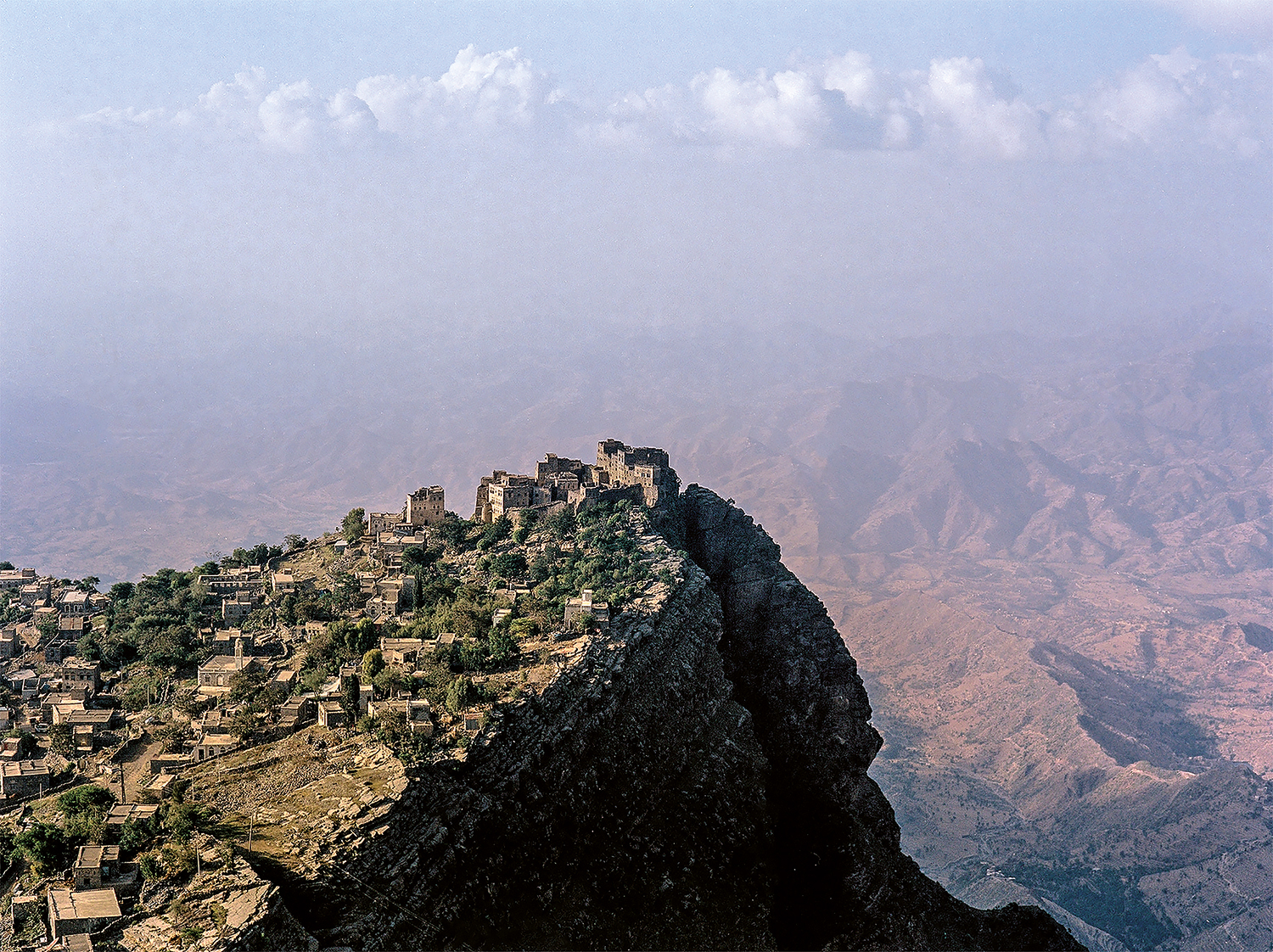
“We should question whose standards we are going by. What is actually beautiful? Where did I learn this idea of beauty?” – Yumna Al-Arashi
Al-Arashi says that photographing the women around her has always been an exercise in understanding power, consent, liberation and subjectivity. The women Al-Arashi was surrounded by growing up, and those whom she photographs, “never needed saving; we didn’t want saving”, she says. For Al-Arashi, photography became a tool for reasserting authorship for these women – if a tricky one. “How do we use that tool when the tool itself is so violent?” she ruminates. “How do you reclaim that tool as something that can be liberatory rather than oppressive?”
A found image Al-Arashi uses often to illustrate this idea shows Oprah Winfrey unveiling an Afghani woman on stage for a feminist event with The Vagina Monologues, on International Women’s Day, 2001, “a few months before the invasion of Afghanistan”. The image reasserts the idea that the Western woman is the standard – the ideal – and that she must be responsible for liberating the oppressed ‘Oriental’ woman. It is a visual representation which reinforces a contest between Muslim women and Western feminism.
“Oprah, who is supposedly this icon of feminism, of the Black liberated American woman, and yet she is also engaging in these semiotics of liberation – we have to go there and save these women. And we have one of them on stage, unnamed,” says Al-Arashi. “The photo helps people understand how these things all connect. How do women’s bodies and imperialism, or invasions, actually work together?”
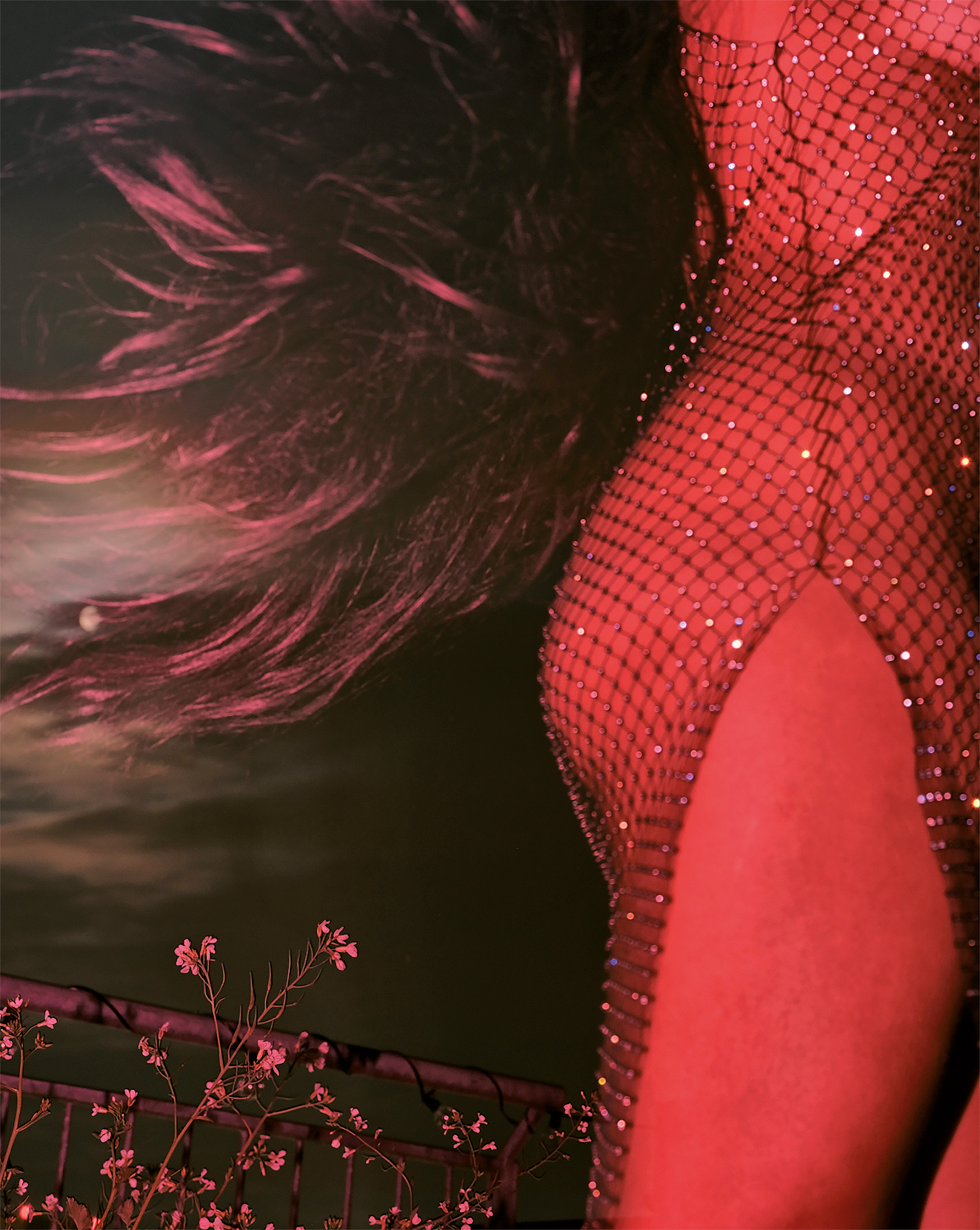
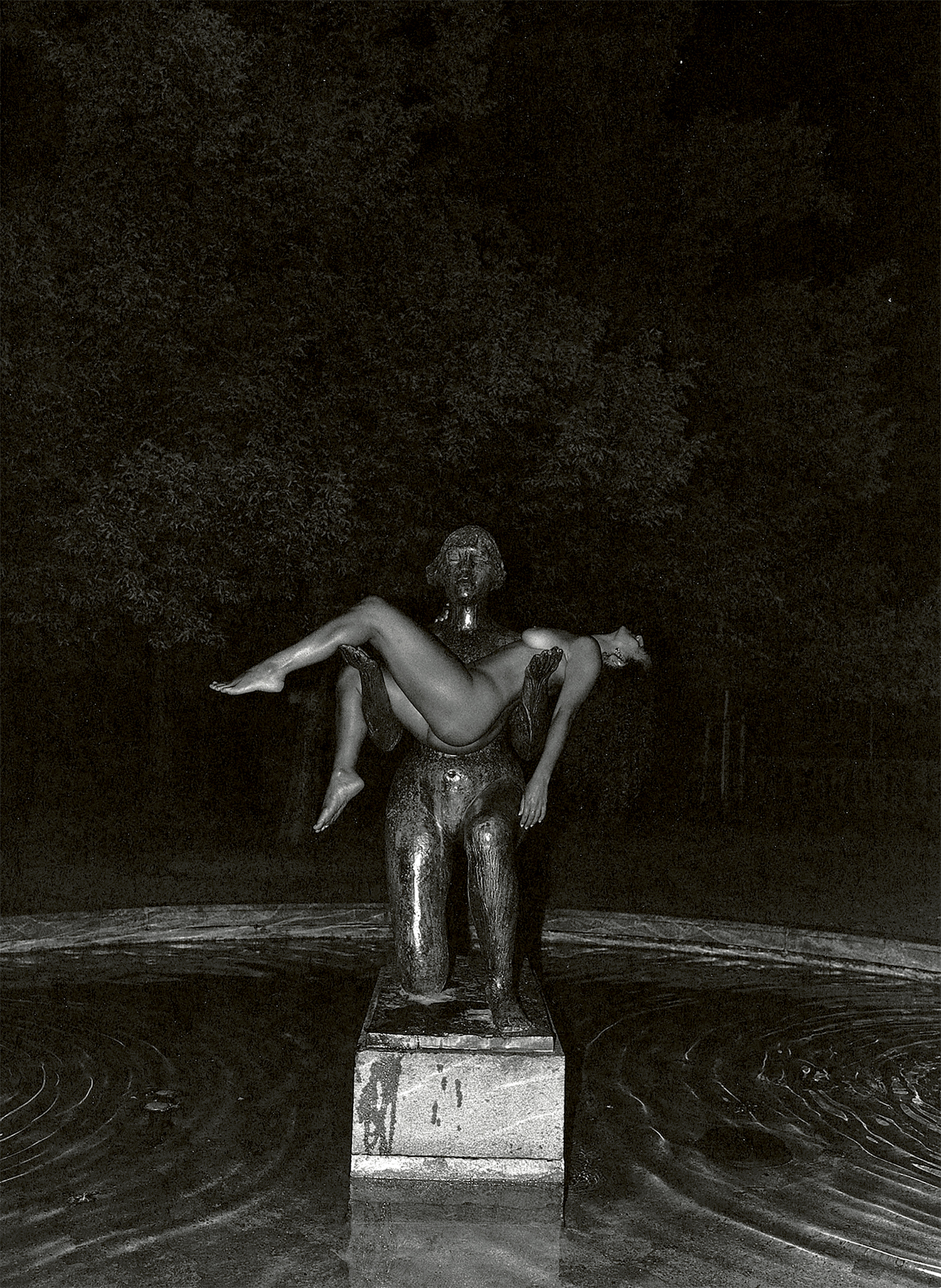
Al-Arashi’s images are often described as beautiful, a response she both welcomes and interrogates. “I have a very interesting relationship to the idea of beauty and also ugliness,” she says. She points to Mooshtari Hilal’s book Ugliness, in which her work is referenced, as a touchstone for these questions. “Everyone loves how my images are beautiful. They’re aesthetically gorgeous and the lighting is nice and people look good, and yes, I am attracted to that and yes, I find it to be something that brings me joy when I work. [But] we should question whose standards we are going by. What is actually beautiful? Where did I learn this idea of beauty?”
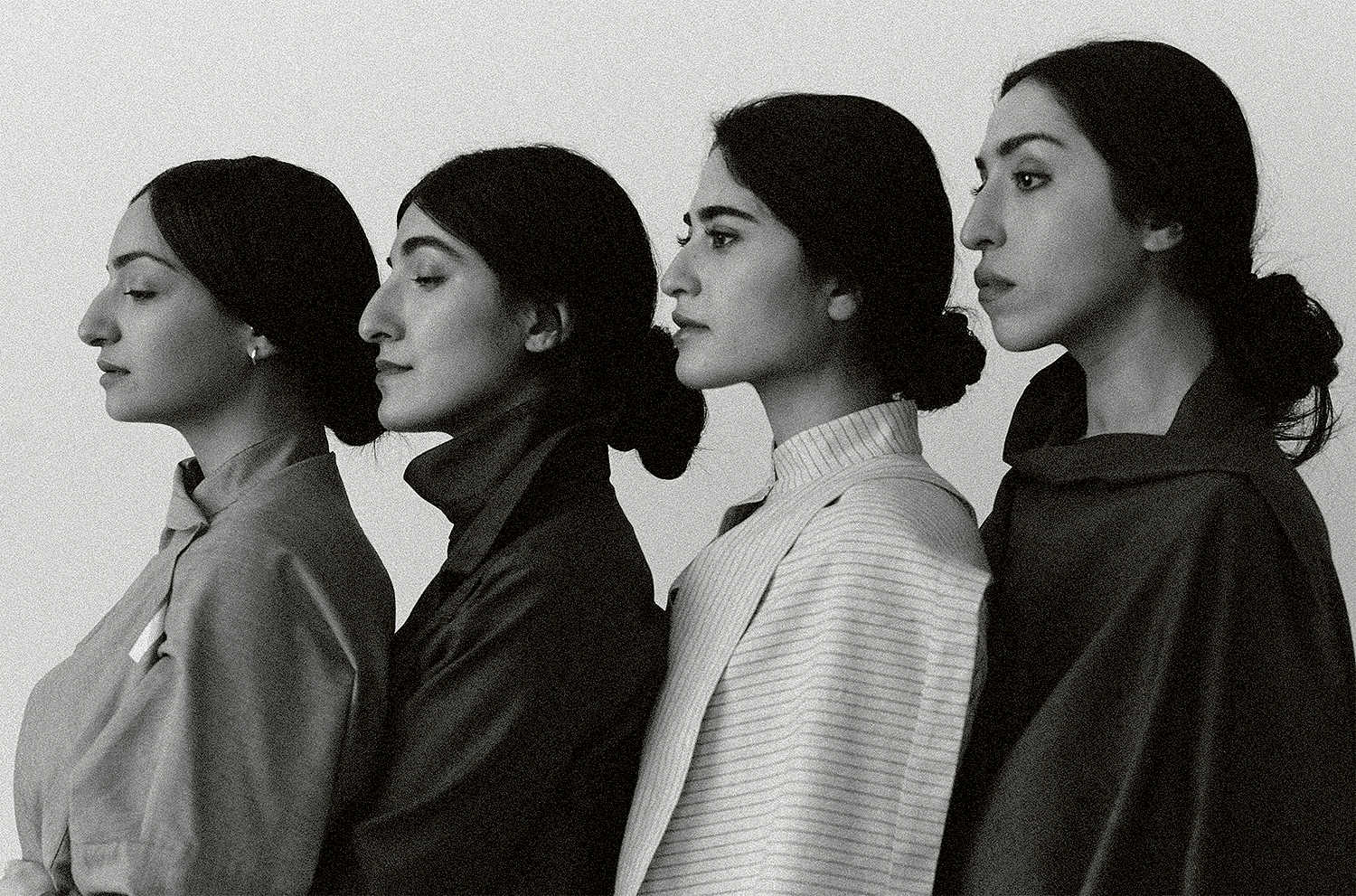
Al-Arashi says she is on a journey of surrendering the idea of perfection in image-making, central to Axis of Evil, a photograph depicting four women from Yemen (Al-Arashi herself), Afghanistan, Iran and Iraq. “We were all amongst one another and we realised how similar our profiles were and how vilified this profile is within our communities and also to the masses of imagery that we see around the world of what beauty looks like regardless of race,” she says. The title – borrowed from the language of US foreign policy – reframes these faces not as threats, but as kin.
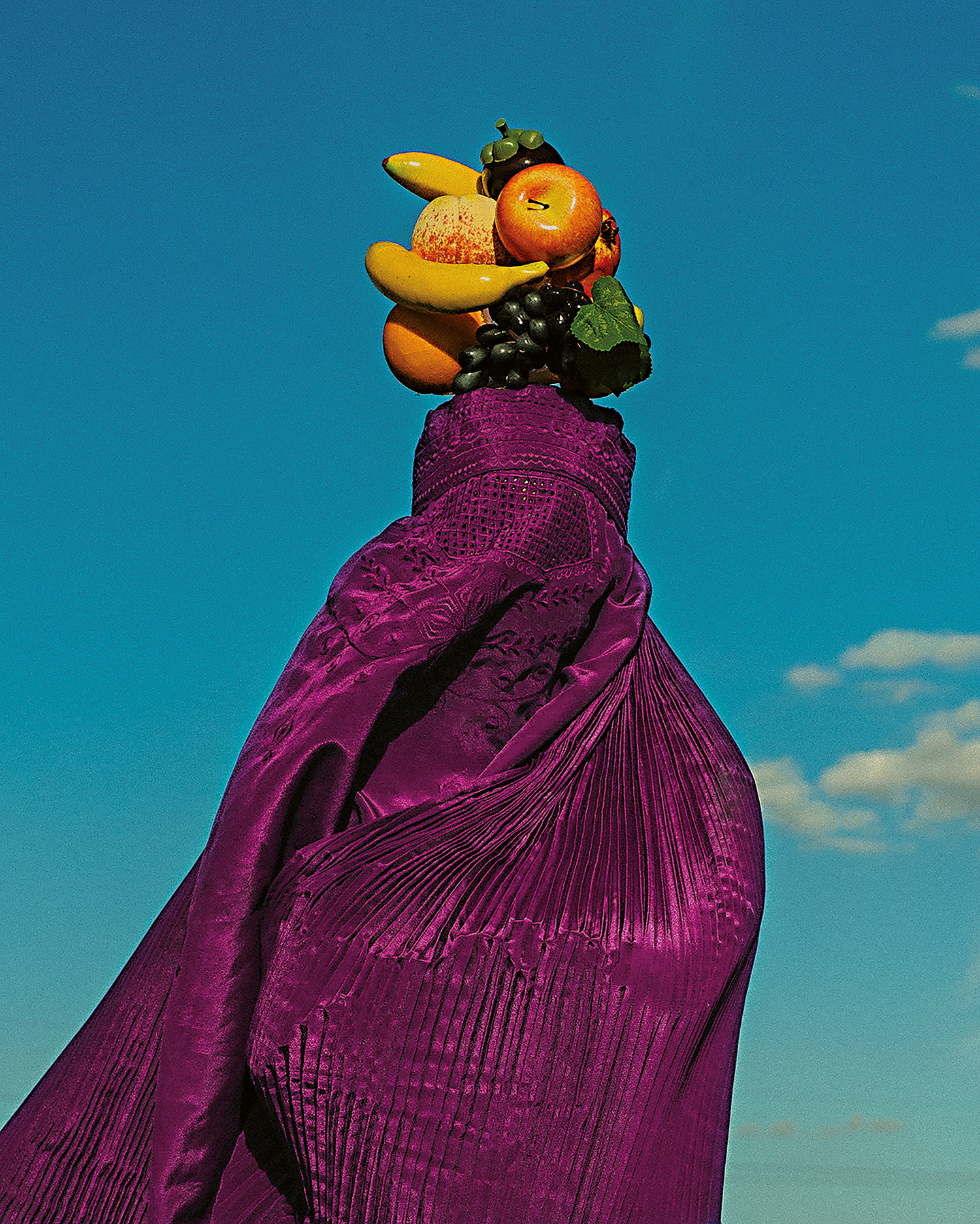
Much of Body as Resistance is about reclaiming the body from systems that distort it, but the image I Am Whoever You Want Me to Be confronts those distortions head-on. Al-Arashi shot the vibrant yet stereotypical composition when she was struggling with how she was being represented in the media – the attention brought visibility and professional momentum, but interviews about her work fixated on spectacle rather than substance, including repeated questions about her father’s feelings about her nude self-portraits.
“I’ve had multiple people ask me about wearing the burka. It was just always this sensationalist, fetishistic perspective and I hated it so much,” she says. Her response was to push the logic of fetishisation to absurdity.
Purchasing a burka – “which again, we don’t wear” – she altered it from its original blue to purple and added a fruit headdress referencing Carmen Miranda, the Brazilian actress whose Hollywood success relied on an exaggerated, exoticised version of her being. “The only way she would ever be able to make it into Hollywood was when she performed the most Brazilian version of herself,” Al-Arashi notes. “So she was always this disoriented version of herself.” Al-Arashi’s resulting self-portrait is deliberately jarring, collapsing the ignorance she encounters into a single frame.
Discomfort, Al-Arashi insists, is not something to shy away from. In fact it is the point. “I like that you told me that this image was really uncomfortable for you,” she says, as I voice misgivings around a visual parody of the burka. “It’s really important when we feel uncomfortable – it’s good we ask ‘why’ instead of just moving along.”