

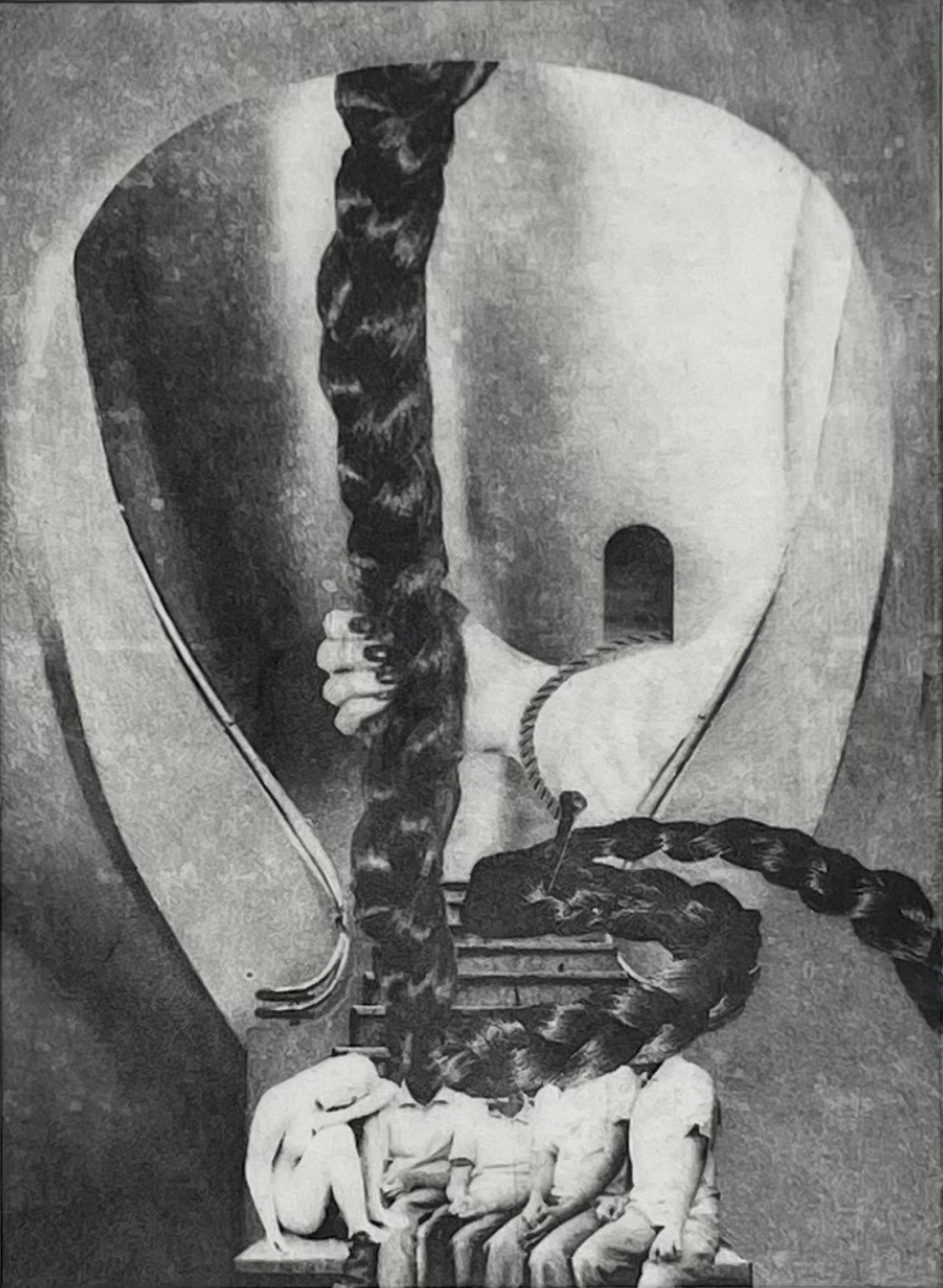
Collage from the series Windows © Mila Rae Sarabhai
Taking a gentle approach to the world, Mila Rae Sarabhai’s collages and installations suggest a decolonised photographic art and won the BJP Mention at Kyotographie this year
Mila Rae Sarabhai grew up in Ahmedabad, a major city in Gujarat, West India. People have lived in the area for a thousand years and the city was founded in the 15th century, but in 1818 the British East India Company invaded and it fell under British rule. The Empire industrialised the textile industry and Ahmedabad became known as ‘The Manchester of India’; later it became a centre in the struggle for independence, textile workers burning down buildings in mass protests in 1919, and going on strike in the 1920s. In 1930 Gandhi initiated the Salt Satyagraha from Ahmedabad, a campaign of civil unrest against the British tax on salt, and more widely against British rule.
Sarabhai’s family was involved in the fight for independence; many family members were also keen photographers, who took images going beyond family photos to depict the political milieu. Sarabhai followed in their footsteps, borrowing her grandfather’s analogue cameras and finding herself attracted to the many ruins in Ahmedabad. “I was always very interested in these old buildings, they were sites of urban legends for kids,” she says. “There were rumours of ghosts, or blood on the walls; we snuck into one, and there were portraits of the people who used to live there on the walls.”
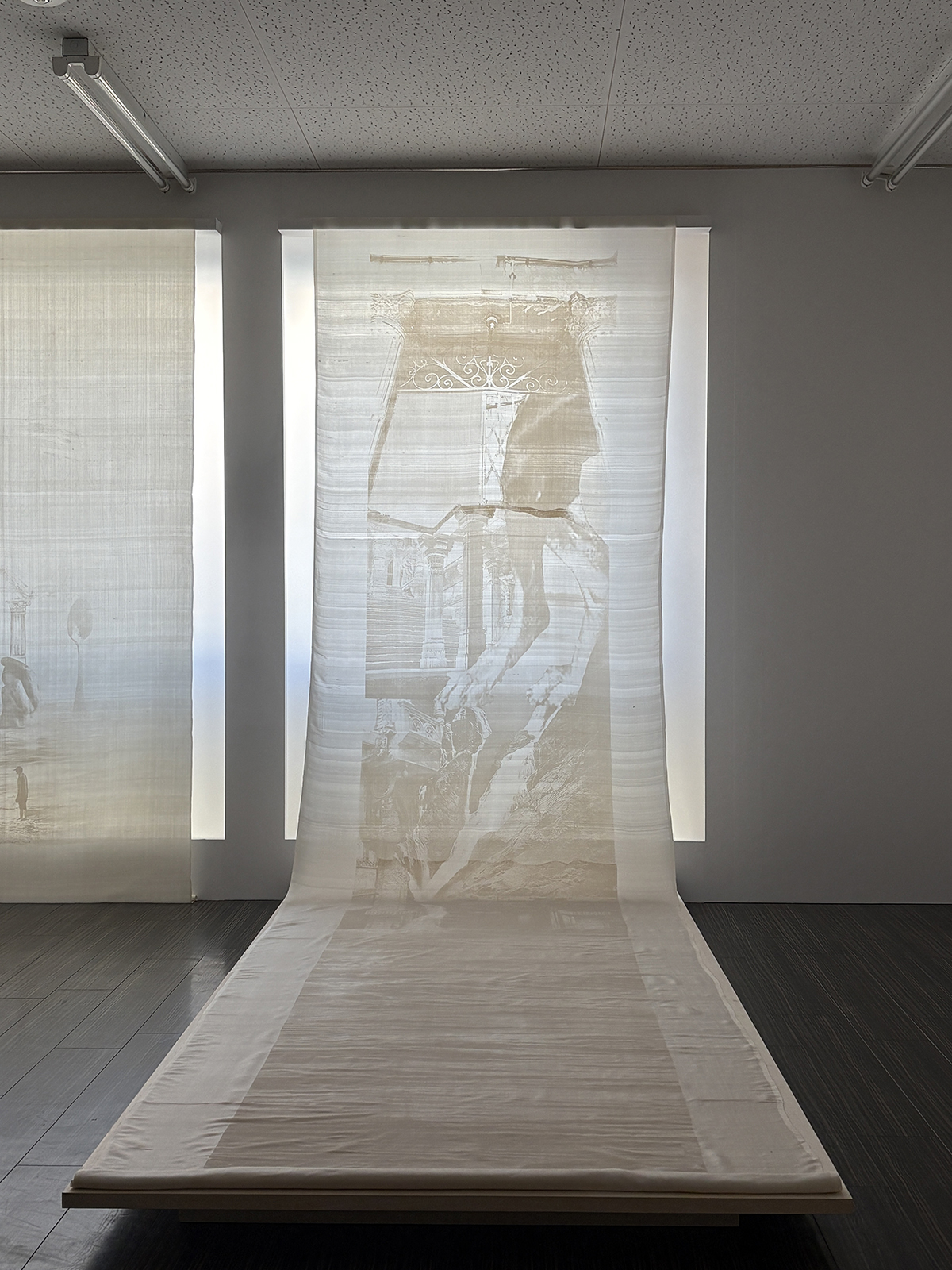
“Different windows, different light,” Mila Rae Sarabhai
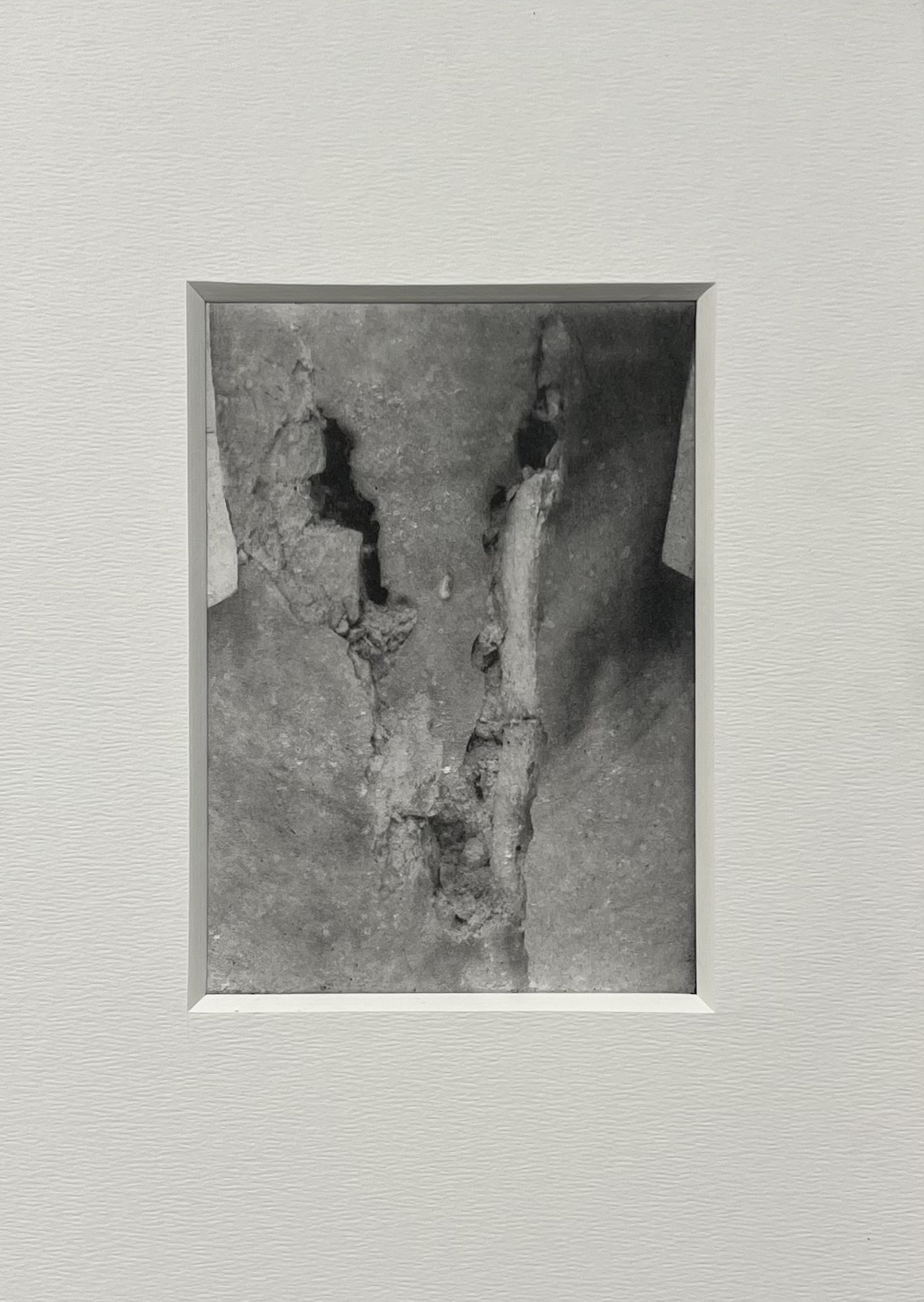
The ruins are remnants of various buildings, from ancestral Indian homes to crumbling colonial architecture, but it was the latter that interested Sarabhai, partly because of her grandfather’s stories of British rule. Creating an archive of photographs, shot in stark, near-abstract black-and-white and capturing fragments of buildings, she became curious about layers of history, going back to the same locations as her family and making new images there. Discovering collage, and its power to resist established narratives, she also started to cut into her photographs plus shots from the family archives, combining the elements to disrupt single views and collapse different times into one.
“Photography is like my sketchbook, the collage is me trying to make sense of it,” Sarabhai explains. “I’ll have a bunch of pictures taken at a certain time, or a few different sets that have a sense of cohesion, and I’ll try to pull them together. Most of the images are of my city so the links are obvious to me, in terms of a story I’ve heard, or a time and place that felt important. But it’s always interesting to hear what someone who has no idea of my city’s history makes of them.”
Sarabhai works by hand, preferring to physically cut out and “piece together” her collages; she then makes small, intense etchings, elusive works that resist easy interpretation. Ahmedabad’s long history of textiles – and her own childhood memories of block printing – also encouraged her to experiment printing onto fabric and seeing how the material and inks combined. Thoughts of the salt tax (which extended to the salt in sweat) and lingering beauty standards around ‘fair’ skin, drew her towards white fabric – and then to using white ink on that white fabric. Her installation Windows is a series of works made with this white on white, then hung up in front of available windows; at the heart of the installation is Bite the Hand, utilising a white sari. Such saris traditionally signifying mourning in much of India, rather than purity or marriage as in the West.
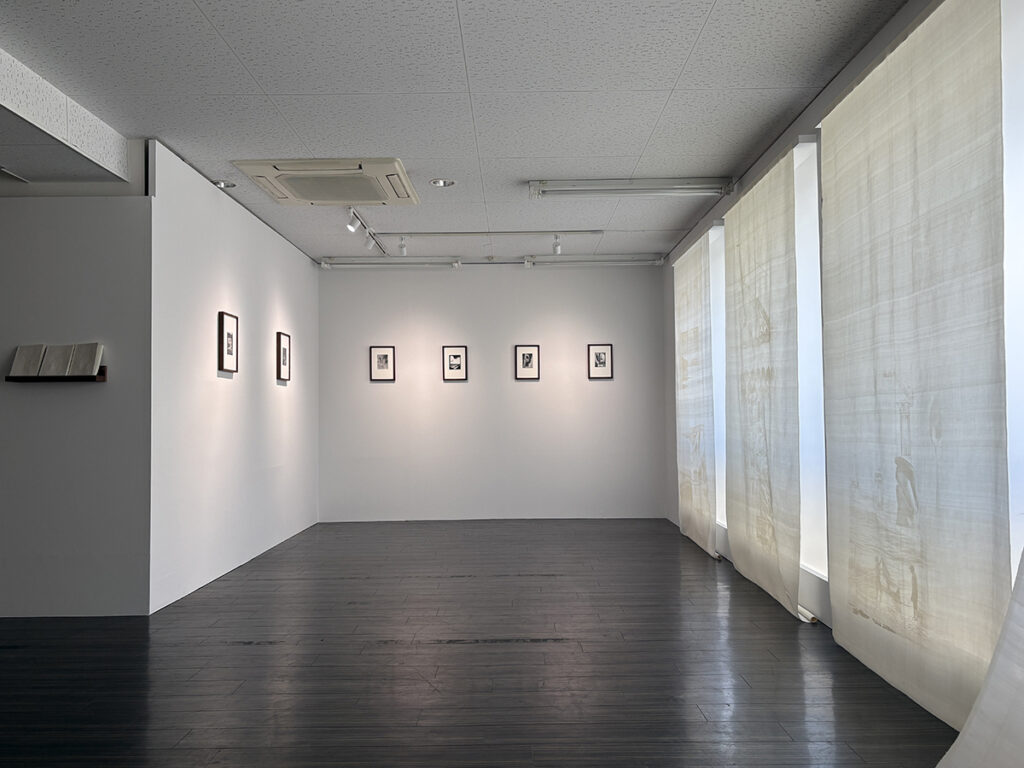
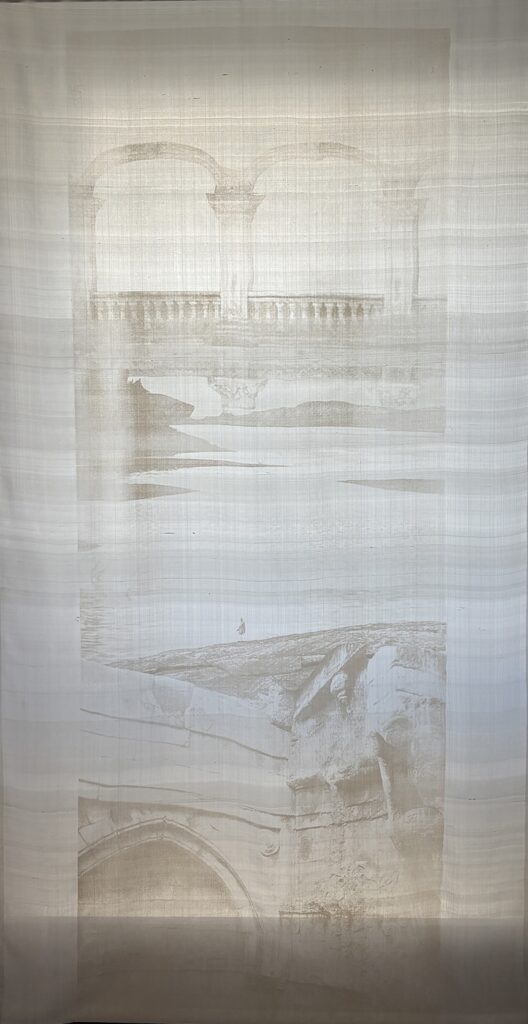
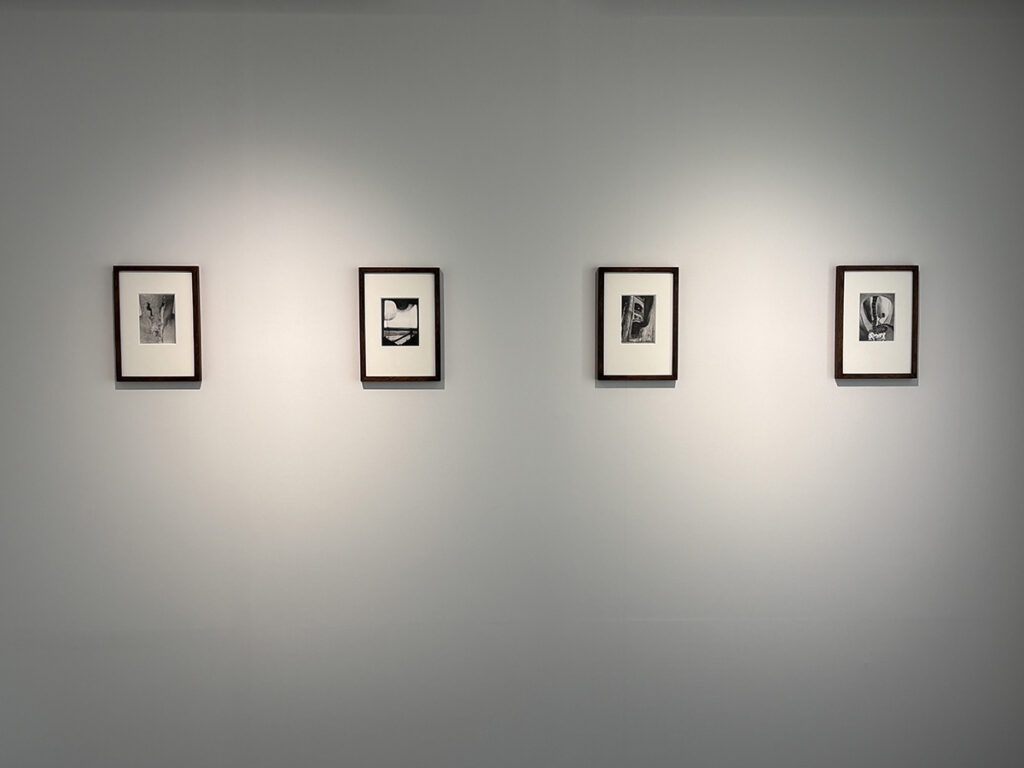
The extent to which the images can be seen in these works varies with the windowlight – Sarabhai’s work fades away on cloudy days, or burns into blankness when it’s very bright. Relinquishing control over her final output, she suggests a more holistic, less extractive approach to the world; embracing the illegible and invisible, she also refuses a scopic regime which favours the evidential, or even legible.
“I put my photographs through so many processes they’re unrecognisable, and that’s precisely the purpose,” she says. “It’s meant to make everything slightly off-kilter, to force the viewer to really try to decipher. There is a level of obscurity to it, a question of visibility and invisibility, of how much is too much, and how much is not enough. Because it’s not that I don’t want people to be able to decipher the work at all. It’s just that I want it to take some time.”
Sarabhai’s work is unprecious, in terms of both materials and her approach to her own images; a friend worried that her Windows installations could be mistaken for ‘just’ a sari or curtains, a concern that she found amusing. Saris were a symbol of resistance in India and there’s nothing wrong with curtains, she says, pointing out that there’s a long history of craft in India, of beautiful objects in the everyday. In fact when studying at London’s Slade for her BFA, she found object display curious in the old imperial capital; the V&A’s Great Mughals exhibition included spoons, daggers and clothes, she says, all of which were originally used, not isolated in museum vitrines. “The fact that something can be used doesn’t lessen its quality,” she notes.
Sarabhai was one of ten emerging artists in the KG+ Select in Kyoto, which is sponsored by Sigma; part of the Kyotographie International Photography Festival, the artists in KG+ Select are selected by a jury, and given a budget to show their work in a central hub. Sarabhai exhibited her Windows installation, some etchings, and her small, handmade photobook, Salted Ground; including her evocative original images, and a text about the salt tax, this publication is also modest in size and materials.
“It can slip into your bag,” says Sarabhai, adding that she’s a keen reader. As with her installations, it warrants a slower pace and repeated visits, a publication to read and digest, not flick through and quickly consume.
Sarabhai’s work was on show alongside exhibitions by a strong cohort of artists at KG+ Select this year; Sridhar Balasubramaniyam, Hyunmin Ryu, Hiroyoshi Taira, Chaofan Wan, Seo Minkyung, Piotr Zbierski, Kim Eun Ju, Aya Kishimoto, and Sohei Nakanishi. Balasubramaniyam was selected to exhibit his work in the main Kyotographie programme next year by Andrea Holzherr, global cultural director and curator of Magnum Photos; Thyago Nogueira, head of the contemporary art department at Instituto Moreira Salles; and Lucille Reyboz, co-founder and co-director of the Kyotographie. These judges plus Diane Smyth, editor of BJP, selected Sarabhai for the BJP Mention.
As we speak she is still in Kyoto, catching up with her Japanese roots (her mother is half Japanese); she’s currently thinking about folding shoji, she says, the paper screens in traditional Japanese homes. If the paper is damaged on these screens it is usually repaired not thrown away, a panel sometimes entirely replaced, or sometimes patched up with extra paper. These layers, and the soft texture of Japanese washi paper, has suggested a new way to explore translucency in her practice.
In the meantime India Printmaker House is taking some of her etchings to the London Original Print Fair in Somerset House, London, while Krupa Gallery, London is including two of her fabric works and new photographs in a group show, The Desert Wind Will Salt Your Ruins, open from 29 May – 11 July. “Different windows, different light,” smiles Sarabhai. “It will be interacting with a very different space. But I’m also looking forward to going back to Ahmedabad and taking more photographs.”