


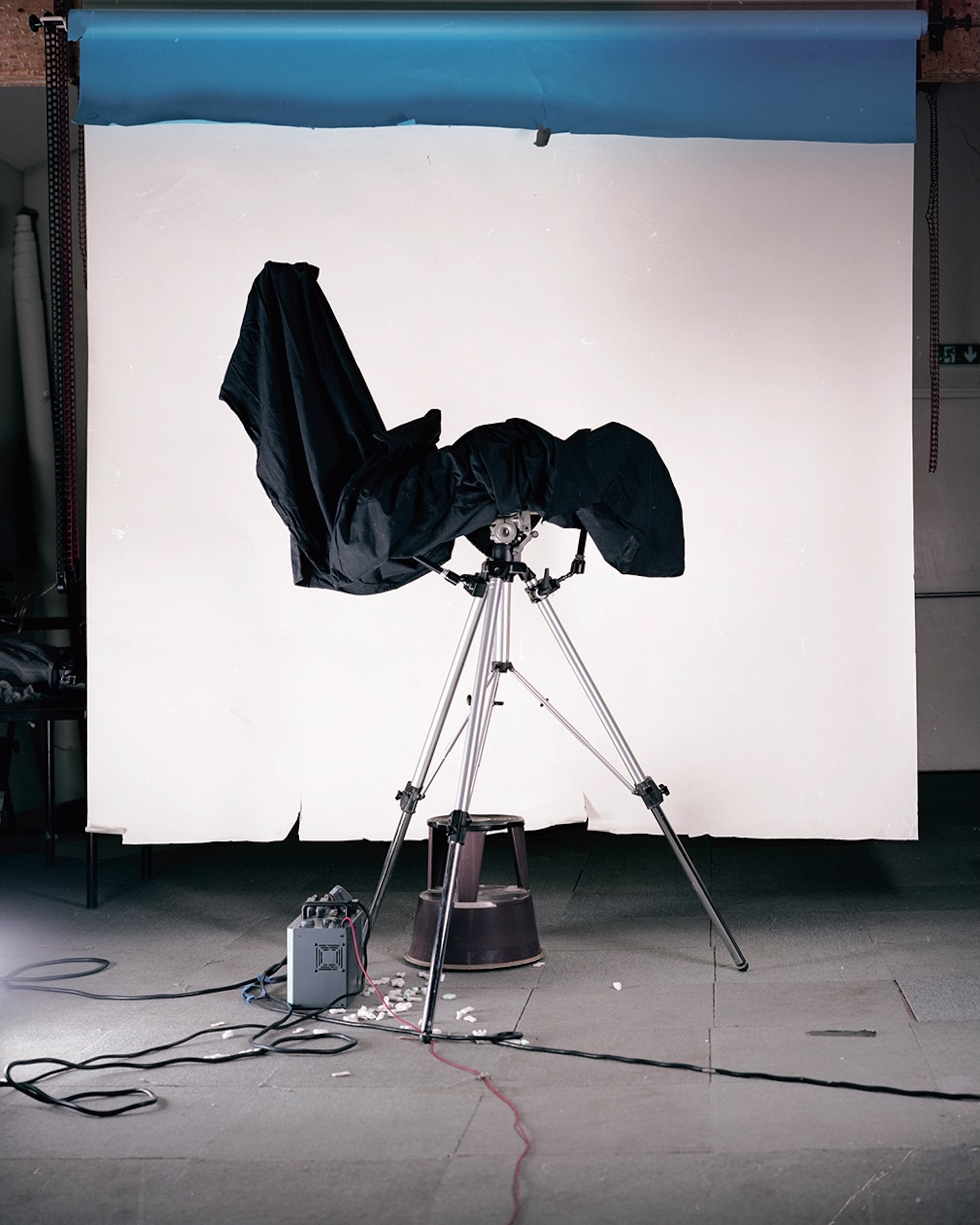
Untitled (Black Sheet), 2017 © Sergio Valenzuela Escobedo, courtesy the artist
Sergio Valenzuela-Escobedo’s latest exhibition, Mänk’áčen (Revision 6), at Mumbai’s Dilip Piramal Art Gallery, National Centre for the Performing Arts, expands on long-term research into the genealogies of the camera in relation to pre-photographic modes of visuality
It all began with the phrase ‘Toumayacha Alakana’, which Sergio Valenzuela-Escobedo encountered during a personal visit to the Yagan Usi Museum in southern Chile. It is attributed to the Fuegians of southern Chile and Argentina and understood to mean “to look with a veiled head”, the artist explains; while considering this a poetic proposition, he became intrigued by its paradoxical nature. “Why must we cover our face to look at the other?” he asks.
His research led him to the astronomical and scientific expeditions of the 19th century, which brought the camera to Tierra del Fuego for the first time. Valenzuela-Escobedo focused on the French Scientific Mission to Cape Horn in 1882-1883, which sought to photograph the transit of Venus across the Sun. “At first, the box didn’t produce images,” he explains. “Progressively, the camera began to capture images, however, the first people to be photographed [with it] never saw their own image. They simply saw an operator under a cloth looking at them for six to eight minutes.”
For the artist, this encounter can be understood through ‘Toumayacha Alakana’, a Western interpretation that tells us more about the observers’ perception than about how the Selk’nam understood and experienced those first encounters with photography. Struck and intrigued by this colonial projection, he set out to find similar amer/indian expressions used to define the relationship between protophotography and these communities.
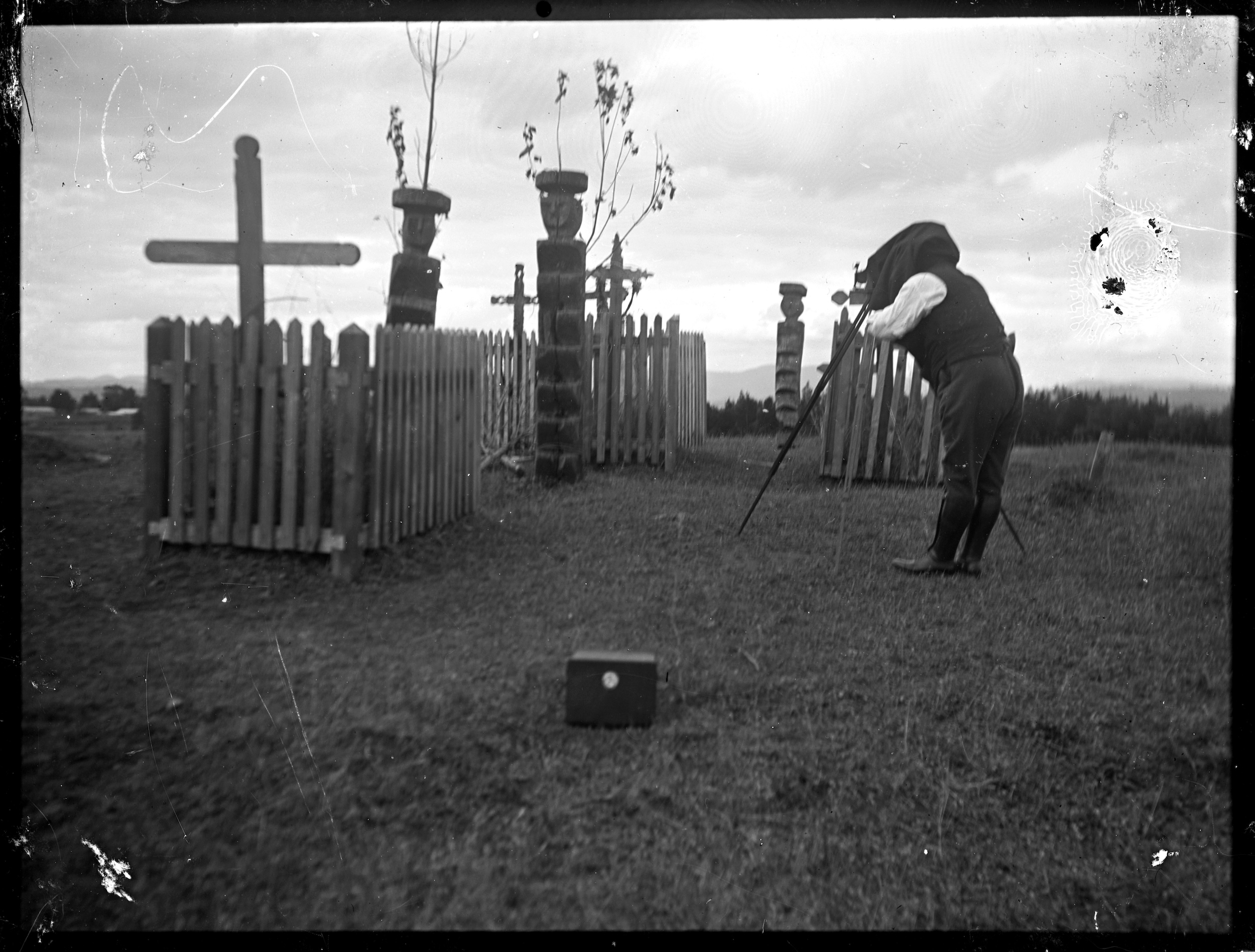
“…the first people to be photographed [with it] never saw their own image. They simply saw an operator under a cloth looking at them“
Valenzuela-Escobedo draws on the theories of Czech-Brazilian Vilém Flusser, particularly his conception of the camera as a black box – a technological development performing according to a programme that photographers rarely question. They know how to operate the apparatus, but do not understand the blackness inside the camera. Valenzuela-Escobedo develops this idea by interweaving the camera’s mechanical functioning with notions of belief, cosmologies and what lies beyond human comprehension, and conceptualises it as a form of “mystical mechanics”.
In considering photographic records of early 19th-century exploratory missions, he positions himself alongside the amer/indian communities depicted in the photographs; both look at the camera, shifting the focus from the subject to the apparatus. “To establish a critical position as a researcher, I chose to become a witness to the relationship between the camera and the Indigenous, rather than reproducing the exoticising tradition of looking at the Other,” he explains. “My interest was in the photographic act itself: the moment in which both the Indigenous person and I encounter and look toward the camera. I centre my research on deconstructing its genesis.” In doing so, Valenzuela-Escobedo expands Flusser’s call to examine the camera as a programmed apparatus by also interrogating its historical and colonial formation.
The artist goes one step further by juxtaposing the early uses of the technological apparatus with the colonial construction of the figure of the ‘savage’ in relation to amer/indian groups. He finds it significant that the arrival of the camera produced an encounter between ‘modern’ and Indigenous technologies of visuality and, even though neither side fully understood the other’s technological and visual systems, it was the Indigenous communities who were positioned as ‘savage’. They became a canvas onto which European observers projected their own anxieties and suspicions about the new technology, he argues, including the belief that the camera could steal the soul. “The fear of photography emerges early within 19th-century European culture itself, when the new photographic device was perceived as a threat,” says Valenzuela-Escobedo.
He mentions Charles Baudelaire, who, in his essay Le Public moderne et la photographie (1859), argued that the camera threatened human imagination by mechanically copying the world. Valenzuela-Escobedo also refers to Théophile Gautier, who suggested that photography was able to capture not only the physical form of a person but also a part of their inner self, rendering the soul visible in the photographic image. Even Roland Barthes described the photographic moment as a form of symbolic death, as the photographed subject becomes an object.
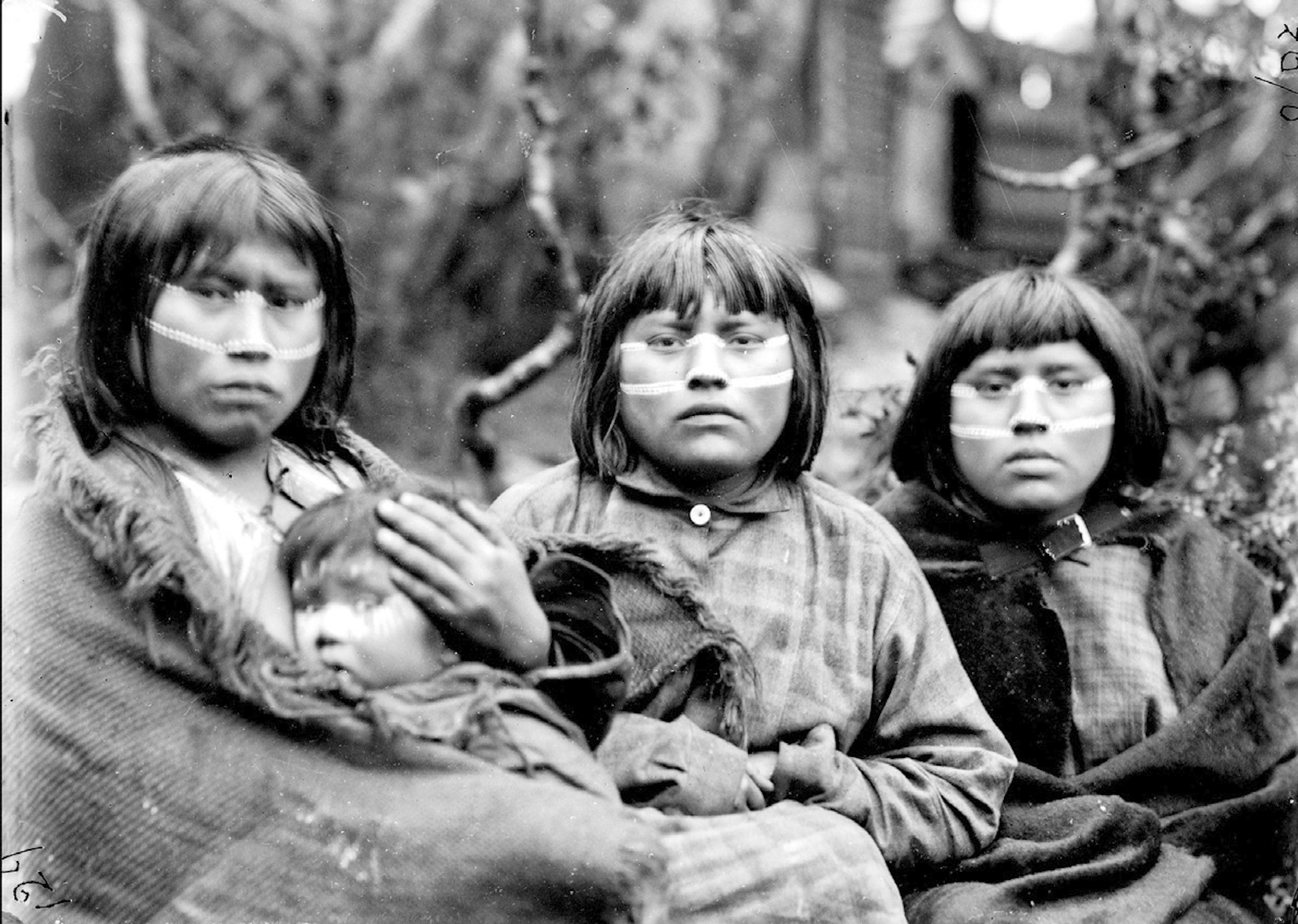
These theories allow Valenzuela-Escobedo to dismantle the longstanding assumption in anthropology and visual culture that Indigenous communities resist being photographed; it also enables him to argue that the projection of European anxieties onto these groups was instrumental in producing the symbolic and monetary value of the photographs. He says: “The explorers would return to Europe with their photographs as trophies, saying: ‘Look, these people refuse to be photographed because they believe that the camera can steal their souls. And yet, look at what I have brought back. Despite their resistance, I managed to capture their image.” The figure of the ‘savage’ Indigenous subject became a staple in Western anthropology, constructed in opposition to the figure of the audacious and heroic European explorer.
The use of the diagram as a conceptual framework and visual form is central to Valenzuela-Escobedo’s research. Its plasticity allows him to construct non-linear narratives which foreground the relational interconnectedness of the different elements constituting his work Mänk’áčen. He explains: “It is important to remember that, although many people perceive diagrams as static, they are constantly in motion because it seeks to explain a system and how it functions.” Mänk’áčen’s diagram is organic; it moves, changes, and takes new shape as the project evolves and different actors become involved. This emphasis on collaboration constitutes another central pillar of Valenzuela-Escobedo’s practice.
From the outset of his research, the artist collaborated closely with the Lafkenche Mapuche community in Puerto Saavedra, Chile in 2017. He deliberately chose not to bring a camera, despite its centrality to his investigation, instead spending time with the community, actively listening and learning about their technologies of visuality. He also participated in spiritual ceremonies through which he witnessed these technologies in practice, such as the nguillatún, a four-day celebration in which the machi (shaman) enters a trance to receive visions indicating what the community must do to secure a stable and harmonious future.
As Mänk’áčen evolves and finds new avenues for dissemination, Valenzuela-Escobedo establishes new collaborations that further develop the project by interweaving local histories of encounters between the camera and ancestral technologies of visuality. He explains: “Through invitations, I collaborate with other researchers who share their findings and significant anecdotes about what has been happening in each place. This gives rise to new tensions within the project.”
In its current iteration at Mumbai’s Dilip Piramal Art Gallery, National Centre for the Performing Arts, the project is concerned with how photographic archives are saved, produced, and maintained, particularly on networked digital platforms, while also addressing how the state’s selective preservation, suppression, or rewriting of historical narratives can contribute to the erasure of history. For the occasion, a new free newsprint publication, Images in Spite of Ourselves by Justo Pastor Mellado, was published by doubledummy, the platform Valenzuela-Escobedo co-founded.
“No one knows what is going to happen to our stories on Instagram or to each post uploaded to these platforms,” he says. “I study pre-photography, what could be considered cameras or proto-cameras in ancestral cultures. But it is also important to think about where we are headed.”
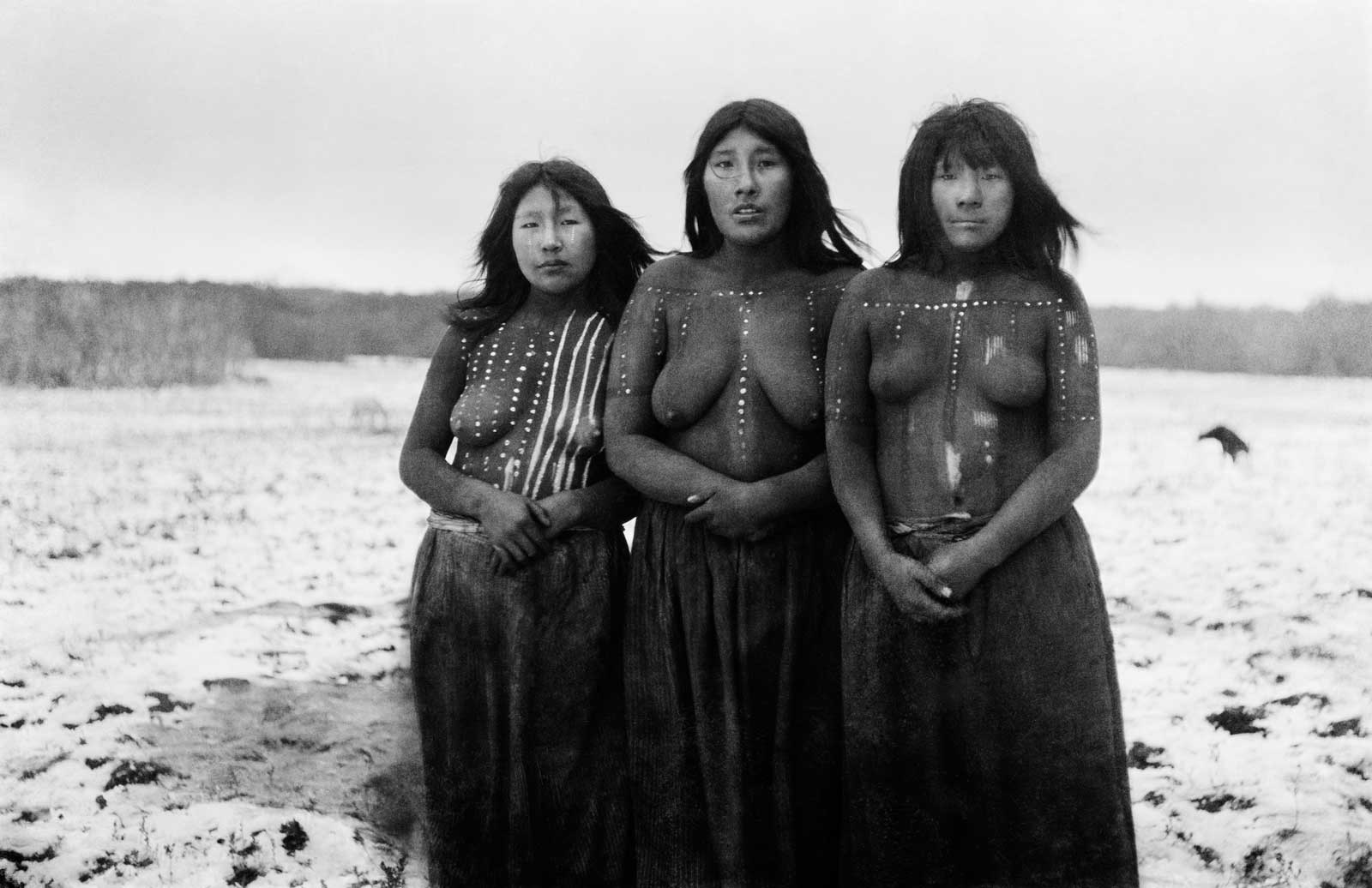
These nuanced histories of photography are particularly relevant at a time when France prepares to celebrate the bicentenary of photography’s invention, according to the official historical narrative. Valenzuela-Escobedo explains: “From the perspective of the prehistory of the camera and of pre-photography, the camera has extremely ancient origins that have nothing to do with the French or even European version.” The artist reminds us of the Nimrud lens, an eighth-century BCE concave lens made of ground rock crystal, discovered in present-day Iraq and now housed at the British Museum. Although its original function remains uncertain, Valenzuela-Escobedo argues it may have served as one of the earliest optical devices, becoming a breakthrough in the history of visual technologies.
He also draws attention to Hercule Florence’s experiments in Brazil, in which he succeeded in permanently fixing images produced by the camera obscura using silver nitrate on paper. Although Florence’s notebooks show the first known written use of the term ‘photographie’, dating to 1833 – years before it was widely adopted in Europe – his contributions to the history of photography remain largely overlooked.
Valenzuela-Escobedo turns to artistic speculation to recover and make space for broader histories of photography and their origins. Drawing from the digital records of Imperial museums which are publicly and freely accessible, and juxtaposing them with seemingly unrelated photographs, images and other objects, the artist unsettles the museums’ authority to produce and legitimise knowledge about the objects in their collections, resonating with Ariella Azoulay’s call to intervene in the imperial grammar of photographic archives.
Ultimately, Mänk’áčen is Valenzuela-Escobedo’s attempt to bring a (multi)perspectival approach to the history of the camera and photography. Drawing on Eduardo Viveiros de Castro’s concept of perspectivism, he imagines “an ideal relationship to the medium that is perspectivist, and offers multiplicity, relationality and alterity”. The project situates Indigenous perspectives within the established history of photography, while proposing a shift in how the different histories of photography are unveiled from beneath the black cloth.
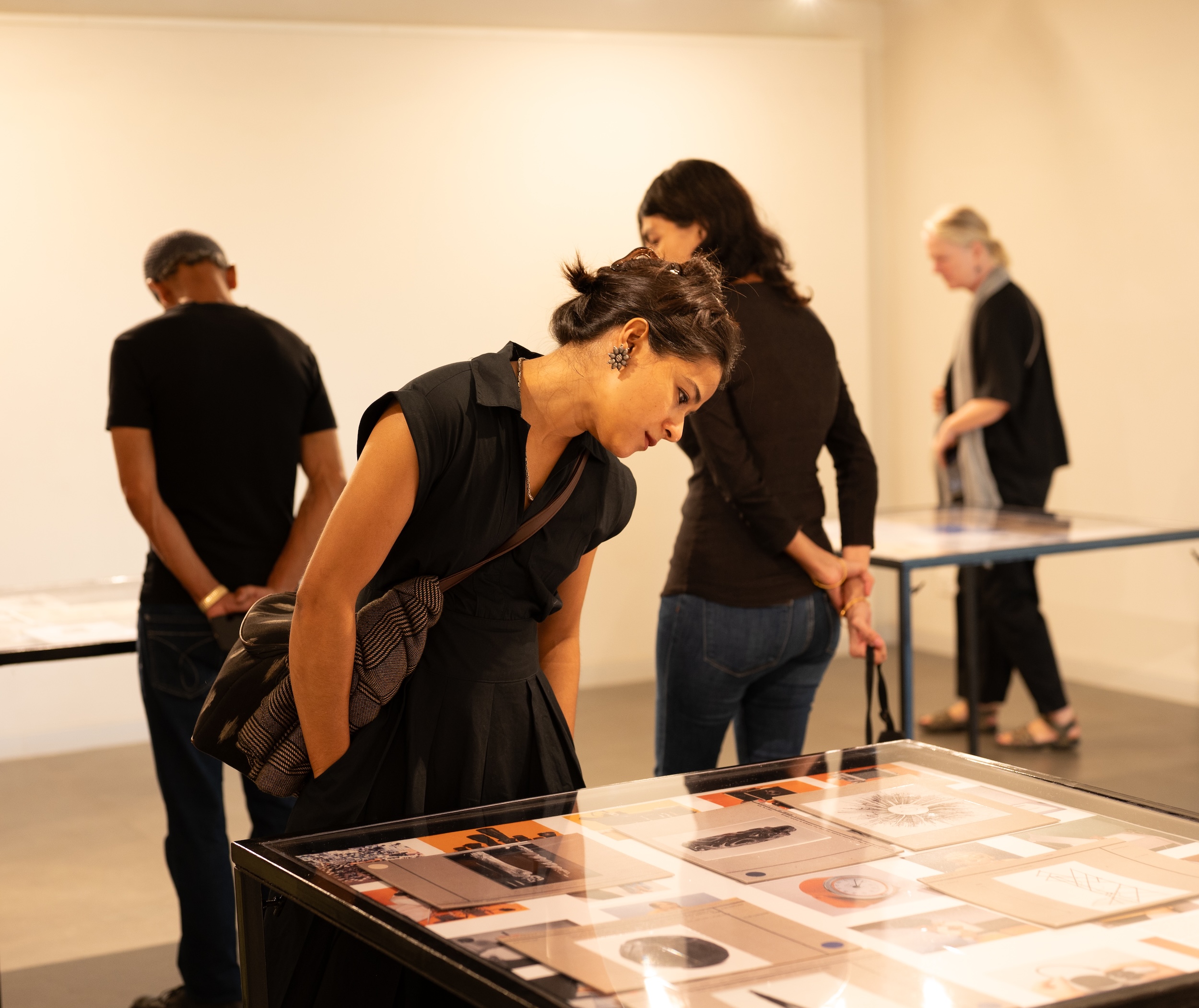
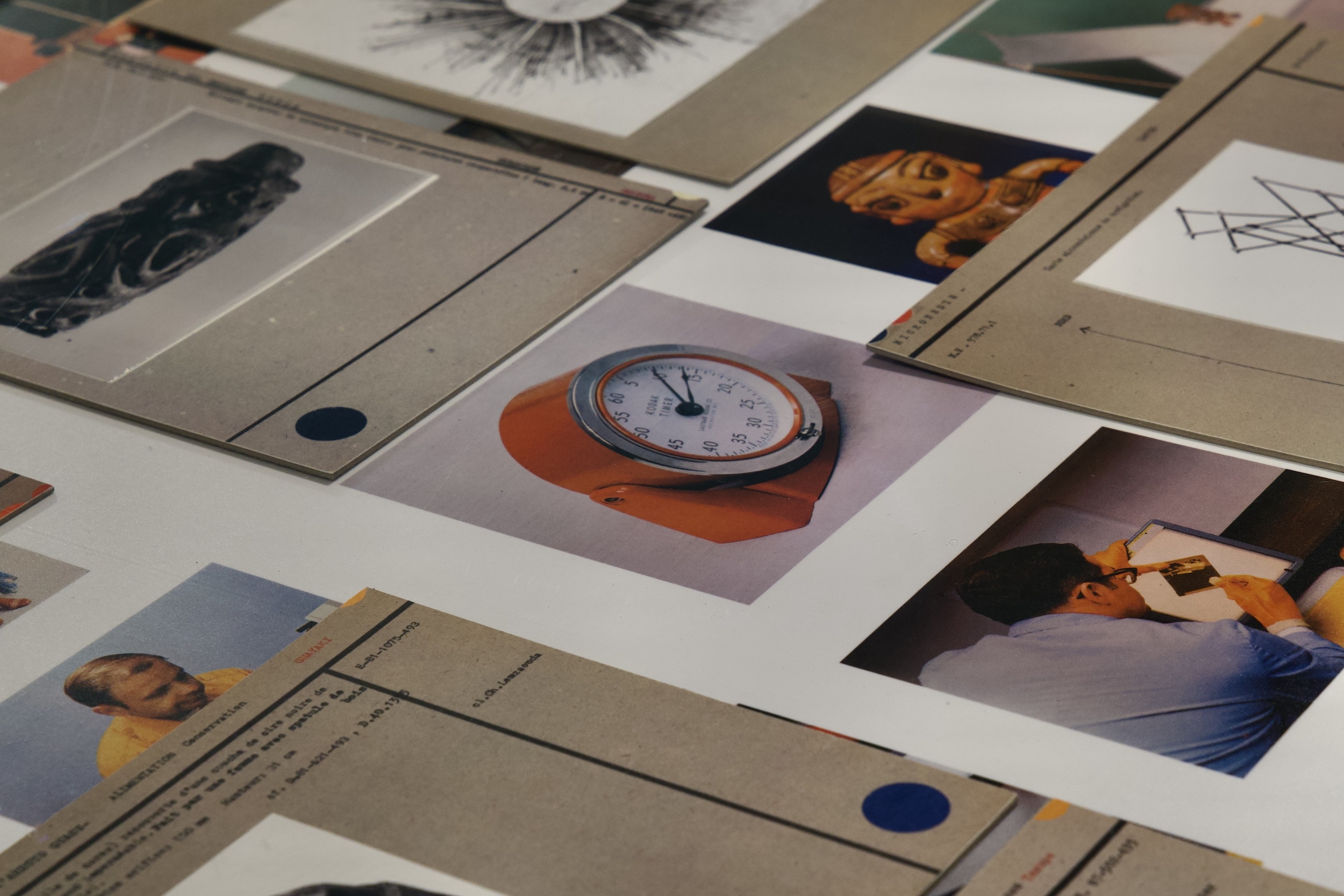
Mänk’áčen (Revision 6) by Sergio Valenzuela-Escobedo is on show until 20 September at Dilip Piramal Art Gallery, National Centre for the Performing Arts, Mumbai www.ncpamumbai.com/venue/piramal-art-gallery https://doubledummystudio.com
