


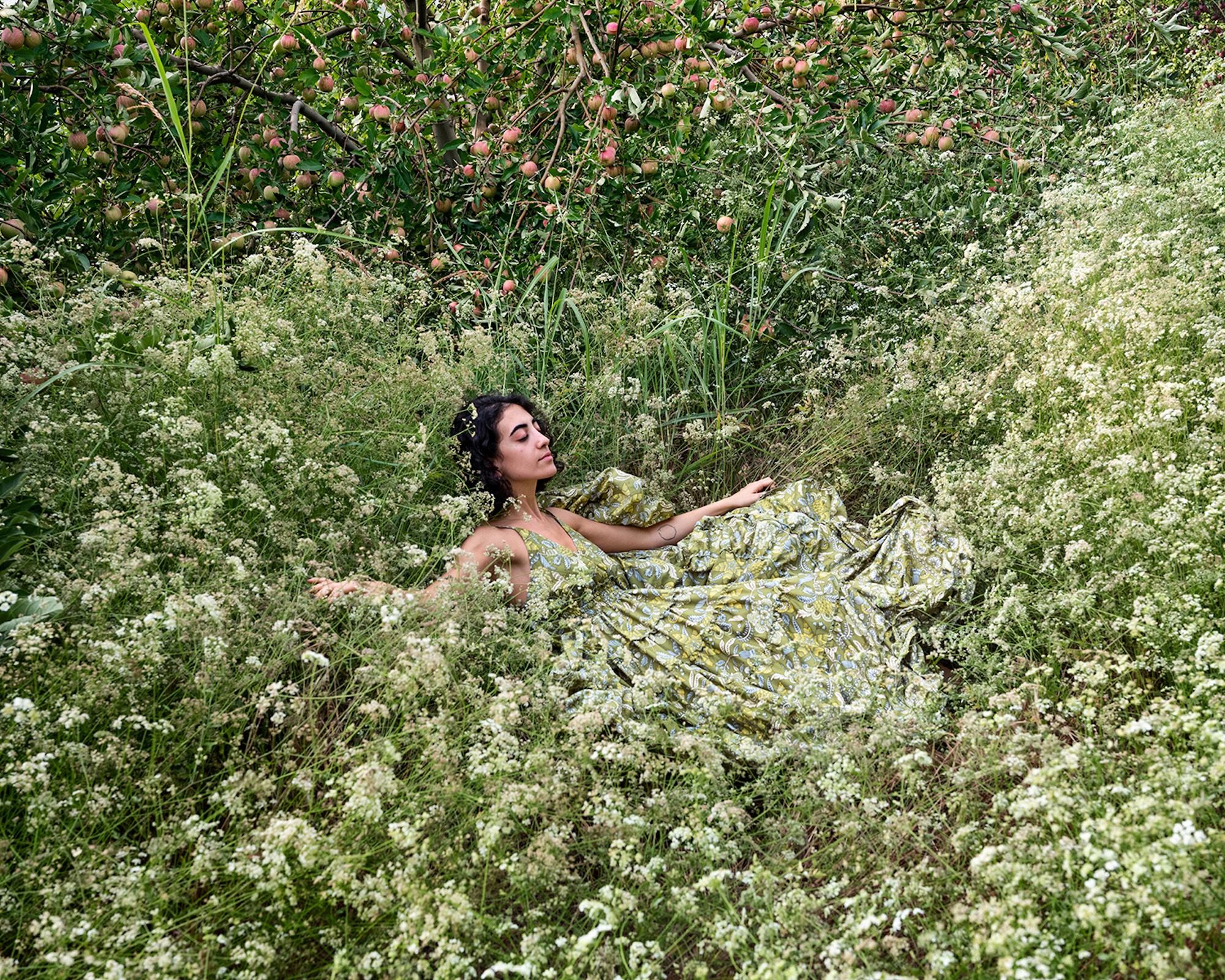
From Where Do I Go © Rania Matar
Rania Matar returned to Lebanon for years to photograph the women navigating a country in perpetual crisis. By the time her book was published, war had returned with a question impossible to ignore
The Holiday Inn Beirut has not been repaired in 50 years. Back when it opened in 1974, it was a monument to the city’s glamour – a 28-floor tower of modernist optimism overlooking the Mediterranean. It was gutted in the first years of the Lebanese Civil War, when militias fought floor by floor for control of its height, using its rooftop as a sniper nest, burning it from the inside out. The Palestinian-Lebanese-American artist and photographer Rania Matar was living nearby, and remembers watching the ‘Battle of the Hotels’ from her apartment, as “every single room burned one by one.”
Matar was a child when she watched the building die; half a century later she returned to photograph young women inside it, and this act is perhaps the quintessence of what Where Do I Go? لوين روح؟ is about. It took Matar “years” to get access to the former hotel, which is off-limits to the public and restricted under Lebanese Army control; even when she had permission to shoot, she had to climb a spiral staircase for 24 floors with her subject and two army escorts to do so.
Since the Civil War, a deadlock has kept the hotel frozen, its ownership split between a Lebanese company that wants to convert it into condominiums and a Kuwaiti group that wants to demolish it. Its heavily damaged carcass continues to pose the question: what do you do with a wound you cannot seem to close? But revisiting it to take photographs was “pretty exhilarating”, Matar says. “Exhilarating, healing, whatever you want.”
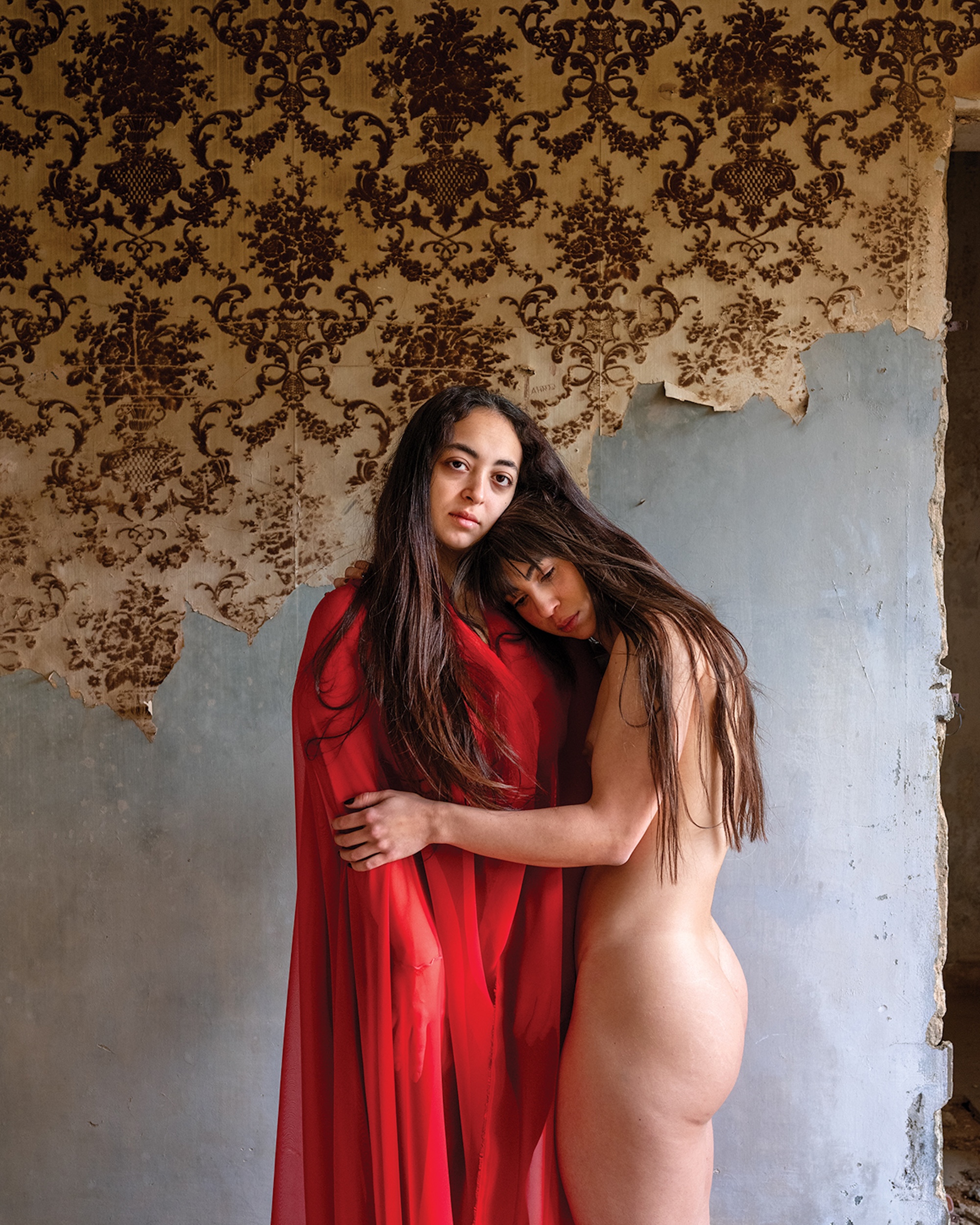
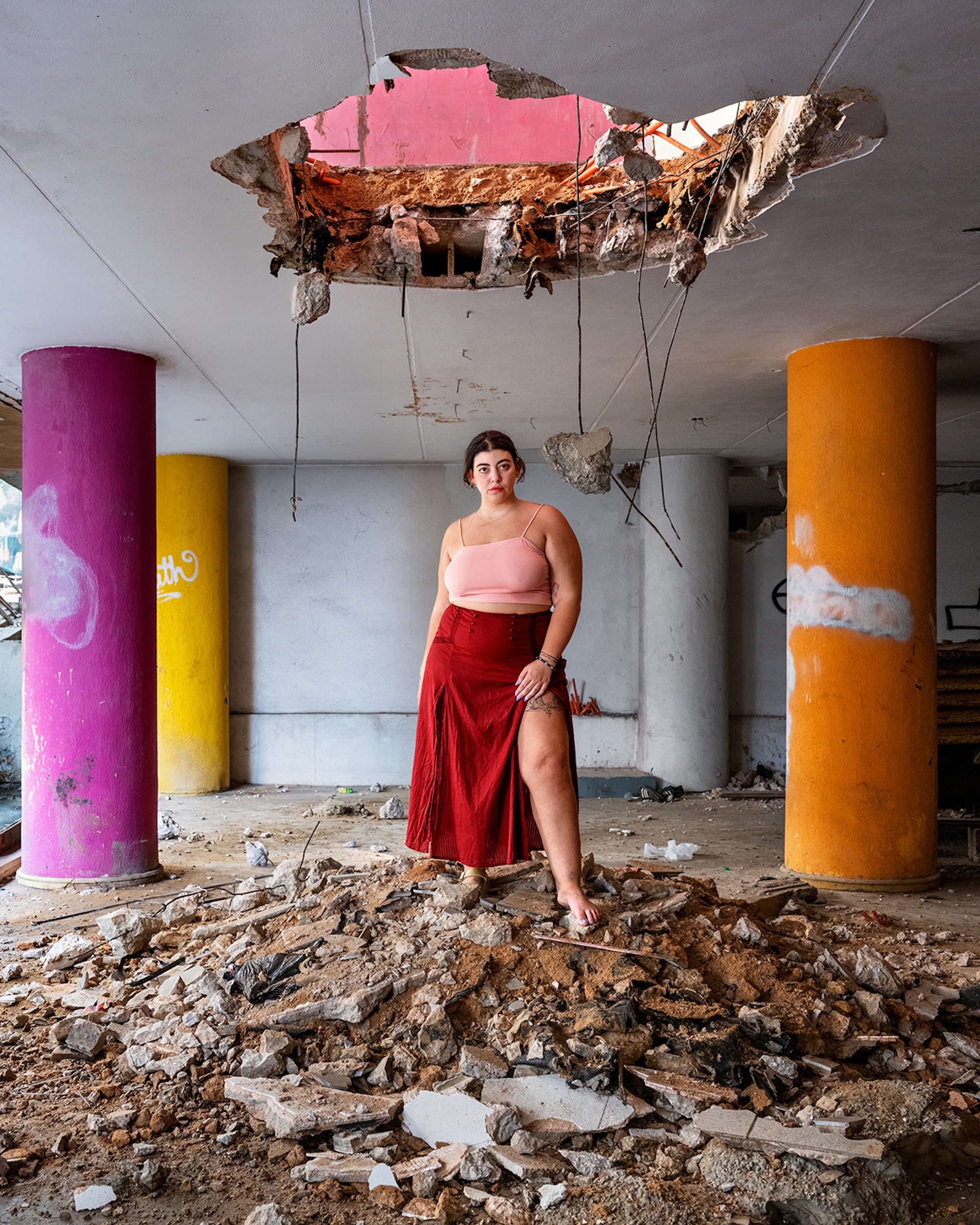
“If they’re replying, then they’re willing to be part of this, and I figure they’re interesting enough to be willing to put themselves out there.” Rania Matar
In psychology, the process of revisiting a charged experience to honour the feeling without being imprisoned by it is known as memory reconsolidation; for Matar, the project started organically after she visited Lebanon following the 2020 port explosion. Observing women working to reconstruct the city, she realised there was a wave of young people who wanted to leave the country, but unsure whether they should. “I saw myself in them,” she says.
Matar left Lebanon in 1984, when she was 20; these women were the same age now. “My friends who didn’t leave, their kids are leaving. It feels like there’s a sense of history that keeps repeating itself,” she reflects. Over multiple visits, her approach stayed the same – put a call for subjects on Instagram, speak with whoever responded, and build a collaboration from there.
“I don’t ask for pictures or anything [before meeting],” she says. “If they’re replying, then they’re willing to be part of this, and I figure they’re interesting enough to be willing to put themselves out there.”
Despite the age gap, collaboration bloomed between Matar and her subjects, and their shared memories of the same country. One woman led her to the south of Lebanon, to a gigantic bomb crater in the middle of a gorgeous landscape, and a scene built around sandbags. “I give them so much credit that they’re willing to do this,” Matar shares.
“We went to this place, and she’s standing on these sandbags where snipers hid during the war. And she was wearing, by her own choice, her mother’s engagement dress. So there were two layers of memory here in some way. I would have never known these areas if she hadn’t taken me there.”
The same woman later took her to another site and told her, ‘I’m part of the land. The land is part of me. I want to be photographed naked in it’. “I’m so honoured that they would trust me to do things like that,” says Matar.
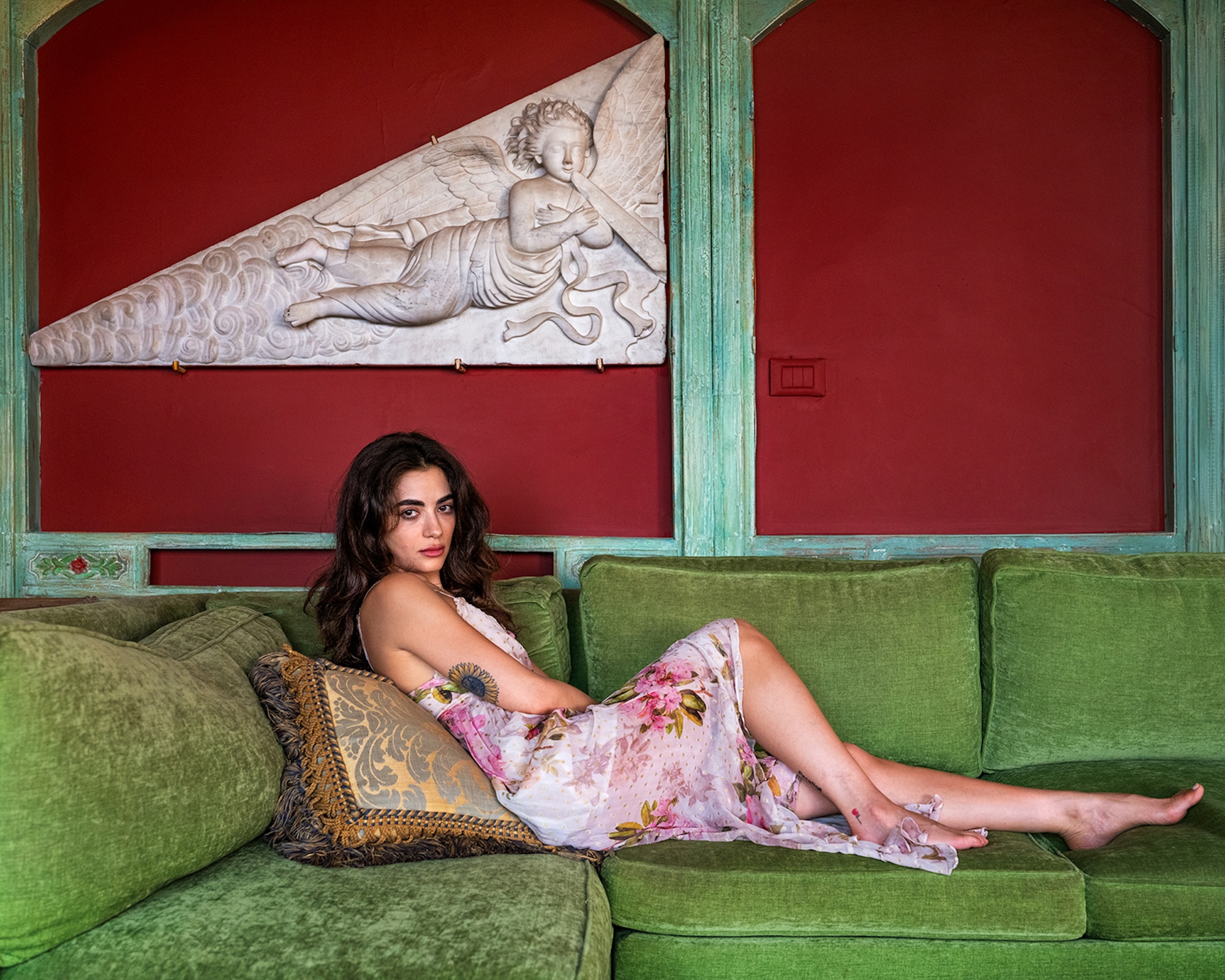
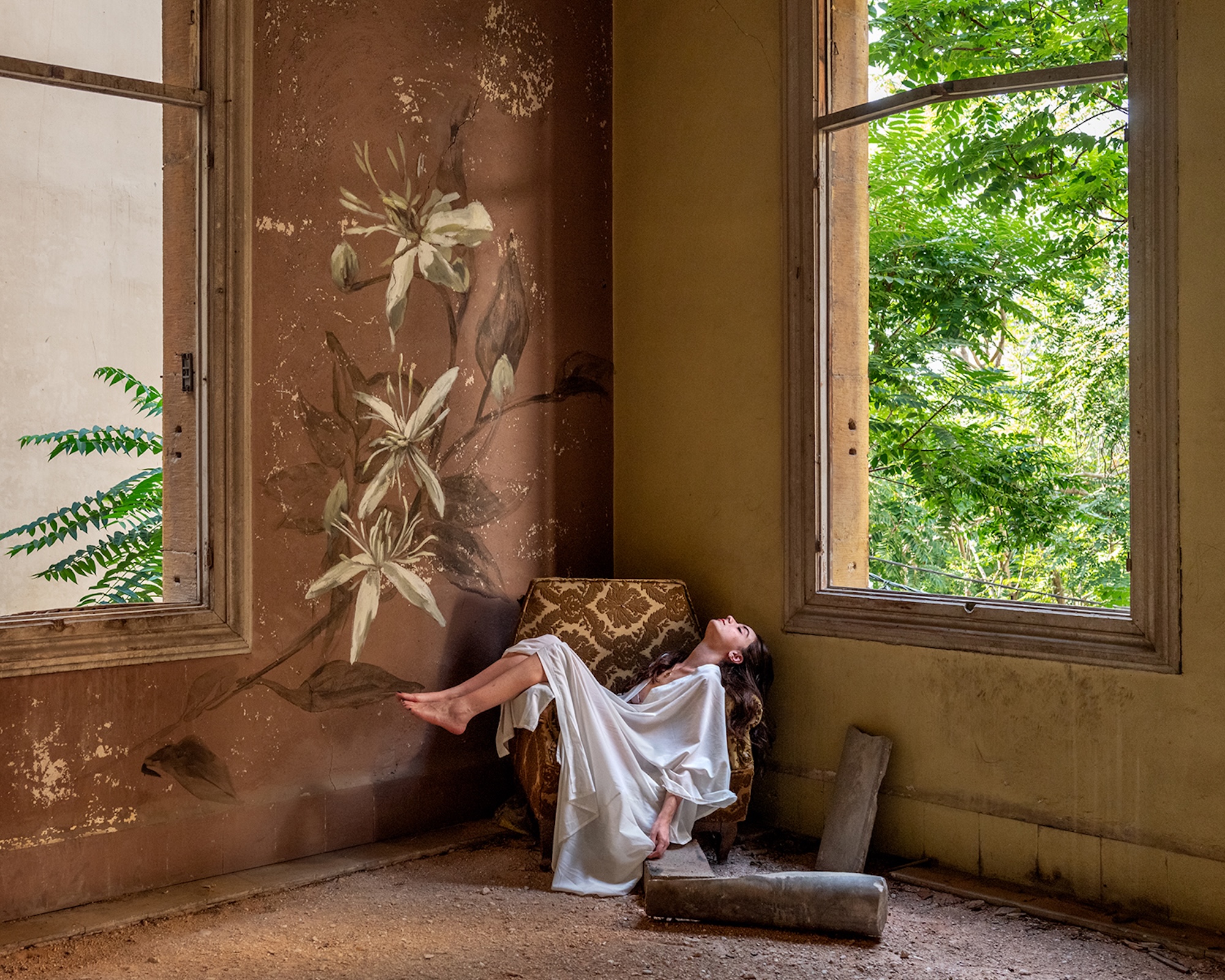
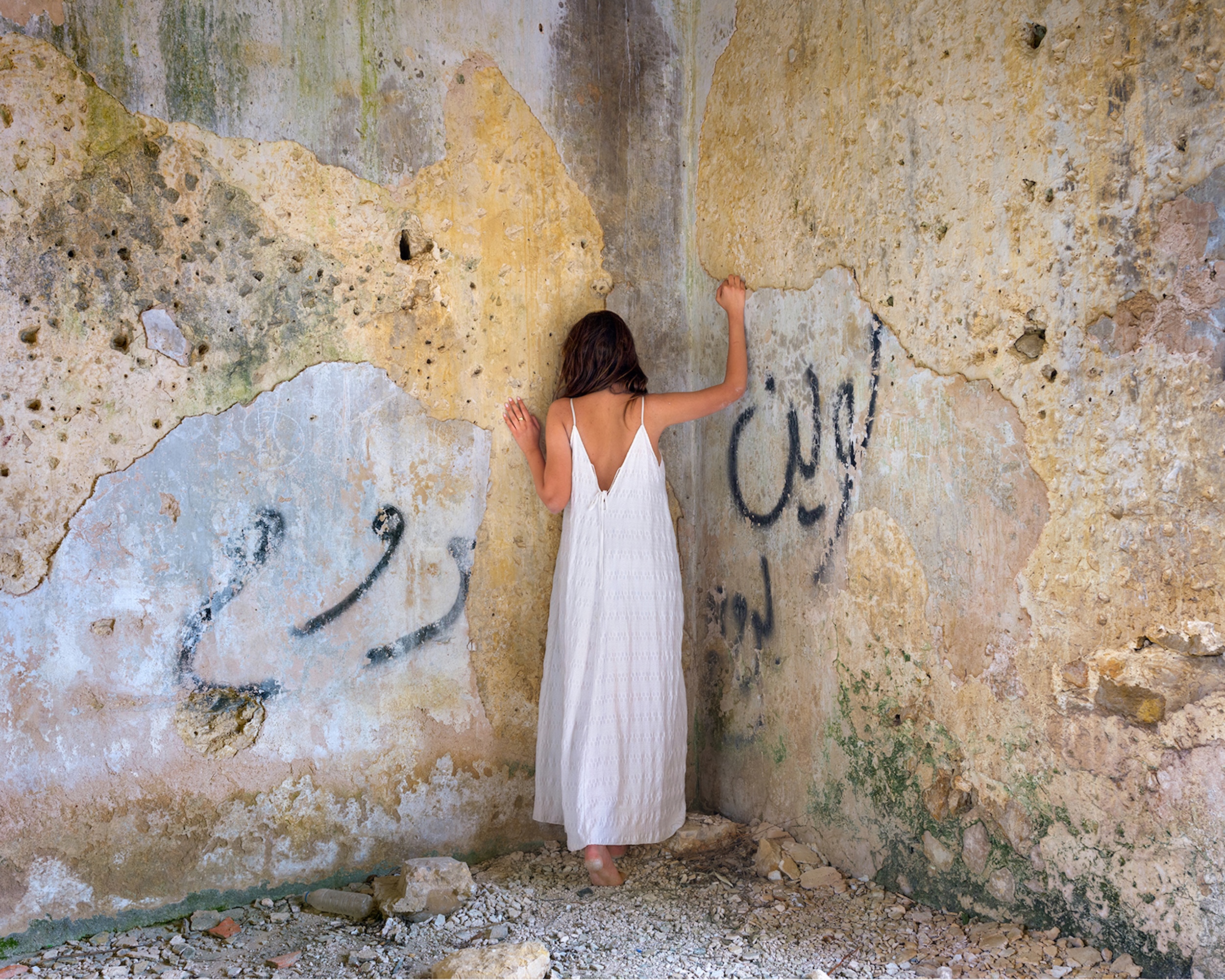
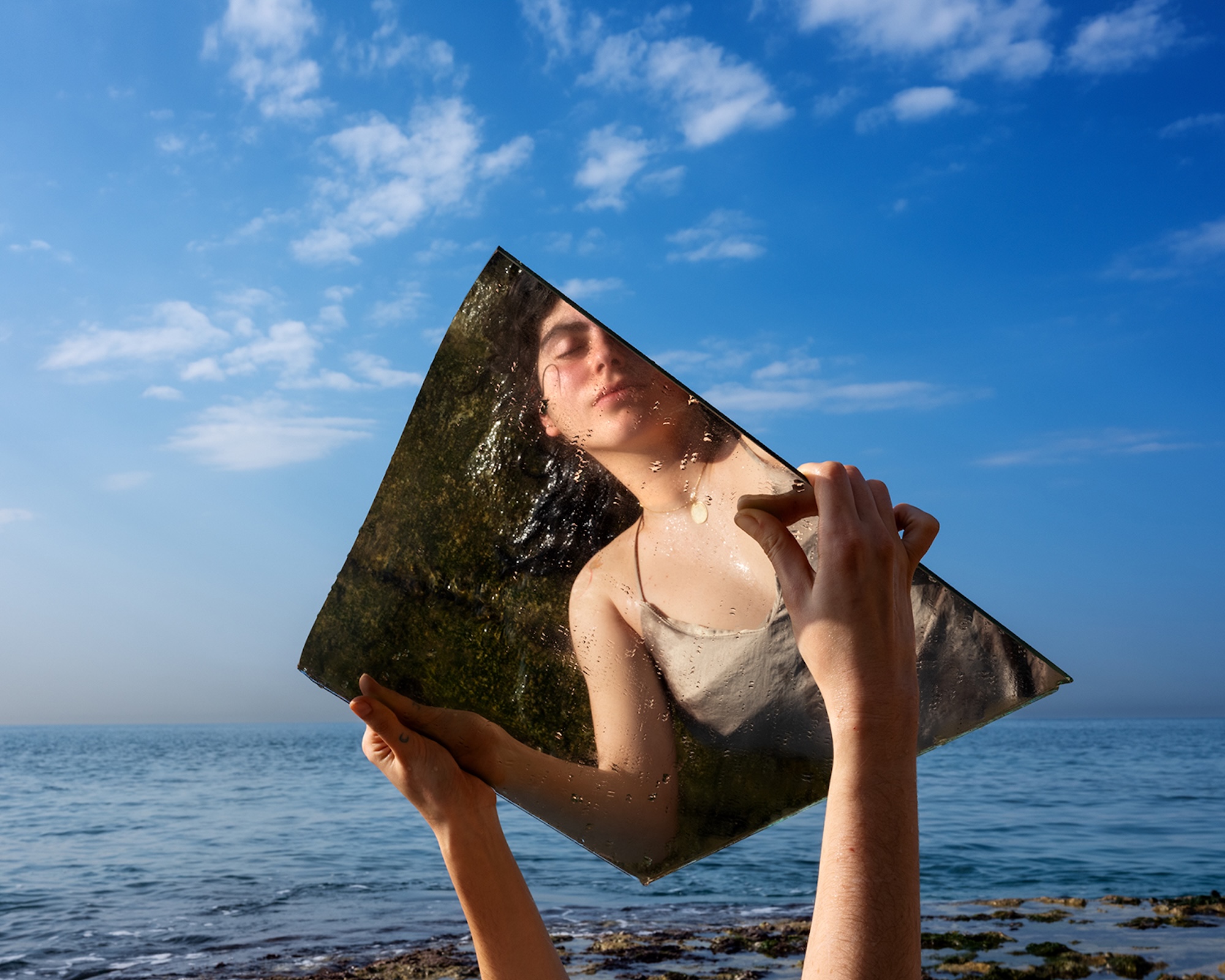
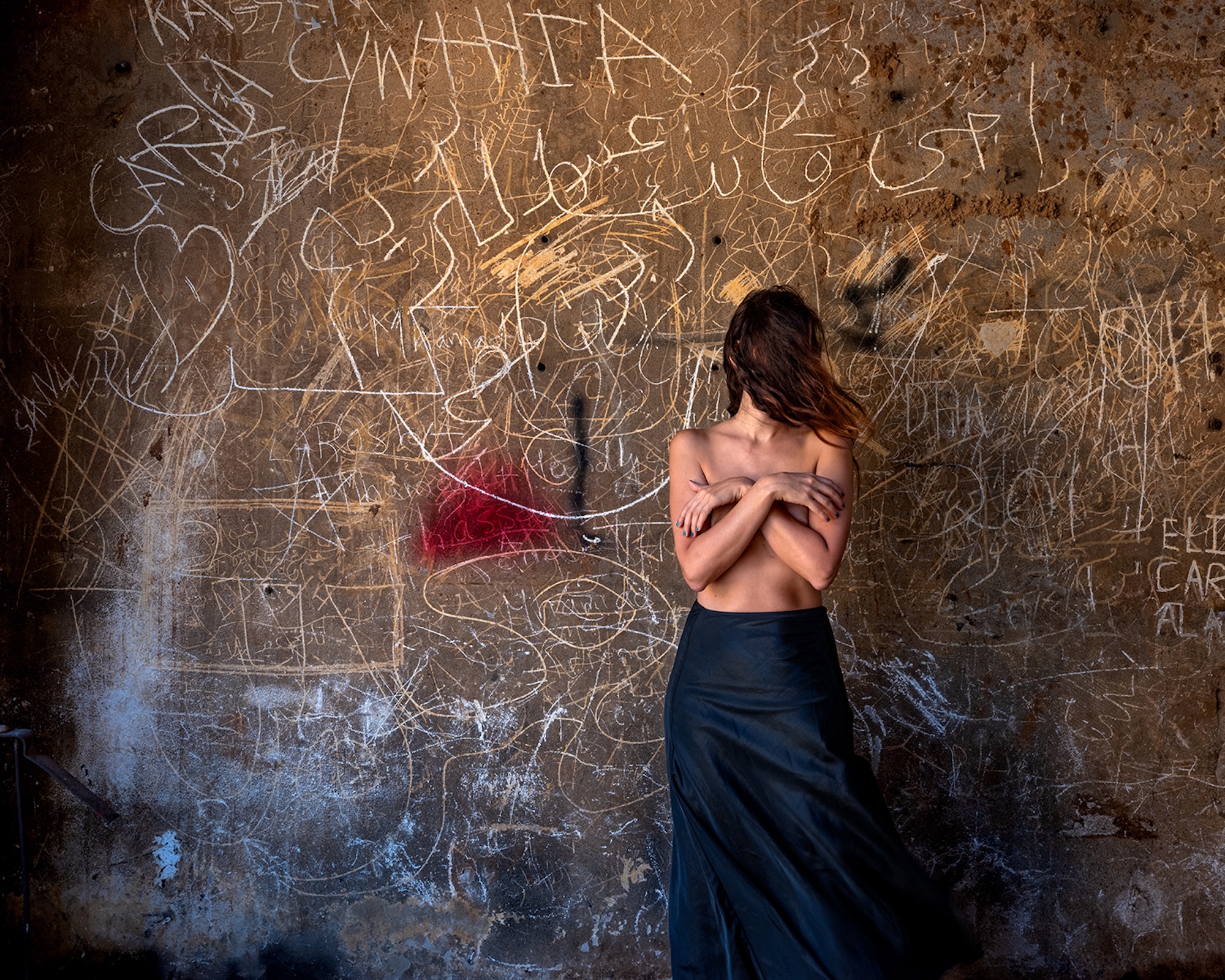
This trust is evident in the work itself, in the 135 portraits that make up Where Do I Go?, an accumulated act of women – including Matar herself – inscribing themselves back into a still-contested landscape. Shot between 2020 and 2025, the monograph was co-published by Beirut’s Kaph Books and the Sidney and Lois Eskenazi Museum of Art last November; in March, full-scale war resumed in Lebanon, with Israeli ground operations in the south. One of the deadliest airstrikes of the conflict occurred in June, just before a ceasefire renewed on 19 June, and on the same day an exhibition of the work in Boston closed. The project was on gallery walls throughout.
When I ask Matar whether work published by a Western-distributed press, and destined for those gallery walls, risks becoming the kind of consumable Middle Eastern grief Western audiences have long had an appetite for. She doesn’t hesitate in her reply. “I completely am aware of a Western audience. But that’s exactly why I don’t want to include this,” she says, referring to straightforward images of destruction. Matar shot those images, and says doing so was important to her, but she deliberately decided to keep them out of the book.
Such images tell the one truth Western audiences already know how to receive, she reflects – without being altered by it. She once walked out of an exhibition of Arab photographers, she says, because it was “all about the hijab and wars, catered to an American audience the way they want to see it”.
What might seem like the most predictable question an interviewer can ask a photographer is crucial in this case – what do you hope someone will feel, looking at this in 30 years? “They might just look at it and say, ‘Here we are again’,” Matar laughs, burdened by the dark humour, by the idea that hope might be a luxury she can’t afford. “I’m hoping people would look at it like, ‘Oh my God, look how far we’ve come’.”
Matar’s book has now been out for months, and will be republished in time for this year’s Paris Photo in November. The war continues to hang like a pendulum, casting its arc over everything beneath it. In the shadow, the question she found on a crumbling wall remains urgent: Where do I go?
https://raniamatar.com Where Do I Go? by Rania Mata is co-published by KAPH Books and the Sidney and Lois Eskenazi Museum of Art, priced $55 www.kaphbooks.com