
From Moon City @ Mimi Mollica
The photographer’s new photo book Moon City is a hallucinatory vision of the dark heart of London
In 2022 hit game Candy Crush celebrated its tenth anniversary with a drone show over New York City; featuring 500 drones flown in formation into images and the Candy Crush logo, the 10-minute display transformed the sky over Manhattan into “the largest screen on the planet”, according to chief marketing officer, Fernanda Romano.
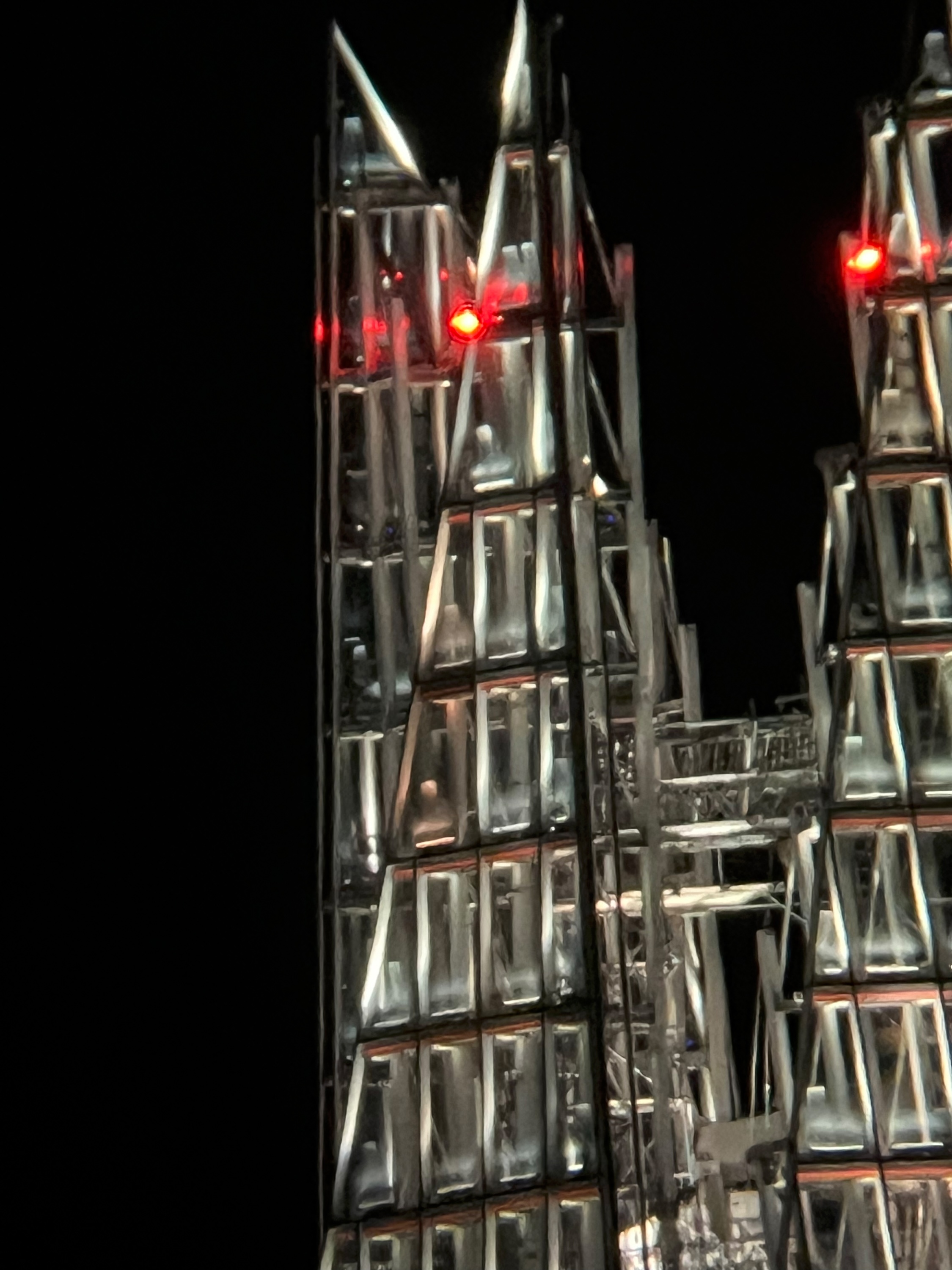
The company faced backlash over the stunt, with local Democratic state senator Brad Hoylman calling it “outrageous” to “spoil” the NYC skyline “for private profit”. But Mimi Mollica’s new book Moon City suggests that the profit motive already shapes both our cities and our conception of space, mostly without us noticing. Shot with a telescope and a mobile phone, Mollica’s images pick out a particular view of London, focusing on his local area and the nearby financial centre to depict office blocks, aircraft, people, reflections rippling on a canal. He shows an environment mostly devoid of nature, in which stark geometries divide and repeat; images of the moon also recur, an idiosyncratic, inscrutable mass suggesting dreams, tides, and the pull of a different way of seeing.
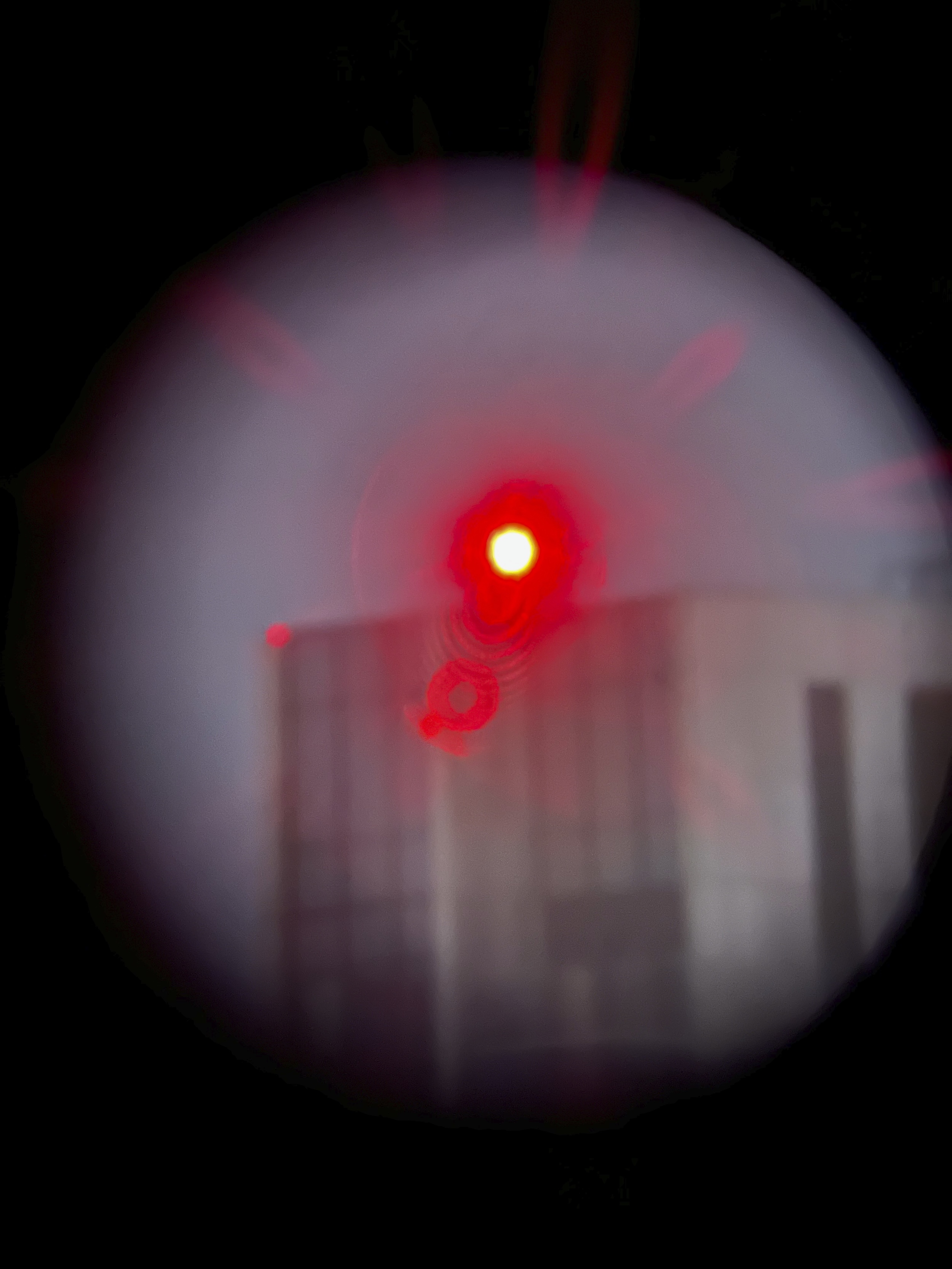
Mollica is a well-established photographer, best-known for his documentary work on the Sicilian mafia, but these images are lo-fi and glitchy, revelling in lens flares and aberrations. They draw attention to the act of looking as much as what is shown, and Mollica says this approach was essential. “I wanted to construct a poetic critique of contemporary capitalist society,” he explains. “My vision was to go to the very essence of the situation we are now living in – squashed in a system that is not fit for purpose for 99% of people, alienated and isolated yet at the same time feeding that same system. So I worked with what I had.
“Actually it was really difficult to photograph while holding this thing [the telescope] at the right angle – it would have been much more straightforward to attach the camera to a zoom and shoot clean, beautiful, scientific images. But I got more and more fascinated by the imperfections. The soft focus, the lens aberrations, the reflections, they make a kind of film noir.”

“I wanted to construct a poetic critique of contemporary capitalist society”
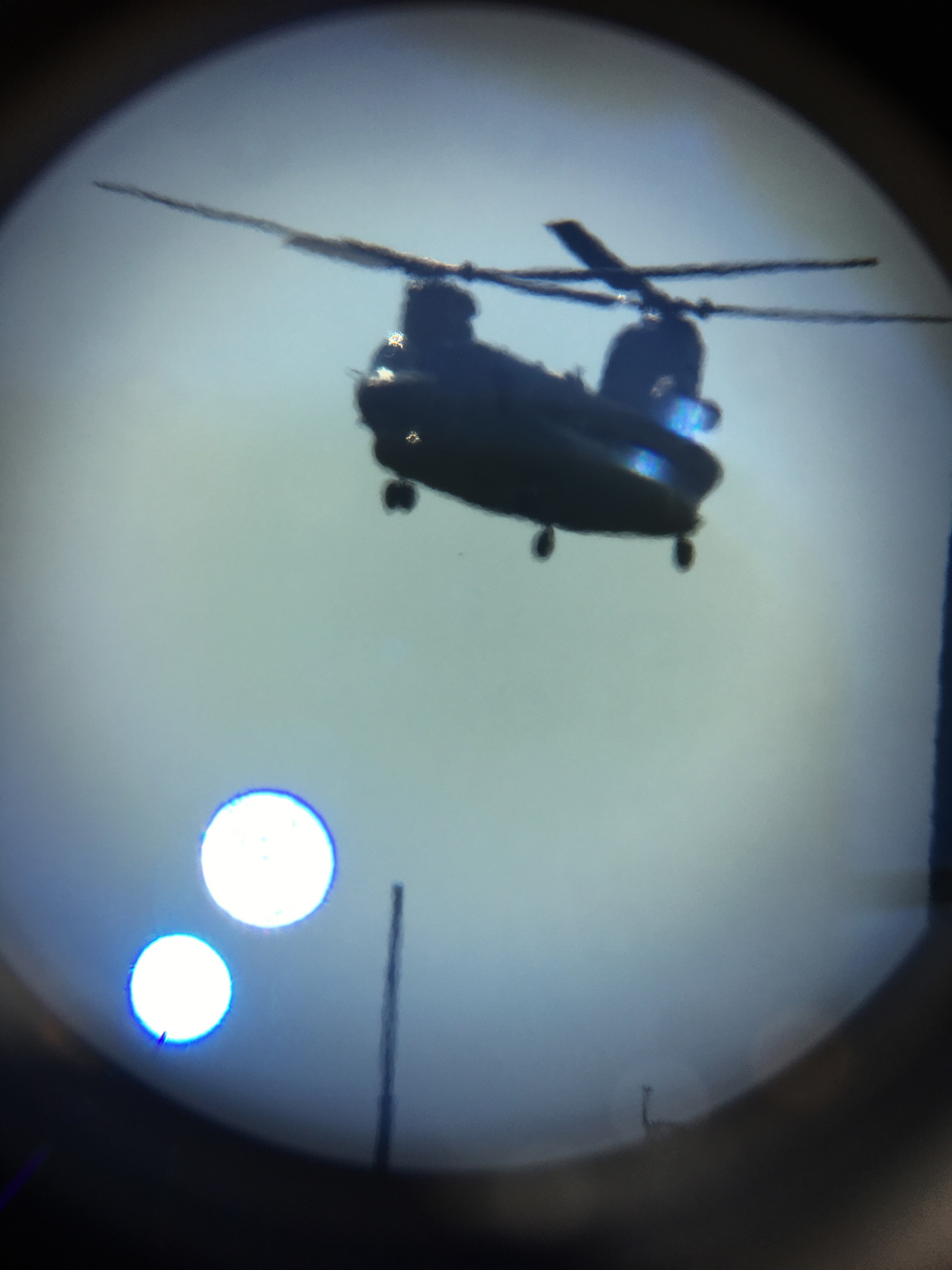
As Mollica’s comment suggests, Moon City feels edgy and even ominous, the pixellated images suggesting surveillance, and the views of the skies drones and the destruction of Ukraine and Iran. Shots of the structures that underpin office blocks – design elements at the top of The Shard, or scaffolding in construction projects – recall 9/11 and the Twin Towers’ mangled remains; a photograph of a chinook helicopter adds to the sense of foreboding, as does a dramatic shot of a plane and jet trail, surging across the sky or perhaps falling out of it. It’s a fever-dream vision of London made out of the everyday, with elements that we all often see, whether we consciously register them or not.
Mollica started shooting the project during lockdown and, though he’s now published the book, is still compulsively making images. And the unconscious and the intuitive are key to this work, implying knowledge that is somehow outside social control, that escapes the neatly packaged and quantified, the literal and metaphorical building blocks of the 21st century. “In the West we have invented these sharp right angles to articulate our life,” Mollica comments. “Everything is very rational. There is no margin for error, everything must have the right place. We are expected to make a coffee, go to work, produce money.
“We go home, order pizza delivered by someone who has to battle all day to survive while we are scratching our balls in front of yet another Netflix series. But these sharp angles and hard surfaces are a consequence of how we have organised our society. Everything is ephemeral, yet it is projected into our eyes with a degree of violence.”
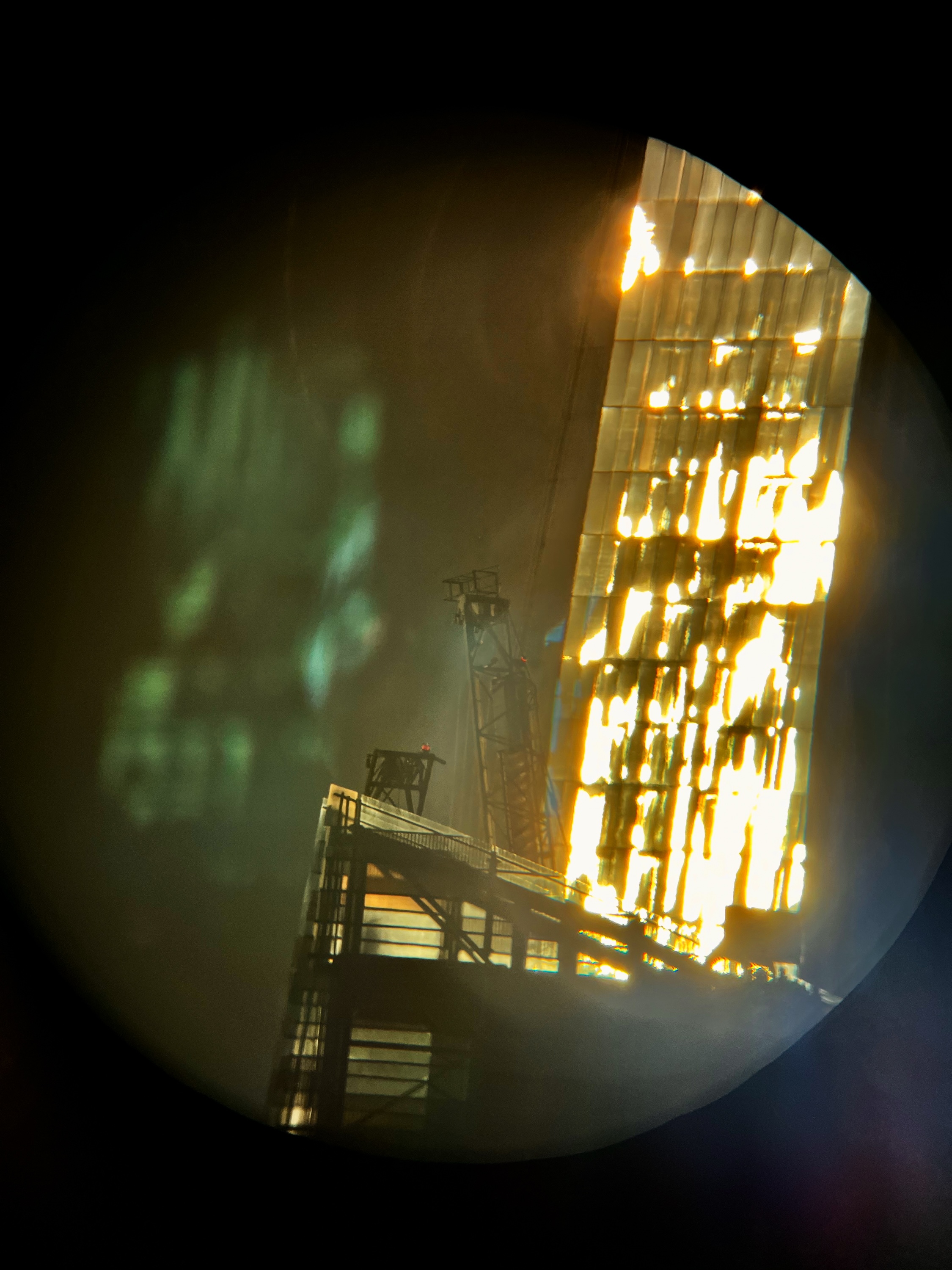

Architecture expresses the zeitgeist, Mollica adds, and skyscrapers are designed to convey power, solidity, and permanence. Their glassy exteriors are also quite literally flashy, reflecting lights and the sun; they are alienating too, sealing off scenes into views which can be surveyed but not touched, tasted, smelt, or heard. Of course this description can also fit photographs, and Moon City also evokes the medium, one shot showing a strip of office windows redolent of a strip of negatives. Mollica likes the comparison but says it was an accident – or maybe unconscious – and is unwilling to over-explain. He’d rather leave audience space to interpret, he says, room to draw their own conclusions.
His layout is deliberately open, each spread oscillating between the city and the moon; Moon City includes essays by Iain Sinclair and Brad Feuerhelm which offer subjective, allusive riffs rather than straight information. Mollica enjoys the title Sinclair has given his text, Collision Course, and says it describes the whole book. “There is this duality, a complex relationship I tried to lay out,” he says. “There is dialogue, I try to maintain freedom for the viewer.” His interpretation is bound up in his sense of the intuitive, pre-rational understanding of the city, in his idea that we can all see what’s going on, if we take the time to really look. “I’m not an economist, I don’t have a degree in global economic or geopolitical whatever, but me as a normal human being, I have my sensitivity, my degree of knowledge,” he says.
In fact for him photography can be a way to focus in, and to gain insight by doing so; photography is intimately bound up with colonialism and extraction, he adds, but it can also be something else. He points to artists such as Anders Petersen, whose images are subjective and particular, showing moments – and viewpoints – that can’t be repeated or compared. “My hope is that photography can be a means to engage,” says Mollica. “I’m not an intellectual so I wouldn’t know if this is relevant, pertinent, or correct. But this is what I feel.”