

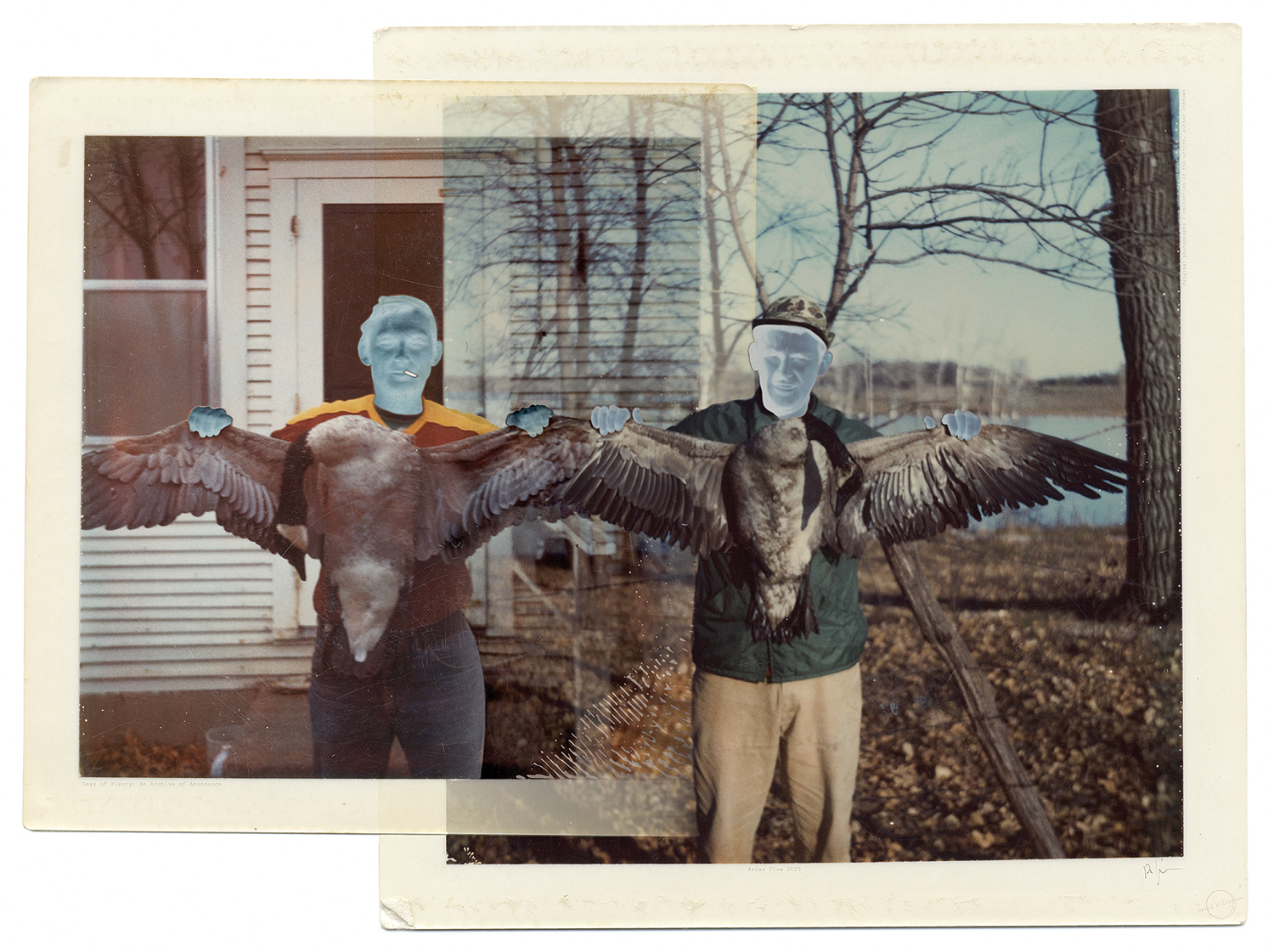
All images from the series Days of Plenty: An Archive of Abundance © David Ellingsen
Canadian artist David Ellingsen confronts a century of environmental extraction through images originally made to celebrate it, with a project rooted in his own family history
In 1956, the last bear ever seen on Reef Point Farm on Cortes Island, British Columbia was shot and killed by David Ellingsen’s great-grandfather. Ellingsen discovered this part of his family history while photographing the last old-growth stumps on his family’s land; tracing back the felling of these trees, he discovered that they too had been destroyed by his great-grandfather. “So photographing and making images in this way is massively personal for me,” he explains.
This tension runs through his show Days of Plenty: An Archive of Abundance, on show at the Cowichan Public Art Gallery in Duncan, Vancouver Island, before travelling to the 2026 Backlight Photo Festival in Tampere, Finland. The series uses archival photographs sourced from institutions, online auctions and charity shops to construct collaged works confronting the history of resource extraction and trophy hunting. And printed in pigment ink on cotton rag, hand-cut and finished with gold edging, the pieces are as materially considered as they are environmentally urgent.
Ellingsen was brought up on Cortes Island, a community of around 1000 people on the edge of the wilderness; his family started logging there back in 1887, but Ellingsen also grew up alongside figures such as Rex Weyler, a photographer and early Greenpeace collaborator. His complex resulting relationship with the land runs through his artistic practice, and in particular in this series. All of the imagery in it was made by someone else, mostly between the mid-19th century and 1970, the year he set as his terminus.
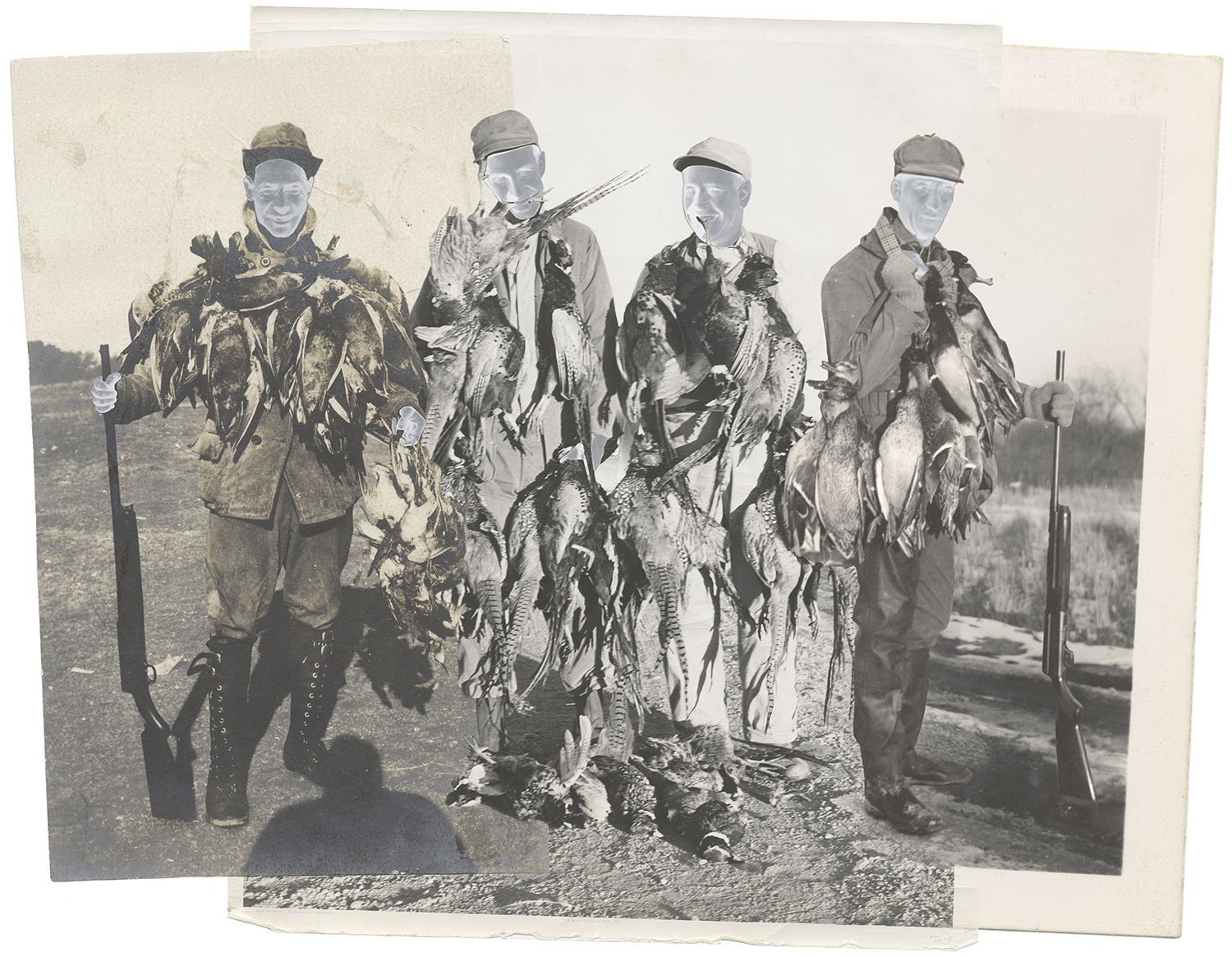
“That cult of the individual, the idea that our personal desires should take precedence over the communal good, was there in 1890 and it’s definitely still there now” – David Ellingsen
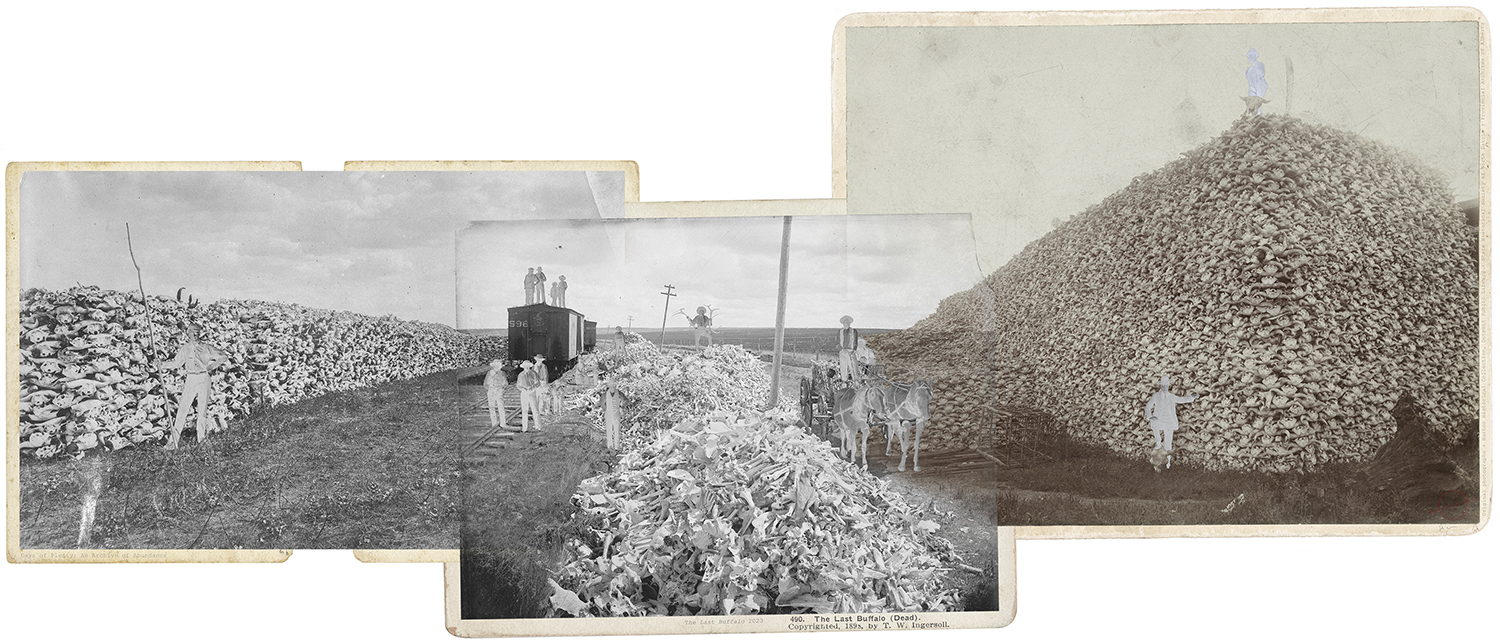
“Every environmental study I’ve ever read begins with the phrase ‘Since 1970’, that’s when scientific baselines started being established,” he explains. “But by 1970, the passenger pigeon was already gone. Five billion animals in a single species, eradicated. The bison reduced from 35 million to 300. The world was already so diminished. This project tries to reach back before that baseline and show what has been lost.”
The choice of archival imagery is both conceptual and strategic. Ellingsen is alert to what he calls intergenerational amnesia, the way we accept the world we are born into as normal without accounting for what came before; by layering photographs from different eras into single collages, he compresses time to make incremental loss suddenly visible. His approach connects to a broader movement in contemporary photography around capturing counterhistory, reframing dominant narratives through the reuse and recontextualisation of archival images. But Ellingsen’s focus on the more-than-human provides it with a distinct ecological edge.
The figures in the photographs – hunters posing with their kills, men surrounded by hundreds of slaughtered animals – are depicted as negatives, rendering them almost ghostly. “The human eye is anthropocentric, we go straight to the person in the frame,” Ellingsen says. “I needed a way to obscure identity without removing the human figure entirely.” He argues that the trophy photograph is a historical precursor to the selfie, each image essentially recording an individual saying, ‘Look at me, look at what I did’. “That cult of the individual, the idea that our personal desires should take precedence over the communal good, was there in 1890 and it’s definitely still there now,” he says.
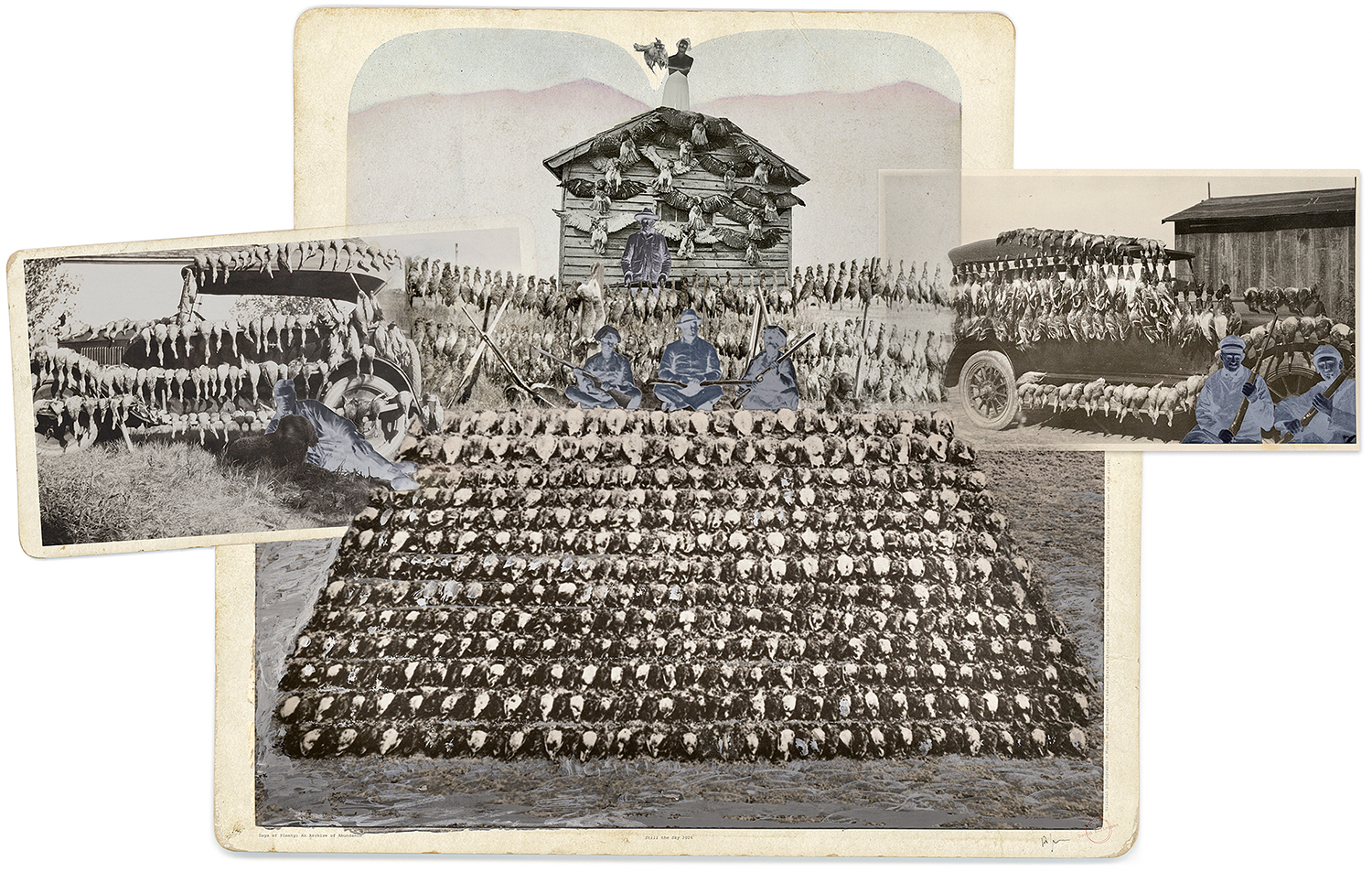
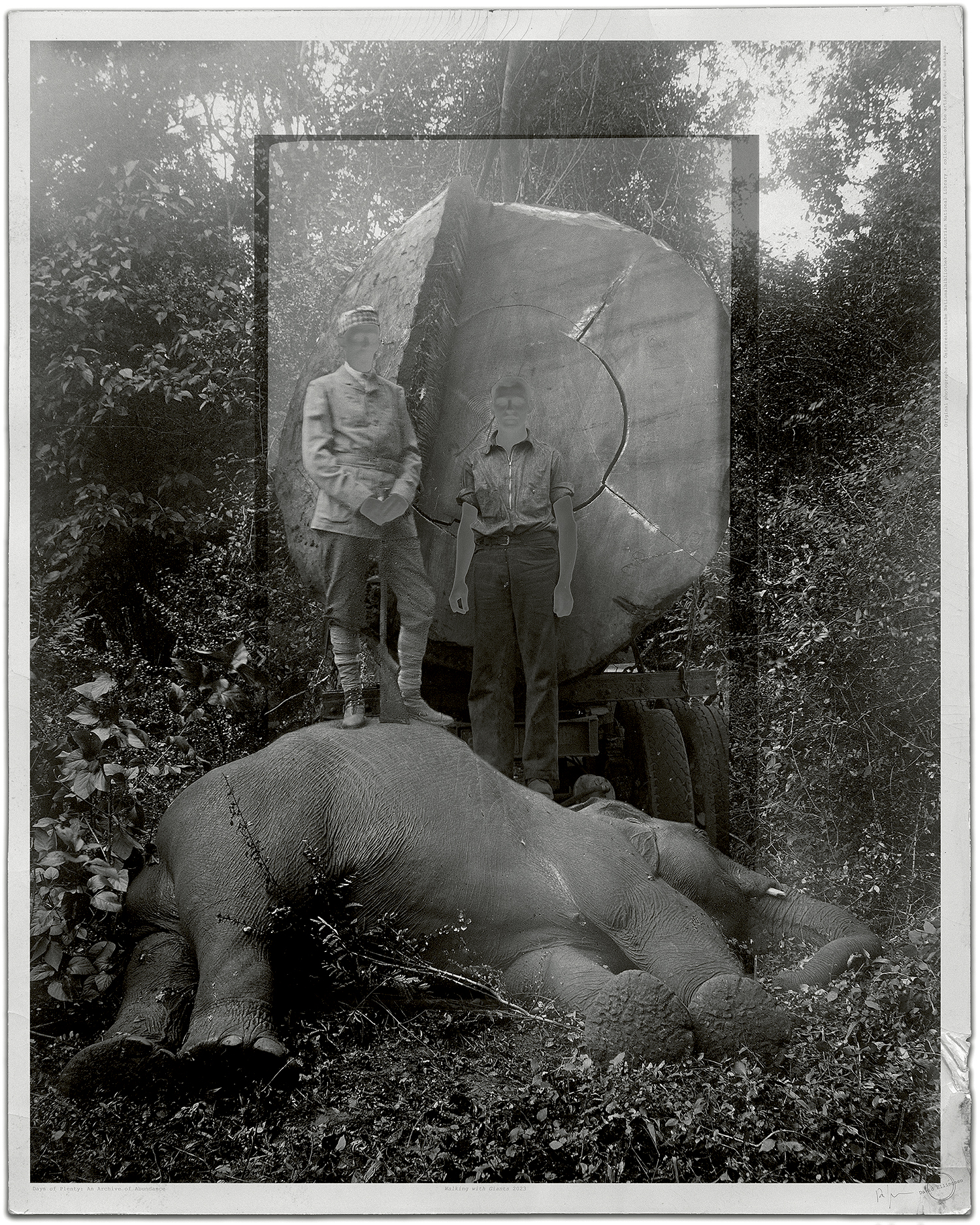
The materiality of the finished works reinforces this idea, Ellingsen using gold edging in reference to cabinet cards and cartes-de-visite – the formats in which trophy photographs were often celebrated and distributed. By reviving that ceremonial quality, Ellingsen implicates the image itself, questioning photography’s role in making extraction legible, shareable and socially sanctioned. At the same time, hand-cutting and physically constructing each piece is, in his own words, “a small act of defiance against AI and the pursuit of perfection in imaging”. It is a return to the object, and an opportunity to think that object through, at a time when images are being generated and discarded at unprecedented speed.
David Ellingsen was the BJP Award winner at Format Festival’s 2026 FORMAT Portfolio Review.
Days of Plenty: An Archive of Abundance opened on 12 June at the Cowichan Public Art Gallery, Duncan, British Columbia, and will feature at the 2026 Backlight Photo Festival, Tampere, Finland, from 01 September to 12 October 2026.