

All images from the body of work The Queering of Photography,
2015–2025 © Åsa Johannesson
Åsa Johannesson unravels the medium’s tropes offering an expansive vision of possibility
The late theorist José Esteban Muñoz opens Cruising Utopia: The Then and There of Queer Futurity with a provocation; “Queerness is not yet here. Queerness is an ideality. Put another way, we are not yet queer.” Muñoz asserts that due to the confines of the current social and political structure, queerness is not possible in the present, and we must strive for a radical new future – an expansive vision of possibility.
Muñoz’s ethos is alive and felt throughout Åsa Johannesson’s work. Over the past two decades, the artist and writer has built a world in which she can explore and experiment with the possibilities of a queer visual vocabulary. In both her visual and theoretical work – she published her first research monograph, Queer Methodology for Photography, with Routledge in 2024 – she reimagines the often-conservative tropes of making and writing about photographs in sharp and revelatory ways.
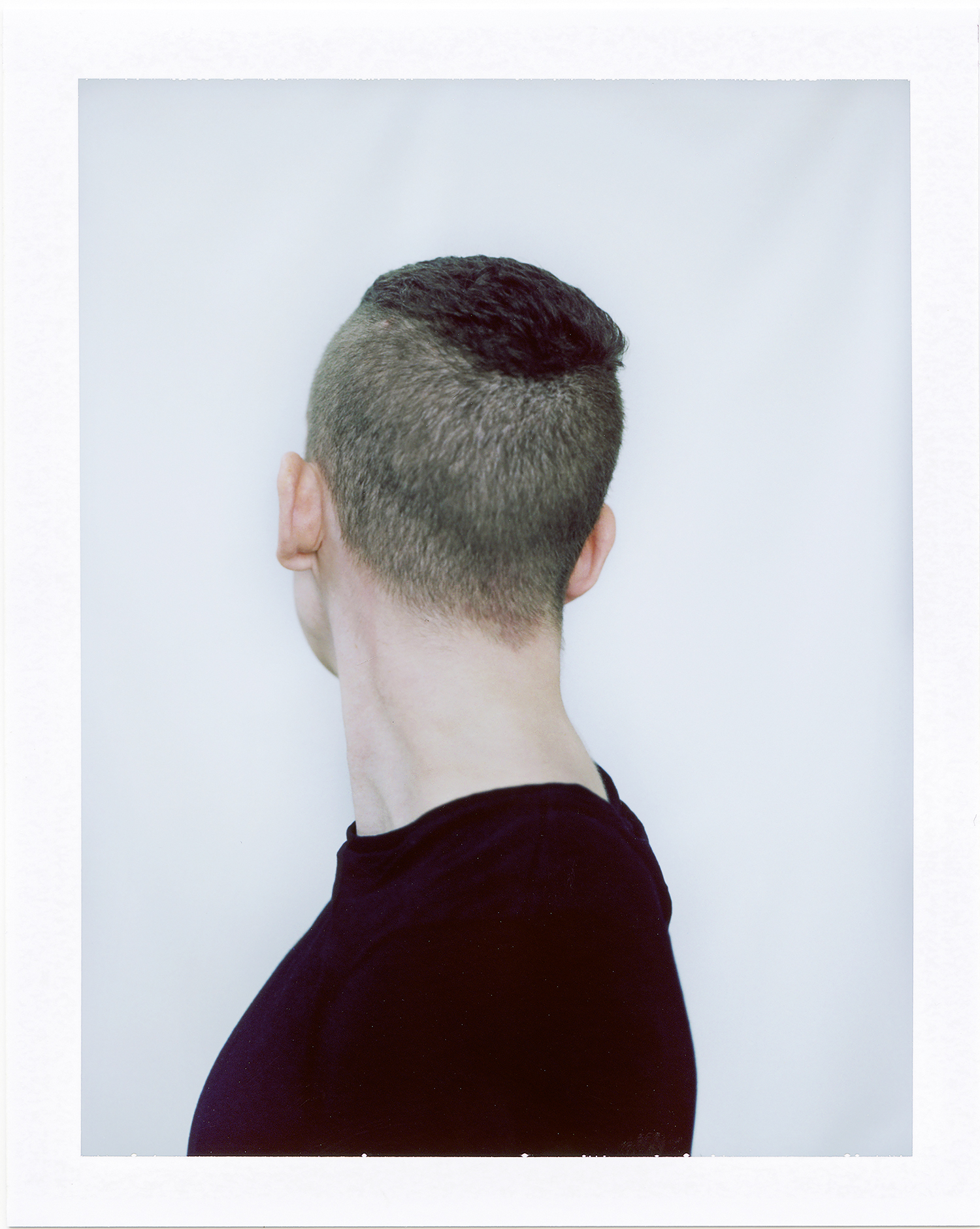
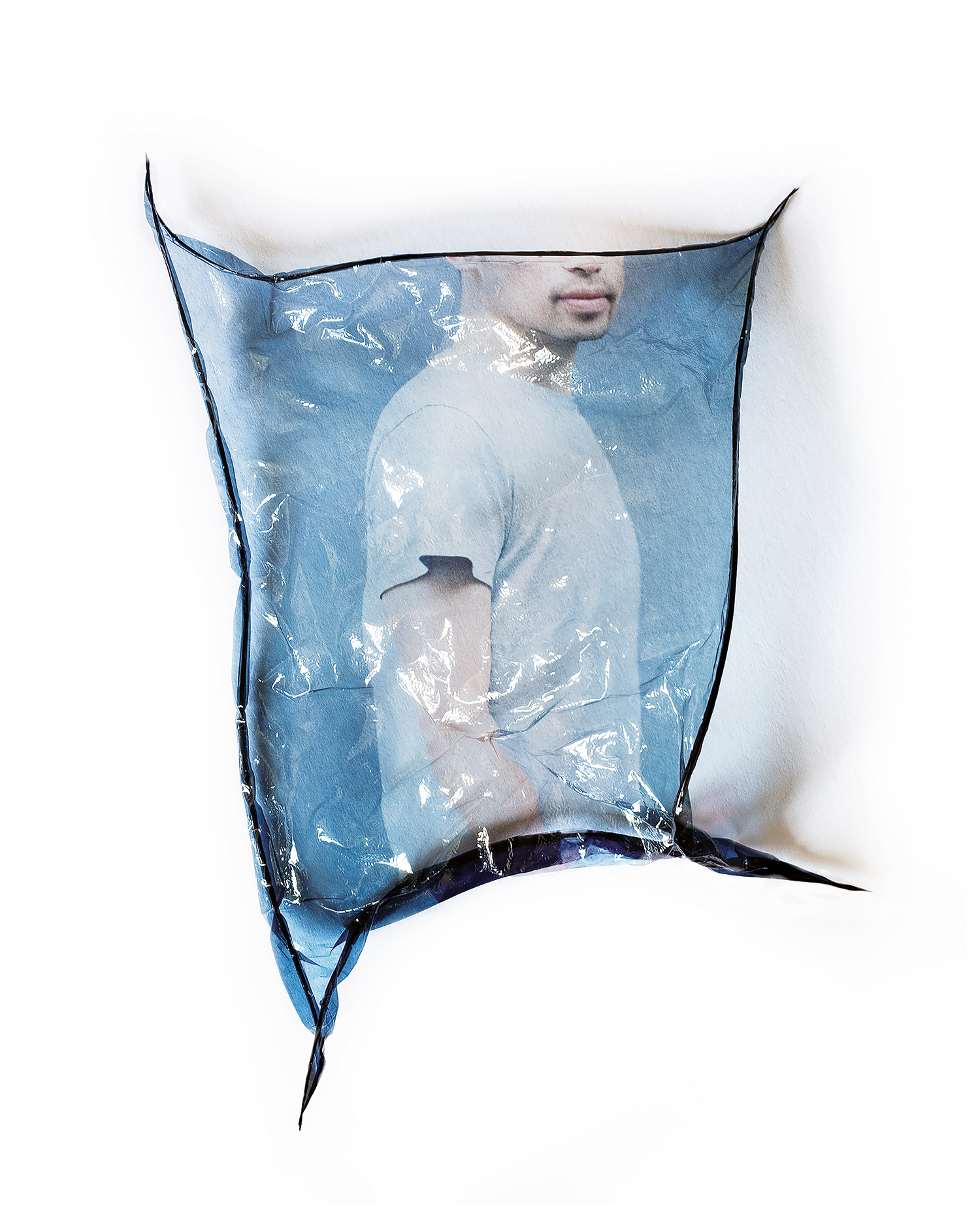
When I connect with Johannesson, she is preparing for her upcoming solo show at Stills in Edinburgh, where she will present her ambitious project, The Queering of Photography (2015–2025), in its entirety for the first time. Composed of five interconnected bodies of work spanning performative black-and-white studio portraits, studies of Roman statues, and Polaroid emulsion sculptures, the show illuminates Johannesson’s commitment to tradition, experimentation and joy, revealing the making of photographs as a site of both intimacy and transformation. In the tension between rigour and play she cultivates a distinctly queer sensibility within the photographic process – one that challenges and reimagines how identity and desire are represented.
“I’m not interested in creating a manual; my practice has always been more exploratory, and in that way, I’ve always felt like a bit of an outsider”
Gem Fletcher: Historically, the work of queer artists is flattened into identity politics, overlooking nuanced gestures and aesthetics put forward in the work. In your book Queer Methodology for Photography you celebrate these vocabularies while providing a more expansive way to think about and discuss this work. Could you talk about the motivations behind it?
Åsa Johannesson: Queer vocabularies, gestures and aesthetics have almost exclusively been historicised through two perspectives – the traditional documentary portrait or the staged portrait. For example, Mark Morrisroe’s work has typically been written about through the lens of ’performing for the camera’, but I would say that this perspective overlooks the queer gestures and aesthetics present in his experimental use of photographic technique and materiality. Another example is Tee A Corinne’s solarised photographs and analogue montages. She was overlooked until very recently, and I believe this is because writers, curators and critics did not know where to place her experimental work within those two categories. Queer photography has a history of being multifaceted, but the recognition of this photographic legacy has been conditioned by a binary measure.
GF: It’s about the photograph’s ability to voice queer concerns beyond its role as representation, and you illustrate in the book how that manifests in numerous ways, from materiality to the specificity of the production and how that underpins the way an image operates.
ÅJ: Exactly. Overlooked gestures could include collaborative approaches to image-making, such as the work of Claude Cahun and her partner Marcel Moore. Acknowledgement of the contributors or collaborators who together generate a photographic image could be accessed using a ’New Materialist’ approach, wherein meaning or results are unpacked, and the many agencies that underpin it are credited. Agencies that impact meaning could, of course, also be non-human, like the camera, the film, or the digital post-production software. Karen Barad’s writings on ’agential realism’ and ’intra-action’ are helpful here. I’m currently working on a collaborative project with my sitters – a prose poetry project based on their experiences as sitters for my work, The Queering of Photography. I’m interested in their role in the making of my photographs – when do we ever hear the sitter’s voice?
GF: Was the book’s thesis born from your sense of feeling trapped by the expectations or conventions projected onto your photography?
ÅJ: Yes, dating back to my BA tutors, there has been an expectation that, as a queer artist, I educate the masses about my culture through a documentary lens. I’m not interested in creating a manual; my practice has always been more exploratory, and in that way, I’ve always felt like a bit of an outsider. I’m interested in trying out different voices when making photographs, as a writer might experiment with different tones. It was about asking the question, can a queer photographic vocabulary really look and feel differently from what we are used to?
GF: I’ve always loved this sentiment by Elle Pérez about how they had to “leave existing queer language to be able to make a new visual language”. This desire to push beyond existing semiotics in search of an alternative. Something I’m constantly grappling with is the painful reality of how conservative photography is, from how work is made to its presentation and discourse. Even in booming areas of the industry, like the photobook, we see very little experimentation with form.
ÅJ: I absolutely agree. I’ve always loved how Jesse Glazzard subverts the book form, breaking down the division between low and high culture by presenting work in chaotic, beautiful zines, resisting, as you say, what’s accepted or expected of a photobook.
GF: One of the most exciting chapters in Queer Methodology for Photography is Measure: Paradigms of Exactitude, which puts forward a thesis connecting the measures of life and photography, through aperture and shutter speed. Can you talk about this a little?
ÅJ: I’m interested in the relationship between photographic logic and life logic, and how queerness comes into both of those worlds. In life, we have been conditioned by a set of heteronormative linear expectations – you meet someone, you get a job, you have children, etc. As queer people, we don’t have the pressures, and I’m interested in how we could apply that subversion of exactitude to photography, reimagining how it’s supposed to be produced. What happens when you break from the medium’s conventions? What happens when an image is not correct? I find that reality exciting.
GF: We see so many of these ideas play out in your work The Queering of Photography, which comprises five individual projects that are simultaneously distinct yet in dialogue with one another. Can you outline a couple of the works?
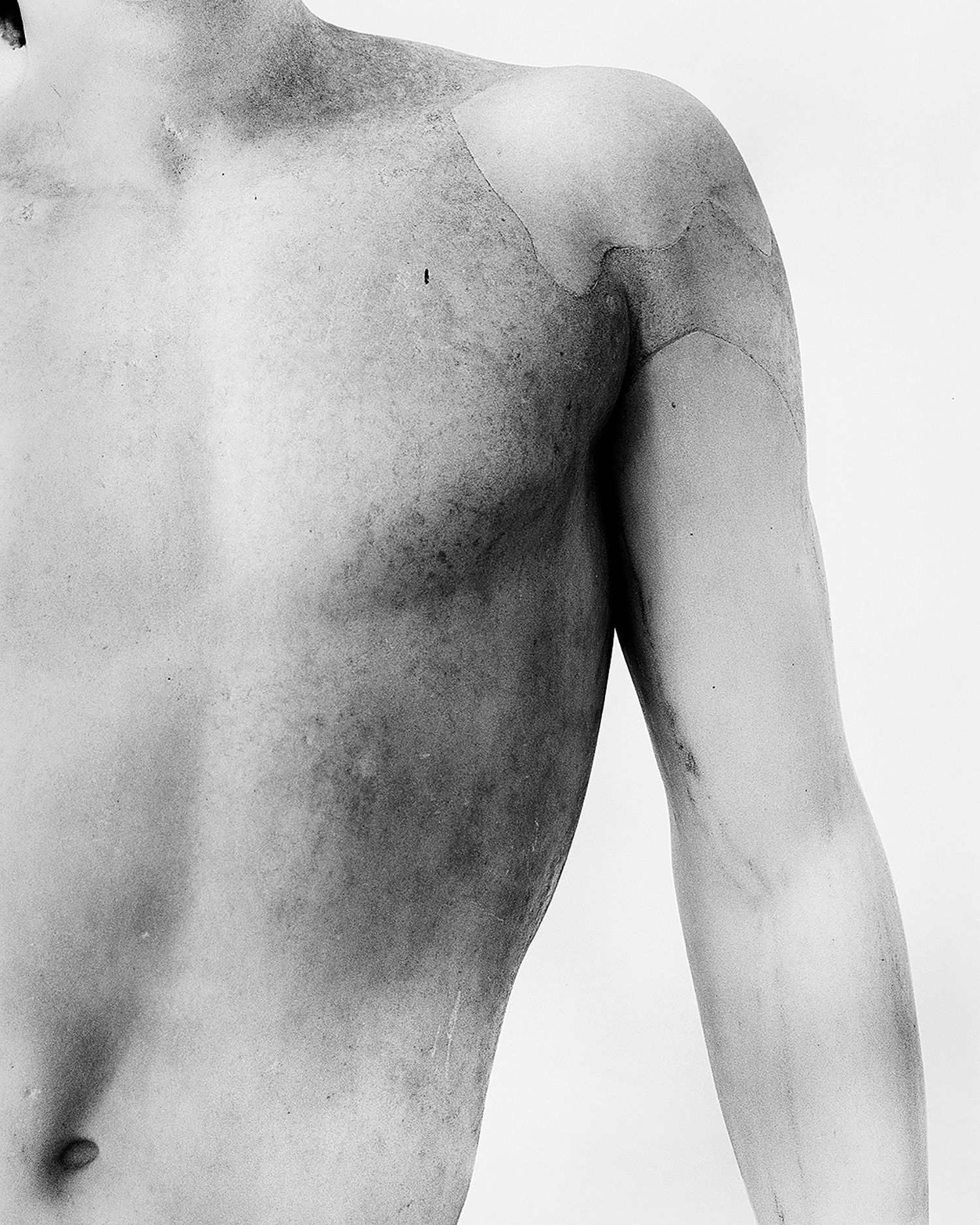
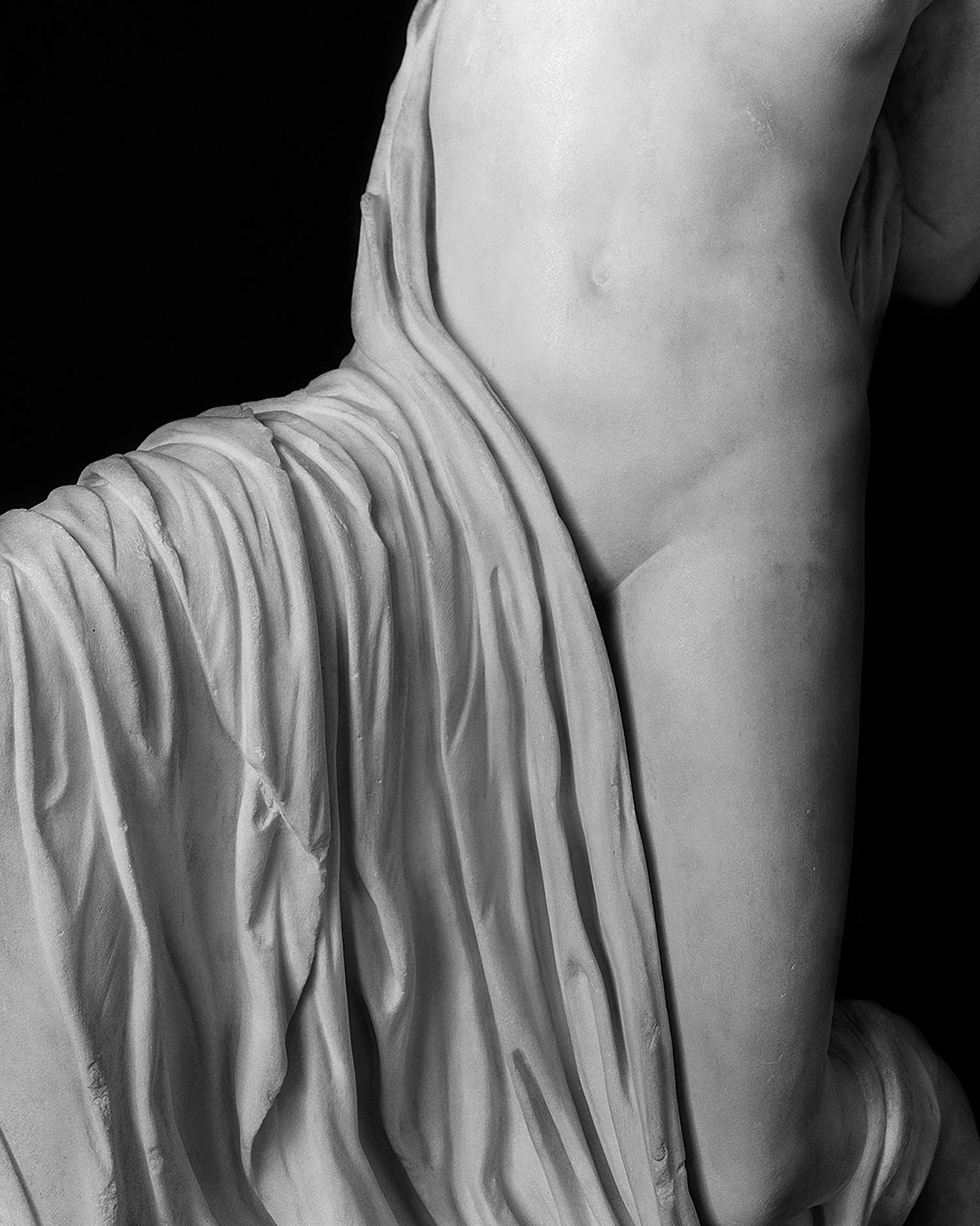
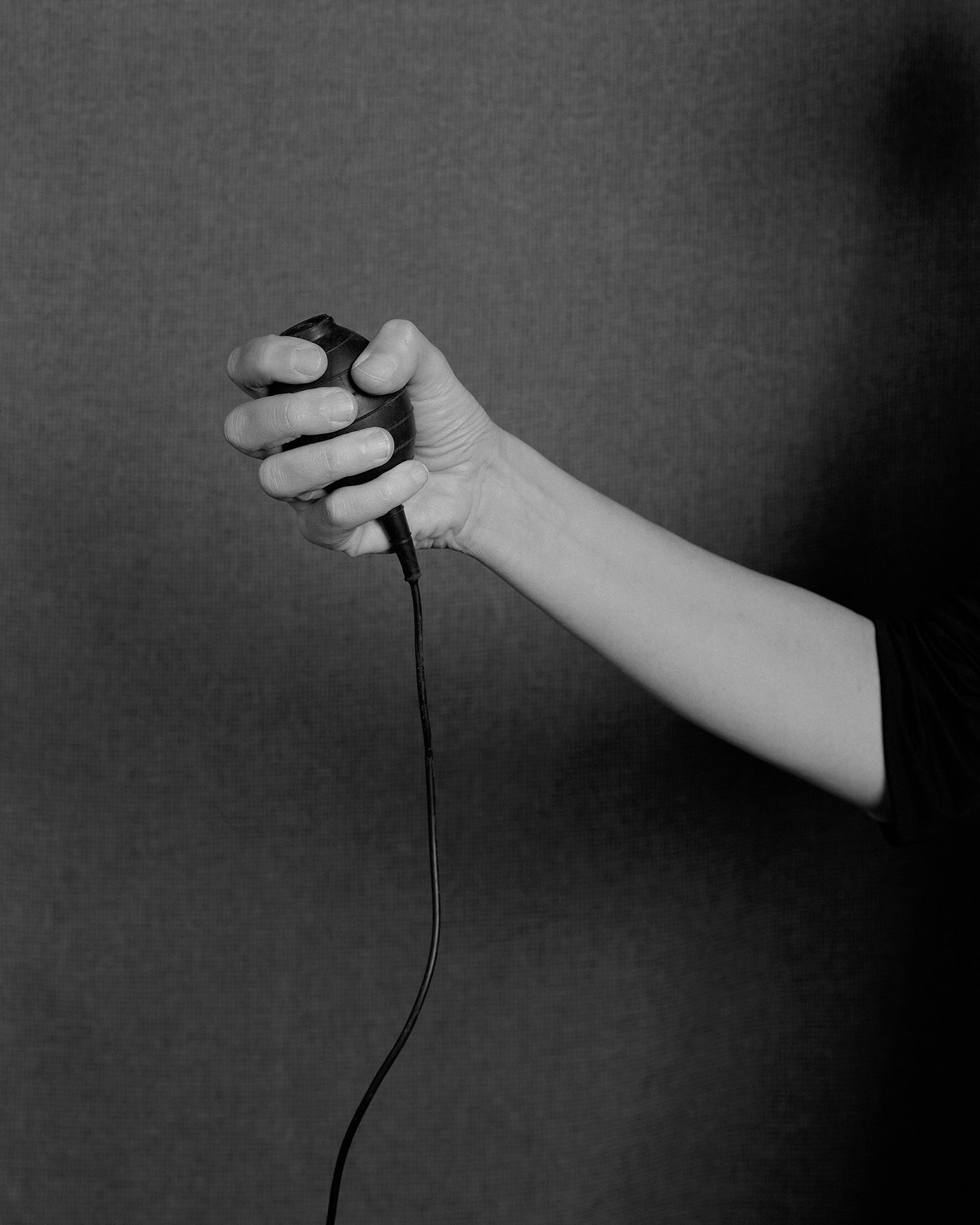
ÅJ: Looking Out, Looking In refers to the encounter between the sitter, camera and photographer. This work comprises black-and-white portraits of people identifying as LGBTQ, depicted in front of a fabric backdrop in a studio location. With the traditional studio portraits as a point of departure, Looking Out, Looking In juxtaposes conventional compositions with mischievous tweaks of body, pose and gaze. Figural, Figurative was created during an artist residency at the British School at Rome and depicts classical sculpture from museums in Rome and Naples. In these works, the statue and the bust transform into new photographic, queer creatures that merge marble surfaces with human bodily forms.
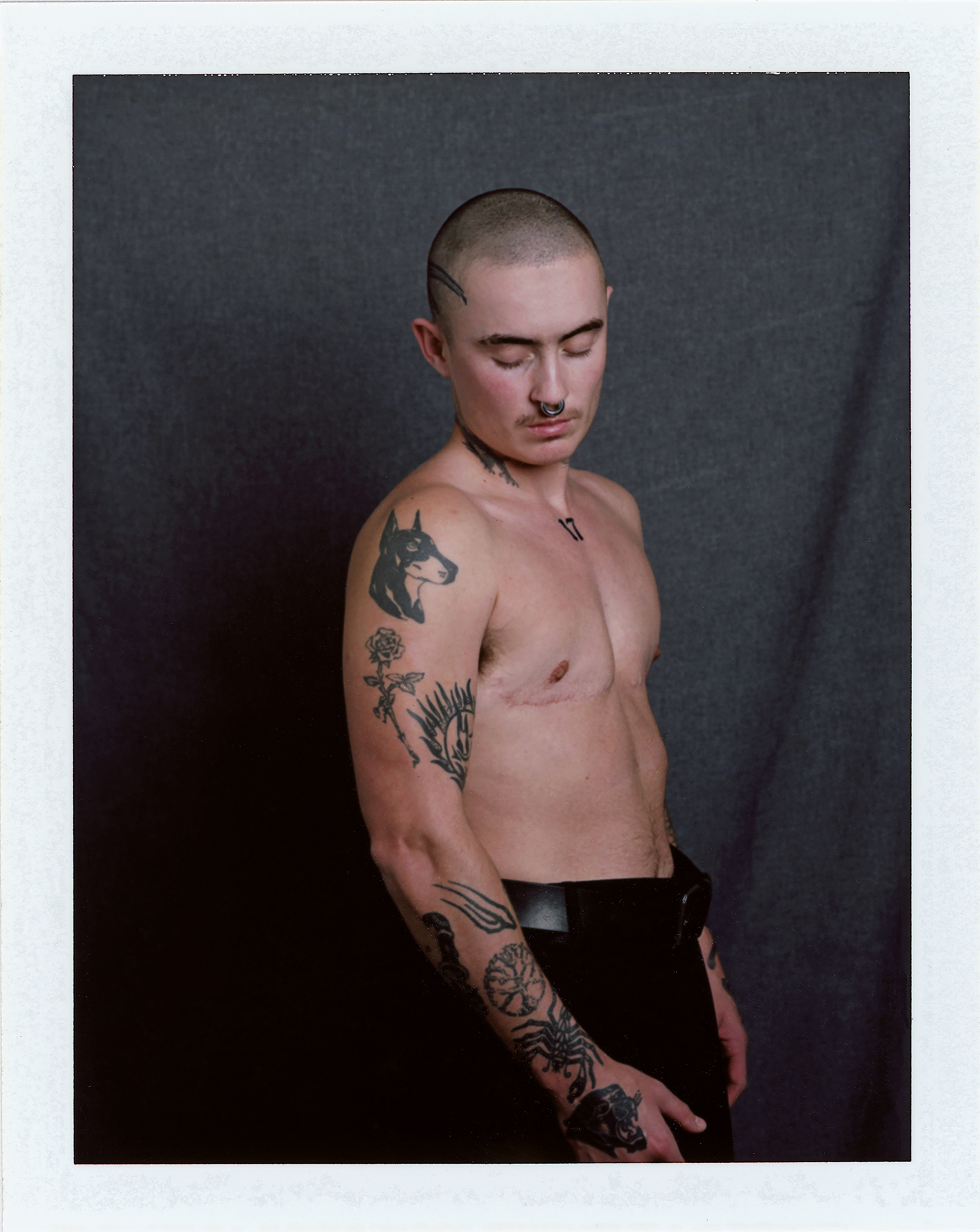
Turn is produced using instant film on a Polaroid back attached to a large format camera. In these, we see a twisted neck, sometimes half a face. The soft Polaroid aesthetic and the turning faces generate a visual form of queerness that is photographic at heart, a visual language that challenges established portrait categories without falling into negation. I’m also presenting Skin, a series produced using instant film emulsion. The Polaroids used for Skin were initially test shots for Looking Out, Looking In. Through the process of emulsion lifts, these images have a new life as queer photographic creatures. Photographic materiality is here the skin and bone of queer representation while also hovering at the margins of photographic conventions. The exhibition will be the first time people can engage with 10 years of work all in one place.
GF: Do you think of the body of work and the show as an ecosystem of sorts?
ÅJ: Yes, the title of the work hints at my interest in rethinking what queer photography could be, and what happens when you allow yourself to queer the process itself or find new paths for articulating queer voices.
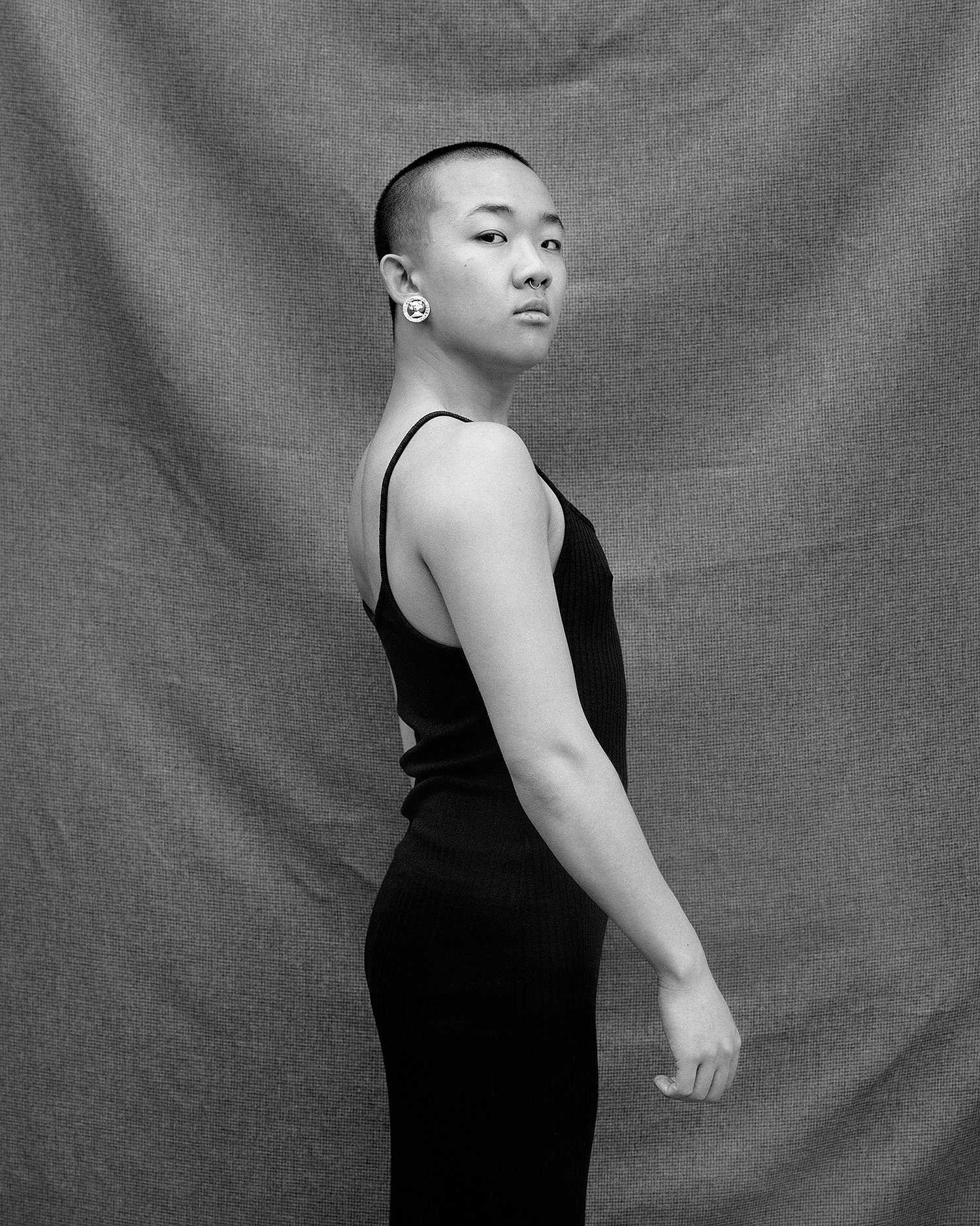
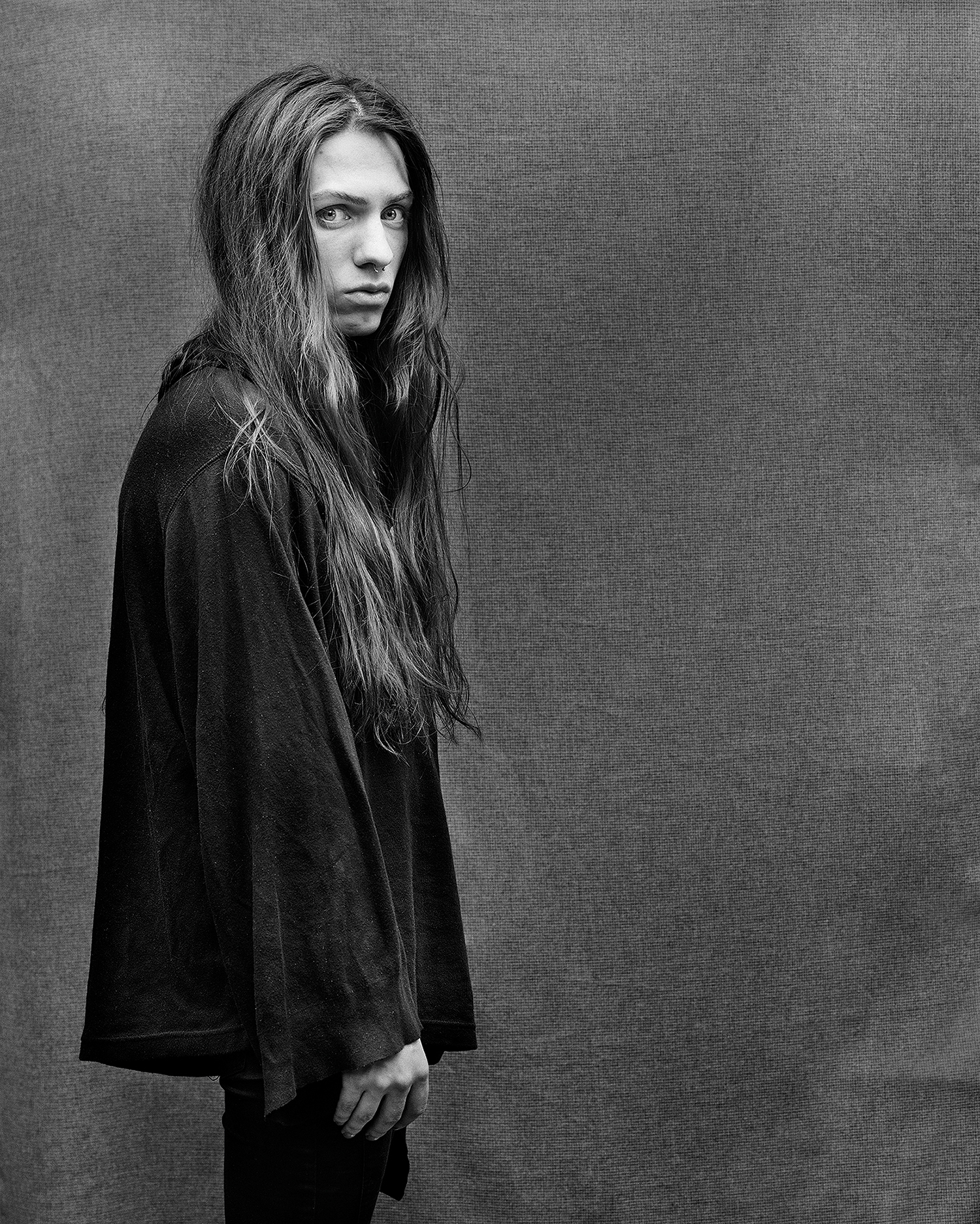
GF: I’ve always enjoyed the tension in your work; it’s both experimental in this quiet yet subversive way, but also has a formal quality. Why is that tension vital to you?
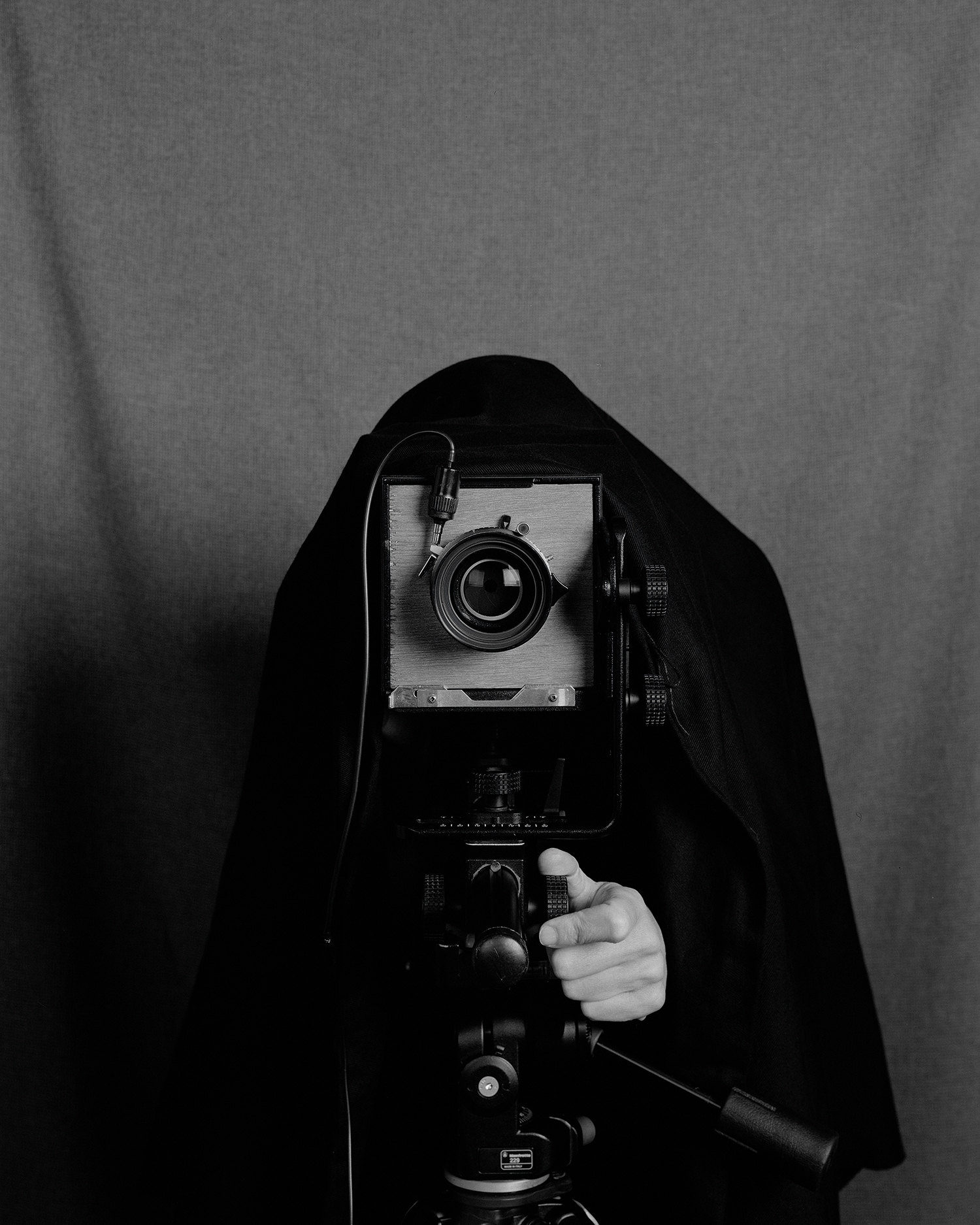
ÅJ: Maybe it’s a reflection of me as a person, too. I’ve never really been like a stage person or a scene queen. I’m quite happy under my dark cloth, and I’ve always been an observer and alert to details.
GF: It’s interesting you mention presence, as you often talk about the making of your work in terms of a site of intimacy and transformation, which sits in opposition to the typical top-down power dynamics that dominate photography. Could you outline your approach and why it’s so important to you?
ÅJ: Firstly, I don’t work with assistants. It’s always just me and the person I’m making pictures with. It’s a transparent process. I photograph one person per day, with each shoot lasting up to four hours and producing 10 to 16 photos. I use a large format plate camera, which is a slow process. Gradually, the person gains more confidence and starts suggesting gestures or poses, and I love that I never know what will happen. It’s an intimacy because it’s a dialogue. When I invite people to sit in my world, they don’t see much of my face because I’m under a dark cloth with the camera. I become this creature they look at for hours.
GF: Do you feel like a creature when you’re under the cloth?
ÅJ: Absolutely, I become a human-machine hybrid. I made a portrait of myself as the creature as part of my series Frame, which attempts to queer the studio space by breaking hierarchies and suggesting new orders. The backdrop no longer serves merely as a support for the portrait but has become a protagonist in its own right.
I love working totally manually, it’s a constant reminder of what photography is. The original photographic view was upside down; later, we put a mirror in the camera to match how we see with the naked eye. But also, we are in contemporary times, making work about a contemporary queer scene that operates somewhere between the gallery walls and social media, so that’s really exciting.
GF: It’s interesting to think about how we tamed photography. By its nature, it’s a slippery, strange and miraculous medium of possibilities, but we projected so much culturally upon it as a ’truth-telling’ communication tool. Now, as legacy media crumbles, AI rises and algorithms continually fill our feeds with deepfakes and slop, photography’s future is ripe for reimagination. Perhaps we can finally allow it to be the strange creature it was always meant to be.