

All images © Maen Hammad
Every year, BJP publishes its Ones to Watch issue – our selection of the artists who epitomise the talent and creativity in international photography today, as nominated by a global network of curators, editors, and artists. As we finalise this year’s list, to be published in Issue 7926 this June, we’re revisiting the 2025 Ones to Watch. Today, Maen Hammad, as nominated by Mohamed Somji and Rehad Eldalil
“In Palestine, in the West Bank, I find that my camera and creating work is the only way to make sense of this very nonsensical reality. It’s like my journal and my punching bag and a voice to myself in the future.” Maen Hammad is calling from the city of Ramallah, a day before Israel continues its assault on Gaza. It is a time when words collectively fail us, when the camera becomes perhaps the only adequate witness.
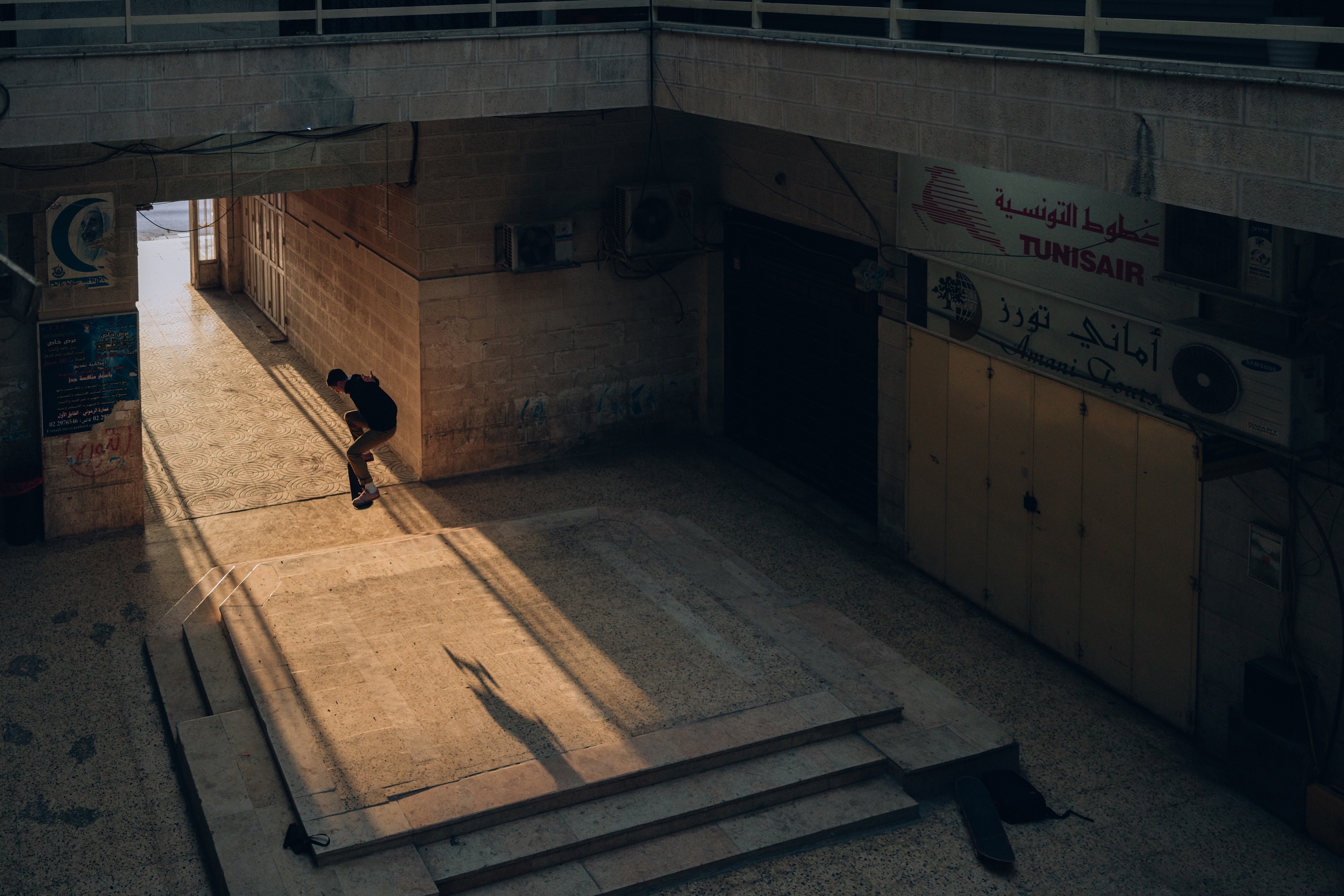
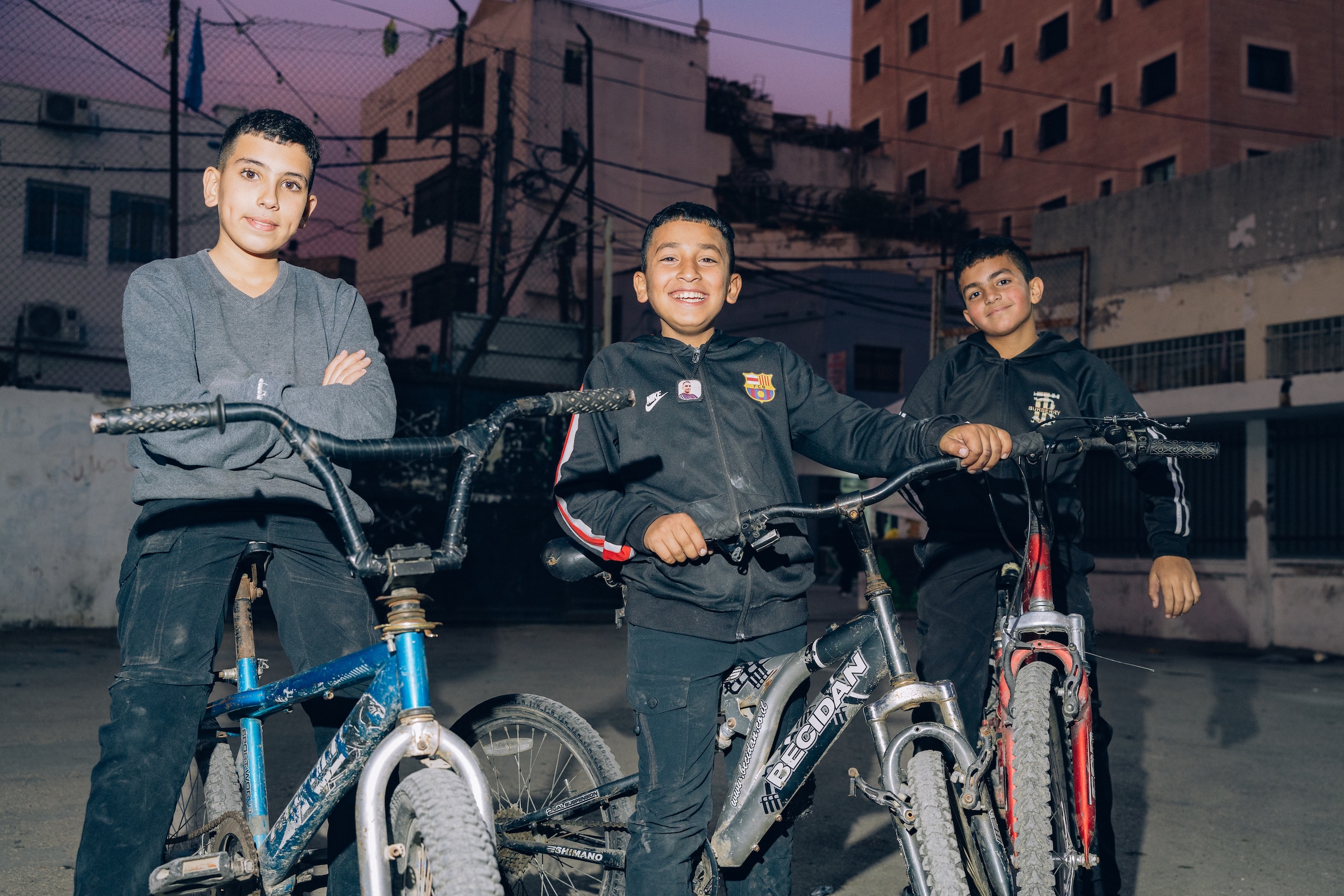
Born in Jerusalem, Hammad lived in the West Bank for two years before his family moved to Detroit; he returned to Palestine as an adult in 2014, then lived between the US and Palestine for a decade before settling for good in the latter in 2024 (“inshallah”). Growing up as a skateboarder in America, his work often casts a gaze on the subculture in the West Bank, and how Palestinian youth resist, or at least endure, daily occupation through skateboarding and its tightknit community. In doing so, Hammad tries to challenge what people assume the region looks like. Much of his work also confronts what he calls “the absurdity” of life in Palestine. “I try to bring that absurdity out in my photos,” he explains. “I think part of it is the absurdity of surveillance, of cameras, of technology, for example, of architecture.”
When Hammad arrived back in Palestine, he did not identify as a photographer or documentary-maker. “I was a silly, lost diaspora kid,” he says. But continuing to skate, as he had done in the US, allowed him to forge a new relationship with his homeland. “I had used the camera to simply document skating throughout my life. It’s just something skaters do, you document your tricks and your homies,” he explains. It was not until he felt he “had a decent bit of this work” that he shared it with mentors, who encouraged him to pursue it as a project.
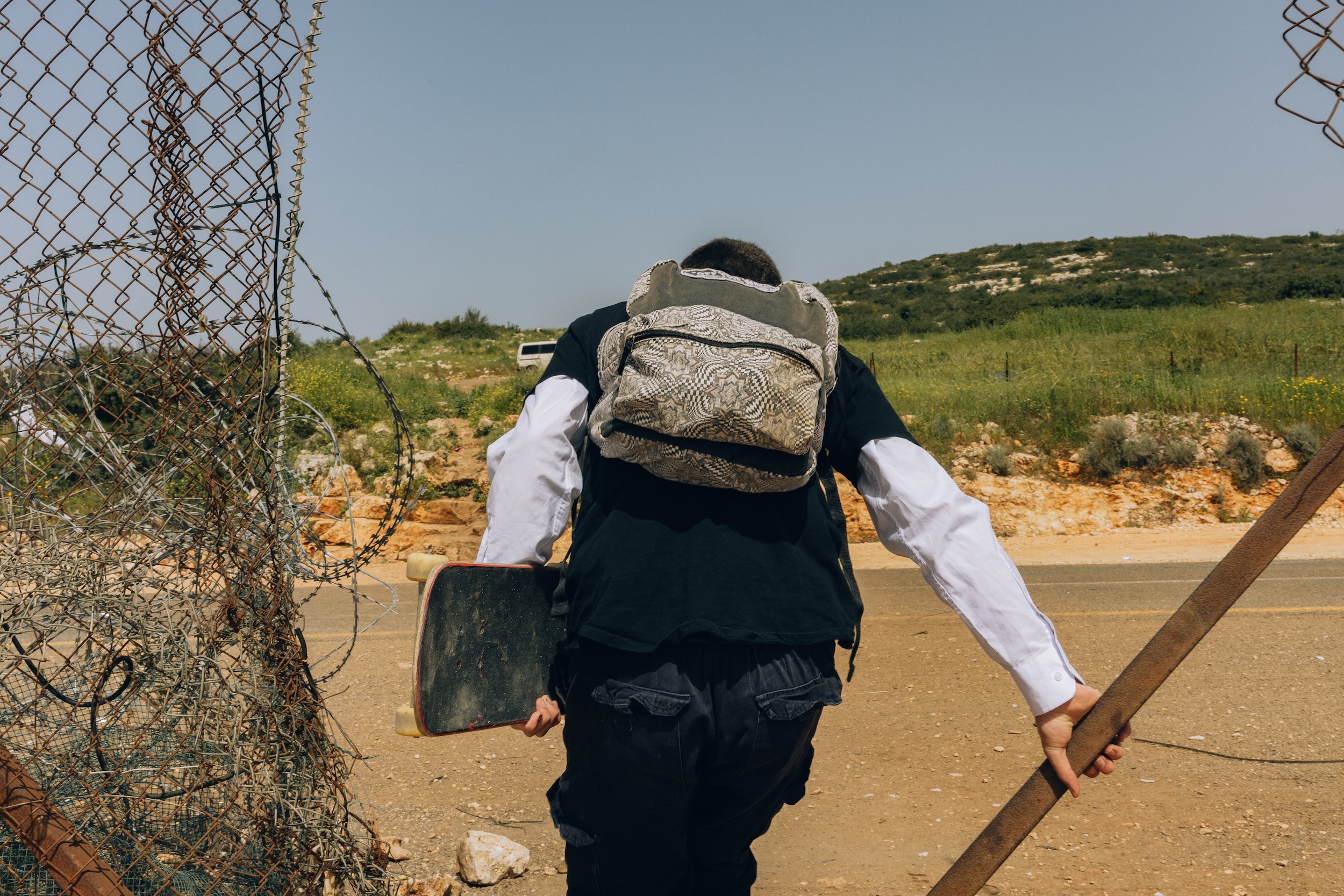
“As a photographer, I feel like I have an obligation to document this for our people.” Maen Hammad
In 2020, when Hammad was living in Palestine, Sheikh Jarrah was the centre of a burgeoning uprising, and his work quickly turned into something else. As protests erupted, his lens shifted toward the resistance, a moment that forced him to reconsider his images of skaters. The result is Landing, a photobook that challenges conventional expectations; the debut publication of Huwawa Books, led by Roï Saade and Tamara Abdul Hadi, it is deliberately disorienting. Pages must be turned around, images demand closer scrutiny.
Skateboarding, for Hammad, has always been deeply personal. In the US, it was an escape from the constraints of suburban life, from the alienation of being a Palestinian American post-9/11. In the West Bank, it is a way to reclaim space, to build community, to carve out joy in an occupied land. “Having found the skating community here in the West Bank when I moved back, it was also a very important escape for my own nurturing back home. And it’s a small community here.”
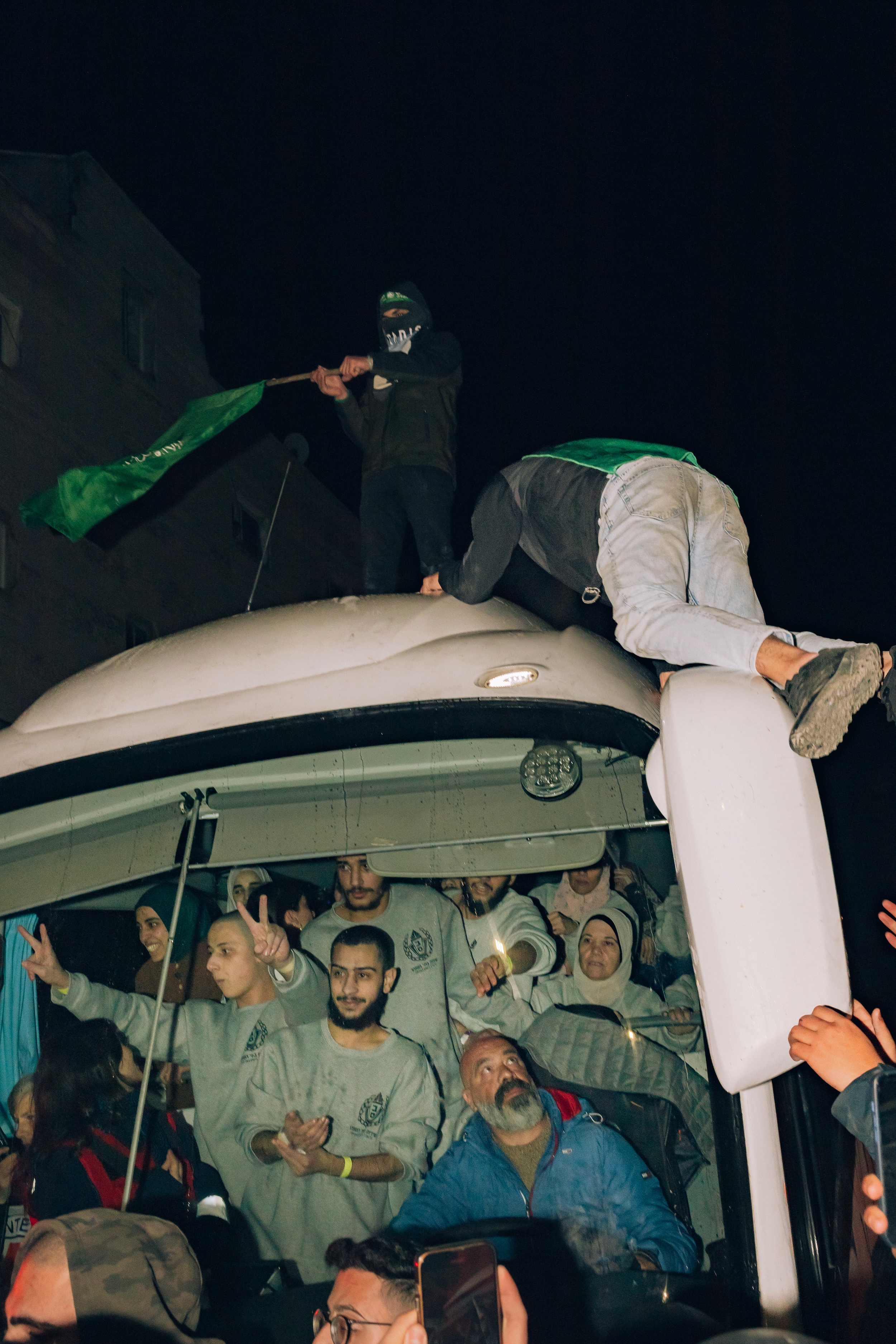
But Hammad’s work extends beyond the skate parks. His photography has taken him to prisoner release gatherings, where thousands of Palestinians assemble to witness the return of those who have spent decades behind bars. “I told myself, ‘I’m going to go to every one of the releases’, because if I wasn’t a photographer, I would still be going there to see it as this point of assembly,” he says. “And as a photographer, I feel like I have an obligation to document this for our people. And for my future self, to be showing my kids or my ancestors, ‘Yeah, I was there, and these are the photos of hundreds of prisoners being released from colonial bars’.”
The unpredictability of documenting prisoner releases – waiting for hours with no guarantee of when or how they will happen – has only deepened his connection to his subjects, and Hammad feels a responsibility towards them, and to recording the moment of their homecoming. It is part of his complicated relationship with the camera, an instrument of documentation and power, of both violence and care.
“I am a firm believer that the camera is one of the most violent things probably produced on this planet,” he says. “And I say this as somebody who’s immensely frustrated with the world of photography on Palestine. That’s another indicator of why I feel like there’s this responsibility, at least to offset some of the damage that’s been done.”
“Maen Hammad’s work is deeply embedded in the activist and image-making communities of the West Bank, where he documents Palestinian resilience with both intimacy and urgency,” says Mohamed Somji, director of Gulf Photo Plus, who recommended Hammad to BJP. “His work, including his more recent work of Palestinian steadfastness amidst a worsening repression in the West Bank, blends sharp social critique with deeply personal storytelling, offering a powerful counternarrative to dominant representations of Palestine.”
And, adds documentary photographer Rehab Eldalil, who also recommended Hammad: “His work is emotional, political and beautifully profound.”