


.jpg)
All images © Tianyu Wang
Every year, BJP publishes its Ones to Watch issue – our selection of the artists who epitomise the talent and creativity in international photography today, as nominated by a global network of curators, editors, and artists. As we finalise this year’s list, to be published in Issue 7926 this June, we’re revisiting the 2025 Ones to Watch. Today, Tianyu Wang, as nominated by Erik Kessels.
Tianyu Wang is speaking via a video call from Finland, where she is on the Silence Awareness Existence residency at Arteles Creative Center, Hämeenkyrö. While on this residency she will only go online one hour per week and, swinging her laptop round, she shows the forest outside her window. Her plan is to make new work around nature and Sámi shamanism, both of which connect with her childhood in China; originally from the Shandong region, Wang grew up with a Taoist religion related to shamanism and a close bond with nature.
The local goddess in her home town is Yan Wenjiang, a citizen who rose to become a deity, thus escaping the patriarchal culture into which she was born, Wang realised on rereading the legend. Echoes of this story also underpin Wang’s work, though superficially it covers a wide range of styles.
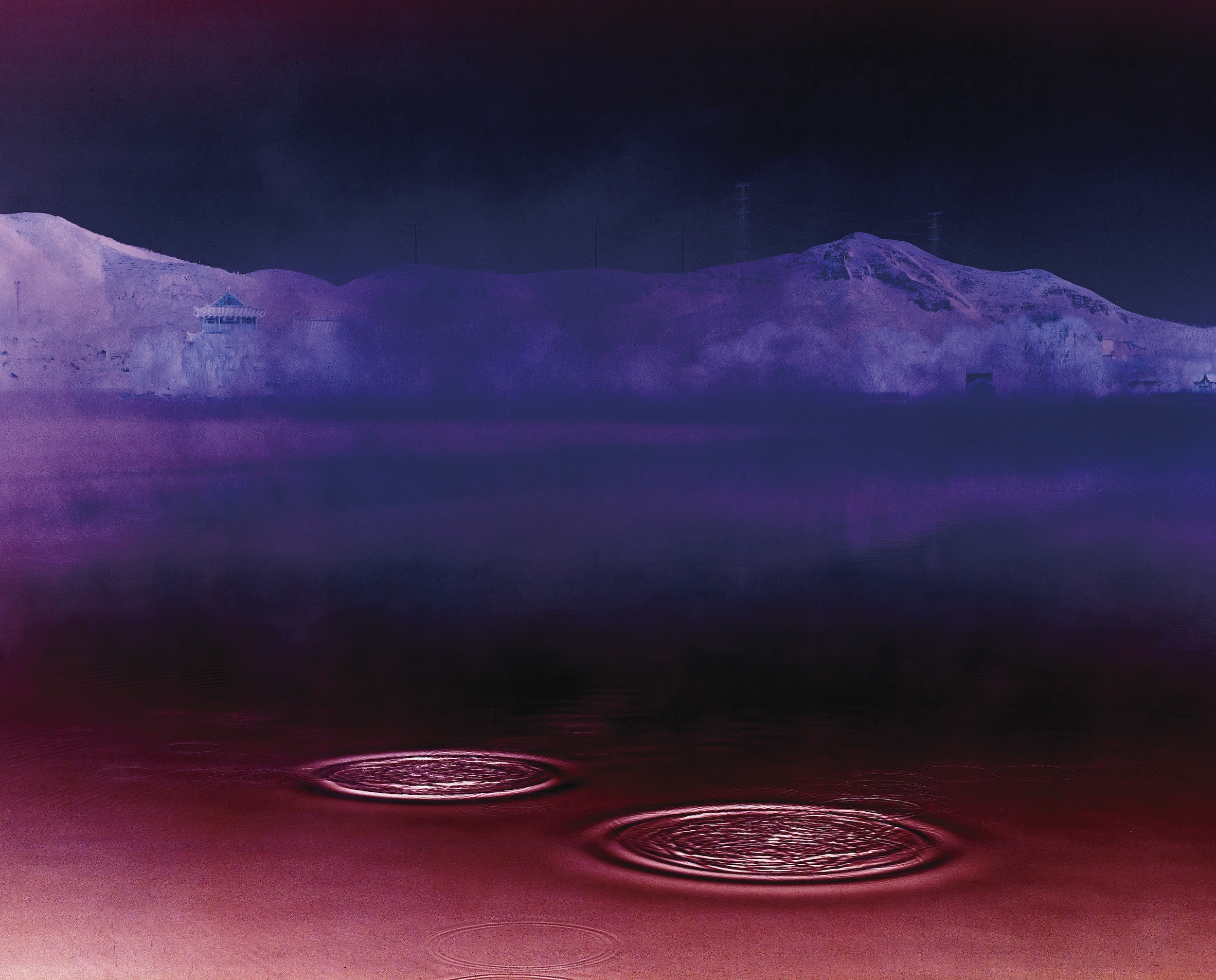
“Since I was a kid, I used the internet and had a camera. It’s part of my life.” Tianyu Wang
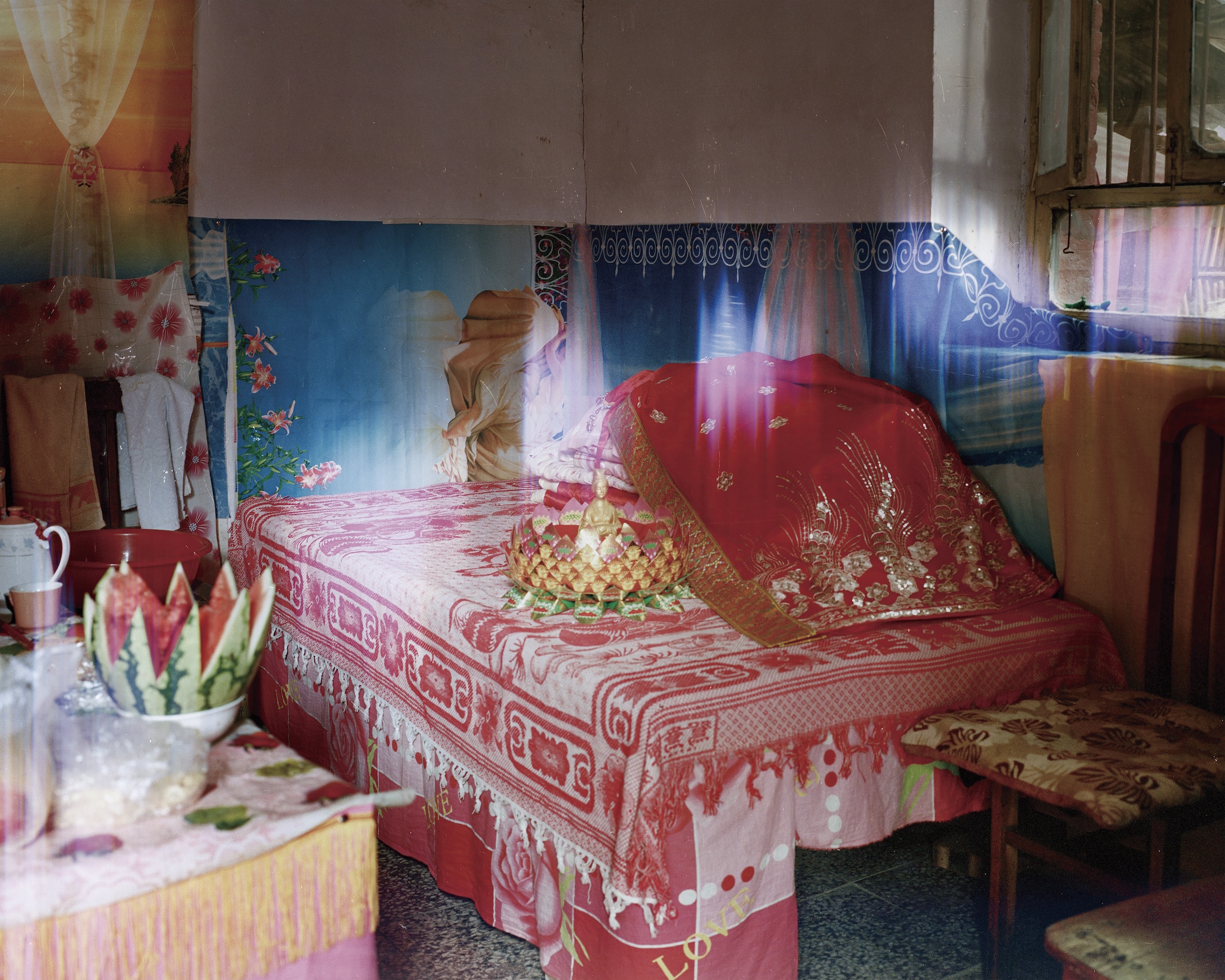
Her early series, Settled into the mountain for eternity, includes documentary and portrait images, tracing the everyday to speak about spirituality; in Shandong, the two are not far apart, Wang explains, because Taoism emphasises interconnection, and Yan Wenjiang is particularly down to earth. “She’s a normal woman from the start, she’s like everyone’s grandmother,” Wang says. “In the local language we literally call her grandmother, and traditionally people would keep a room for her in the house, as if she was part of the family.”
Wang’s second series, Yan Wenjiang, is more experimental and is informed by spirituality as experienced by her grandmother; images of hands reference healers and transmitting energy from one individual to another, and Wang hopes that this flow continues in her book of the project. Yan Wenjiang suggests an alternative interpretation of the world, a non-Western view in both visual and metaphorical terms, and Wang says that, as a child, she was inspired by traditional Chinese painting. Unlike Western linear perspective, these paintings often adopt shifting views, in which elements are arranged fluidly rather than around a fixed vanishing point.
Even so, born in 1997, Wang is a digital native, well-used to cameras and images. “Since I was a kid, I used the internet and had a camera. It’s part of my life. When I talk with my friends, we say the camera is like part of our body. I use it to document the world I see, and in a way, it has also shaped how I perceive the world. This idea resonates with Vilém Flusser’s writing – unlike the traditional notion that the camera is merely an extension of the eye, he argues that the camera constructs a new visual culture. As a programmed visual tool, it not only influences how photographers create images, but also profoundly alters the way modern individuals perceive and engage with the world.”
Wang is also inspired by newer traditions in China, such as using the body to make performance art, an approach that informs her most recent project, Hiding and Seeking, which explores women’s position in traditional, patriarchal society. Made at home, a place of ostensible safety, it shows Wang contorting her body into impossible shapes. Shooting in black-and-white, she also manipulated the images, creating confusing, hard-to-read planes, and she installs them using further multiple prints. Wang started the series in Lausanne, Switzerland, while studying MA photography at ECAL, and says the distance from China made it more possible.
“Family space is private space, and it’s also the realm where patriarchal discipline, especially for women, is perpetuated and operates across generations,” she says. “People know that in a patriarchy it’s easier to hide violence in this realm because, beyond direct physical violence, the manifestations of invisible violence within families are subtle and fragmented. When one is inside this system, it’s often difficult to perceive and break away from it – it takes time for people to fully realise its existence. I hope to prompt reflection on the oppression created by everyday, invisible violence under the long-term influence of patriarchy.”
Quirky and anarchic, this series has helped propel Wang to wider attention; it was selected for Paris’ Circulation(s) festival in spring, and helped Erik Kessels discover her work. “I find it at the same time disrupting and heartbreaking,” he comments, recommending her for Ones to Watch. “The aesthetic of the black-and-white images confuses the viewer and communicates the painful content of the subject very well. A bold and brave act from this highly talented artist, coming from a culture where it is not easy to talk about this topic.”
Wang is now based between Lausanne and Paris, where she hopes to pick up paid commissions; this could be as a photographer or as a book editor and designer, because she worked at Jiazazhi Press for five years, while studying for her BA and beyond. Since 2022 independent publishers in China have faced increasing pressure, with several publishers detained by the police and independent bookstores forced to close. Wang does not mention this directly, but says she plans to remain in Europe.
.jpg "Wash hand(洗手)")