
All images © Yomna El Beyaly
The Paris-born artist captures accidentally theatrical scenes through vernacular photography
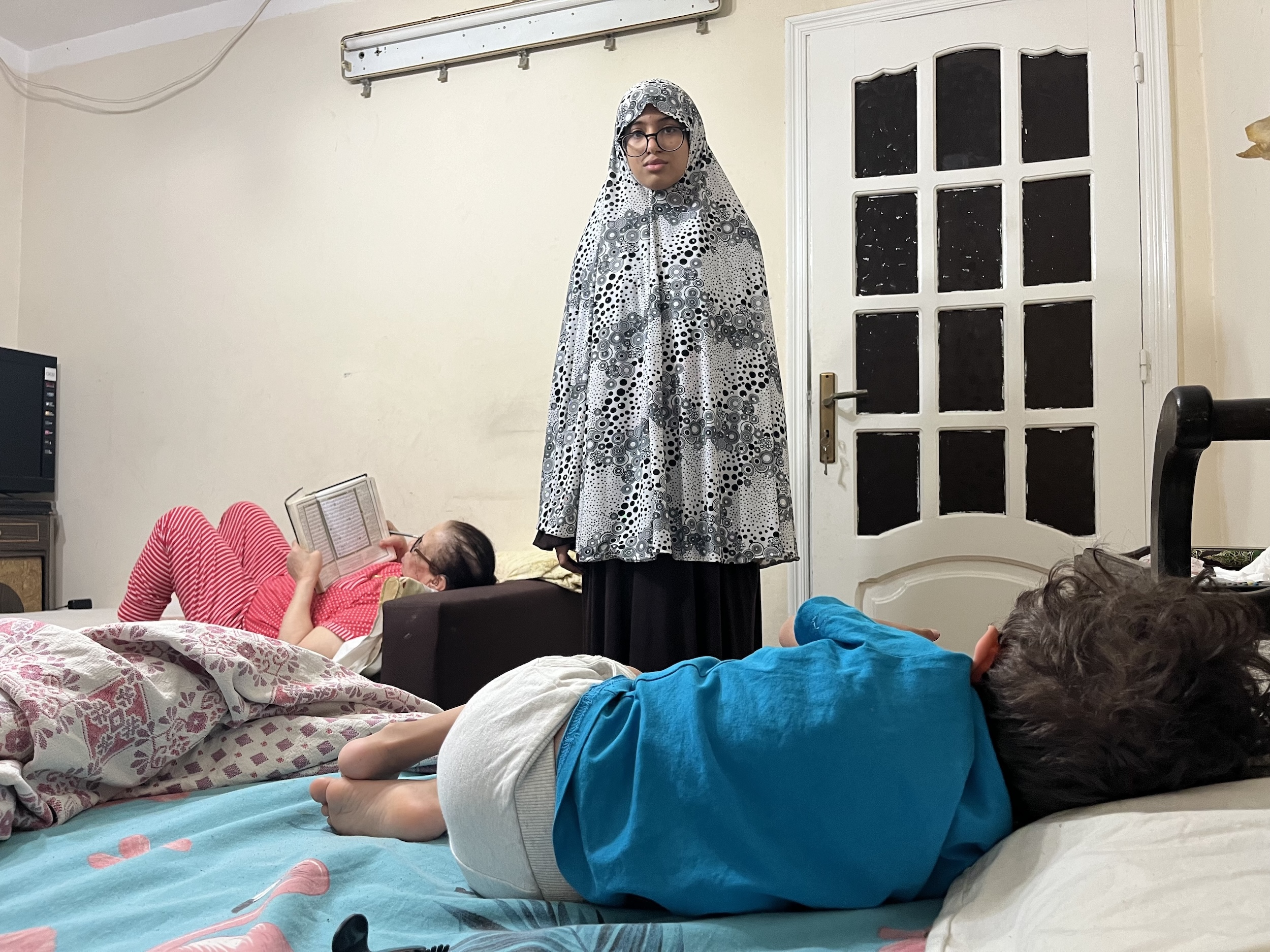
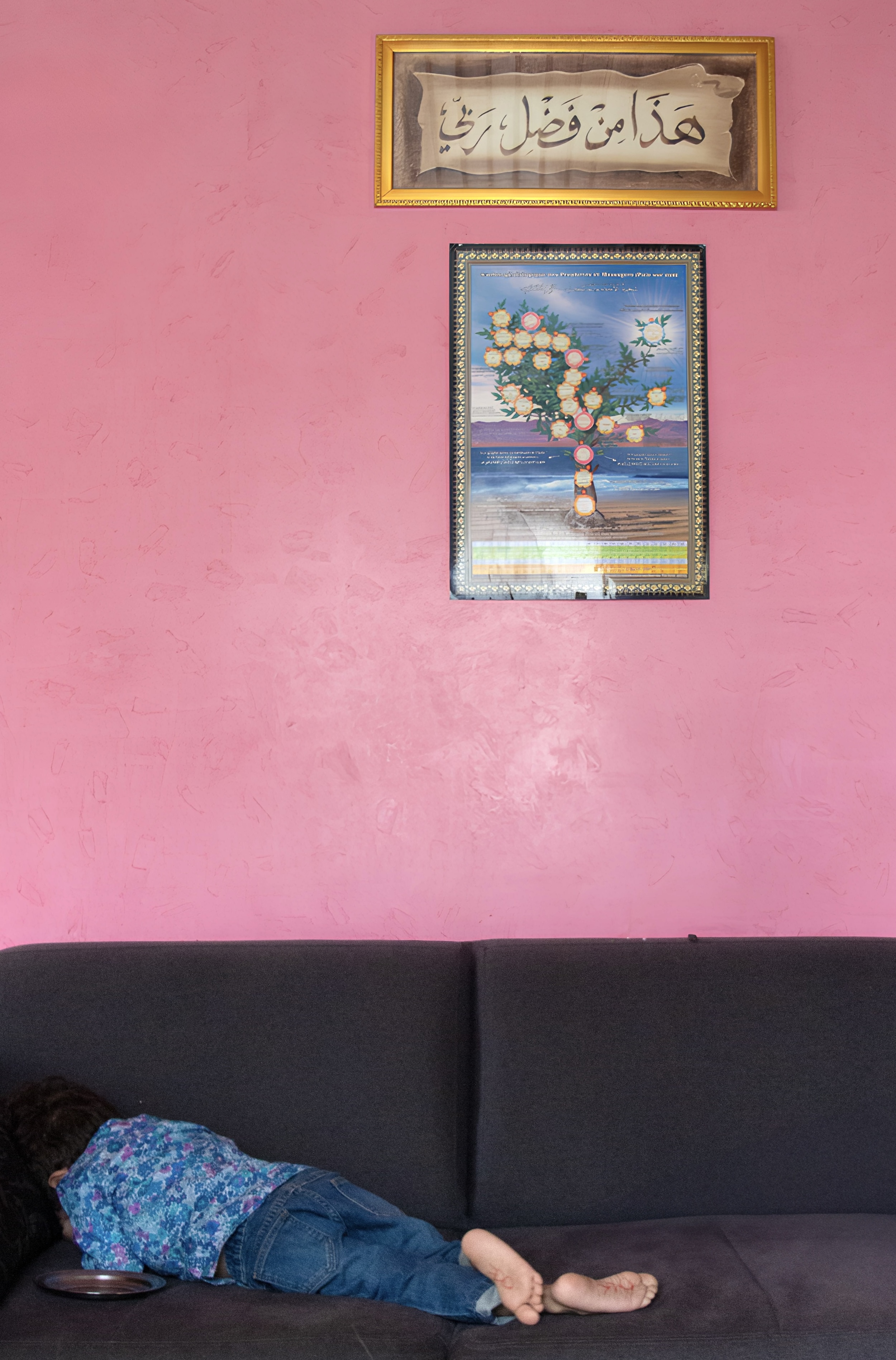
In Yomna El Beyaly’s series Koll Shai2, shot entirely on iPhone, a woman lounges on a sofa and reads what looks like the Quran. A young boy sleeps with his back turned to us, and a young woman in an abaya – who looks like she’s about to pray – stares directly at us. Though it is, on the surface, a shot of an everyday scene in Cairo, it is markedly theatrical. The characters are perfectly positioned on-stage; upstage, downstage, and even by the wings. El Beyaly is attuned to the performances of everyday life – life imitates art, as Oscar Wilde once argued – especially in a place like Cairo which in and of itself is an accidental theatrical performance.
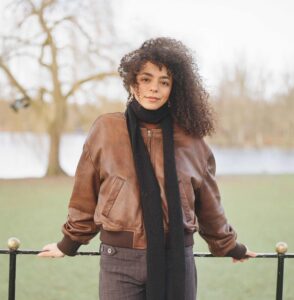
El Beyaly is currently a student at Beaux-Arts de Paris, after finishing her Bachelor in Fashion Image at Duperré. She was born in Paris to Egyptian parents and spends every period of free time she has in Egypt. El Beyaly’s work is intuitive – she shoots on a digital camera as well as an iPhone to get the quickest shots of a fast-paced country.
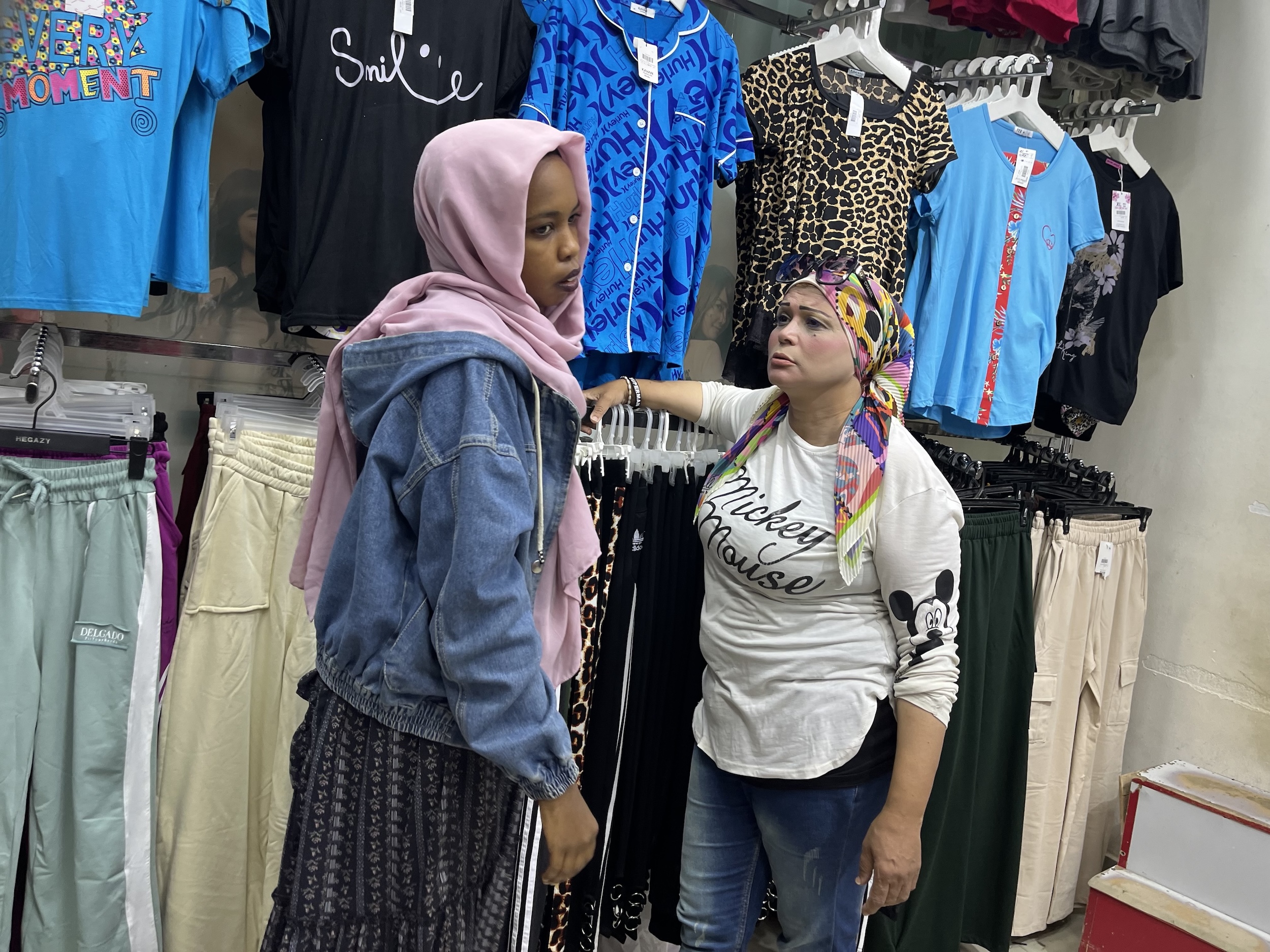
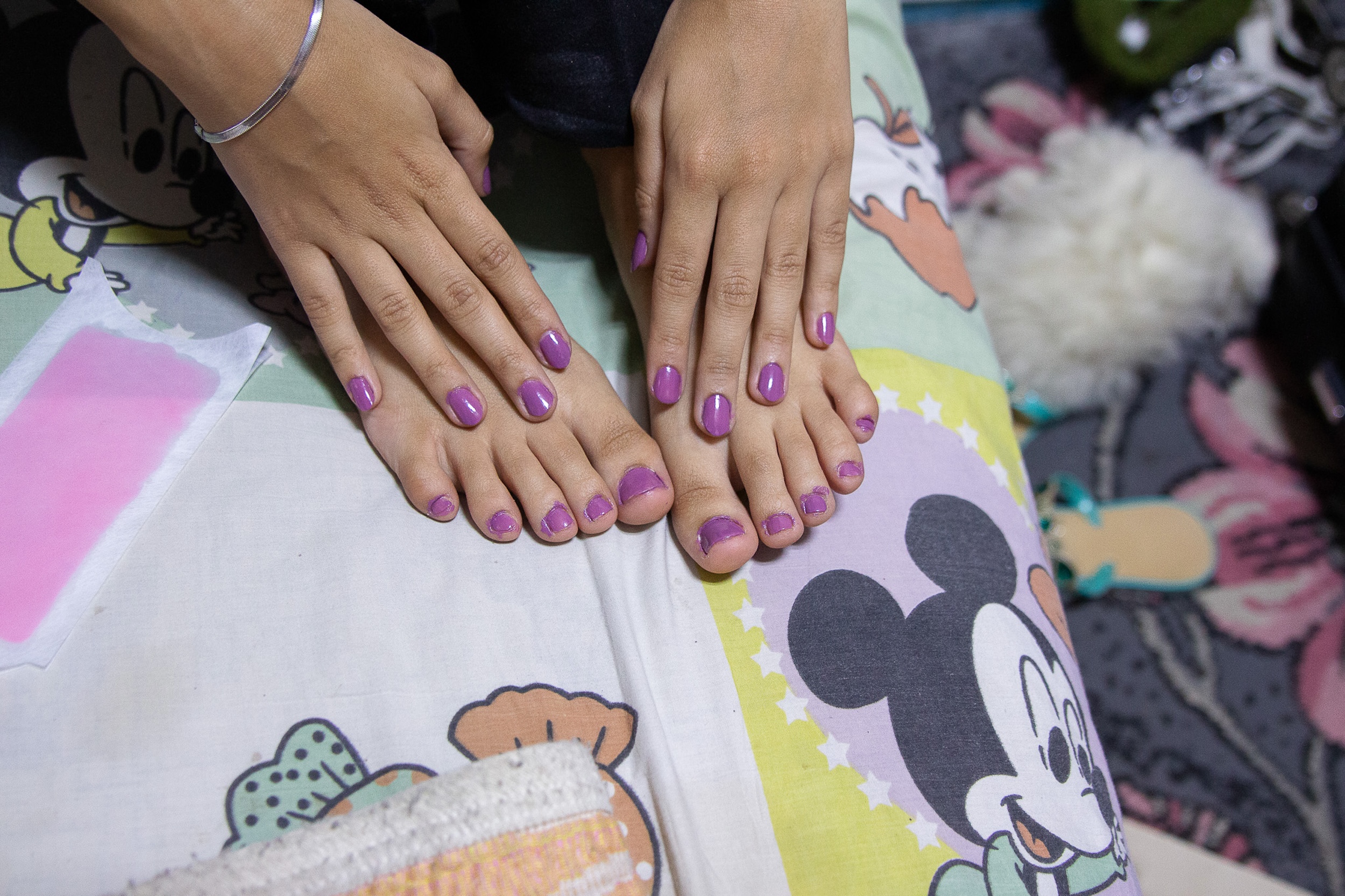
Koll Shai2 was shot whilst El Beyaly was sourcing accessories in Cairo, “and I was interested in the girlhood aesthetic in shops and shopping areas,” she tells me. “It was difficult to take my camera out, so I used my phone. I can’t really take my camera outside. People notice it and behave differently. With a phone it’s more discreet.”


“I like observing details that usually go unnoticed. Yes, it’s romanticised, but it’s still real”
This is something the photographer is especially aware of in Egypt, where cameras are treated with an added level of distrust, and El Beyaly is often aware of her diaspora identity making her seem like an outsider. “Even though I know the codes, I still feel like I’m seen differently. People sometimes don’t see me as fully Egyptian. If I take out a camera it becomes more obvious and sometimes people don’t want to be photographed,” she explains.
El Beyaly’s fashion background is evident in her work – though the streets of Cairo seem to style themselves perfectly, the photographer’s eye is always drawn to stylised, sometimes extravagant aesthetics and details. Especially girlhood, salons, and marketplaces.
“I’ve been surrounded by girls my whole life,” she says. “I was raised by women and I still spend most of my time with them. I’m inspired by them. I also studied fashion photography, so I’m interested in preparation, beauty rituals, hair salons, and similar spaces. I like observing people in those environments rather than participating in them. In France it’s not the same,” she argues.
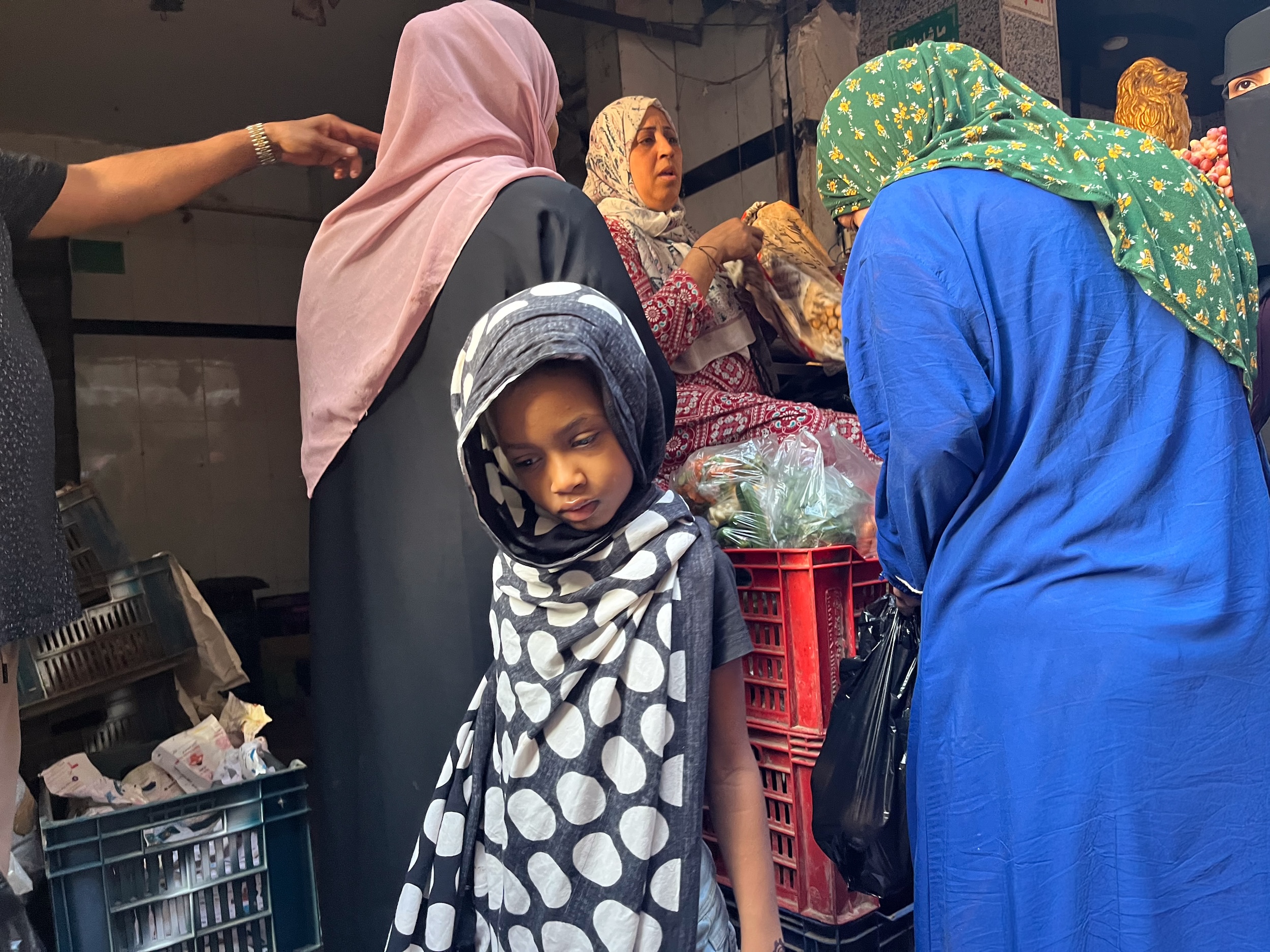
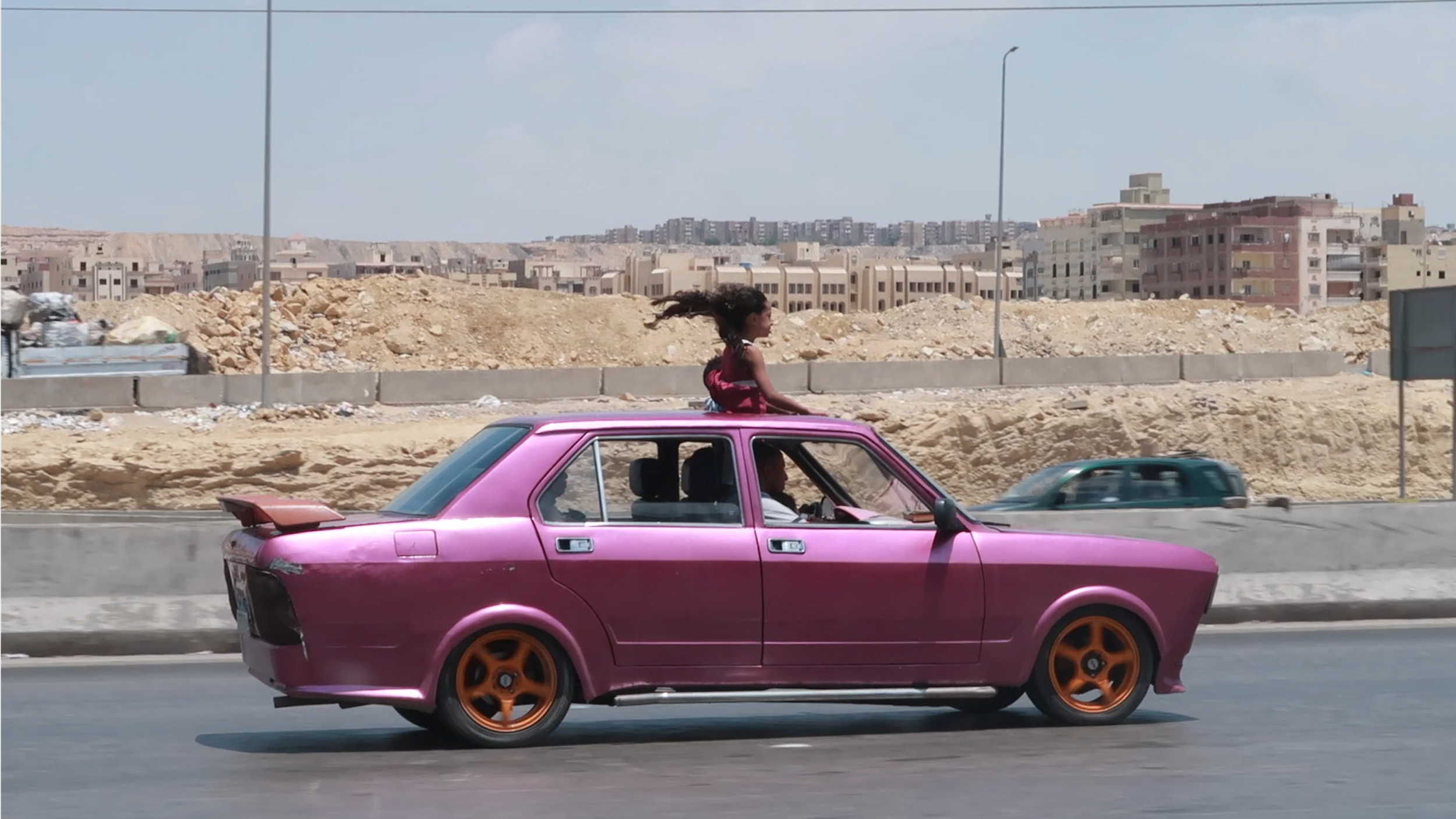
Although when in Egypt she has more space to follow her aunts, cousins and friends in their beauty rituals – observing their daily life – in France, she has more space to do staged or editorial work. Each offers its own value for a photographer still exploring her visual language.
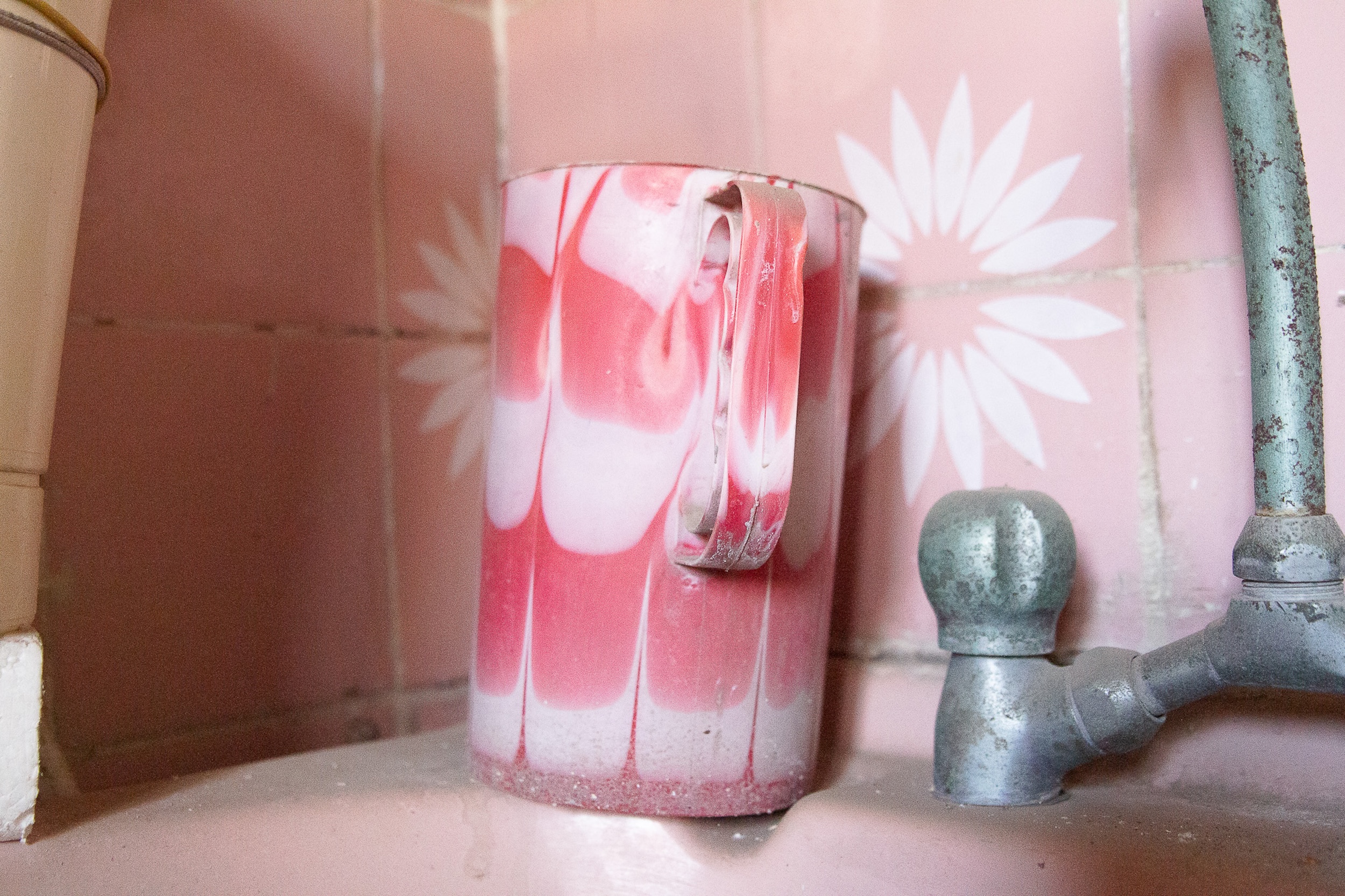
In another series, Fata7i ya warda, El Beyaly celebrates the mundane visual world in Egypt that we – the Arab world – are often told is ‘cringe’ or ‘tacky’. In one scene, we see a plastic pink marbled water jug, set against a lighter pink tap and pink walls. El Beyaly is surprised when I tell her this is my favourite shot in the series – I tell her it is so nostalgic of the Arab households I grew up in and around as a child.
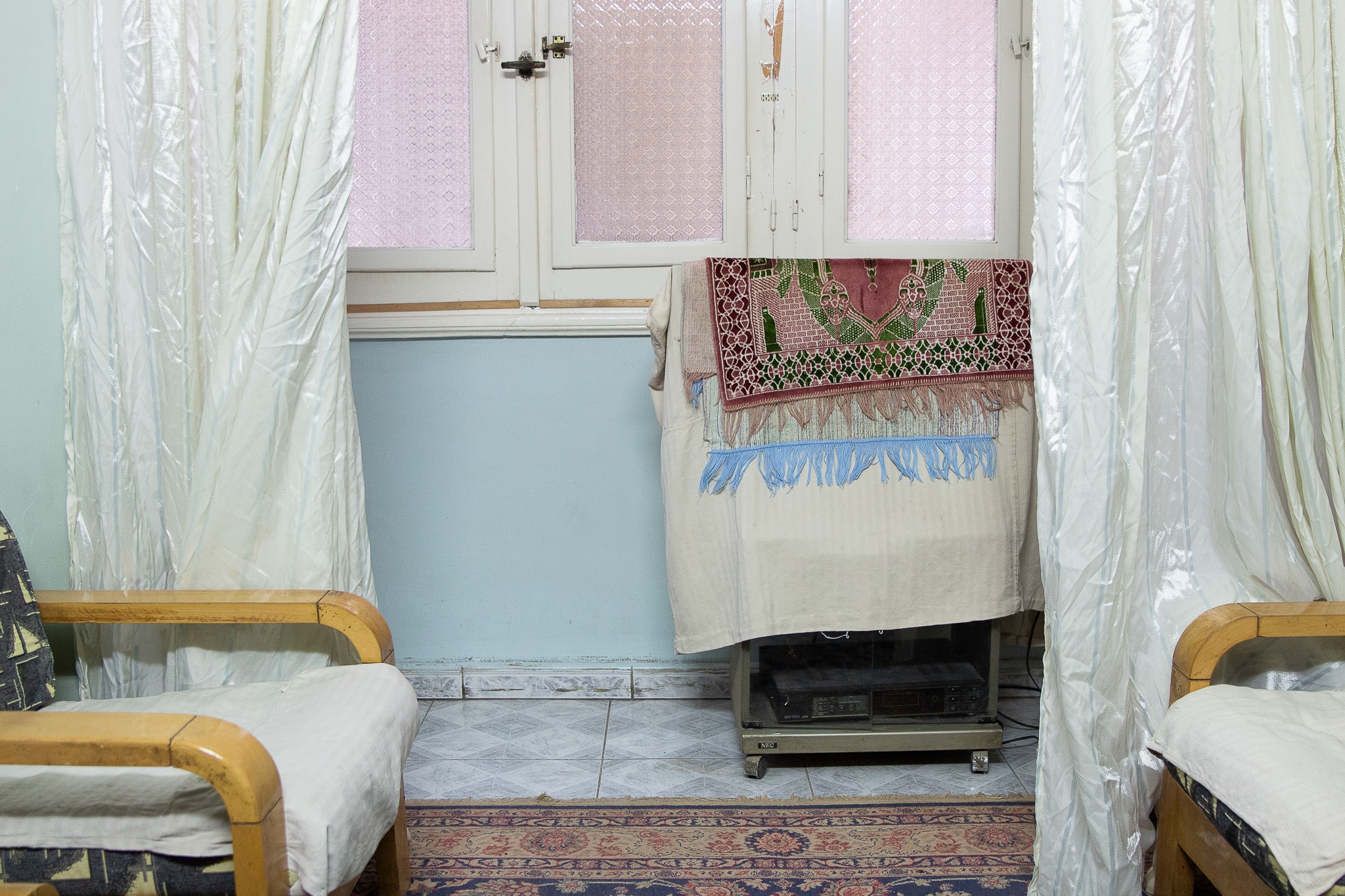
That nostalgia and the idea of memory seem central to El Beyaly’s work – she often captures those small details of a living room, a ceiling or a bathroom of a grandmother’s home we are at risk of forgetting, or hazy memories of a trip taken with family friends one summer. El Beyaly’s images ask: why do we always remember the little things the most clearly? The colour of the tiles; the smell of your aunt’s soap; the pattern on the rug.
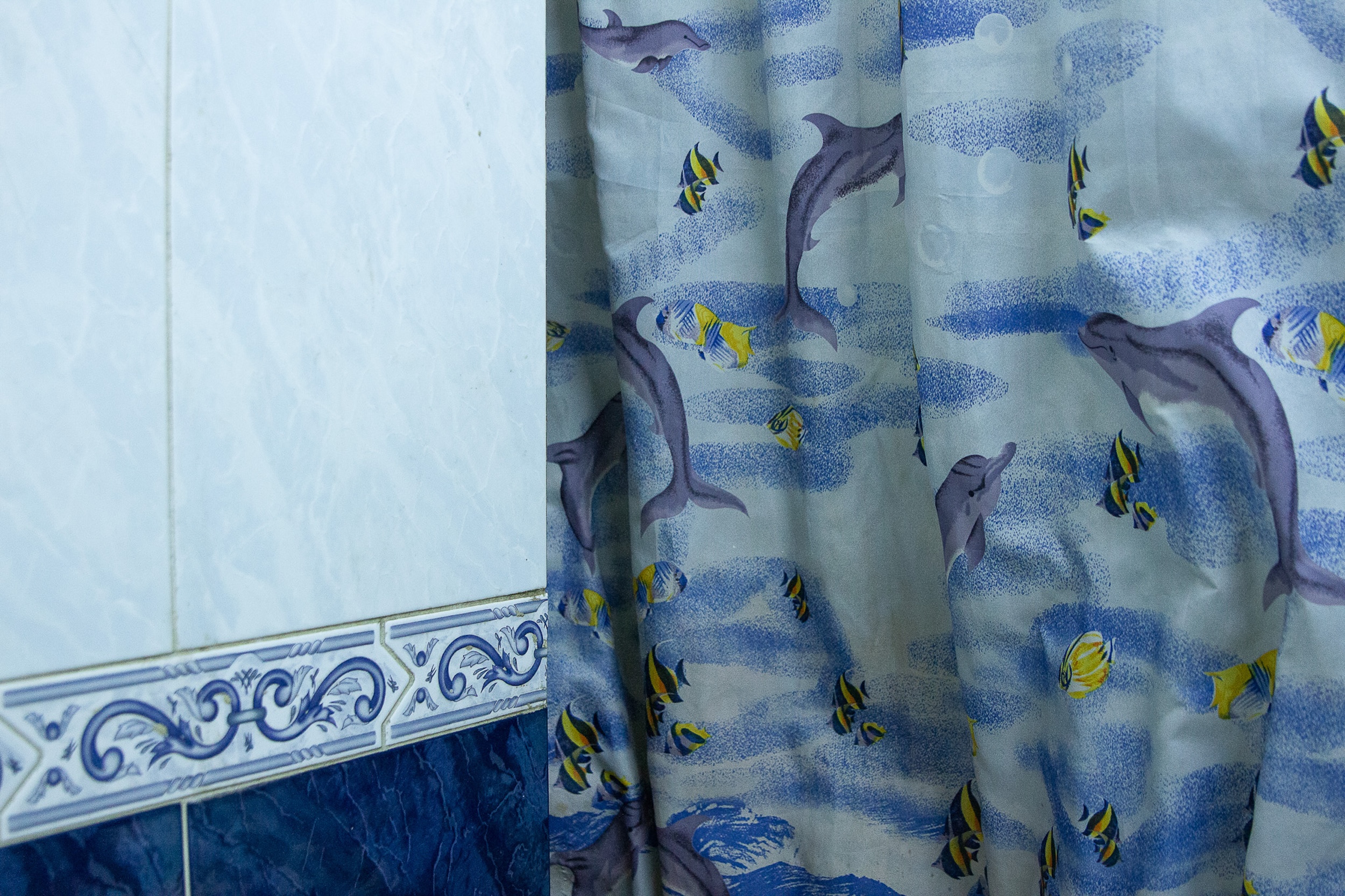
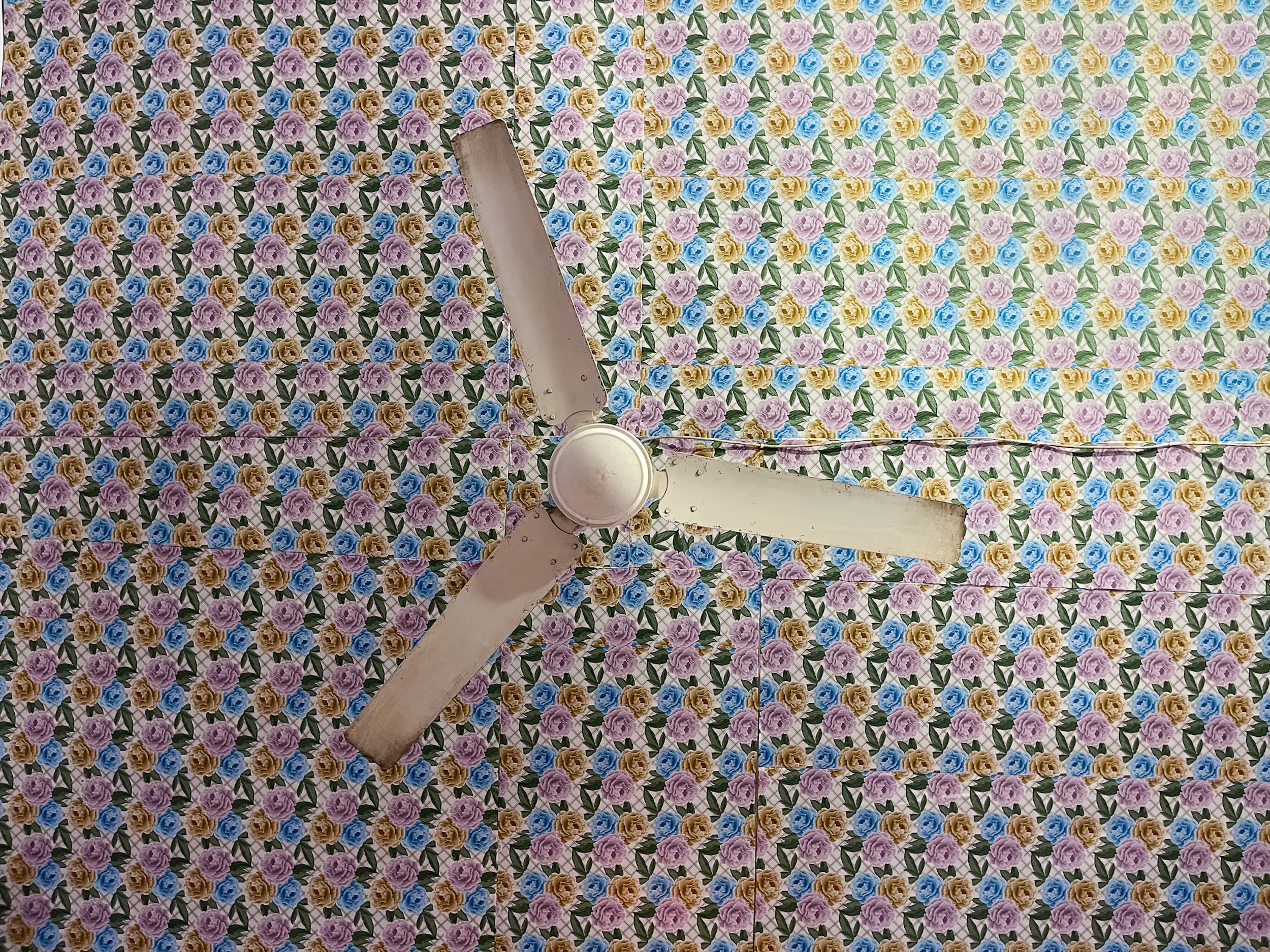
Another remarkable shot is of a ceiling fan against a rather chaotic wallpaper of blue and pink roses. A recent trend has emerged amongst the SWANA diaspora to both honour and somewhat jest at what’s known as ‘Arab kitsch’, this very vibrant, opulent, or ‘trashy’ visual coded system that is at the heart of Arab pop-culture. But what El Beyaly does is simply notice it. Her gaze doesn’t feel patronising; rather, it feels comforting to the viewer. Something recognisable and true.
“I think it comes from childhood,” El Beyaly tells me. “I used to spend a lot of time noticing small things in the house. Now I do the same. I focus on objects, corners, textures. I like observing details that usually go unnoticed. Yes, it’s romanticised, but it’s still real. It’s just how I see things.”
This play, or tension, between ‘real’ and ‘romanticised’ is the same tension that is necessary in performance and theatre. In the same way El Beyaly is adept at both staging images in her fashion editorial work, and noticing the gestures of authentic, everyday life. And there is something so honest about the way the artist sees her homeland – through the eyes of both a visitor and a local. Being based between France and Egypt – existing in diaspora – might allow El Beyaly certain sensibilities not every photographer has access to. That is perhaps the power in her striking yet seemingly straightforward work: to see things that escape others’ views.