


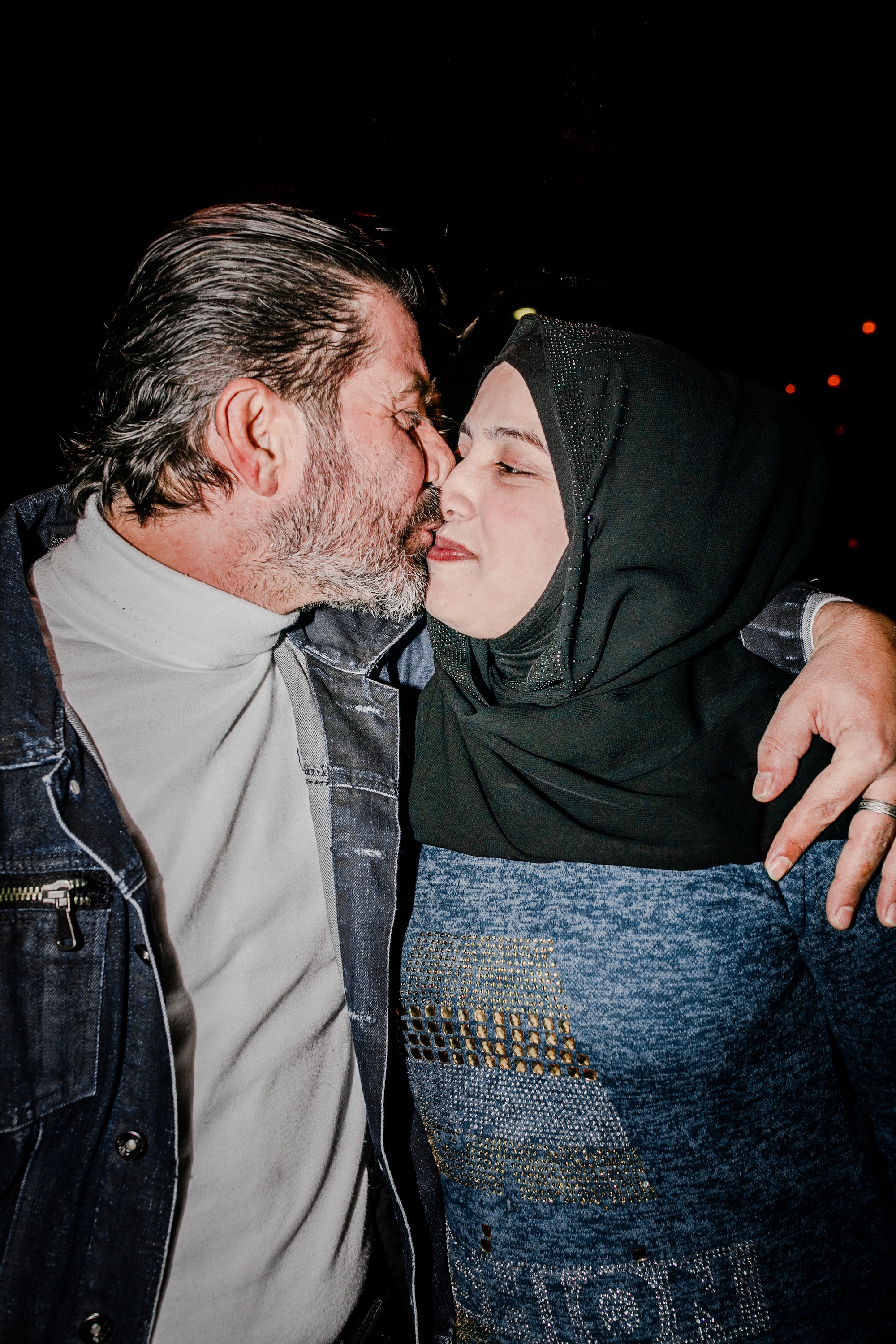
From What’s Ours. Lebanon. 2013-2023 © Myriam Boulos. Courtesy of the artist
Gathering work by seven living artists and one artist duo from across South West Asia, North Africa, and its many diasporas, No night is long enough for us to dream twice presents an expanded approach to image-making at the Art Gallery of Western Australia
“No night is long enough for us to dream twice” is a celebrated line from the poem The Raven’s Ink, by Palestinian author Mahmoud Darwish. Born in al-Birwa in 1941, Darwish was forced to flee the village with his family in 1948, when it was captured and razed by the Israel Defense Forces; the family managed to return to close nearby but, having missed the Israeli census, was assigned ‘present-absent aliens’. Darwish found this situation absurd, and he used absurdism and surrealism in his poems to articulate the fragmented reality of exile. But he also used them to envisage new possibilities. His poems are “lyrical, imagistic, plaintive, haunting, always passionate and elegant – and never anything less than free – what he would dream for all his people”, poet Naomi Shihab Nye has said.
Curator Dalia Al-Dujaili was inspired by Darwish’s practice when working on the exhibition No night is long enough for us to dream twice, on show at The Art Gallery of Western Australia until 31 January; putting together work by artists from across the SWANA region and its diaspora with co-curator Rachel Cieśla, she wanted to reach beyond the documentary imagery so often seen from this area, and towards something more liberatory. “I was curious to explore how regional and diaspora SWANA artists utilise artistic movements and philosophical approaches such as absurdism and surrealism to expand the possibility of photography,” she explains. “So much of the work from our region is stuck in war or documentary aesthetics and approaches, and whilst useful in some contexts, it feels flattening, dehumanising and also limiting for the artistic careers of these photographers.
“I also feel like Eurocentric curatorial approaches impose these kinds of aesthetics and want to go to shows about the SWANA expecting a certain kind of mood or vision, which I really wanted to challenge. I was not interested in flags and pomegranates and these heroic images of liberation – though, again, so beautiful in other contexts. I wanted audiences to be surprised by the universality of concepts like play, desire, lust, violence and celebration and how these play out in the region when they are scrutinised under the camera lens.”
“The idea I’ve been working with is ‘documentary futurity’: a documentary impulse that records what is happening while also imagining what could come next,” adds Cieśla. “Dreaming is the right word for that, because a dream isn’t a record of the past. It’s the mind opening out onto another world that I’ve created in order to try out another possibility. In the exhibition, you see photographs and videos that stay with difficult sites without settling into elegy. They keep a door open.”
“The idea I’ve been working with is ‘documentary futurity’: a documentary impulse that records what is happening while also imagining what could come next.” Rachel Cieśla
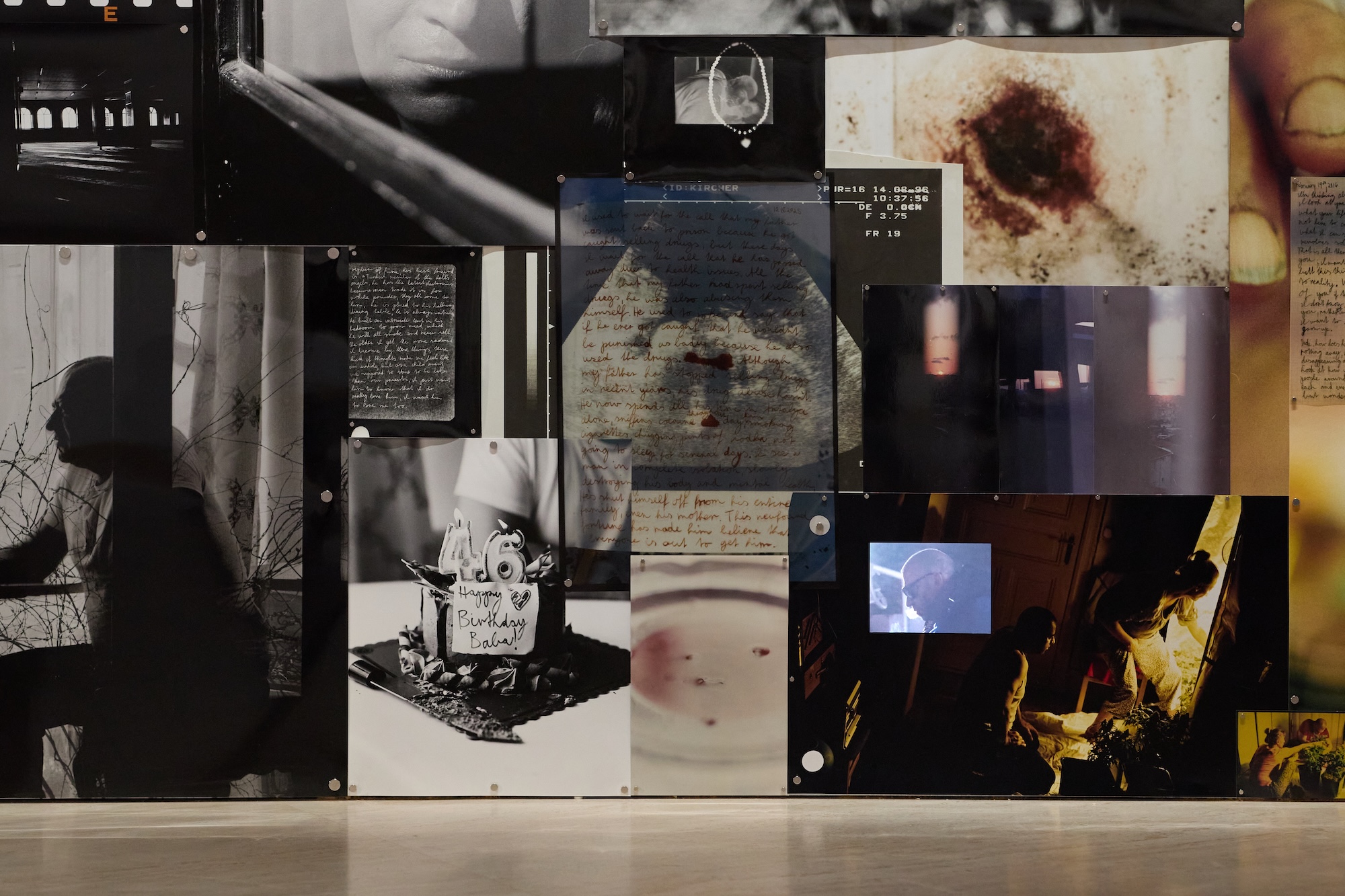
No night is long enough for us to dream twice includes seven living artists and one artist duo whose work opens this sense of possibility; the artists span the South West Asia North Africa region, including Algeria, Iran, Lebanon, Morocco, Palestine, and Türkiye. The exhibition includes a site-specific new iteration of Abdulhamid Kircher’s Rotting from within (2026), which includes photographs, family snaps, and 30 video works to create a dense collage, seemingly at the edge of what it can contain. Describing Kircher’s relationship with his estranged father, Rotting from within includes moments of peace and love, all the joy and pain of what the curators describe as “the unruly complexity of lived experience”.
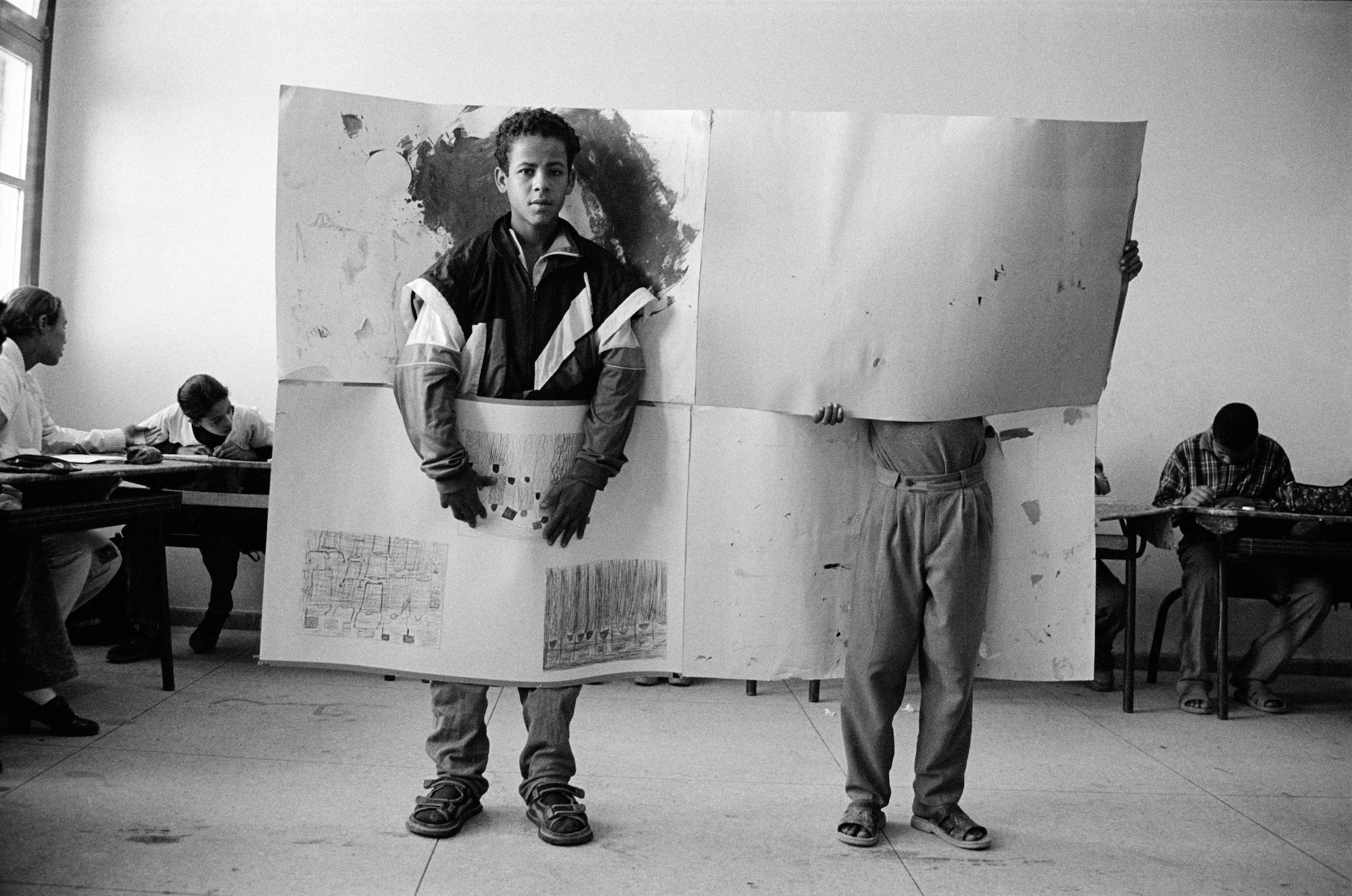
Lebanese image-maker Mohamad Abdouni considers family alongside intimacy and queer experience, in which images become inseparable from questions of belonging and visibility; Hicham Benohoud – who hails from a different generation – embraces a different kind of messy with his portraits of Moroccan school children, taken while he was an art teacher. Disillusioned with the rigid four-hour lessons he was expected to run, Benohoud transformed his classroom into a studio in which the students could be creatively free. Photographing the results between 1994-2002, his images are warm and anarchic; they also imply a critique of the education system, and what Benohoud saw as its failings.
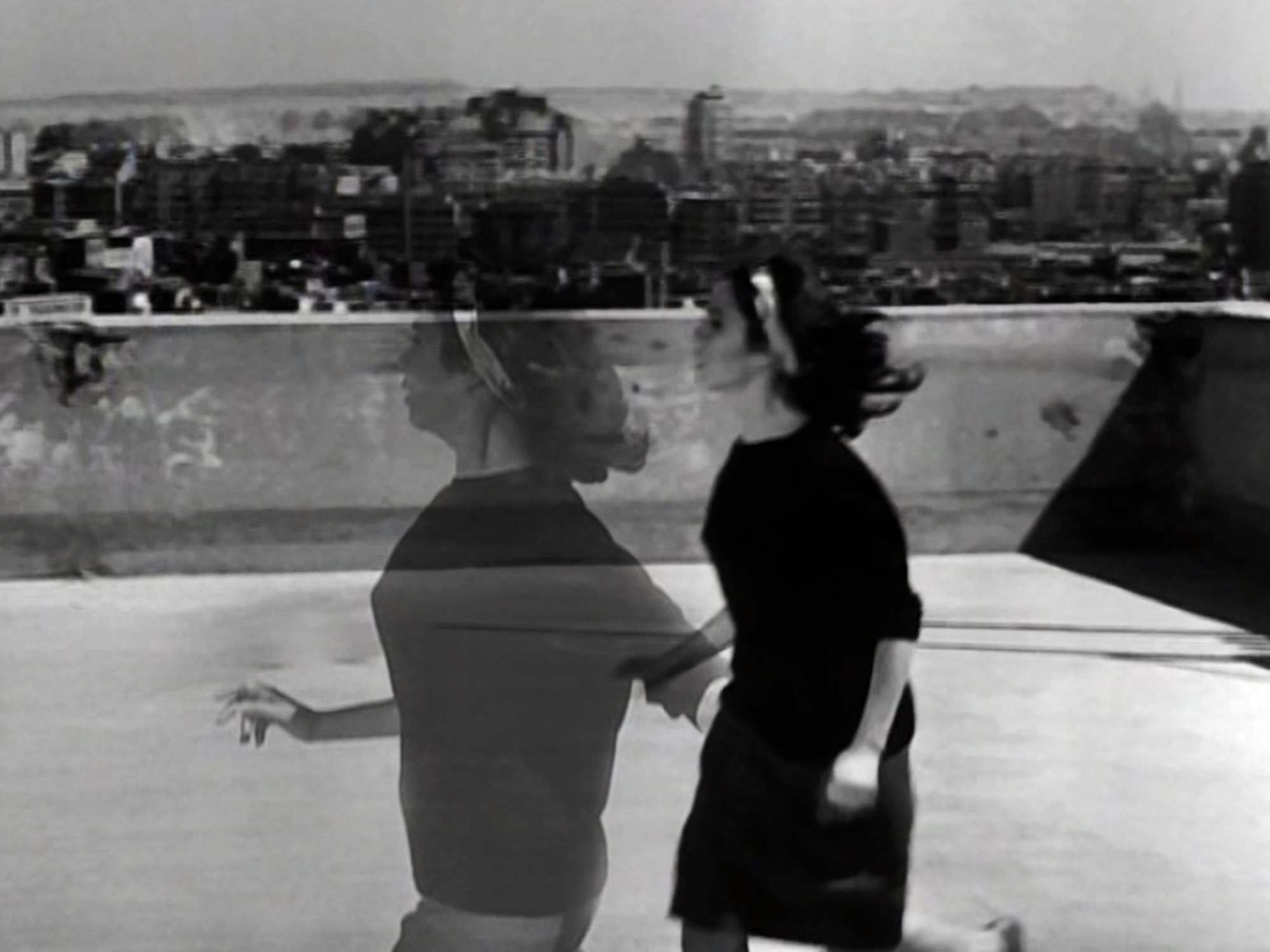
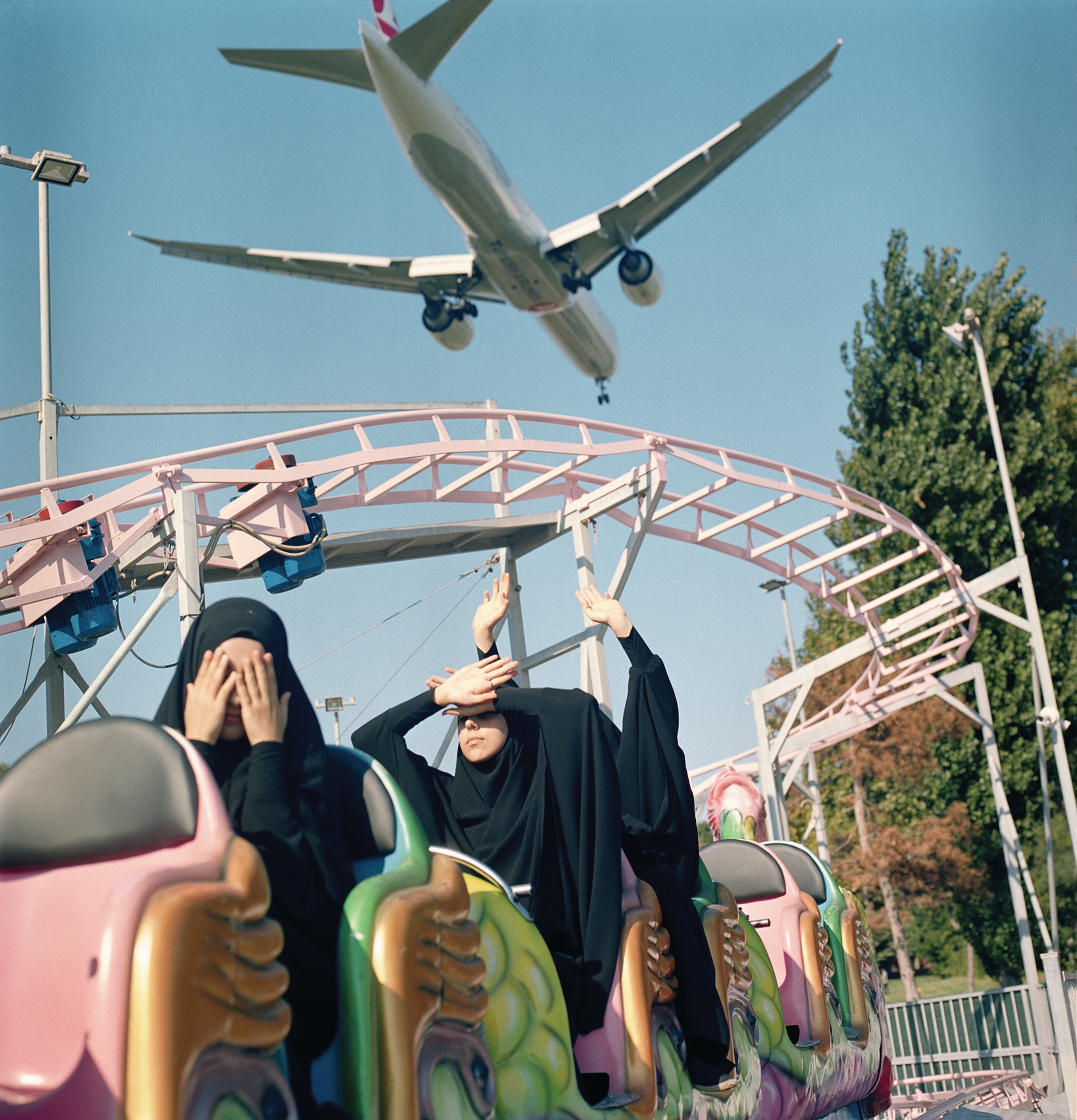
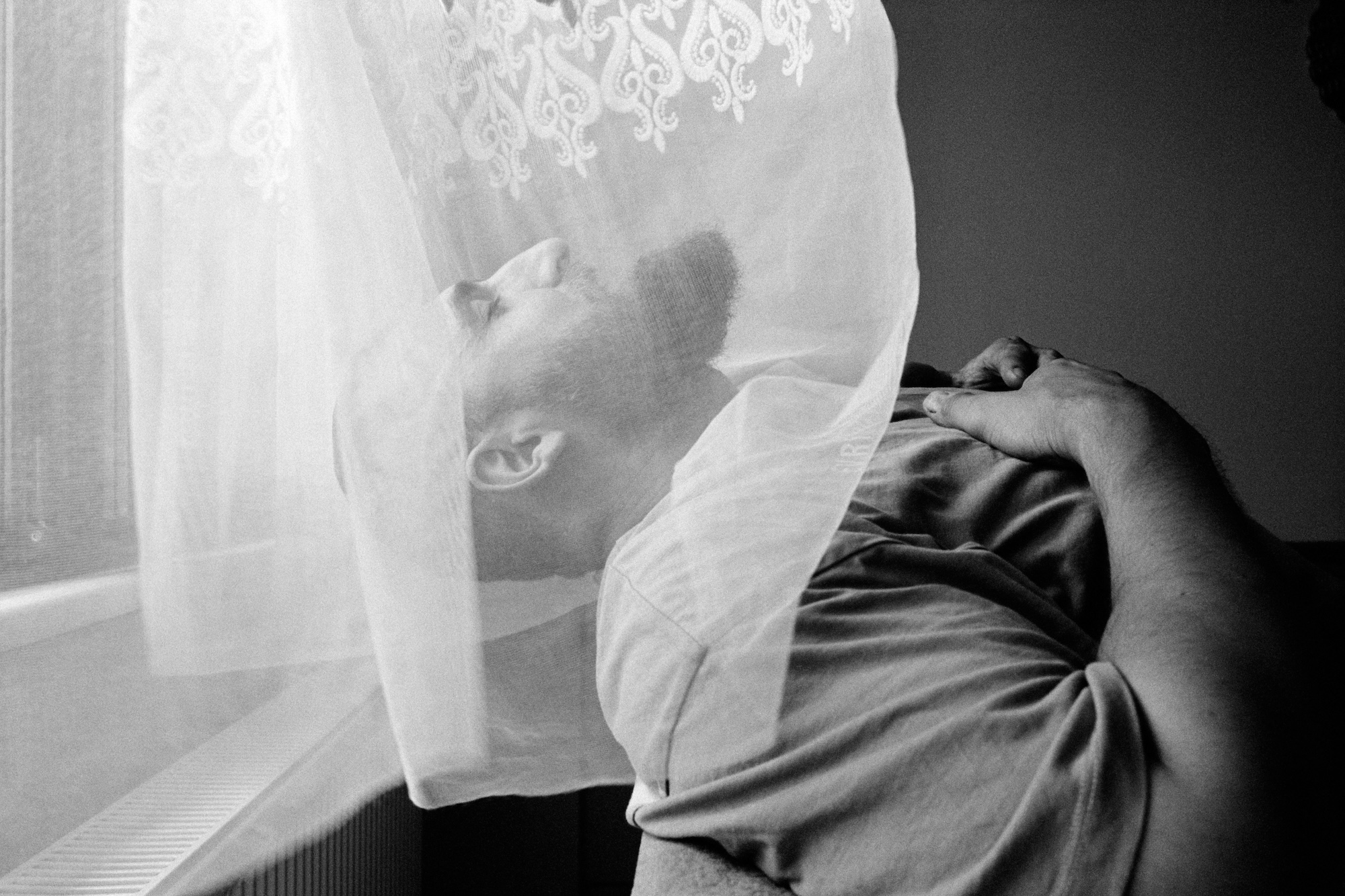
Sabiha Çimen explores life for school kids too, her series Hafiz shot in girls-only Qur’an schools in Turkey; finding moments of humour and intimacy, it speaks of rich inner lives inside the uniforms. Born in Istanbul, Çimen is a self-taught photographer and now a member of Magnum Photos; Hafiz was her first photobook, and it won the 2022 Paris Photo-Aperture First PhotoBook award. No night is long enough for us to dream twice also includes important projects by Myriam Boulos and Hannah Darabi, both of whom explore intimacy and sexuality amid times of protest and political change; Boulos is from Lebanon, and is also a member of Magnum Photos, while Darabi uses found images to talk of Iran. Darabi’s Why Don’t You Dance? used collage as a means to discuss bodily autonomy and personal liberation; No night is long enough for us to dream twice includes a satirical 1980s gym dance class, which Darabi shot as a video work.
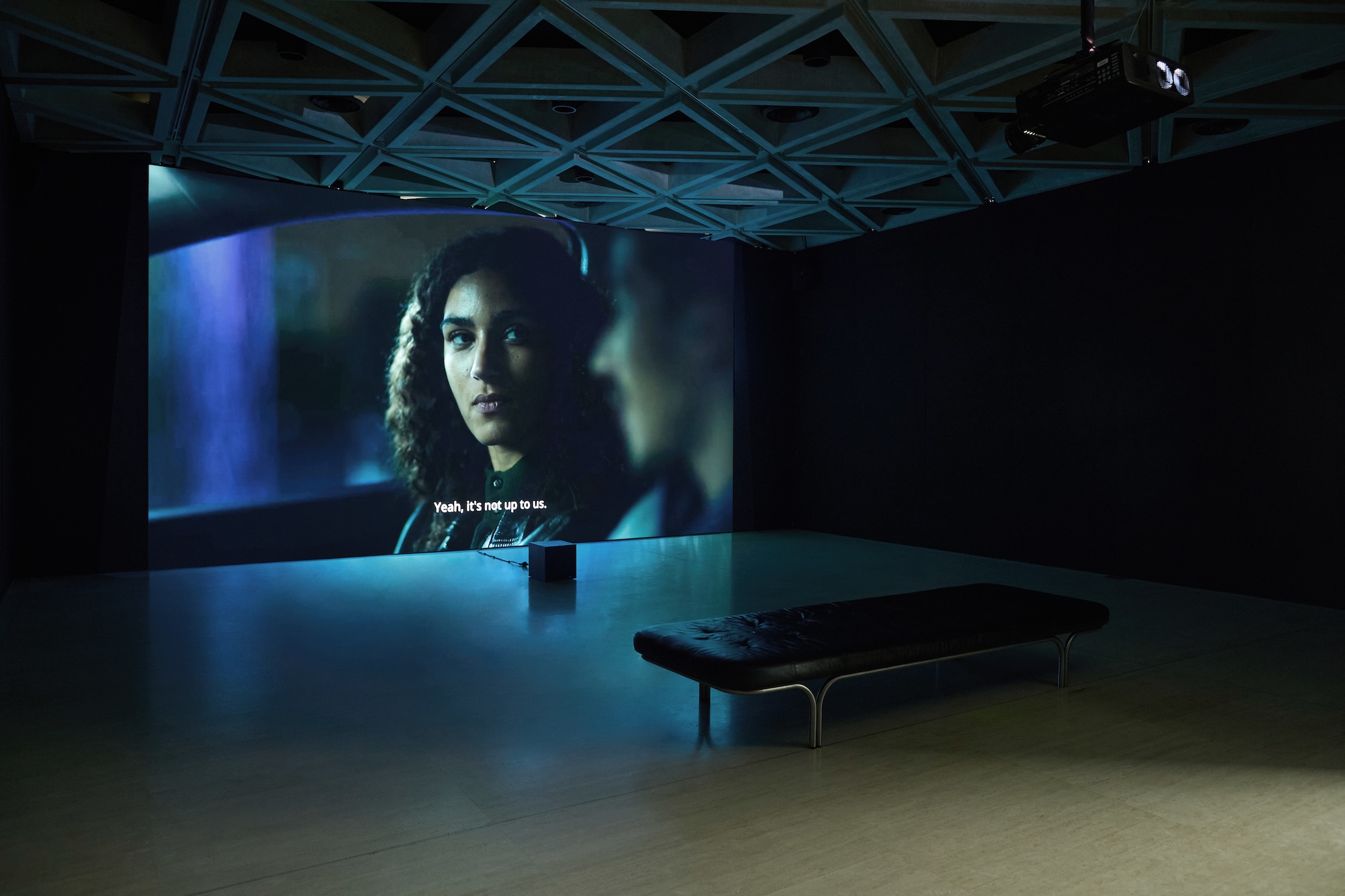
The exhibition also includes two other video works. Basel Abbas and Ruanne Abou-Rahme, who are of Palestinian descent, contribute the video-sound installation Collapse, which combines original documentary and material from historic films and “leads you into the slightly darker moments of the show”; Mohamed Bourouissa, the Algerian-born French photographer, shows his video work Généalogie de la Violence (Genealogy of Violence), 2024, in which a young couple in a car chat and discuss their future – until they are interrupted by a police identity check. Bourouissa is also exhibiting his seminal image Le cercle imaginaire (2007-08), from broader work Périphérique, which investigates social tensions in the marginalised Parisian banlieues.
Darabi’s film is being shown on an appropriately retro 1980s TV, but the two other films are being shown at large scale, as are many of the images, and Kircher’s whole-wall installation. “We blew a lot of the images up because we wanted the show to feel really immersive,” Al-Dujaili explains. “I talk about it like walking through a fever dream.” She and Cieśla have also included a book display to help add context though; the audience in Perth won’t necessarily have much knowledge or understanding of the richness of SWANA-region photography, Al-Dujaili points out, so they wanted to help them get acquainted. “It felt important to challenge what these audiences might expect walking into a SWANA show, and hopefully they will leave with a new ‘to read’ list or a new photobook in their hands.”
And it was books that brought Al-Dujaili and Cieśla together, and helped bring the show into being; Cieśla heard about Al-Dujaili through her HIKMA project – an online repository and library for materials on Mesopotamia and modern day Iraq – and reached out to her via WhatsApp. Their shared interest in photography from the SWANA region and its diaspora soon became clear, and evolved into the idea of an exhibition around this work and the theme of dreams. Cieśla is Lead Creative at The Simon Lee Foundation Institute of Contemporary Asian Art, a curatorial initiative at The Art Gallery of Western Australia which she describes as “working to enrich AGWA’s connections with contemporary artists and cultural thinking in Asia and across its diasporas”. The Institute is wary of shows that are geographically bounded in a fixed sense, she adds, so No night is long enough for us to dream twice is deliberately wide, including artists from across the region and its diaspora rather than honing in on a particular culture.
This approach is also appropriate, she adds, reflecting its geographical, political and cultural history. “The borders across SWANA have been drawn and redrawn, and people move across them constantly, through exile, migration and family ties. A show built around one place might have treated those lines as fixed, when for many of these artists they aren’t. It also meant we could include artists working in the diaspora, whose images are shaped by distance as much as by where they come from. What we were drawn to instead was something these artists share beyond a common geography – a relation to pressure,” she continues. “Each of them makes images within spaces where social forces are building, breaking and building again, whether that’s a city, a home, or a body. Putting them side-by-side lets you see how that pressure shows up differently in each context, and what echoes between them anyway.”
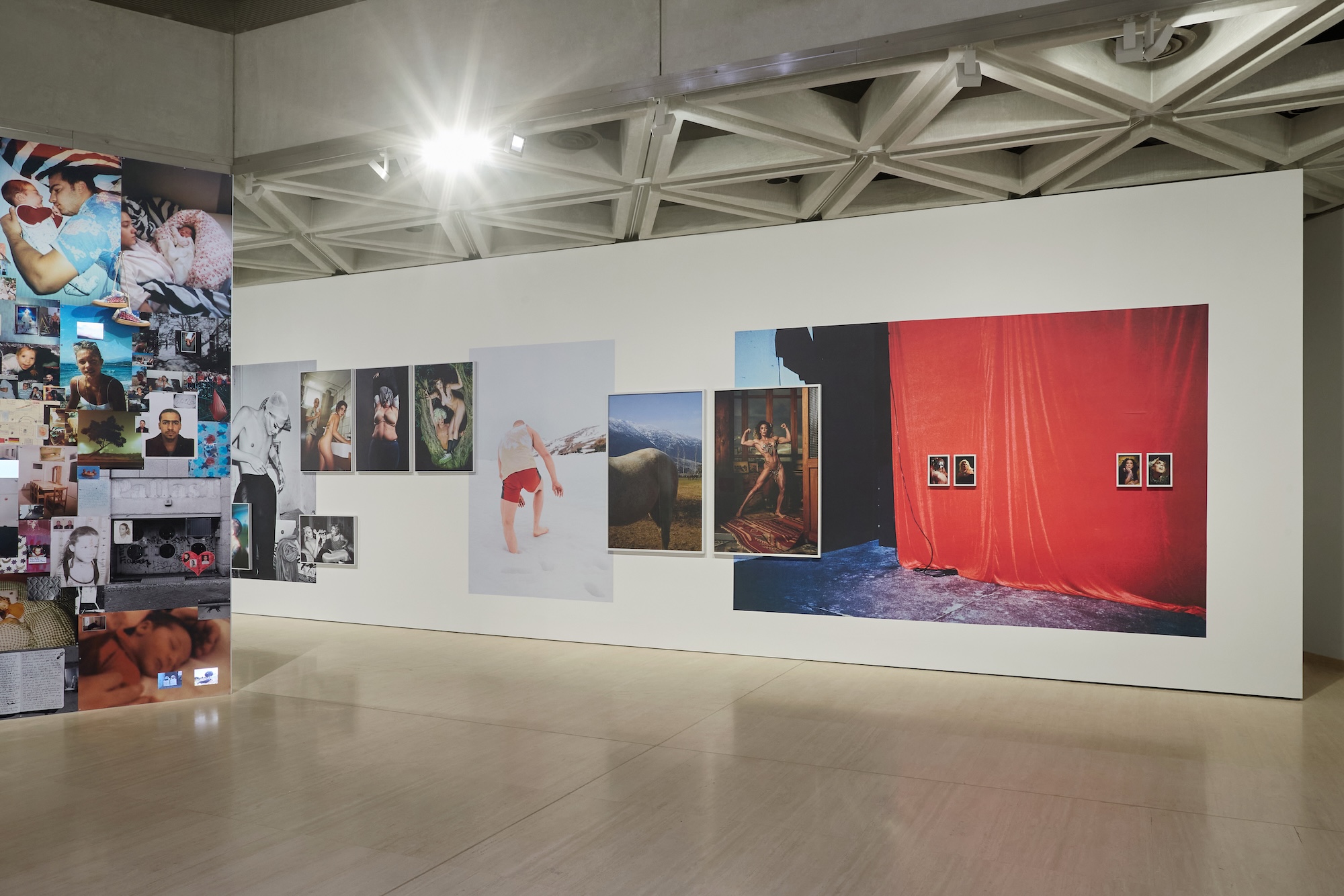
No night is long enough for us to dream twice is on show at The Art Gallery of Western Australia until 31 January 2027 artgallery.wa.gov.au