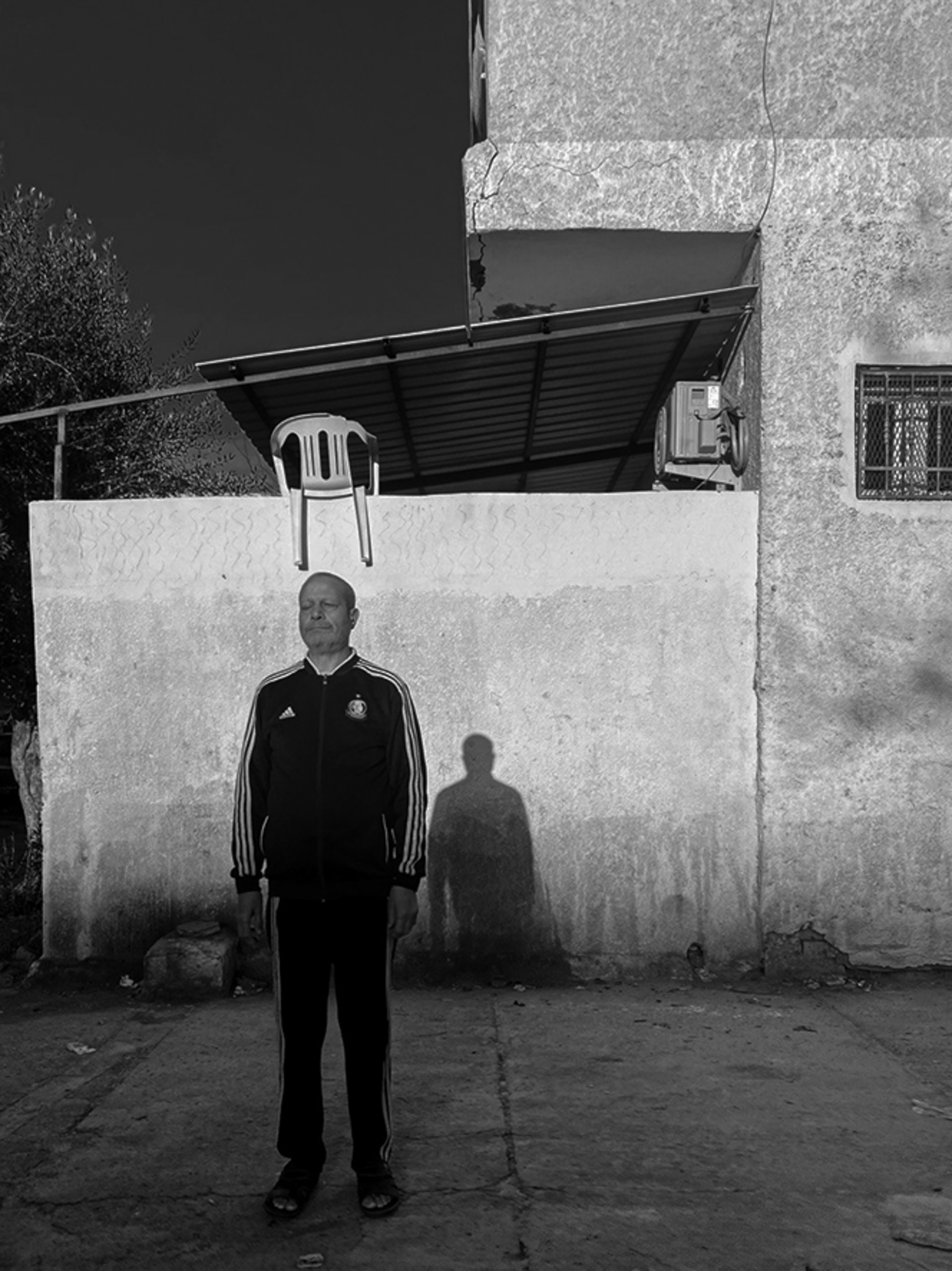

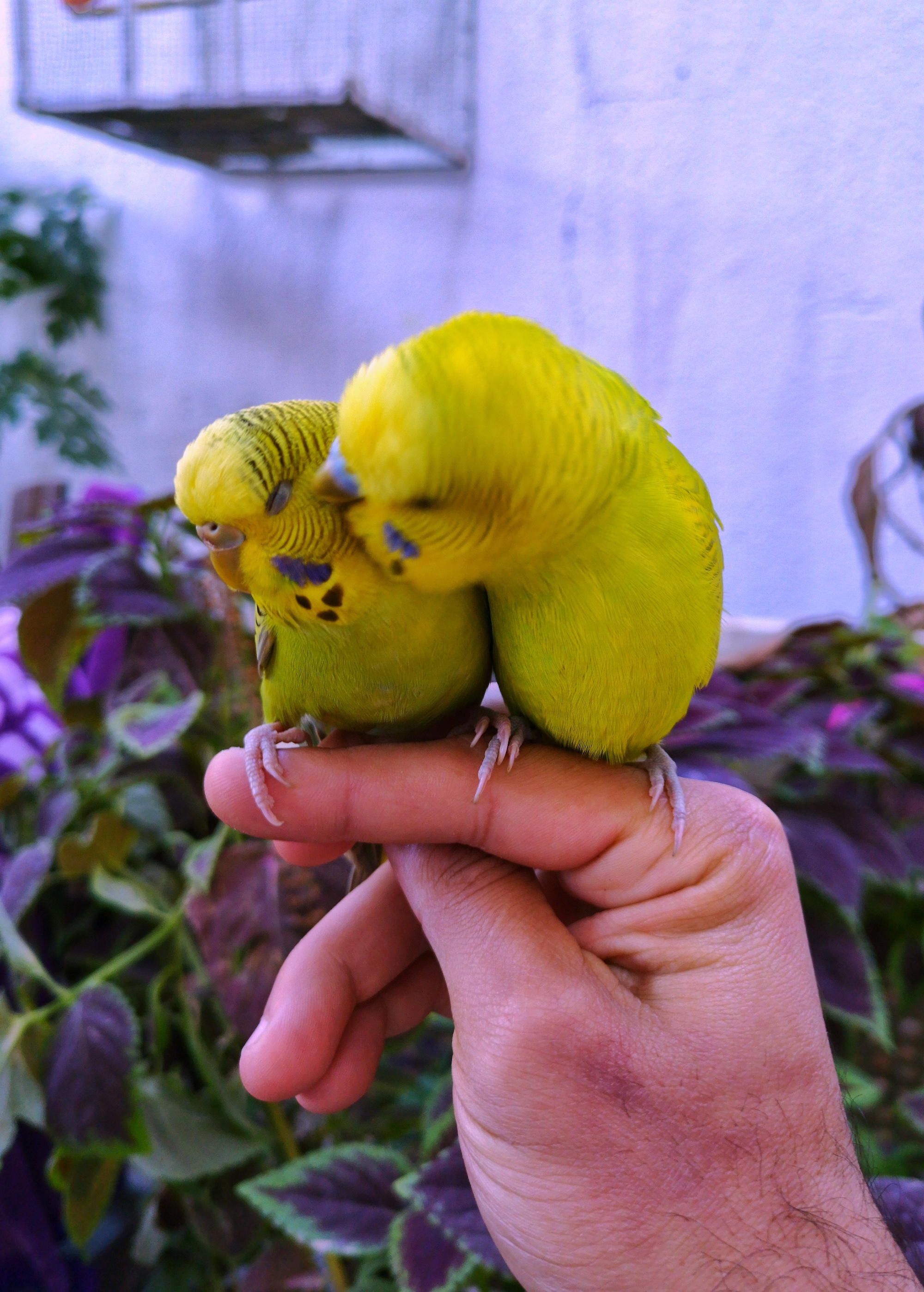
© Majd Arandas
Held within the wider BredaPhoto Festival, a strand of exhibitions by artists from the SWANA region dismantles flat media-driven narratives to present richer, more nuanced perspectives
For decades, the visual vocabulary assigned to the Southwest Asia and North Africa (SWANA) region by the international world of photography has been an exercise in transactional observation. A hyper-visible taxonomy of ruin, anchored in flattened and anonymised rage and grief, manufactures a state of perpetual exception, flattening complex social topographies into spectacles that court Western pity while burying structural truth. Within global institutions, regional image-makers are mined for local authenticity but systematically stripped of political urgency; international editors sanitise symbols of local resistance to satisfy detached audiences, while treating practitioners’ lived experiences as barely compensated raw material.
Yet a slow but steady shift in lens-based practices is gaining momentum, even in traditional and so-called apolitical spaces. Rather than seeking to correct the distorted mirrors held up by so many foreign photographers, or bending to the restrictive mandates of international gatekeepers, an emerging generation of image-makers, researchers, and storytellers is choosing to bypass these institutions, or only engage with them on their own terms. They are constructing what can be termed a “counter-archive”, not as a nostalgic retreat into a static past, but as an intentional, self-authored historical record of perpetual survival towards ultimate liberation.
This critical reclamation underpins a strand of the exhibitions in the current BredaPhoto Festival, which is themed Our Songs Came Through. Co-curated by Mohamed Somji, Ileana L. Selejan, and Astrid Hulsmann, the biennial explores how individuals and communities find solace and comfort (or “troost” in Dutch) and how intimate imagery and memory can puncture institutional erasure. These questions are key in the SWANA context.
“This kind of work gives us the tools to crack open a radical collective imagination.” Noor Abed
Somji’s curatorial approach is characterised by a rigorous push towards self-authored storytelling, honed through his experience programming at Gulf Photo Plus, including at its popular Slidefest evenings. There developing regional practitioners are given the space to express their grievances and interrogate their motivations, away from the Western gaze. Inherited hierarchies of recognition are consistently broken down. But manifesting this dialogue in an exhibition in a Western institution can be challenging.
“When we started talking about this theme toward the end of the last festival, I was skeptical about how easily it could become very kumbaya – a superficial ‘let’s all go into the mountains, cleanse our world, and come back’ approach, while mass killing and active displacement are unfolding in Palestine, Lebanon, Yemen, Sudan, Iran and elsewhere,” says Somji. “We went back and forth on the texts and the selections of artists, work, and more, to make sure the structural, political reality was firmly addressed.
“Through GPP, we’ve spent years building an infrastructure for self-authored stories, because we know the damage of institutional erasure,” he continues. “The artists featured here aren’t just capturing conflict, they are archiving the poetry, the domestic resistance, and the psychological architectures that endure when people insist on surviving on their own terms.”
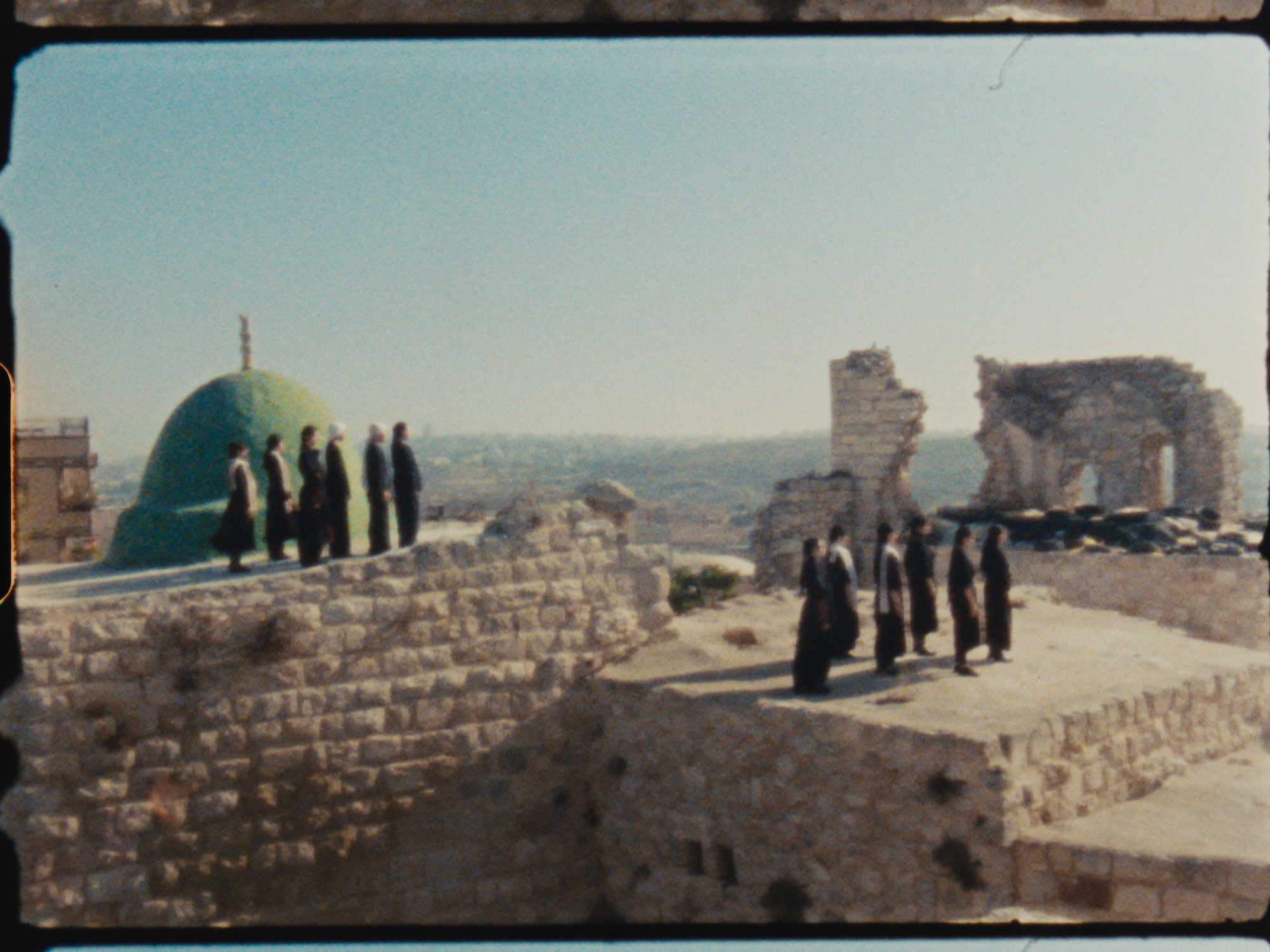
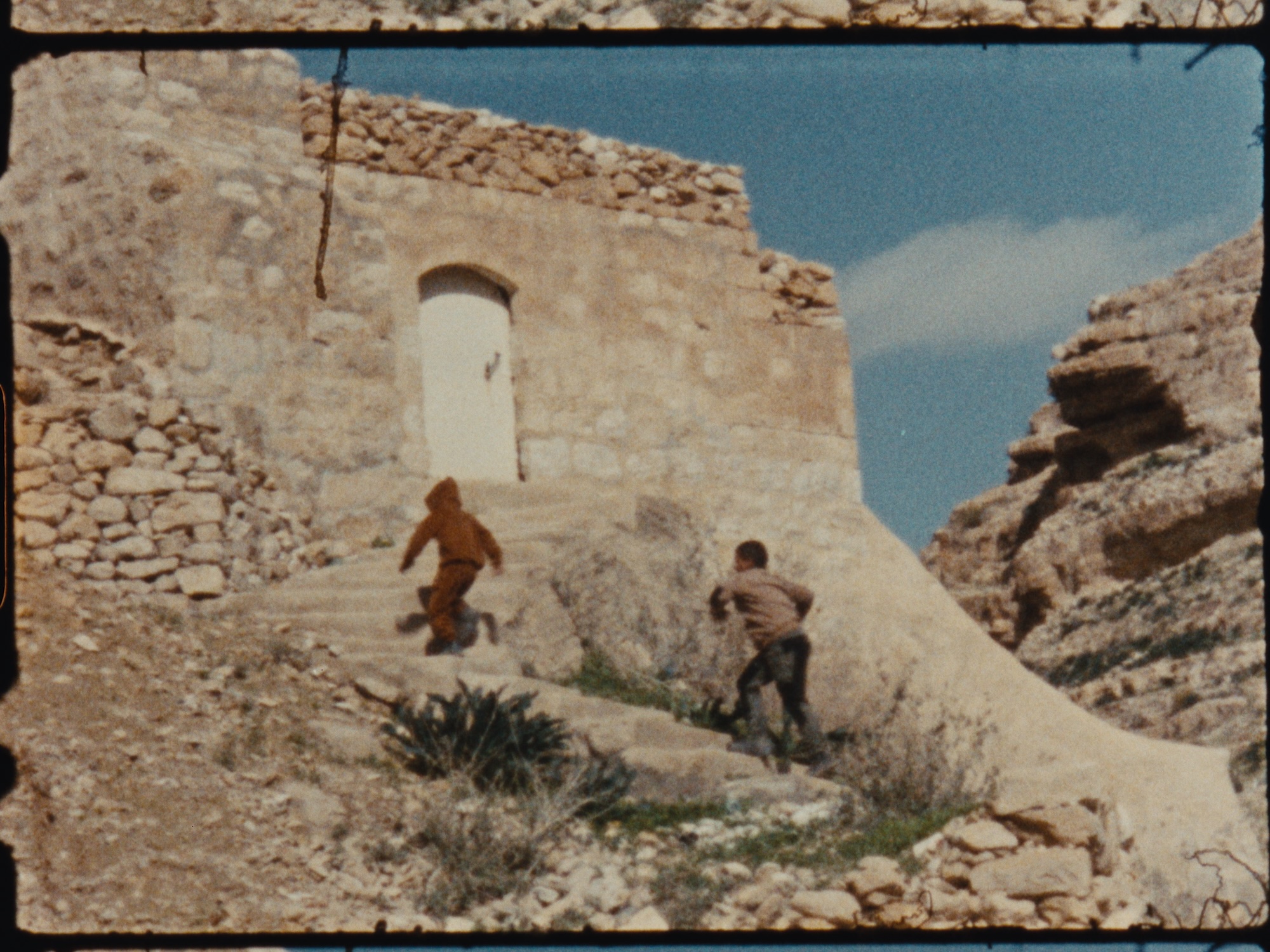
Palestinian artist Noor Abed’s specially-commissioned video installation, we walk in our sleep, presents a poetic blueprint of Palestinian realities, for example, subverting the clinical approaches of mainstream media and military occupation. Outsiders’ depictions of Palestine have often relied on the iconography of the barrier – checkpoints, watchtowers, concrete walls, and actively-restricted freedom. This centres the occupier’s gaze, defining Palestinian life entirely by that which restricts it. Abed adamantly refuses this framework.
Working in close collaboration with her family and neighbours, she turns the lens inward to examine how land is claimed, remembered, and mythologised through collective, physical ritual. we walk in our sleep moves through a series of vignettes, showing people whose gestures hover between ancient agrarian labor and contemporary performance art. Synchronised figures moving across open hillsides, the subtle positions of their heads and hands invoke histories that predate violent colonial sketches. Projected in a completely darkened, small room with only a tiny bench to sit on, the film is difficult to categorise; it’s overwhelming, in a way that feels necessary.
Abed was initially inspired to make the film when she noticed people muttering to themselves on the streets of her hometown; after many sleepless nights of contemplation, she connected this phenomenon to something else she had already zoned in on, the sacred space between the living and the dead. Abed believes that the martyrs walk among us.
“For many, many years now, I’ve been contemplating the wide range of rituals around mourning and death, which is something we witness every day,” Abed explains. “In the last few years, it started to become physical. The dead are among us, I truly believe that. So for me, it’s almost like carving into this space, the air around me. It became an exercise of listening to and being close to the martyrs [those who have been unjustly killed].”
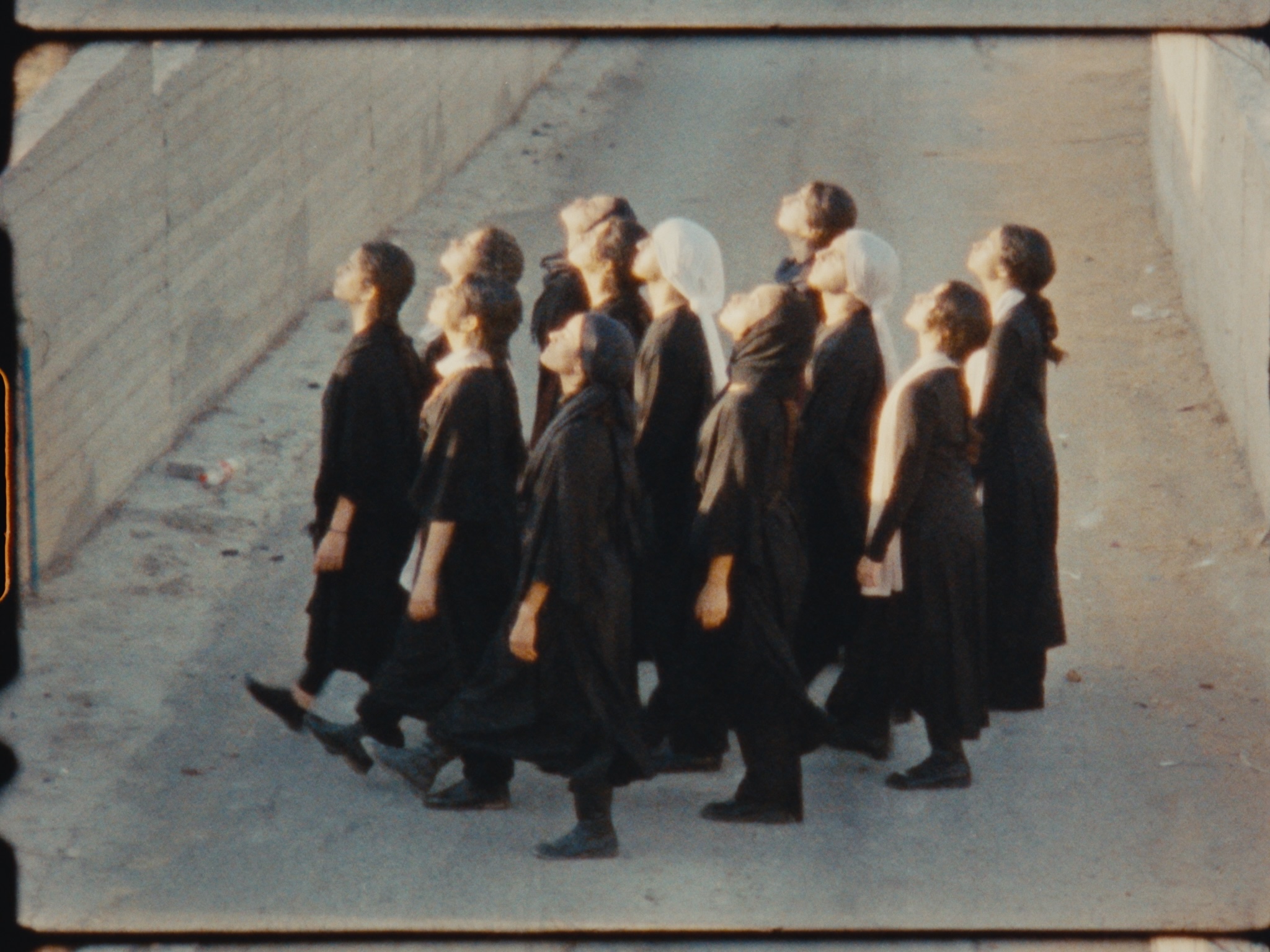
Abed’s work maps a psychological landscape that remains inaccessible to the colonial apparatus; a checkpoint can bisect a road, but it cannot erase the collective memory of a community that has walked, sung, and lived on that land for thousands of years. She refuses to use folklore as mere nostalgia, but positions it as a perpetual tool of survival, demonstrating its inherent political utility. Her lens is patient and meditative, a direct rejection of the high-velocity aesthetic of breaking news stories disseminated in a 24-hour cycle; instead it asserts an invisible, unbreakable network of spatial permanence.
“For me, it’s a work of deliberate digging, of continuous searching – instead of considering the past as framed and fixed,” she says. “Because this is very dangerous, particularly in the context of Palestine. Once the past is turned into mere symbols, there is a risk of not being able to breathe anymore. It becomes empty. And for me, the collective memory is all about the embodied practices, knowledge, our rituals and the visceral connection to our land – whether in joy or in loss, in a funeral for a martyr that turns into celebration.”
Abed insists on the preservation of memories, by transforming them and keeping them connected to the present. “To simply lean on the past in this utopian way, with distance, there is no resistance for that in me,” she says. “This kind of work gives us the tools to crack open a radical collective imagination, that gives us both the hope and the means to rehearse liberation. Because there is no future other than liberation.”
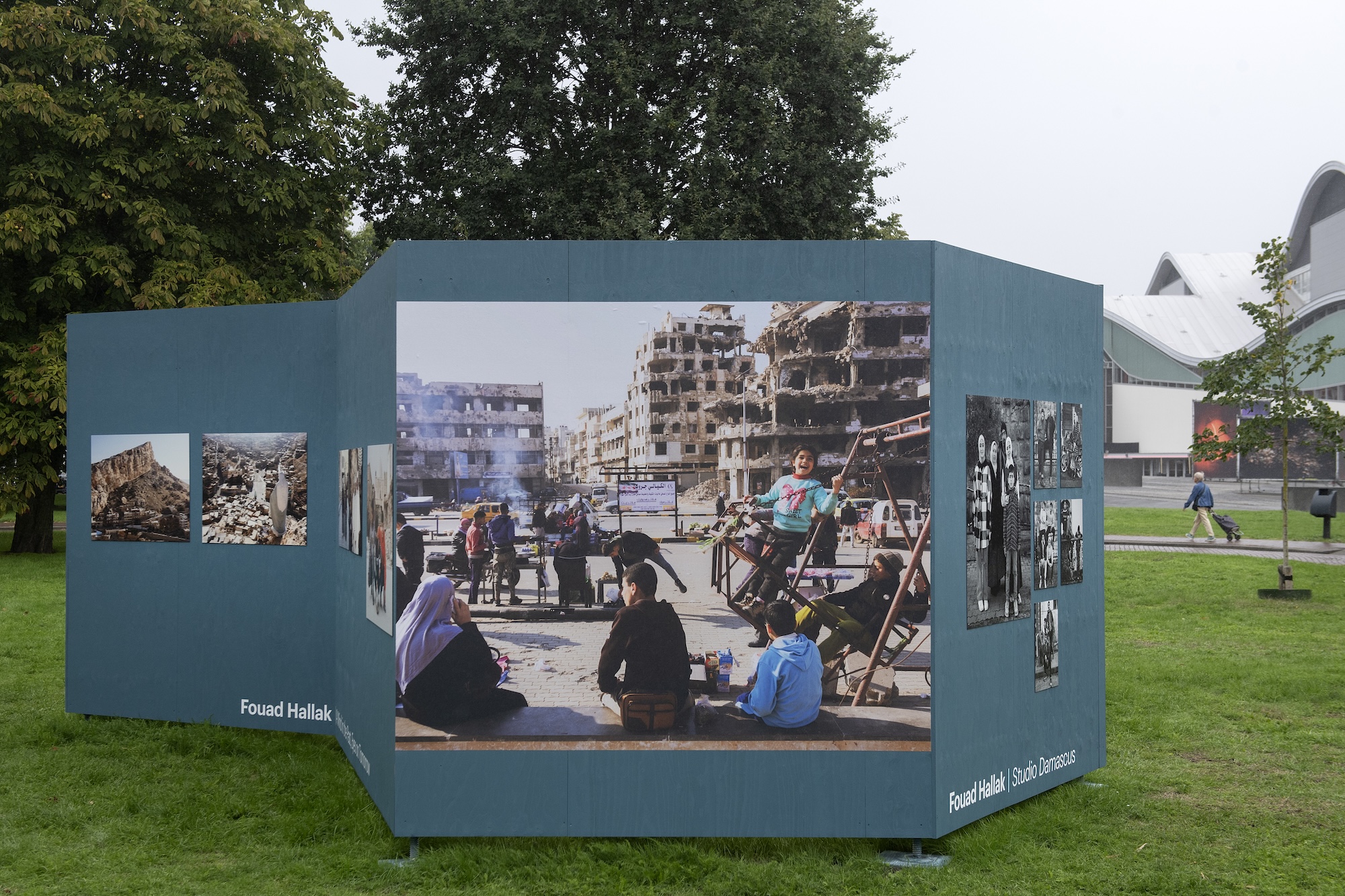
While Abed maps the deep roots of connection to the land, Fouad Hallak’s A Mind in the Past, Eyes on Tomorrow addresses the fractured geometries of exile and return. Born in Syria, Hallak fled the country on a migrant vessel to claim asylum in the Netherlands; his work shifts away from diasporic trauma towards an internalised psychogeography. His recent documentation tracks his return to his homeland, in transition following the fall of Assad, capturing the fragile space between historical devastation and actualised hope.
“After the fall of the Assad regime, I noticed that people often looked at what happened in two different ways – some stories were bright, and others were painful,” Hallak reflects. “But these feelings can exist at the same time. When I went back, I was not an outsider. I was part of the story. I see this in the photograph of Khaled, who protested and fought against the regime. He carries his history with him and still moves forward… Before, this possibility did not exist. Now it does. For me, that is hope.”
Fascinated by old studio portraiture, and saddened by its disappearance due to war, Hallak created a temporary mobile setup in the streets of Damascus. Inviting residents to have their portraits taken, he constructed a new archive of Syrian presence with his series, Studio Damascus.
“When survival becomes part of everyday life, the simple act of having a portrait taken becomes difficult,” he says. “I believe that having a portrait taken with your family can be a sign of stability. When I direct people in front of the camera, the connection creates a moment in which they can step away from their instability. Studio Damascus explores reunion, memory, belonging, and the human need for stability.”
Hallak refuses to flatten the reality of a community navigating a shattered state. “After all these years, I still feel there is a desire to make these realities easier to understand,” he concludes. “I don’t think the problem is misunderstanding. This is what I search for in my practice – a language that comes from human feeling. Something emotional, intimate, and perhaps even spiritual.”
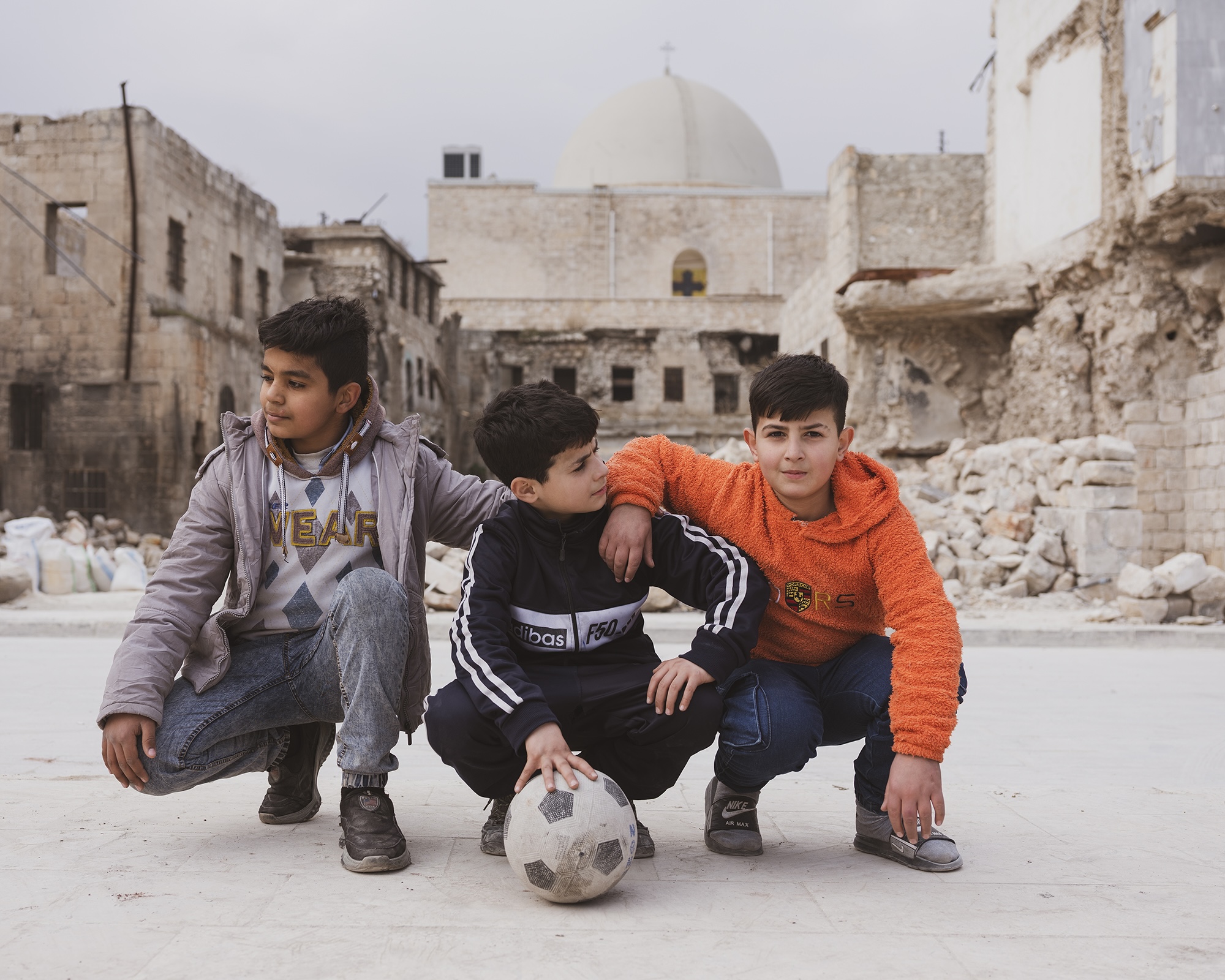
Meanwhile photographer and filmmaker Fatima Joumaa turns the counter-archive towards the structural realities of South Lebanon (Al-Janoub) and Beirut’s southern suburbs (Dahiyeh). In her intimate project From My Mother’s Novel: Returning to South Lebanon, she weaves images through her mother Layla’s old notes and sketches, creating a meditation on grief, memory, and women as keepers of history. Joumaa combines analogue photography, poetic video essays, and first-hand local testimonies to directly challenge the usual media representations of war.
Whenever life in Lebanon is ruptured – and there have been many compounding crises over the past seven years alone, long before Israel’s current genocidal assault and occupation of the South – global image-makers flood the streets, capturing the immediate violence and debris, the grief and rage, before equally swiftly departing. This high-velocity reportage leaves what Joumaa calls an “after-image” in its wake, a concept she has developed into a series for independent Lebanese magazine The Public Source.
Shifting her gaze toward the quiet, slow-burning aftermath and complex interiorities that unfold after the intrusive cameras leave, she fights the persistent clichés that reduce entire neighbourhoods and their inhabitants to passive sites of devastation. “I was always aware of how much the image is treated as an extractable resource, whether moving or still,” she says. “And often, when international media or institutions approach us, they want the image because it carries a kind of authenticity – but they want to decide what that authenticity is allowed to contain.
“I have been asked to remove flags, portraits of martyrs, political signs, or anything that might make the image appear too political to them, as if there’s anything that isn’t political,” she continues. “And I refuse to portray my people only as victims.”
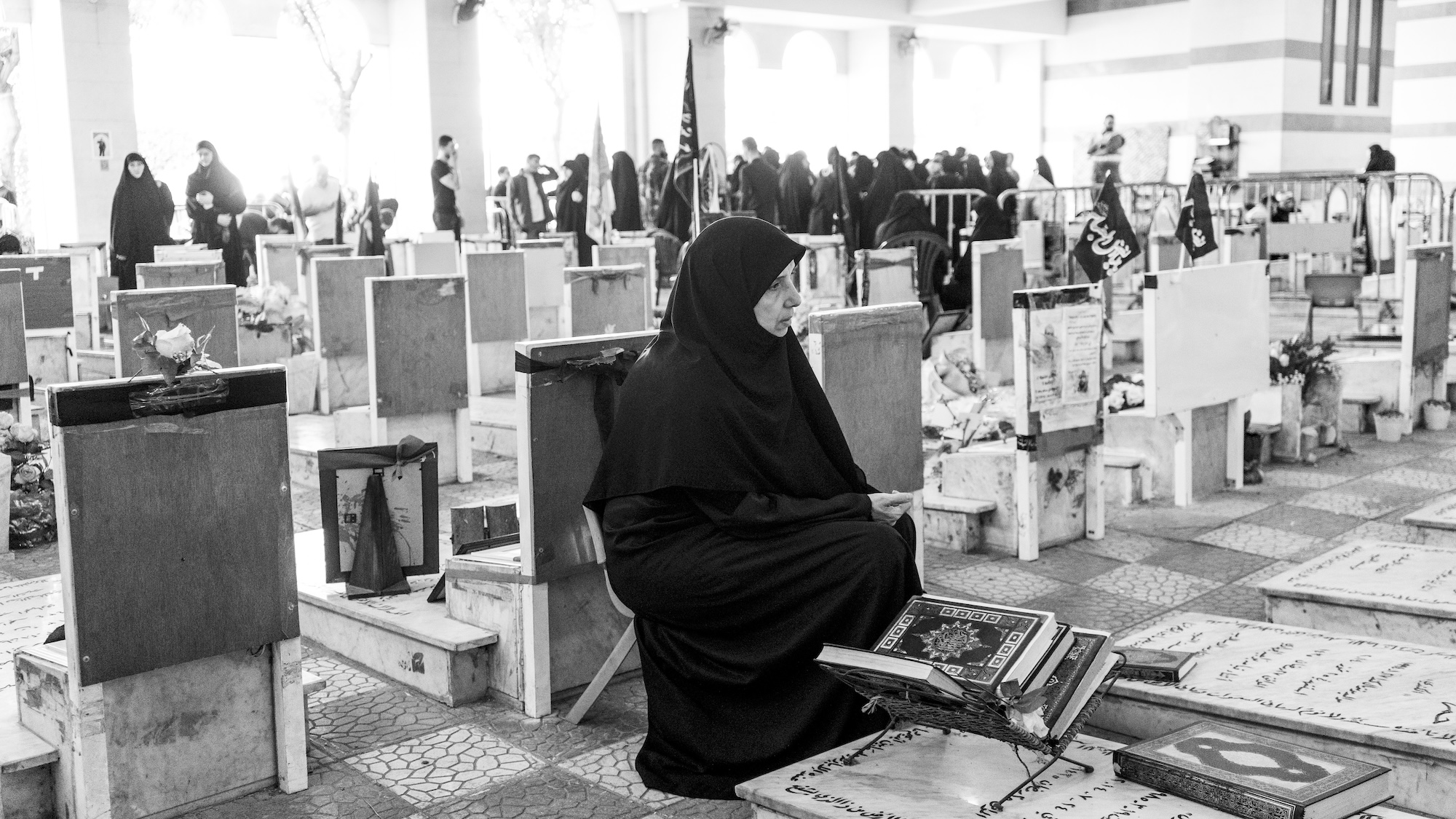
Joumaa argues these signifiers are at the core of this landscape, not mere additions to it – and that removing them does not render the image more neutral. Quite the opposite. “It produces another complete image, one that is more comfortable for the institution,” she says. “To them, it simply checks a box of exclusivity [paying lip-service to local perspectives] rather than talking about what is fundamentally happening.”
For Joumaa, the Israeli assault on South Lebanon, and its systematic violent occupation and genocidal destruction of almost all of the land in the region, is an everyday reality. She could not return to her village in Janoub to bury her grandmother, as is the reality for many families in South Lebanon. But by integrating first-person local testimonies into her video essays, she ensures that the voices of the community dictate the narrative arc of the work; the record of survival is written in the smallest, most intimate – most often overlooked – pockets of human existence.
Centring the camera on home-bound networks of care, Joumaa suggests that sovereignty is maintained through everyday acts of defiance, not on a grand geopolitical stage. And her insistence on documenting the unseen, foundational rhythms of community forms a natural bridge to Kuwaiti photographer and researcher Huda Abdulmughni, whose work focuses on the ancestral landscape.
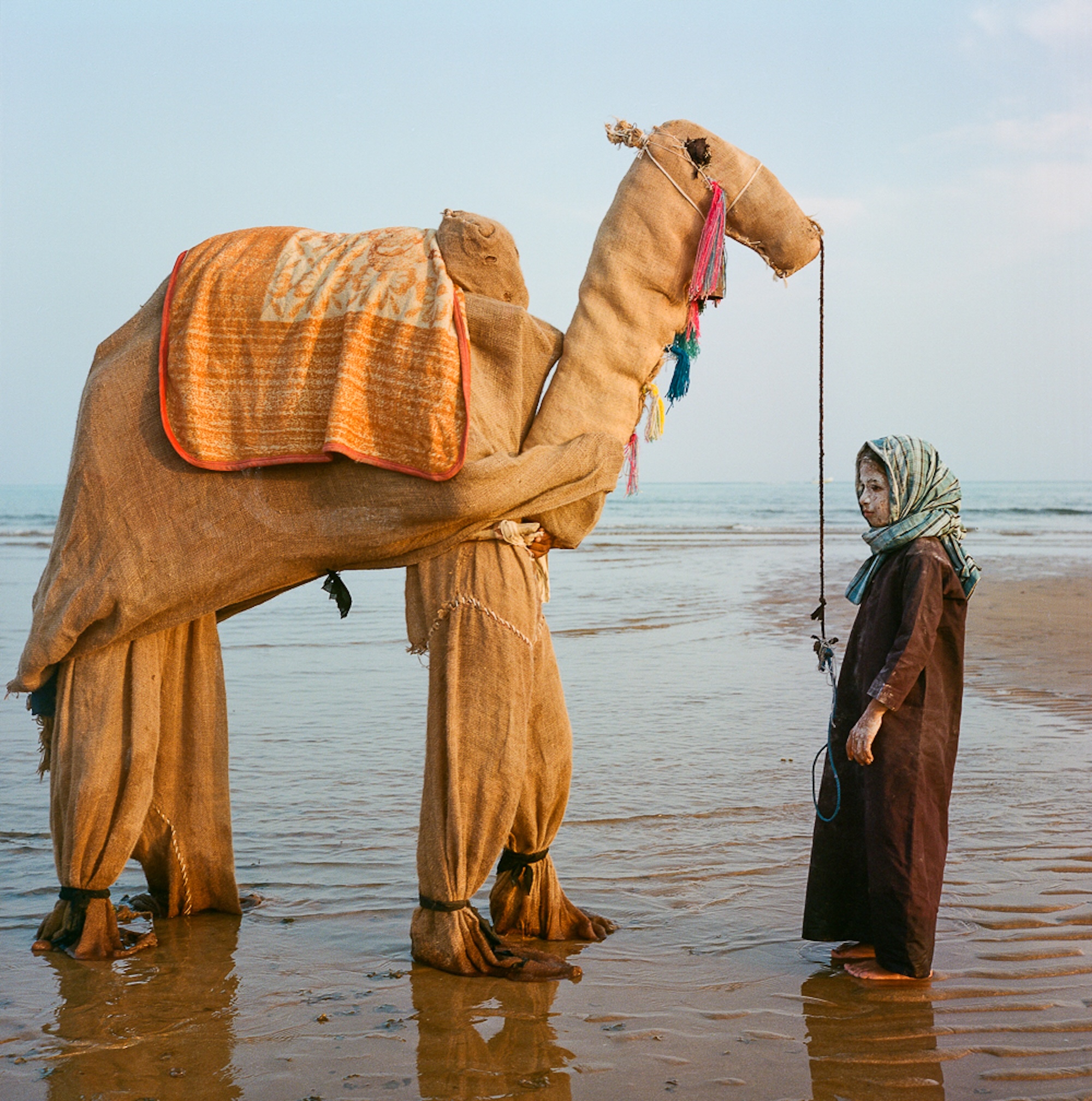
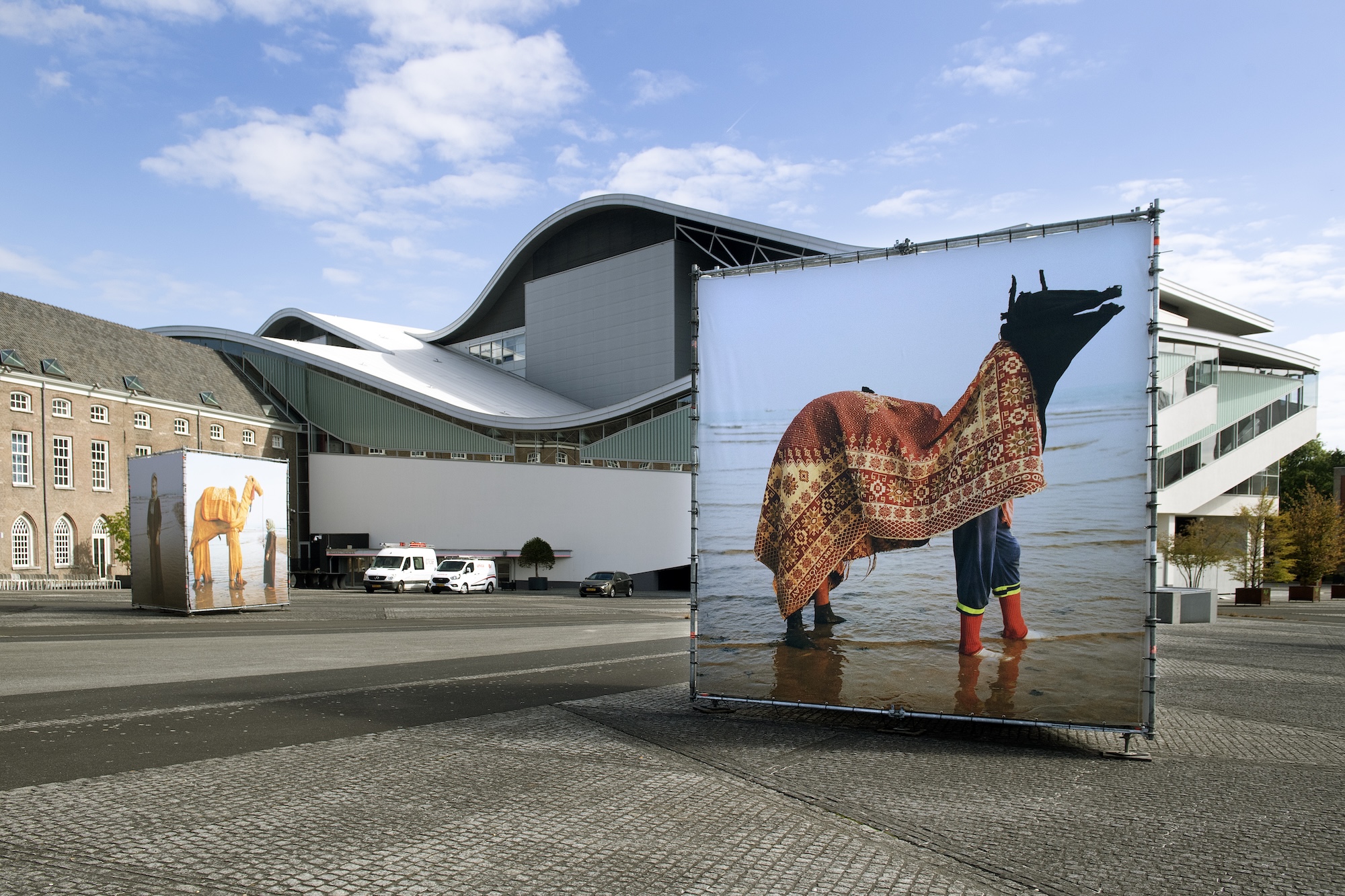
Where Joumaa’s lens operates as an almost forensic instrument within the targeted spaces of her land and people, Abdulmughni focuses on a different kind of survival – one grounded in ecological harmony and collective memory. Abdulmughni’s Nowruz Sayadeen documents the annual fisherman’s New Year on the Iranian island of Qeshm, for example, in which the village’s primary source of income is paused, out of respect for nature’s seasonal bounty. Using both analogue and digital media, Abdulmughni captures the highly-stylised, almost mythical cast of characters populating the shores, including the iconic shushis – figures adorned with white face paint and palm leaves.
But rather than presenting the figures as exotic subjects, performing in costume once a year, Abdulmughni captures a world that relies on ancestral knowledge of the seas. Depicting traditions passed down through the generations, outside the strict categories preferred by Western ethnography, Abdulmughni’s work demonstrates that regional sovereignty is preserved through seasonal rhythms and ancestral ecological care. But her work also shows that this is also a world increasingly impacted by climate change due to geopolitical conflict, in which the community’s harmony with the earth may be devastated.
The biennial takes a devastating turn to remind us of the stakes raised when gentle rhythms are severed by colonial violence, including a posthumous show by Majd Arandas, A Memorial in Fragments. Arandas’ work brings the viewer face-to-face with the realities of active elimination; born in Gaza in 1994, he was killed in an Israeli airstrike near his home in Deir al-Balah on 01 November 2023. Arandas had long ago been forced to sell his professional camera to survive the Israeli blockade, but continued to document with his mobile phone, and his archive has been retrieved and preserved by his brother.
Somji wanted to honour Arandas’ work and life, but also show the networks of solidarity that surrounded him, and now surround his archive. “Whether it’s a beautiful exchange between Majd and a friend about the plants in his beloved grandmother’s garden, or a photographer friend exchanging cat photos with him, it shows how communities find ways to bond together, and provide solace, despite everything that’s against them, despite the challenges of neoliberal worlds and neo-colonialist regimes,” Somji says.
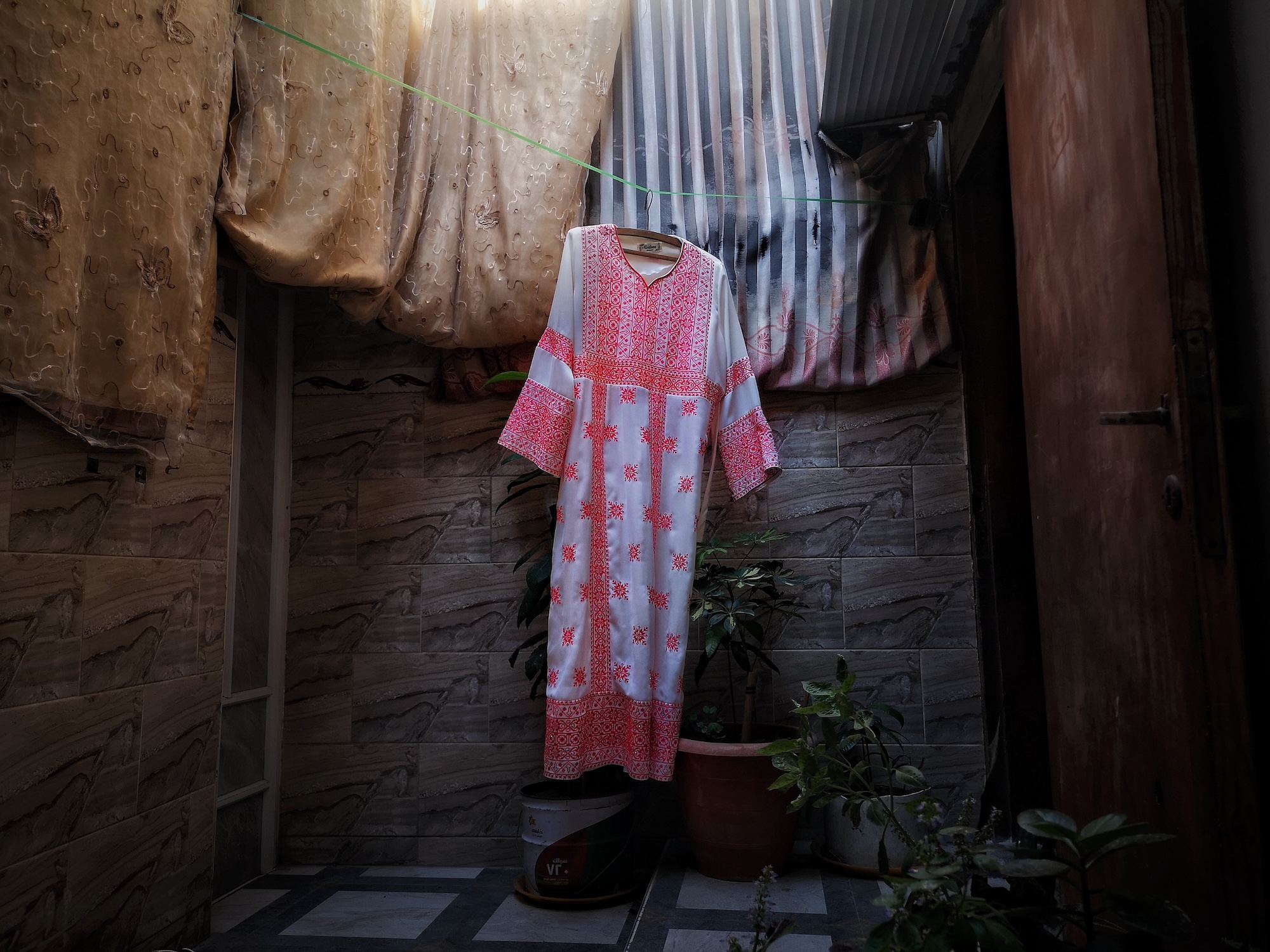
Arandas’ surviving images testify to what it means to create an archive when your existence is being contested in real-time. But he photographed Gaza with luminous tenderness, his images capturing quiet gestures of affection, subtle exchanges of care, and the warm, amber lights of temporary shelters. His work refuses to let his people be remembered solely by their erasure, insisting instead on the profound beauty and unyielding right to exist that defined their daily survival.
These exhibitions help make Our Songs Came Through a significant biennale; they also surface the often behind-the-scenes negotiations required to present these images within a Western framework. Organising exhibitions of work by independent SWANA practitioners in a European institution is a change, even in an institution known for pushing the envelope; more than that, it is a linguistic, bureaucratic, and geopolitical battleground. A violent manifestation of this gatekeeping is the European Visa system, for example, which prevented Libyan artist Amera Elnaal from entering the Netherlands to attend her own exhibition.
Our Songs Came Through is an intervention in the contemporary photography landscape, gathering an eclectic group of somehow connected artists to move far beyond the tokenism that often plagues Western institutions’ attempts to showcase art from the SWANA region. Rather than grouping these artists under a banner of shared trauma, it highlights their shared commitment to visual sovereignty, formal experimentation, and archival repair. The artists gathered here demonstrate that, to restore a fractured archive, one cannot simply add more images. Rather, we must fundamentally reinvent the methodology of image-making.
Collectively, the SWANA artists exhibiting at BredaPhoto are dismantling the familiar, flat, media-driven narratives. They remind us that history is not merely written by the victors, even those who wield a camera; it is unobtrusively and persistently preserved in the songs that survive, the rituals that map, and the communities which refuse to be forgotten. The fractured archive is reimagined as a site of radical agency, resistance, and complexity, and it honours the nuances of daily human survival.