


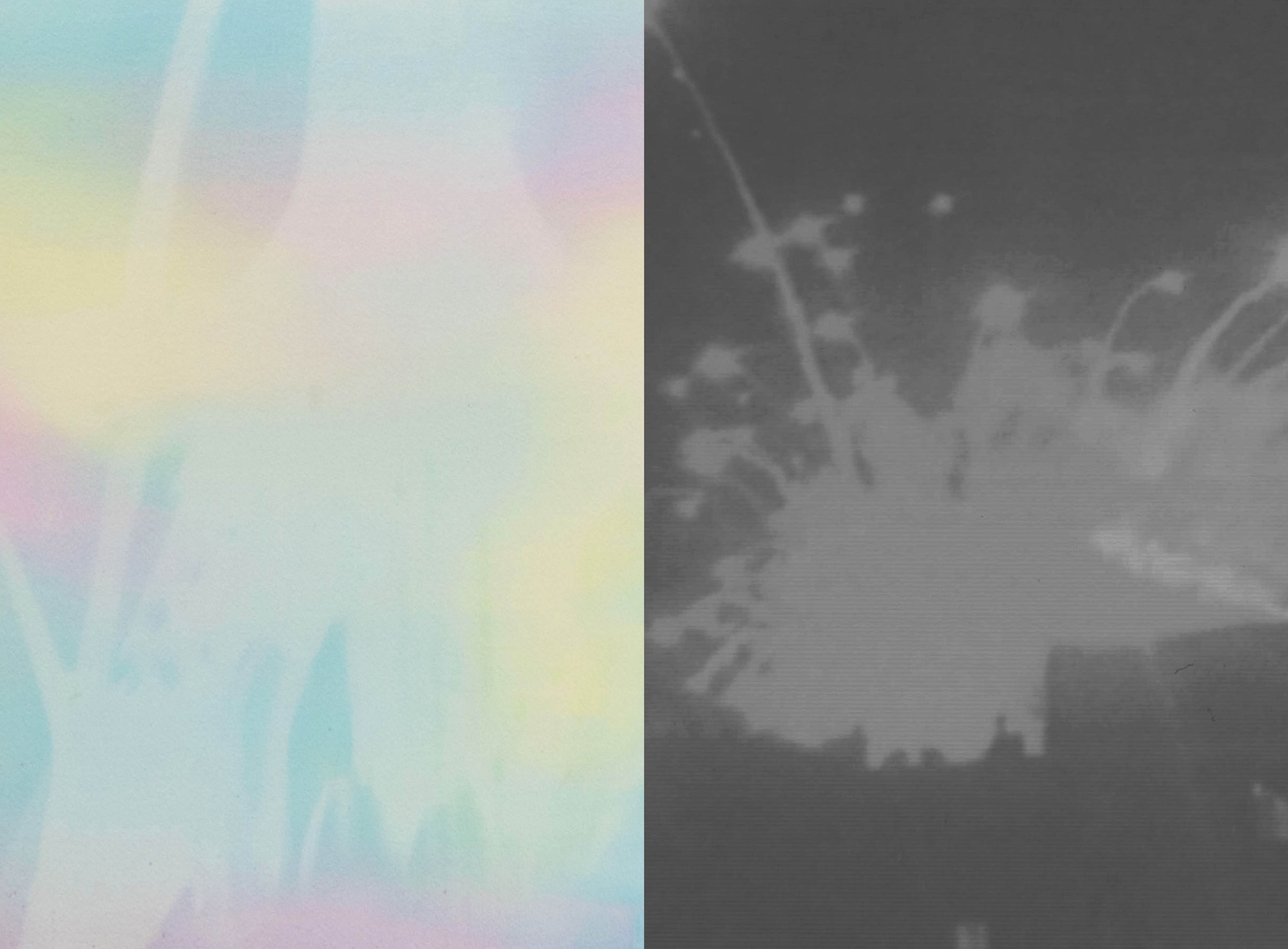
Copies instables, alugraphy on paper, 2026 © Pooya Abbasian
Made on a residency with the Lee Ufan Arles x Guerlain Art & Environnement Prize, Pooya Abbasian’s Soli-Sombre responds to our attempts to control nature, the bombing of Iran and – most of all – how images intersect with both. BJP caught up with him during the opening week of Les Rencontres d’Arles
Pooya Abbasian’s show at Lee Ufan Arles Atelier MA is titled Soli-Sombre, a wry take on a phrase from bullfighting (which still happens in the south of France). ‘Sol y sombra’ refers to ringside seats which will be in both the light and shade over the course of an event, as the sun moves around the arena; Abbasian’s rendition suggests something sober or gloomy rather than festive, while ‘soli’ denotes a single melody played by many instruments. Against this backdrop “Soli-sombre” suggests other things too, including a sense of ambiguity, of viewing a spectacle, of critiquing a particular way of engaging with nature. All these readings are apt. Things are not what they seem in Soli-Sombre. There are delicate images which initially look like lyrical photographs of flowers. There’s a slow film which is at first sight a fly-on-the-wall documentary about a local farmer. Neither is exactly right.
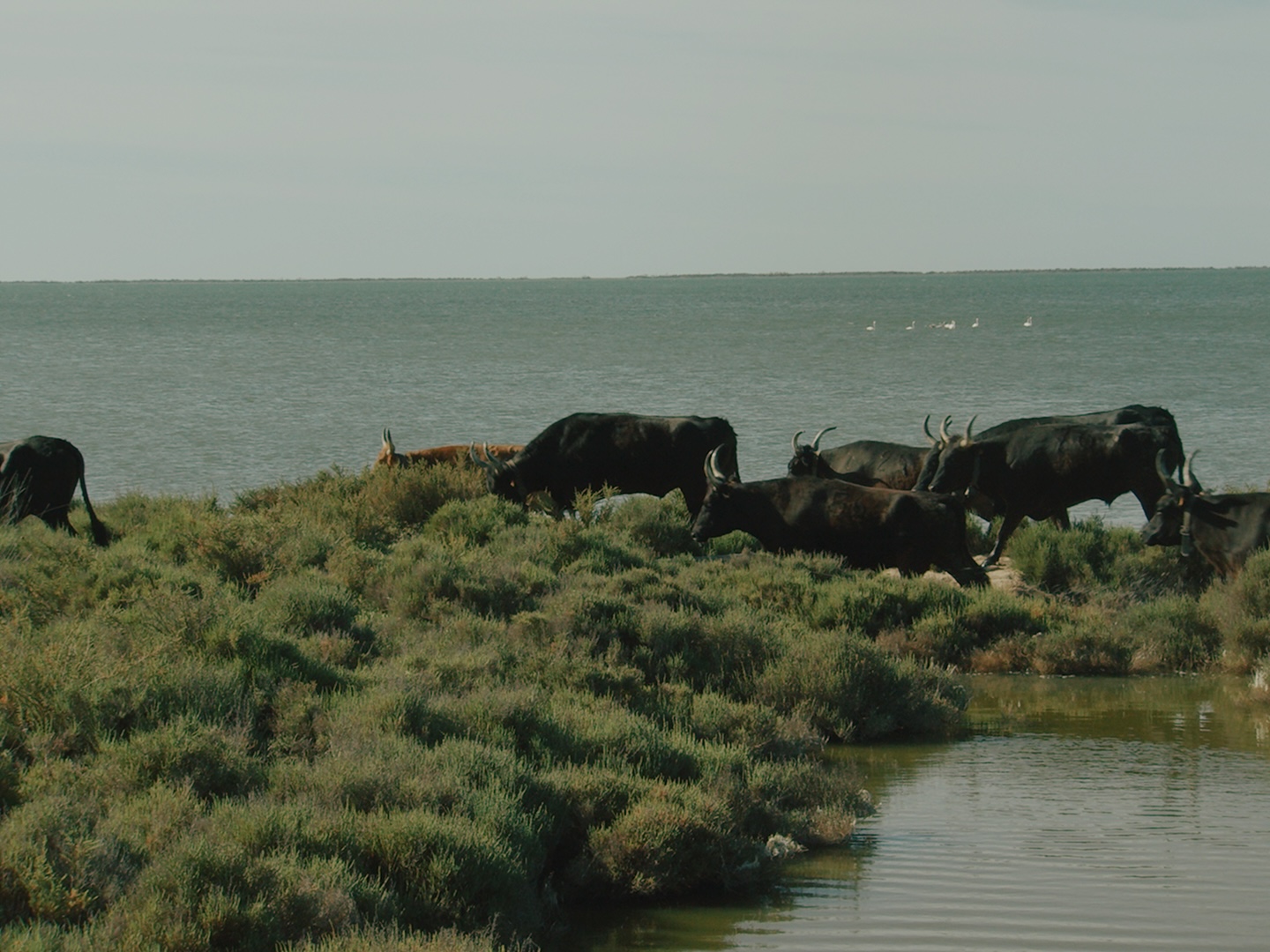
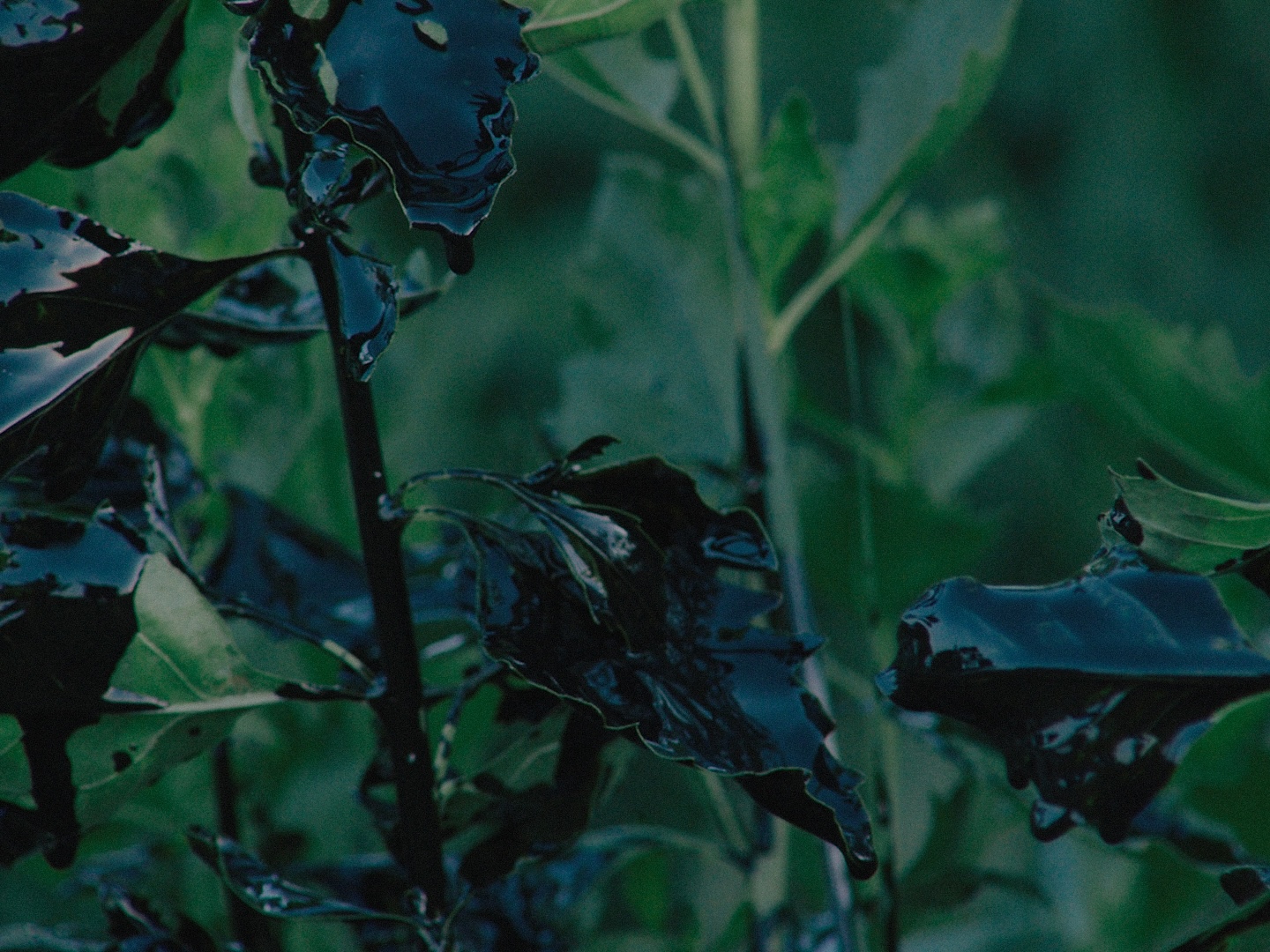
Abbasian’s work is the result of a residency, the Lee Ufan Arles x Guerlain Art & Environnement Prize; the Franco-Iranian artist has previously made work about ‘invasive’ species such as Oxalis and Japanese knotweed, so he proposed honing in on a local problem plant in Arles. Originally from North America, Baccharis has taken root across the Camargue, creating thick bushes across the salty soils and wetlands. These bushes block out rare local species, and the plant is therefore weeded and policed; in Abbasian’s film the farmer is shown throwing Baccharis stems on a bonfire, eradicating them in the flames.
“Recently I understood that there is no arriving – there’s always this transition and transitional state, changing and evolution. There’s ‘I’m going to grow here’.” Pooya Abbasian
But then the film then takes a turn for the fantastical, a voice-over speaking as the plant, and asking why it has to be harmed. The language it uses is striking, echoing phrases in La Bête du Vaccarès, a 1926 Provençal novel by Joseph d’Arbaud; this book draws on local folklore and traditions, including a fallen pagan god. The ‘beast’ represents nature and pantheism, and he begs for pity from his human assailants, arguing for co-existence and the right to life. Forced to leave Iran for France ten years ago, Abbasian is sympathetic to the plight of both the beast and the Baccharis plant. The plant is also a part of the environment and the bushes provide homes for birds, he points out; the Camargue is a construction, created through human intervention not the natural world alone.
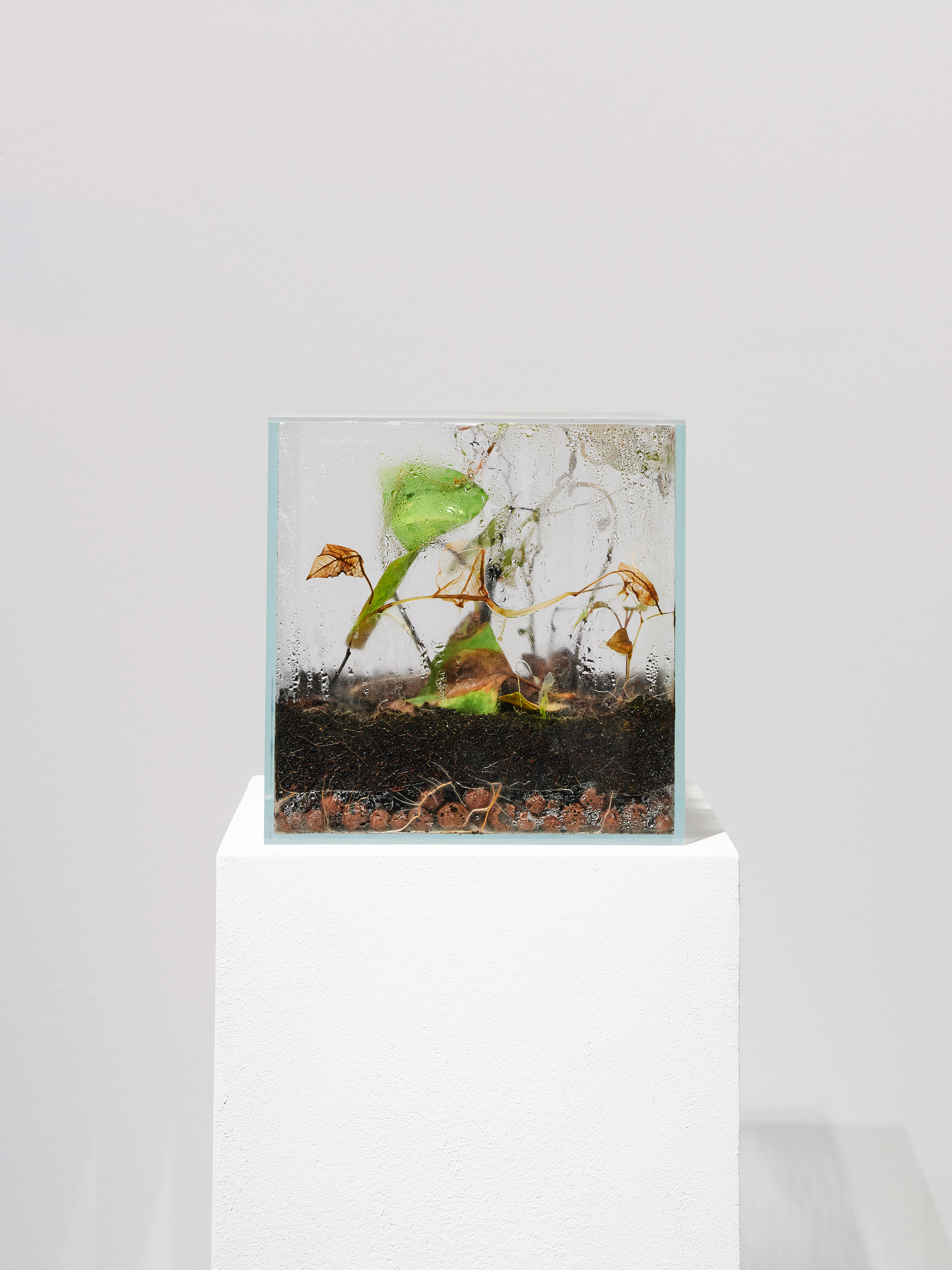
“We humans brought the Baccharis over from North America, we made it come here!” he says. “But then when nature takes over, we don’t like it. We have to remain in control…. I’m sure if I was in his place [the farmer’s] I would have the same reaction. There is no place for judgment or answers about what we should do, that’s not my position. But I want to ask questions, to ask if maybe we could co-habit.” Meanwhile in his film we accompany the farmer as he drives his car, seeing the landscape through a windscreen; in the gallery we watch on screen, doubly separated from the environment. Abbasian has also installed a perspex box, displaying a knotweed plant in the gallery; it’s happy in its terrarium micro-environment, but then it’s sealed off from the outside world.
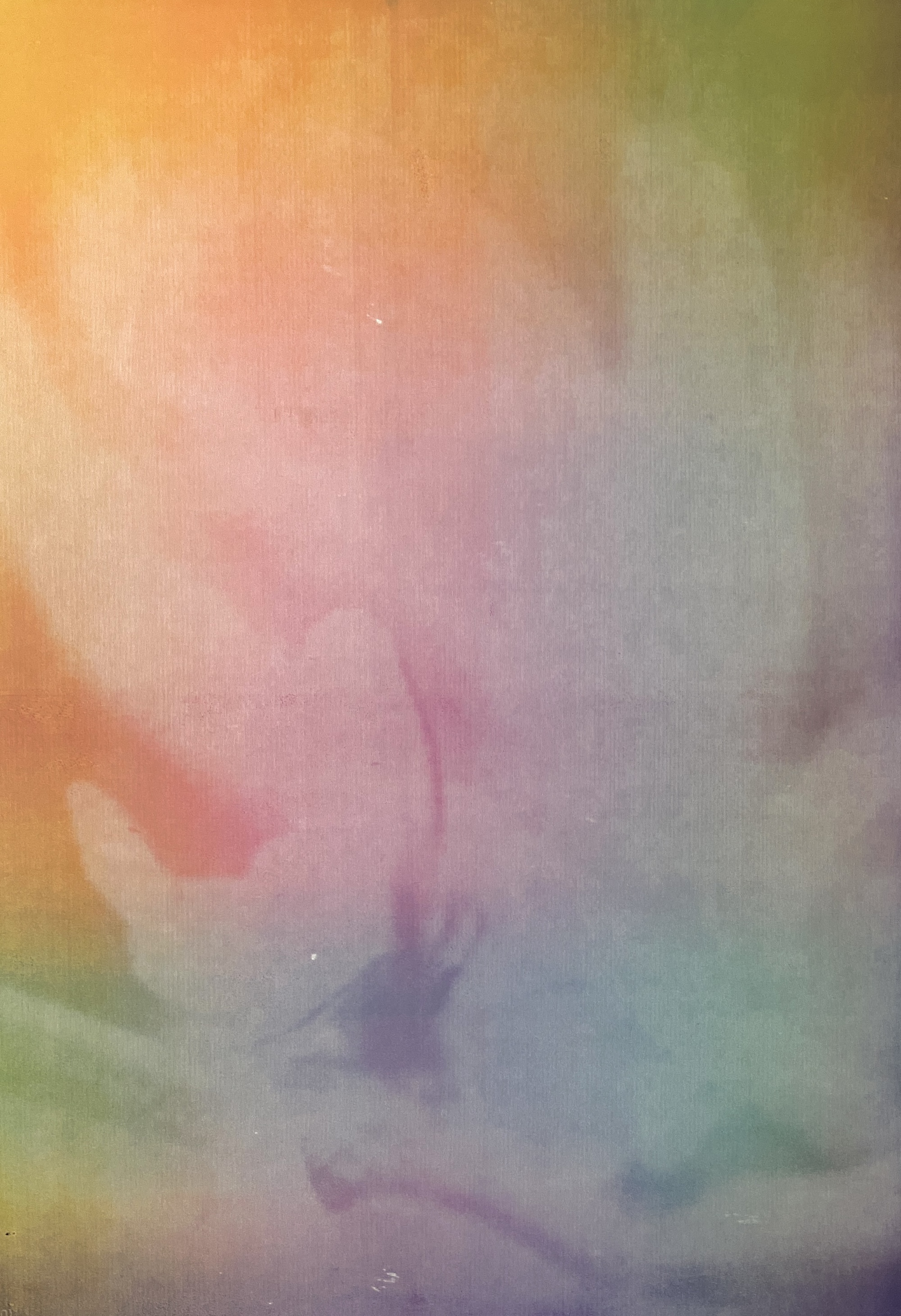
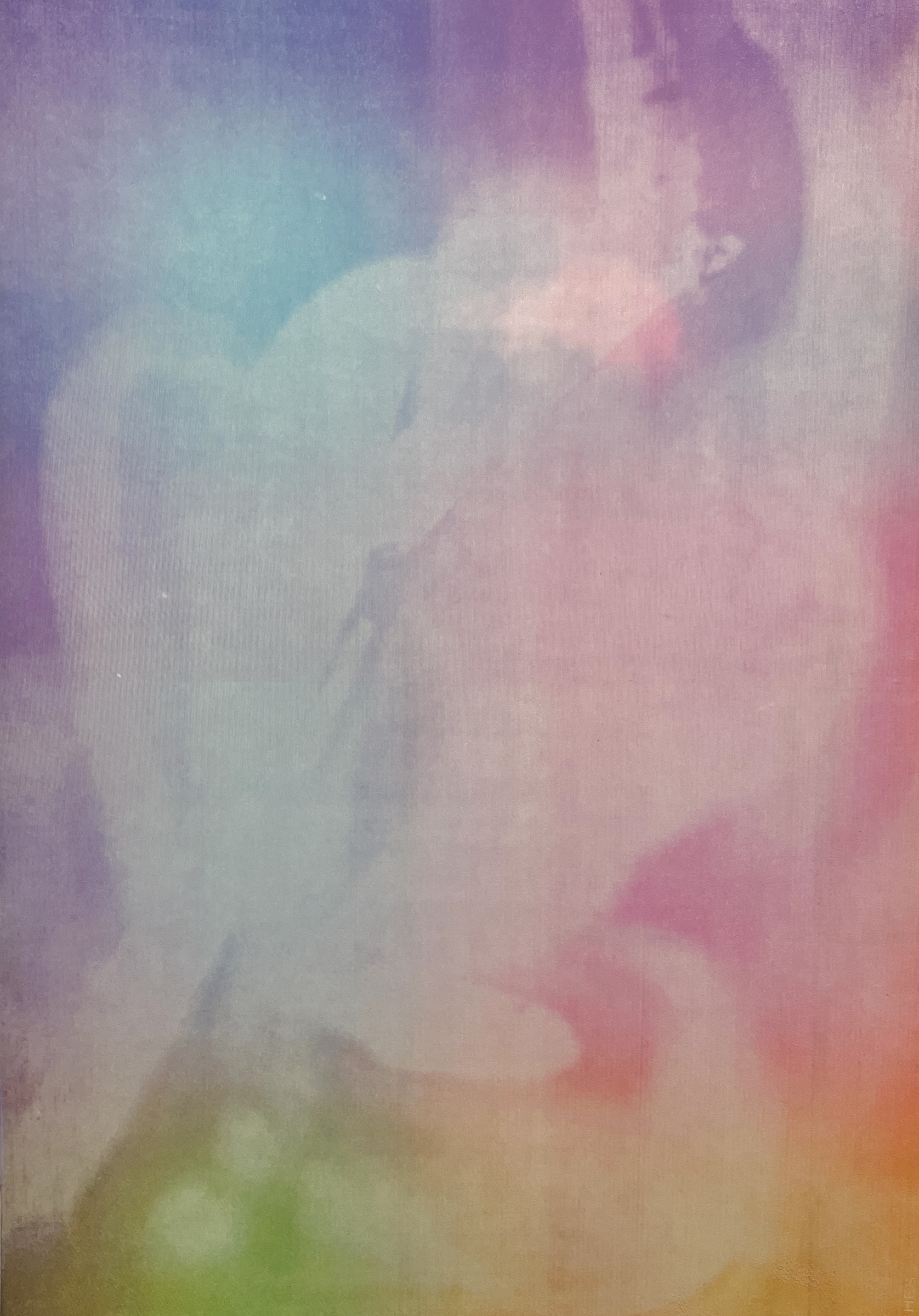
Abbasian’s stills are another case in point. Lush and delicately-coloured they’re attractive enough to seduce, to look like uncomplicated pretty pictures of flowers. Move closer and a tiny grid reveals itself. These images are images of images, not images of plants; Abbasian has developed a technique in which he projects videos and captures them on light-sensitive surfaces. “You lose more than half the quality of the image, because there’s less resolution, less pixels,” he says cheerily. “You’re losing some information. I needed to let go and embrace the accidents which were happening, which I could not control. That was the basic idea.”
Abbasian’s images sit somewhere between video and still, refusing to be exactly one or the other; he originally worked in film, including collaborating with Abbas Kiarostami, the celebrated Iranian director (and photographer, screenwriter, and poet). Kiarostami told him that in cinema the image is a lie, that images have no link with reality – but that “with all these lies, we can create a kind of truth”. For Abbasian, working at the boundary of still and moving suggests just such an ambiguity, a refusal to be boxed in. It suggests the idea that life is constant evolution. “Like me after I was forced to migrate, I had to change where I was staying,” he reflects. “I had to learn the language, I had to embrace the culture, to react to new surroundings, to make new work. I needed to change everything from zero.
“I realised that I was always thinking there’s still point A and point B, that I was travelling from point A and I was going to arrive at point B,” he adds. “But recently I understood that there is no arriving – there’s always this transition and transitional state, changing and evolution. There’s ‘I’m going to grow here’.”
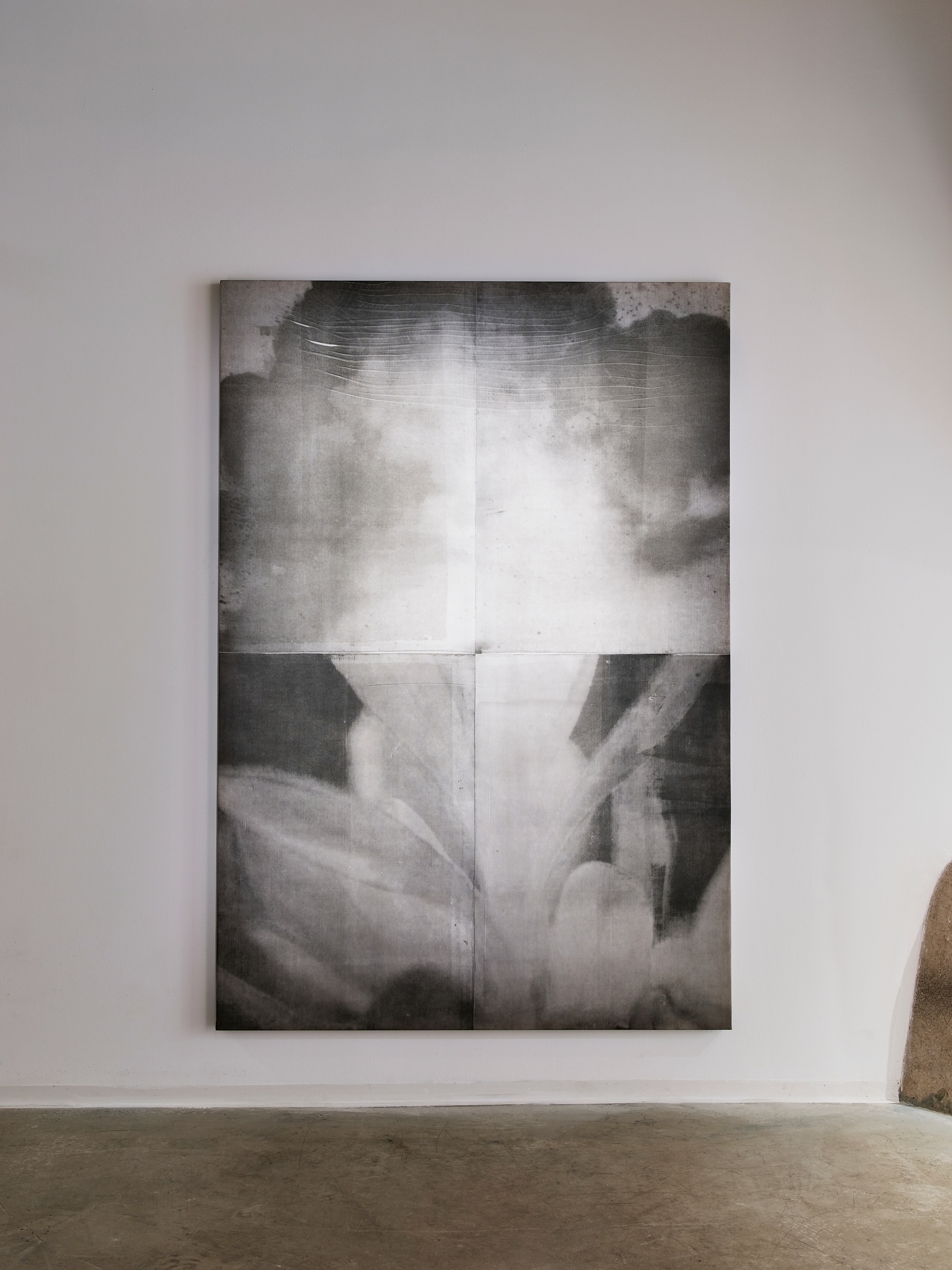
Abbasian arrived in Arles for his residency just as protests were erupting in Iran; these protests were followed by a massacre, then still-ongoing Israeli and US attacks. The internet went down in Iran and he couldn’t get news of his family but, at the same time, he obsessively consumed news reports. The images that were emerging were apocalyptic, leading to some heavy soul-searching. “I was finding myself stupid to work on plants at this time,” he says, adding that Soli-Sombre also refers to this dichotomy, to working in a beautiful studio in Arles while such devastation was being wreaked in his home country.
Eventually he realised the two stories were interconnected, quite literally in his every day. “I realised ‘This is what I’m living, this paradox’,” he says; in his short film the farmer has the radio on in his car, and also hears news of bombing in Iran. But as with the way we frame nature, Abbasian questions our representations of war. From the news seen in France, Iran looks like a disaster; that is partly true, he says, but friends in Iran also point out it’s not the whole truth. “They’re like, ‘Yeah, but when you don’t see the images, in the end what you have is your reality, and you’re going to go to buy bread, cook’,” says Abbasian. “They still have to live. In the end, images are manipulative. I don’t know how much we can trust images.”
Soli-Sombre by Pooya Abbasian is on show at Atelier MA, Lee Ufan Arles until 04 October https://en.leeufan-arles.org