

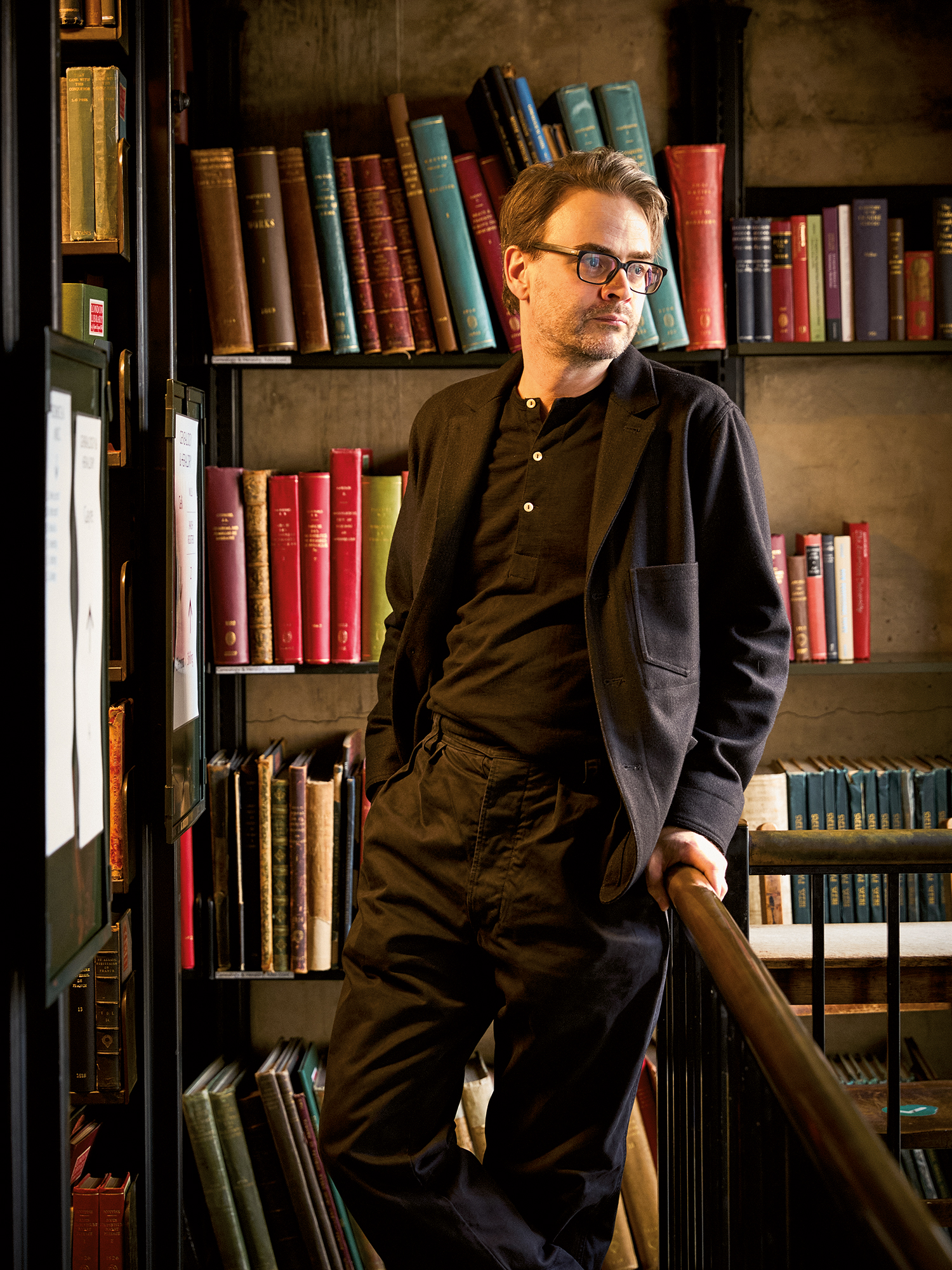
Louis Porter photographed at The London Library for British Journal of Photography, 25 February 2026. All images © Alice Zoo
A member of The London Library for the last decade, Louis Porter uses its historic collection as a means to consider the present day
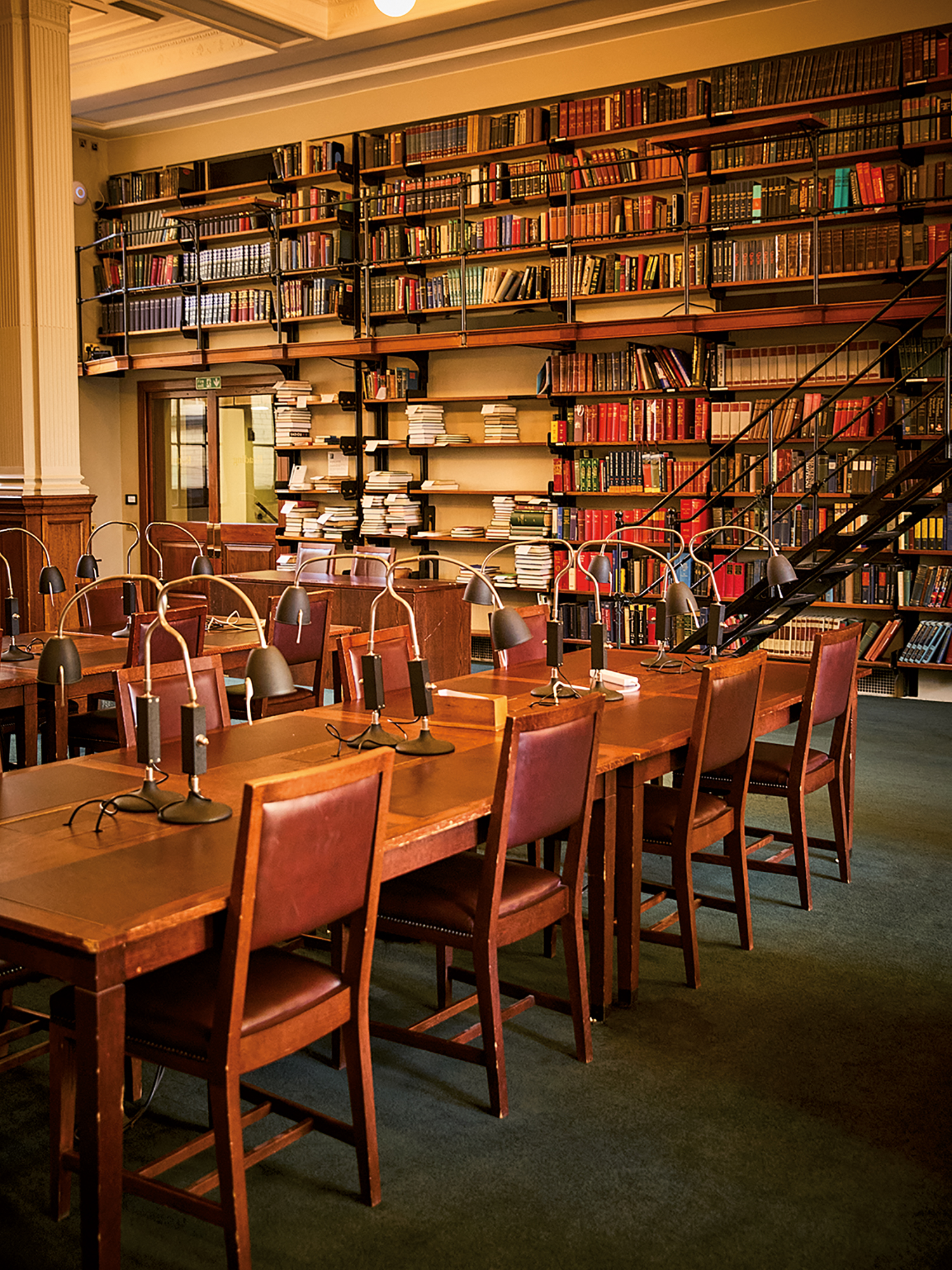
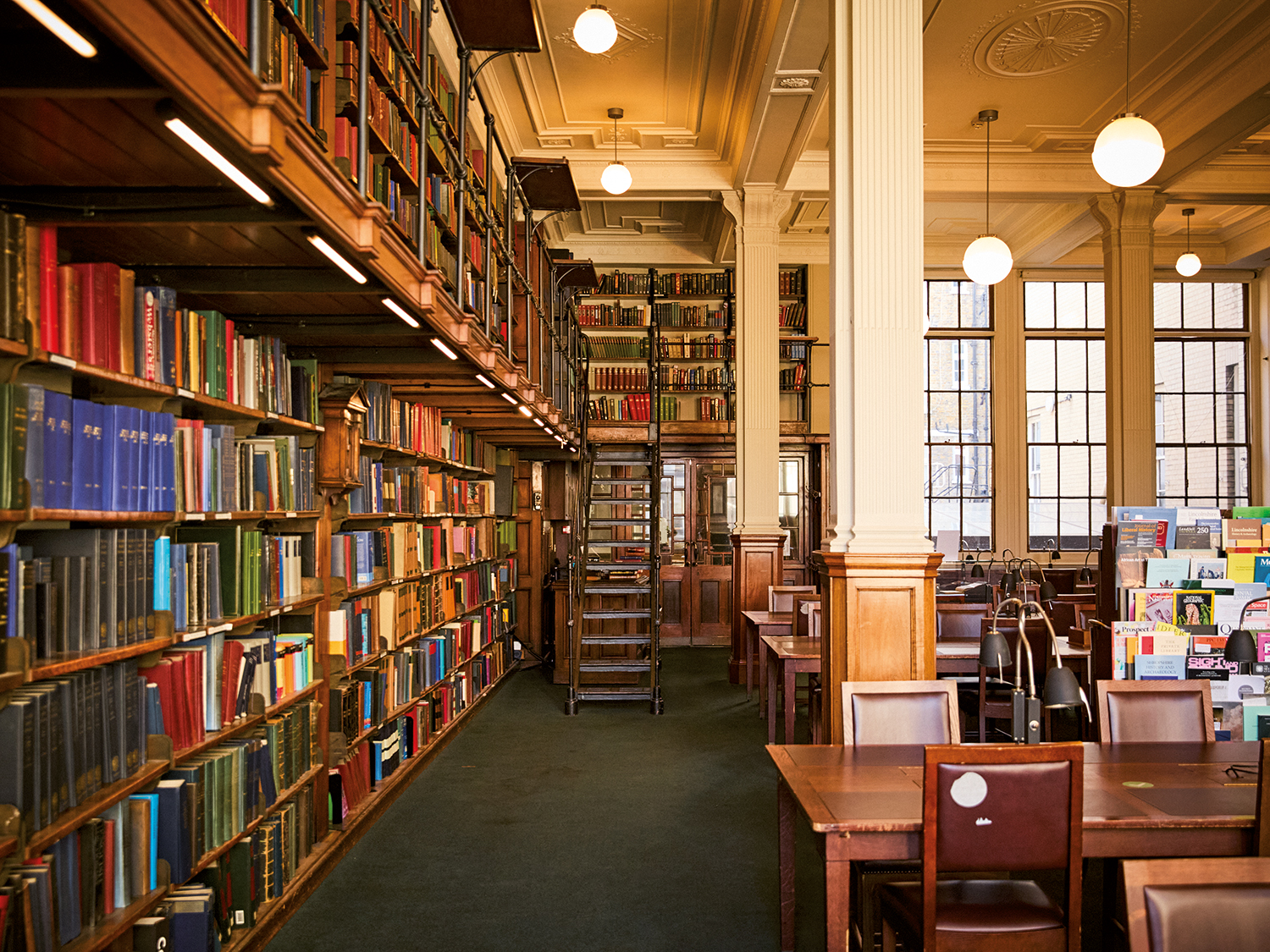
In 1840, eminent Victorian and man-of-letters Thomas Carlyle called for a new kind of library in Britain. Combining the excellence of the British Museum Library with the option to take books home, this library would give all classes access to knowledge, he argued, adding that “a collection of good books contained all the nobleness and wisdom of the world before us”. The London Library was founded the following year, and moved into the central St James’s Square in 1845. The library remains in the square today, a sprawling network of buildings housing convivial reading rooms, scholarly studies, and shelf after shelf of books. It holds more than one million publications in fact, nearly all of which can be borrowed by members.
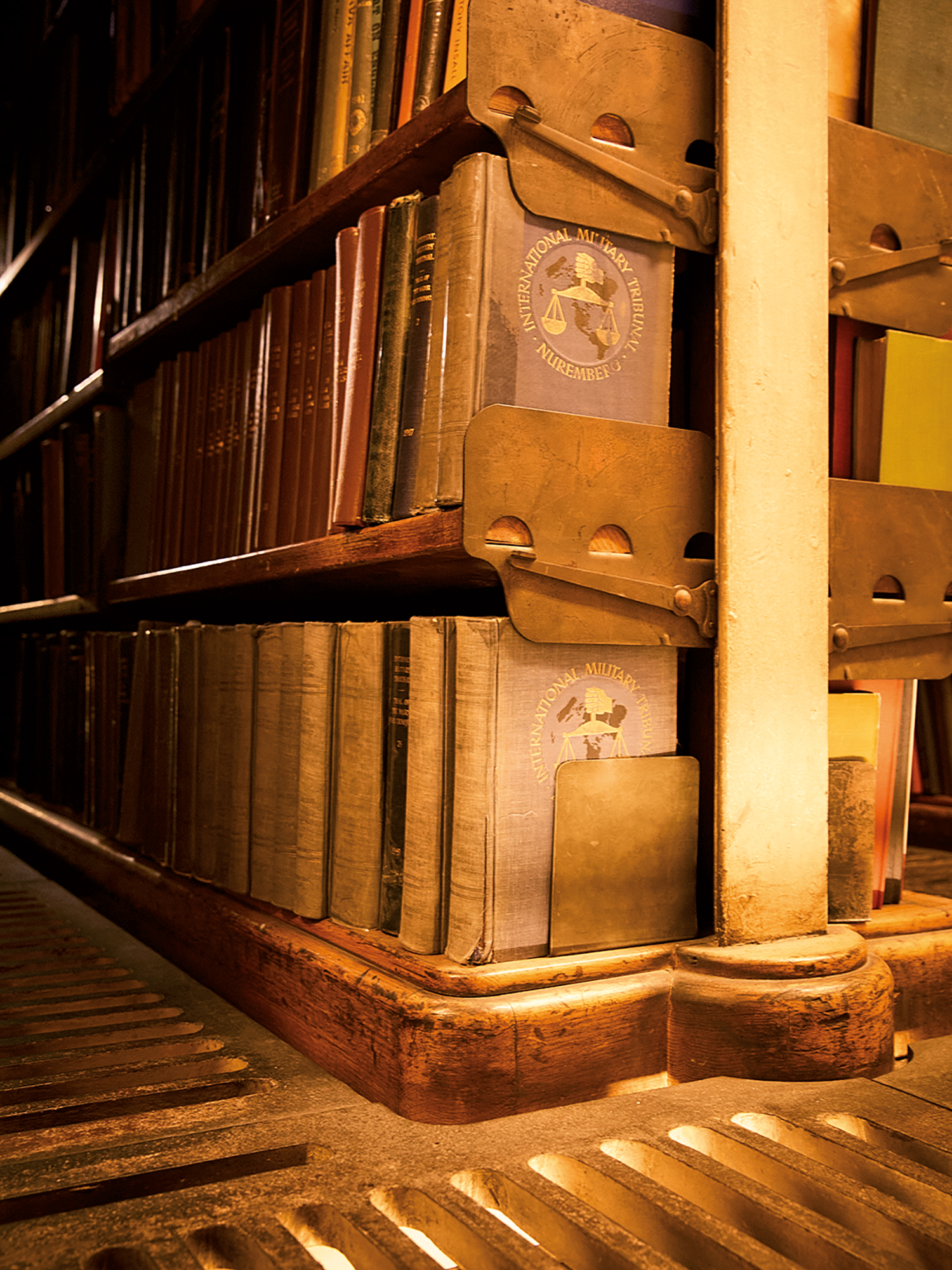
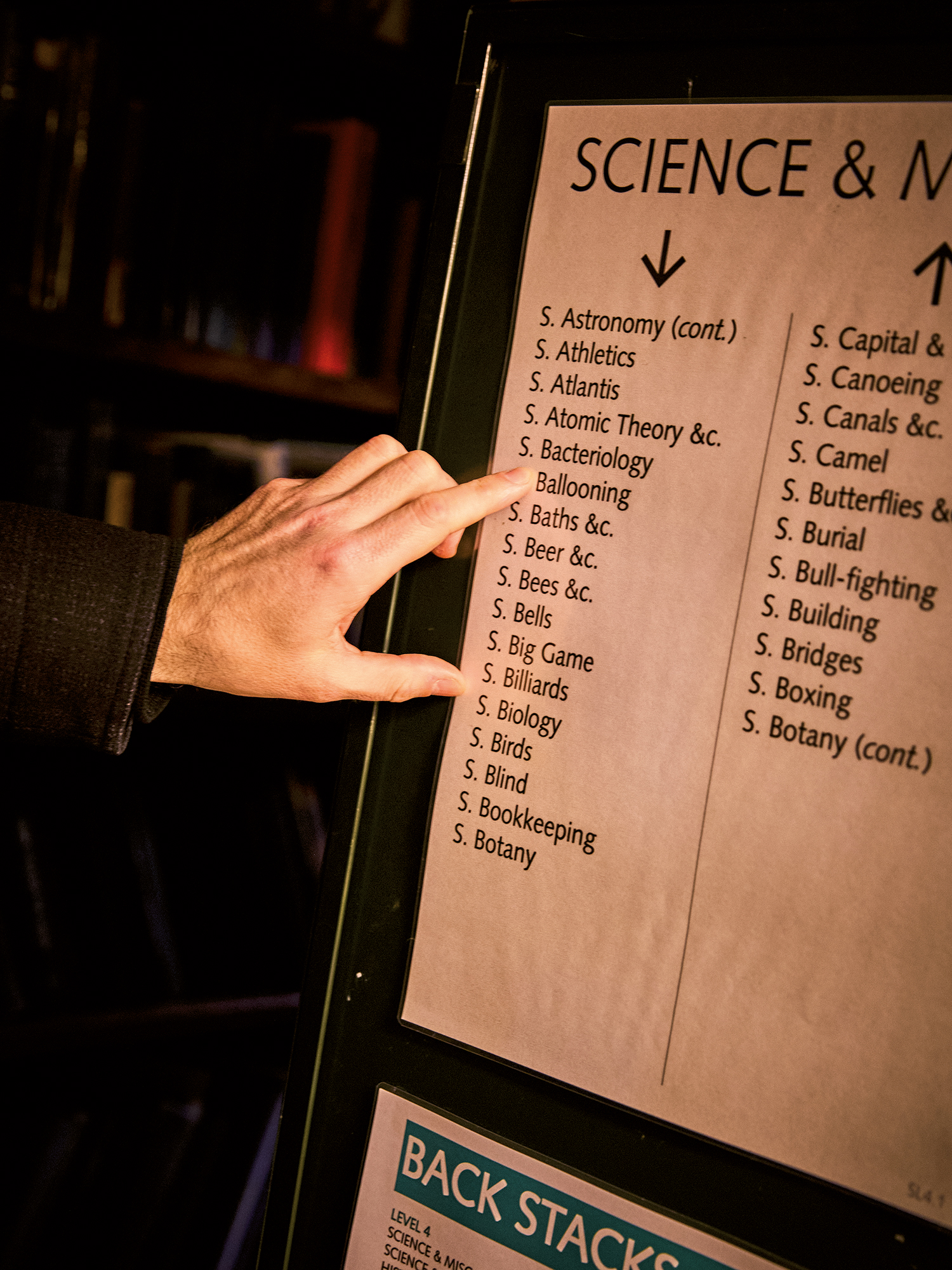
The library’s collection dates from the 16th century to the present day, and is considered particularly strong in literature, art, architecture, philosophy, topography and travel; unusually, members are able to browse the bookstacks storing these publications, rather than requesting specific titles be brought to them. This and The London Library’s idiosyncratic classification system – thematic, in alphabetical order – means disparate publications sit side-by-side, and allows for pleasing chance discoveries and curious finds. “I was in on Saturday looking for a book, and next to it found a history of filing cabinets!” chuckles Louis Porter, artist and London Library member. “Of course I brought it home.”
Porter joined the library a decade ago, pulled in by its gravitational force soon after moving to London. He grew up in the UK but lived in Australia for 13 years, where he started an MFA in photography; on returning to England, he still had his thesis to write, and was in need of a quiet place to work. Stumbling on The London Library he initially questioned paying the membership fee, then reasoned it was a good deal. “I was doing well in Australia, I had a studio and that was very nice, but when I got to London, I soon realised how expensive it is,” he explains. “A desk space in London is as much as a large studio in Australia, so I thought, ‘There’s no way I’m going to have a studio’.
“Then it occurred to me that, while it’s expensive to pay for a library, if I thought of the library as my studio, I had an incredibly cheap space with nearly unlimited resources. And I could borrow the books! My favourite place to read is lying on the couch, so that was a game-changer.”
“I’m constantly looking for ways to bring groups of images together from different methodologies, from something more instinctual. When you have a very large number of images, you naturally are going to apply some sort of understanding that is unconscious”
Writing the thesis was what brought Porter into the library, but it is not what made him stay. That was down to the millions of photographs in the library’s books, because he has been working with found photography for years. He started out as an image-maker, shooting looping, oblique street photography such as the series Unknown Land in Melbourne or I Love China on an Australia-China Council residency at Red Gate Gallery, Beijing. But he became an “abstract archivist” initially by accident, after a friend had rescued a newspaper’s picture library, otherwise going to be skipped. Feeling compelled to save the photographs, Porter bought the lot then started to work with them, refinding the shot locations and reframing the same scenes. Collapsing the time between the frozen past and the present, this project also subverted the question of authorship.
He has since rehomed many other unloved collections of images, and often uses them to create funny, thought-provoking publications. The Anatomy of Business (2012) drills into photographs from a financial magazine, isolating gestures, body language and the occasional still life to consider how commerce is embodied; A Catalogue of a Young Country Ladies Library (2023) – a collaboration with Mana Pinto and his gallery, Chiquita Room – showcases early postcards of female readers, and questions the formation of libraries and cultural identities. Desenho (2023) was made with Pedro Torres using images from a drawing course, sold in instalments in Brazil in the 1980s and 1990s; focusing on errors and inconsistencies, it picks at what it means to be directed to make art.
Porter’s practice has also included projects with mail order catalogues, front pages and newspaper microfilm archives; everyday items that on closer examination reveal deeper social structures. “Over the years I’ve collected and saved archives in many different forms,” Porter explains. “And these things started to creep in [to his work]… But it was an important transition, saying what if I stop worrying about trying to project myself as this creative and just rearrange the images already out there? I started thinking about words, that we don’t reference words back to the person who initially coined them but we can use them to do miraculous things. And I’ve been excited about that idea ever since.”
Other projects revolve around more formal archives, though they tend towards the esoteric and even occult. Porter is currently researching a new project in The Warburg Institute, which has a library of 35,000 books on art and science and their relationship with superstition, magic and folk beliefs. He has also worked in The College of Psychic Studies, which includes books on psychology – and parapsychology – collected by Sir Arthur Conan Doyle, author of Sherlock Holmes mysteries (and BJP articles). Porter has found many interesting collections in London, off the beaten track but holding the first books printed in English, or early medical manuals, or grimoires (collections of magic spells). An autodidact with an innate love of learning, Porter can spend hours with these tomes. “Images and ideas are my big interest in life,” he shrugs. “I’m not interested in sport or cars.”
The London Library has become a home from home, and Porter is usually there at least twice a week; he will often have about 10 of its books in his actual home too, to read and to photograph. His take on the images in these publications often centres on how they are circulated or understood and, while Carlyle might have described a collection of good books as containing “all the nobleness and wisdom of the world”, Porter’s interventions worry at what might make a ‘good’ book or collection, and what ‘wisdom’ we might glean from them. His 2024 publication Monuments Égyptiens reproduces a 1902 book by Jean Capart, for example; in the original each photographic plate is covered by a thin sheet of tissue, which the viewer can lift, but in Porter’s version the sheet always remains. The images are visible but veiled, he says, just as photographs bring proximity yet also distance.
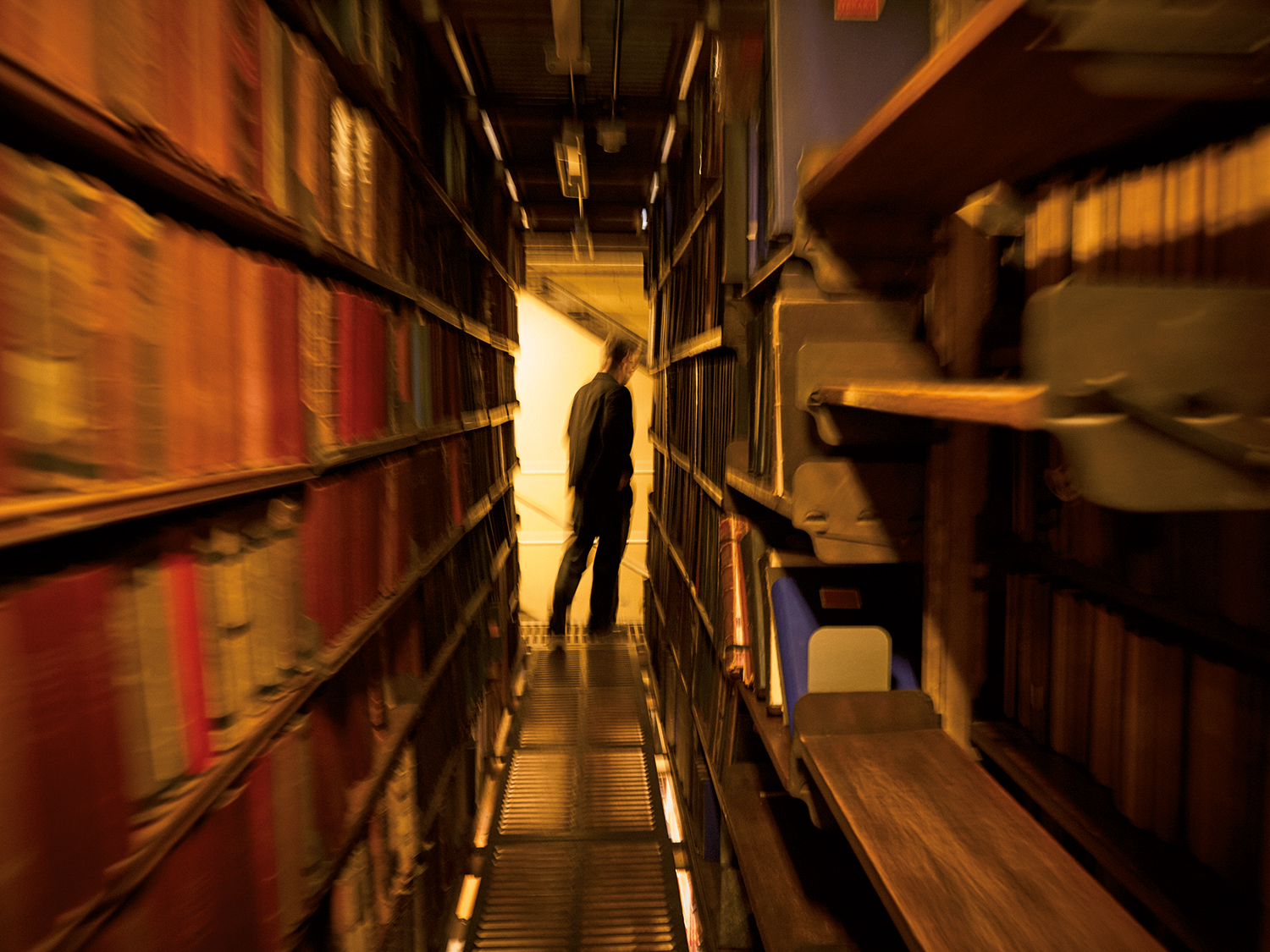
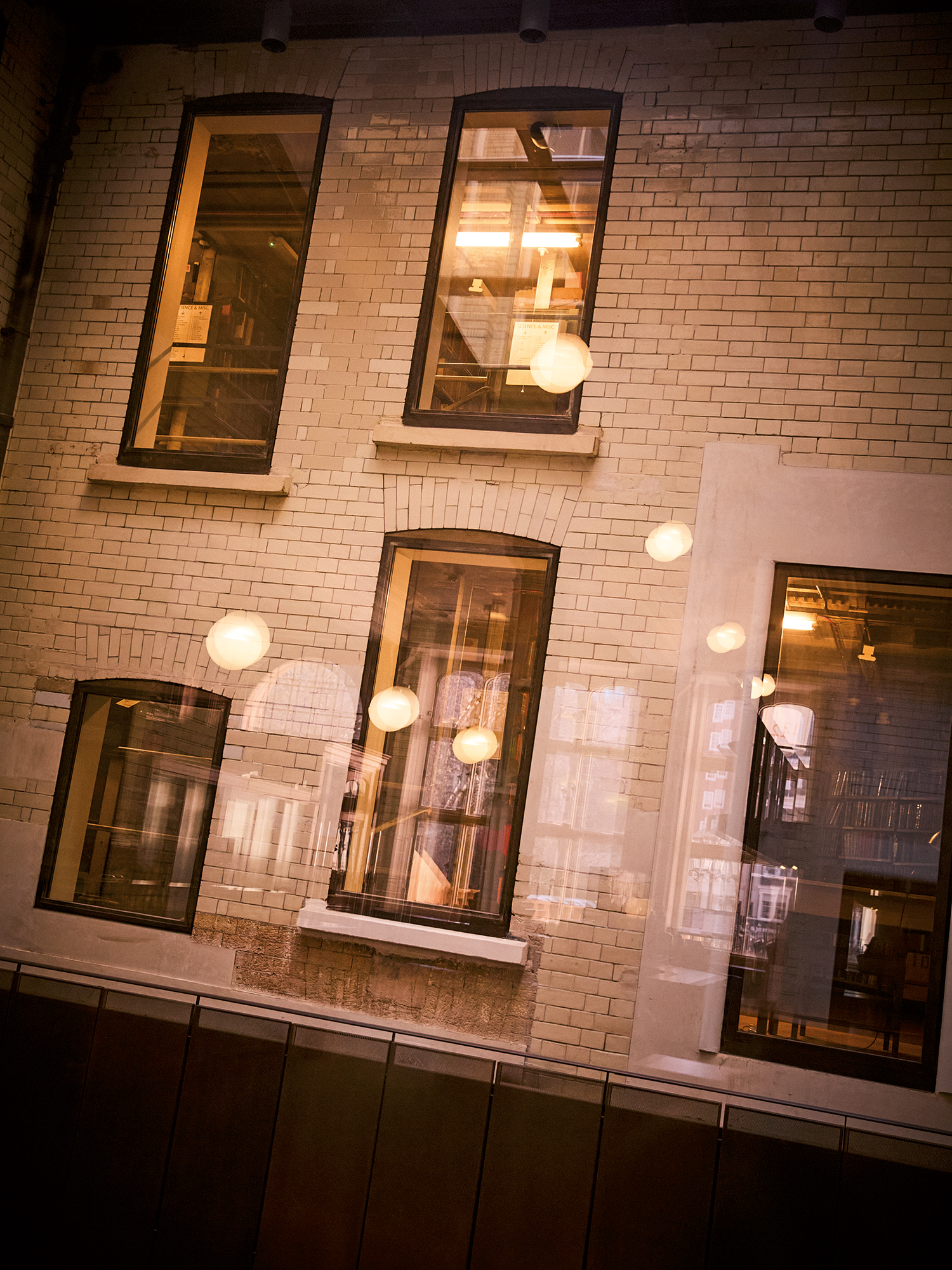
Monuments Égyptiens was inspired by Porter’s travels through the bookstacks in The London Library, which include many 19th and early 20th century books with such papers; as we journey through the shelves he pulls out an example to show me, a publication featuring delicate insects drawn on the tissue paper, which readers can superimpose – or not – on an image of a hedgerow. The stacks are quiet and hushed; Porter and I spend a morning there without seeing anyone. Spread between different buildings, the library is also labyrinthine – and vertiginous, because some of the flooring in the stacks is made of glass, or metal grids. It is possible to look three storeys down at seemingly endless shelves and books.
Of course the library is not infinite, and neither is human knowledge, and these limitations interest Porter. Physically experiencing the books is important, he says, suggesting knowledge as an embodied, subjective experience rather than strictly objective or rational. When he selects books and images he does so intuitively, he adds, partly relying on unconscious pattern recognition and his emotional reactions; he created his 2025 publication Search Engine – and the 2022 installation that preceded it – over 10 years, after looking at about 60,000 London Library books. The selected images are in the same order as on the shelves, but other forces helped guide what he chose.
Search Engine plays with the format of index cards, the analogue way to interrogate collections; in both versions of the project the reader flips through images as if flipping through index cards. The result is mysterious, intriguing, baffling; it is an archaeology of evidence, but, without a wider context, extracting meaning becomes hard. Like Larry Sultan and Mike Mandel’s Evidence, Search Engine suggests that evidentiary images only prove what we already think, and it also adds a layer around how we structure and access information. And, with a title referencing contemporary image searches and databases, it also suggests that both digital and analogue archives do the same thing.
“I‘m interested in the systems that carry images, their conceptual and technical qualities,” Porter says. “When we talk about the logging, the searching through, these are images that are massing in place, images that will relate to other images. So I’m constantly looking for ways to bring groups of images together from different methodologies, from something more instinctual. When you have a very large number of images, you naturally are going to apply some sort of understanding that is unconscious. The feeling of going through these things is almost meditative, and you can apply that to the feeling of scrolling through social media too. Entering into that is, for me, really important.”
Porter approached taking photographs in a similar way, getting a train out of town on the hottest days in Australia then walking home, waiting until he was exhausted – “near delirious” – before starting to shoot. Our current tech-heavy society is an evolution or acceleration of Victorian empiricism, he argues, but there are other ways to engage with the world. “There’s nothing more rational-positivist than the AI systems we’re putting in place,” he reflects. “But somehow something’s creeping around the sides of that – an irrationality, a reassertion of a strange, dark, dreaming space. We’re living in a peculiar time, we’re suspended between a rationalist ideal that wants an ordered world, and a chaotic other.”
He has explored this dichotomy in other projects too. His 2015 publication Optics gathered illustrations from The London Library’s early photographic manuals and treatises, to consider how new forms of looking materialised. One spread of his publication contrasts an image of the interior of the eye with a shot of the surface of the moon, showing new abilities to zoom in very close or very far away, to see far beyond the limits of the human body. Other spreads reproduce diagrams on the movement of light, redrawing the complexity of the world as directions, angles and planes. These diagrams generalise and abstract – they are useful but, as with AI, are also subjective, dependent on what is fed in and how it is analysed.
Another portfolio, On the Use of Novel Devices from the Distant West (2015), was made on residency in the Awagami paper factory in Japan, and takes its name from the first Japanese publication to describe photography (Ensei Kiki Jutsu, 1854). In it, Porter uses early photographic processes to depict objects from local schools, educational devices such as fossil specimens or engine cross-sections, which he compares to didactic museum objects. A certain way of seeing the world was being invented, disseminated and even imposed – a way of seeing that is now almost second nature. Porter developed his calotypes, cyanotypes and salt prints with local eggs, milk, salt and potato starch, and with paper produced in the factory. It produces both supple, more translucent Japanese sheets and stiffer, more opaque Western types.
Porter’s The Appearance of Distance (2024), which was exhibited in Paris Photo’s 2025 Emergence sector, considers how we perceive range and space; including diagrams, found images of hands and faces, and wooden sticks measuring acceptable social distances in various cultures, it ponders the shift from interpreting the world via one’s own body to measuring in abstract terms. The series is named after Walter Benjamin’s description of aura, a specificity of things he believed was being lost with modernity; the accompanying text is by Esther Leslie, professor of political aesthetics at Birkbeck, University of London, and highlights Benjamin’s reference to the “wilfully subversive protest against the typical, classifiable”, his efforts “to banish Newton’s mechanistic, mathematical Enlightenment physics”. “Adorno speaks of a Cartesian ambition, in which ‘items of knowledge’ are ‘pinned down and identified like things – photographable’,” Leslie writes. “But what is a photograph actually?”
It is a problem Porter also poses. Photographs are slippery, he says, they tell us more about us than the world; they are “a very quick, intuitive way to observe the absurdity of our condition”. Like Leslie, he questions whether we have understood photographs, let alone digital or post-digital images. For him, it is another good reason to consider The London Library his study or studio. “Slightly older archives are conceptual windows to view now,” he says. “I always think that, if you want to observe the present, it’s better to look at what you’ve just passed. In the same way, I like to sit with my back to the direction of travel.
“We’re in a technological revolution, and the last time we had a moment like that was the Industrial Revolution. And you know, for the Victorians reality became very porous. They started to get interested in science fiction, in the occult, in escaping the earthly realm with technology, and that’s happening to us too. There’s a tendency to think of our age as a repetition of the build-up to World War Two, but I don’t know. I think we’re Victorians again.”