
All images © Tudor Rhys Etchells
Every year, BJP publishes its Ones to Watch issue – our selection of the artists who epitomise the talent and creativity in international photography today, as nominated by a global network of curators, editors, and artists.
As we finalise this year’s list, to be published in Issue 7926, out this June, we’re revisiting the 2025 Ones to Watch. Today, Tudor Rhys Etchells, as nominated by curator Isaac Blease.
Born in Wales in 1994, Tudor Rhys Etchells is a recent graduate of the documentary photography MA at the University of South Wales. His photographic practice, however, is shaped by his former career as an immigration lawyer in Cardiff, navigating and deconstructing the damning bureaucracy surrounding citizenship and migration, in the UK and beyond.
Etchells describes having to “mediate the reality” of clients in his legal position, constructing narratives of migration by questioning their harrowing experiences. “In my work now it’s about asking the right questions with the camera,” he says, “being aware of the space you hold and how people are going to react to you.” This shift in perspective led him to critically examine the ethics of photography and representation – what it means to photograph and to be photographed, and the power dynamics that shape these interactions.
Encountering Ariella Aïsha Azoulay’s writing also led him to question how migrants are depicted in the media. “Contemporary documentary photography of the issues surrounding migration is dominated by the same themes, such as photographs of asylum seekers queuing up for food,” he observes. Visual narratives favour shock factor and dramatic effect over nuance; few focus on the bureaucratic systems that contribute to migrants’ dehumanisation, a system which Etchells knows intimately. “There is a repetitiveness in practising within the legal system,” he explains. “The same addresses, the specific and formal language, the same rights of appeal.”
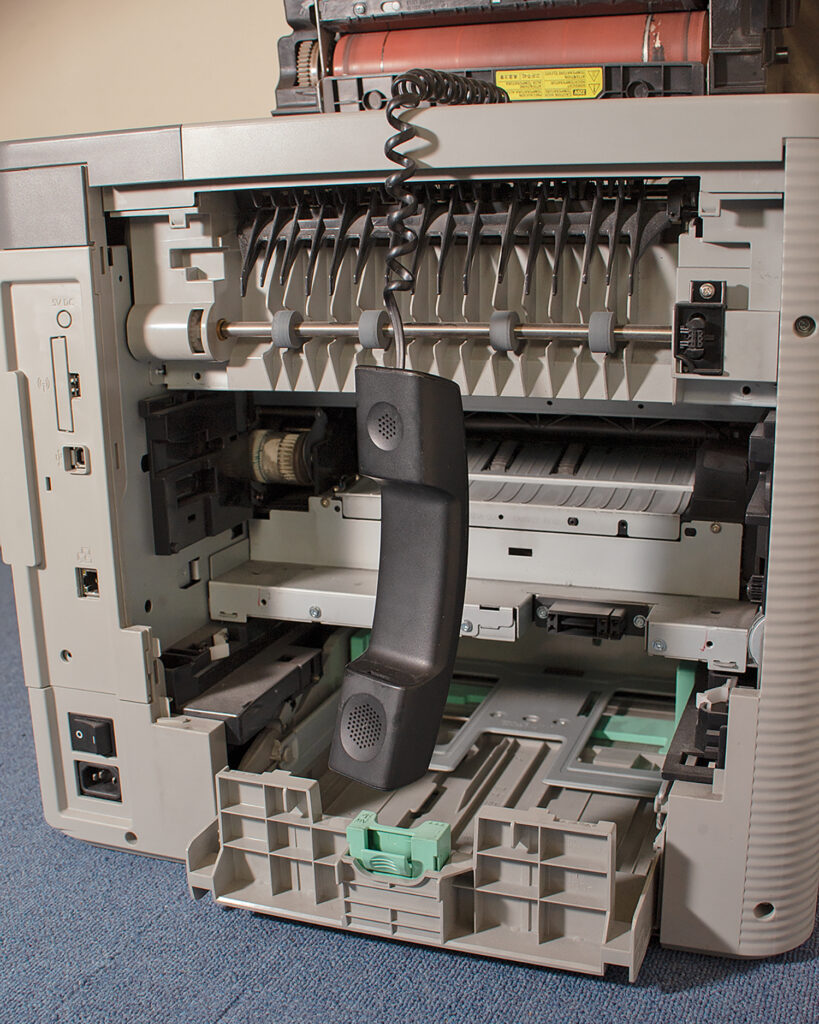
“Photography is a visual representation system, and therefore best placed for telling this story” – Tudor Rhys Etchells
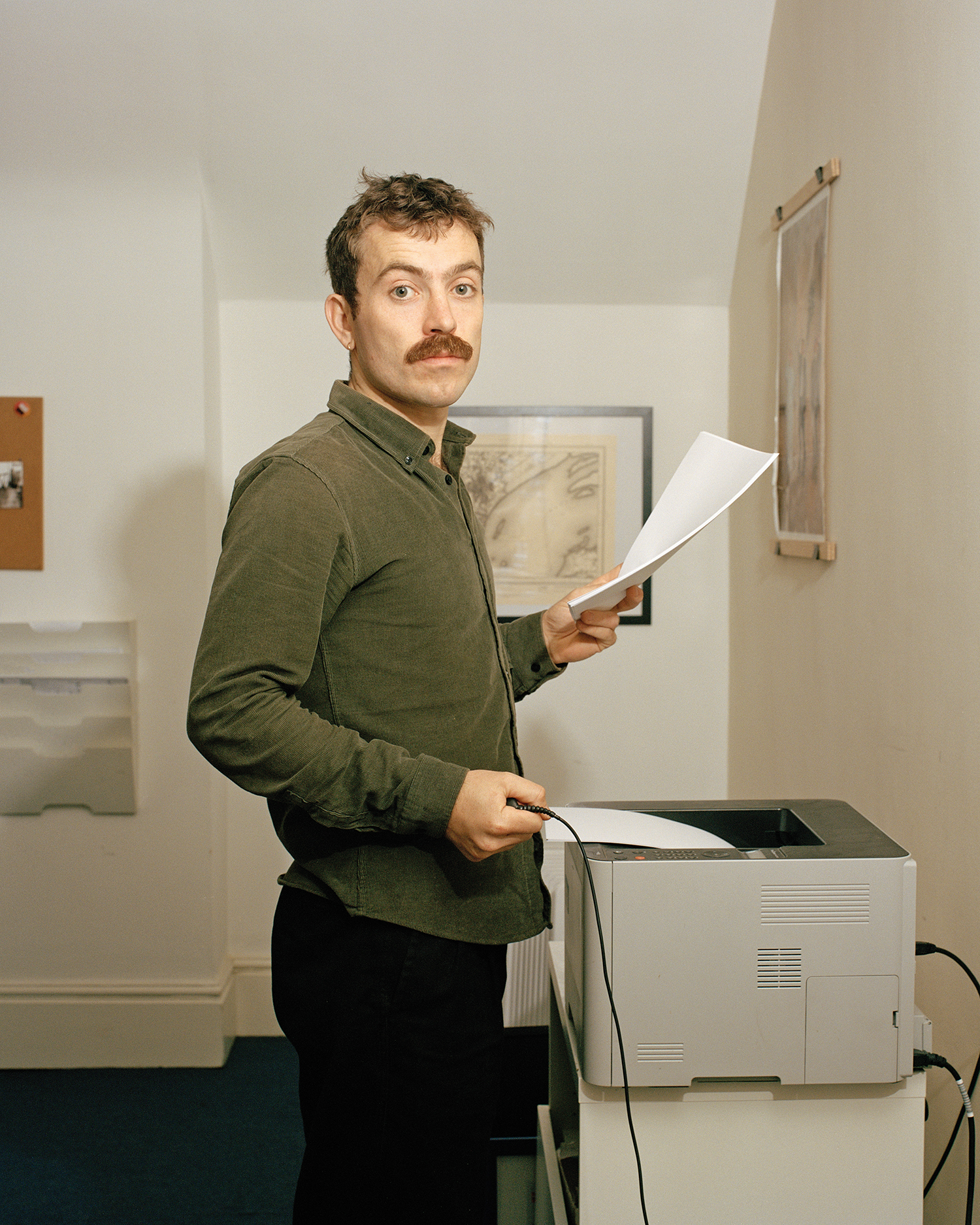
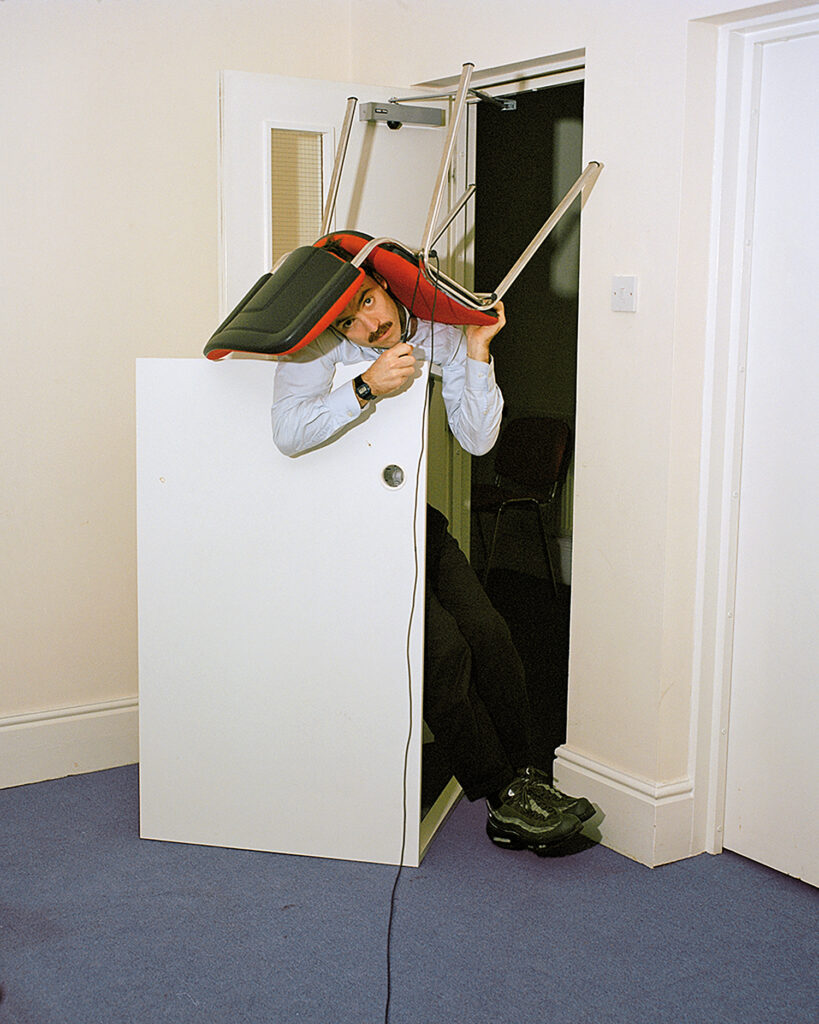
Focusing on this system, Etchells put together A Reasonable Degree of Likelihood, a conceptual yet politically engaged series which caught the attention of Isaac Blease, curator at the Martin Parr Foundation and Etchells’ Ones to Watch nominator. The project “compellingly looks at the alienation and bureaucratic everyday of immigration office work through a series of performative self-portraits and images made at sites of significance,” Blease explains.
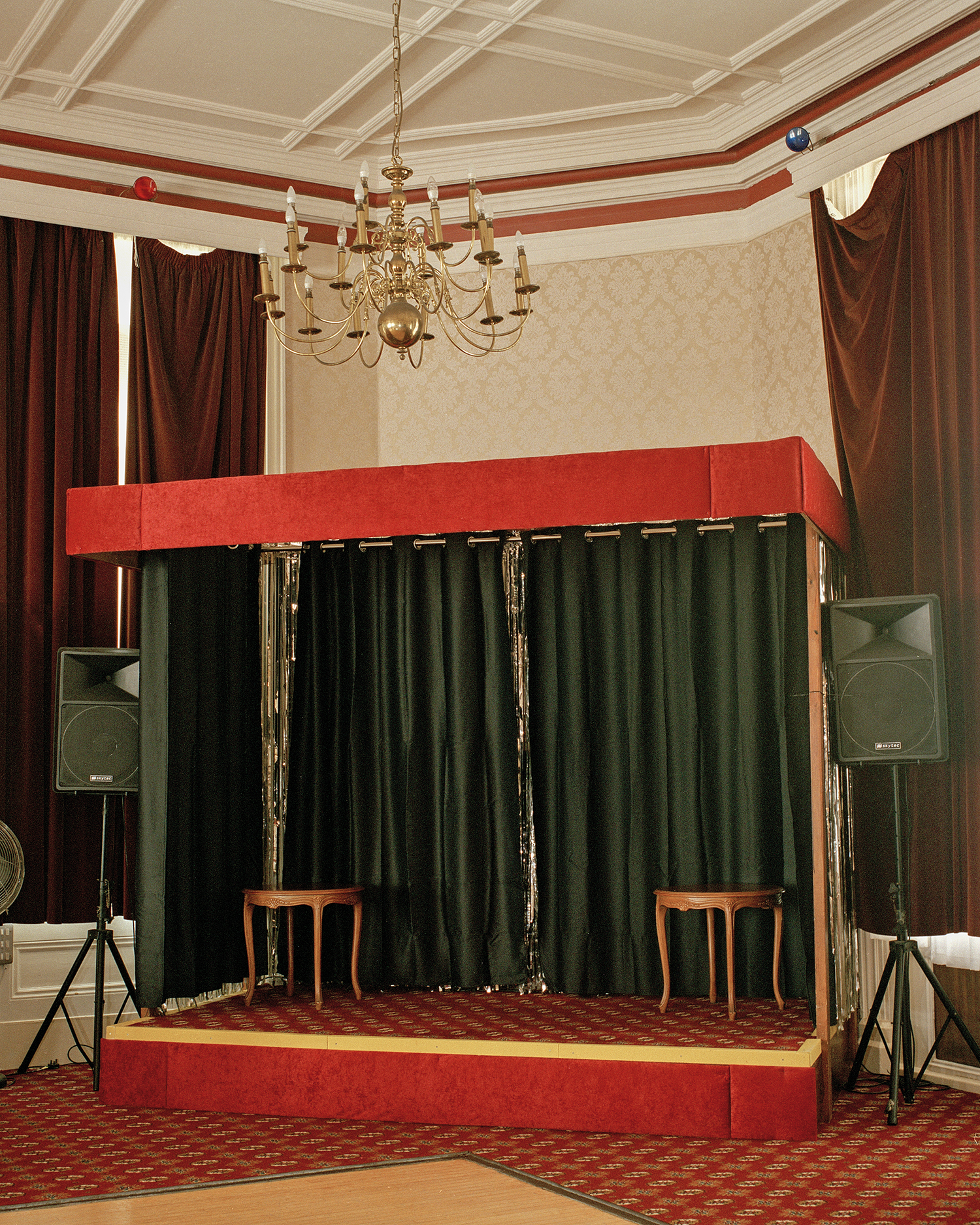
A Reasonable Degree of Likelihood prods at physical manifestations of bureaucratic space, the public buildings and old hotels in which asylum seekers are held in limbo. In essence, photography becomes a tool for Etchells to reveal the brutality concealed within the intensely mundane, the purgatory that is the immigration waiting game. “How do the architectural structures feel oppressive in a way that mimics the legal structures they are supporting?” he asks. “Photography is a visual representation system, and therefore best placed for telling this story.”
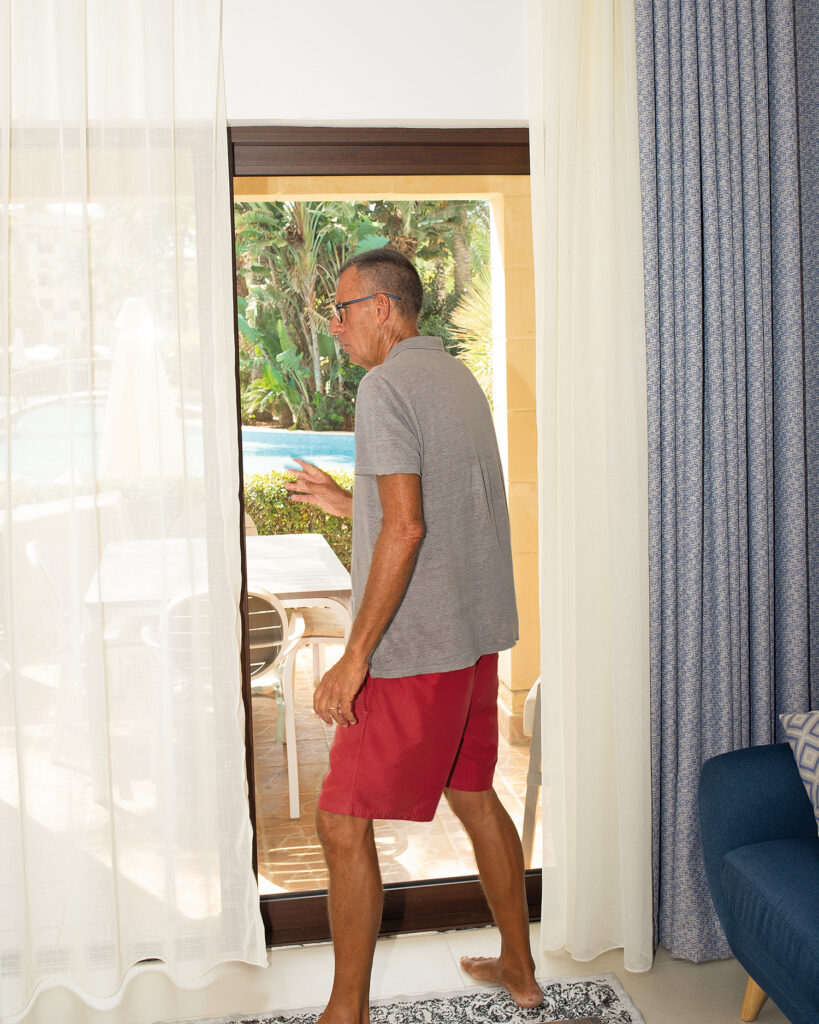
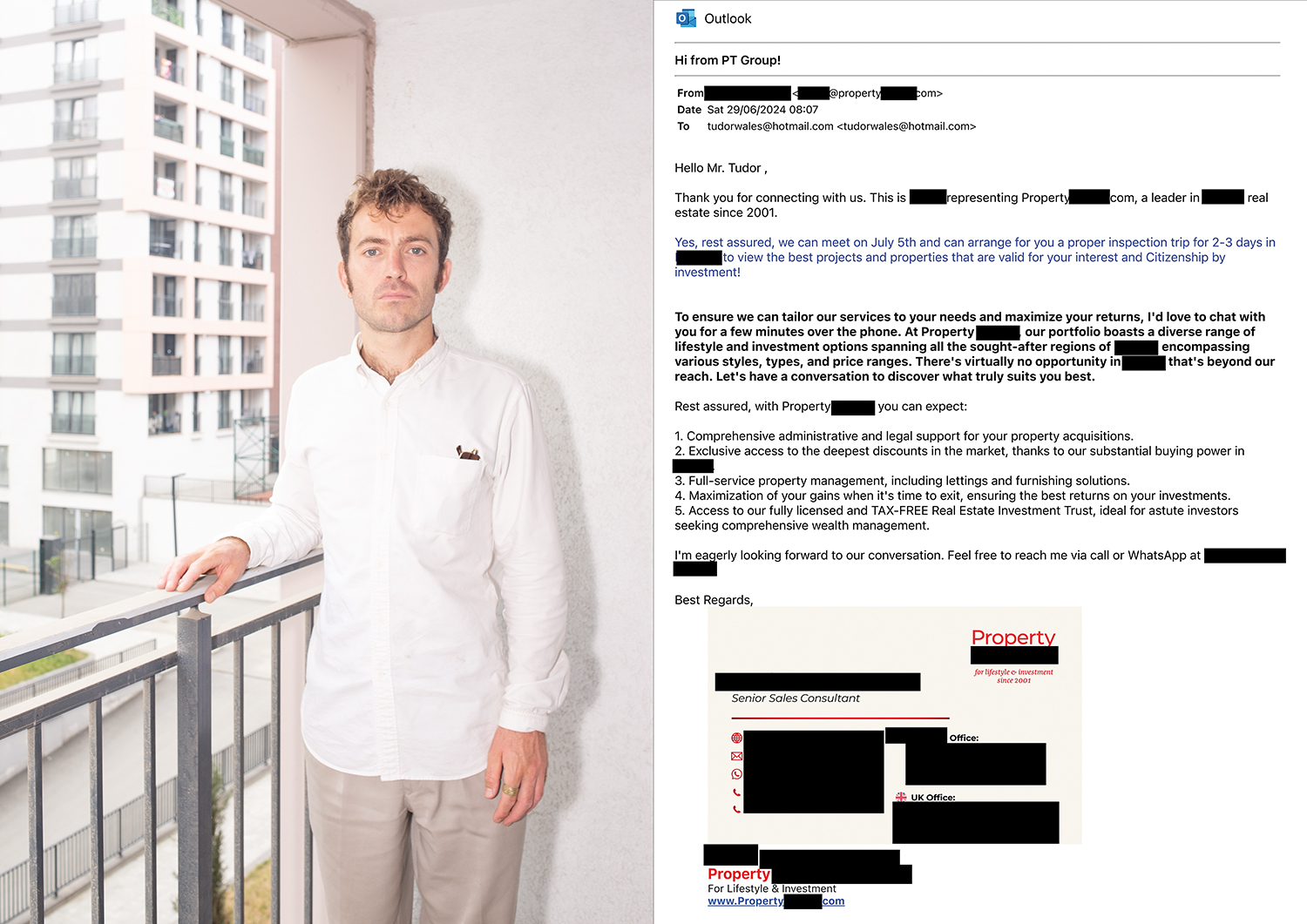
Etchells’ work is not confined to the coverage of British bureaucracy, also exploring wider examples of the commodification of citizenship. Available Potential Guaranteed, his most recent project, speaks to the performative nature of Citizenship by Investment (CBI) schemes, in which estate agents sell newly developed apartments through which buyers can obtain passports. Turkey’s CBI programme, for example, has attracted 40,000 applications and generated over $15billion in investment since it was launched in 2017, according to the country’s former interior minister Süleyman Soylu.
“If states are selling citizenship, ridding it of any moral integrity, are they also concealing contradictions of how people actually respond to borders?” asks Etchells.
Man-made constructs, borders are ephemeral and lack any essential qualities; as Mahmoud Keshavarz and Shahram Khosravi put it in Seeing Like a Smuggler, borders “create fluid relations that can be reassembled to produce different perceptions for different bodies”. In short, if you have lots of money, you’ll be fine.
Travelling to Istanbul to explore the physical manifestation of Citizenship by Investment, Etchells enacted what he describes as a “durational performance”, visiting apartments and estate agents. His installation of the project at BayArt in Cardiff, where Etchells is also an associate artist, included a portrait diptych of him taken by an estate agent; it is a document, Etchells points out, but it is also misleading. “What is truthful about that photograph of me?” he asks. “Neither of us could actually buy the house. Him, because he is Syrian and due to a historical disagreement is not allowed to purchase property in Turkey. And me, because I don’t have half a million euros.”