
All images © Bouchra Khalili
The SWANA-focused gallery, which underwent a period of renovations, relaunches by exhibiting Circles and Storytellers, alongside Palestinian artist Dima Srouji’s new permanent commission
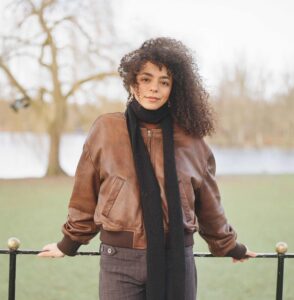
Mosaic Rooms reopened its doors in February after a year of refurbishment, marking a new institutional chapter and a renewed commitment to the cultural and political conversations that have long shaped the organisation’s programme. Anchoring this moment is Circles and Storytellers, the first public UK solo exhibition by the French-Moroccan artist Bouchra Khalili – a show that examines storytelling, performance, and the possibility of reimagining citizenship itself.
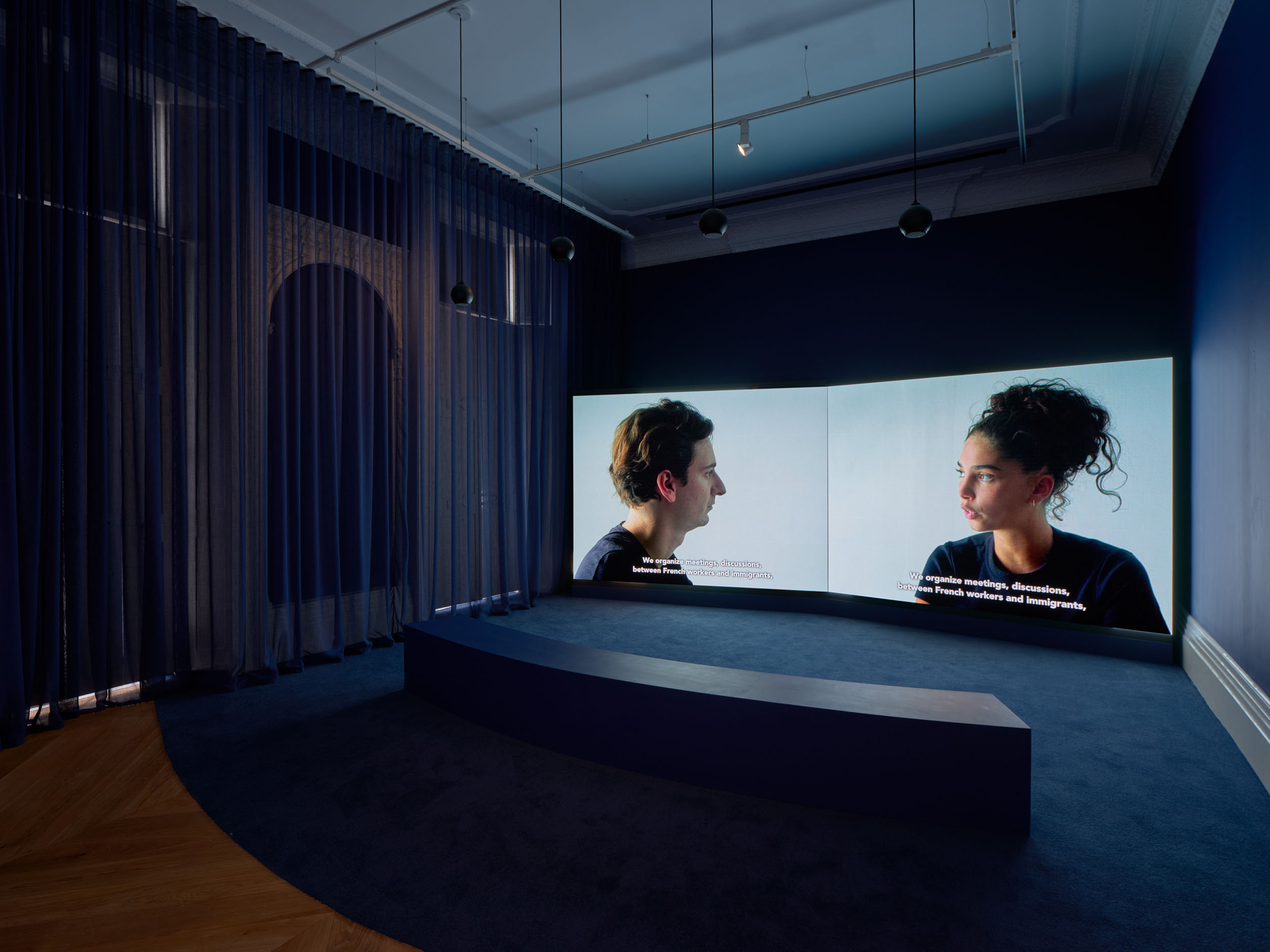
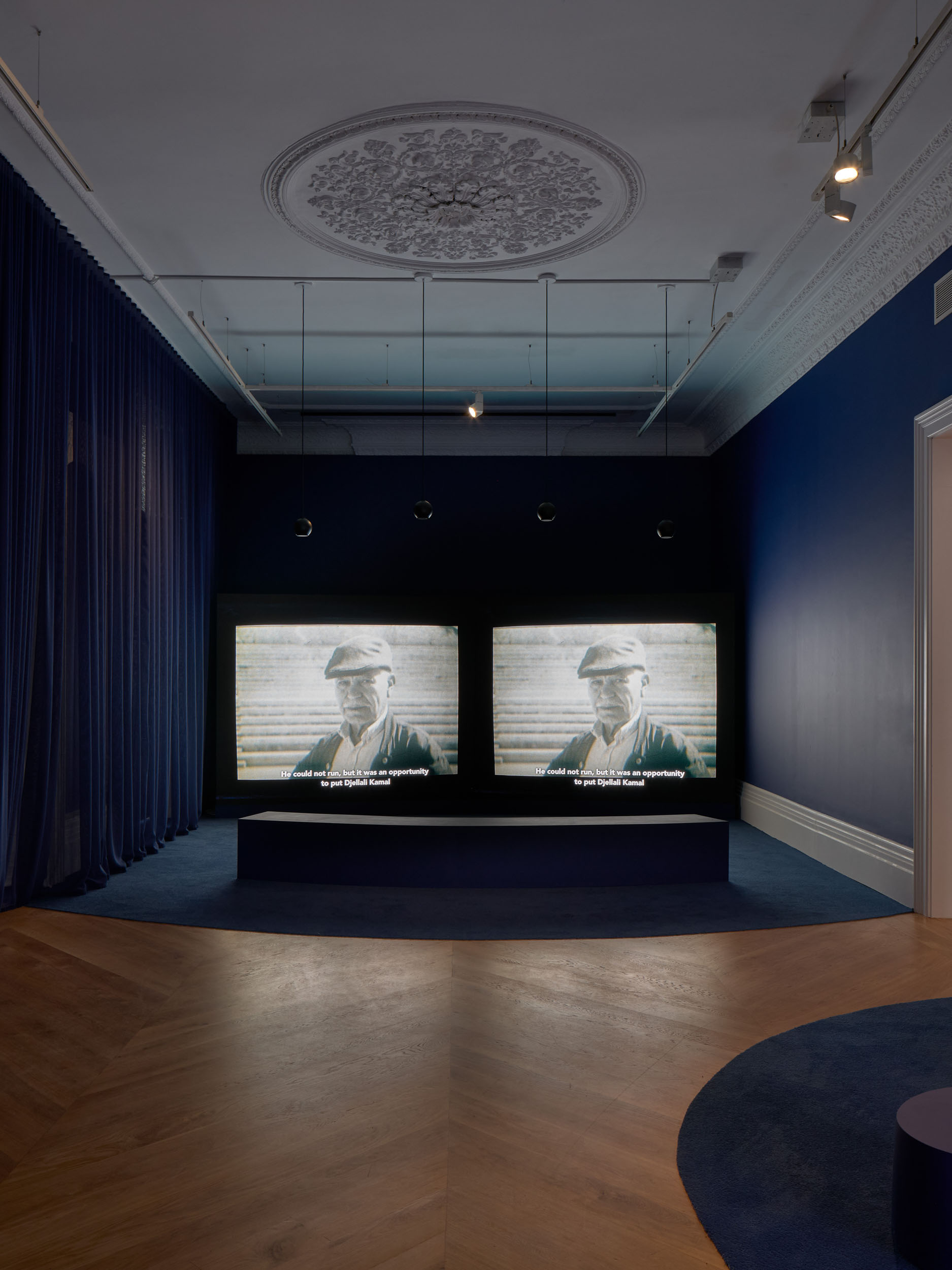
The exhibition forms the culmination of Khalili’s decade-long investigation into the largely overlooked history of the Mouvement des Travailleurs Arabes (MTA), a militant organisation active in France in the 1970s and led largely by undocumented North African workers. At Mosaic Rooms, the project unfolds through two interconnected works: The Circle Project (2023), a mixed-media installation, and The Public Storyteller (2024), a 16mm film and video piece. Together, they explore how theatre, storytelling, and collective performance once functioned as tools of political imagination.
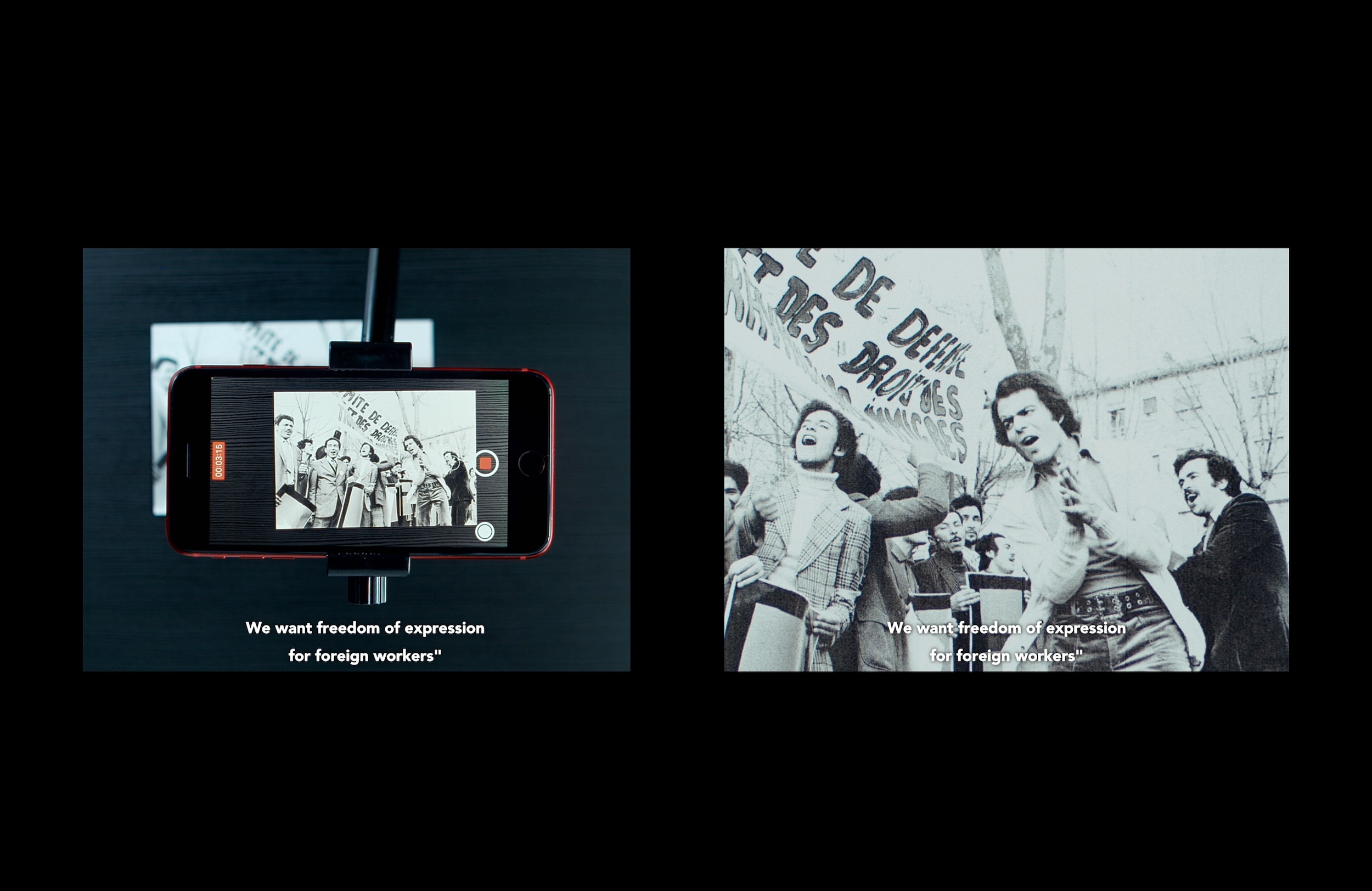
That investigation traces the activities of two theatre troupes linked to the MTA – Al Assifa and Al Halaka – which were formed by immigrant workers seeking to represent their own experiences on stage. These groups performed across France in the mid-1970s, bringing attention to the precarious living and working conditions faced by Maghrebi immigrants while forging alliances with French workers and students.
For Khalili, the legacy of those performances resonates with a central question that frames the exhibition: How do we perform citizenship when the public stage was never ours to occupy?
“Beyond film as a medium, it is above all the notion of montage that is central to my practice – more specifically montage as a gesture that produces ‘constellations’”
“It is one of several questions raised by the exhibition,” she explains to me. “It points to the essential link between performance, artistic production, and civic imagination. The issue here is imagining other ways of forming community, beyond normative conceptions of belonging and identity.”
The theatre groups she references were not simply artistic collectives. They were part of a broader movement that sought to redefine the political landscape of France in the wake of decolonisation. Through performance, members of Al Assifa and Al Halaka attempted to imagine a community that extended beyond national identity.
“This is what the members of Al Assifa and Al Halaka, the theatre troupes of the Arab Workers’ Movement, sought to do in the 1970s by forming theatre groups to bear witness to the living and working conditions of North African immigrants in France and, above all, to show that it was possible to build alliances with French workers and students, who could form a new community on stage and beyond,” Khalili says.
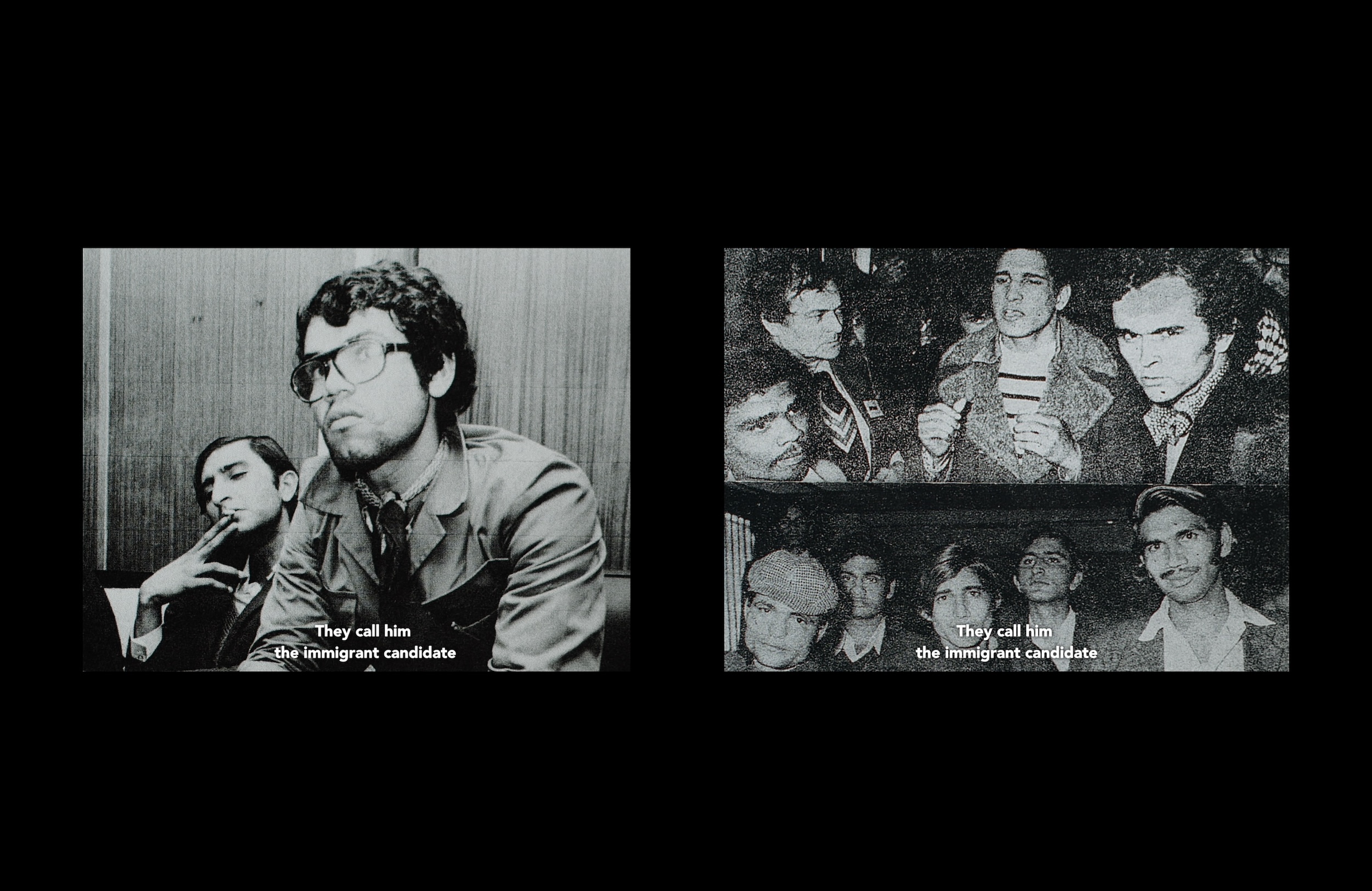
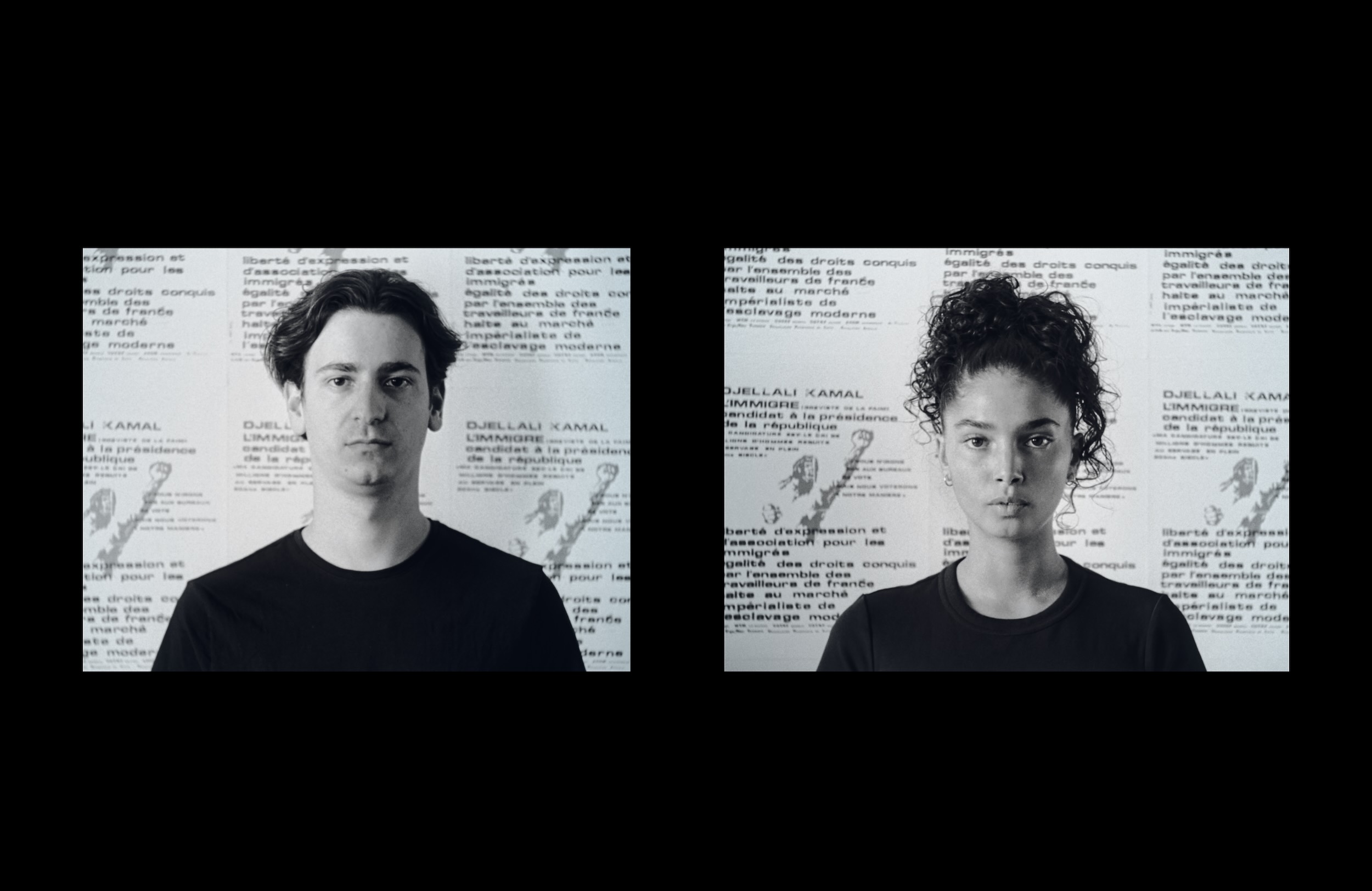
The exhibition also revisits one of the movement’s most striking gestures: the symbolic presidential candidacy of Djellali Kamal in the 1974 French election. Kamal – a pseudonym adopted by an undocumented worker involved in the theatre group – ran as what was described as “the candidate of those who cannot vote.”
“This presidential candidate, an undocumented worker and performer, represented through his very anonymity the possibility of a new transnational community, freed from the limits of citizenship as defined by the nation-state,” Khalili says. “In this sense, the exhibition invites viewers to participate in the projection of a new potential community brought together by the power of performance, storytelling, imagination, and poetry.”
Rather than presenting a straightforward historical reconstruction, Khalili’s films weave together fragments of memory, performance and narration. The artist describes her approach not as research in the traditional sense but as something closer to tracing and assembling overlooked stories.
“I did not select these stories,” she says. “I have carried them within me for many years – even before becoming an artist. I sometimes wonder whether I did not become an artist precisely to find the forms through which to tell them. Selection is in some ways contrary to my method: I do not select the stories – they are there, they exist, and I have inherited them.”
This philosophy extends to the performers who appear in her work. Khalili frequently collaborates with non-professional participants whose own experiences intersect with the histories she explores.
“What matters is their interest in the project and the way they invest in it with their own history and subjectivity,” she explains. “If there is any selection, it occurs rather in the making of artistic and narrative strategies that shape the modes of production and transmission of stories, memories, narratives, images, and sounds.”
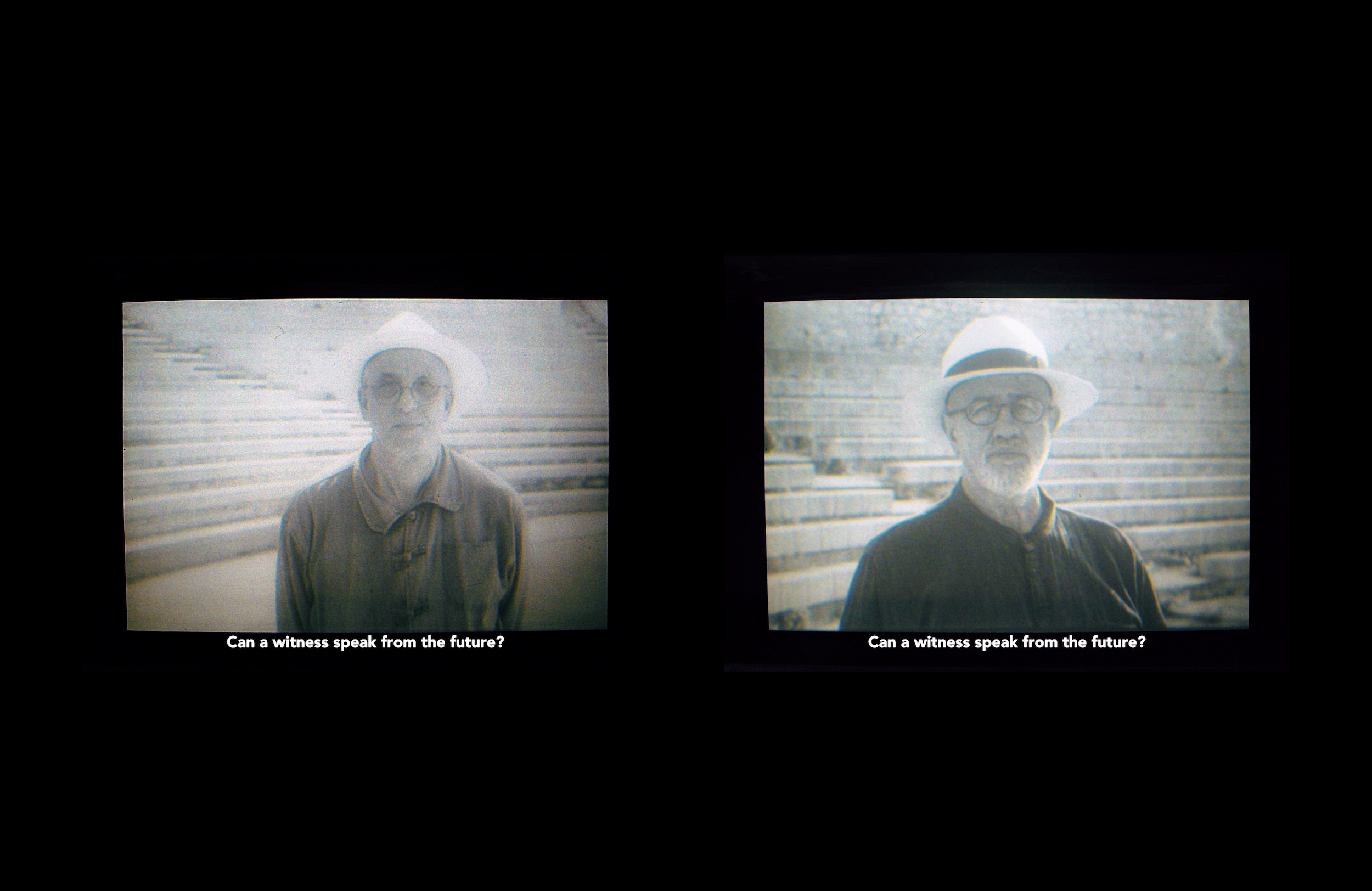
In The Circle, two young protagonists – Lucas and Mia – investigate the history of the MTA and its theatre groups while simultaneously performing their own relationship to that past. Both belong to the generation of grandchildren of immigrants connected to the movement. As they follow the traces of the story, their roles shift from investigators to collective narrators. Another figure in the exhibition, storyteller Mohsin Touil from Marrakesh, appears in The Public Storyteller, drawing on the oral traditions of storytelling that remain central across North Africa and the Arab world.
“Mohsin, as a storyteller embodies what the tradition of storytelling carries: summoning the voices of the ancestors to speak in public, in the present-time, so as to picture a potential collective future,” Khalili says. Film is central to the exhibition, but Khalili emphasises that what truly structures her work is not the medium itself but the process of editing and arrangement. “Beyond film as a medium, it is above all the notion of montage that is central to my practice – more specifically montage as a gesture that produces ‘constellations,’” she says.
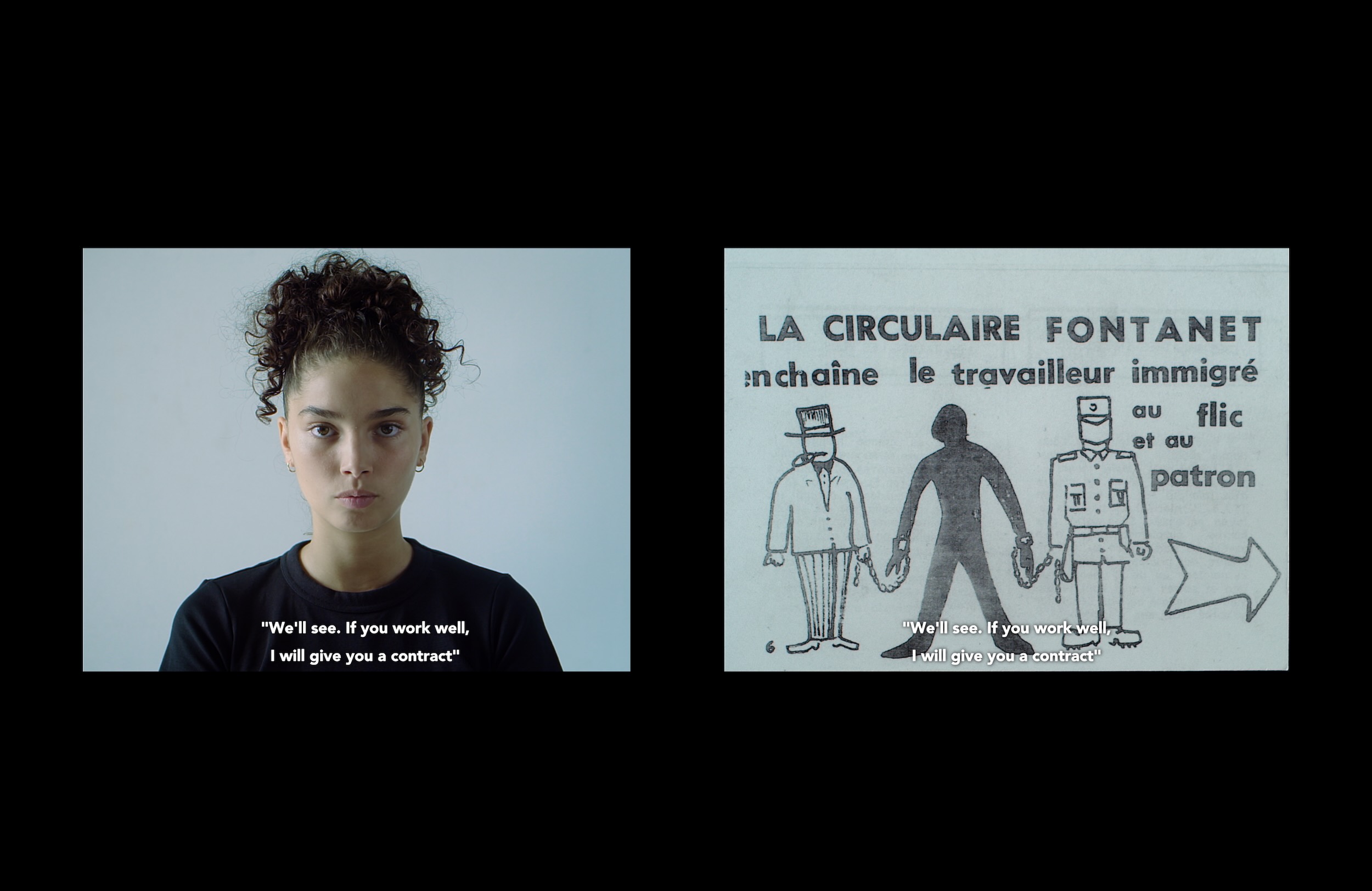
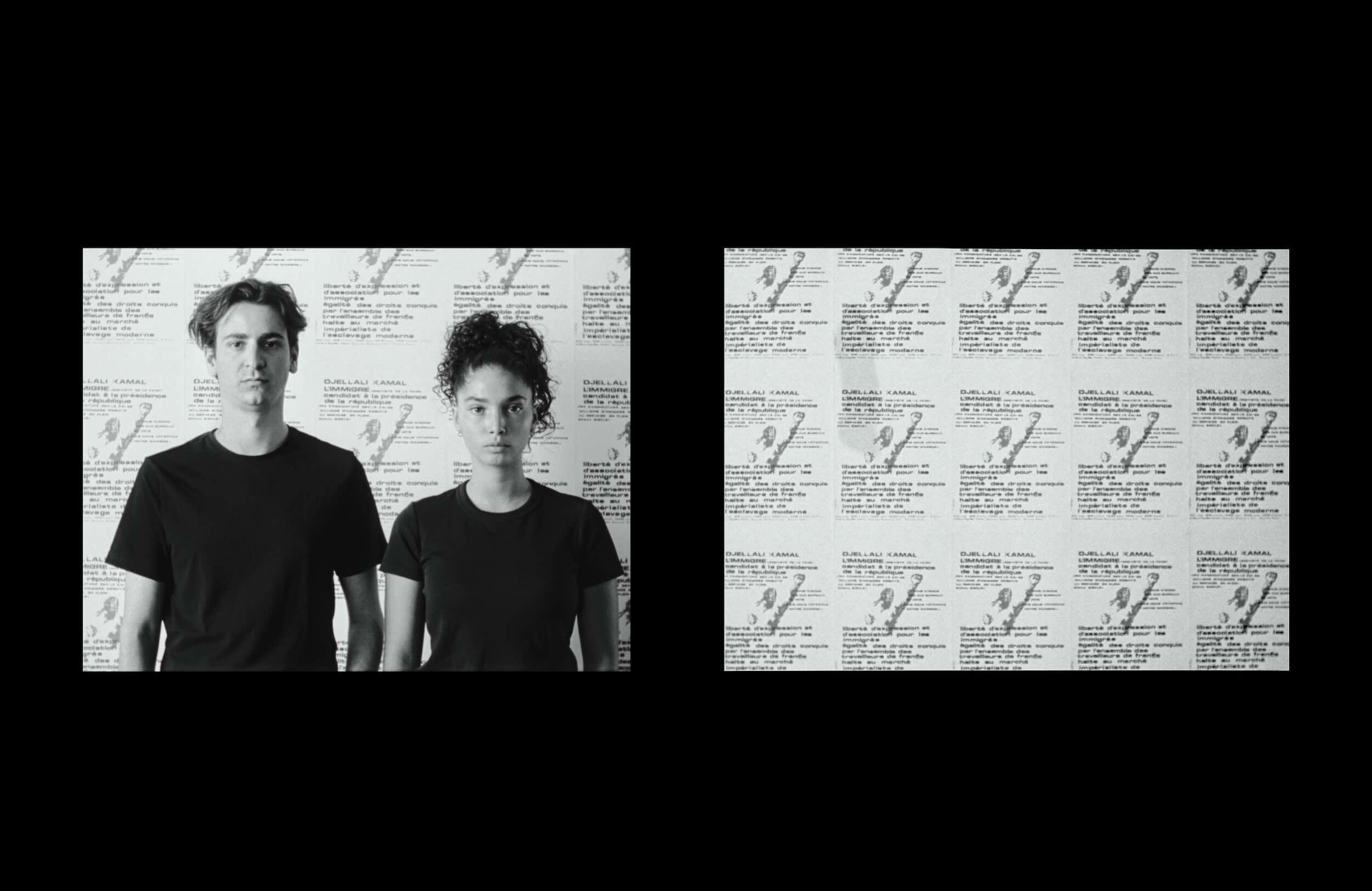
These constellations – assemblages of narratives, images and voices – allow past and present to intersect. In Khalili’s films and installations, the constellation becomes both a visual motif and a conceptual structure for imagining communities that do not follow the rigid hierarchies of national identity.
Although Khalili’s work is frequently discussed in terms of migration and borders, she resists those labels as reductive. What interests her more deeply is the possibility of redefining citizenship itself. “My work is often described in terms of migration and borders which, I believe, miss what is truly at stake,” she says. “Beyond these categories, what interests me most is rethinking these paradigms in order to propose another one: that of a radical citizenship.”
She points to the vision of Algerian poet Jean Sénac, who imagined what he called “citizens of beauty” in the aftermath of Algerian independence – people belonging to a community freed from colonial borders and rigid identities. “At a moment when the poison of racism and supremacism is spreading on a global scale as we have not seen for decades, it seems more urgent than ever to think of forms of transnational communities that free us from the walls and barbed wire rising everywhere,” Khalili says.
In that sense, the exhibition resonates strongly with the ethos of Mosaic Rooms itself. The institution – long supported by the A. M. Qattan Foundation before becoming an independent charity – has positioned itself as a platform for dialogue between artists from the Arab world and its diasporas.
Khalili notes that she followed the organisation’s programme from afar before accepting the invitation to exhibit there. “I knew the respect and affection that many artists from the region and beyond, hold for this unique institution,” she says. “Naturally, my work resonates in a particular way in this space because of the link it traces between the history and culture of the region and those produced within its diasporas.”
The reopening has also introduced a number of new architectural and public features, including expanded communal spaces and a permanent stained-glass installation titled Four Moons from Home by Palestinian artist Dima Srouji, installed in the building’s entrance hall. But if the physical renovation signals renewal, Khalili’s exhibition suggests that the most important transformations may occur in the realm of imagination.
“I do not believe that my work blurs the lines between artistic practice and political action,” she says. “What interests me above all is the power of imagination, artistic imagination, the imagination of visual, sonic, and discursive forms, which ultimately allows us to produce other perspectives on the world we inhabit.”
For Khalili, that imaginative potential is inseparable from the collective dimension of storytelling itself. The narratives revived in Circles and Storytellers are not merely historical curiosities; they are propositions for how communities might still be formed. “If I make art,” she says, “it is because I think – hope – that art can be a producer of potential communities.”