

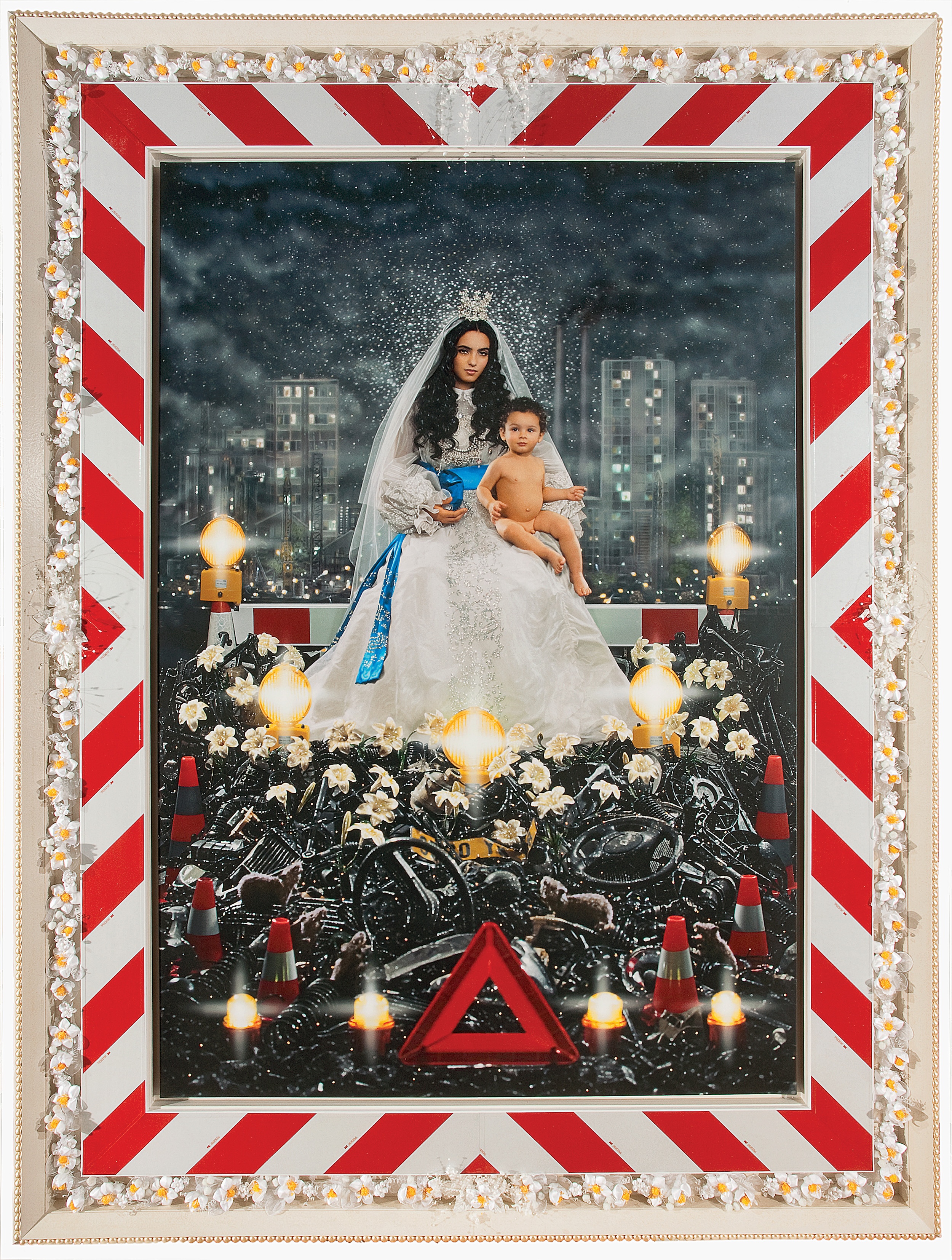
La Vierge a l’enfant © Pierre et Gilles
Bonnes Mères blends film, photo, painting and sculpture to offer an honest and generous look at motherhood
Motherhood has morphed from a private domesticity into a high-stakes public performance, mediated by a digital landscape that demands constant, curated visibility, soft aesthetics turning into performative mothering. This intensive performativity creates a glass cradle where the labor of raising a child is inextricably linked to the labor of showing it transforming every organic meal and sensory play-date into a metric of maternal worth. Yet, as the “Instamom” aesthetic reaches a breaking point of burnout, an exhibition at Mucem Marseille unmasks the traditional imaginaries that have long policed the maternal image shifting into the shadows, bringing to light the multiple, invisible realities including the ‘monstrous’ and the weary that comprise the true maternal experience.
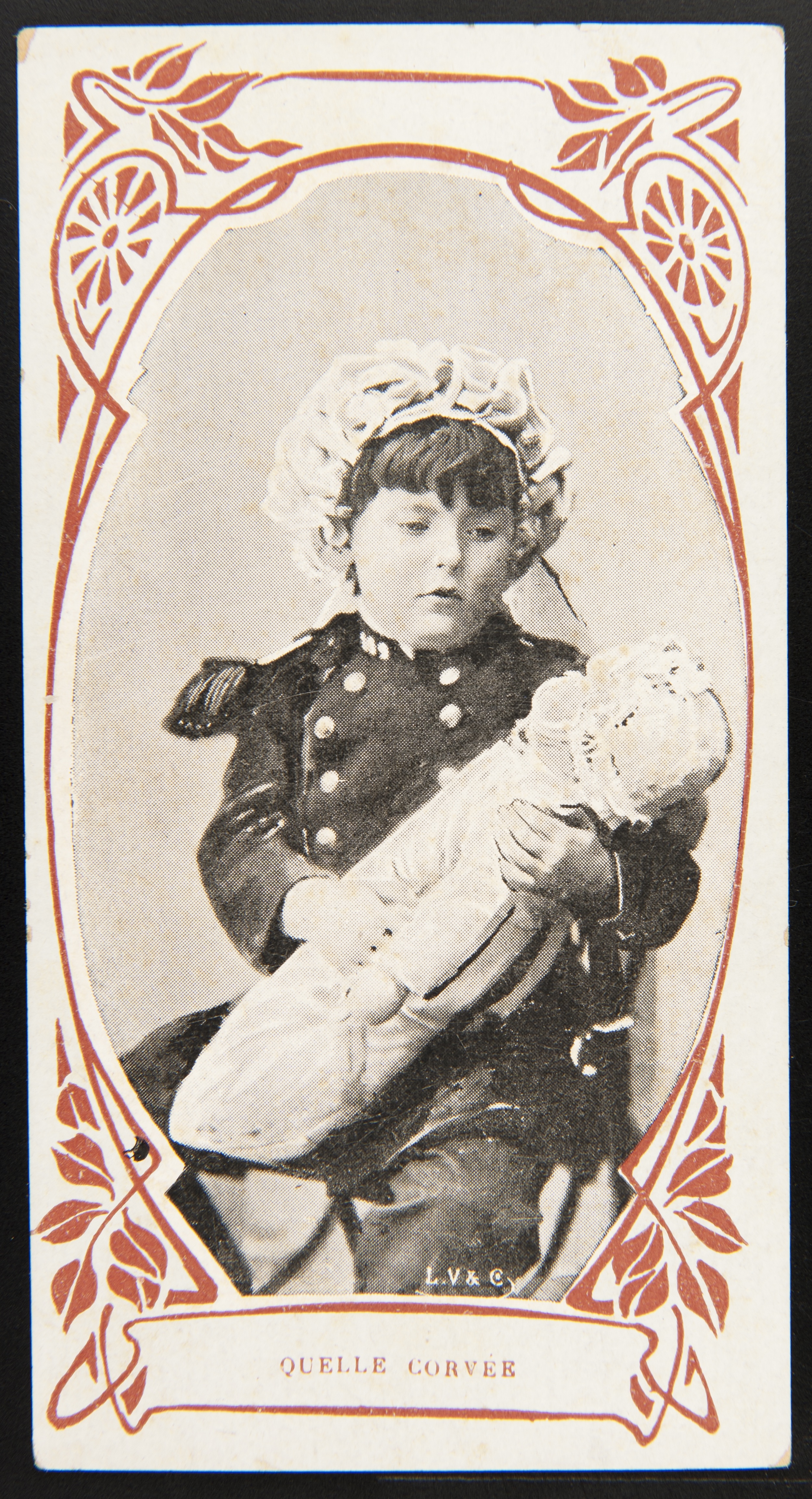
Opening on 18 March, the exhibition Bonnes Mères presents a staggering dialogue across time, featuring four-hundred works that bridge the gap between ancient ritual and contemporary subversions in Mediterranean cultures. The collection’s physical scale is as diverse as its subject matter, ranging from intimate terracotta figurines and ethnographic artefacts from the Mucem’s own archives to monumental installations, large-scale paintings, and evocative film excerpts. This multidisciplinary collection is anchored by solid modern interventions challenging the classical gaze of masters like Fragonard and Cignani among others. Supported by prestigious loans from the Musée d’Orsay, the Benaki Museum in Athens, and the Musée des Arts Décoratifs, the exhibition transforms motherhood from a static icon into a history with its own criticalities and open concerns.
Curators Caroline Chenu and Anne-Cécile Mailfert have eschewed a strictly chronological or archival approach. While the exhibition is rich with historical depth, drawing from the Mucem’s ethnographic collections and ancient mother goddesses, the process was driven by a desire for a frictioning visual dialogue: one that avoids soft encounters but rather unfolds a processual world-making around what motherhood means across the Mediterranean. “The approach is one of visual dialogue,” mentions Chenu, “showing how childbirth, breastfeeding, exile, pain, or a mother carrying her child have hardly changed in thousands of years. We did not want to aestheticise terror, but we refused to omit it.”
“Rights are never permanently guaranteed and remain very unequal”
Within the specific dramaturgy of the exhibition, photography transcends mere documentation, emerging instead as an active site of friction. The medium becomes a lens through which the complexities of womanhood and maternal labour are examined. This inquiry begins with the aforementioned visceral realism of Letizia Battaglia; her documentary approach functions as a neorealist anchor, capturing the mother as a singular pillar of resilience amidst systemic social decay. Battaglia’s frames do not merely depict a role; they expose the fractured identities and conditional agency forced upon women within oppressing patriarchal structures.
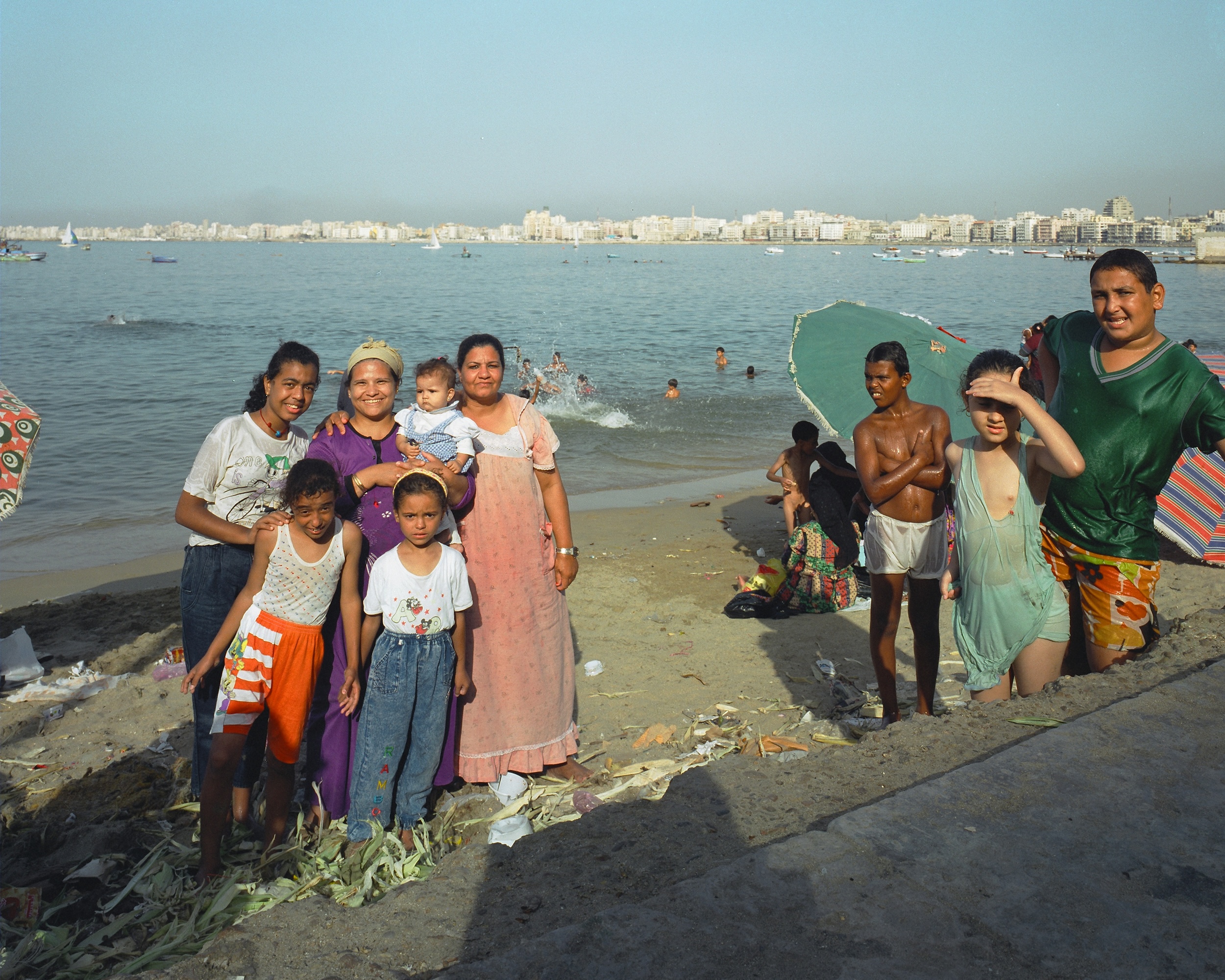
This exploration of identity and placement expands through the work of Zineb Sedira, for example, who shifts the focus toward the geographies of motherhood. Sedira’s practice bridges the North African and European experience, utilising the maternal bond as a conduit for post-colonial transmission. In her work, the mother is the primary navigator of displaced histories: a theme that finds a radical, physical counterpart in the mirror of political performance occupied by Fatima Mazmouz and Kader Attia. Mazmouz utilises a rigorous embodied practice, positioning her own pregnant form as a confrontational site of resistance.
Her staged, visceral self-portraiture actively deconstructs the colonial and patriarchal gaze, reclaiming the maternal body from a history of passivity and fetishisation. Parallel to this reclamation, Attia’s photographic output centres on reparation. By framing the maternal bond as a vessel for addressing intergenerational trauma, Attia utilises the image as a clinical yet poetic tool for restorative justice, viewing the psychological scars of history through the aperture of the domestic.
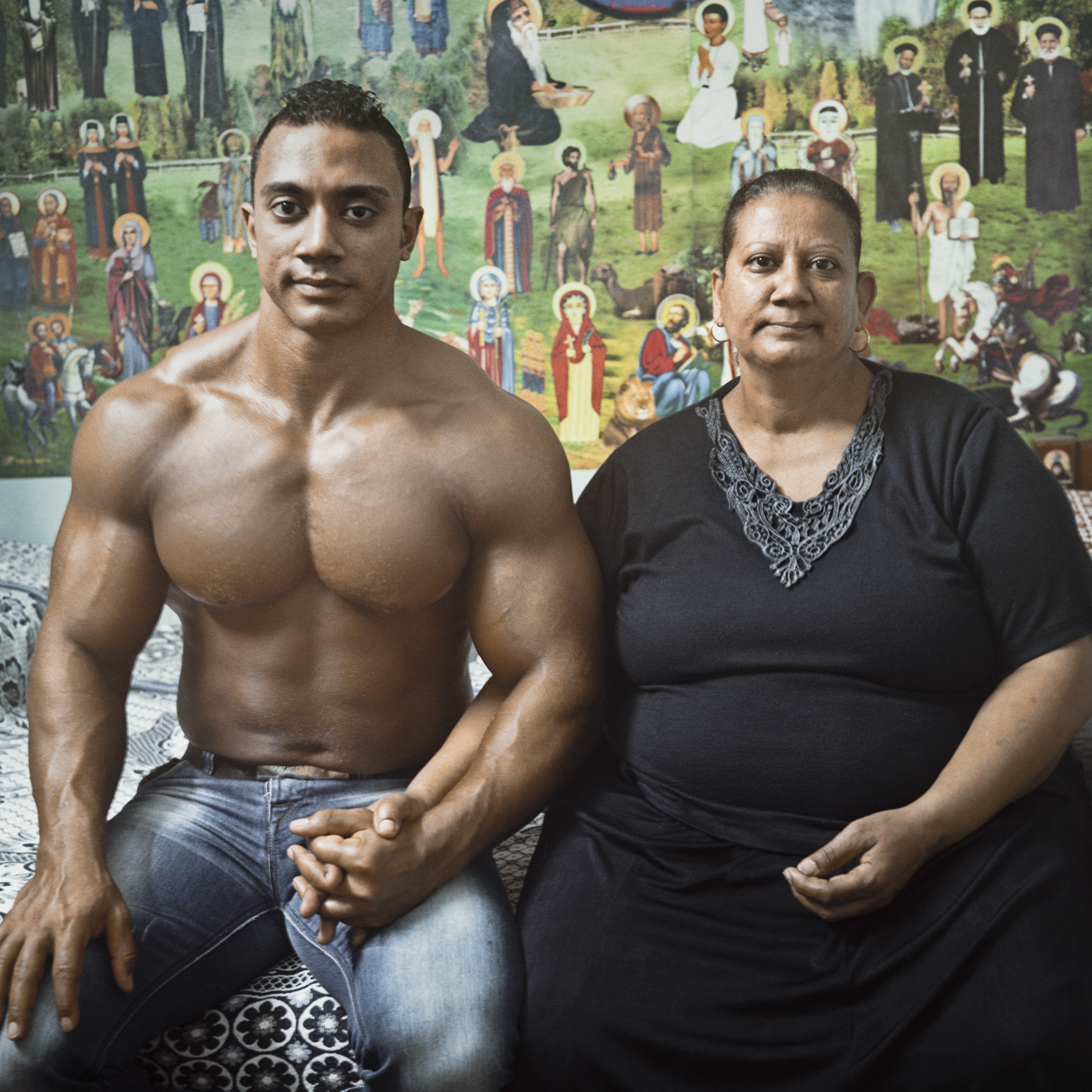
The narrative of 21st-century motherhood in the Mediterranean is increasingly shaped by works that interrogate the volatile political landscape of reproductive rights. Artists like Laia Abril and Fatima Mazmouz revisit the “dramatic consequences of clandestine abortions,” reminding us of a reality where women were forced to resort to “dangerous means, such as hangers or needles.” These pieces underscore that such rights are “never permanently guaranteed”and remain “very unequal” across the region. In contrast, Michael Serfaty offers a “restorative gaze” in his Landscape of our Childhood (2013), transforming “C-section scars” into a map of maternal history titled with the names of the children born from them. This shift toward the personal is mirrored in the contemporary portraits of Sophia Tsag and Vasantha Yogananthan in Marseille, whose work captures a motherhood that is both “tender and strong.”
The geographic specificity of the Mediterranean reveals a landscape where cultural reverence for the maternal rarely translates into systemic support. The aesthetic choices within the exhibition are deeply informed by the friction of regions where “rights regarding bodily autonomy and family planning remain very unequal,” and where the “abandonment of mothers” remains a persistent scourge. As Chenu suggests, this maternal experience expands the creative spectrum to its furthest extremes, offering representations that embrace a profound ambivalence that sits much closer to the “complexity of reality” than traditional tropes allow.
