

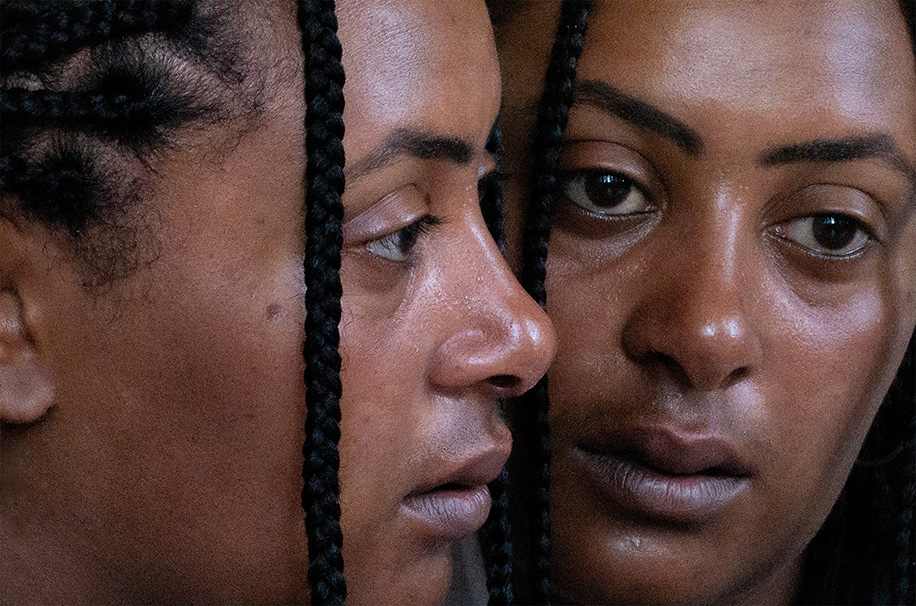
© Jip Shalkx
The winner of the People’s Choice Award in this year’s Female in Focus talks through her work and how we can navigate a world where the physical and digital are increasingly intertwined
We have all experienced it: that heart-sinking moment when you look around the dinner table and realise that every person is glued to their device. “You’re together, but not together. And you’re all friends, so you’re probably all consuming the same content,” says Dutch photographer Jip Schalkx. She describes this as a “hybrid social reality” – a blended state of existence where our physical and digital worlds are increasingly intertwined.
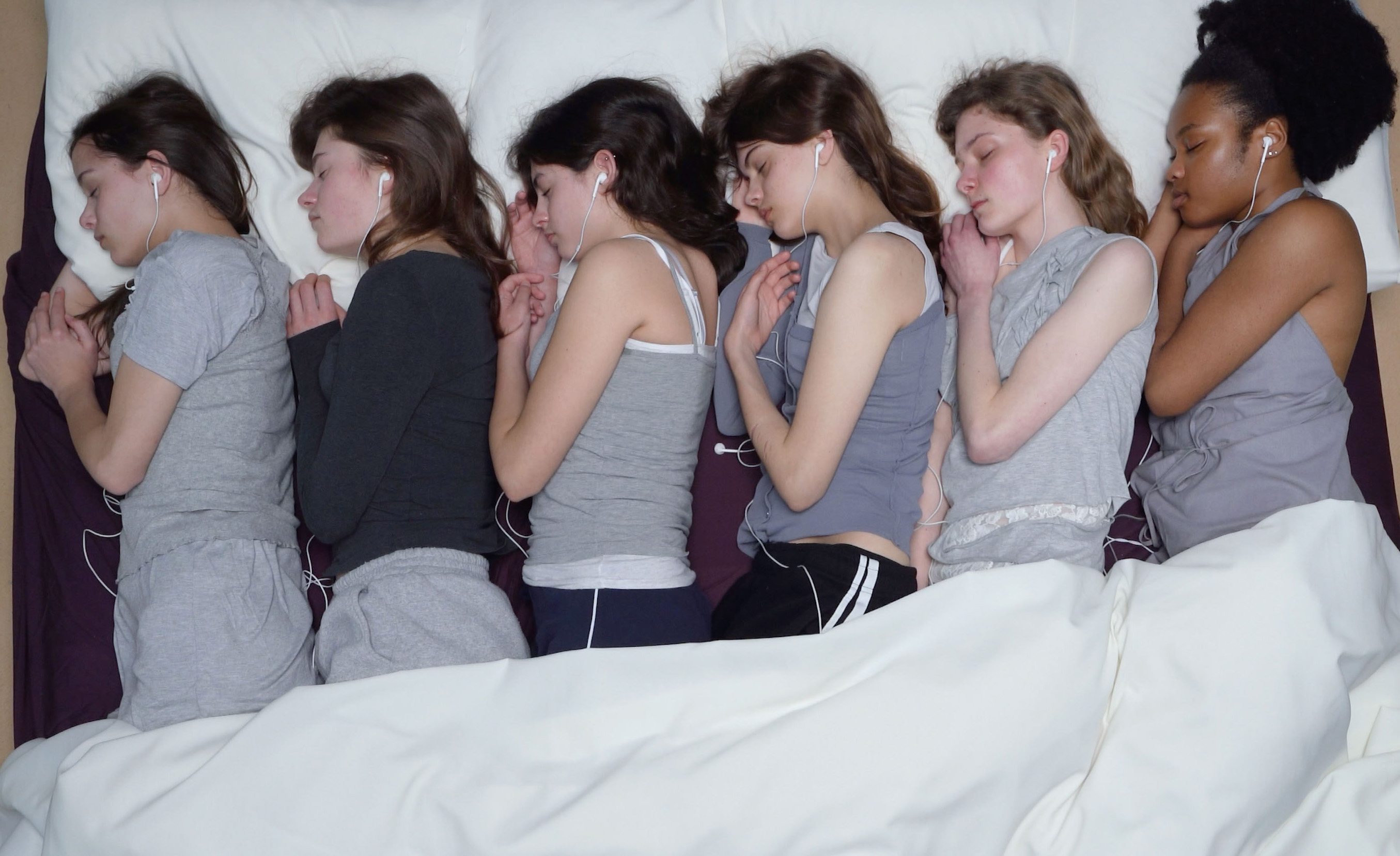
The contradiction of this new reality, of creating an illusion of togetherness while actually promoting isolation, is what inspired the 28-year-old artist’s award-winning image, 4ever &ver &ver. In it Schalkx depicts six girls lying together peacefully, headphones on. The scene resonates instantly, offering a gentle critique on the impact of technology on our social and emotional worlds.
The image is a poignant commentary on one of the most defining issues of our times, and for that it has been awarded the People’s Choice Award in this year’s Female in Focus prize, curated around the theme ‘On the Cusp’. The annual prize for women photographers is organised by British Journal of Photography and sponsored by Nikon. “The photograph powerfully reflects how young people navigate a world where visibility and the pressures of social media increasingly shape everyday intimacy,” says Ruby Nicholson, senior communications manager for Nikon Northern Europe. “It beautifully captures the delicate balance between connection and isolation, making it a resonant and highly relevant image for our times.”
Shalkx reveals that the image belongs to a video piece, in which the girls sleep to a looping soundscape stitched out of audio grabs from social media. It includes clips from protests for Palestine, beauty influencers advocating for “vampire sleep” on TikTok, and Kylie Jenner’s viral “realising stuff” statement. It mimics the “forever loop” of scrolling, and the muddled lines between our physical and digital realities.
This video is part of a wider body of work investigating “how algorithmic modification influences how young people communicate in this capitalistic world”. For Shalkx, the questions began to emerge during an internship in Barcelona, after which she returned to the Netherlands and felt a jarring sense of alienation. “There’s this work-driven force,” she says, comparing the social codes of her home country to a city like Barcelona, which is noticeably laidback. She considers the Netherlands among the most capitalistic in the world, and “when I got back, I noticed it a lot more. I felt alienated, and I didn’t understand why”.
“The algorithm sees me. It knows what I want, before I even know myself” – Jip Shalx
About How You Sell Yourself. Shalkx argues that in a world of hyper-capitalism and constant self-optimisation, the boundaries between our real personalities and our branded selves have collapsed. It is true, because the algorithm dictates who is seen and valued, and that requires us to sell ourselves in a very specific way. In drawing heavily on Guy Debord’s ideas of capitalism and image-consumption in The Society of the Spectacle, Shalkx argues that this has redefined how young adults in the Netherlands live their lives – what they choose to wear, how they talk to one another, what they eat, and how they behave.
Writing on this subject was all well and good, but translating these thoughts into images was a whole other challenge. Shalkx’s process combines deep research and constant observation – looking at people, but also Tumblr, Pinterest, books and magazines. It was through this process that the image at the centre of 4ever &ver &ver first appeared:“I saw it so vividly in my head, of the girls lying next to each other.” Her instinct, as a photography student, was to shoot a still image, until a friend suggested she film it instead. Filming, it turned out, gave the piece something a photograph could not: “That kind of friction, where it’s almost still, like they’re in ‘sleep mode’.”
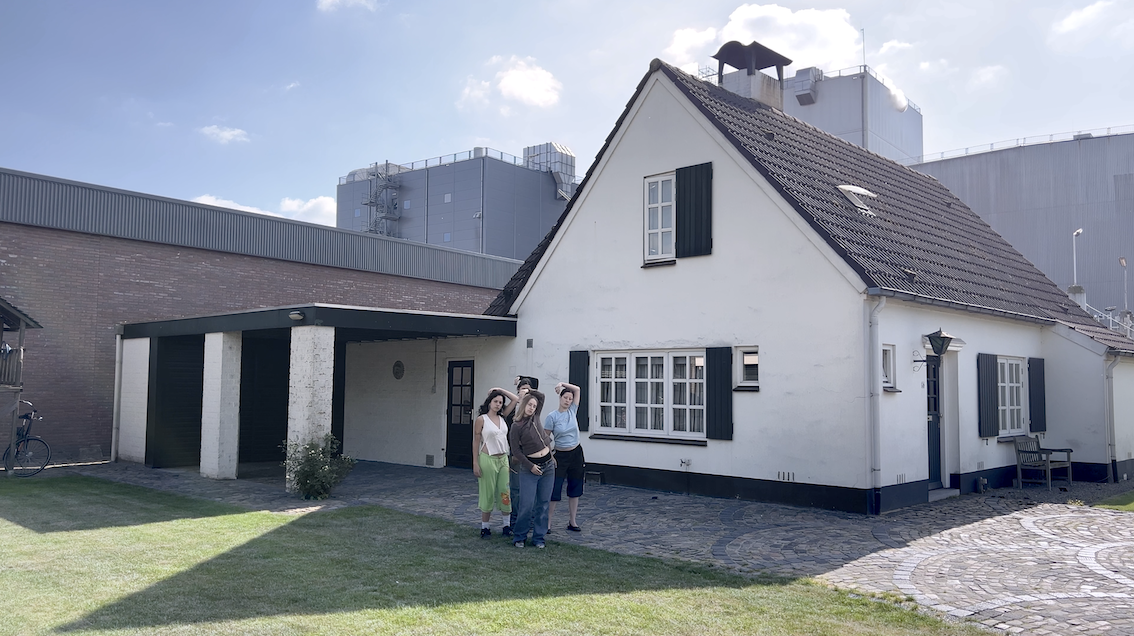
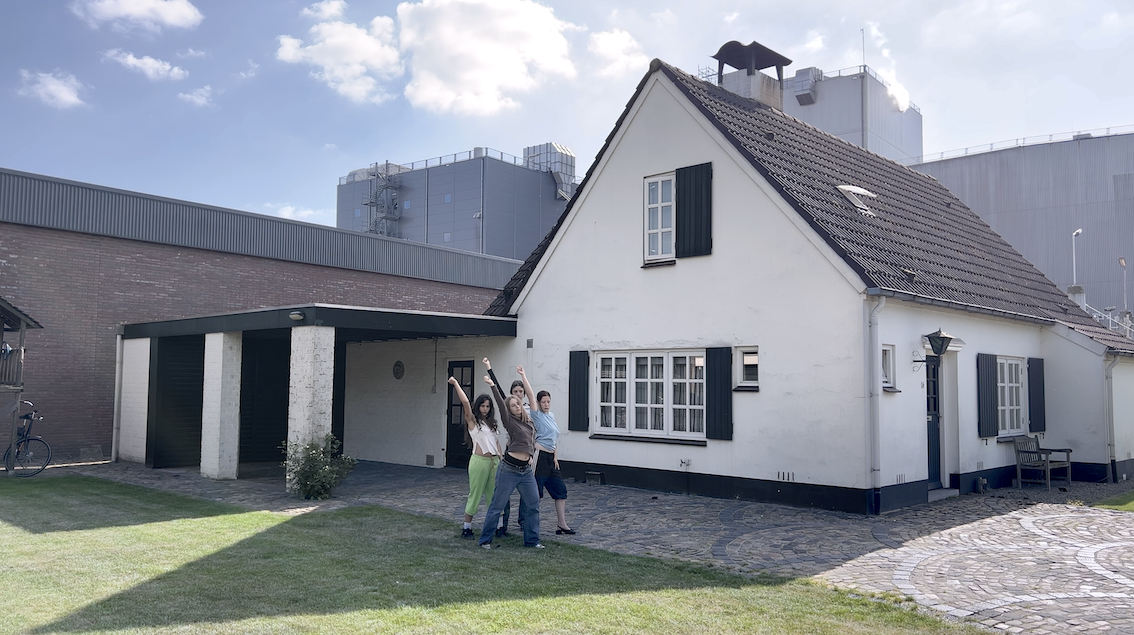
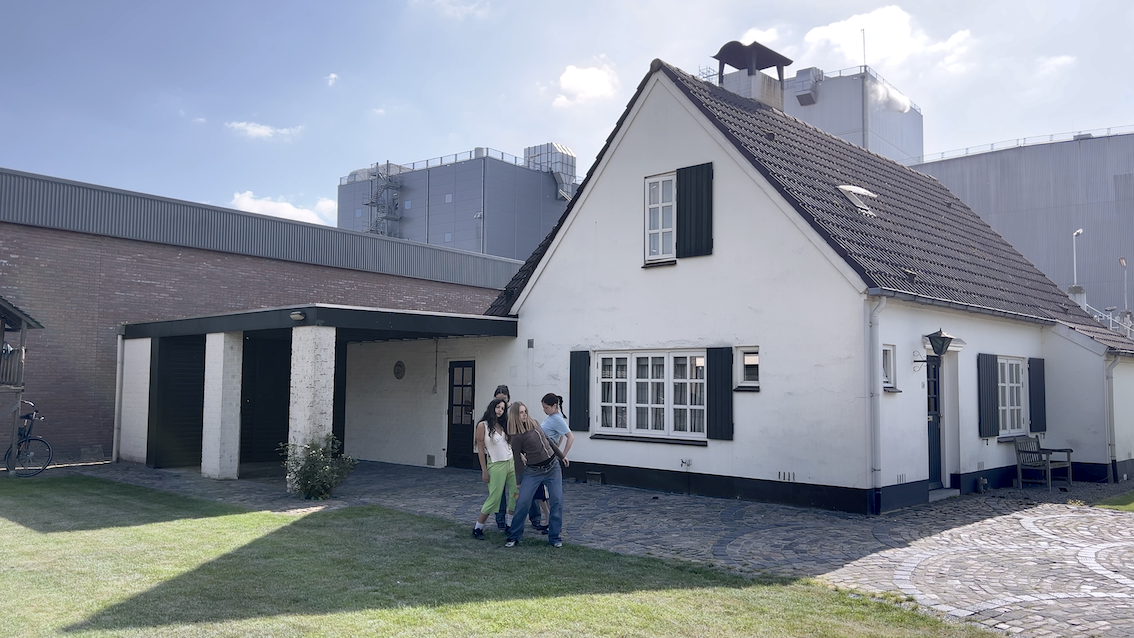
Two more video pieces followed. The second features a dance sequence, choreographed by Ūla Naujokaitytė, and based on TikTok-style movements. “It’s about how language changes, and how social media has changed how we behave with our bodies,” Schalkx says. The idea came after seeing a group of teenagers communicating using TikTok-coded gestures. She staged the dance in front of a typical Dutch house, but with an ominous factory smoking behind it, deliberately slowing the choreography to subvert TikTok’s usual sharp, snappy energy and create a movement that is far from appealing “in the algorithmic sense”.
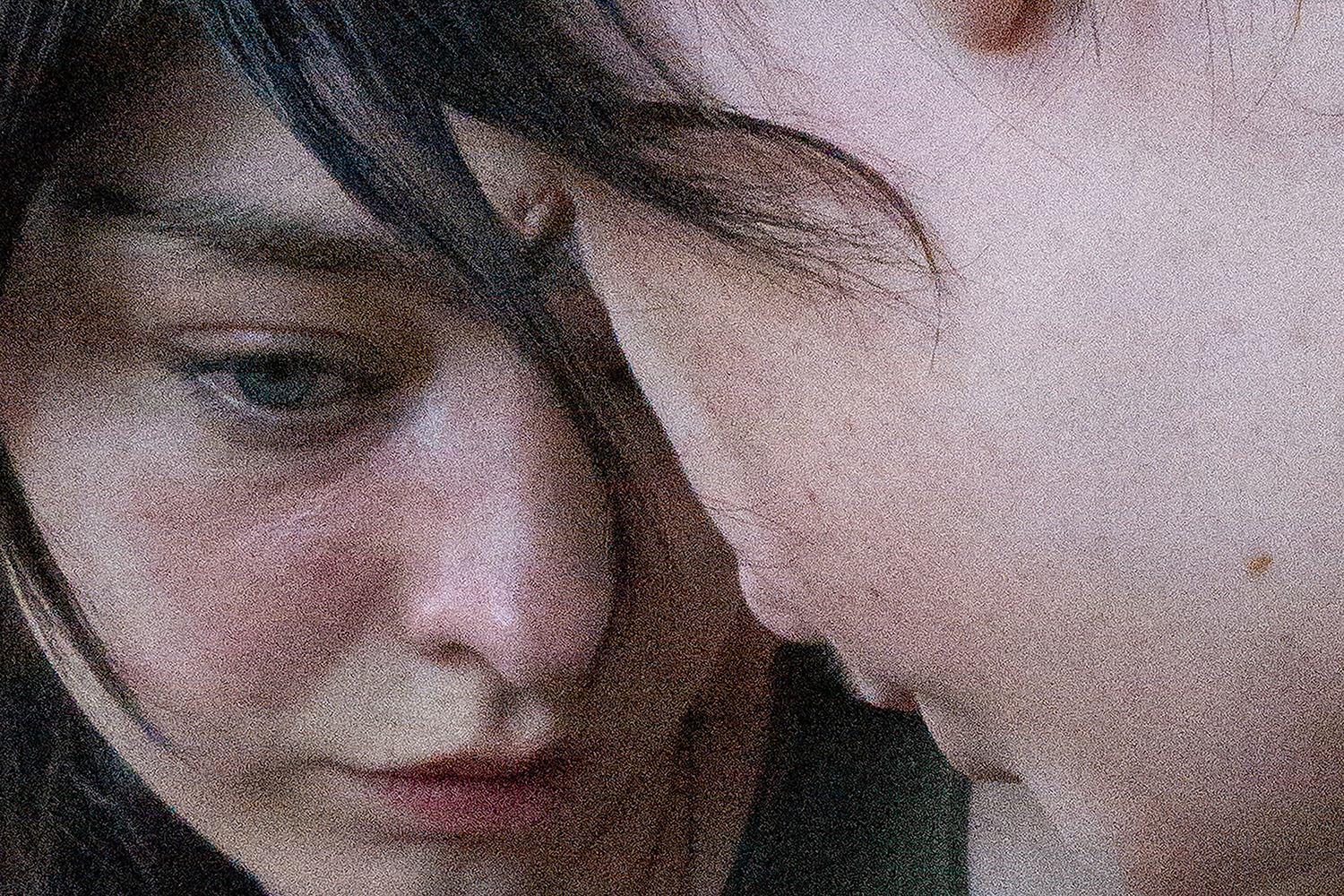
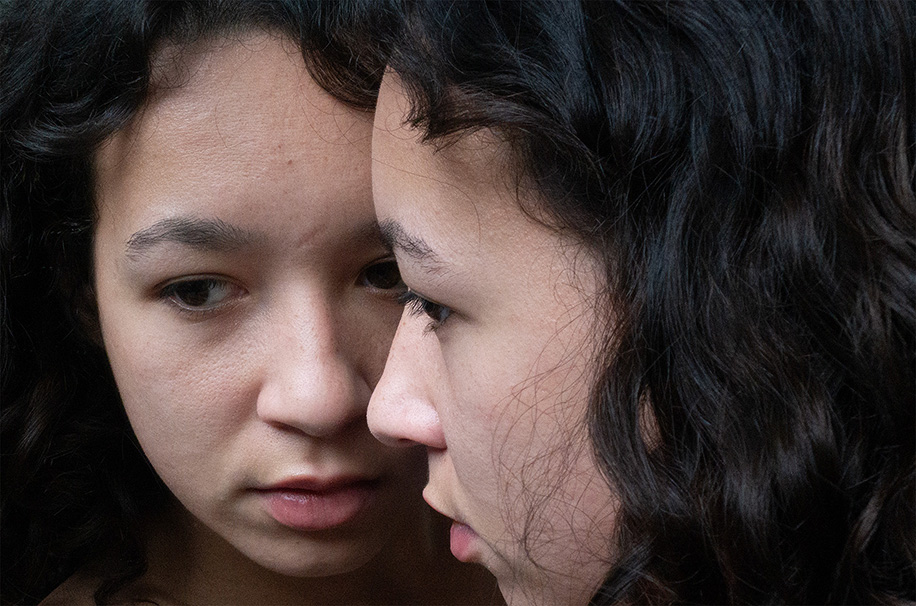
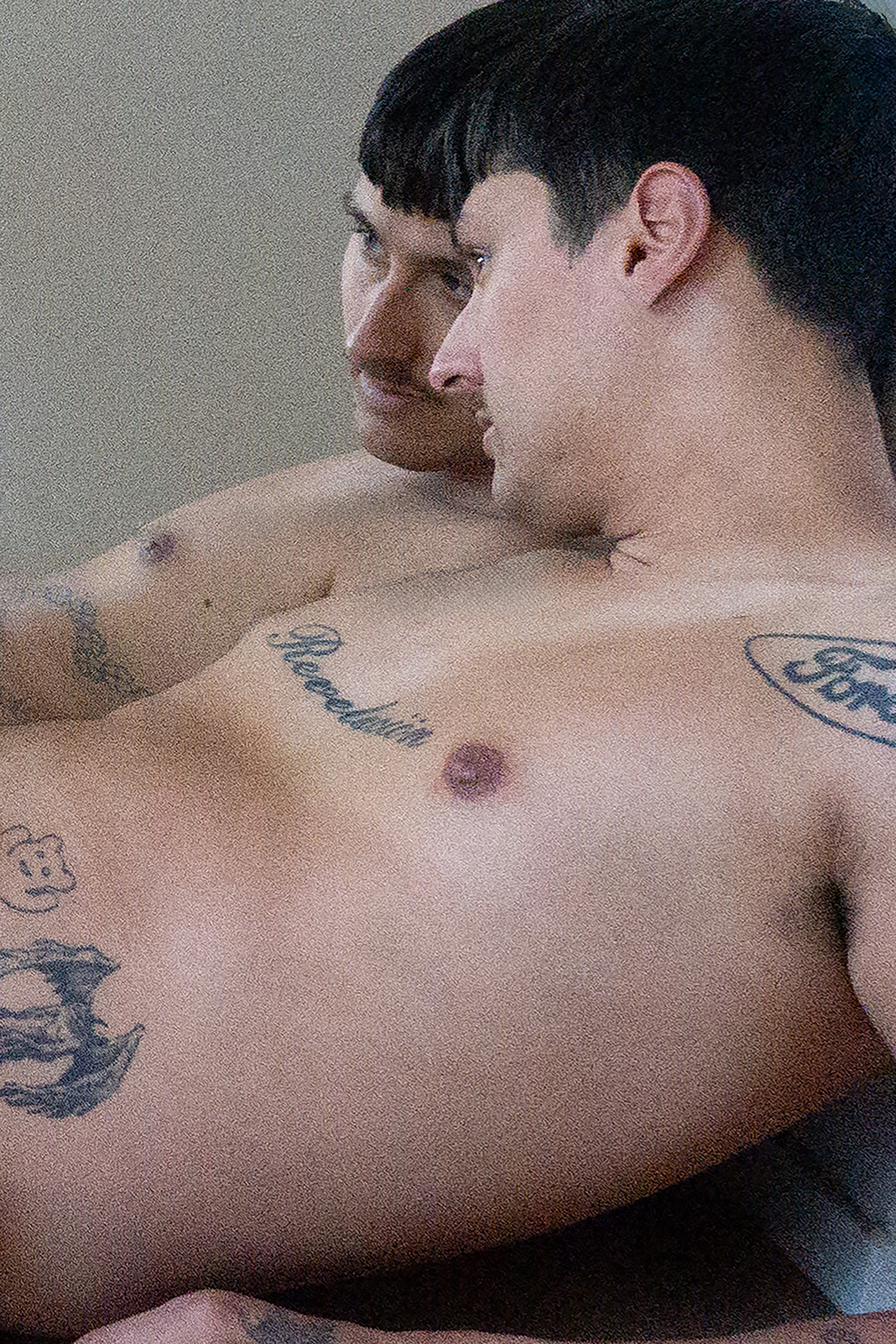
The third video takes a more satirical turn, and stars her friend Victor. “I’m part of something bigger here,” he says, professing his love for social media in a one-take monologue shot at a bus stop. “The algorithm sees me. It knows what I want, before I even know myself.” Shalkx wrote the script using AI, she says, prompting it with themes from her long-running conversations with Victor about social media. Alongside the three videos sits Cloud9, a series of mirror portraits printed on glass. This work investigates the tension between the digital and physical self: who are we, Schalkx asks, the version of ourselves we perform online, or the version that exists in real life?
All of this is in part informed by Shalkx’s own conflicted relationship with the internet. She grew up mostly without a smartphone, and remembers social media’s arrival. “I come from the Tumblr era,” she says. “I loved that you could aestheticise things, like what you’d do with a magazine. Cutting things out and putting them on a mood board.” But the internet soon outgrew its innocence. “Back then there were no ads. It was just people posting stuff. Then it became more and more commercialised,” she says. “Enterprise culture became the norm.” It is a shift the writer Cory Doctorow has termed “enshittification”: the slow decay of once-useful platforms as they are optimised for profit.
These days, Schalkx’s own presence online is more guarded. “I love my images, but right now I’m taking a step back,” she says. Yet the same questions continue to occupy her practice, and her next body of work takes it a step further in a deeper exploration of self-branding and commodification.
“A lot of people are doing projects about the internet, and a lot of it adopts a very specific aesthetic,” Schalkx says, referring to glitchy collages, work that uses AI, or 3D rendered elements. “I never really resonated with this way of talking about it. It feels scary.” Rather than depicting the darkness literally, Shalkx wants to speak about the subject in a more human, recognisable way. “Making people scared – I don’t think that’s the only way we can communicate about it.”
Shalkx is right, because we have experienced these conversations too; long discussions about the ills of the internet that end with a collective sigh of doom. Schalkx’s work asks many questions, and while there is never an easy answer, the proposition of recognition rather than fear is a strong one. And maybe that recognition is the first step to finding a way back to each other.
Female in Focus is at International Centre for the Image until 25 October 2026
Female in Focus: On the Cusp has been created in partnership with Nikon
