

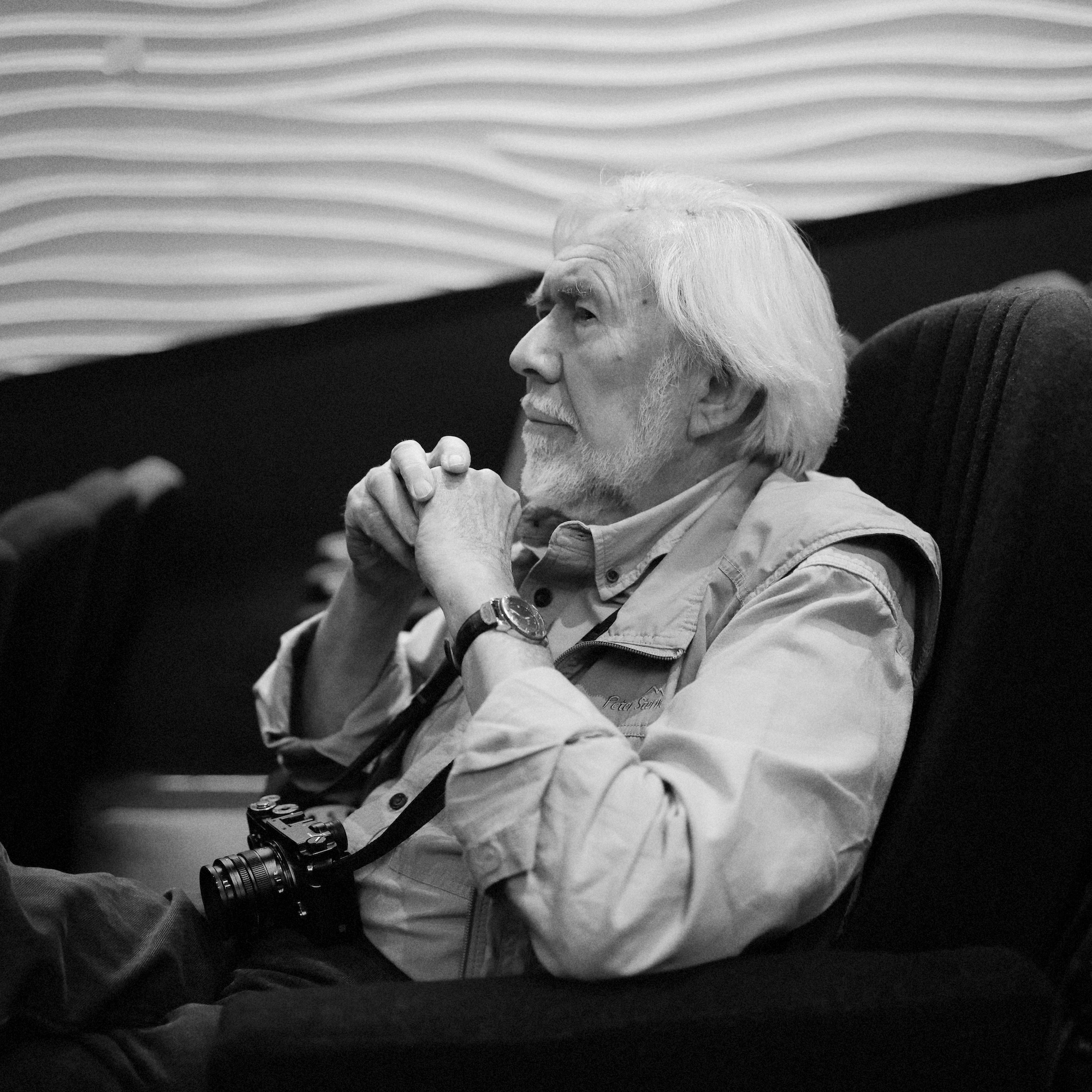
Ian Berry, photographed on 27 June 2019 at the Magnum AGM in London © Jerome Sessini/Magnum Photos
Magnum Photos’ Ian Berry passed away on 13 September at the age of 92, a committed documentary photographer whose work made a real difference
On 21 March 1960, young British photographer Ian Berry was in the South African township Sharpeville, where about 5000-7000 people had gathered around a police station to protest. Berry, who was living in South Africa and working for the magazine Drum, was there to document along with other members of the press, but nothing dramatic seemed to be happening. Until, suddenly, it did.
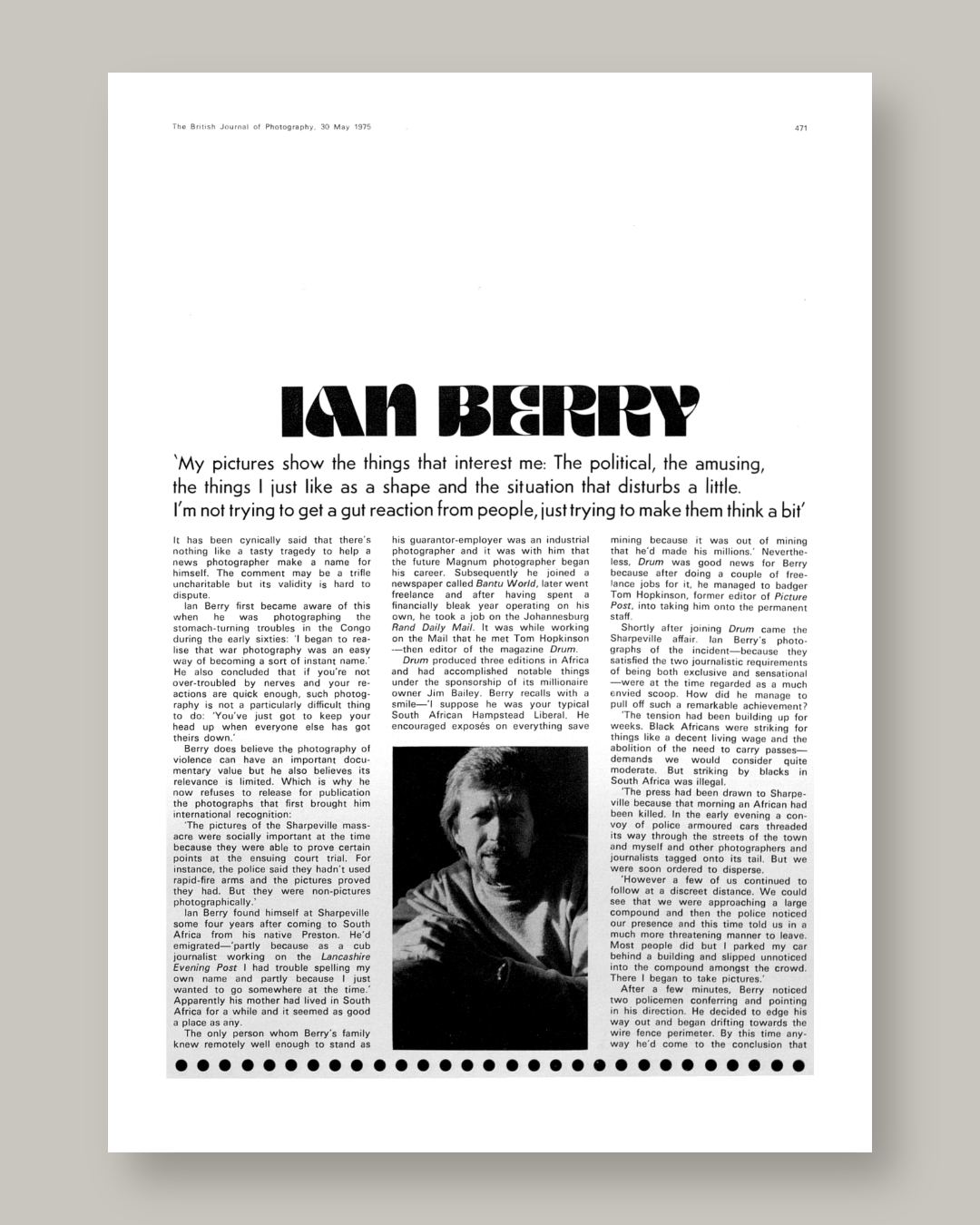
“The tension had been building up for weeks,” he told BJP in an interview published on 30 May 1975. “Black Africans were striking for things like a decent living wage and the abolition of the need to carry passes [a form of internal passport used to segregate the population] – demands we would consider quite moderate. But striking by blacks in South Africa was illegal. The press had been drawn to Sharpeville because that morning an African had been killed. In the early evening a convoy of police armoured cars threaded its way through the streets of the town and myself and other photographers and journalised tagged onto its tail. But we were soon ordered to disperse.
“However a few of us continued to follow at a discreet distance. We could see that we were approaching a large compound and then the police noticed our presence and this time told us in a much more threatening manner to leave. Most people did but I parked my car behind a building and slipped unnoticed into the compound amongst the crowd. There I began to take pictures.
“There was a sudden explosion of gunfire. People started running in all directions and I instinctively began to take more pictures. A woman racing in front of me was hit and as I saw more people fall, I dropped to the ground myself. There seemed little point in trying to get away because you were just as likely to get hit running. Perhaps a minute elapsed, the firing finally stopped, and I got up, and took more photographs of the people on the ground.”
“I’m looking at what’s there and trying to portray it in the best way I can.”
The South African police had shot scores of protesters, including children; it said it had killed 69 and hurt 180, but research published in 2023 shows at least 91 were killed and some 238 were wounded. Many of those injured sustained back injuries from being shot as they tried to flee. Berry’s photographs were the only record of what had happened, other than the testimonies of the police and the township people, but Drum’s owner refused to publish them, in case the magazine was closed down. So Berry sent them to an agency in London, and they were picked up by magazines such as LIFE and Paris Match. Later they went on to be used in court, to exonerate protestors who had been shot at, then charged with affray.
“The pictures… were socially important at the time because they were able to prove certain points at the ensuing court trial,” Berry told BJP in 1975. “For instance, the police said they hadn’t used rapid-fire arms and the pictures proved that they had.”
“From my point of view the only good thing that came out of this was that, as the only non-police white guy to witness the people running away who were shot in the back, I was able to testify when they were charged with affray and it came to court,” he added, in an article published by Magnum Photos in 2018. “I was called to give evidence and as a white in those days in South Africa my word was taken as gospel. I was believed over the police.
Berry faced no immediate repercussions and continued to document apartheid; eventually, like many other members of the press, he was banned from the country with no reason given. The Sharpeville massacre was so brutal it felt like a turning point, but it was another ten years before things started to change in South Africa; the Sharpeville massacre is now marked with a public holiday. And Berry’s images continue to be important. Just over a week ago, as The Guardian reported that three of those injured are suing the South African government for compensation – opening the possibility of doing so to hundreds of others – Berry’s images were published again.
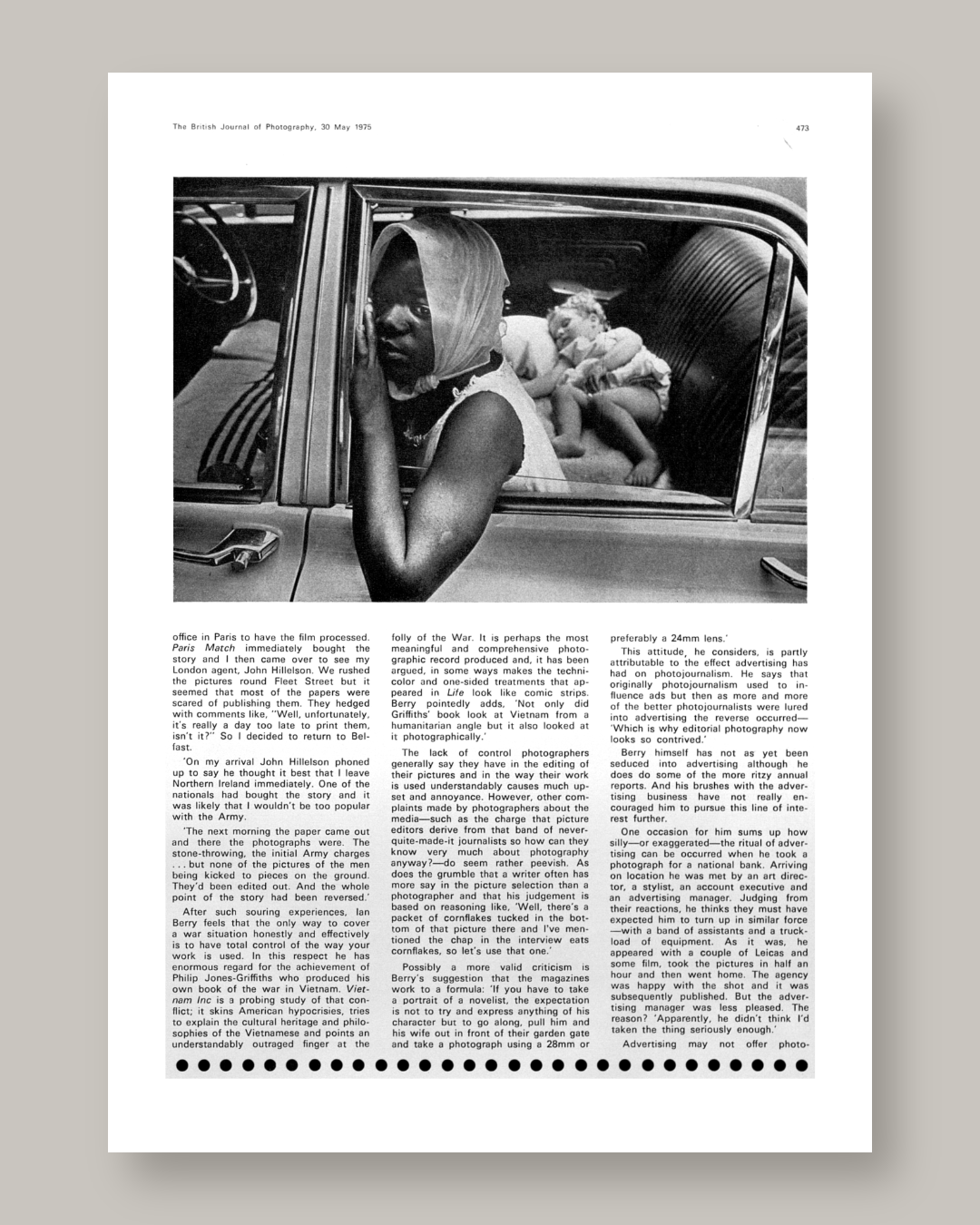
For Berry, photographing Sharpeville was a watershed; there were no great pictures to be had, told BJP editor Diane Smyth in 2020, for an article on WePresent, but it showed the importance of documentary photography. “People were just being shot and I photographed them being shot around me,” he added. Invited to join Magnum in 1962, Berry became a full member five years after that, and went on to be The Observer’s first contract photographer. Berry worked all over the world, documenting conflict in Northern Ireland, Israel, Vietnam, and the Democratic Republic of Congo, and famine in Ethiopia. His experiences in publishing this work – or in not publishing it, when Paris Match chose not to include his images of British Army violence in a story on Northern Ireland – encouraged him to take more control of the circulation of his work, and he went on to publish many books.
In 1978 he published The English, for example, supported by the first Arts Council grant to be given to a photographer. Most recently he published Water with GOST in 2023, having worked on the project for 15 years. “This year has shown above all others that the planet is struggling,” he said as the book launched. “There is too much water in some places, too little in others. Ice is melting at an unprecedented pace and it’s so very easy to dismiss what is happening when we see it briefly on TV and then it’s gone. I am concerned that our ecosystem is less than robust and if just a few people think of ways in which we can support it, I feel I can rest and let my work tell its tale.”
A photojournalist who covered social issues around the world, Berry’s career was of a kind which is now often critiqued. But his Sharpeville images testify to the power of documentary photography, and Berry was vocal about this too. “When I joined Magnum, we regarded ourselves as having common social interests in what was going on in the world,” he told Smyth for the WePresent article. “We were all left – not Left with a capital L – but left-thinking in how we wanted to look at what was going on. We wanted to show people on one side of the world what was happening to people on the other side of the world… I’m frankly not interested in navel-gazing – I’m looking at what’s there and trying to portray it in the best way I can.”
www.magnumphotos.com/photographer/ian-berry/