

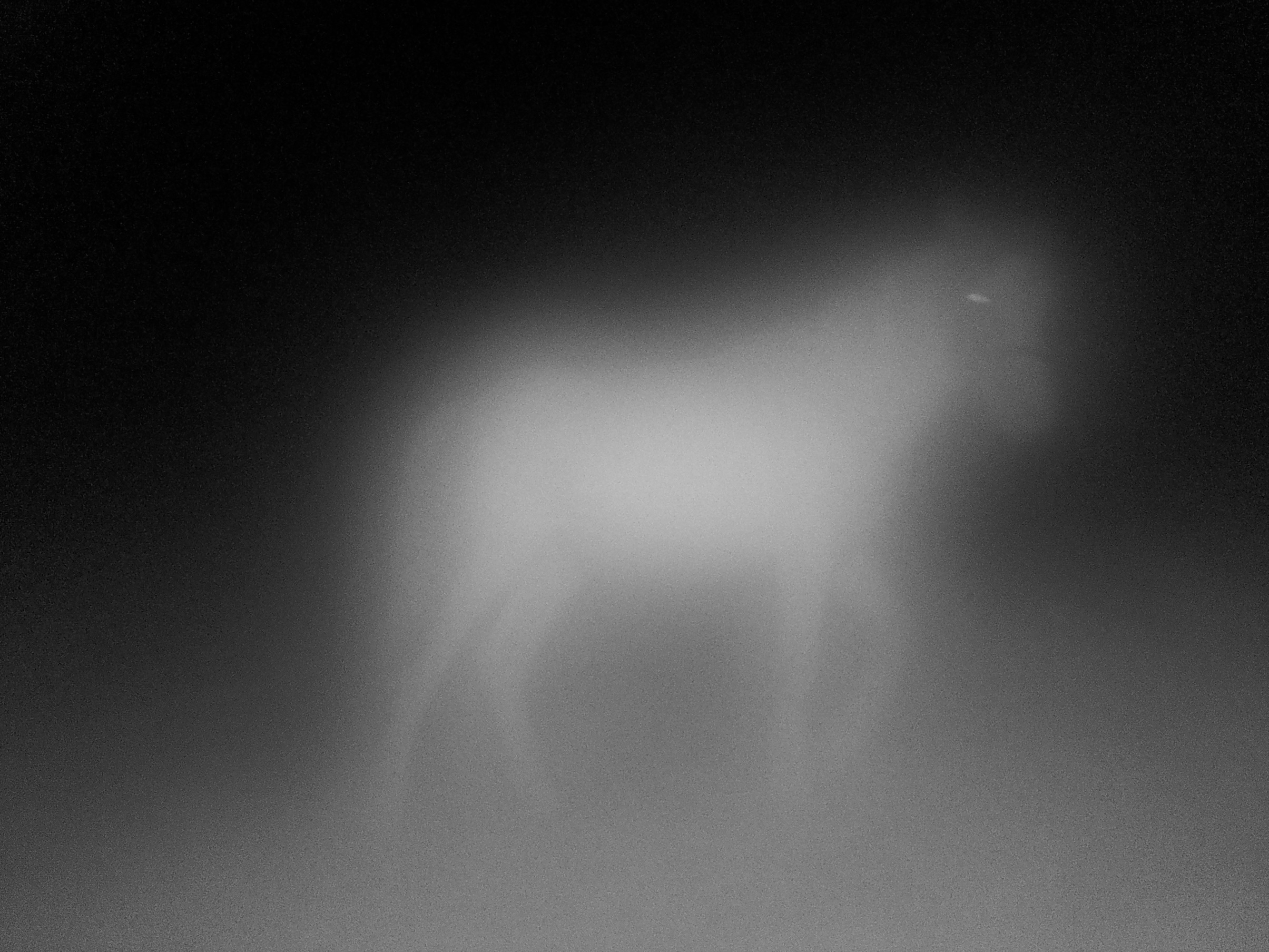
© Miriam O’Connor
The triennial project by PhotoIreland returns to highlight contemporary photographic practices across Ireland.
Writing at the turn of the millennium, Justin Carville noted that the national venues where Irish photographers could exhibit were “thin on the ground”. Lens-based artists whose work was hard to define within an institutional framework, politically or materially, were most affected, leaving them to look to Europe for professional and financial success. Over the past three decades, we could argue that Europe has been looking towards Ireland, in part due to the multi-stranded initiative PhotoIreland, and in particular its forward-looking triennial, New Irish Works.
Now in its fifth edition, the programme, founded by Ángel Luis González Fernández, has invited 10 artists to continue developing their projects over a three‑year cycle – the latest offering of which is a group exhibition at Dublin’s International Centre for the Image, on display until August 2026. Gathered under one banner – Austin Hearne, Billy Kenrick, Ciara Richardson, Debbie Castro, Dorje de Burgh, Emily O’Connell, Garry Loughlin, Kate Nolan, Mandy O’Neill and Miriam O’Connor – the cohort highlights the diverse material approaches and perspectives circulating across Éire today.
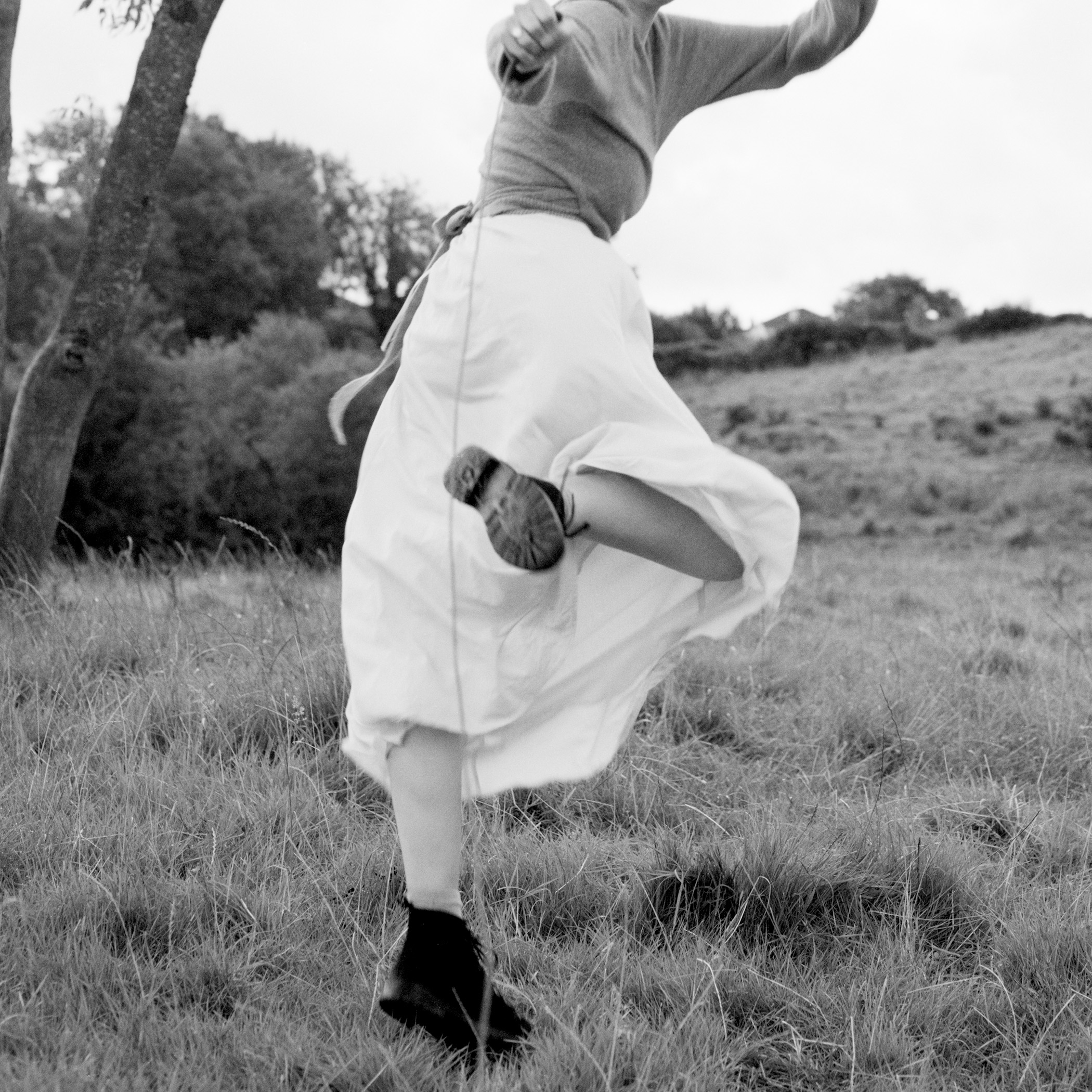
The island’s history, both official and unofficial, is explored through various artists’ projects. Emily O’Connell revisits a dark chapter in Ireland’s history through and then I ran, a series of performative photographs re-enacting her then-teenage grandmother’s brave escape, climbing out of a window while pregnant, from a Catholic state mother-and-baby home in 1964. The sombre tone of the landscape photographs sweeps across the monochrome portraits and archival images, settling as a testimony, a historical wound and an institutional critique.
Criticism of the Church and wider institutions also figures heavily in the work of Austin Hearne. “I was very affected and enraged by the Roman Catholic Church’s abhorrent treatment of queer people, women and babies in homes and its handling of sex abuse allegations,” he says of his work, which also explores his “preoccupation with my place as a gay man growing up during and after the Aids crisis”. In the exhibit installation, a litany of images, photomontages, collages and hand-manipulated prints is laid out on wallpaper-pasting tables, called ‘slabs’. This invites a post-mortem of media culled from his 30-year archive that spans the decriminalisation of homosexuality in 1993, and later referendums held over same-sex marriage and abortion, events that have loosened the Catholic Church’s vice-like grip over what Hearne calls “the lives, loves, and bodies of the Irish”.
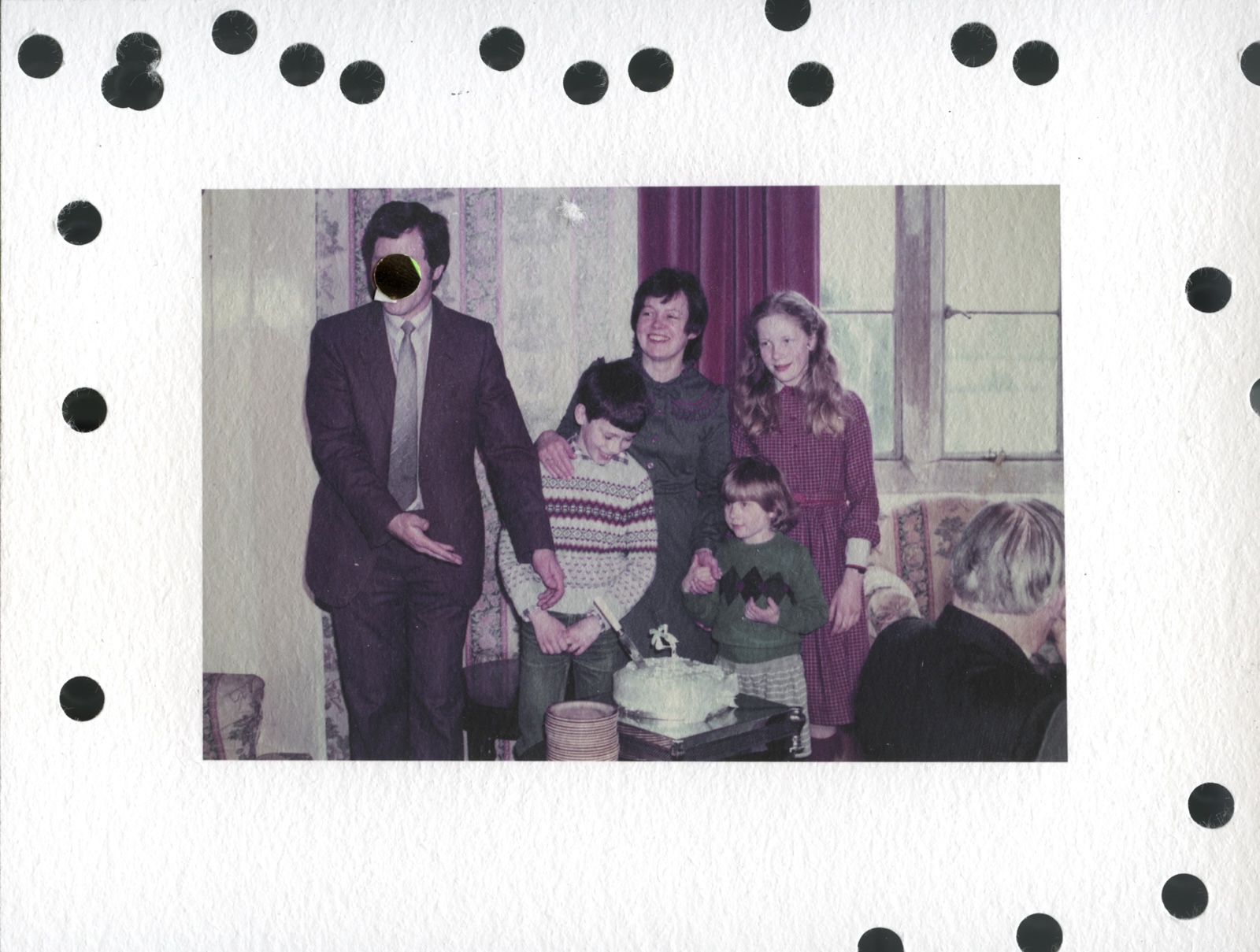
©Debbie Castro
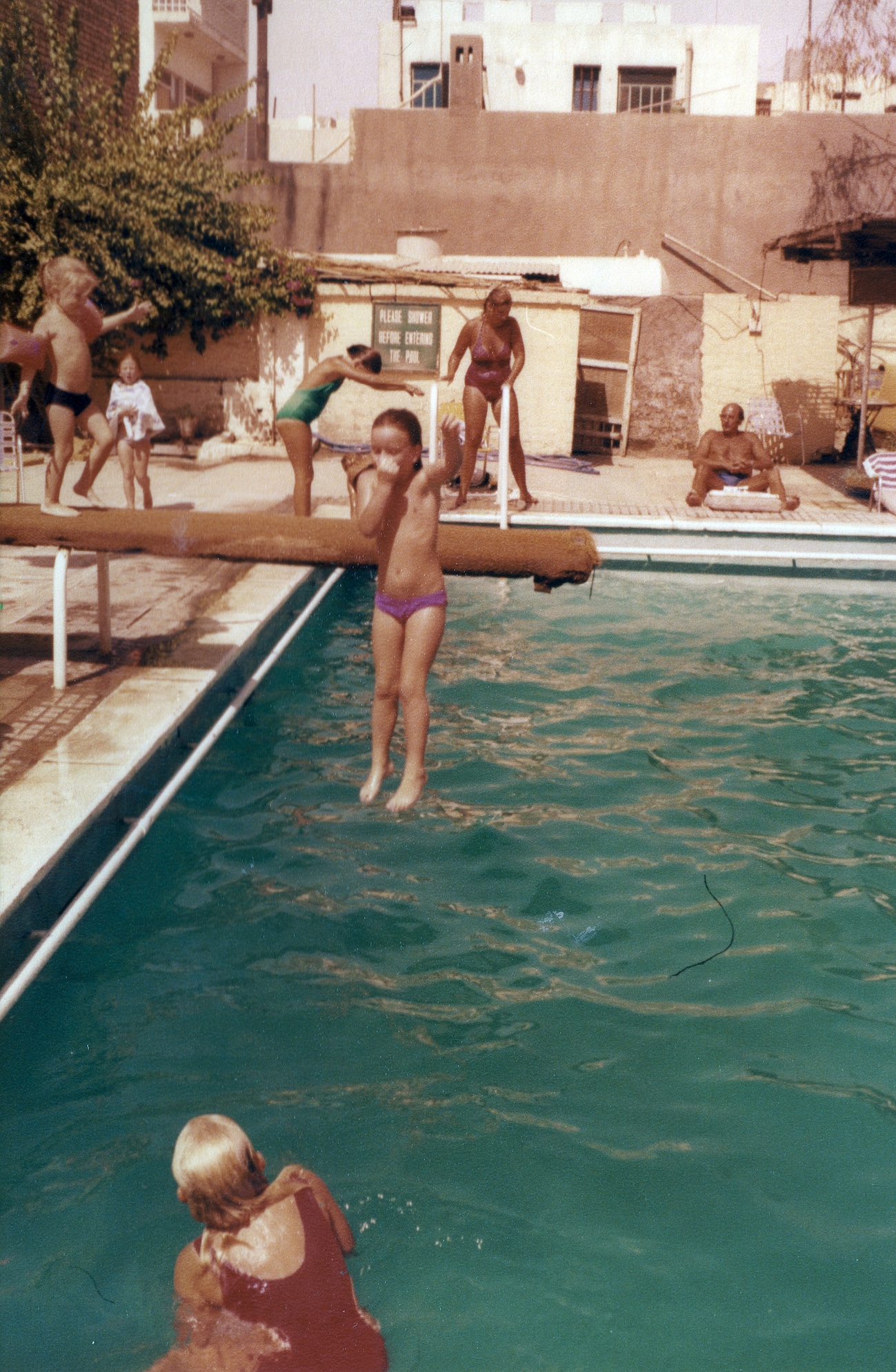
©Kate Nolan
The archive is also a topic for Debbie Castro, who asks, ‘Age is a privilege, unless you forget!. Working through her father’s photographs, snapshots taken before his Alzheimer’s diagnosis, she documents his memory loss through strategically manipulating and placing stickers over what, or who, he can no longer recall. Kate Nolan also returns to her father’s albums but instead lands in 1980s Baghdad, where he had worked as a civil engineer on the construction of Haifa Street under the direction of President Saddam Hussein – a Westerner living in the capital during the Iran-Iraq war. What she remembers of Baghdad is inseparable from how those photographs have been framed.
Celebrating diverse approaches to photography, NIW twists Irish histories and perspectives into new forms. Recognising and supporting photographers whose work is both conceptually and politically engaged over several years allows for interdisciplinary and experimental projects to resist reductive representations or cliched photographic imagery.
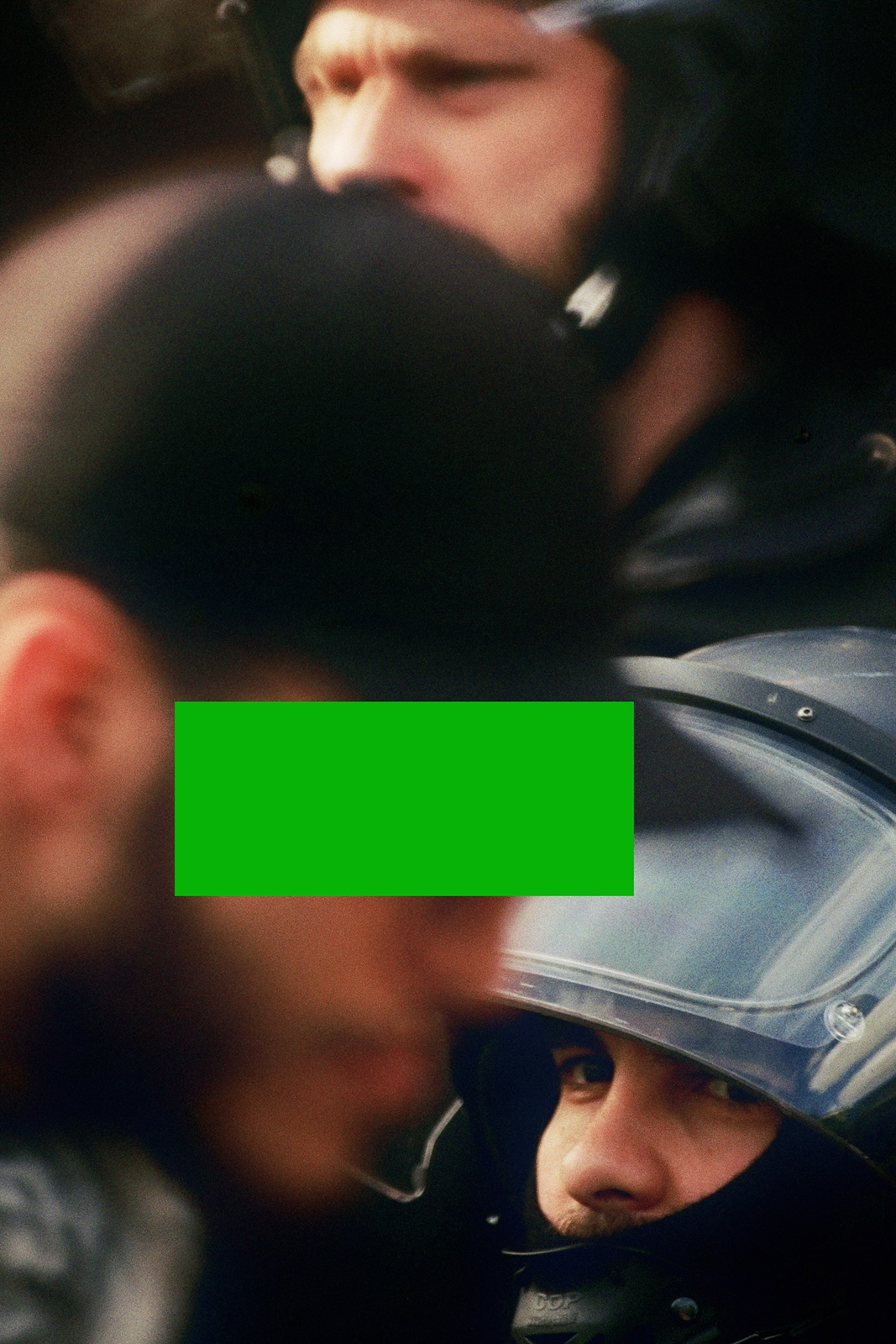
Working as a full-time farmer and simultaneous carer for her mother, Miriam O’Connor’s project delegates her busy life to the workings of a camera trap. Over two years, the infrared sensor camera, usually used for wildlife monitoring purposes, captured 8071 photographs according to its own logic. Triggered by shifts in heat and motion, it records a transparent ghostly horse, cows’ eyes glowing in the night, and Miriam’s figure at work between the fields.
The camera trap’s vision reorients what is worthy of attention, meaning photographs appear to human eyes too late, too early, repeated and inconsistent. Days, dates, times and years frequently become muddled. Read overall, the project is a statement of seen and unseen labour.
Sustaining a career as an artist in today’s climate is difficult. Visibility does not necessarily translate into critical or institutional recognition. Through paced behind-the-scenes professional development, publishing opportunities and exhibitions, New Irish Works is an artist-centric model that considers the long-term support systems needed to sustain a practice.
“The shift to camera-phones also gave young people more autonomy over their own image”
Mandy O’Neill has been revisiting the programme for over a decade. Originally participating in the 2013 NIW and again in 2016 with Promises, where she had an artist residency in a local school, she began to realise that portraiture was not suited to the stories she wanted to tell. “The shift to camera-phones also gave young people more autonomy over their own image,” she writes, “which I felt they were perhaps better placed than I to record.”
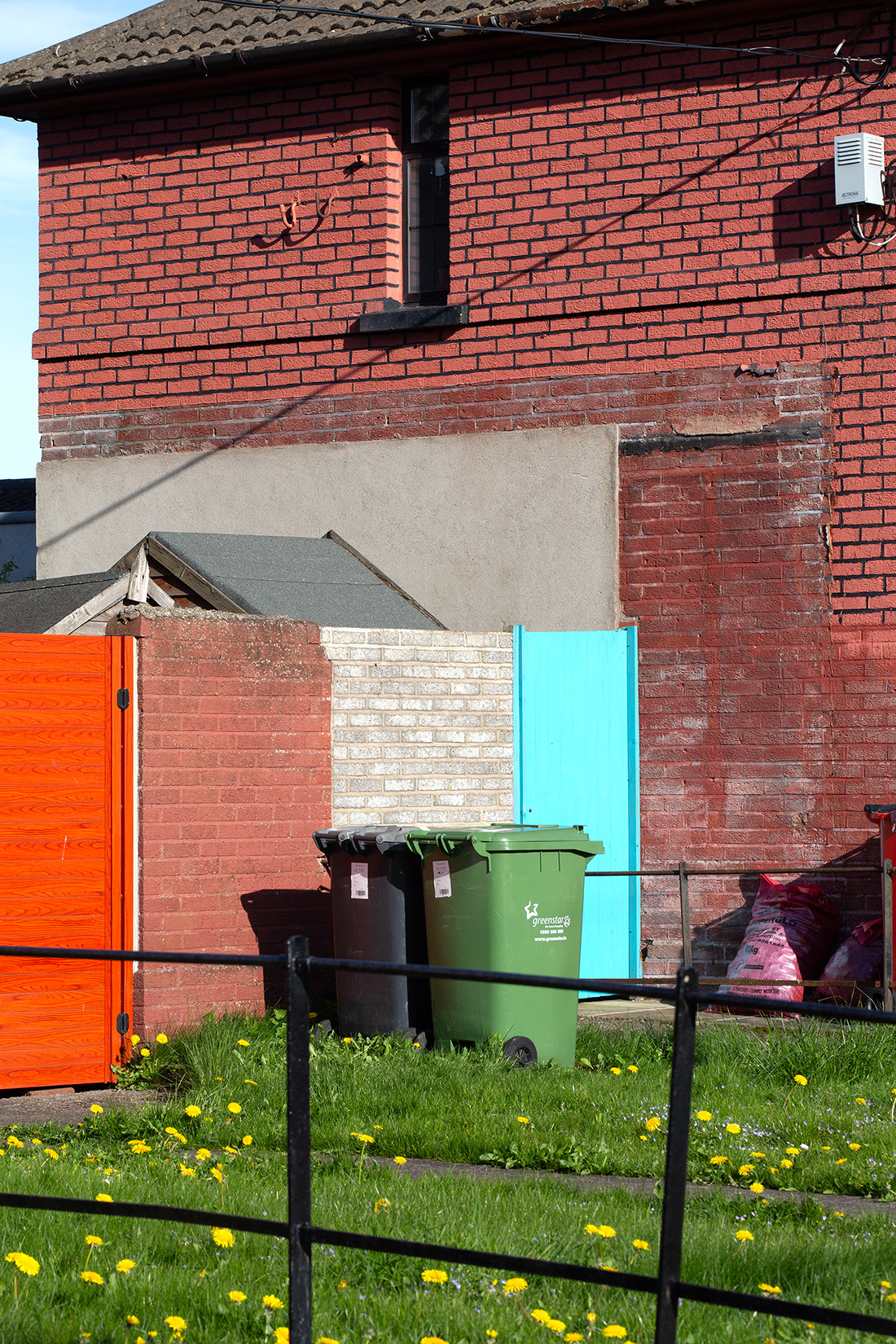
Beginning with her PhD at Dublin City University, Best Laid Plans explores the built environment and urban planning in a working-class suburb of Cabra, Dublin. The housing scheme, first constructed in 1929, was designed in the likeness of a ‘Garden Suburb’ model to counter the public health and housing crisis unfolding in Dublin’s inner-city slums. Starting her project in 2020, just as plans for two new large-scale housing developments in the area were publicised, O’Neill wanted to research the effects of planning upon residents. “Standard documentary approach incorporating portraiture could be somewhat reductive,” she explains of her text and image field diaries. “The embodied approach began by walking the area, noticing and photographing the changing built environment, becoming excited about materials such as timber, steel and concrete, and gathering photographic prints and text.”
Over the past year, the project has continued to broaden its language and audience. “Ángel understood immediately how we could make this work for space and the importance of the installation as a spatial experience,” she explains. “New Irish Works has been a brilliant iteration of the project.”
In Partnership with International Centre for the Image
New Irish Works is at International Centre for the Image until 9 August
