

All images © Shizza Majeed
The British-born Pakistani photographer takes inspiration from her life between cultures to create culturally personal portraits
For Shizza Majeed, family and community are a welcome source of inspiration, though she hopes not to be defined by them. The young photographer, who graduated from Kingston University last year, is a London-based photographer working across editorial, documentary and portraiture photography. Her graduate series, Babaji’s Britain, gained recognition in 2025, featuring in Autograph ABP’s online gallery with selected works displayed on a digital billboard in Old Street, London. The series focuses on her grandfather, Ghulam Abbas, a Pakistani man who migrated to Britain in the early 1960s.
Through collaborative portraits with Abbas, Majeed explores how over half a century of life in Britain has shaped his sense of self and what his identity looks like today.
Majeed was shortlisted for the British Journal of Photography’s Portrait of Britain Vol. 8 with a portrait of Abbas and named a finalist for the Association of Photographers Emerging Talent Award 2025. The project was later supported by Counterpoints Arts. Below, BJP catches up with the emerging artist to learn more about the body of work and her plans for the future.
“My heritage is something I’ll probably always carry with me within my work, but I expect the way it appears will shift over time as I grow”
BJP: Tell us about your background in photography.
Shizza Majeed: Photography has been a constant presence in my life since I was very young. For as long as I can remember, my mum always had a camera in her hand, photographing me constantly. I always joke that I got my itch for photography from the rare occasions my mum ‘claimed’ to have a good hair day and she’d finally let me take a photograph of her. When I was around 8 or 9, I received my very own digital compact camera for my birthday, and I instantly began mirroring my mum. My camera went everywhere with me, and I photographed my life extensively. I don’t think I really knew why at the time, but it quickly became my complete norm.
My love for photography carried through my education, from A-Levels and through to my honours degree, which I just completed last year. It wasn’t really until midway through my degree that I fully realised this was something I was good at and that I really could pursue this as a career. For a long time, photography was more of a therapeutic practice for me; it gave me the platform to channel my thoughts and feelings about myself and the world, and put what was in my head somewhere else for a while. More recently, I’ve been exploring ways to use my photography to create space for underrepresented voices, building on the personal storytelling that has always driven my work.
BJP: How do community, tradition and heritage play a role in your work?
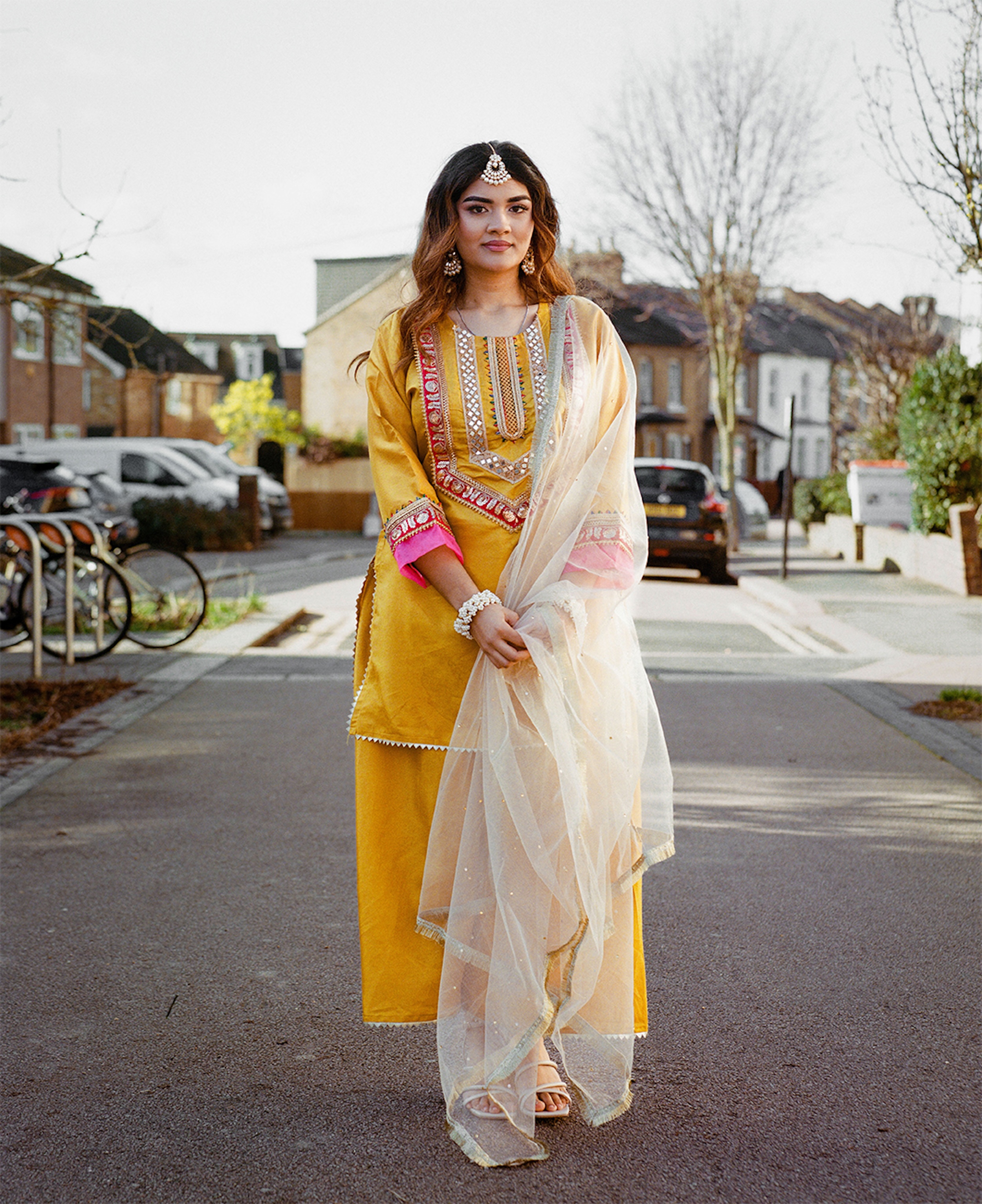
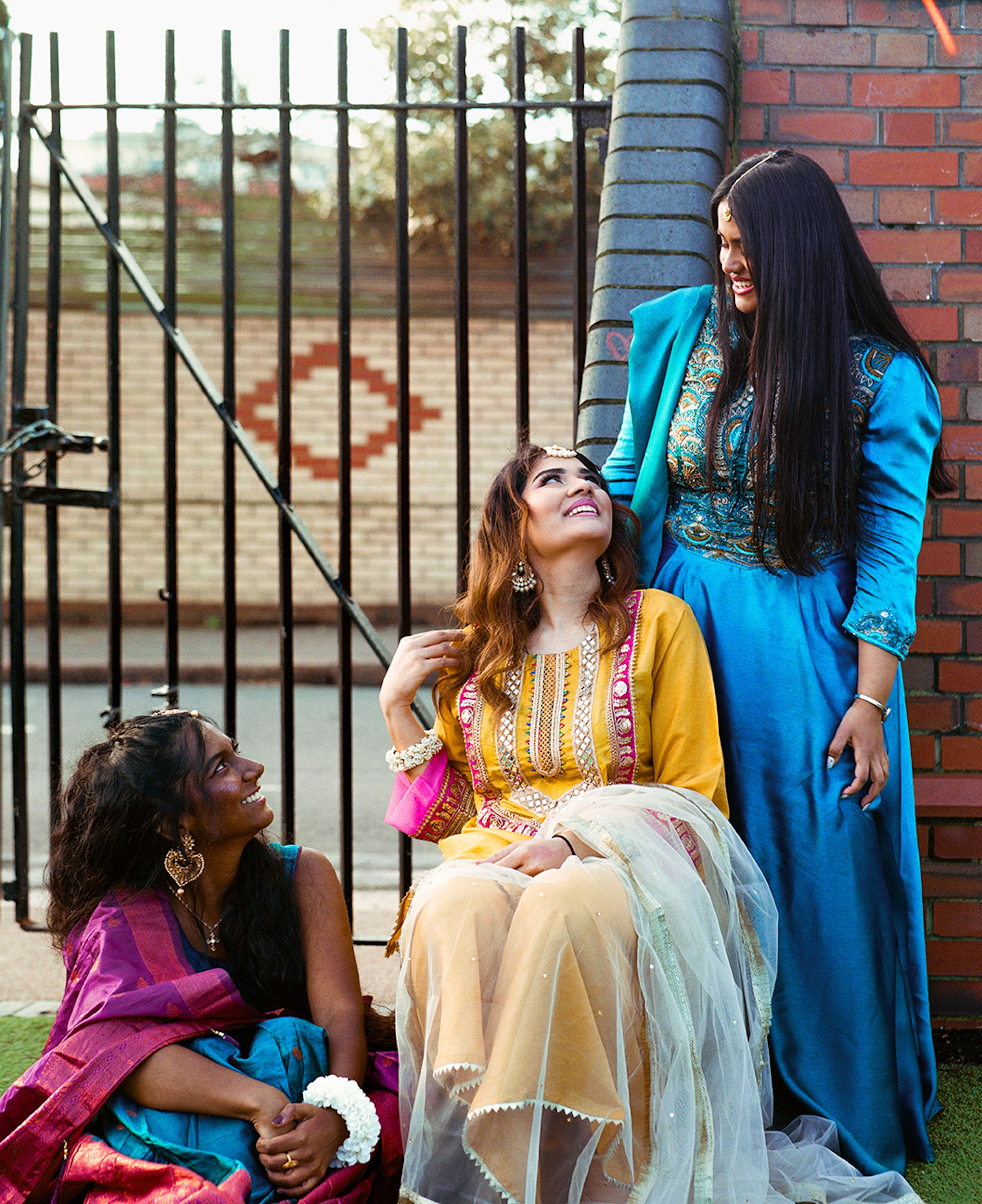
SM: My personal practice at the moment is heavily shaped by my experiences as a South Asian woman growing up in the West. Even when I am not pointing the camera at myself, I’m still exploring those feelings through others, often focusing on shared experiences that reflect what it means to navigate multiple cultures. Although I think it is important to note that, through my projects like Babaji’s Britain and Our Lives, Our Way, Together, I am not actively trying to defy stereotypes or change opinions, but to simply add to existing conversations by sharing the lived experiences of real people.
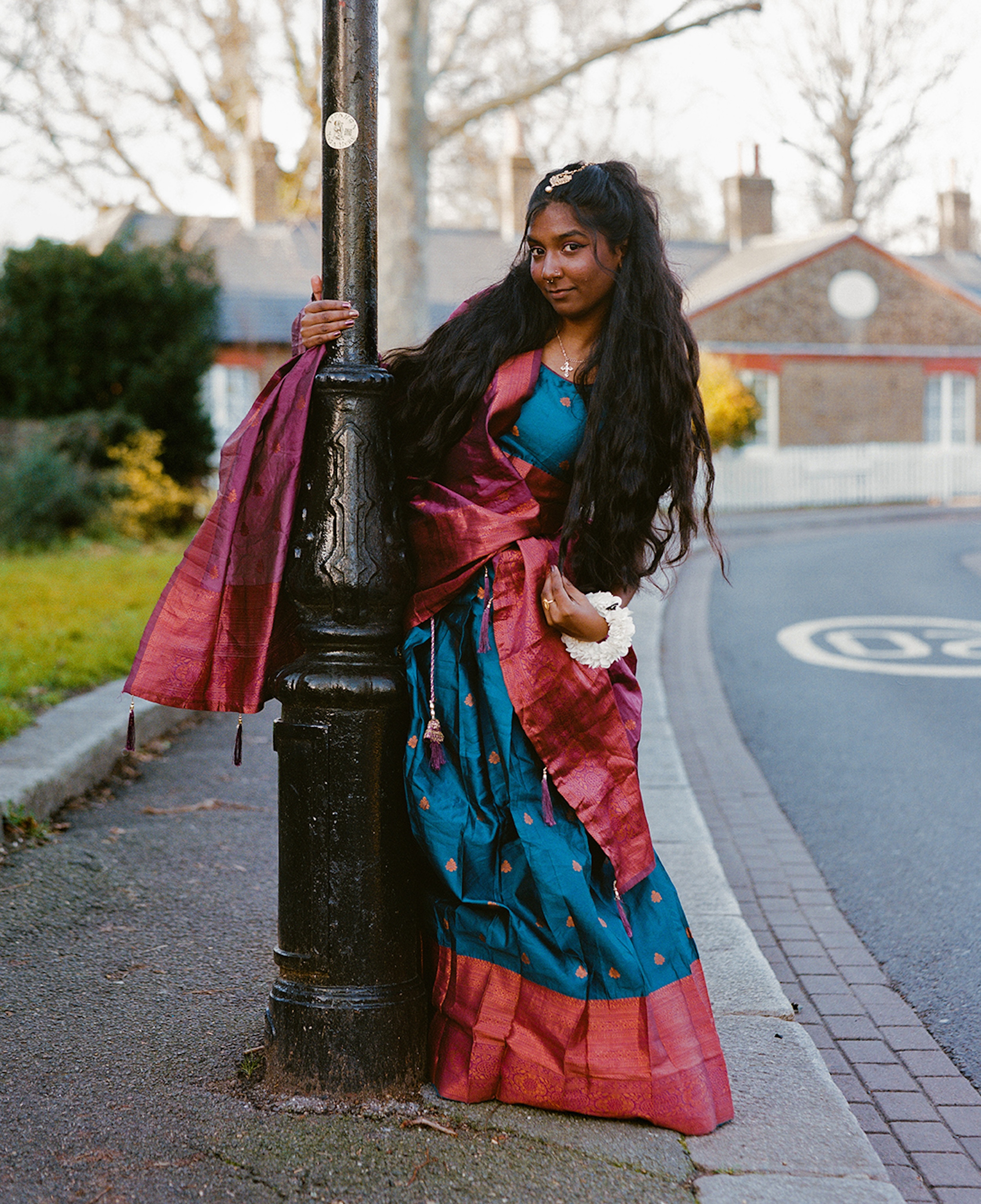
But in all honesty, this shift in my photography has only happened quite recently. For a long time, I actively resisted it because, quite simply, I feared becoming a photographer who would be defined solely by the colour of my skin. Like much of the brown representation I had seen in the media, I was worried I’d be boxed into exploring the same topics over and over again. I would often dance around ideas of heritage, but never fully commit to them, and that fear did more damage than good. The more I tried to avoid those topics in my work, the more creatively blocked and uninspired I felt. Whilst writing my dissertation at university, I spent a lot of time exploring photography’s roots in British Colonial India. Engaging with this history helped me confront and let go of that resistance I had around exploring my own heritage. It transformed my practice, making it much more intuitive and honest and gave me the space to reflect on my own identity both in my work and as an artist.
Right now, those themes feel important and necessary for me to explore; not only because they’re cathartic, but also because I’m creating the kind of imagery I wish I had seen when I was younger. I still see myself at the start of my career. My heritage is something I’ll probably always carry with me within my work, but I expect the way it appears will shift over time as I grow.
BJP: Tell us about your shortlisted Portrait of Britain image – what is the story behind the photo and what makes it special?
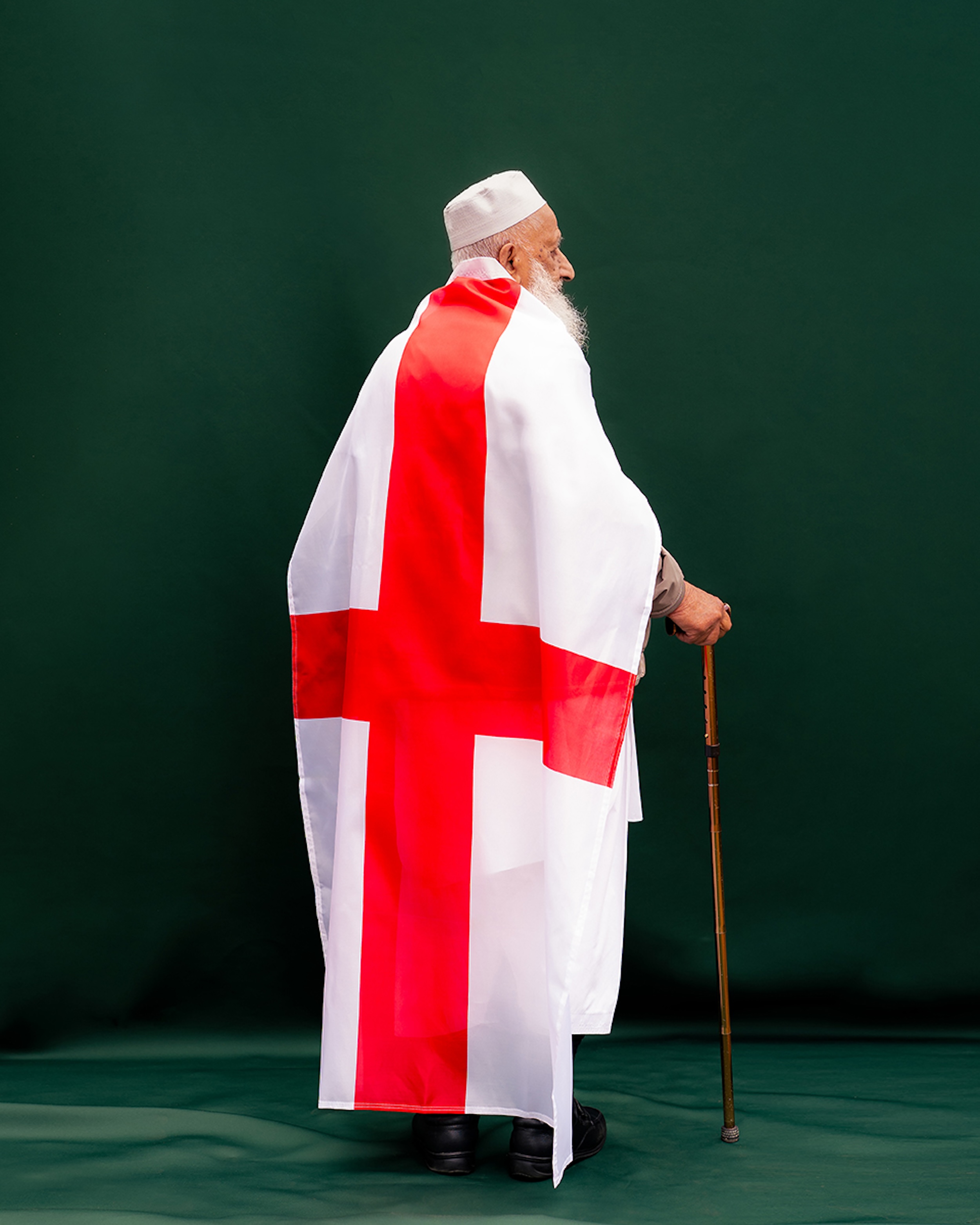
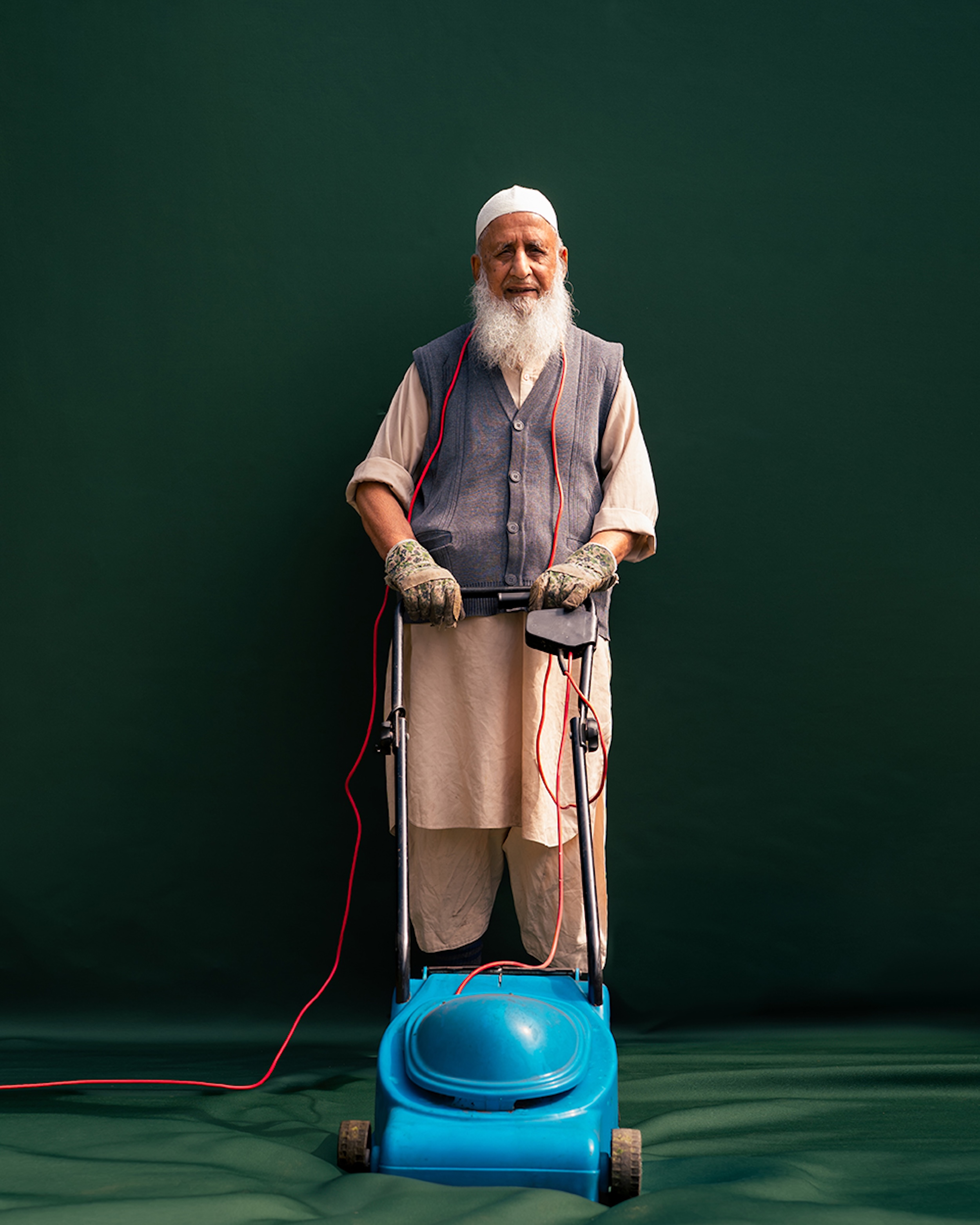
My shortlisted image for Portrait of Britain comes from my series Babaji’s Britain, which I created during the final year of my Photography degree. In this series, I collaborated with my grandfather, who migrated to Britain from Pakistan in the early 60s, to create portraits exploring how over half a century of life in Britain has shaped his sense of self and what his identity looks like today. This work playfully pokes fun at both British and Pakistani culture, using stereotypes to visualise how he has held onto his cultural roots while embracing aspects of British life.
The series consists of eight portraits, taken against a green backdrop, a subtle nod to the Pakistani flag. Each image features contrasting elements from both cultures that form a visual dialogue between his past and his presence, showing the inevitable changes and complexities of identity that can happen as a result of migration. Some of the photos and the stories they tell are more obvious, while others require you to look a little closer!
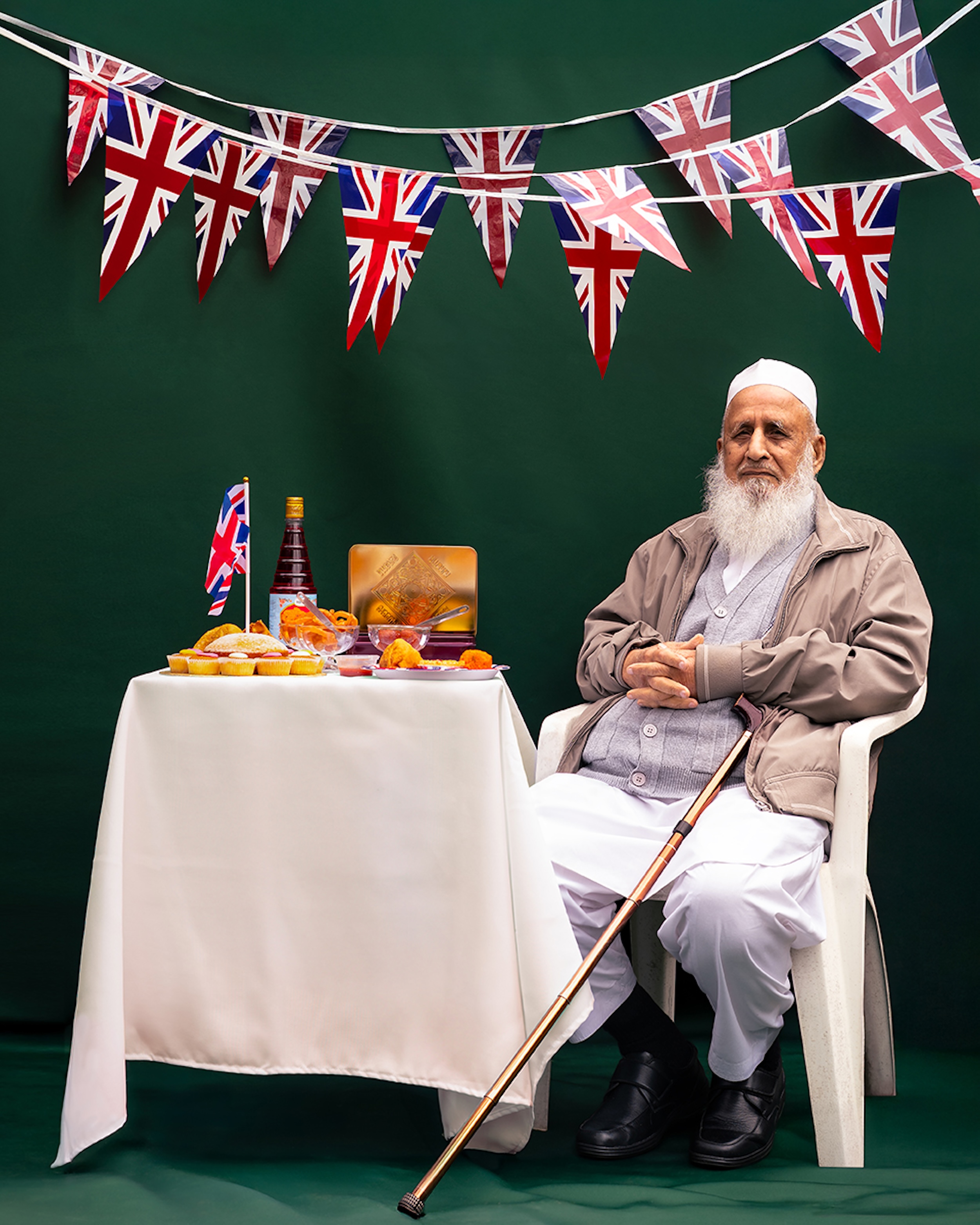
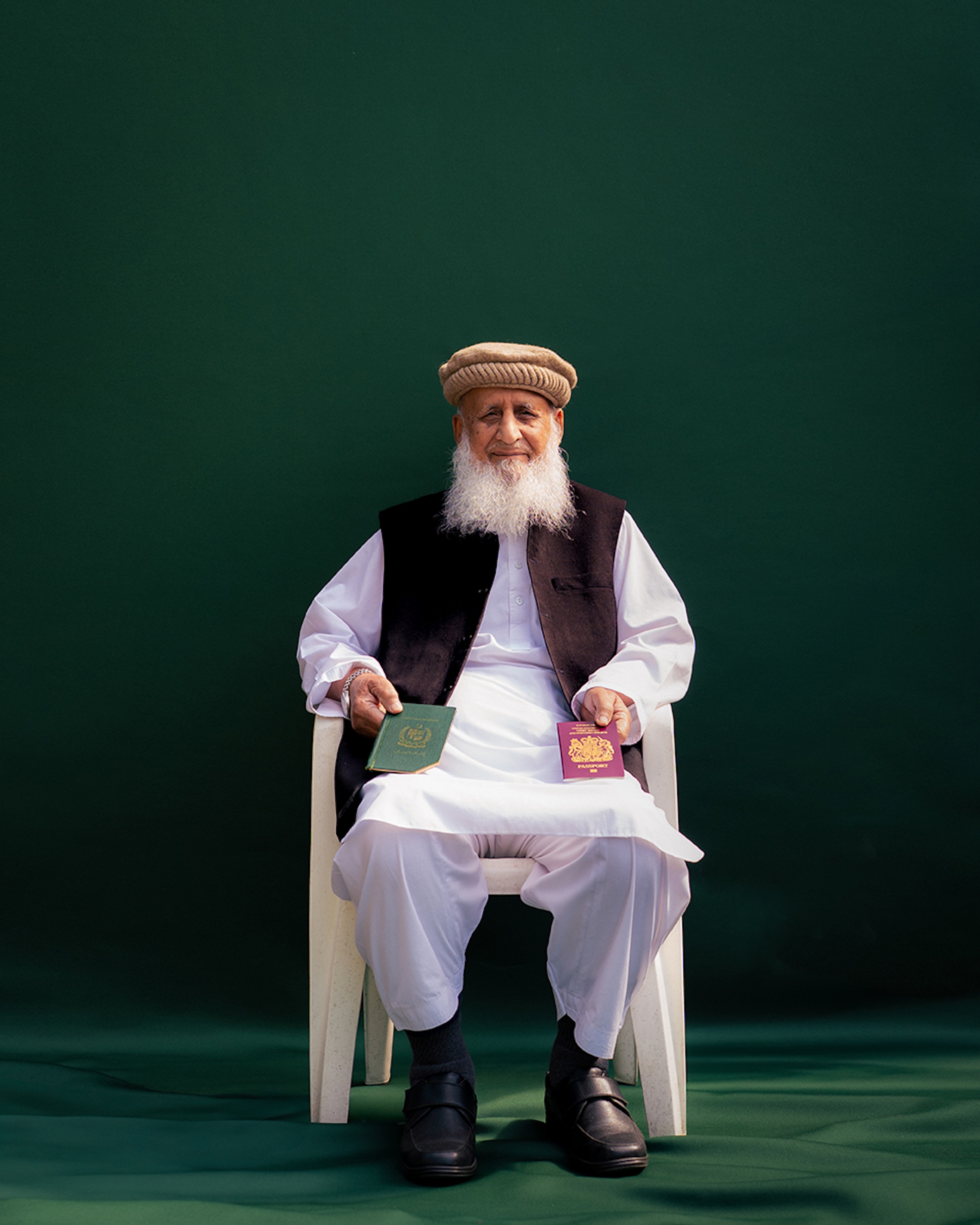
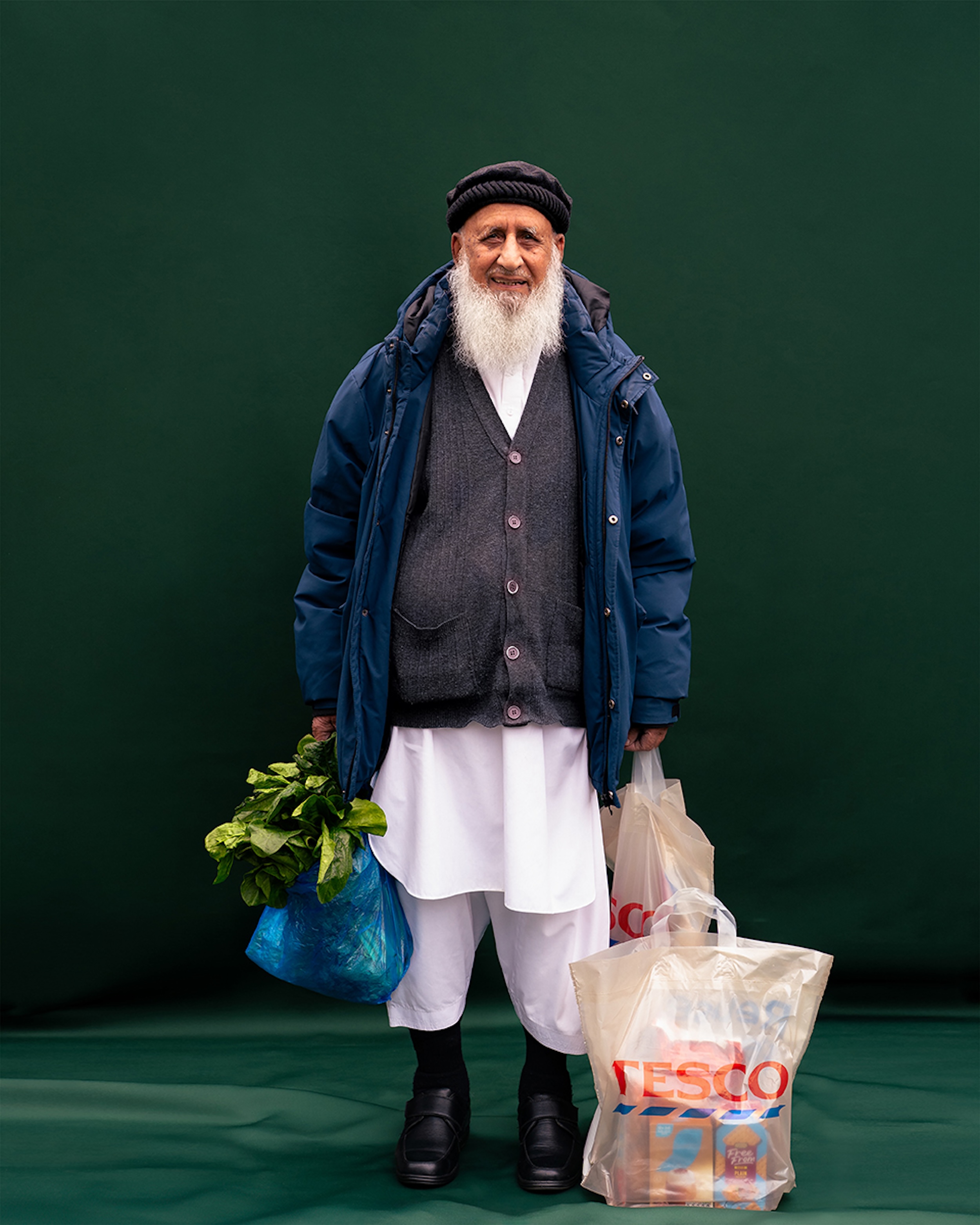
I think a lot of people are drawn to A Familiar Taste because it is probably the most relatable image for anyone who finds themself split between two or more cultures. Even as a second-generation immigrant myself, I find this image represents a dilemma I have faced my whole life. Too Western in some spaces, not Western enough in others. But I also think it is because of how content my grandfather looks in the image. When developing this project early last year, it was really important to me that this series gave another perspective on migration. I wanted to create imagery that moved away from the negative depictions of migration stories, without dismissing those realities, but instead to give another perspective through my grandfather’s story.
This image, in particular, was inspired by my childhood memories of him. Growing up, I spent a lot of time with my grandfather on his weekly errands, accompanying him to various supermarkets and South Asian convenience stores. Moving between the places almost felt like a poignant reflection of his life and mine, constantly dipping into two cultures that we simultaneously belonged to. I wanted to portray those memories and feelings in this image in the simplest way possible. One bag from a British Supermarket store, and the other a blue plastic bag, the kind you often see in international grocery stores.
BJP: Who or what are some of your references in photography?
SM: My photography practice is heavily inspired by my life. By my experiences, the people around me, my friends, and my family. All the stories I tell within my imagery are so deeply intertwined with my personal experiences, which is probably why I have always felt quite protective of my work. I also draw a lot of inspiration from everyday life: walks around my neighbourhood, secretly listening in on conversations, or simply sitting on a park bench and watching the world go by.
Within the photography world, one photographer whose work I always return to is Simrah Farrukh, particularly her series Andarana with her grandmother. That series was actually a big influence on my own project with my grandfather. Her depictions of South Asians feel so fresh and nuanced, and I am constantly in awe of her use of colour and painterly-like approach to photography; her images are always on my mood board!
BJP: What are you currently working on?
SM: I am currently working on a few projects. One project I am particularly excited by is a sister project to Babaji’s Britain; this time, I’m turning the camera beyond my own personal history and towards others whose lived experiences can help expand the conversation about ‘who is British’. The work invites reflection on how modern-day British identity is shaped by migration, and by what people bring with them into shared spaces through things like food and cultural traditions.
I’m also at the early stages of another personal project around menopause, inspired by my mum’s experience over the past few years. It’s a topic that isn’t talked about enough, especially within minority communities, which makes me feel all the more passionate about bringing it to fruition.