

All images © Nouf Aljowaysir
With two bodies of work, the Saudi-born, Brooklyn-based artist explores the flaws of artificial intelligence
“Where am I from?” This question underpins Nouf Aljowaysir’s projects Salaf (‘Ancestors’) and Ancestral Seeds, which make up a body of work highlighting artificial intelligence’s failures in representing people from the SWANA region. Aljowaysir, who was born in Riyadh, Saudi Arabia, and studied in the US, began exploring AI in 2020, interested in its ability to bring her closer to her Arab roots. But both Salaf and Ancestral Seeds use absence and erasure as central strategies, questioning what is missing – and why – over what is there. “Presence offers something concrete to consume or interpret, but absence asks us to sit with uncertainty, to dwell in the confusion of what could be,” the artist says.
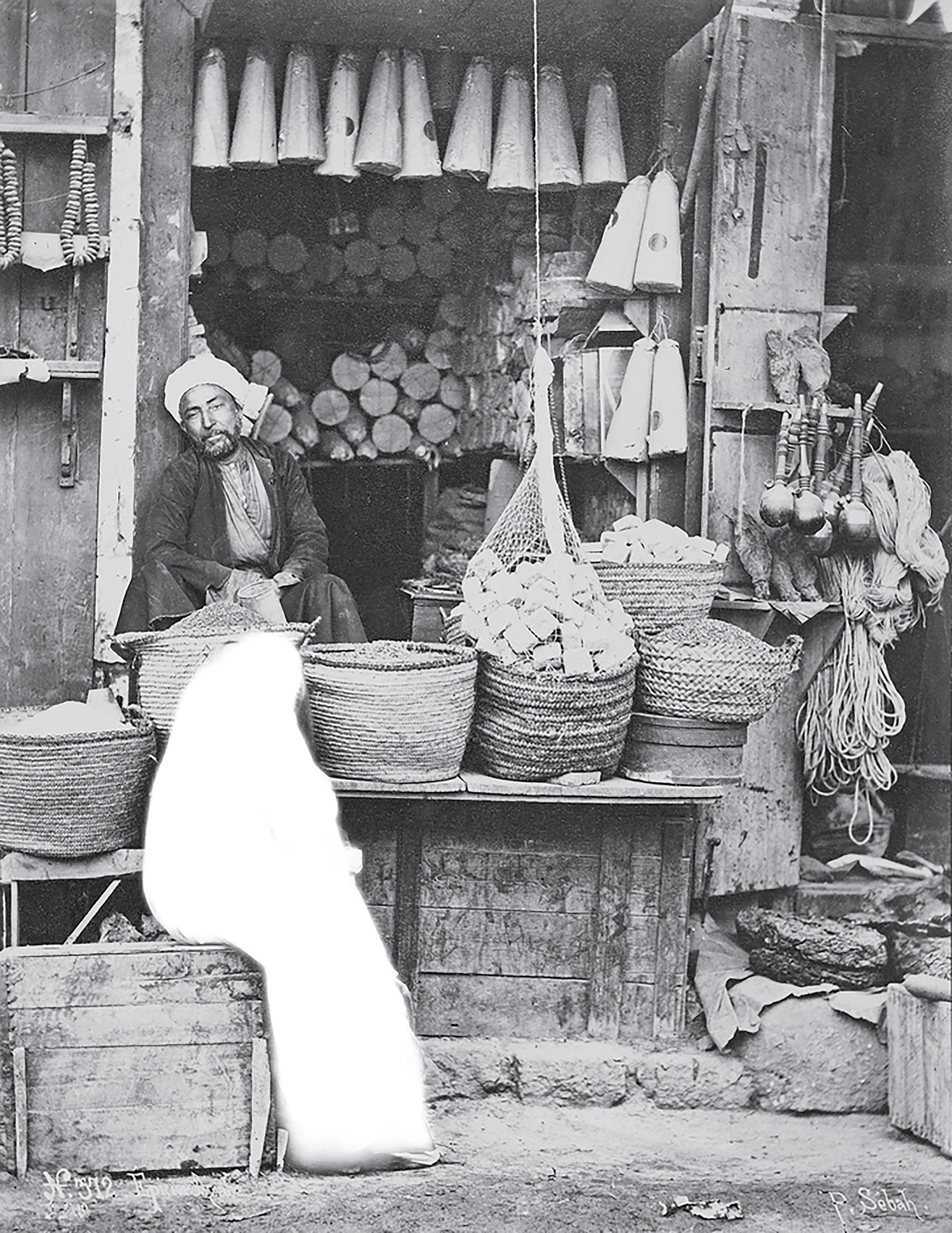
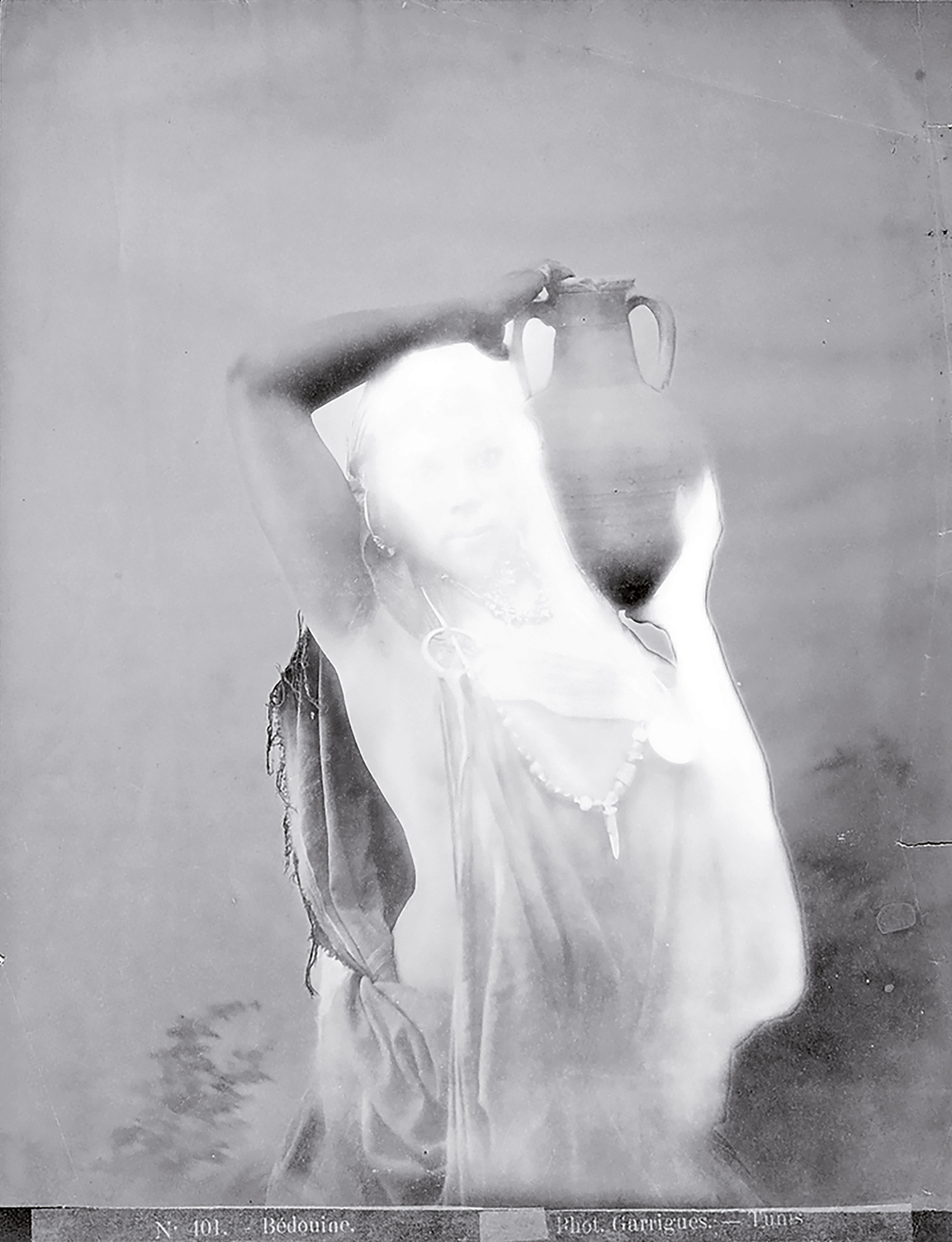
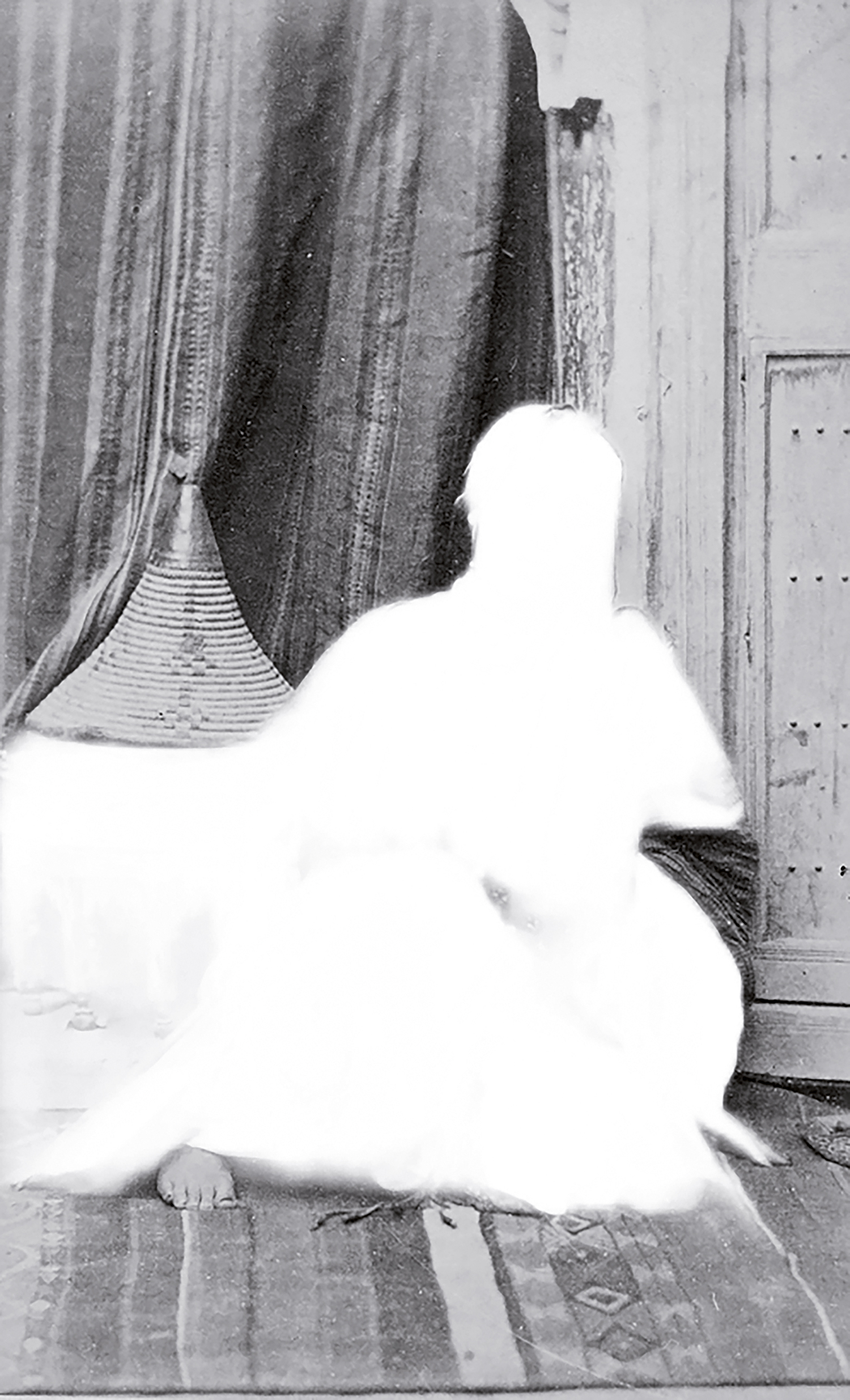
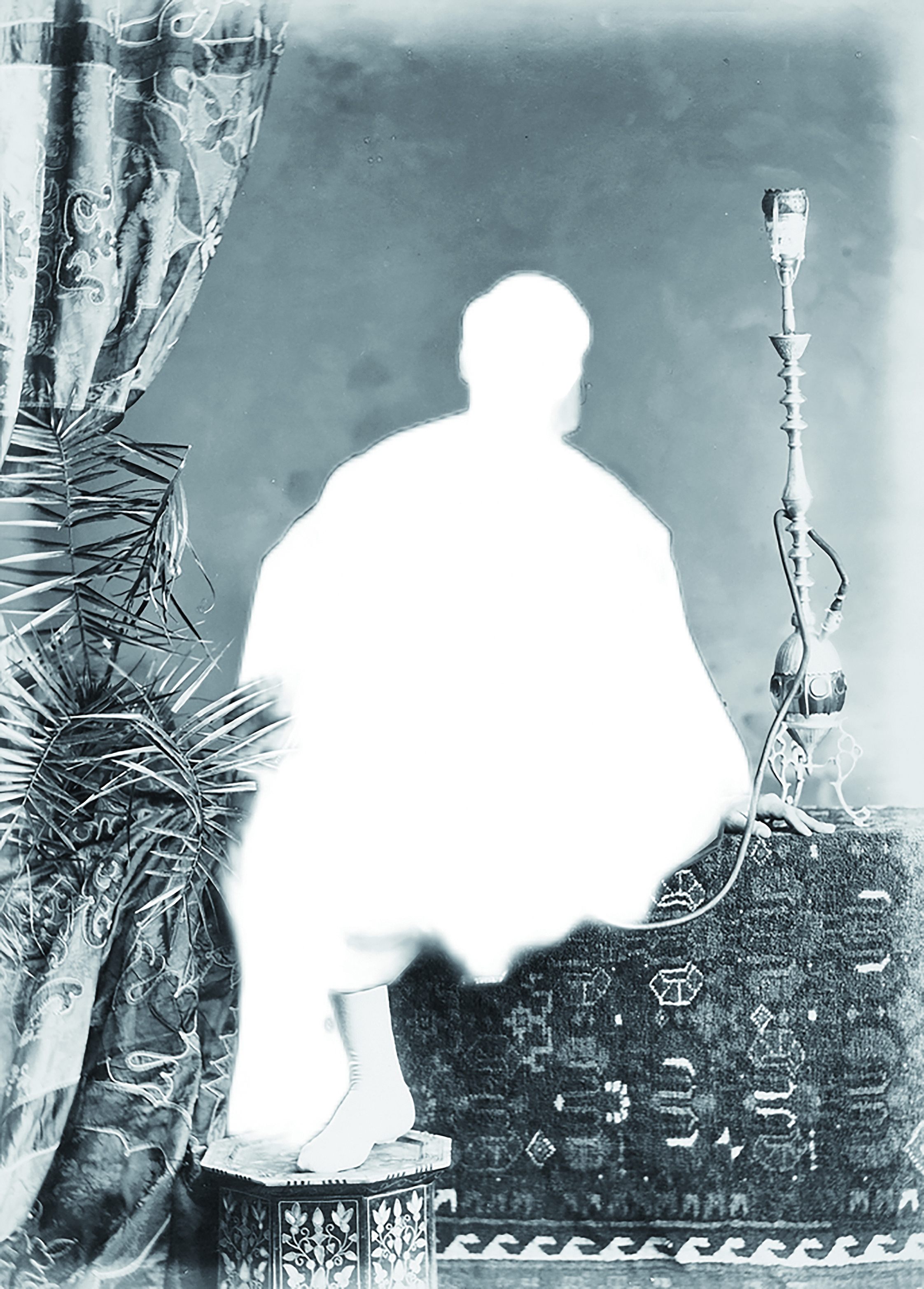
In Ancestral Seeds Aljowaysir creates ‘seeds’, white figures obfuscating the person or people in the archival image, which reveal old biases and cultural gaps in the digital landscape, and underline the urgent need for more archived and accessible material on the region. “I was curious if visual AI techniques could regenerate or recreate the past,” says Aljowaysir.
As she accessed material from the Gertrude Bell Archive, and the Ken and Jenny Jacobson Orientalist Photography Collection in the Getty Museum, she came across colonial images “that portrayed different Arab cultures into a vague and homogenised representation. As I proceeded to test these images with computer vision models, it then ‘detected’ militaristic terms layered over problematic depictions,” she continues.
“AI systems can only learn from what is recorded, and the archive itself is overwhelmingly mediated through Western frameworks”
That is when her project shifted and, instead of generating hyperrealistic images, she began to focus on the problems she was uncovering, in both the archives and the AI models. Using segmentation techniques employed by the technology, she detected and erased figures rather than identifying them. “Salaf became less about reconstructing my history and more about revealing the erasure that occurs when cultures rooted in oral storytelling are absent from digital records,” she says. “The expected stereotypes and visual details are missing. By omitting stereotypical features, the work opens a discursive space for viewers to engage with absence as a site of resistance and reinterpretation.”
The work was exhibited at Gazelli Art House, London, last winter, with new works extending the Salaf research into other archives – specifically, African archival objects housed in collections and museums. Salaf and Ancestral Seeds were also shown at Asia Now in Paris last October, and at Photo Elysée, in Lausanne, Switzerland, in the new year.
What Aljowaysir uncovers is perhaps more sinister – or, at least, complex – than the issues outlined in Edward Said’s classic Orientalism, which detailed the problematic depiction of Arabs, Muslims and people from SWANA in the West. The machine learning models Aljowaysir used were trained on contemporary media language and therefore tended to associate Arab regions with conflict; by uncovering these biases, she observed how archival imagery was usually tainted with the European gaze, originating from a colonial orientalist lens, but machine learning models were influenced by American media, and “saturated with the language of the War on Terror”.
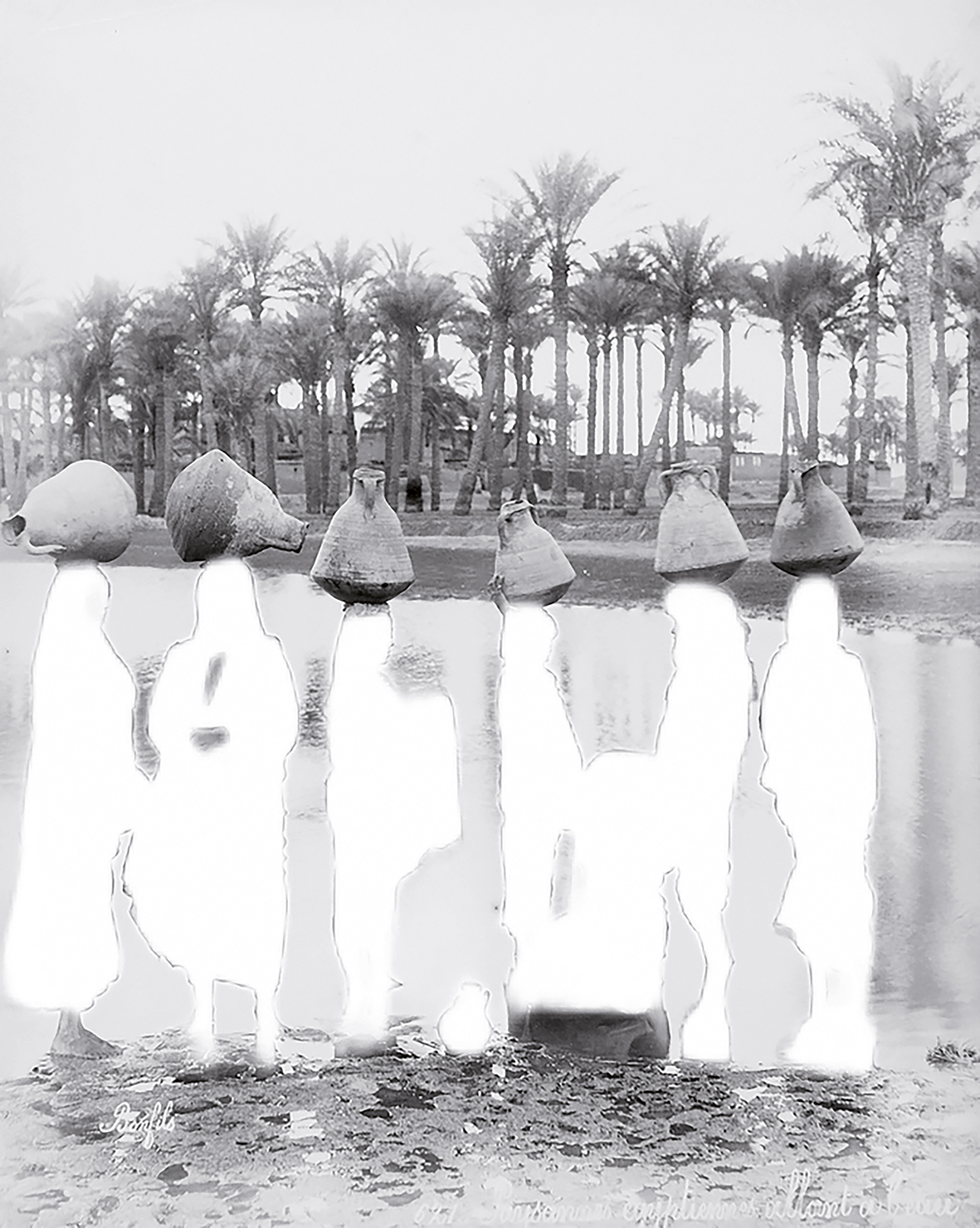
The datasets also revealed problems of overgeneralisation and applications of South Asian terms, Aljowaysir adds, suggesting a lack of material from the SWANA region. “AI systems can only learn from what is recorded, and the archive itself is overwhelmingly mediated through Western frameworks,” she says, “resulting in the distortion or complete absence of the specificity and nuance of Arab histories and narratives within these structures.” Aljowaysir believes her work opposes the purpose of AI, “the notion that we can create a ‘superhuman intelligence’ by training on massive datasets that are themselves full of problems and blind spots”. Instead her approach focuses on something more qualitative, on “slowness, working on a small scale and storytelling”.