

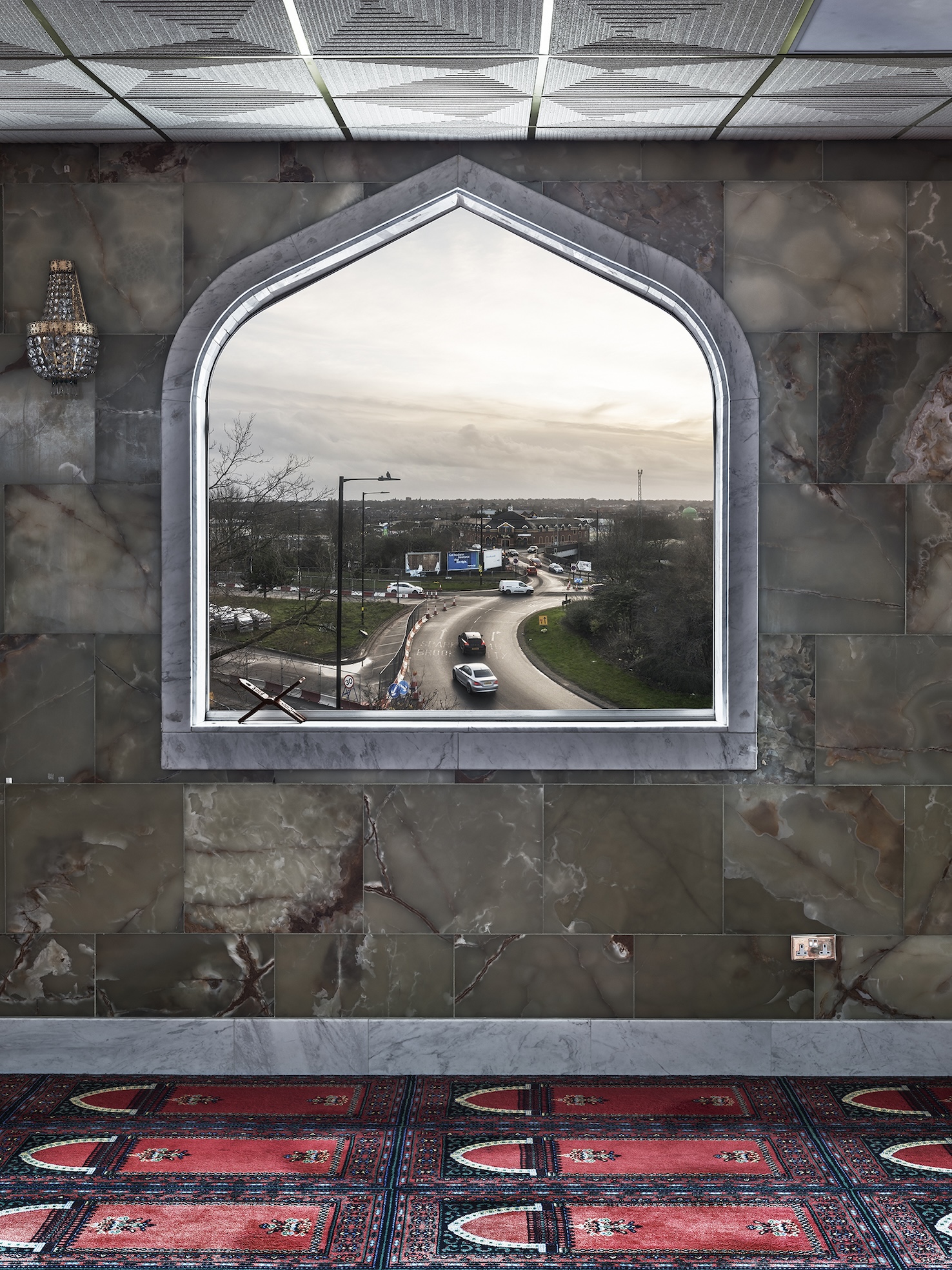
New British Views #21, England, 2022 © Marwan Bassiouni
In Partnership with Soul City Arts & University of Warwick
For decades, Muslim artists have been told that representation is progress. Ahead of the Good Muslim/Bad Muslim symposium, the photographers and researchers reshaping the visual arts are making the case for something more radical: the right not to be perceived.
What does it mean to photograph a community that has spent decades being surveilled, ridiculed, and filtered through neo-Orientalist structures? For Muslim lens-based artists, visibility in the West has long carried an excessive price: the enforcement of a “sanitized Muslim” trope that demands both perfection and submission at the expense of complexity.
In 1978, long before the pivotal aftermath of 9/11, Palestinian scholar Edward Said wrote in Covering Islam: How The Media and the Experts Determine How We See The Rest of The World that it had become part and parcel to deliberately distill the actually wildly dynamic Muslim socio-political and cultural world – a vibrant tapestry spanning dozens of countries, cultures, and ethnicities – as a region and a people of a “timeless childhood, shielded from true development by an archaic set of superstitions, prevented by its strange priests and scribes from moving out of the Middle Ages into the modern world.”
Nearly half a century later little has fundamentally changed when it comes to how Muslims are portrayed and perceived in the West. The “sanitized Muslim” trope still mandates that Muslim identity must be palatable, quiet, and “perfect” – a tendency which was recently painstakingly dissected in Mohammed El Kurd’s Perfect Victims – to gain societal acceptance, placing a heavy psychological burden on individuals. The image is curated to soften, and any shred of complexity is lost in a sea of commodification, with the ultimate goal being to entertain rather than to meaningfully involve the audience by making them question their role in what they are observing.
Simultaneously, the colonial convention of putting others on display as if they were mere curiosities remains ubiquitous, leaving little room for the authentic, complex, and complicated Muslim experience.
To challenge these suffocating conditions in the visual arts, Soul City Arts and the University of Warwick have partnered to stage The Good Muslim, Bad Muslim photography symposium. Driven by artistic director Mohammed Ali Aerosol and academic lead Dr. James Hodkinson, and curated by Mohamed Somji, the event serves as a critical, collaborative effort to interrogate these media pressures and explore the visual arts as a space for defiance and authentic self-expression.
Described by academic Dr. James Hodkinson as an “intervention” to “disrupt, rework, and refresh” the status quo, the symposium aims to answer pertinent questions: how do our media, our politics, our arts sector, its policies, even our visual culture itself, continue to influence how Muslims see themselves and show themselves in their art? Have our visual vocabularies become limited?”
In an attempt to answer these questions – or at the very least, rigorously debate them – the Good Muslim, Bad Muslim symposium offers a dynamic line-up of speakers. In his opening keynote, independent photographer and writer Asim Rafiqui will interrogate the figure of the “good Muslim” as constructed by Western media and photojournalism: the “integrated” apolitical subject whose visibility depends on silence about empire, occupation, and the imperial geographies from which diasporic Muslim communities so often emerge.
“When such magazines give attention to you, you feel like you have arrived. It’s a very seductive and drunken place to be.”
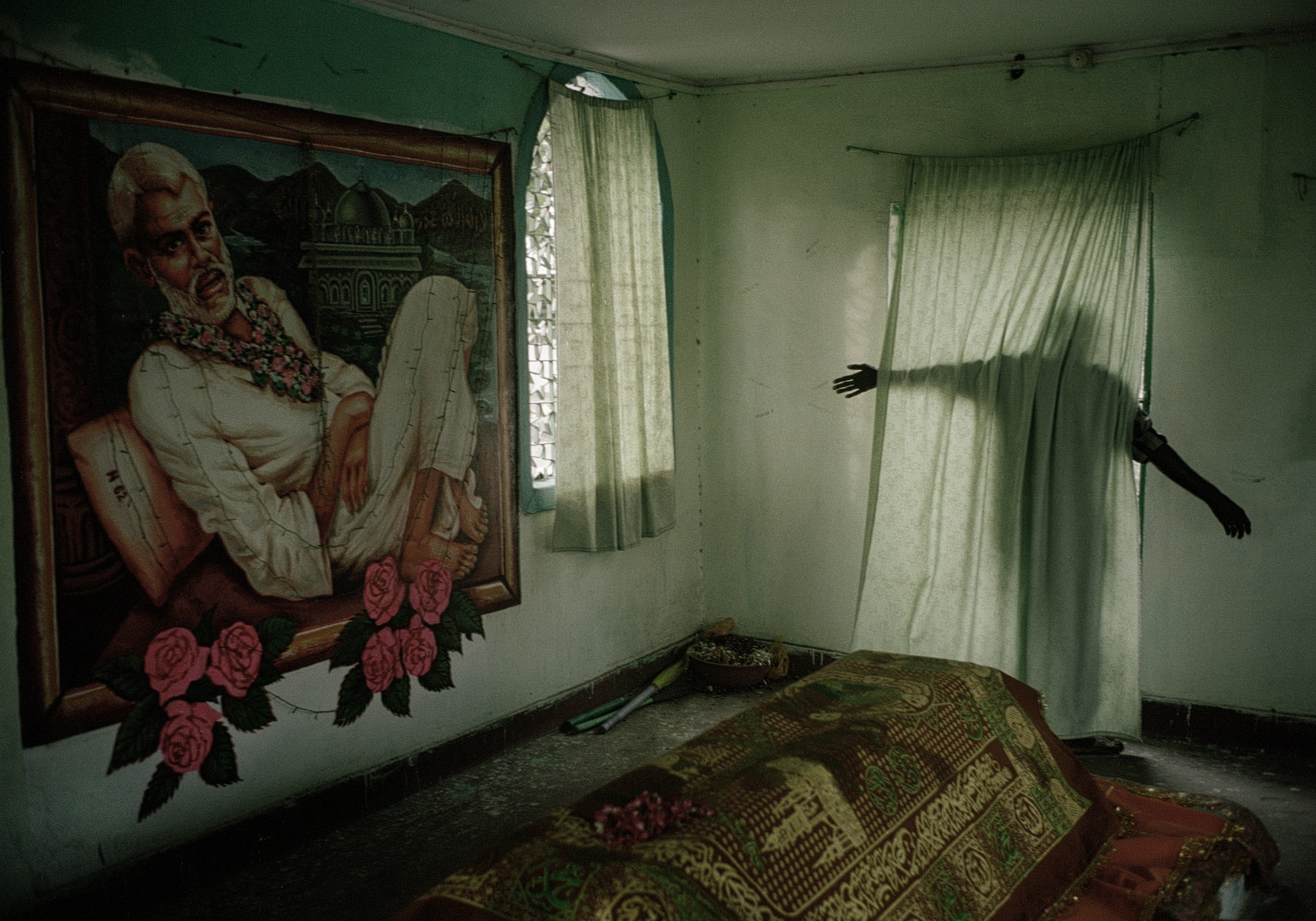
©Asim Rafiqui
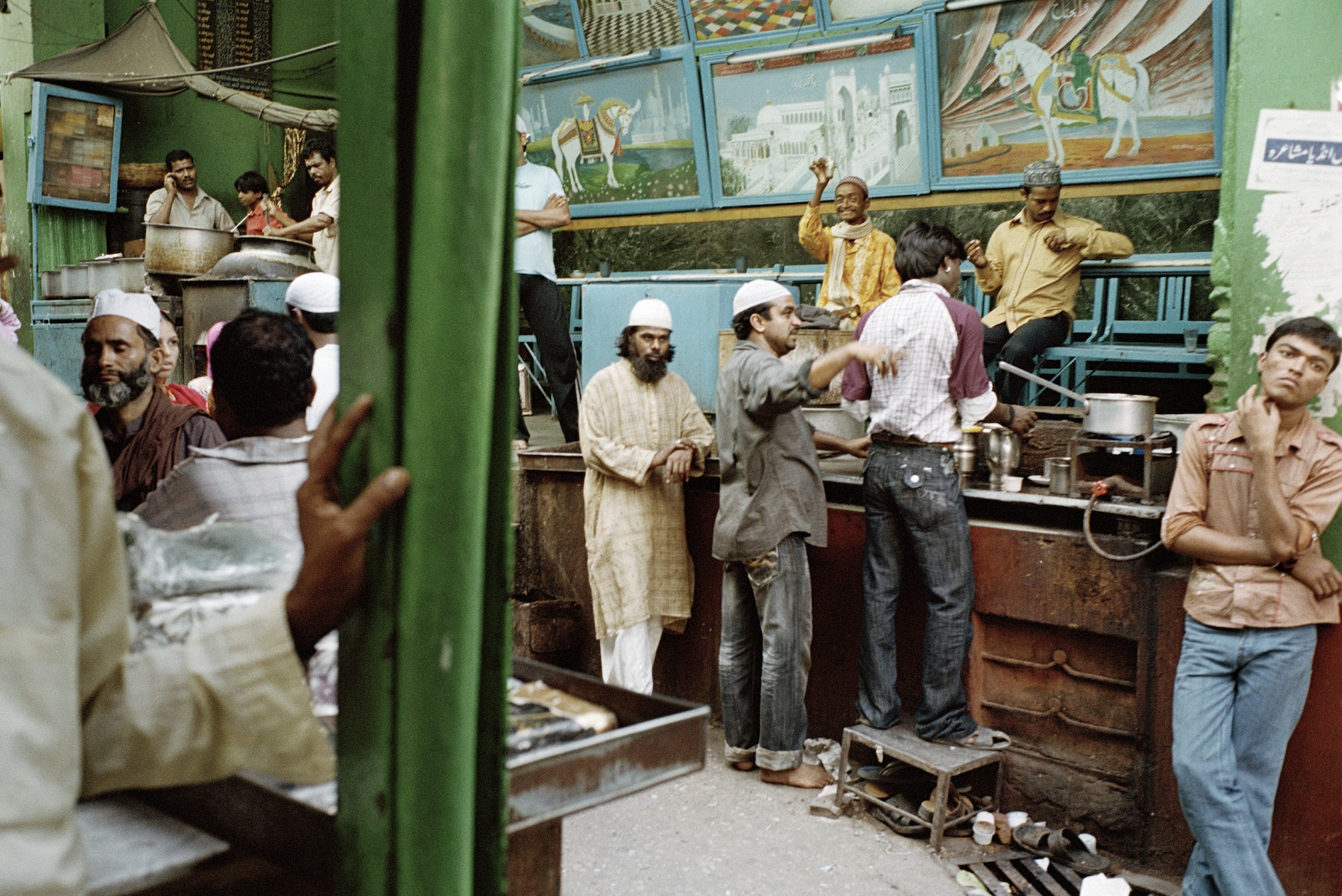
©Asim Rafiqui
Tripping over the Line
Rafiqui still remembers the exact moment he realized he had to quit his job and radically change not only the world he navigated professionally but the world at large. In the aftermath of 9/11, Rafiqui was regularly traveling the world on assignment for many of the world’s leading legacy publications. His career was on a fast upward trajectory, fueled by what he saw as a genuine appreciation of his craft.
“When such magazines give attention to you, you feel like you have arrived,” he recalls. “It’s a very seductive and drunken place to be. You stop thinking. You simply start chasing and trying to stay in the mix.”
Then, in 2006, Rafiqui stopped by a New York magazine office to pitch a personal project on Evangelical Christianity in America—a stark departure from the ‘war and terrorism’ stories he was routinely dispatched to cover in Pakistan. The editor’s response was a brusque reality check: “Well, why would I call you for any work in America? You have no competitive advantage.”
Despite having lived in the U.S. for nearly twenty years, Rafiqui was being systemically pigeonholed. “A wall had collapsed,” he says. “I was actually chosen because I was this convenient portal to what they considered to be some bizarre culture they thought I would have secret access to … the Taliban whisperer, if you like. Outside of that, they couldn’t fathom how they would possibly ever use me.” Later, a friendly deputy editor pulled him aside with a warning: “Listen, Asim, If you want to be the photographer you want to be, you will have to do it all on your own.”
It proved to be a critical juncture. After “tripping over the line”, Rafiqui walked away from the imperial terror fantasies, refusing to allow legacy institutions to impose a fixed identity on him. “You realize that you were only in the mix because you were as racist, as essentialist, as derogatory as they were,” he reflects. “It wasn’t like you were doing anything new or changing anything. You were just feeding the machine.”
For Rafiqui, the post-October 7 critical juncture completely shattered any remaining illusions pertaining to mainstream moral progress. “Obviously these last few years have shown us clearly what we’re dealing with. And if we don’t wake up now, after everything that we’ve literally seen, then either we’re dead inside or … it’s our own fault to not regroup and change how we’re doing things. If we’re working in exactly the same way as we were before October 2023, then there’s something fundamentally wrong.”
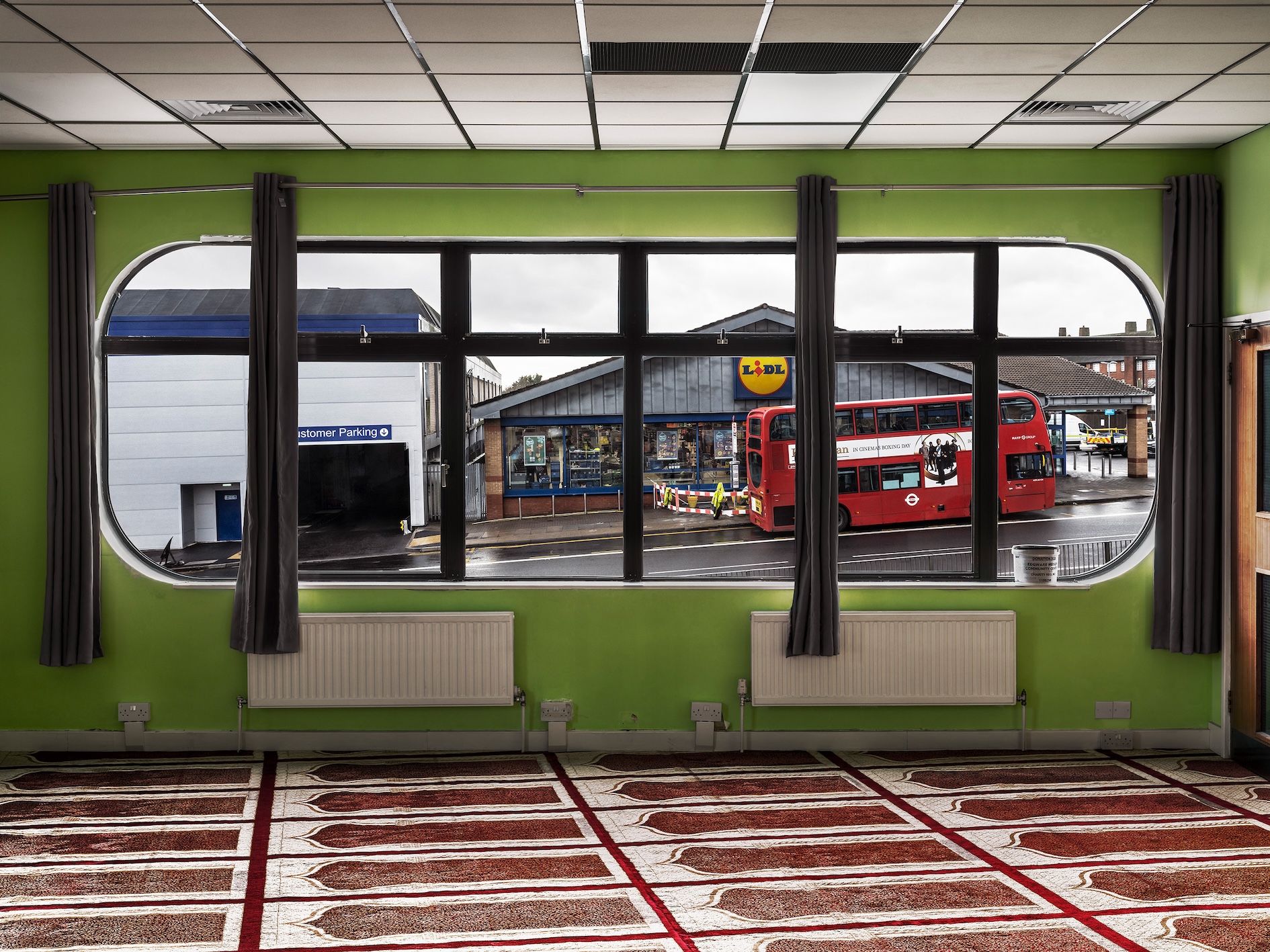
New British Views #12-1, England, 2021 © Marwan Bassiouni
Digital Absence as an Act of Preservation
After a career in photojournalism left her with a profound sense of unease and dissatisfaction with the industry, visual researcher Shaista Chishty – a former student of Rafiqui who will present her paper The Case for Opacity: A Radical Alternative to Performing the Good Muslim – decided to dissect the visual traps she encountered in her practice-based PhD at Cardiff University. This disillusionment was awakened during her work in humanitarian photojournalism, where she found herself increasingly estranged from the compromised visual culture surrounding the development field.
“The typical get flown out and document whatever’s happening in a country you have probably never been to, know little about, with a focus on returning in minimal time with a set of images an editor already had in mind,” Chishty explains. “I remember coming back from Ethiopia and people saying, “Oh, these children look too happy. The kinds of images that were published ultimately reinscribed existing harmful narratives about negatively racialised people. I felt uncomfortable with the objectification of poverty and the grey area concerning ethics and consent.”
In her early work, Chishty analyzed how the niqab was represented in mainstream discourse, juxtaposing it against how veiled women framed themselves. At the time, Chishty too, was considering the potential of self-representation to shift narratives. However, As she continued to observe her social feeds, she began to notice a trend where the images some Muslim women were sharing online were starkly reminiscent of 19th-century Orientalist studio paintings – fantasies often dreamt up by European men who had never even travelled to the so-called ‘Orient’. “And I thought, why is the aesthetic the same?.. that is what I am seeking to understand through my PhD research.”
Drawing on her work as a photographer and researcher, Chishty’s PHD research argues that visibility is a trap: rather than delivering true recognition and freedom, it exposes Muslims to increased surveillance, scrutiny, and institutional control, ultimately reinforcing the very “good Muslim, bad Muslim” binary it claims to resist. In an era of mandatory digital self-fashioning, she turns to Édouard Glissant’s demand for the right to opacity, the right to be unknown and a refusal of legibility as a radical alternative and political act in the face of Islamophobia. True subversion, Chishty suggests, lies in the strategic breaking with convention and imagining alternatives: regrouping, learning and experimenting in ways which refuse expectations.
To build visual and creative languages entirely on one’s own terms, Chishty says, we need to better understand visual histories, how they live on in the present, and address our own complicity. This non-compliance requires resisting a system built explicitly to isolate and fracture collective power. “The system does try to separate us to make us despair… When we’re together, we’re better. But the system is deliberately designed to make us compete with each other.”
The wider itinerary of the symposium mirrors this deep exhaustion with institutional surveillance, expanding the inquiry into physical and generational landscapes. In New Western Views, Amsterdam-based photographer Marwan Bassiouni offers a quiet, contemplative alternative to the media’s relentless obsession with spectacle by documenting Western landscapes entirely from the interior windows of mosques, framing an understated localized coexistence where Muslim presence is simply woven into the national fabric. While his work comfortingly allows Muslims to merely be, rather than having to prove anything to anyone, it is perhaps made stronger by the juxtaposition with the everyday Islamophobia that runs rampant in Europe in real life.
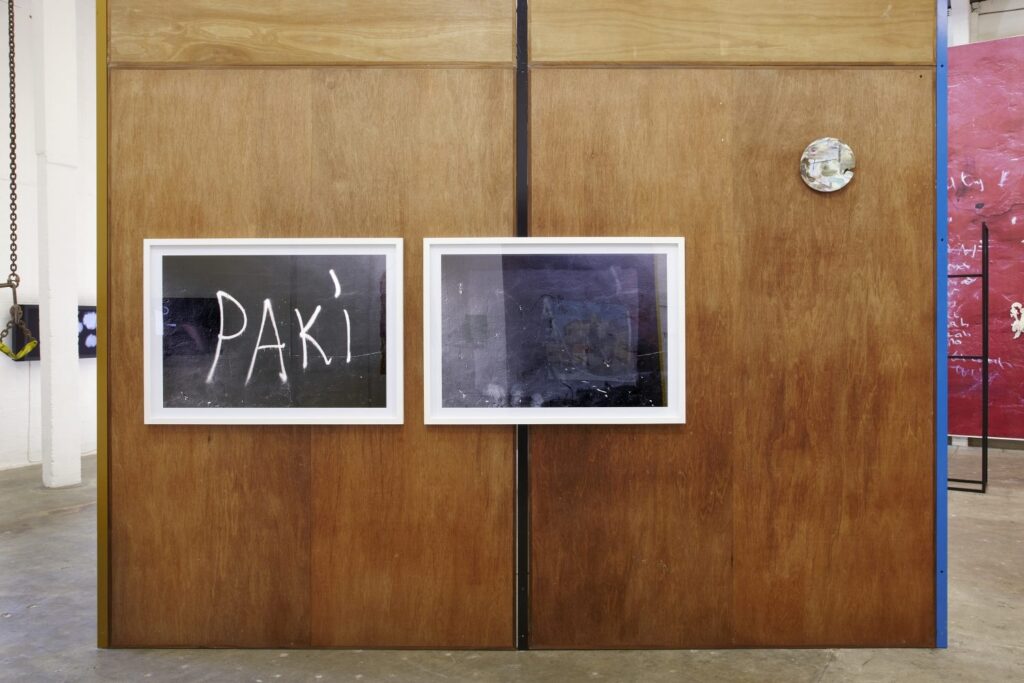
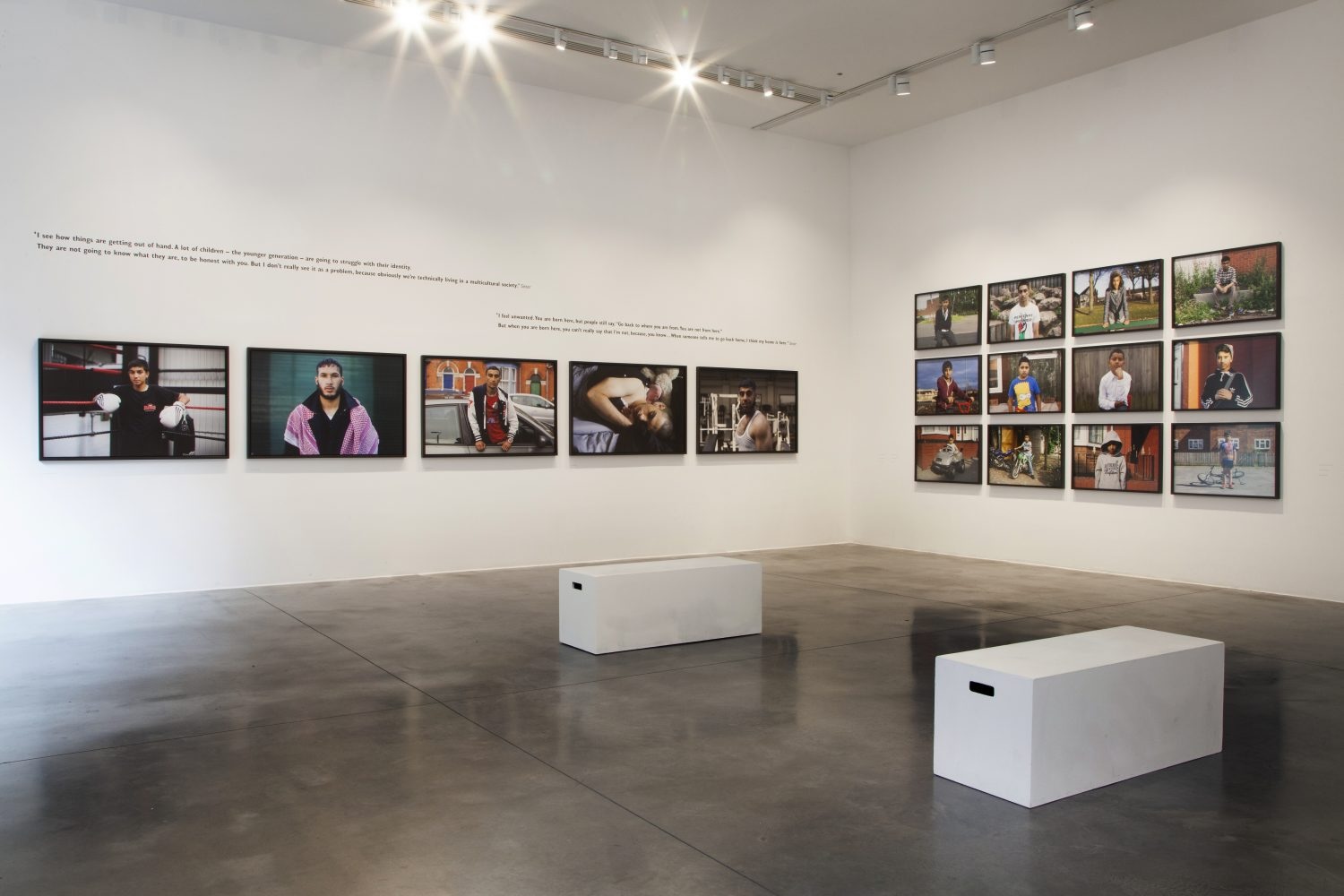
And where Bassiouni looks out from the sacred interior to zone in on a calmer coexistence, Birmingham-based photographer Mahtab Hussain reverses the lens entirely, confronting the claustrophobic reality of a community under constant, algorithmic surveillance. In What Did You See?, his documentation of Birmingham’s Muslim communities by photographing every mosque in the city, Hussain exposes how the apparatus of counter-terrorism and urban surveillance transforms everyday working-class neighborhoods into open-air panopticons, effectively translating the abstract “Bad Muslim” paradigm into a tangible, lived reality of digital profiling and architectural containment.
Where Hussain’s stark typologies map the claustrophobic outer boundaries of this state-sponsored dystopia, the symposium offers a radical counter-strategy by retreating from the hyper-scrutinized public square into the sacred, domestic interior of the Muslim home. This profound shift from external surveillance to internal sanctuary forms the emotional core of the Thread and Trace panel, where artists Nilupa Yasmin and Miriam Ali, alongside moderator Dr. Fatima Rajina, dismantle the voyeuristic demands of the Western gaze by turning toward the tactile, generational archives of textile and fabric.
By replacing the eerie electronic eye of the police camera with the intimate, restorative acts of handling, unpicking, and reweaving inherited garments and prayer rugs, these artists create a site of creative refusal – one where identity refuses to become a spectacle performed for institutional acceptance but is instead quietly nurtured through a visceral, deeply felt devotion – with the object outliving the person who wore it into meaning.
Likely to be the most intimate part of the symposium, What We Don’t Say is the culmination of a longer process. Ahead of the event, practitioners were invited to submit a short, anonymous reflection on an unresolved tension in their work – a moment they changed or softened their art knowing who might see it. A curated sequence of these testimonies will be read aloud in a closed listening circle, followed by small-group conversations where attendees can sit with disagreement rather than letting a single debate play out across the room. This session runs under strict closed-door terms: no recording, no attribution, and no press.
This setup will honour the symposium’s argument that the pressures shaping Muslim representation are often deeply internalized long before an institution or audience ever sees the actual output. Ultimately, any person of colour navigating the contemporary art world is keenly aware of the massive emotional toll it takes to perpetually perform for audiences from which nuance is intentionally withheld in spaces that remain shackled to neo-Orientalist structures.
Professor Mahmood Mamdani, the author of Good Muslim, Bad Muslim, will conclude the symposium with a short reflection on some of the the ideas that inspired the symposium.
The Good Muslim/Bad Muslim symposium takes place on Monday, September 7 at Oxford House, Bethnal Green, London
Written by Farah-Silvana Kanaan
