

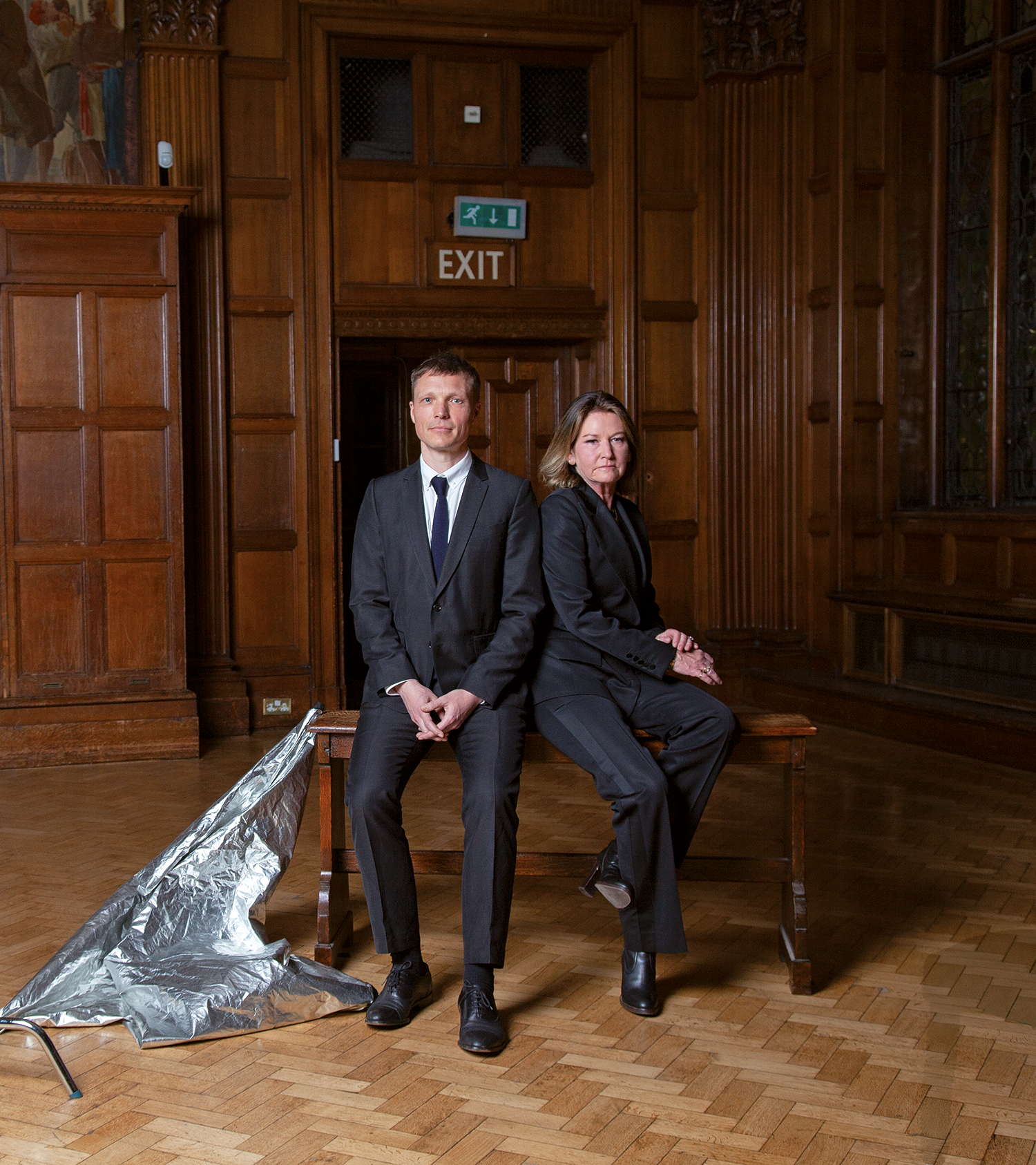
Portrait by Jillian Edelstein
For our Any Answers feature, Harriet Logan and Tristan Lund discuss their work at the Incite Project
In 1992, at the age of 24, Harriet Logan won the Ian Parry Photojournalism Grant (IPPG), set up by Aidan Sullivan, then picture editor of The Sunday Times Magazine, in memory of the eponymous photojournalist. Logan went on to join Network Photographers and worked internationally on many conflicts. In 2012 she started the Incite Project with Tristan Lund, an independent curator and art advisor who also serves as a curator at Photo London and was previously a director at the Michael Hoppen Gallery. As a private collection, the Incite Project now includes nearly 1000 prints. It regularly lends to institutional shows, and supports image-makers, photobook projects and the Ian Parry Photojournalism Grant. The IPPG is currently open to entries until 31 August.
Harriet Logan: Incite supports photographers who strive for social and political change through their work. It started with the idea of wanting to collect the iconic images of history. But after a trip to New York in 2014 we realised we were being too passive in the way we bought prints because galleries repeatedly showed us work from the Vietnam War or American Civil Rights movement, as these are such well-photographed events in US history. It was then that we made the decision to focus exclusively on living, working photographers.
Tristan Lund: That was the biggest single decision we made, and it brought us clarity. It also made our work more challenging. Old black-and-white press prints almost absolve the viewer of responsibility because they record conflicts that feel far away and long ago. Contemporary photojournalism challenges you as a viewer. It says, this is happening right now, what’s your role in it?
HL: Tristan has brought photographers I’d never heard of into the collection. Photographers from an art background dealing with these same issues that photojournalism covers. The collection isn’t just photojournalism, it’s about conflict, be that environmental, social or political. What all these photographers have in common is a shared desire to try to explain what is going on in the world.
HL: It’s a private collection but we go to great lengths to make it accessible. Most of the collection is framed and hung. It’s important to me that the work is seen, not just squirrelled away in drawers. In 2024 we curated a show for the Sainsbury Centre on the subject of truth and photography, wholly drawn from the collection. We regularly invite professionals and students to view it, and much of the collection can be seen on our Instagram account.
TL: Traditionally the role of photojournalism was to illustrate a news article. But by removing the image from its origins, by framing and hanging it, the viewer reads the image slowly and the subject becomes harder to ignore. Importantly, we also ask who took the picture. The Incite Project and IPPG celebrate and support committed image-makers.
“Contemporary photojournalism challenges you as a viewer. It says, this is happening right now, what’s your role in it?” – Tristan Lund
HL: Digitisation has been the biggest change in photography. Now you can take a picture and within seconds share it with the world. This was previously impossible. I’m constantly looking at Instagram and wondering, what are the pictures that define the wars in Ukraine and Gaza? The destruction in Gaza is only documented by Palestinians and without them we would not know about the atrocities happening there. This year’s IPPG winner is 20-year-old Palestinian Omar Ashtawy.
TL: A photojournalist’s intent is not to hang prints on a wall but we do this to honour them. We are inspired by the fine art photographers in the collection to help photojournalists make the absolute best prints they can by introducing them to great printers. It’s really important that all styles sit together in the collection, side by side, because we are trying to treat their work equally. We think this is rare.
HL: Winning the IPPG changed my life. I’d encourage any young photojournalist to enter. The grants and mentorship are incredible, we give cash but there is so much more to it than that – the big change in 2026 being our collaboration with GOST Books. All the details are on our website.
HL: I hate the idea of compassion fatigue. As a photographer I’ve seen horrible things and the biggest emotion I felt was anger. We live in a shitty world and shitty stuff happens; we should remember that, and honour the photographers who risk their lives to make these images.
To discover more about the Incite Project, the Ian Parry Photojournalism Grant or the work of Tristan Lund, click the links.