

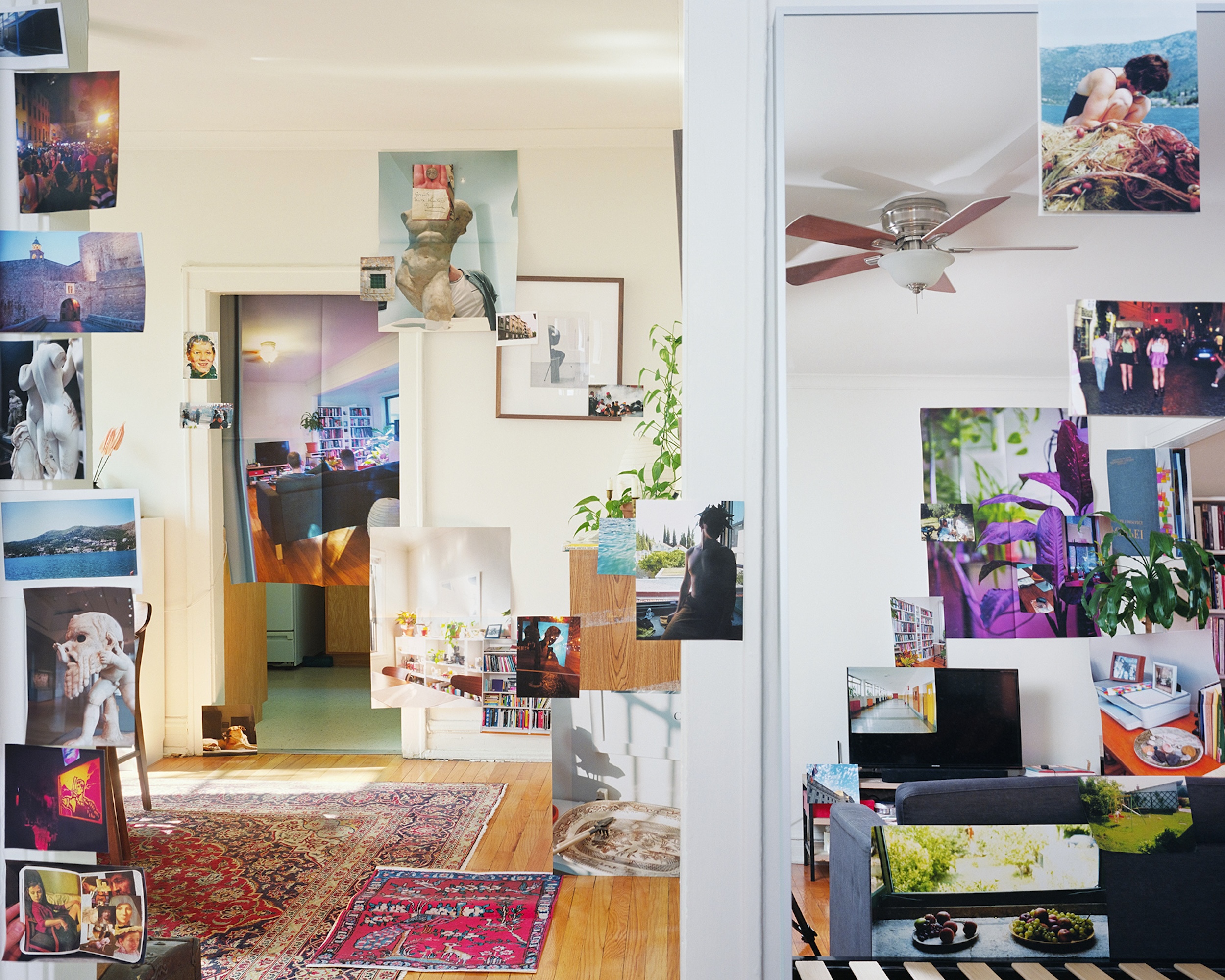
All images: Resident Aliens © Guanyu Xu
The Chinese-born, Chicago-based artist’s exhibition Resident Aliens at Yancey Richardson examines the personal lives and domestic spaces of immigrants
When I was a child growing up in Washington, D.C., I was always fascinated by mudrooms: small entry spaces found in parts of the country that experience a lot of snow. They’re staged between the outdoors and indoors, intended to store shoes, coats, and other objects that belong outside and would otherwise have no purpose inside. Bikes, sleds, strollers, umbrellas – these rooms gathered what we shed before crossing into the warmth of the home. Their design was never meant to receive people. Cold by nature, they functioned as buffers, like airlocks, ensuring that the heat and intimacy of the interior remained protected. It was almost as if guests were expected to form their first impression of the home only after passing through this utilitarian threshold. A mudroom is not meant to be beautiful or permanent; it is a checkpoint between where you’ve been and where you’re going, a brief moment of disarmament where boots are removed, and protection from the elements is relinquished.
I’ve been thinking about mudrooms again after seeing Guanyu Xu’s Resident Aliens, his new series at Yancey Richardson in New York. As someone who’s never had a mudroom in any home of my own, I’ve continued to think about their liminal nature. What purpose does such a space serve without the people who move through it? What intimacies emerge when belongings – garments, memories, remnants of the outside world – are forced into proximity? What visual identities arise in a room designed only for transition, one that resists the comfort and stability we associate with permanence?
Begun in 2019 and still ongoing, the work unfolds inside the rented homes of immigrants in cities across the United States and China. Xu enters as a guest and collaborator, inviting participants – many navigating precarious visas, refugee cases, or temporary work permits – to excavate their own photographic archives and offer the images that feel essential. Xu tells me, “Most of the photographs come from my collaborators’ personal archives. I asked them to give me images that are important in their life, their memory, and that can represent themselves. They could be places, family portraits, food they love, all different types of subjects.”
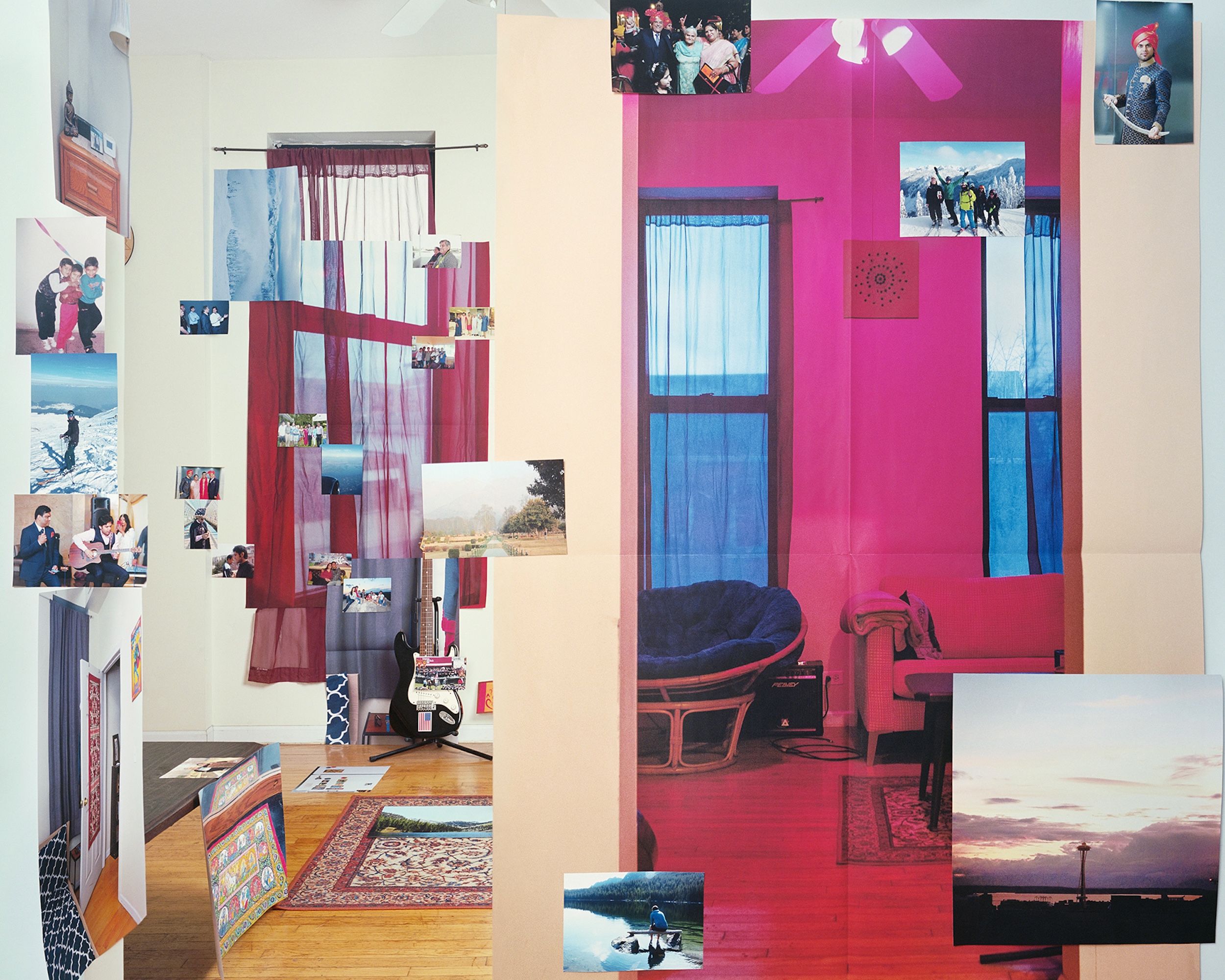
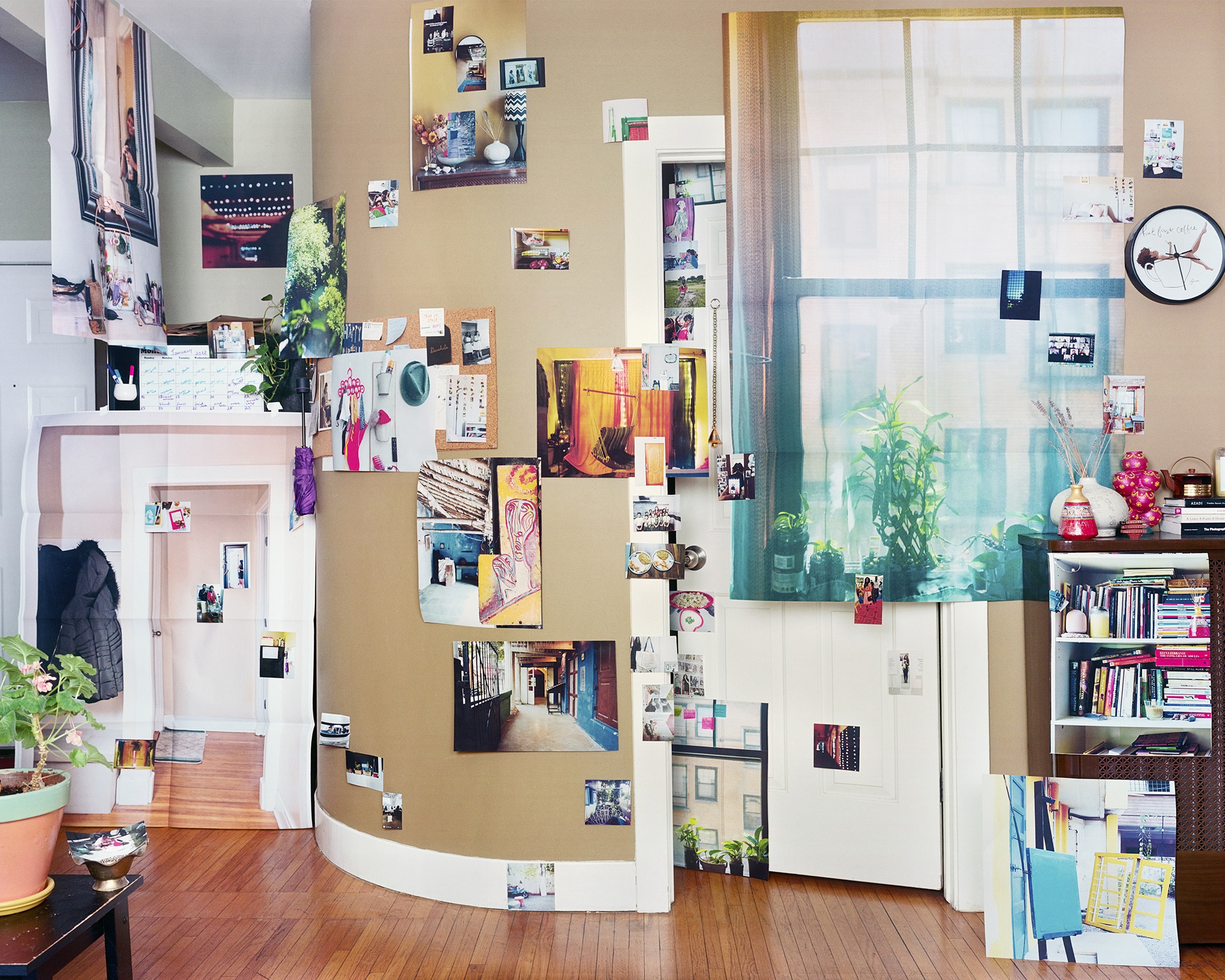
“I do see all the photographs as these portals to different times and space”
He prints everything and returns for a second visit, when those memories are taped and draped across the furniture and fixtures of each flat, forming a temporary installation that he then re-photographs as a single, dense tableau “I don’t create a like a mock up before I enter into the space to do the installation,” he says. “It’s merely between the relationship of my eye, my cameras, the viewfinder – creating a conversation through that in the physical space.”
On screen, the pictures read as busy, collage-like interiors: photographs within photographs, rectangles layered over beds, wardrobes, windows, and radiators. In person, they feel stranger and more exhilarating than that description allows. A bathroom mirror seems to contain a photograph of itself, reflecting a space that might be the same bathroom at a different time. A rental window blooms into an impossible vista, stacked with a printed New York skyline, a waterfall, and yet more images of elsewhere. Veneer wardrobes, laminate counters, and battered doors are so flush with ink and colour that they stop reading as furniture at all.
The effect created from this abstraction is almost four-dimensional: there is the object in front of you depicting objects and places from different times, transforming the work’s material implication. Are they photographs of spaces? Are they archives of time spent? Are they disruptions and tears in time?
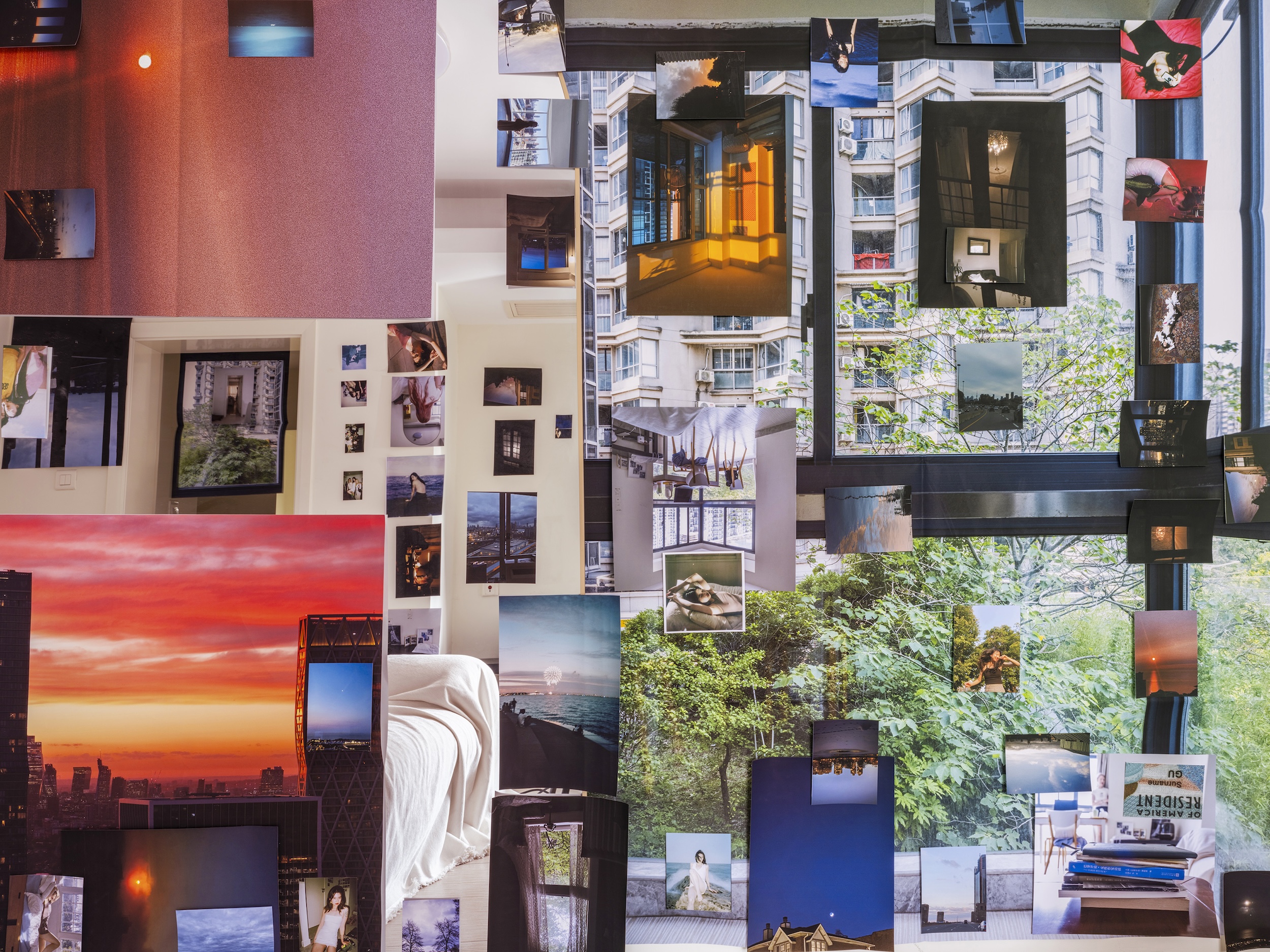
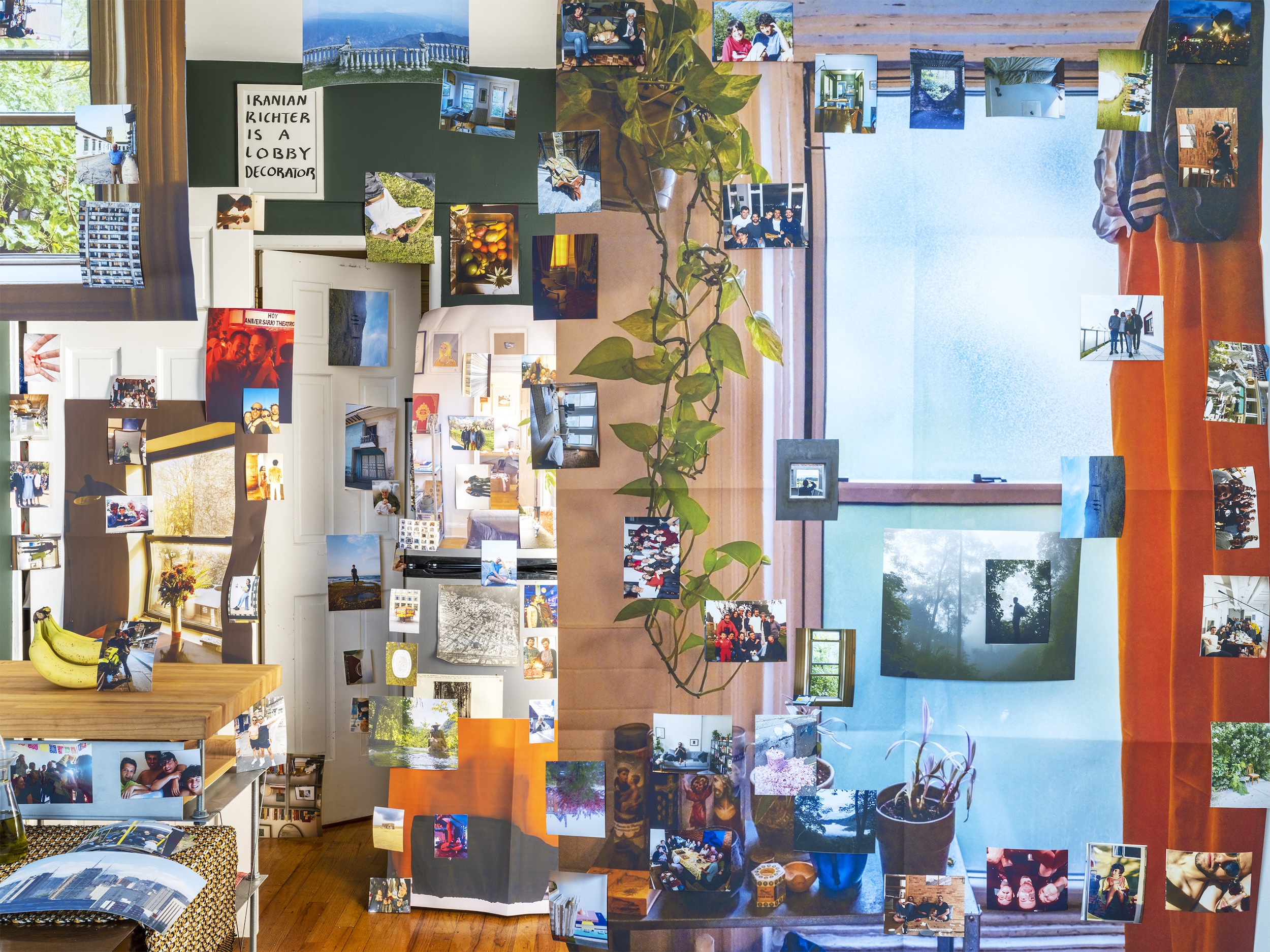
He admits, “I do see all the photographs as these portals to different times and space.” Resident Aliens extends that strategy into other people’s rooms. Most of Xu’s collaborators are immigrants living in spaces that are emphatically not “forever homes” – dorm rooms, sublets, tiny studios – and yet bear the full weight of a life in transition. Their legal status often hinges on bureaucratic performances of intimacy: dossiers of bank statements, certificates, and, crucially, photographs that must convince an immigration officer that a relationship is real, made even more complicated with the works’ explorations of queer immigrants.
“We have to represent ourselves in bureaucratic forms which are just a stack of documents,” Xu says. The visual collages reinforce the scattered, fragmented, and transitional nature of the immigration process. The home is inherently both timeless and mounted in ongoing memories of places far away.
“If you look closely enough,” Xu explains, “some photographs have folding marks that have to fold because they’re too big to fit into my suitcase.” Once these paper histories arrive in someone’s apartment, they flood the space. Tiny 4x6s cluster around an electrical outlet; a large landscape slides down a headboard; a snapshot of a family dinner hovers beside a bottle of cleaning spray. The installations exist only for the afternoon of the shoot, but their residue lingers: some collaborators later hang the final photograph in new homes. The work is ever-reimplicated within the space as an artistic act, both forgotten and unfinished.
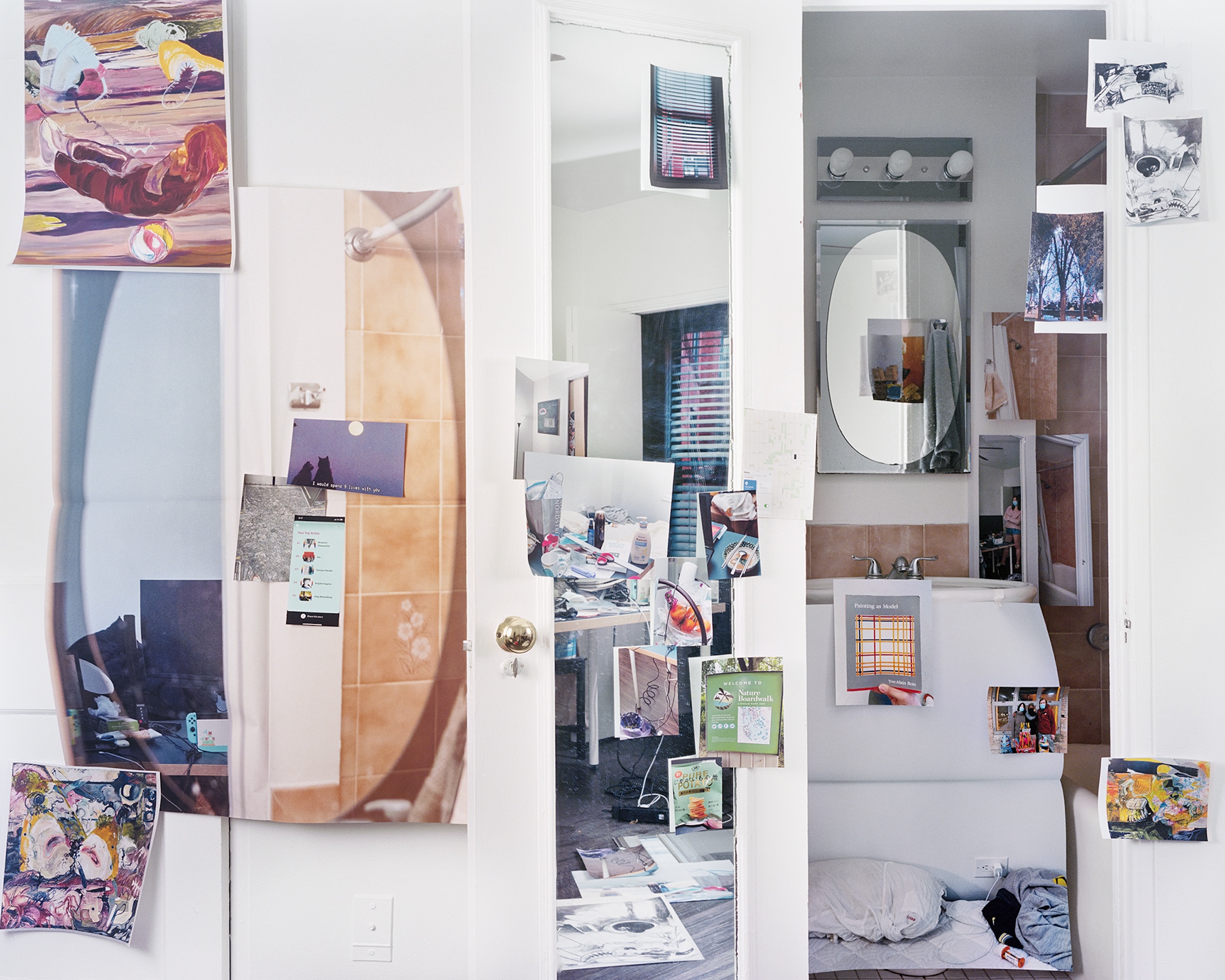
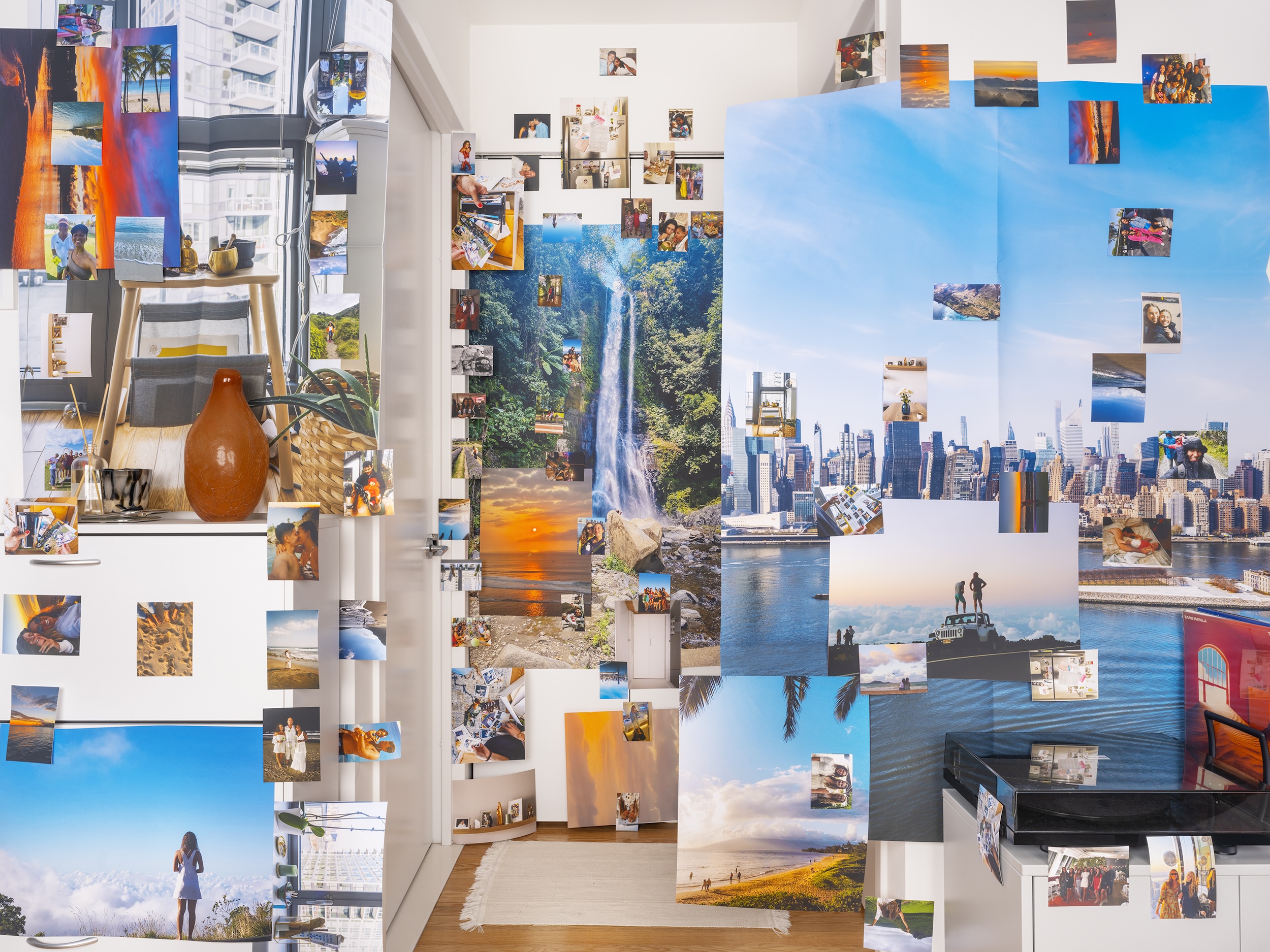
If the classical immigration photograph presents a subject as knowable and neatly contained, Xu insists on the opposite. His images are too layered and contradictory to resolve into a single, legible identity. They’re not depictions of one moment – they are tablets containing coordinates to places and stories that feed each other’s momentum. They are information banks; they are star systems, all from the same origin.
And, as I explain to him during our conversation in which I was overwhelmed by the work’s metaphysical nature, I try to centre them through the metaphor of the mudroom. Those little airlocks of domestic life are built to catch the mess of the outside world before it reaches the soft interior of the home. They bring together objects that are in flux between their coming and going. They are spaces that otherwise don’t exist if there is no one to come and go. What is the tenement apartment in the hours the alien worker labors to keep his status? Is it a home or a space to hold what from outside cannot yet be accepted within?
And does it exist if not to hold memories? To welcome in loose ends that cannot be resolved until we leave? Do these spaces contain memories – or are the memories necessitated by the inhabitant’s movement? “It’s almost like I’m a median right,” he says. “I’m this in-between person and I create an in-between space through image.”
Resident Aliens is on view at Yancey Richardson, New York until 20 December, 2025