
Photobook

Sam Ivin’s Lingering Ghosts on show in London

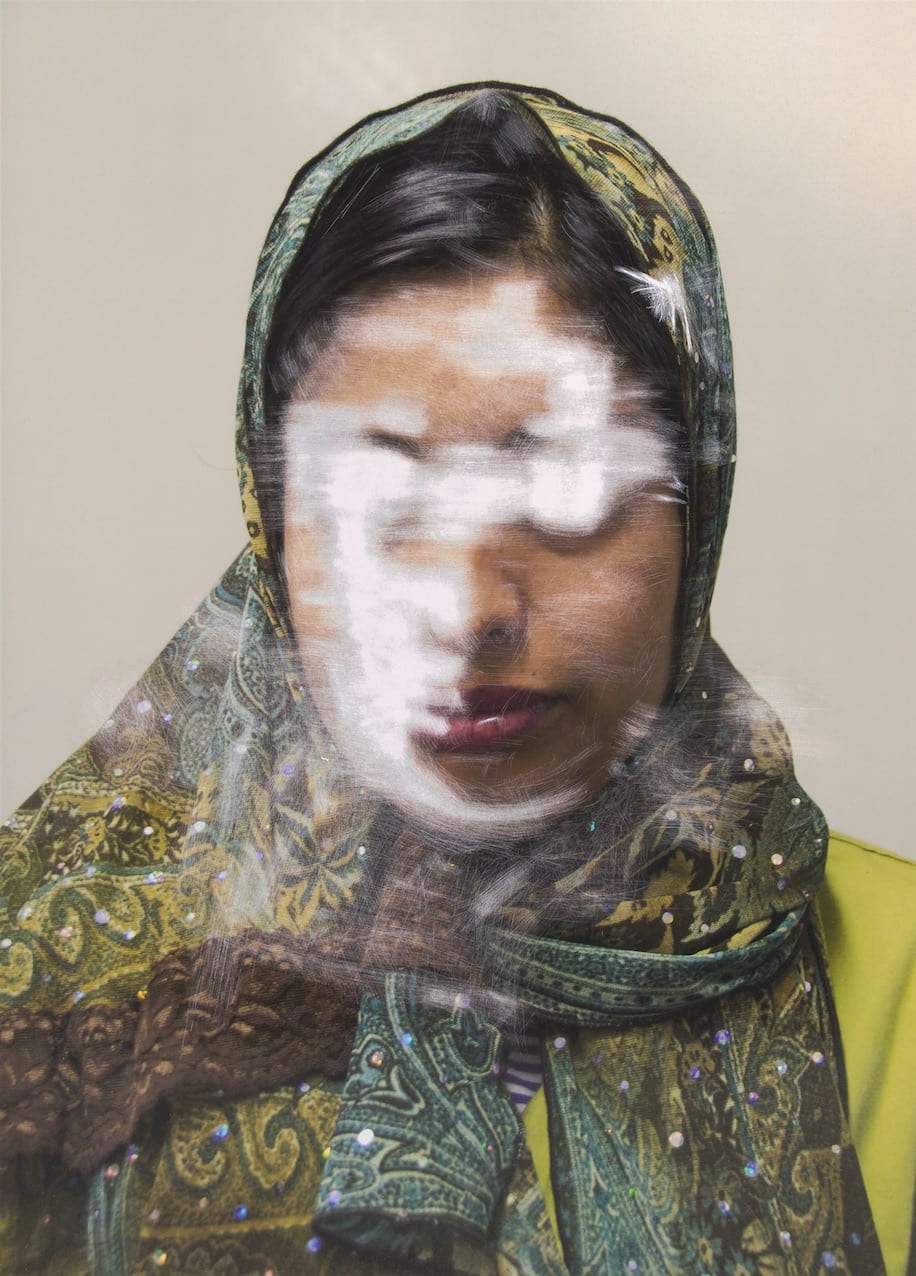
Article 14 of the Universal Declaration of Human Rights states: “Everyone has the right to seek, and to enjoy in other countries, asylum from persecution.” The UK was one of 48 nations to vote in favour of this document at the United Nations General Assembly in 1948 and now, 68 years later, British photographer Sam Ivin prints the full statement at the start of his first photobook, Lingering Ghosts. Made up entirely of portraits of people who have applied for asylum here, the book is a reminder – and an interrogation – of the codified notions of morality and fairness that Britain voted for but is not living up to.

Published by Fabrica, Lingering Ghosts asks a simple but thorny question – what does it mean to be an asylum seeker in the UK? Ivin scratched out the eyes of his subjects to induce a sense of foreboding, discomfort and alienation. As Gemma Padley notes in the foreword, “Once we remove our ability to connect with a subject through a person’s eyes, what remains?”

1 June 2018

Chris Dorley-Brown’s singular vision of East End London

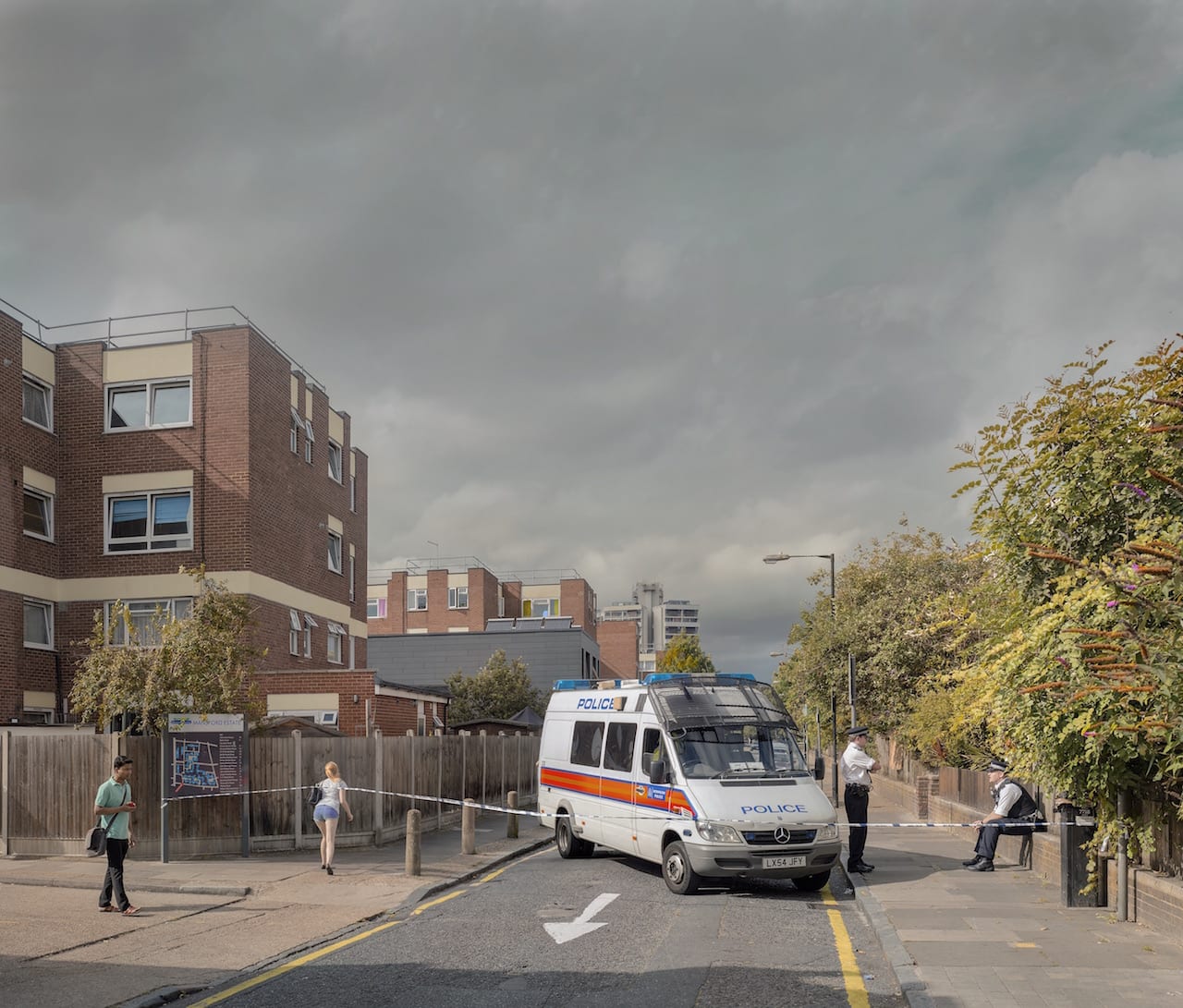
“I don’t have a journalistic bone in my body,” says Chris Dorley-Brown. “I’ve never been to Kosovo. Loads of people do that really well, but I don’t have the urge or the instinct, and that’s partly why I don’t really think of myself as a professional. I do the odd advertising job to earn money, and I think I do it okay, but the phone isn’t ringing off the hook with jobs because I don’t put the energy into promoting myself, since I’m wandering around here all the time. I keep my overheads low and can just about get away with it.” It’s a modest way to sum up an extraordinary body of work – more than 30 years of images, nearly all shot in London’s East End, and most photographed on the street. Some show luxury new developments, others rundown social housing. Some capture crowds of people, some empty streets. Many are one-offs, others – such as the images in The Corners – are manipulated using Photoshop to put various passersby together on one intersection

29 May 2018

Architecture goes California Crazy

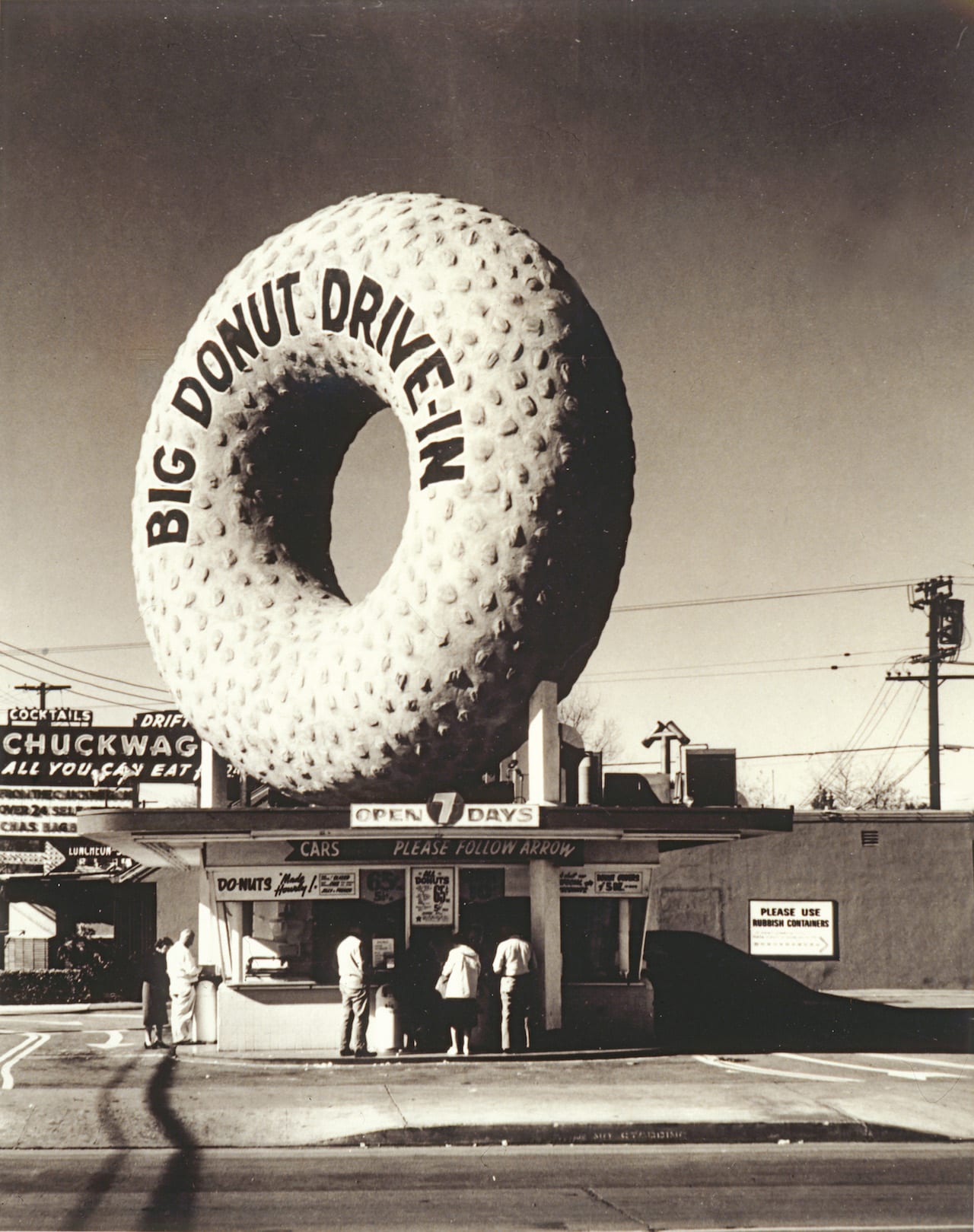
In 1920s America, at the dawn of the automobile age, diners and souvenir shops sought new, creative ways to lure drivers into their roadside establishments. The result was eccentric structures all along America’s Sunbelt, designed to be spotted from miles away. The roster includes owls, dinosaurs, coffee-pots, and even a Mexican giant standing on a roof serving nachos and beer. At the time, the architectural establishment dismissed these structures as “monstrosities”, but they flourished nevertheless, and now they’re even celebrated. 

29 May 2018

Kenji Toma’s Most Beautiful Flowers

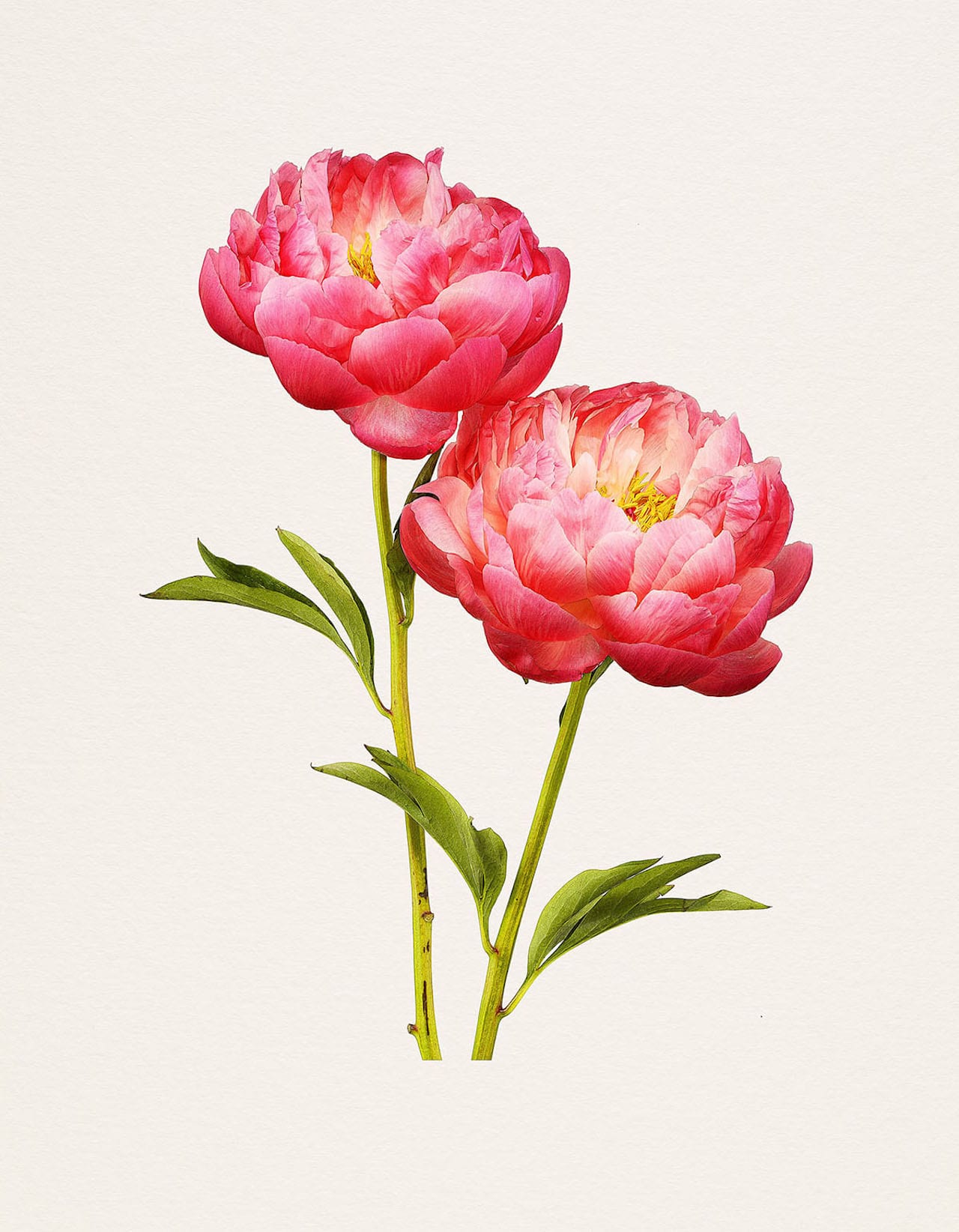
“I am just obsessed by the beauty of botanical drawings,” says Kenji Toma, describing his new book, The Most Beautiful Flowers. It’s a homage to Pierre-Joseph Redouté’s celebrated book of watercolours, Choix des plus belles fleurs [The most beautiful flowers], which was first published in France back in 1827 – long before colour photography was available. “His images were illustrated with the purpose of replicating the botanic subject as close to reality as possible,” says Toma. “I’m more interested in doing the exact opposite with photography.” His series shows hyperreal, unrealistically perfect images of flowers, each shot with the same lens, angle, and lighting, and delicately arranged with pins and armature wire. Going one step further than nature, they put a contemporary spin on the concept of the botanical encyclopaedia.

29 May 2018

Ones to Watch: Soham Gupta

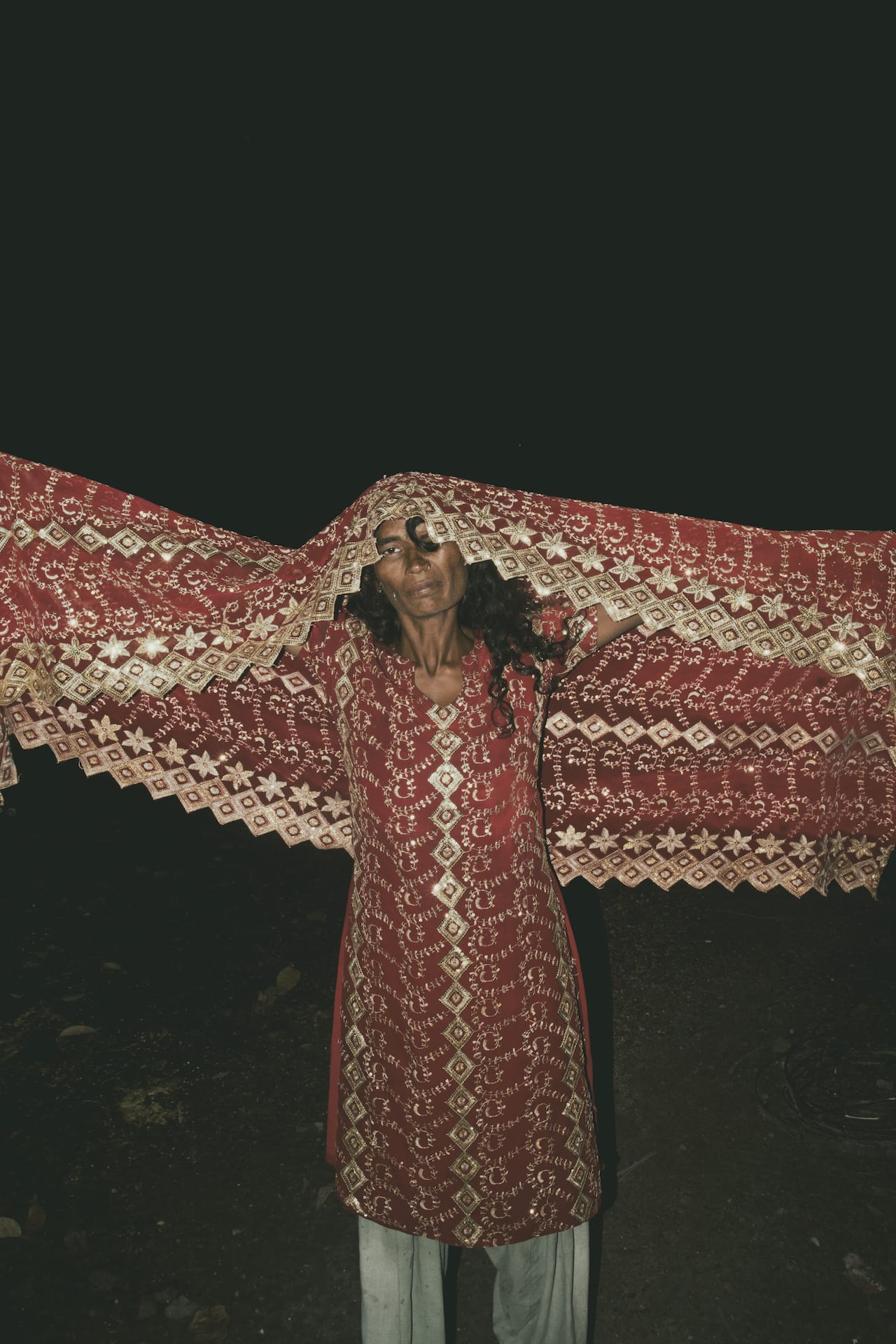
The “fictive hellhole” of Soham Gupta’s Angst makes for challenging viewing. Since 2013, with the night as his backdrop, the 29-year-old has been creating a haunting constellation of portraits of those living on the margins of Calcutta society. Drawing on a troubled youth spent struggling with societal expectations, Angst is a despairing, personal reckoning with a world in which the weakest and most vulnerable are neglected. The project started following a workshop with Antoine d’Agata and Sohrab Hura (a Ones To Watch in 2011) in Cambodia, where Gupta was encouraged to move away from his background in photojournalism and build on his innate interest in loneliness and vulnerability. Setting out on his own nocturnal journey through the streets of his hometown, Gupta began photographing and writing short fictional texts about the people he encountered. After instigating conversation, he would then collaborate with them to create a portrait.

25 May 2018

Breaking Point at the Hamburg Triennial

The 18-year-old Hamburg Triennial will be directed for the second time by Polish curator Krzysztof Candrowicz, who moved to Hamburg four years ago and set about transforming the it, bringing people and institutions together, and determined to make it more relevant to the viewing public. The 2015 edition was, he says, “The first holistic attempt to create the collaborative framework of the festival. Before, the museums were basically highlighting their own exhibitions, but there was no actual curatorial collective structure.” The determinedly political and environmentally-conscious theme this year was inspired by an amalgamation of many factors, he says, including spending a year “away from structured, mechanised and commercial reality”, travelling around Latin America, Nepal and India. “Breaking Point became, for me, a metaphor for rapid and sometimes unexpected transformation on a personal and global level.”

23 May 2018

Chrystel Lebas wins the Kraszna-Krausz award

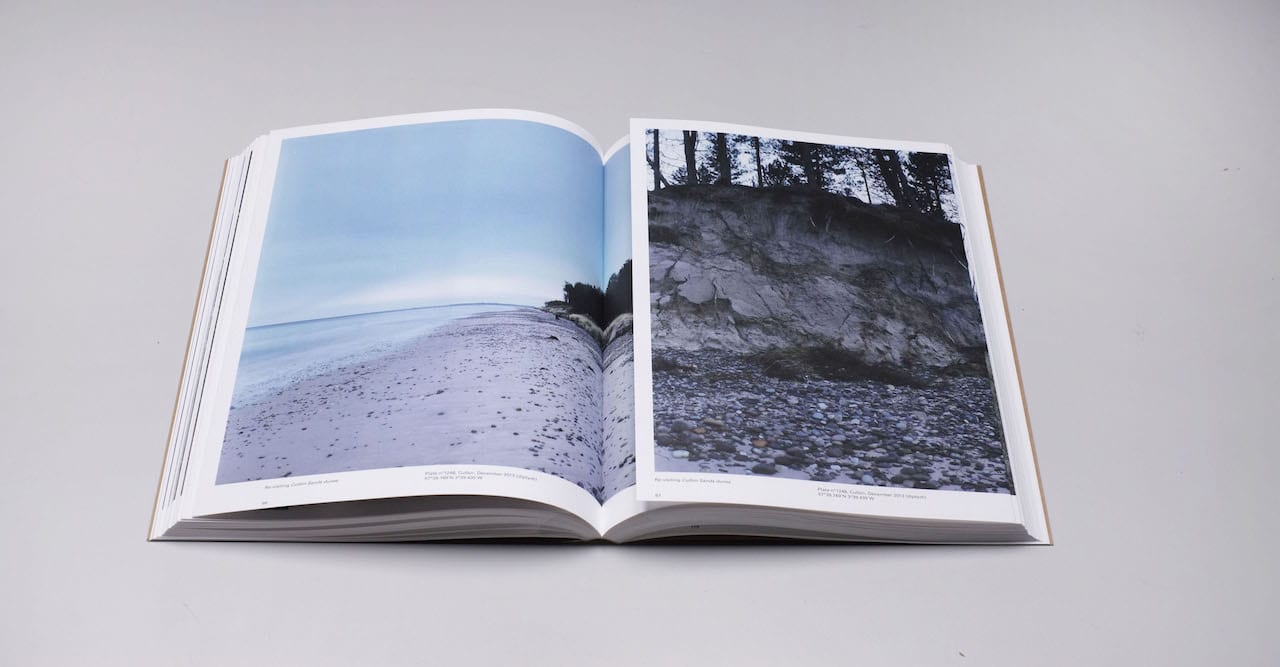
Chrystel Lebas has won the Kraszna-Krausz Foundation Photography Book Award, beating off the two other shortlisted photographers – Stephen Gill and Dayanita Singh. Lebas won the prize for Field Studies: Walking through Landscapes and Archives, which she published with Dutch outfit FW: Books. Field Studies is framed by the work of 20th century botanist Sir Edward James Salisbury, particularly his glass plate negatives from the 1920s, retracing his steps and making new images in the same Scottish landscapes. Gill was shortlisted for Night Procession, which he self-published through his imprint Nobody Books; Singh was shortlisted for her multi-book project Museum Bhavan, which was published by Steidl. 

21 May 2018

Photo London: Hayahisa Tomiyasu’s TTP wins the MACK First Book Award

It’s a prestigious prize, which earns the winner an exhibition at Photo London plus a photobook published by the well-regraded specialist MACK Books. This year it’s gone to Hayahisa Tomiyasu for his book dummy TTP. Shot from the window of his eighth-floor student flat in Leipzig, Germany, TTP shows a park with a ping pong table, shot at various times of day and in various seasons, and showing different protagonists each time. The table is used as a tischtennisplatte (table tennis table, as a sun lounger, as a climbing frame, as a skate obstacle, and as much more, and, states MACK Books “thanks to Tomiyasu’s sustained curiosity, we observe the habits, humour, and idiosyncrasies of human behaviour”. 

17 May 2018

Marcus DeSieno records the No Man’s Land of surveillance cameras worldwide

Hacking into the live feed of a CCTV camera is “shockingly easy” says Marcus DeSieno, whose new book, No Man’s Land, presents a series of landscape photographs captured on surveillance cameras around the world. He got the idea for the project back in 2013, after seeing a couple of park rangers attach a security camera to a tree in the Everglades National Park, Florida. Even though the cameras were ineffective at night, when most trespassers would plan to break in, the wardens said that the purpose of installing them was to instigate fear, and “act as a symbol of power”.

16 May 2018