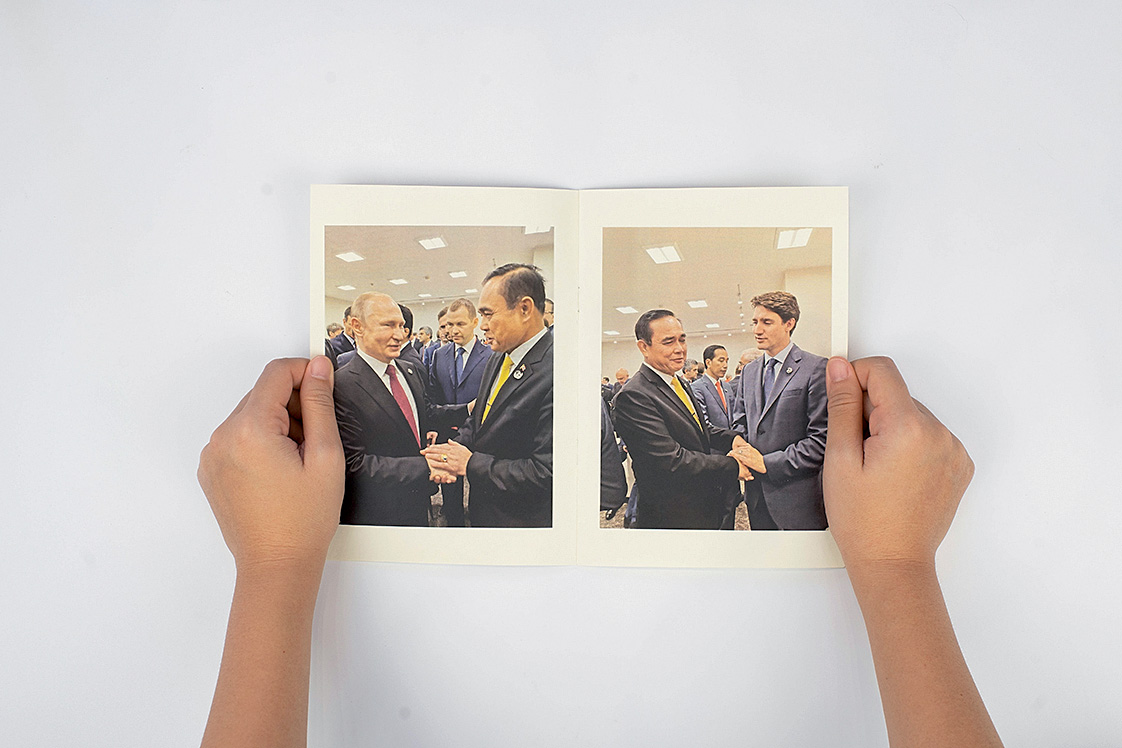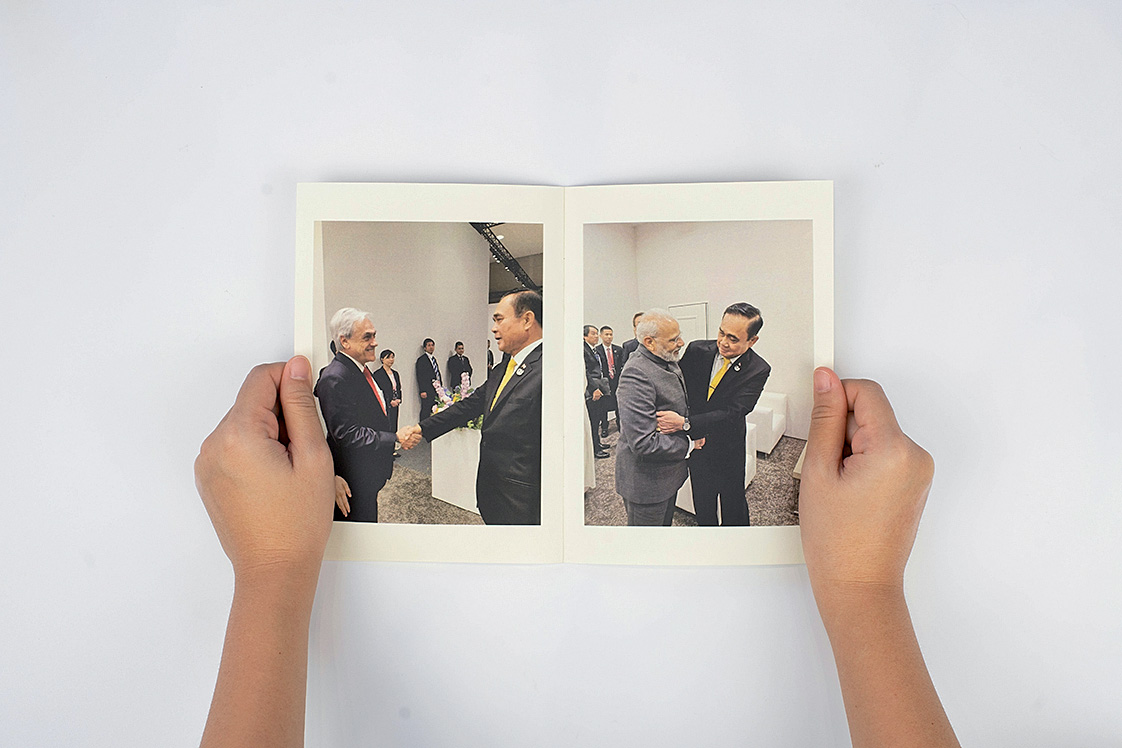

Image © Miti Ruangkritya.
Born in Bangkok in 1981, Miti Ruangkritya works across photography, video, found images and text, and artist books. His work has been exhibited at Foam, Amsterdam, and Three Shadows, Xiamen, while his publications are held by institutions such as Tate (in Martin Parr’s collection) and the Metropolitan Museum of Art, New York. Ruangkritya started his ongoing series of zines, Thai Politics, in 2006, gathering both his own photographs and found images exploring the topic. Here, he explains his practice in his own words
“When I began Thai Politics, I wasn’t trying to create a comprehensive history of politics in Thailand. The title functions more as a category that allows me to explore relationships between images and political circumstances. Looking back now, the project has become a record not only of political change over nearly two decades, but also of the changing ways images are made, shared and understood.
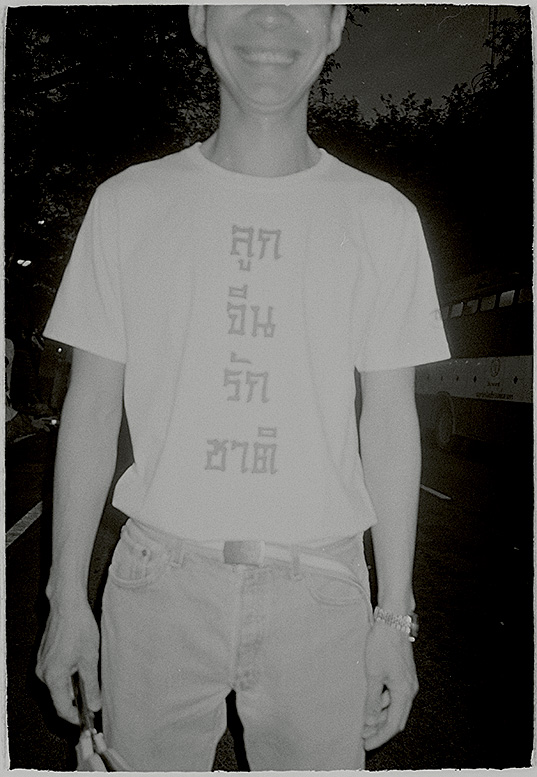
The first work in the series was a group of photographs of T-shirts worn by Yellow Shirt protesters [opposed to Prime Minister Thaksin Shinawatra]. I photographed them on black-and-white film, using a visual language closely associated with documentary photography and reportage. At that time photography still occupied a central role in political representation. Over the following years that relationship began to change. Smartphones, social media and new digital technologies expanded image-making far beyond professional photographers and traditional media, and the project evolved alongside those shifts.
As the series developed, my role changed from making photographs to collecting, editing and recontextualising images that already existed online. Thai Politics No 2, from 2011, was built from Photoshopped images gathered from the Facebook group ‘Thaksin, Where Are You?’, where users placed the exiled former prime minister into fictional and often absurd situations. I wasn’t interested only in the images themselves, but also in the community that had formed around producing, sharing and altering them.
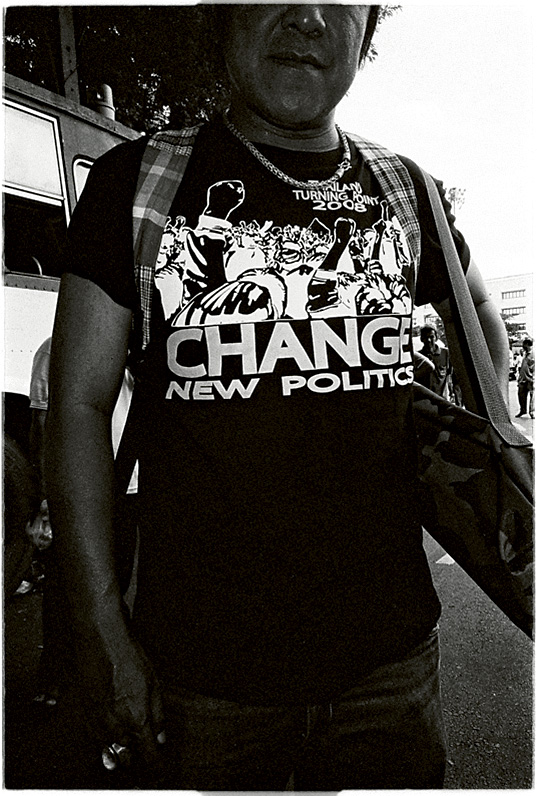
“I don’t see a hierarchy between images made by photographers, artists or individuals. A meme, a selfie or a photograph can all be equally revealing. The authorship is less important to me than what it tells us about a moment”
– Miti Ruangkritya
That interest continued in No 4, which explored the rise of selfie culture through publicly available images made by anti-government protesters. Unlike the earlier T-shirt project, I no longer needed to walk the streets looking for subjects. Social media had become a new public space where political identities were performed, photographed and circulated. I became interested in how people chose to represent themselves there, and what those choices revealed about the political moment.
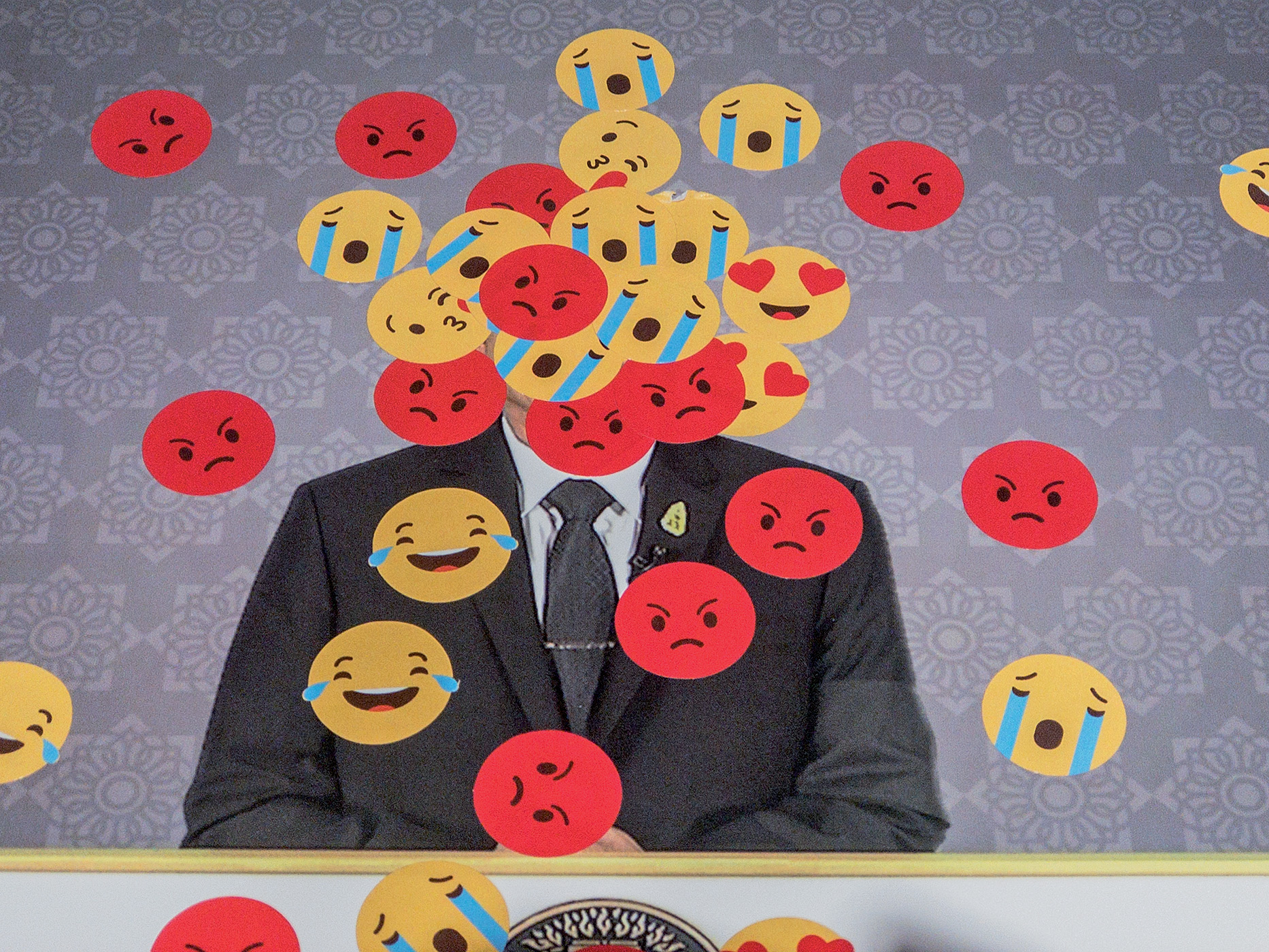
Later works continued to reflect new forms of image production. No 7 was assembled from photographs shared by online contacts documenting compulsory military television broadcasts appearing across Thailand [after the coup d’état in May 2014]. During a period when many people were largely confined to their homes, photographing those broadcasts and sharing them online became a collective way of recording a shared experience. No 8 transformed screenshots of the coup leader’s television appearances into a child-friendly sticker book, looking at how political messages are received, repackaged and circulated among the public.
In No 10 I turned to mass formation photographs taken from military and government websites. These carefully orchestrated group images, where hundreds of participants are arranged into symbolic shapes and emblems, have a history stretching back to Arthur Mole’s ‘living photographs’ during the First World War. This work extended my interest from crowdsourced photography and social media towards institutional image-making and the visual language of the state. Most recently, No 11 consists of AI-generated images shared online after Thaksin returned from exile. Together, the series traces a progression from photographs made with a camera to Photoshopped images, found online material, crowdsourced photography, state-produced imagery and now AI-generated pictures.
I don’t see a hierarchy between images made by photographers, artists or individuals. A meme, a selfie or a photograph can all be equally revealing. The authorship is less important to me than what it tells us about a moment. The internet has made it possible for more people to participate in producing and sharing images, allowing us to see aspects of political life that might otherwise go unnoticed.

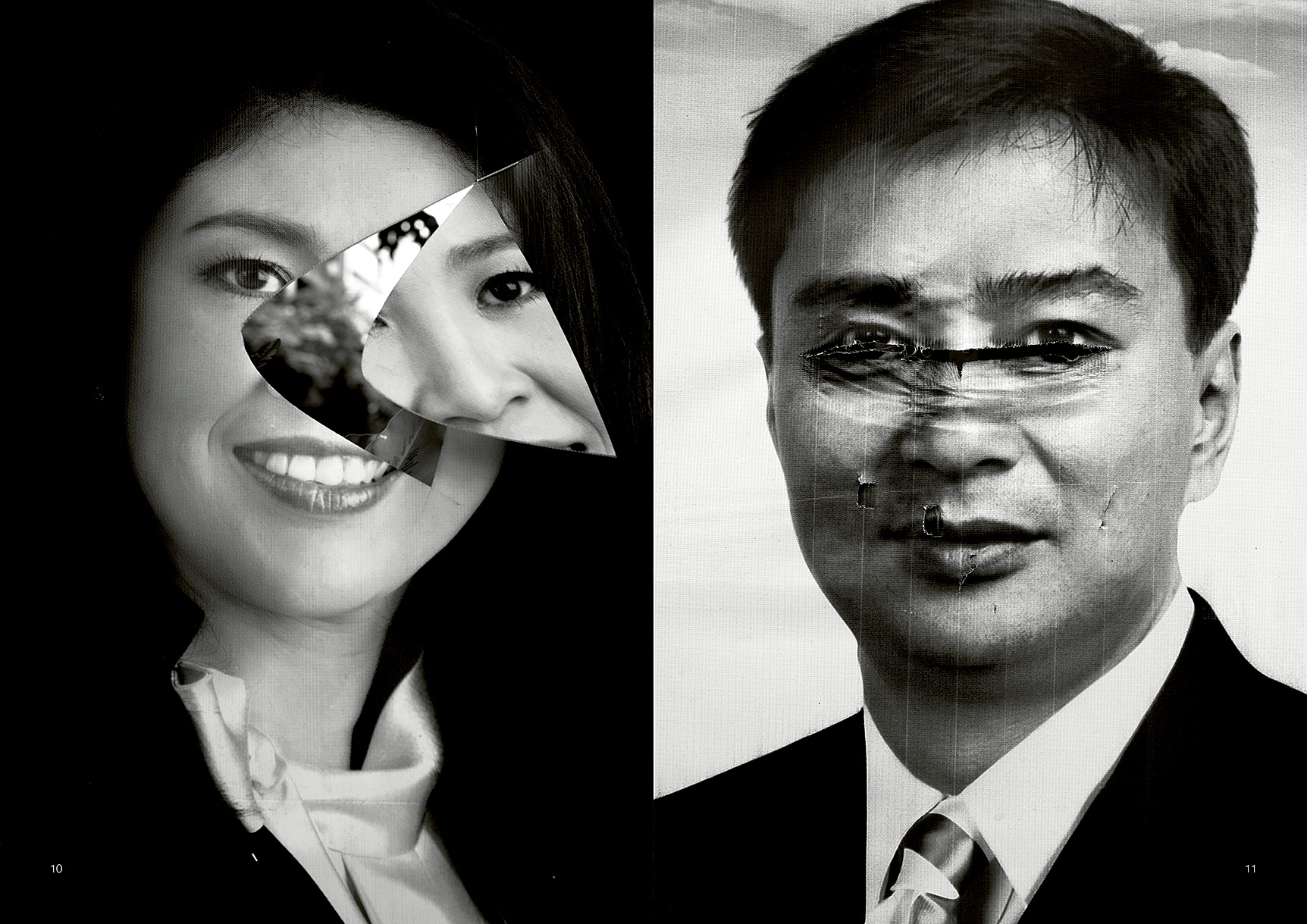
This project has taught me that the meaning of an image is never fixed. As time passes, photographs are often understood differently from the moment in which they were made. I’ve watched the same images acquire new meanings for different viewers over the years. Although my own interests and decisions shape the work, I don’t want to determine how those images should ultimately be interpreted.
Working on the series also made me realise that political history is made up of far more than the major events we usually remember. Alongside protests, elections and coups are countless images produced, shared and circulated by ordinary people. I found myself increasingly drawn to images that seemed peripheral to the main event but still revealed something about how those moments were actually experienced. At the same time, I became aware of how much image-making depends on repetition and reproduction. Although made by different people, many images repeated similar poses, gestures and formats. What first appeared to be individual expression often turned out to be a form of collective participation.
The changing nature of images also influenced how I presented the work. Rather than producing expensive photographic prints, I chose to publish the series as inexpensive books printed at the laser-printing shops commonly used by university students. I wanted them to resemble flyers, pamphlets and other forms of mass communication. The colour shifts and inconsistencies between editions weren’t flaws to be corrected but part of the work itself. These books exist through reproduction, variation and circulation rather than as singular original objects.
We’re living in a moment when images are produced and shared constantly, yet they’re often far more temporary than we assume. Platforms disappear, accounts are deleted and images lose context or simply vanish. I’m interested not only in what images show but in how they function, who produces them, how they circulate and the realities they help create. By bringing these different kinds of images together, Thai Politics tries to preserve forms of image culture that might otherwise disappear while revealing how the ways we produce, share and understand political images continue to evolve.”