
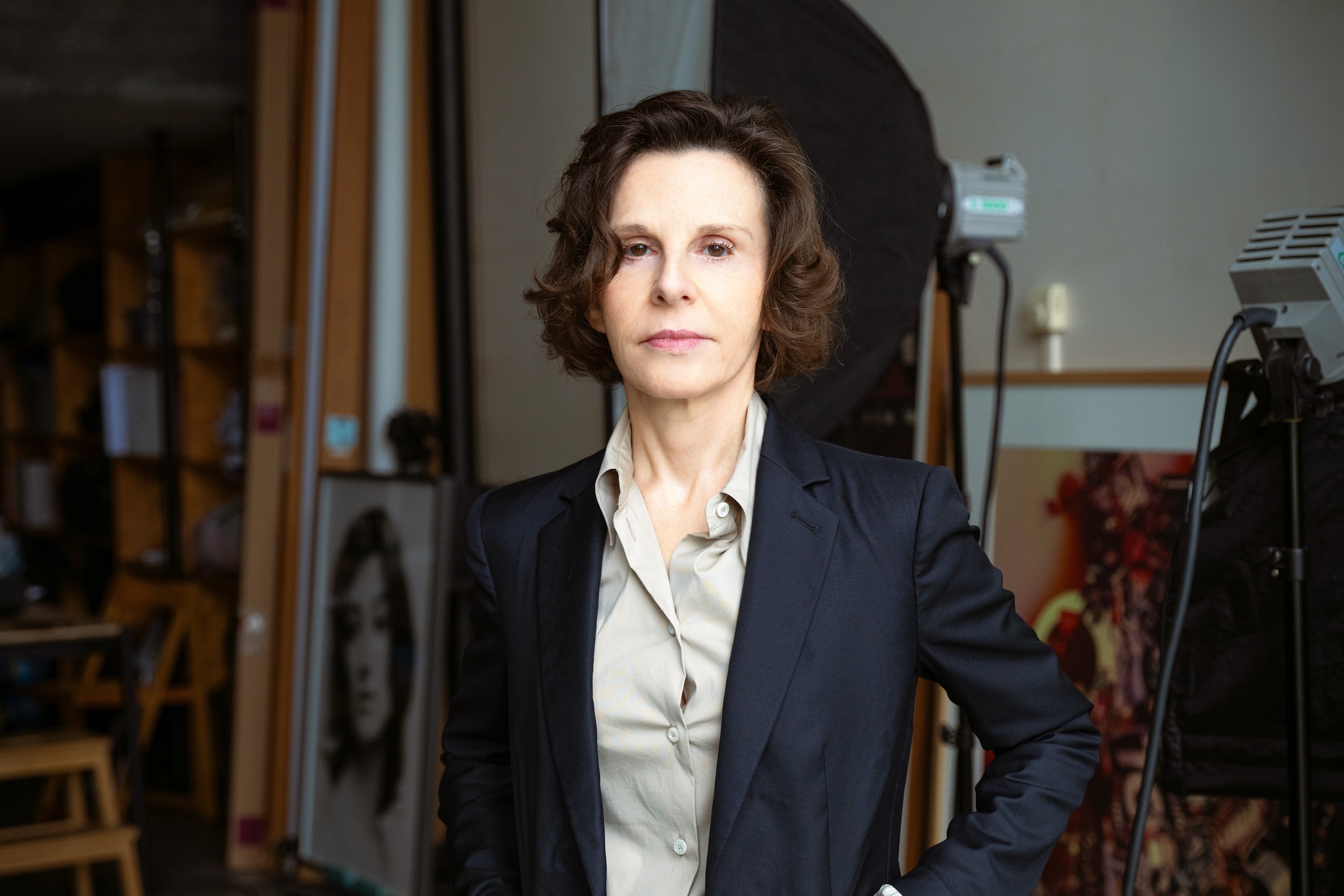
Portrait of Valérie Belin. ©Louise Lenepveu
As her Prix Pictet-winning Still Life series returns to view at Paris Photo, the French artist considers consumer excess, the persistence of plastic and the allure of beauty.
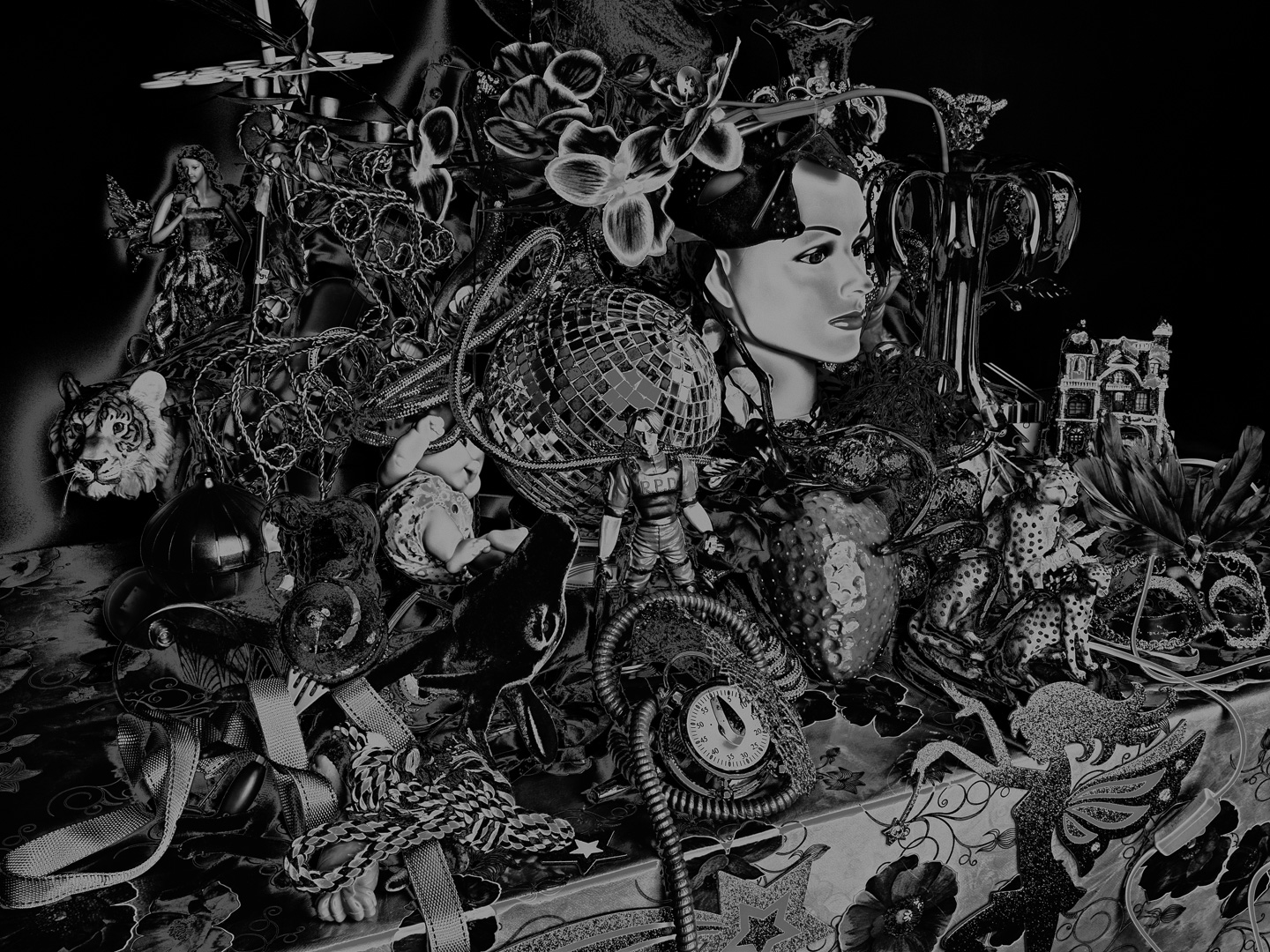
The objects in Valérie Belin’s photographs have little purpose beyond being looked at. Decorative ornaments, artificial pearls, a mask or a mirror become the components of elaborate arrangements whose glossy surfaces and insistent colour suggest a world of extravagant abundance. The photographs borrow the authority of still-life painting, giving cheap consumer goods the appearance of treasures. Their troubling quality emerges when we consider how little these things matter to us, and how long they might remain.
“They are made of plastic, a material that has something paradoxical about it,” Belin tells BJP. “It is artificial, yet almost indestructible. It gives these insignificant objects a kind of grotesque immortality.”
Made in 2014, Still Life won the sixth Prix Pictet the following year, for the cycle themed ‘Disorder’. This month, it will be presented alongside Alfredo Jaar’s The End at Paris Photo, as Pictet Group begins its official partnership with the fair. The two series bring different forms of environmental concern into dialogue: Jaar’s photographs of Utah’s diminishing Great Salt Lake and Belin’s studio constructions of manufactured excess.
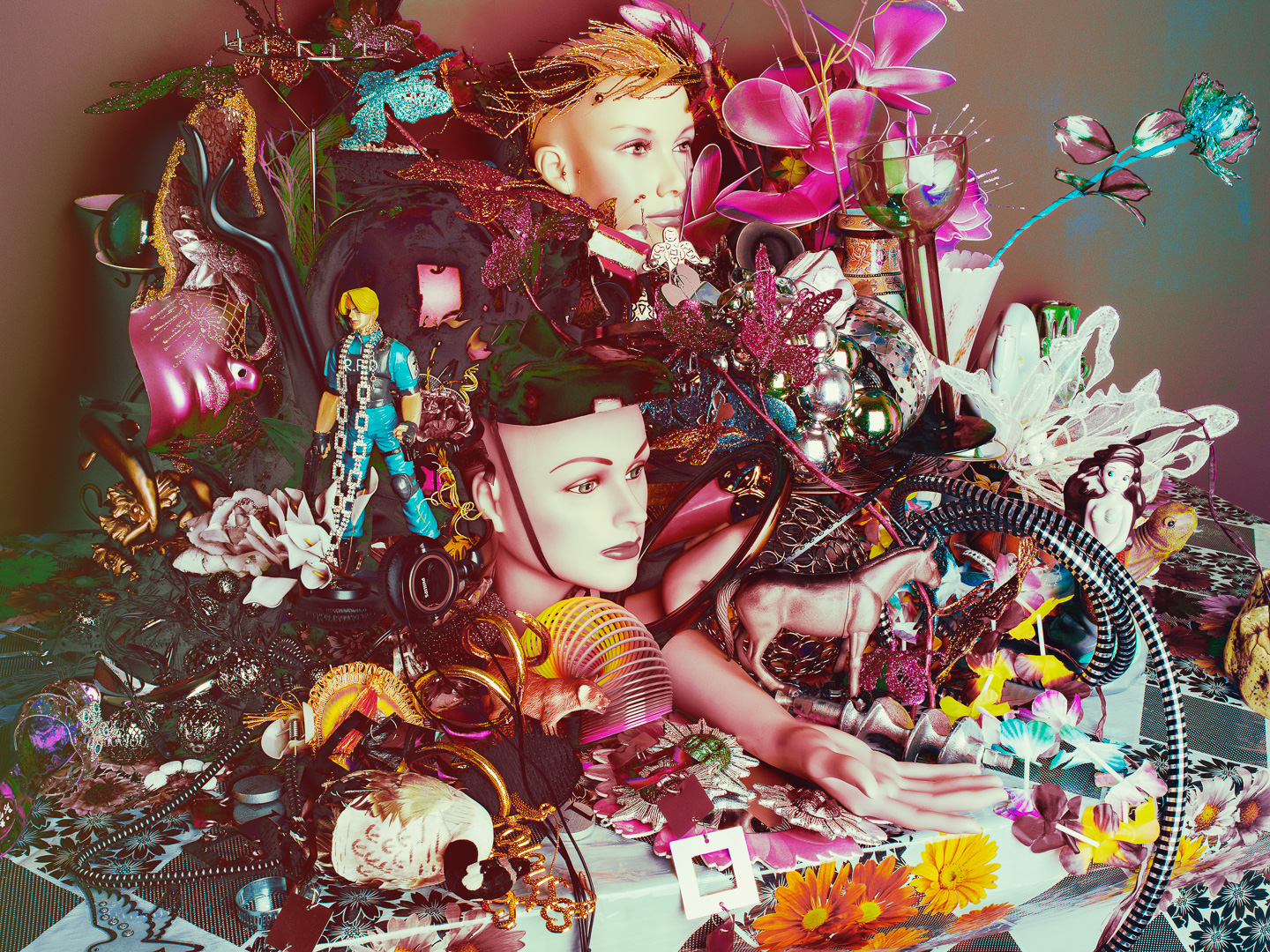
Belin’s pictures draw on the vanitas, a tradition of still-life painting in which possessions, perishable foods and reminders of death invite reflection on the brevity of life. Her contemporary version disturbs that relationship between the human lifespan and the things that fill it.
“In traditional vanitas, objects remind us of the transience of life. Here, they seem destined to survive us,” she says. “This is an immortality that is slowly destroying the world in which we live.”
The series examines consumer culture through the visual appeal of its objects. Colour, gloss and the relationships between objects draw us into compositions whose richness seems out of proportion to their contents. Belin wanted to create images that were seductive, artificial and disturbing, allowing their implications to appear through the experience of looking.
“In my work, the human figure can become an object, just as an object can acquire a kind of presence”
Valérie Belin
“The meaning emerges from the tension between the beauty of the composition and what it represents,” she explains.
That tension connects Still Life with a wider practice in which appearances repeatedly unsettle our understanding of the subject. The Paris-based artist’s photographs of people and mannequins have long questioned the distinction between a living presence and its manufactured likeness. Across portraits and objects, the surface becomes a place where we struggle to establish what, or who, we are encountering.
“In my work, the human figure can become an object, just as an object can acquire a kind of presence,” she says.
In Mannequins (2003), the first impression of a living model gives way to the recognition of a shop-window dummy. Details of texture and construction undo the illusion. This movement between recognition and doubt is central to her work: the camera records a surface with great precision, while making our understanding of what lies behind it less secure.
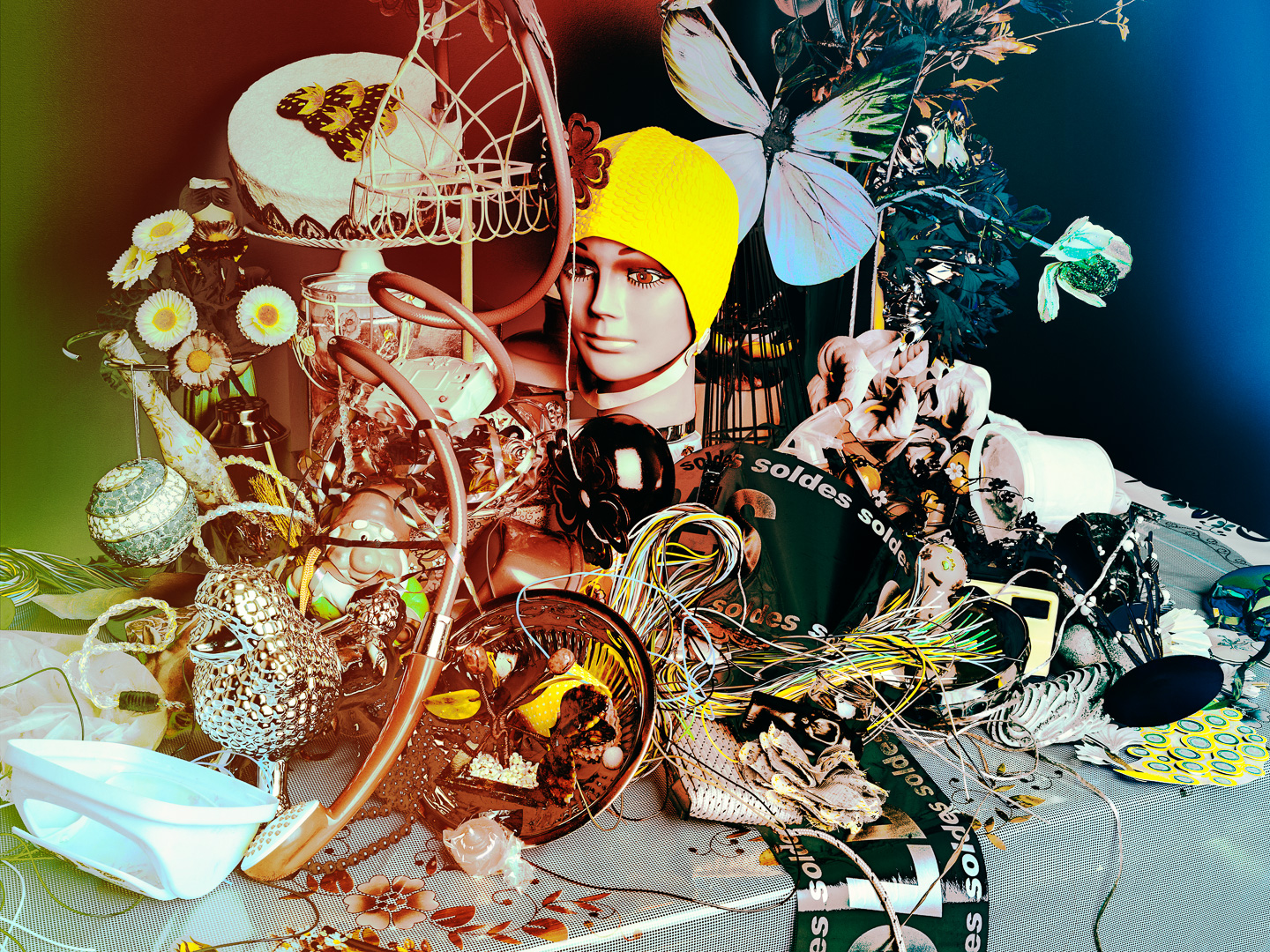
Within Still Life, mannequin heads, arms and hands become elements in the arrangements, placed almost on the same terms as everything surrounding them. Their fragmented bodies imply an unsettling consequence of accumulation: the person disappears into the possessions.
“I wanted to suggest a human presence that has been absorbed, suffocated or buried beneath this accumulation,” Belin explains. “The distinction between the human and the artificial becomes uncertain.”
Yet the apparent chaos is meticulously organised. Belin selects and arranges her objects according to relationships of form, colour, material and light. She describes the contradiction as an ordered image evoking a world that has lost its balance, with the compositions suggesting an unfamiliar galaxy or a new form of life. Disorder becomes something capable of generating its own logic.
Winning the Prix Pictet expanded the audience for these questions, placing the series within a wider discussion about sustainability. Founded in 2008, the prize recognises photography engaging with environmental and social concerns. Belin values the way this context allows different aspects of her work to be considered together: its formal construction, its relationship with art history and its representation of consumer society.
“These different readings are not contradictory; they are all part of the work,” she says.
More than a decade later, she sees continuity in the pictures, even as their context has shifted. Plastic’s persistence and the consequences of mass consumption have become harder to ignore. “What changes is the context in which we look at them.”
The uncertainty running through her photographs also acquires a different resonance amid the rise of generative AI. Belin has always understood photography as transformative: lighting, framing and composition make something new from what the camera records. The encounter with an actual subject nevertheless remains essential to her process.
“I am interested in its materiality, its surface and the way light acts upon it,” she says. “The ambiguity of the image begins with something real.”
Belin makes no claim that a photograph must explain a problem or supply its solution. Its usefulness may lie in creating an encounter whose implications take time to become clear. Drawn towards these arrangements before fully understanding them, we have the opportunity to examine our own attraction.
“Perhaps the images invite us to look again at the objects that surround us, and to question the place they occupy in our lives.”
Valérie Belin’s Still Life and Alfredo Jaar’s The End will be presented by Prix Pictet on the Promenoir at Paris Photo, Grand Palais, 12–15 November 2026, with a preview on 11 November.