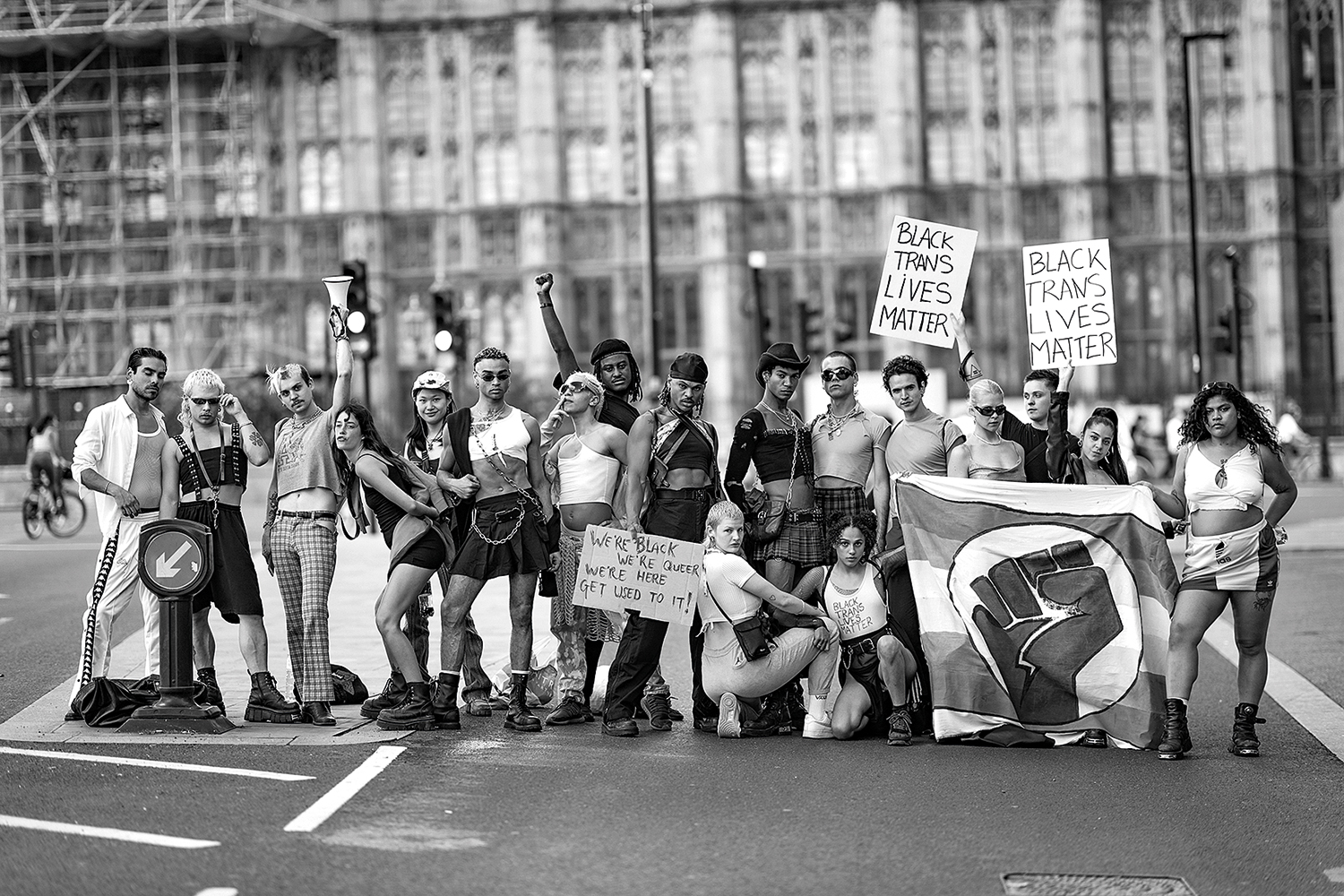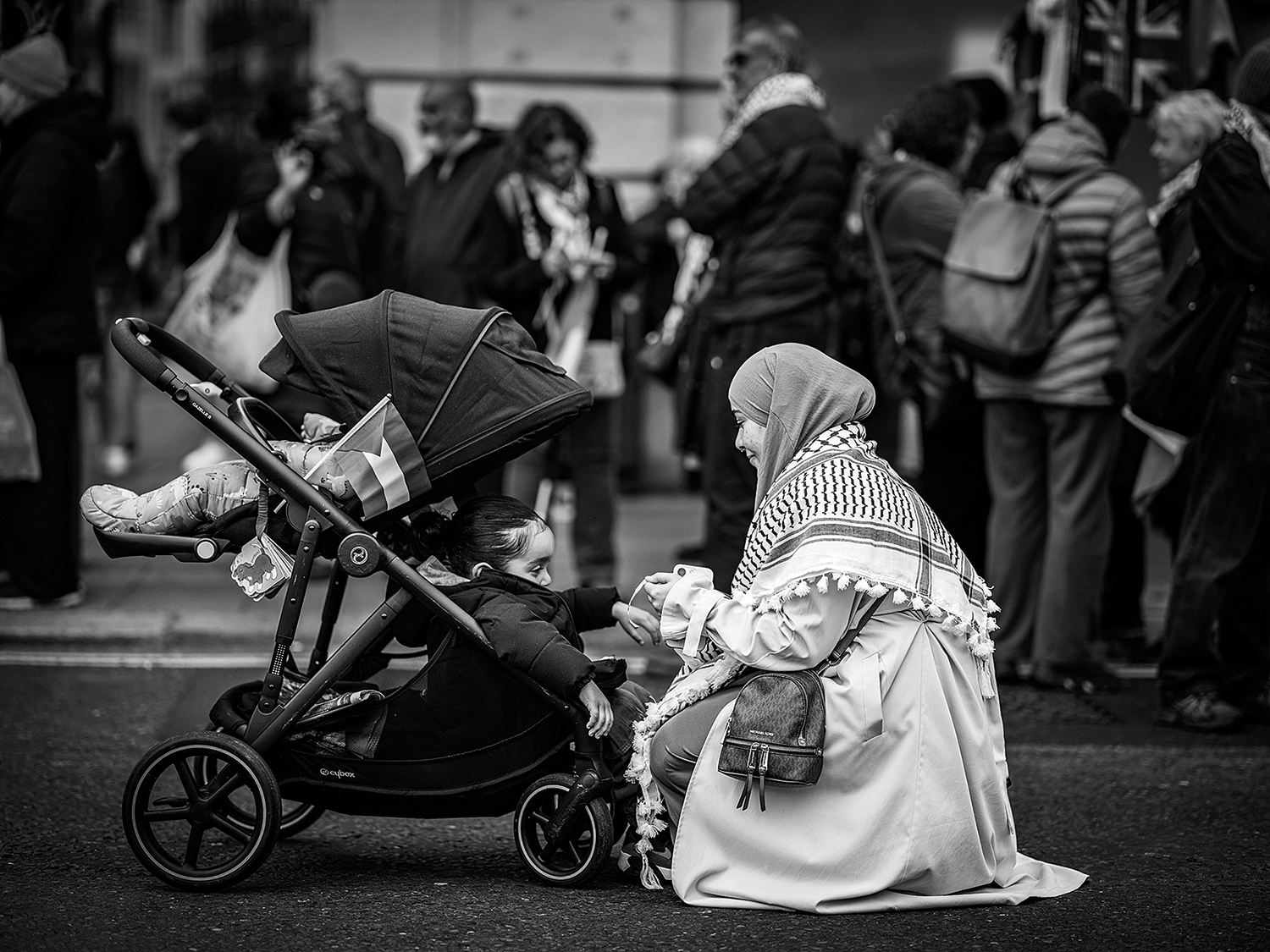


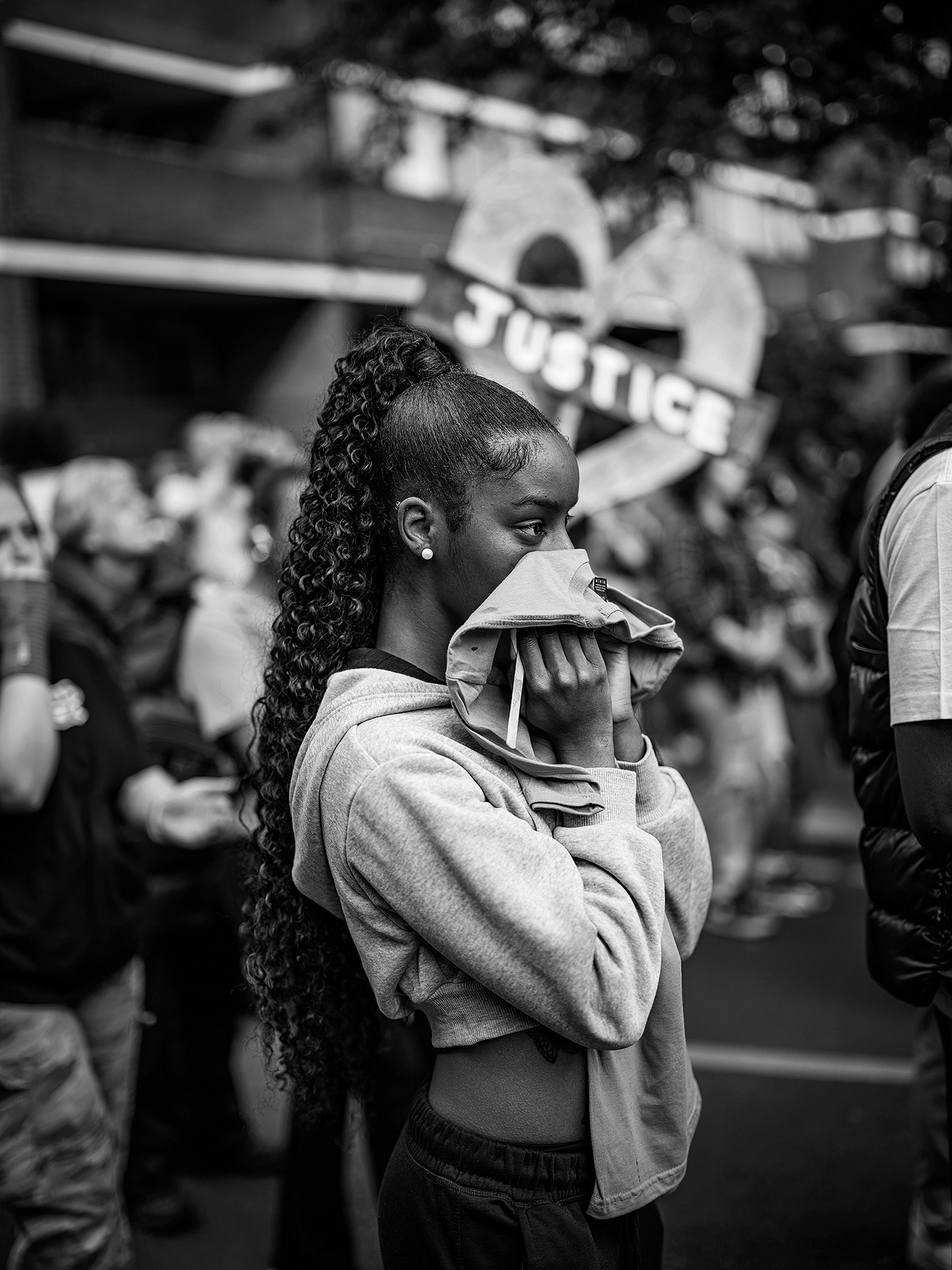
Still Waiting for Justice, London, 14 June 2024 © Misan Harriman.
Eminent photographer, global activist and cultural thinker, Misan Harriman refuses “to become politically mute in exchange for acceptance”. He speaks to Isaac Huxtable
Misan Harriman has a captive audience. Five years ago the London-based portrait photographer was an extremely established practitioner, top of his game, magazine covers across the newsstands, the man selected for Meghan and Harry Sussex’s baby announcement (and baby reveal). A proud and politically active Black man, Harriman was a shining exemplar in shifting editorial times. Black Lives Matter had shaken the fashion/editorial/publication worlds, and essential, overdue attention was being given to Black artists, celebrities, thinkers, politicians. Often they were photographed by Harriman. He has worked with Steve McQueen, Lewis Hamilton, Diane Abbott, Naomi Campbell and Marcus Rashford, to name but a few. He is also the first Black photographer in the century-long history of British Vogue to shoot the September issue cover. In July 2021, he became chair of the Southbank Centre, London.
Harriman built a platform and audience throughout his rise, attracting people who appreciate the twin flames of artistic production and political activism. He is a star photographer. But his Blackness, his politics, his belief in human value, and the actual point of all this representation is rooted in Black political thought. Sometimes the sumptuous photograph and the vocal photographer do not mix with ease, as was the case for Gordon Parks, one of his inspirations. Harriman is a man of principles, and principles have a cost. He knows why he makes these photographs, and he refuses to be silenced. A week after this interview, amid calls for Harriman to be removed from his position as chair of the Southbank Centre due to social media posts, the photographer announced he will not seek another term. He will step down this autumn.
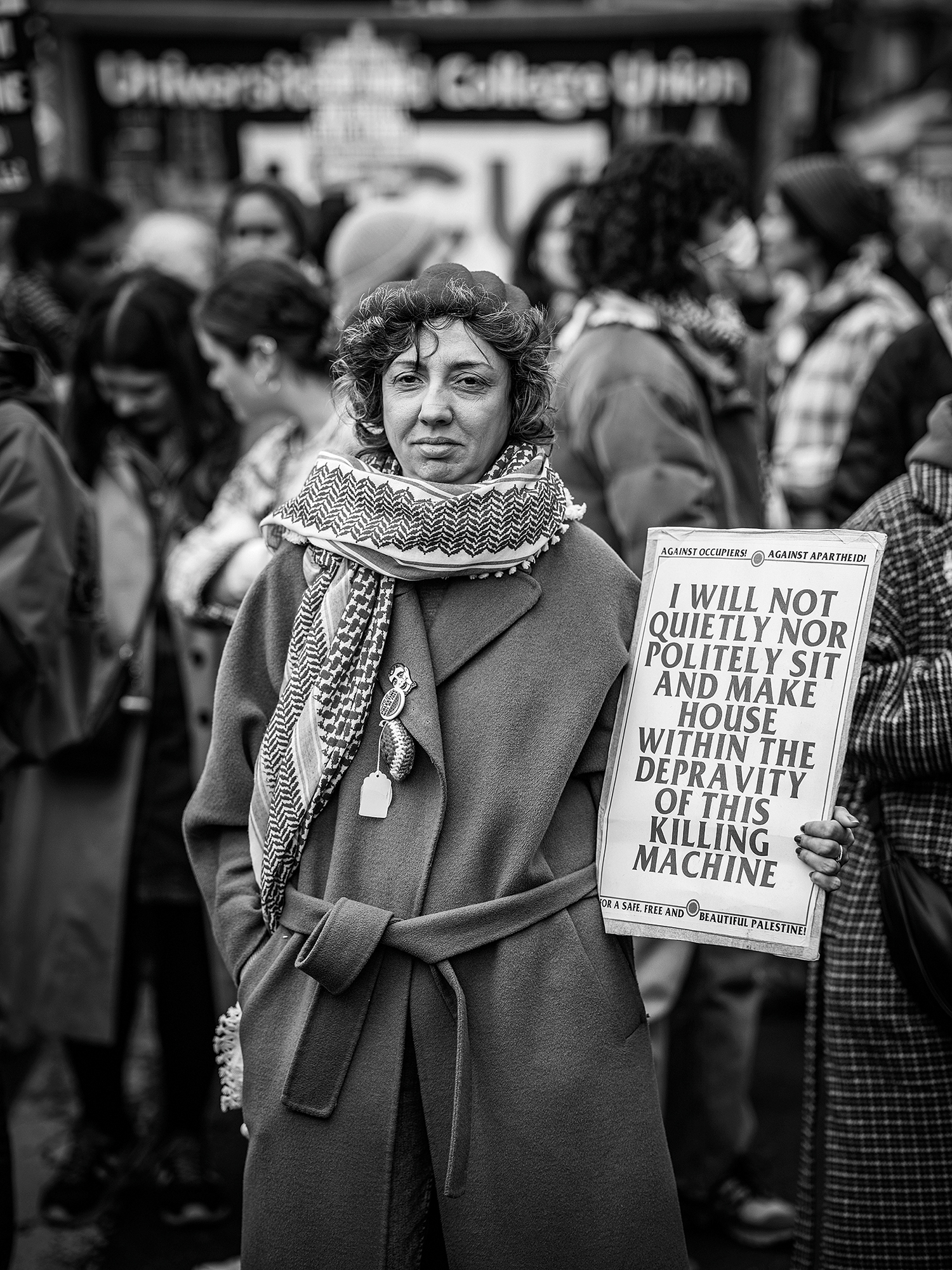
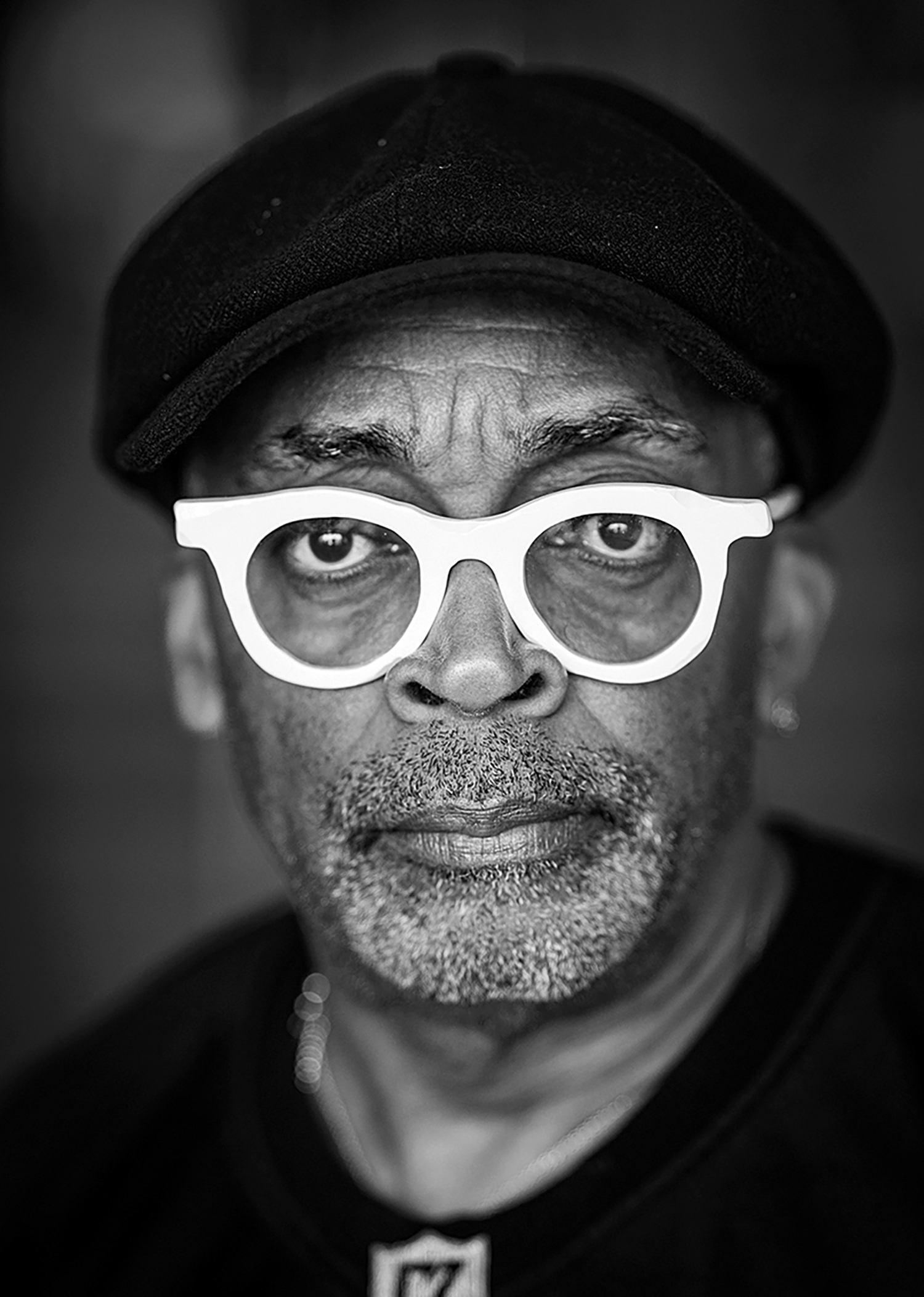
“It’s my job to represent the human condition. And also, for me as a human being, I do not believe that there can ever be a child of a lesser God” – Misan Harriman
Isaac Huxtable: At this year’s Photo London, you presented The Purpose of Light, an all-encompassing display of portraits taken at protests, heavily featuring activism against the genocide in Gaza and the British government’s role in the ongoing conflict, but also Black Lives Matter, trans rights protests and environmental activism. Photo London is a fair, where people walk around mingling, looking at pictures for sale. Your booth stopped many in their tracks, and created this major interruption to the pleasant, glittery cycles of such fairs. It was hotly discussed and impossible to avoid. Can you tell me more about that?
Misan Harriman: I wish I could take the credit for this one, but it’s all in the brilliance of my gallerist, Aki Abiola, and his Hope 93 gallery. I had offers to include some of the prints in maybe a group show, but we realised what we could do with a proper space at Photo London. Aki said, we don’t always get this captive audience, so let’s remind them what’s going on in a world that is, frankly, on fire, right? We have a chance to make them remember the trans community, climate action, women’s rights, the queer community, Black Lives, Gaza, Iran, Afghanistan, you know, all of it – Grenfell, for God’s sake, Grenfell – and see the intersectionality of the work, shot over seven years in three continents.
It also points to the legacy of Civil Rights photography, the importance of looking at the documentation of protest, or a world on fire. When people think about Cecil Beaton, for example, they might think about the glamour, the royals. But he also shot the Blitz. It’s about how we choose where we point our lens. But when the world is in the place it is now, I think we have to bear witness in the way that I’m trying to force people to do. For work like this, it’s really, really important for it to live in the art world in a way that, as you’ve said, it often doesn’t.
IH: What was the reception?
MH: It was an extremely busy booth the entire fair. The work wasn’t overwhelming, but it was immersive. It’s an overtly political body of work at a very divisive time. And we didn’t know whether there would be, you know, complaints, letters, calls to the people that run [Photo London] to shut it down. But we did know the art has to do the work. As an artist you need to let the work be in the places that it can have the most impact. And then, it was extraordinary. There was a lot of emotion and loads of feedback saying that it was their favourite booth, a reminder of so much that’s going on.
I’ll be honest with you, for a lot of Black and Brown people, to see themselves represented in this way, in this place… The fine art world doesn’t always make people of colour feel necessarily welcomed. And to have a Black gallerist with a Black artist, with many Black and Brown and Muslim people on the walls, was cathartic and deeply healing for a lot of people. A lot of people were crying. I don’t know if people cry in art fairs.
IH: You mention Cecil Beaton, and I know Gordon Parks is a very important photographer for you. I’m struck that they’re both photographers who were able to balance glamour and beauty with perhaps more political, polemic happenings, from the Blitz to the Civil Rights Movement. Parks sits between genres – he’s now seen in a gallery context, but he was working for magazines, while doing something very documentary, something for the advancement of Black Americans.
MH: Yes, Parks is my idol. It’s exactly that ability to carry your political voice into your practice, and not compromise. The active choice to turn your lens on to the ills of this wounded planet. It would have been easy for me just to do big shows of my celebrity portrait portfolio – Harrison Ford, Kate Winslet, Jay-Z. But look outside, people! All of our rights are under attack. To look at my archive and decide to just show my celebrity work? That’s just not an option. That’s not how I’ve been raised, it’s not how I feel. I’m a child of the Empire. I understand what it means historically for art to have a voice. Nina Simone’s quote always comes back to me saying, ‘An artist’s duty is to reflect the times that we’re living in. Everything else is entertainment’. We have enough entertainment.
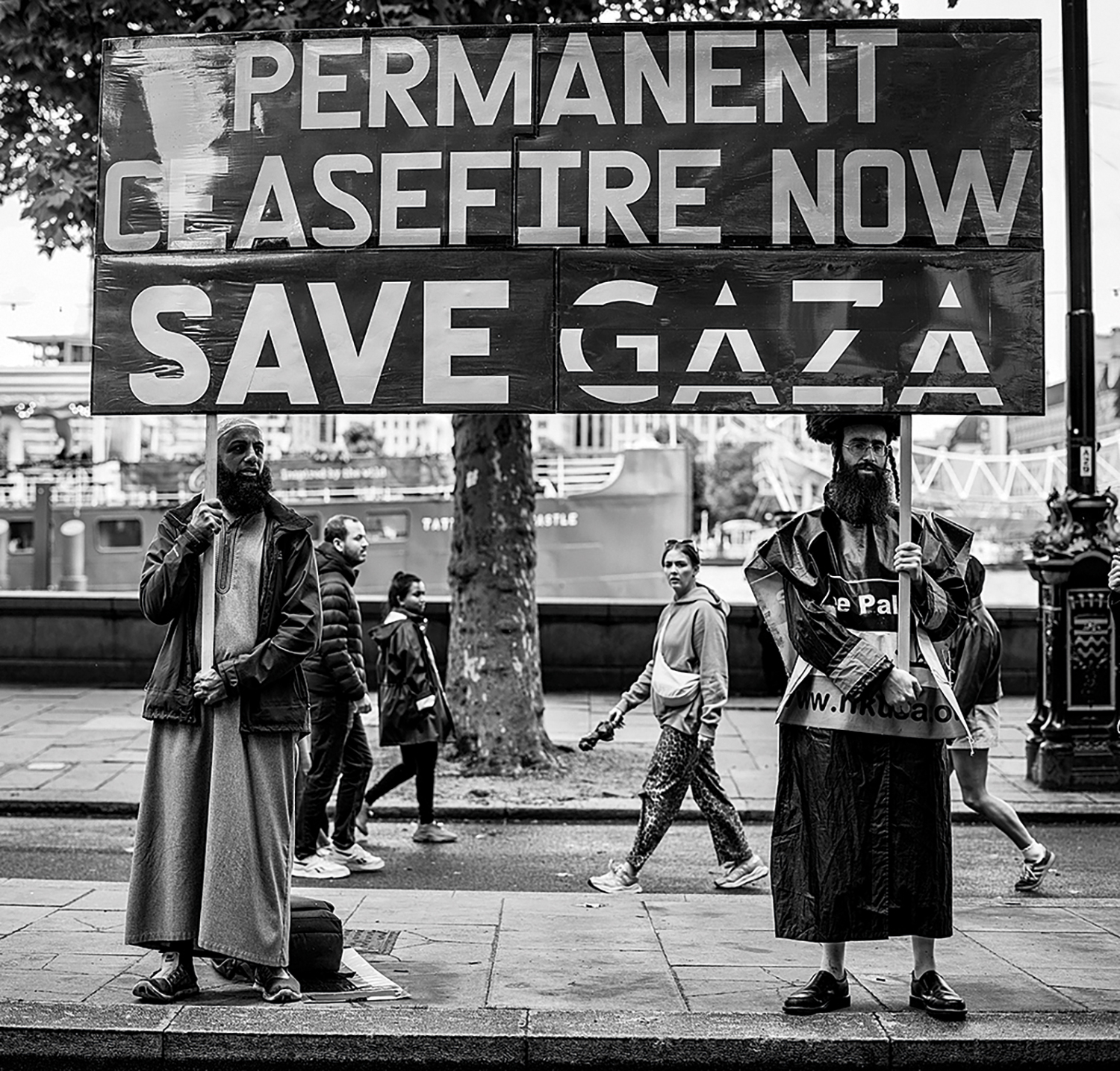
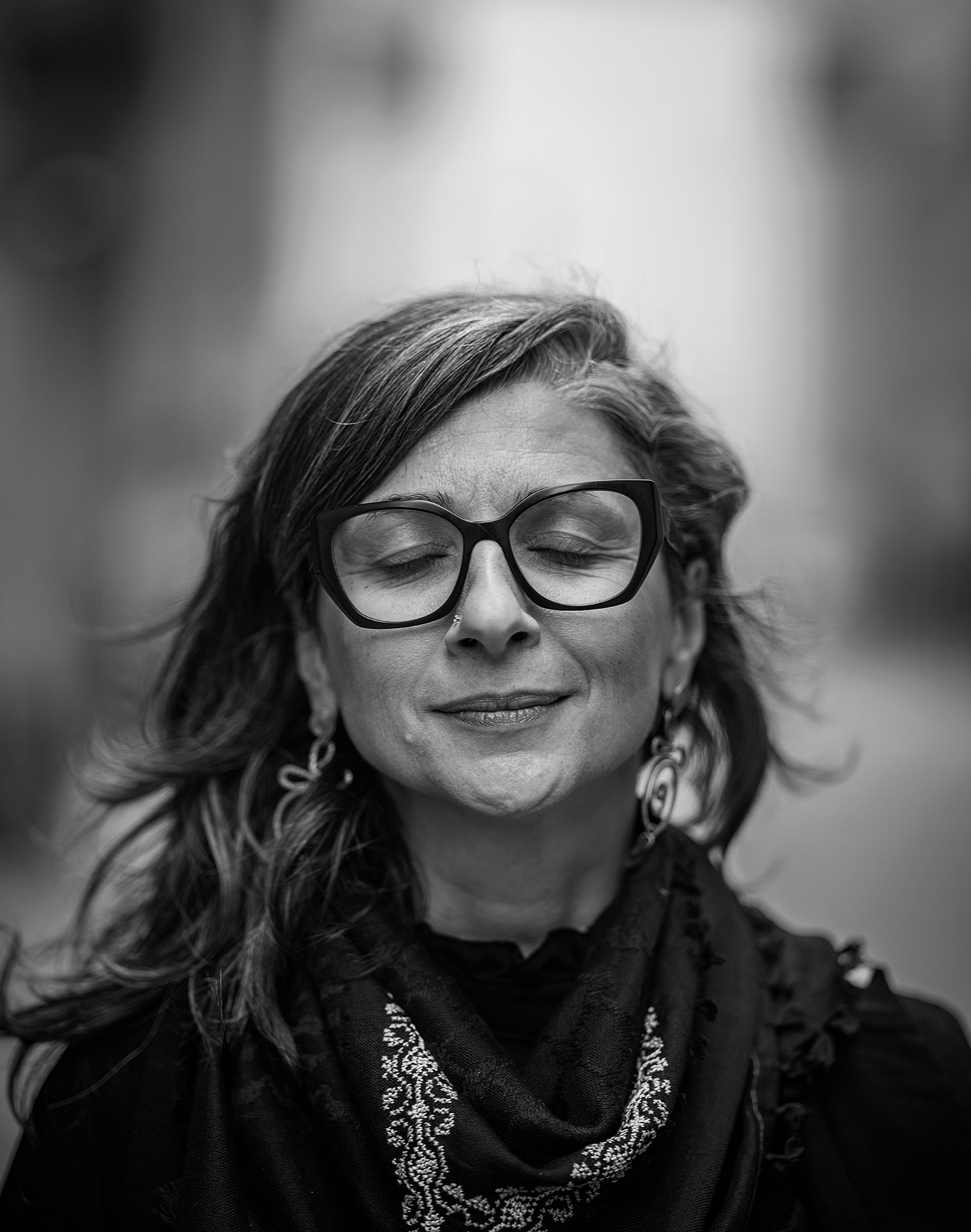
IH: With these intentions, your platforms, your images and your voice, you also have to balance being an institutional stakeholder, a public figure. You also have to work. How do you manage all that on a global stage?
MH: I think of Omar El Akkad’s book, which changed my life in many ways, One Day, Everyone Will Have Always Been Against This. It really helped centre myself as the world became even more divisive, and I needed to remember what my practice must be. It’s my job to represent the human condition. And also, for me as a human being, I do not believe that there can ever be a child of a lesser God. I know that if I walked out of my front door and there was a child bleeding on the floor, I’m not going to ask that child who their God is. I’m not going to check what colour skin they have. I’m going to help that child. So I think it’s a combination of many things.
I can’t call up the world leaders, but my photographs can cross borders instantly. Someone said to me, forget photography, they can’t think of any artists alive today that reach as many people as I do online. So it’s well past me just being a photographer that people talk about. My voice has become part of the practice. When people see a 48-year-old Black man crying, weeping over whatever horror I’ve seen that day, I think is why there’s real trust in my voice. I’m not this generation of influencer that’s trying to tell everyone that I can walk on water, that I have all the answers. But if I hear of a child that’s been shot by a sniper, that’s going to break me.
I am a father myself, above and beyond an artist. How can we allow that to be normalised, how has apathy taken dominion over us to a point where you can see that on your phone and then you worry about whether you’re getting Glastonbury tickets this summer? I have a voice, and I have a camera.
The Voice newspaper did an article and they said, as chair of the board of Southbank, I represent something increasingly rare in British cultural life – a prominent Black cultural figure occupying institutional space while refusing to become politically mute in exchange for acceptance. As an artist, my voice is my voice. I can make it very clear the platform I am speaking on behalf of. It’s really clear to anyone that follows me that when you see me crying over dead children in Congo or Gaza, that’s me, Misan Harriman, responding to the ills of the world. And I think that’s something that most people would accept as very normal.
IH: Thinking about how this political belief is embedded into your whole practice, I’m curious to hear your approach to the specificity of a Black photographer shooting Black subjects.
MH: It’s interesting you ask this because I did a post a few weeks ago of Black men and women portraits I’ve taken. It was in response to people saying there’s something about the way I shoot Black people. In Nigeria we have a saying, that we see ourselves. I don’t know if there is a training manual for trust, and ultimately I think it’s that. I’ve shot Steve McQueen many times and we have an unspoken language. He arrives on set, we kick it, we talk, we know what it is. And it’ll be a look, and he’s like, have you got it? And I’ll say, yeah I got it…
I don’t know how else to be. It’s not technical. I think the conversation before can sometimes make the image. An understanding of the shared lived experience can make the subject give more than they would with another person who doesn’t really understand what life is like for them. And then lighting. I use natural light. I understand how, the massive spectrum of natural light and how it falls on Black skin. And that’s just built in. I just know how to do that. So it’s a combination of understanding light and how melanin reacts to light within the subjects, and then the unspoken, almost spiritual trust.