

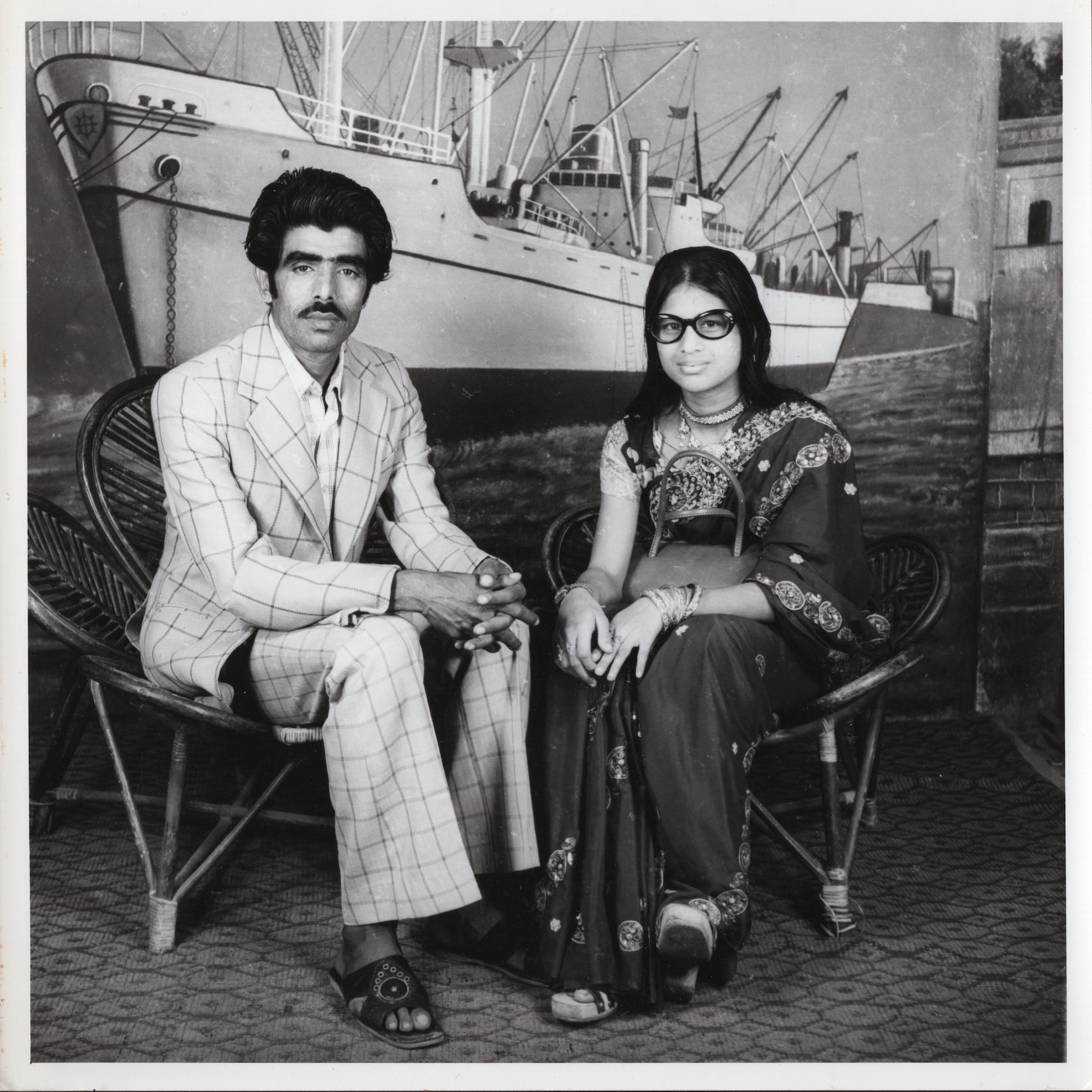
Abdus Suhan and his partner. From Londoni Memoirs © Seema Khalique
Realising that the experiences of a whole generation of British-Bangladeshis will soon be lost – and motivated by celebrating the community in the midst of a rising far right – Seema Khalique built a multi-faceted piece of history now on show in London’s Bethnal Green
Seema Khalique’s father Abdul arrived in the UK from Bangladesh in 1956; her mother, Gulnehar, arrived in 1973, after the Bangladesh Liberation War. Abdul Khalique was in the restaurant business, and the family moved to Croydon in the 1970s after buying a restaurant there; later they moved to Eltham, once again following work. It’s a story that speaks of graft and determination, the sheer grit required to start a new life in a new country. But there are also gaps in the narrative. As Khalique’s father grew older, she realised she knew little about his early London years, or what it had been like to arrive in the UK. She realised that he and a whole generation of British Bangladeshis would soon pass away, and with them these experiences would be lost.
And so connecting with 12 individuals – many linked to her father – Khalique spent hours with each of them from 2021 on, listening to their stories, collaborating on their portraits, and looking through their archives. The result is Londoni Memoirs, a still on-going project supported by the National Lottery Heritage Fund, which gathers oral history, archive photos, ephemera, and new images to document Bangaldeshis who settled in Britain in the 1950s-70s. Some, like Khalique, are based in London, others are further afield, landing by luck and the work that was available when they migrated.
“Generally all the participants moved where there was work, so if that meant going to Birmingham, because of the factory trade there, they were in Birmingham,” says Khalique. “There was a massive community in the East End because of the factories there, and that created opportunities for women working from home – they could do sewing and tailoring, and be with the kids. Everyone had a sewing machine. Most people worked six days a week. One of the participants lived in St Albans and his general pattern, when he worked, was to work from four in the morning until four in the afternoon at a factory, then the evening shift at a restaurant.”
By working at this level people managed to set themselves up, says Khalique; many were also sending money to Bangladesh, particularly during the war [in 1971]. “Many people spoke about feeling that they had helped Bangladesh survive,” she says. “Family members didn’t starve because they were able to provide.”
Londoni Memoirs collects some heartbreaking stories, tales of people fleeing burning villages – the only ones to escape – and returning years later, not knowing who they would find alive. Few of the participants had spoken publicly about these experiences before, says Khalique, preferring to move on “though they still carry the trauma”. But Londoni Memoirs also records happier times, Khalique determined not to flatten a range of experiences into a monotone, or many testimonies into a single lumpen mass.
“One participant came from a very affluent family, he came to the UK to study law and his father basically funded him,” she points out. “He lived on the same road as The Beatles, and had these crazy stories about parties where the police would chase everyone away. Others spoke about squatting in London, as a solution to the housing crisis. It was interesting to hear about the parallel lives that were lived at that time, and to hear about not just the struggles that we associate with migration, but the enjoyment that comes from it. Experiencing cold weather, snowball fights, all of it.”
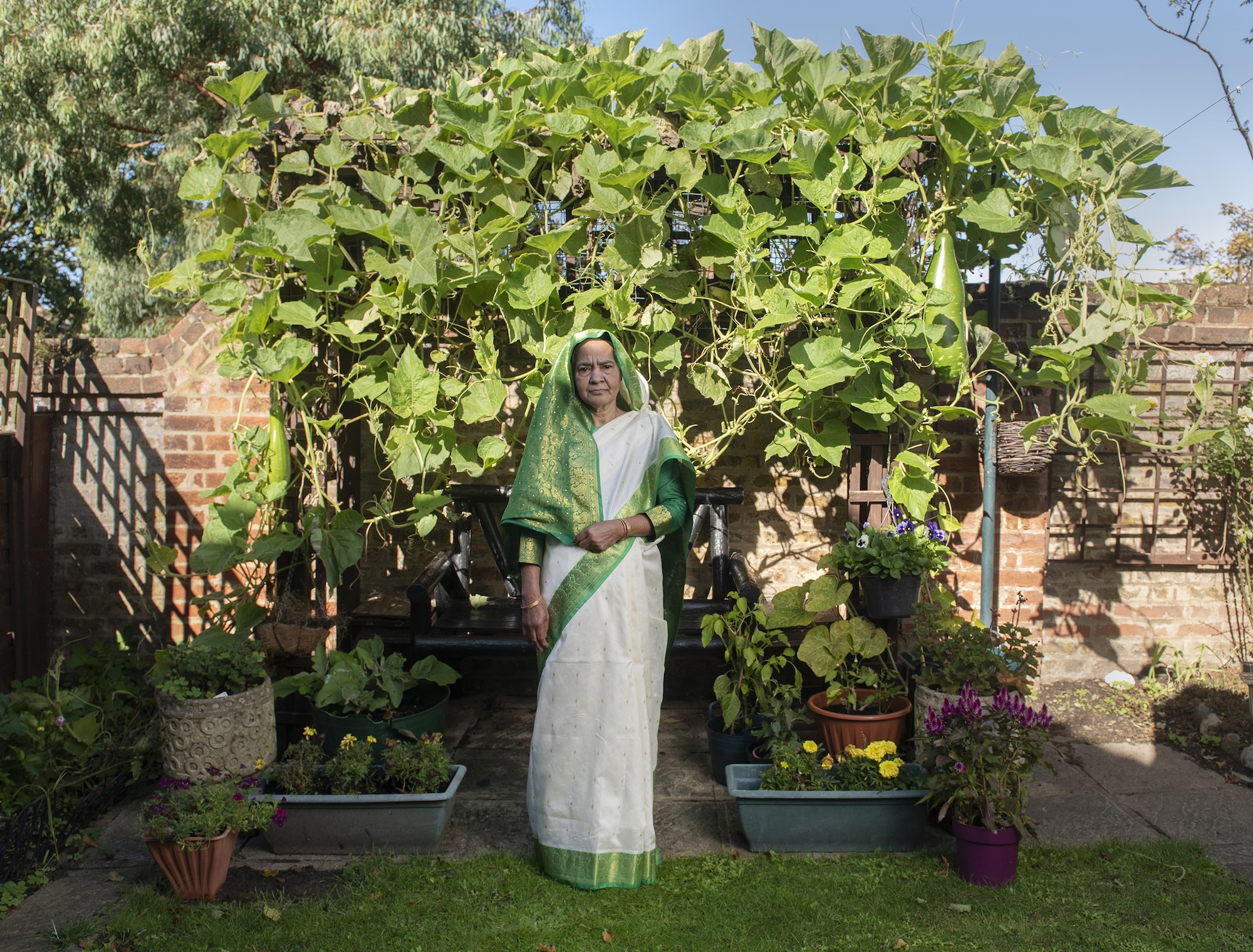
Khalique’s sensitivity shows in her portraits, which she made collaboratively. There’s a sweet photograph of her mother in her garden, wearing a green sari matching the foliage of a Bangladeshi Marrow Plant “which the Bangladeshi grow with pride in the summer months”. Some of the women preferred not to be shown looking straight at the camera though, wary of the sin of idolatry; Khalique has also collected other images, which present other images and do other things. There’s a formal studio portrait of Rajia Yaqub and family, for example, a snap of Makhlisur Rahman standing with his house and a smart car; often taken to send back home, these shots present carefully-constructed images of happiness and prosperity, not everyday trials or tribulations.
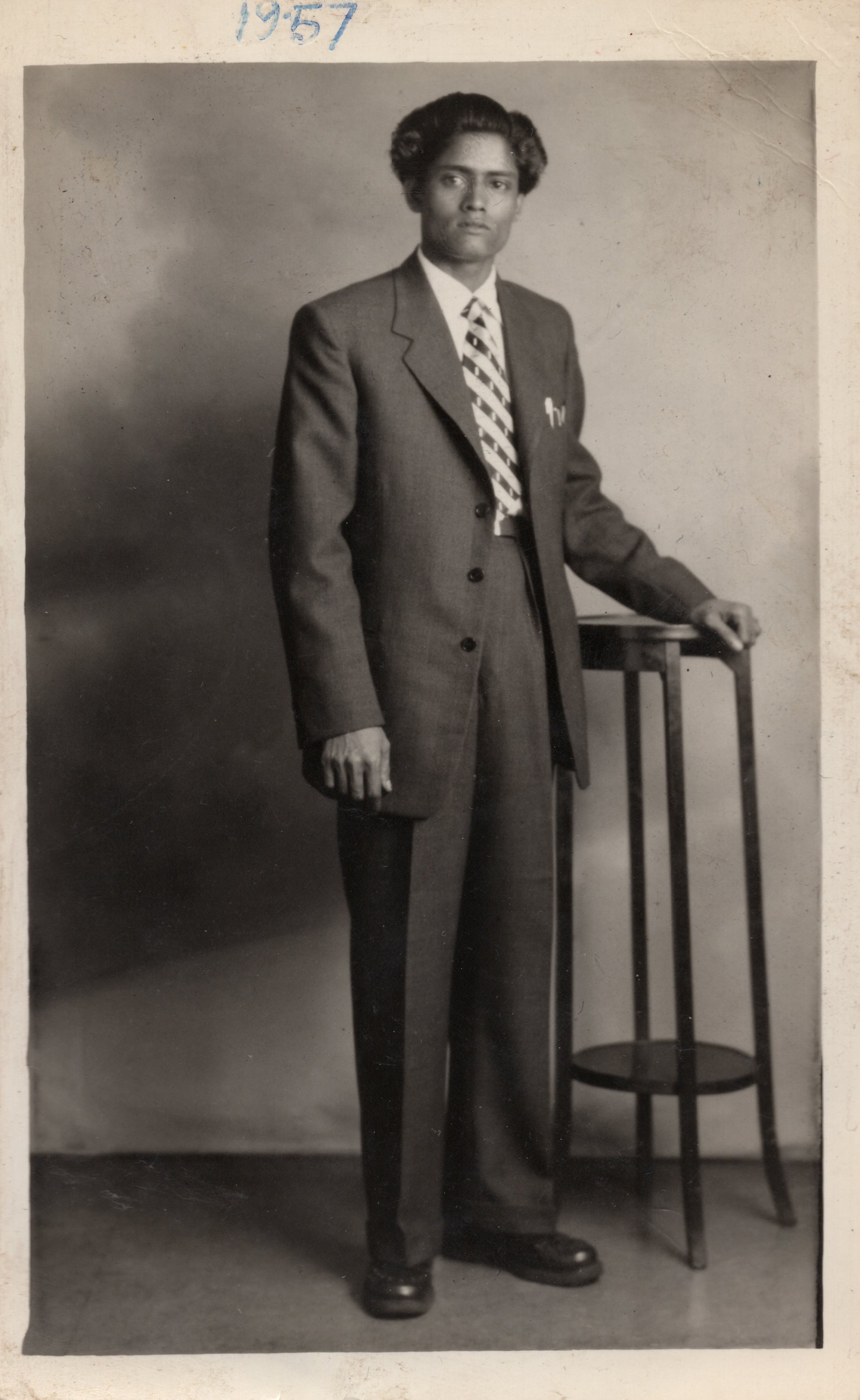
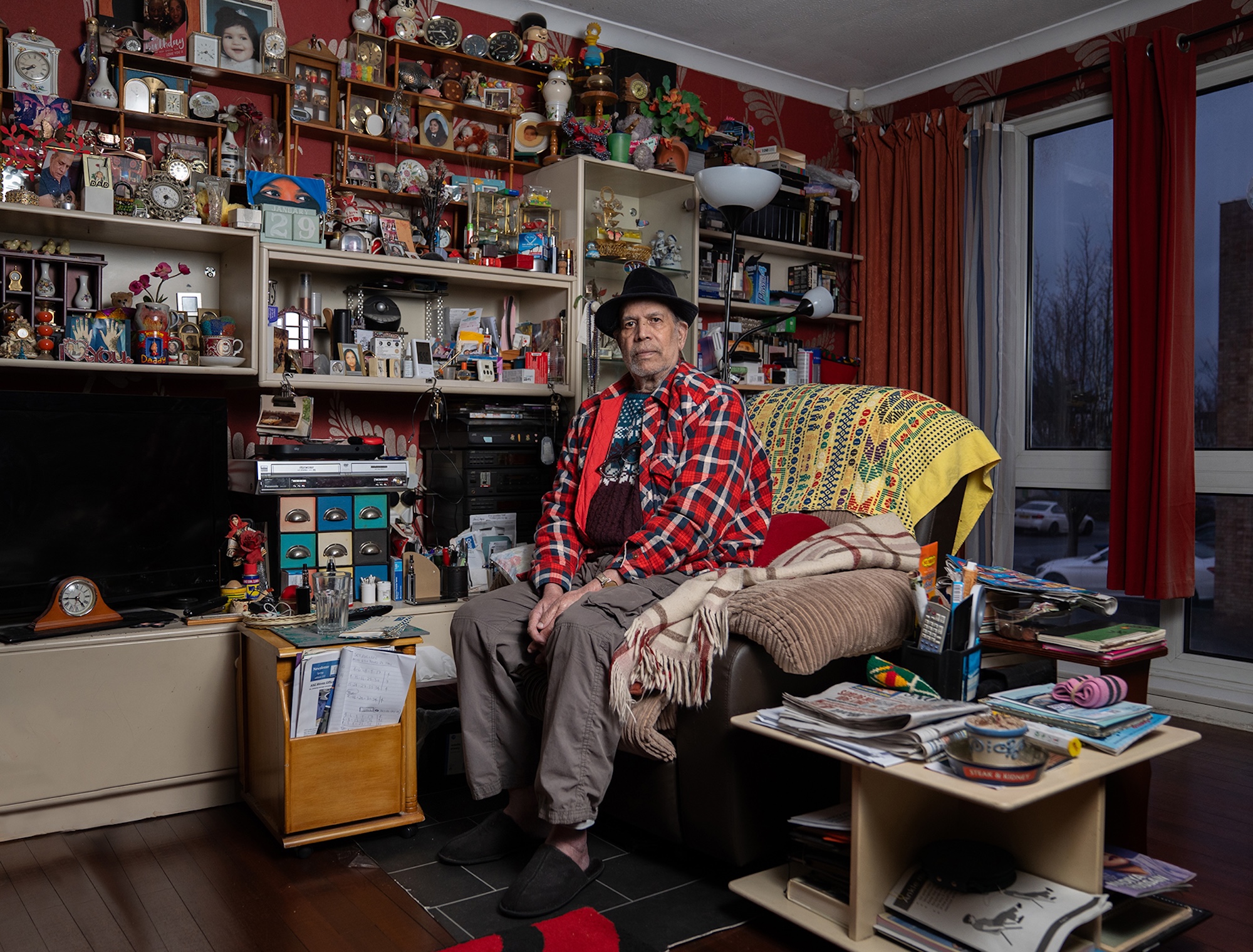
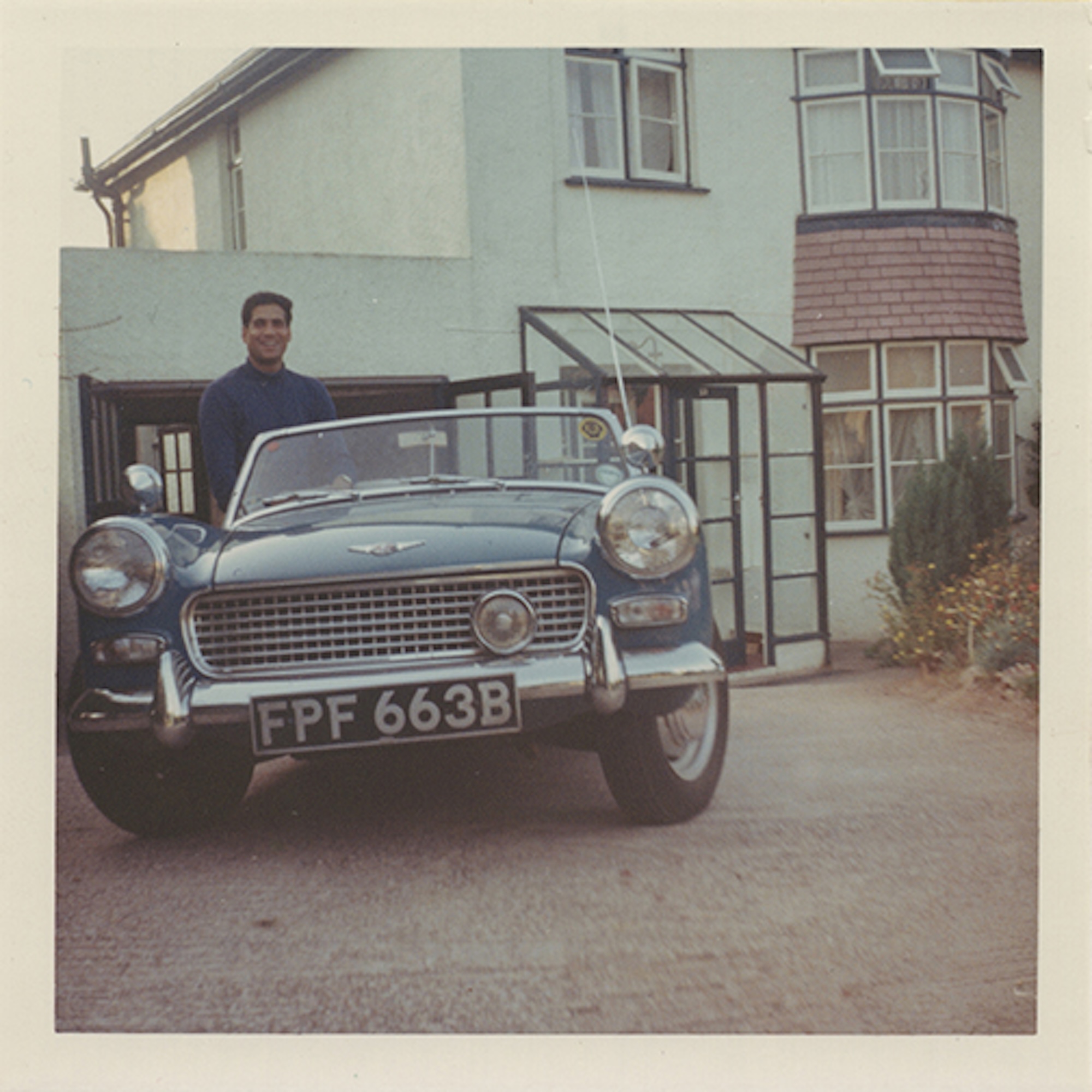
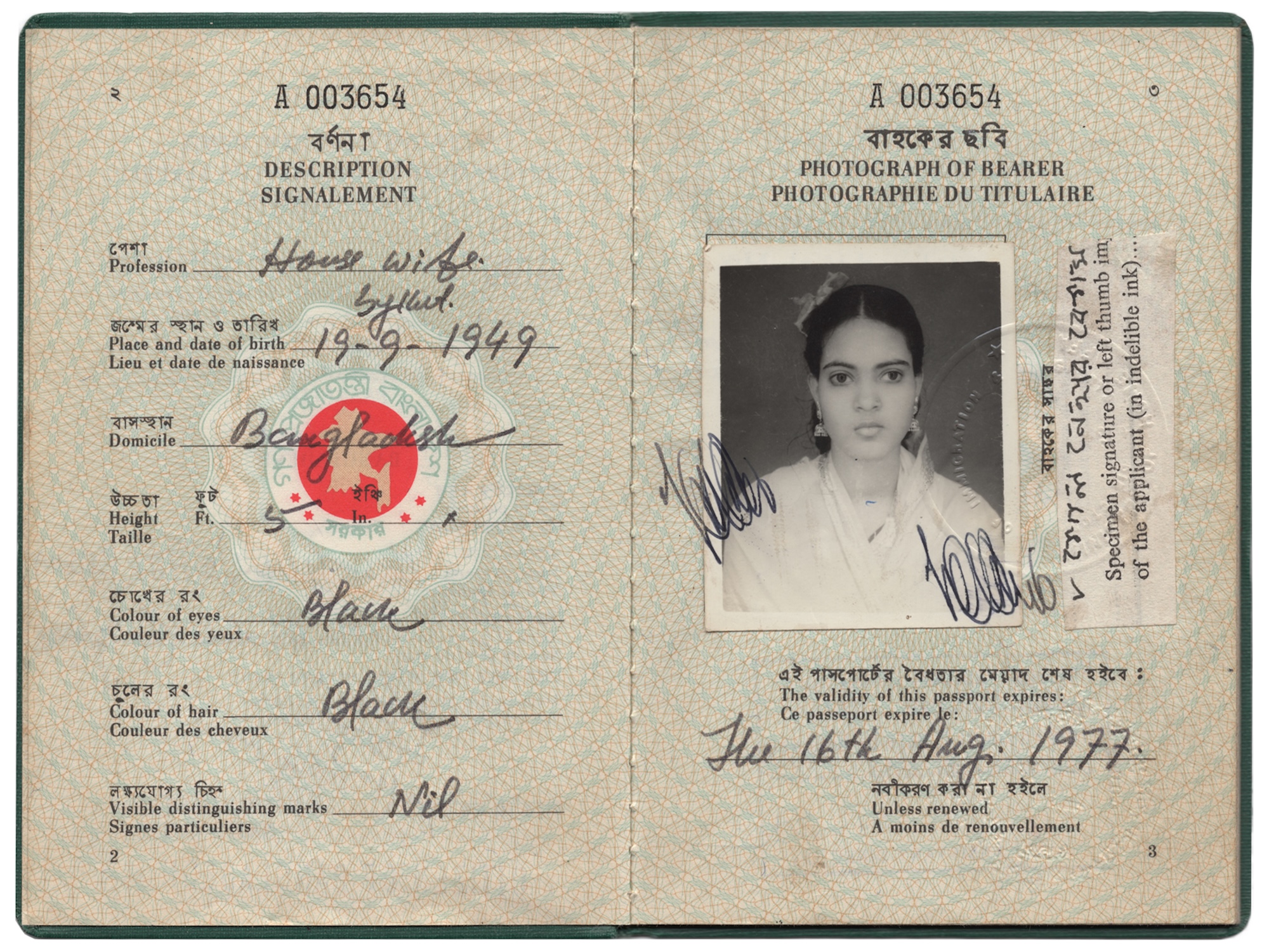
Khalique has also collected passport photos and official documentation, including an amazingly glamorous photograph of her mother in a passport due to expire in 1977, and a receipt from the Pakistan Relief Fund for £5, dated in pre-independence 1965 [when £5 was worth about £125 today]. Khalique’s exhibition at Four Corners includes 10-minute videos of the participants speaking; she’s also created transcripts of the videos, and published them in a newspaper. “I know not everyone will sit and watch all the videos,” she says. “So the newspaper was important, and then it can also travel.”
The location of the gallery is important too because, though Khalique still lives in South East London, she wanted to show the work somewhere close to the British-Bangladeshi community; Four Corners is in East London, near the long-standing Banglatown in Whitechapel and Brick Lane. Few of the participants could come to the opening night, as they’re now elderly and some in poor health, but ten were able to come for a special afternoon, and for Khalique that was deeply rewarding. They were wowed by seeing their portraits and archive photographs on the walls, she says, adding she had framed these images to ensure they felt properly honoured.
Khalique also arranged a family workshop in the gallery, allowing children to find out more about British, Bangladeshi, and British-Bangladeshi history, plus issues of representation; these issues have become more important to her, she says, because of hardening far right attitudes, and because she now has kids of her own. “I grew up in a very multicultural area, growing up I never felt racially different,” she says. “It’s only since becoming a mother I’ve realised that, and only in the last few years I’ve experienced it. And that pains me because, while I can fight for myself, my children can’t fight for themselves. So I felt I had to do it for them. I wanted to make work that would celebrate this community.”
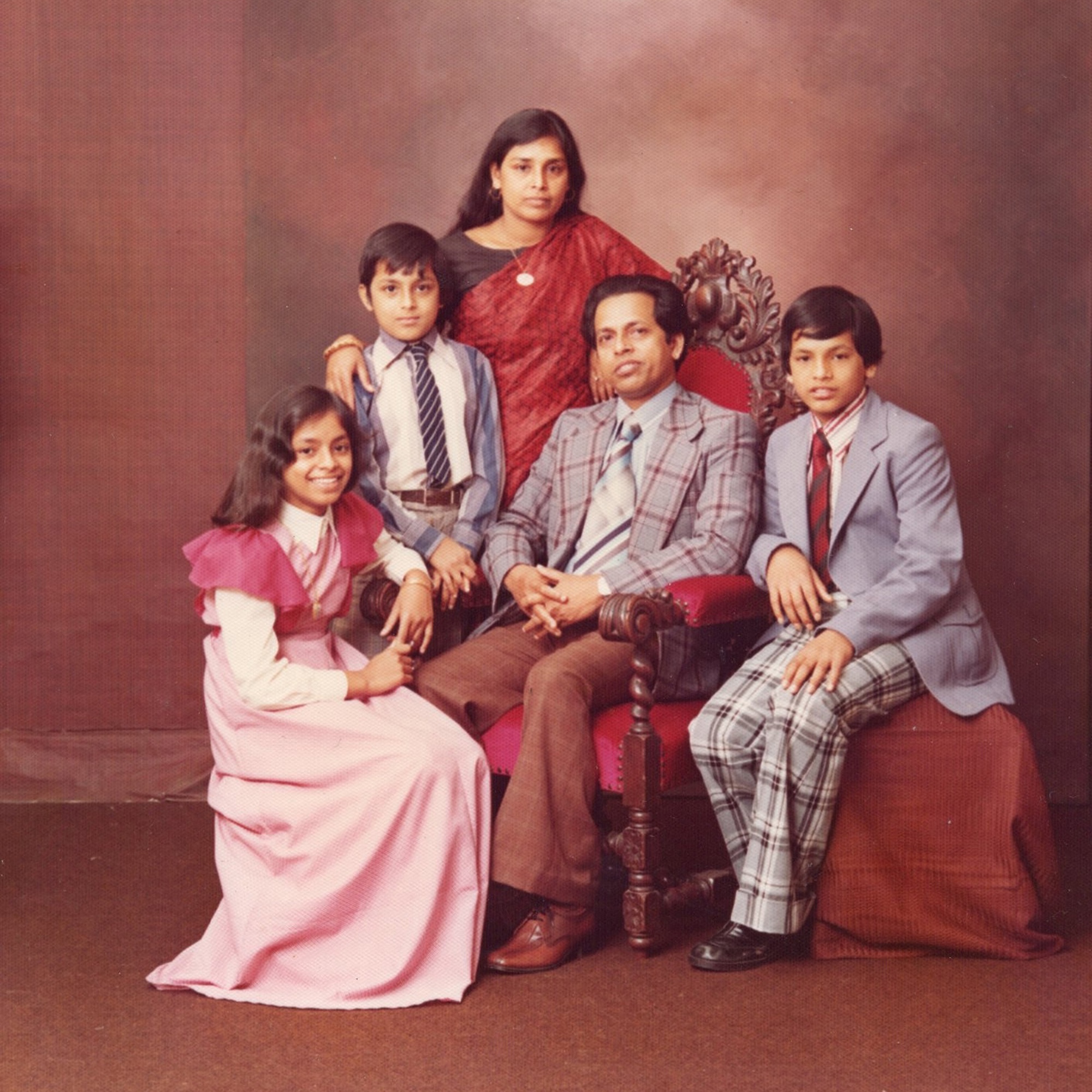
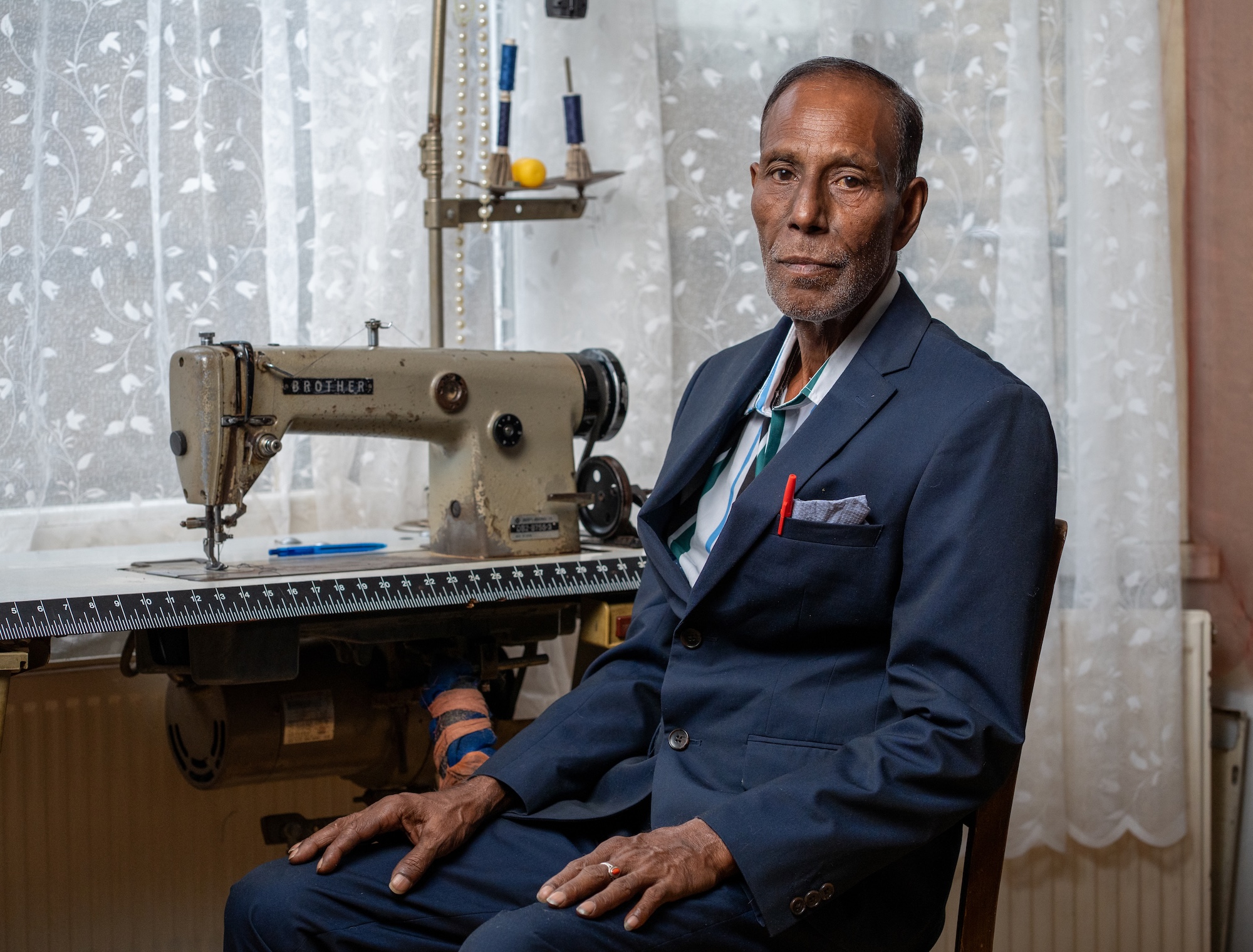
Londoni Memoirs by Seema Khalique is on show at Four Corners until 10 October www.fourcornersfilm.co.uk www.seemakhalique.com