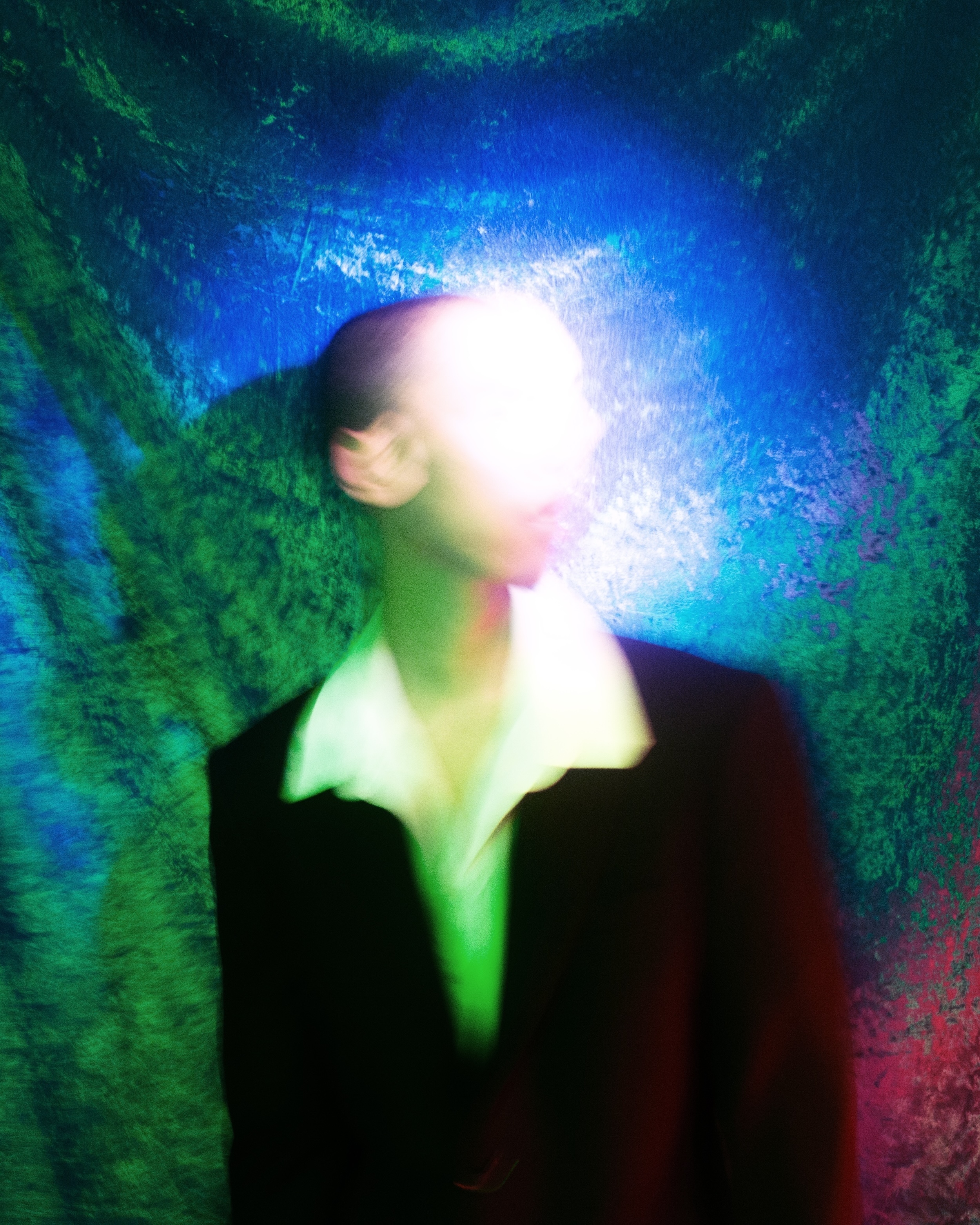

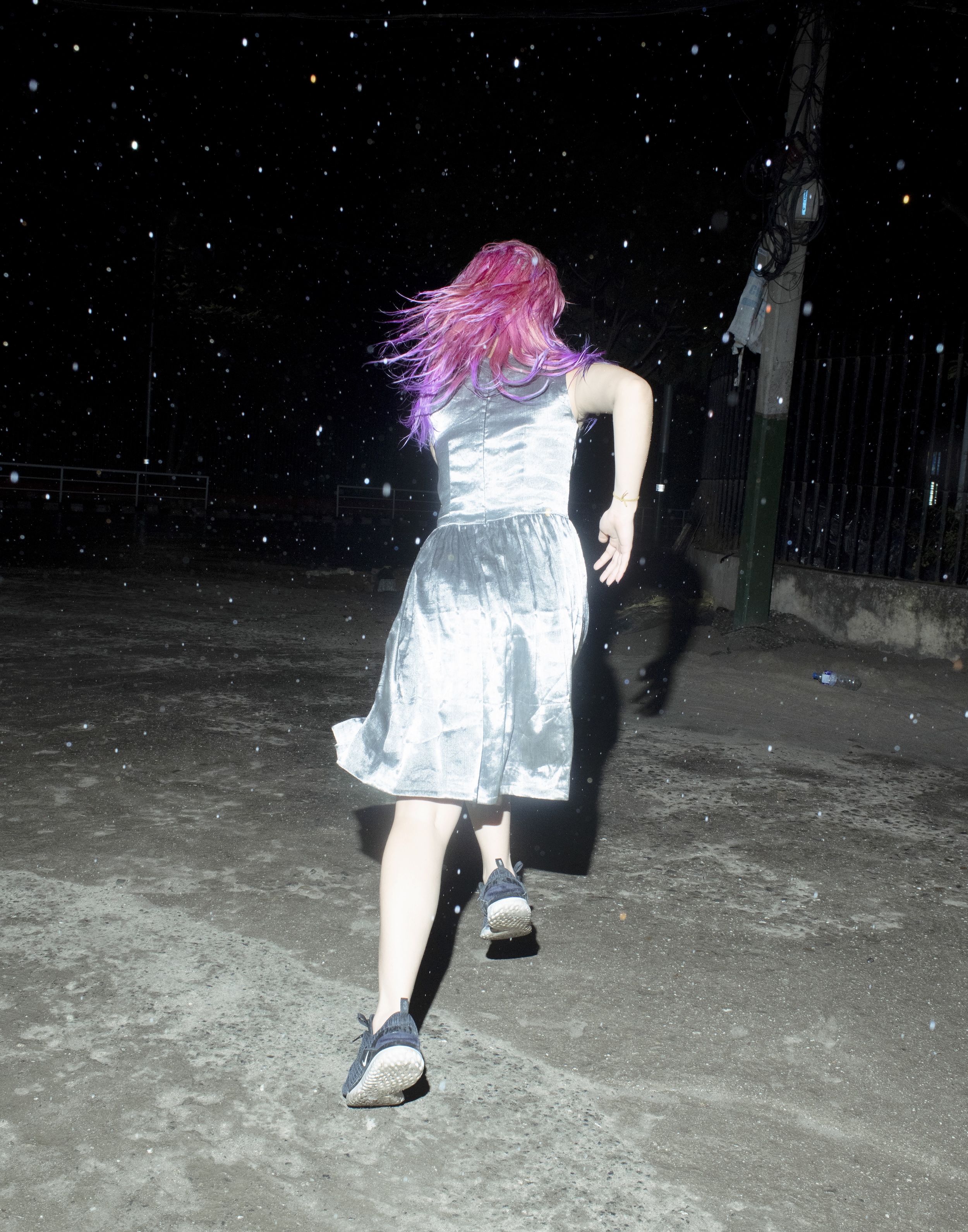
My Sister Running Away, from the series Between Space and Memory © Arhant Shrestha
Every year, BJP publishes its Ones to Watch issue – our selection of the artists who epitomise the talent and creativity in international photography today, as nominated by a global network of curators, editors, and artists.
As we finalise this year’s list, to be published in Issue 7926, to be published this June, we’re revisiting the 2025 Ones to Watch. Today, Arhant Shrestha, as nominated by Anna Planas, artistic director of Paris Photo.
As a child, Arhant Shrestha dreamt of Kathmandu. He imagined what the city streets must feel like – the pace of traffic, the rush of people, the nocturnal happenings. For him, Kathmandu was a city of make-believe, a childlike manifestation of everything he could not see from his family compound. Kathmandu existed purely in the abstract. Yet, with the exception of his time at Bard College, New York, Shrestha has always had a home in Kathmandu. He was born and raised in the Nepalese capital although, as he describes it, Kathmandu was a land far, far away.
Shrestha’s childhood memories consist of car trips from home to school, school to home. This monotony catalysed an active imagination. The city outside became a land of iinfinite potential, fairytale and magic. Family whispers fed this metropolitan hunger, a burgeoning sense that what lay over the wall was not for kids.
“I grew up in a city I was not allowed to see” Arhant Shrestha
Two things changed this: photography and sneaking out. To hear Shrestha tell the tale is to conjure Rapunzel with a camera, Cinderella escaping to find the cool kids. Slipping away, shooting the streets, squeezing into clubs, back home before sunrise; his experiences resulted in a skewed sense of the city. His camera processed this new world in real time, pressing together reality with a lifetime of fabulation. For Shrestha, it is always night-time in Kathmandu.
“I grew up in a city I was not allowed to see,” the artist says. He speaks of his practice with succinctness, a comfort with his photographic concerns. Shrestha understands exactly what his work is about: Kathmandu. However, he becomes noticeably uneasy when asked what the city is like. He does not know where to start; there is so much to be said, and words will never be enough.
Shrestha’s earlier projects “reside in the feminine”, as he puts it, with dreamy images that capture the metropolis and its people through the thematic stylings of family gossip. The women in his family, matriarchal storytellers who drip-fed stories of Kathmandu as a fantastical cautionary tale teetering between fact and fiction, built his perception. Venturing into the city for real was as much a queer awakening as it was photographic.
“I walk down the street holding hands with my partner. I dress up in traditionally feminine clothing. It wasn’t ever, and never, felt unsafe,” he says. “That was such a special feeling. “The early work is not necessarily chronological, but about my relationship with Kathmandu from childhood into adulthood,” he adds – and it is this work that won him a spot at the 2024 Hyères International Festival of Fashion, Photography and Accessories, and caught the eye of Anna Planas, artistic director of Paris Photo, who recommended him for Ones to Watch.
“Arhant Shrestha’s series looks at the city of Kathmandu with a gentleness and a confident gaze. Through his personal history he embraces the night and portrays masculinity in an inspiring way,” says Planas.
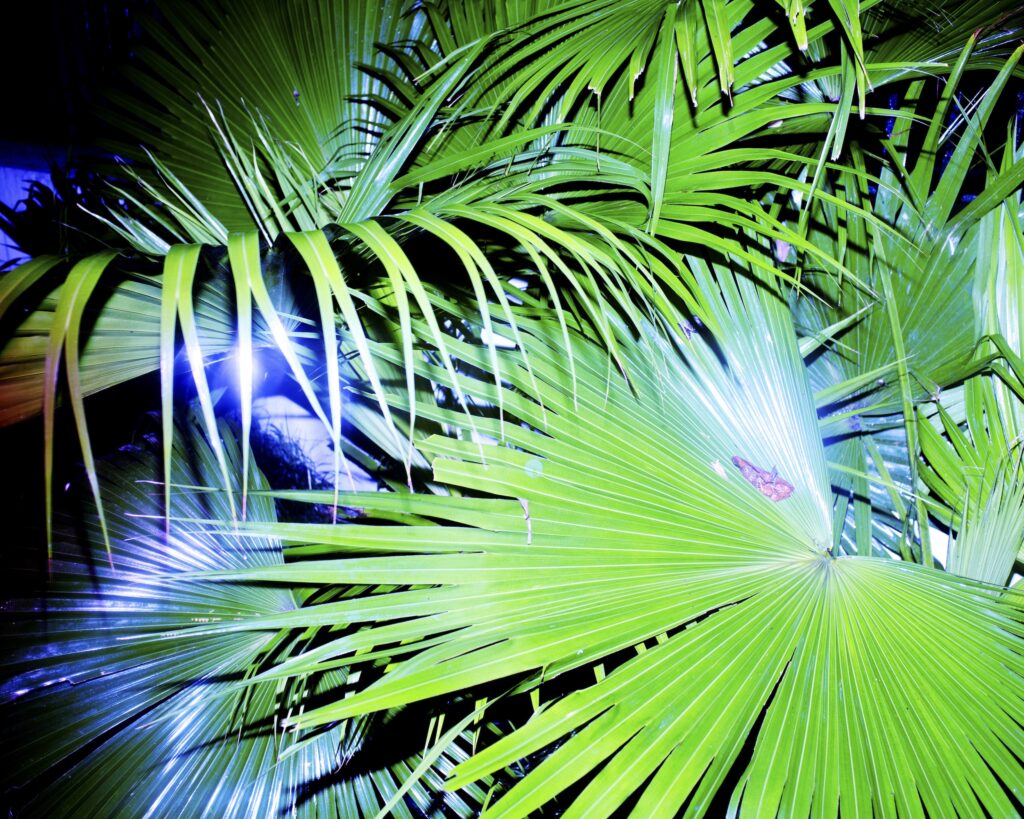
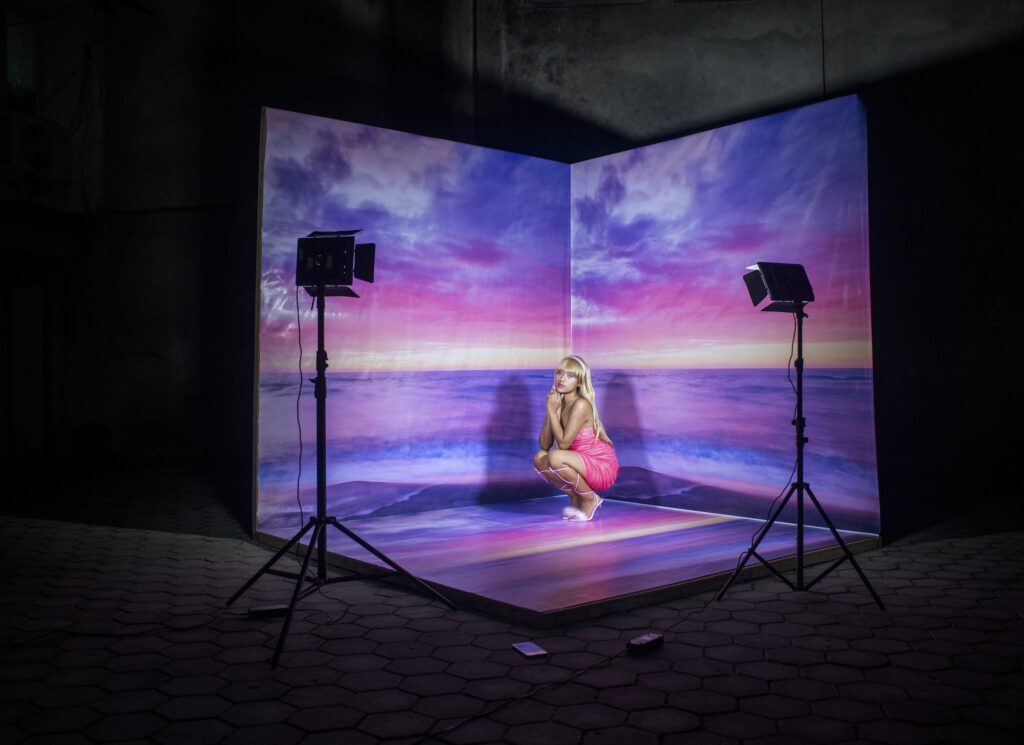

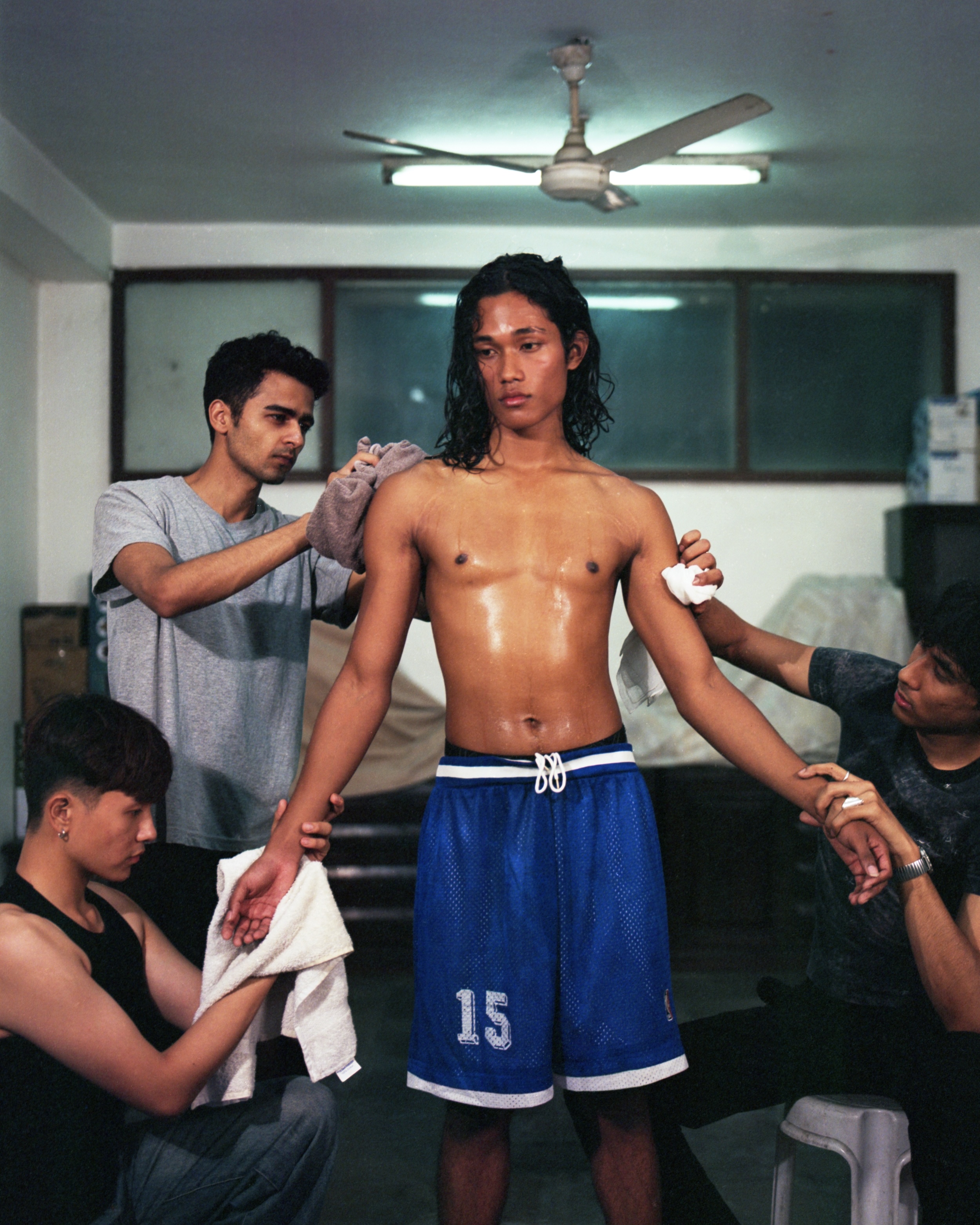
His latest work, Loose Fist, is a departure. In 2023, Shrestha and his partner were the victims of a homophobic attack, violence that shattered his queer ease and once again, rendered the city alien, dangerous – a sensation he describes as “regressing”. The assault left him shaken, and distrustful of men. “There were times where just a man passing me by would get my hands clammy and shaking,” he says. “I wanted to be in a place where I could walk up to a stranger, have a conversation with them, and move on. That’s how I started taking pictures of men.”
Loose Fist exists in the same fantasy world as previous works, yet the divine feminine has melded to the masculine. As part of this photographic exposure therapy, he returned to where he began: the club. “A lot of men kind of jostling around” is how he describes one image from the new series. Violence, of the camera and the body, melts and re-forms throughout. Working across festivals and clubs in the hedonistic scene of the Thamel district, Shrestha was both outsider and insider.
“I wanted to get rid of that fear. I wanted to instinctively hurt men, in the way they hurt me. The assault damaged my relationship not only to men but also to Kathmandu,” he says. He had stopped his ritual of shooting nocturnally. “Masculinity, and the camera, is not inherently and entirely violent,” he continues, outlining what he learnt. “There are communities of male support, familial, platonic, sexual. It’s important for me to understand that. Those strong arms could be used for violence or for embrace.”
As he continued Loose Fist, Shrestha rediscovered the magic of Kathmandu. The series solidified his relationship to the city, his kingdom come. Now he is back on the street, holding hands, shooting. “There’s always going to be a part of me that needs to be out in this city making pictures,” he says.