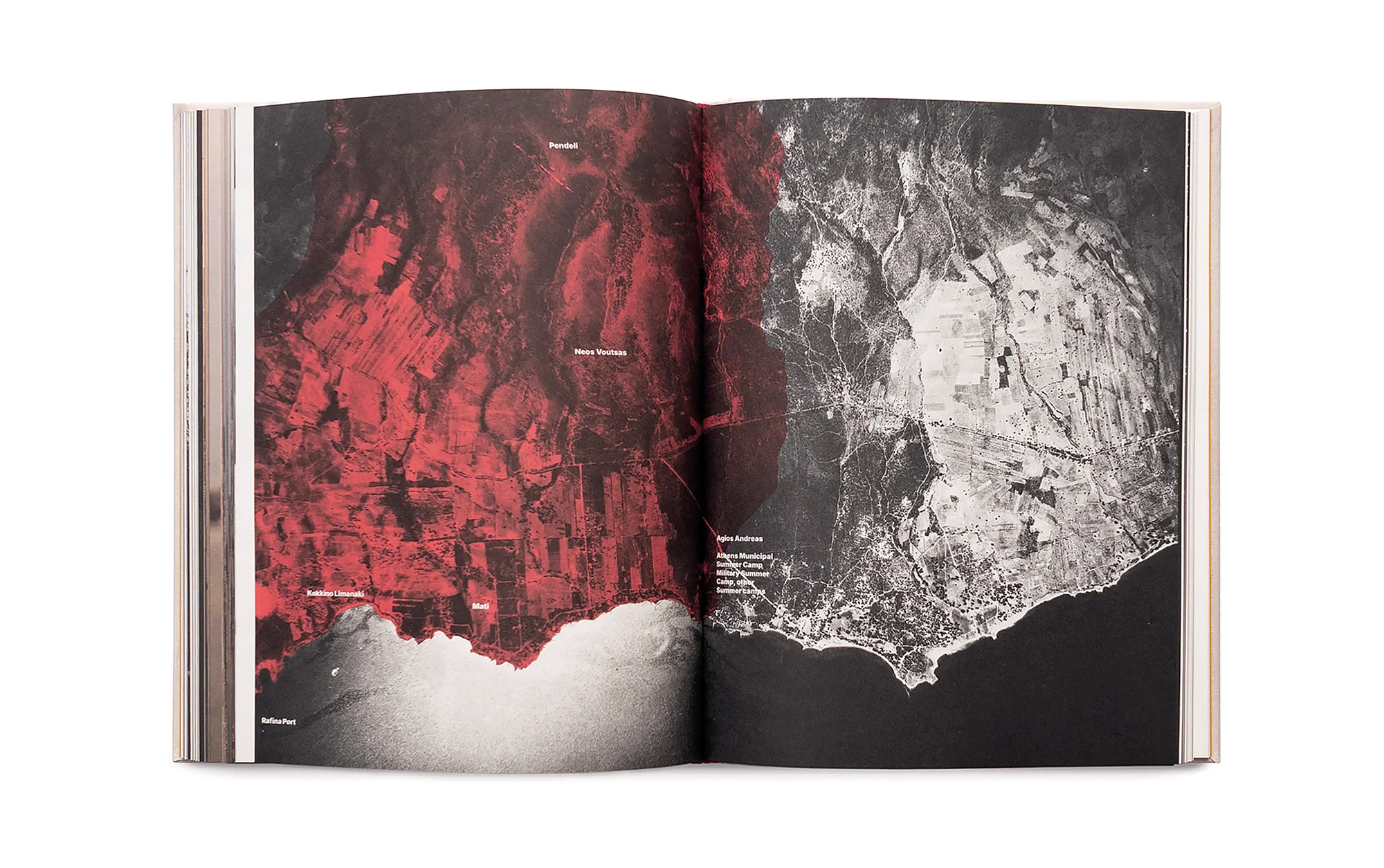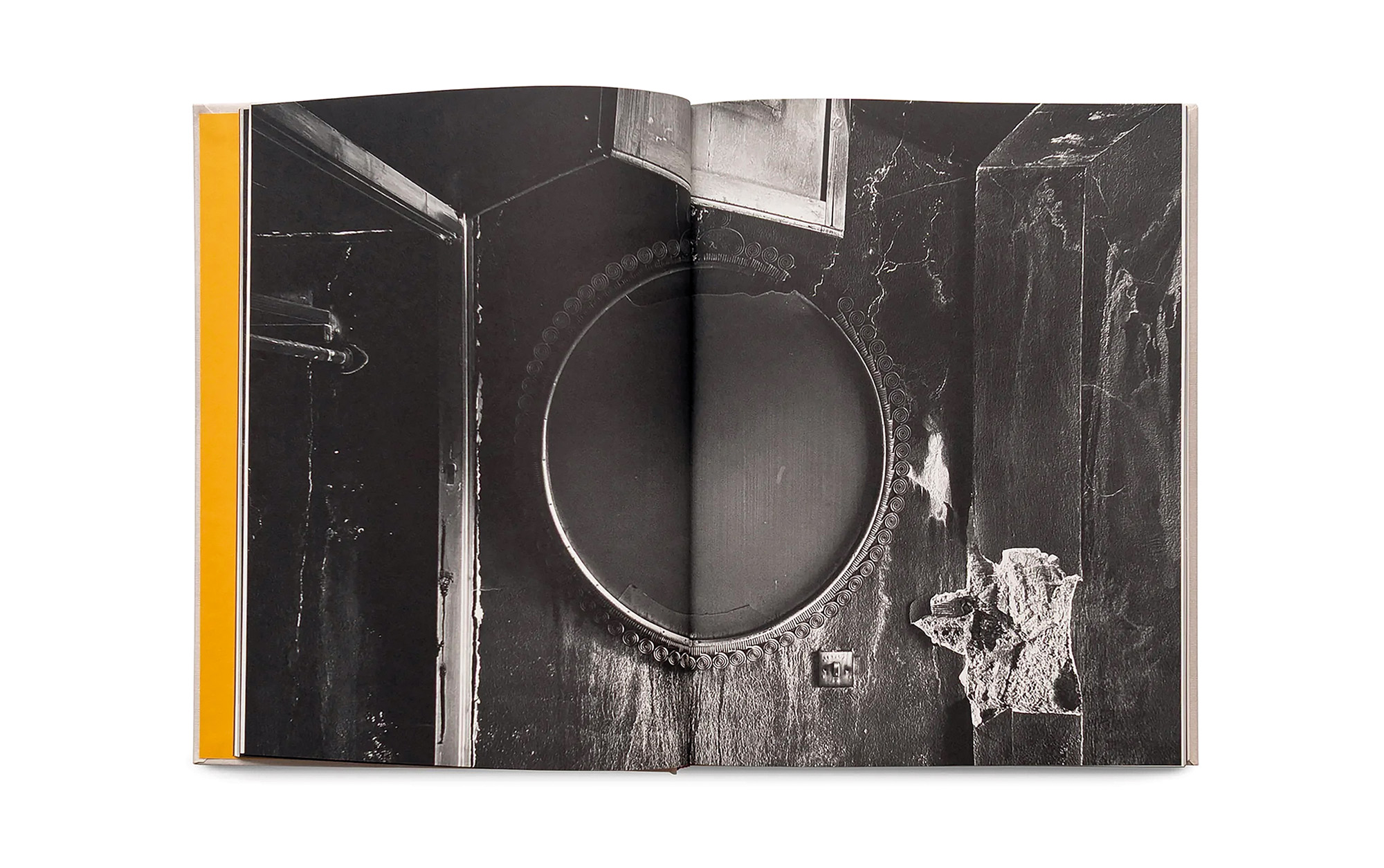

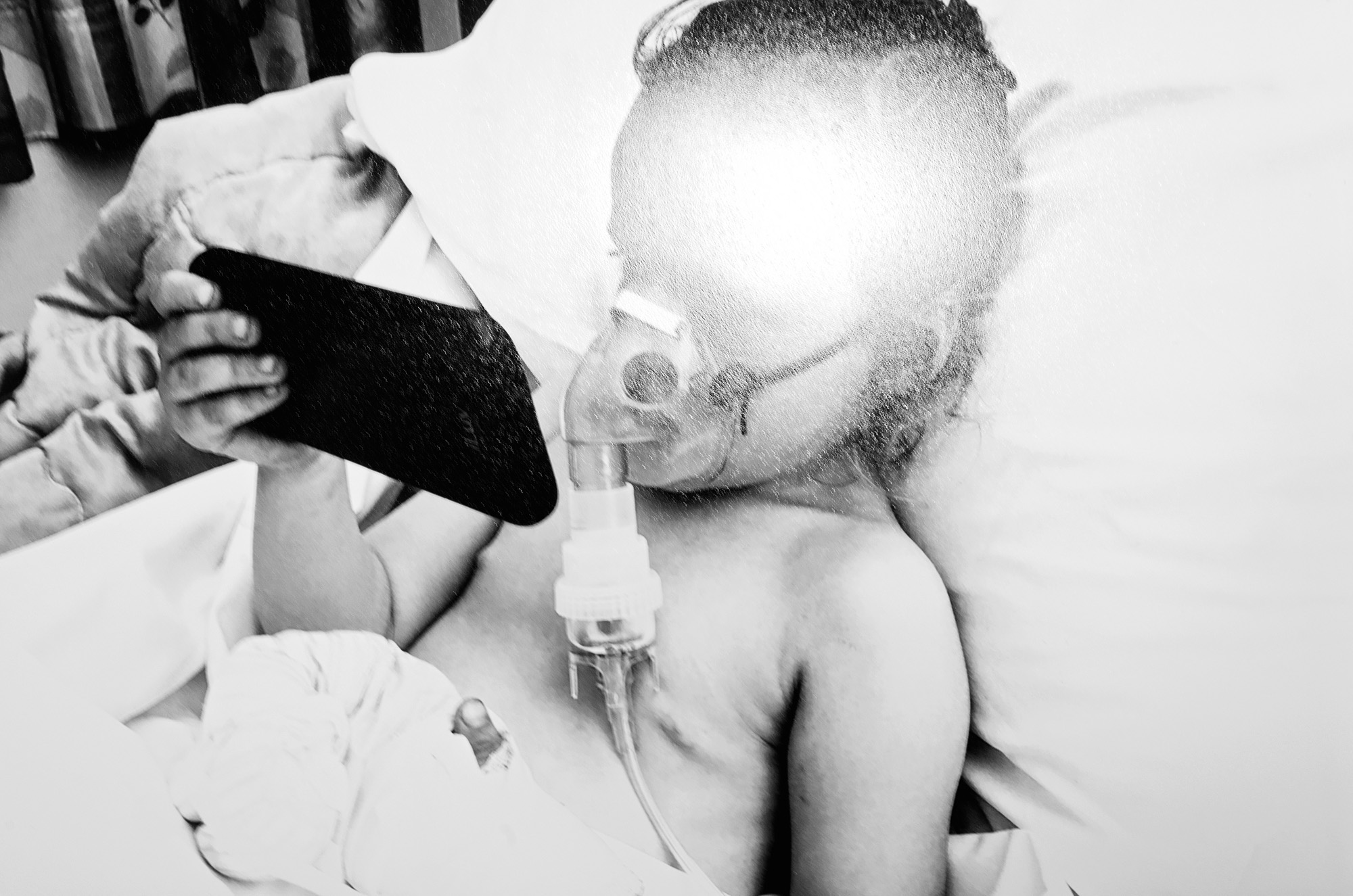
All images from The Fumes of Mars © Katerina Angelopoulou.
Combining first-person accounts with her own images and official documents, Katerina Angelopoulou’s The Fumes of Mars offers a counter-narrative to an unmitigated disaster.
Every era produces its own visual language and witnesses to make sense of the world. In our present moment, our visual language takes the form of hyper-accessible digital vernaculars such as screenshots and smartphone snapshots, but we still long for material anchors to prove a sense of belonging to a place, a home, a family, a community. Yet, even as we cling to these physical remnants, the terrain of perception is undergoing a radical, automated displacement, as vision detaches from the human eye and migrates into machines. Algorithms, surveillance nets and generative networks now look, interpret and act without our mediation, leaving us to wonder what will remain of witnessing when the human observer is removed from the loop entirely.
We now live in an ecosystem that demands our constant, unblinking and mostly passive participation. This relentless flow feeds directly into what literary theorist Anna Kornbluh terms ‘immediacy’, especially when world-facts are being circulated. Kornbluh warns that our obsession with the instant, the unmediated and the direct – along with the defunding of journalism – seriously undermines our capacity for critical and collective thinking. When a systematic rejection of mediation encourages a culture of instant disavowal and superficial identification of information, the vital distance required to think and understand real-life facts collapses.
The real violence of the contemporary image is mostly not found in its graphic content any more. True violence resides in the systematic violation of distance, the precise, contemplative buffer crucial for critical reflection. With the erasure of this space, we are deprived of the capacity to understand our world and its high-stakes politics, laws and policies. It leaves us stranded in a state of raw, unmediated chaos and mixed feelings. This erasure of distance is therefore always a deeply political act of violence.
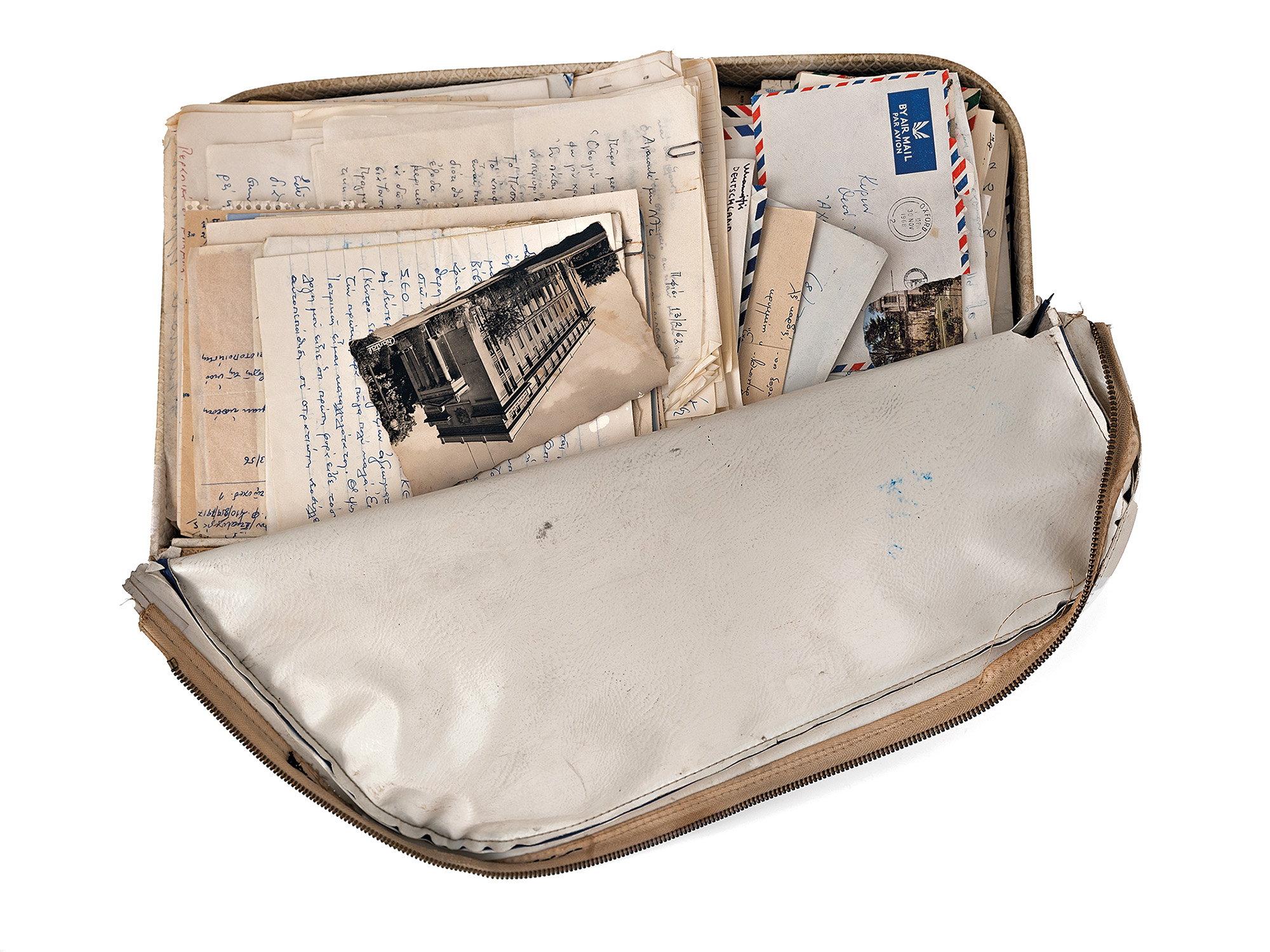
“It became very important to make a point that you can get a more rounded and truthful story of what has happened if you don’t just take your information from one TV channel, or one government source…” – Katerina Angelopoulou
Katerina Angelopoulou’s The Fumes of Mars engages with these factors – but also acts to reclaim distance, by gathering collective testimonies. Her work offers rigorous research into a wildfire that, on 23 July 2018, ripped through Mati, a middle-class town nestled on the eastern coast of the Attica region near Athens. The disaster claimed the lives of 104 people within hours and, years later, forensic evidence suggests another 14 to 18 unidentified people remain buried in a collective grave in the area. Angelopoulou experienced it first-hand.
“My parents’ home was in the area – at the time, I was living in the United States, but I was visiting my mother, and that afternoon, I had just arrived,” she explains. “My mother, my daughter, who was three at the time, and I were caught by the fire directly at our doorstep. We ran with the hope and sort of the expectation that we would manage to get away and go back to Athens. But we only made it to the sea, which was just 100 metres away.”
Angelopoulou and her family stood in the sea for four to five hours as the tragedy unfolded, and the artist found herself making snapshots on her phone. “Sometimes we take pictures – or we tend to take pictures – of things that shock us, to revisit them later to make sense of what happened. I think that was what the instinct was,” she reflects. But she was only able to go through those snapshots in 2021, when she initiated an inquiry into the facts and counter-facts that led to Mati’s disaster.
As the flames took hold, the institutional scaffolding of the state had collapsed entirely. The army, fire department, police and political leadership failed to coordinate, communicate or execute basic evacuation protocols. A secondary violence began afterwards, the violence of the state-engineered narrative. The government tried to conceal what had happened, and blame the residents for the outcome; the state, aided by uncritical media outlets, manufactured a convenient scapegoat – the residents had built illegal homes and walls, blocking access to the sea, preventing victims from escaping.
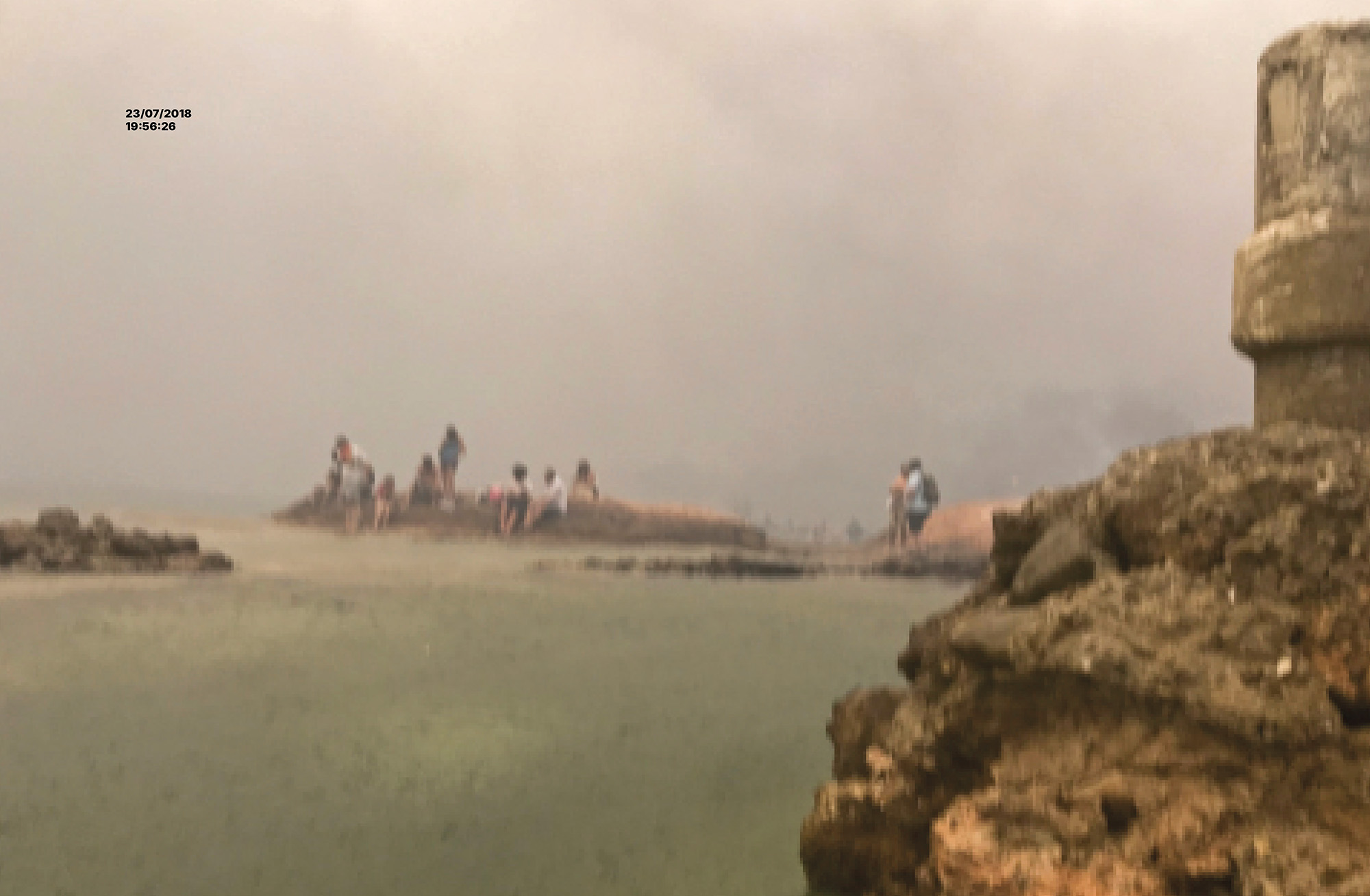
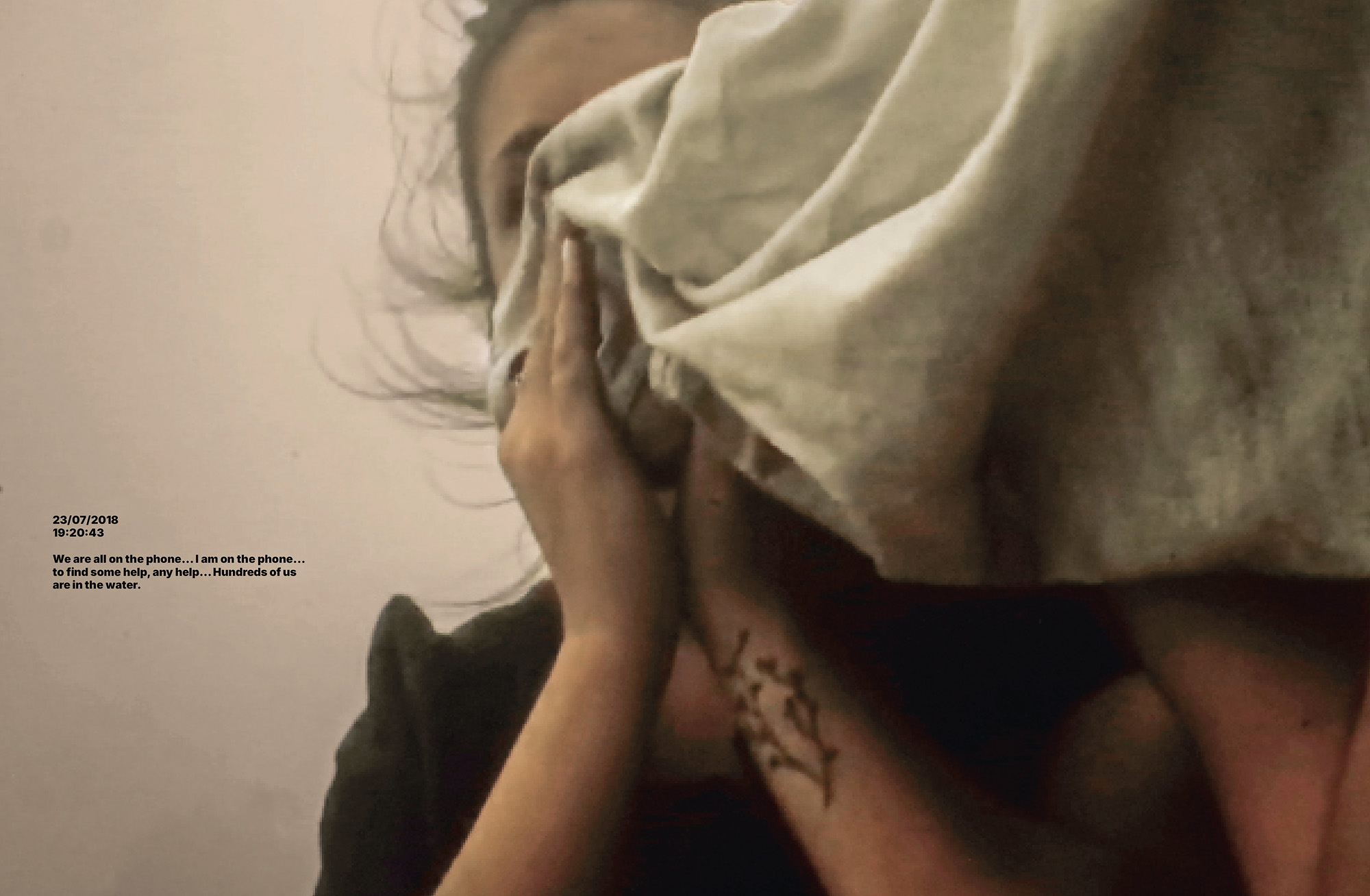
“That is the narrative that, unfortunately, was propagated by the media, which had no specific information about the area, but just used it as a shield,” Angelopoulou notes. “And over time, it became part of the collective unconscious.” She monitored international media reports, read every scrap of public testimony, and examined the official statements of government bodies. The day after the fire, the Minister of Internal Affairs had publicly claimed there were no operational mistakes. It was an outright lie; data later revealed that officials knew the scope of the tragedy while downplaying it in real-time.
Angelopoulou’s approach pieces together a counter-narrative from survivor testimonies, collected via public sources such as newspapers, television interviews and social media posts, alongside more personal photographs from the catastrophe and the aftermath. The Fumes of Mars juxtaposes images of the charred interiors of Mati’s homes alongside expansive, eerie landscapes, and written testimonies from the survivors.
“I wanted to make sure that everything that is in there can be found elsewhere,” she says. “It became very important to make a point that you can get a more rounded and truthful story of what has happened if you don’t just take your information from one TV channel, or one government source, or one newspaper, and go through a number of news channels or information channels. Politicians and politics have always had an agenda.”
Weaving her personal images with maps tracking the fire’s geographical spread, and matching these pairings against the recorded movements of police and fire engines, Angelopoulou built an iron-clad, forensic timeline exposing the flaws of the official timeline, and the system faults that had occurred. The Fumes of Mars transcends digital forensics to trace a profound parable of the “last image” – the very last image one records, as could have been the case for Angelopoulou, shooting from the chaos of the fire. It maps the evolution of a visual remnant, from the raw, instinctual impulse to document an unfolding catastrophe, and from within elements of immediacy culture, to its role in the quiet aftermath of survival, and finally, to its creative reconstruction.
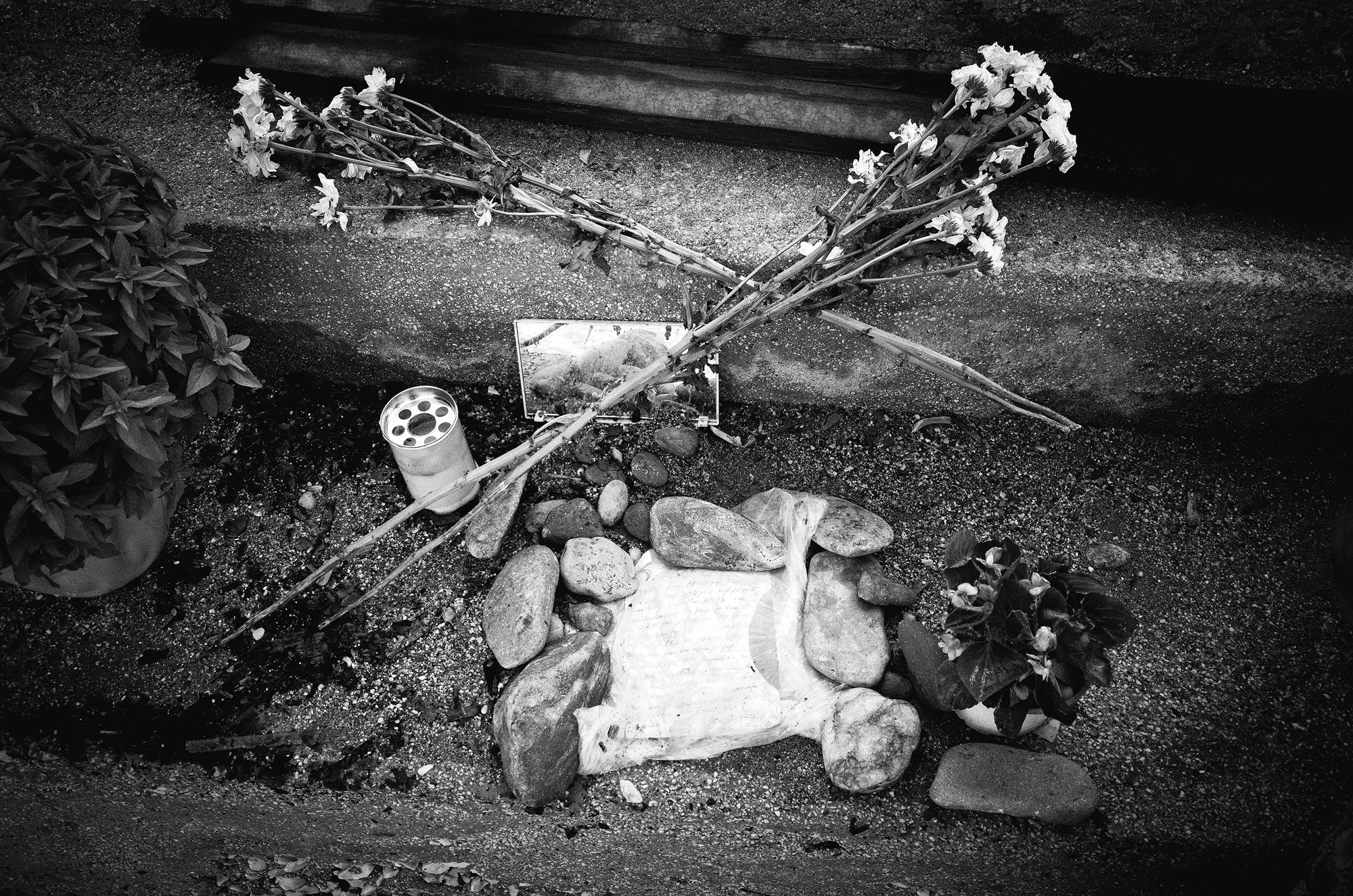
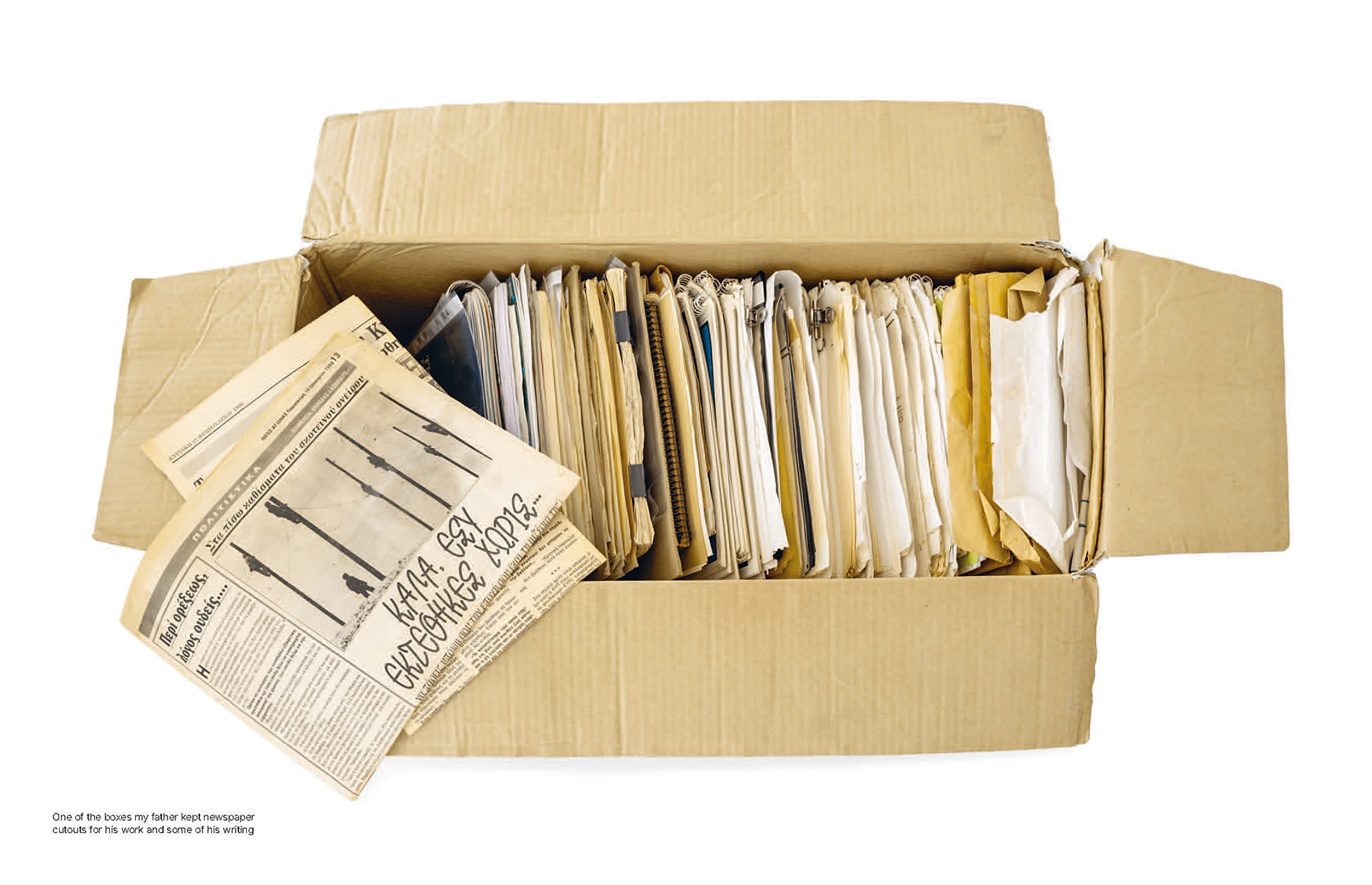
By examining what a last image can still signify and accomplish, the work also illuminates the long journey of making sense of trauma, which for Angelopoulou led to a deeply personal excavation of her late father’s belongings. “I went back and collected things from the house and photographed them as archaeological remnants, where one can just recount one’s life,” she explains. Isolating charred objects and documenting them with deliberate, forensic composure, Angelopoulou transforms them into monuments of survival and loss.
For her, the physical destruction of her family home symbolised a deeper erasure of identity. “Losing the house I grew up in, the house I always went back to was devastating,” she says. “It’s probably the place where I have the most memories of my parents, because they were so busy during the year that summers were the only time we actually saw them. It’s also the place where I hold the most memories of my father. I think that’s partly why the loss of that house, that area, and that place felt, in the biggest sense, like a loss of where I came from.”
Reclaiming this lost horizon through her practice, Angelopoulou suggests that the truthfulness of photography lives on in this capacity for restoring context, history and analytical depth to human suffering – even from images produced by the immediacy culture that Kornbluh frames. The Fumes of Mars posits this last image as a foundation upon which to reclaim collective memory and political critique; crucial to this reclamation is dismantling of the institutional monopoly on truth, through a deliberate engagement with the ‘unreliable witness’.
In legal and psychological discourse, a single witness to a trauma is routinely dismissed as unreliable, vulnerable to shock and fragmented perception. The state weaponises this scepticism, omitting community stories under the guise of maintaining objective order, while propagating its own fabricated narrative. Angelopoulou flips this dynamic on its head by gathering a constellation of disparate survivor testimonies; individuals who had no way of coordinating their accounts, describe the exact same breakdown of state apparatus from completely different geographical vantage points. The singular, unreliable witness dissolves into a reliable, collective truth.
This plurivocal approach shifts authority away from the singular, top-down governmental decree and returns it to the community, lending a complex, dual utility to the raw, unedited smartphone snaps circulating in the immediate aftermath of the fire. The least manipulated, most democratic archives of the unfolding event, these images possess a slippery elasticity; a photograph can amplify a scene to look more apocalyptic than it was, or conversely, flatten an end-of-the-world reality into something seemingly manageable. A single image is never enough. But when these raw visual fragments are tethered to a rigorous, cross-referenced network of collective testimonies they shed their ambiguity.