

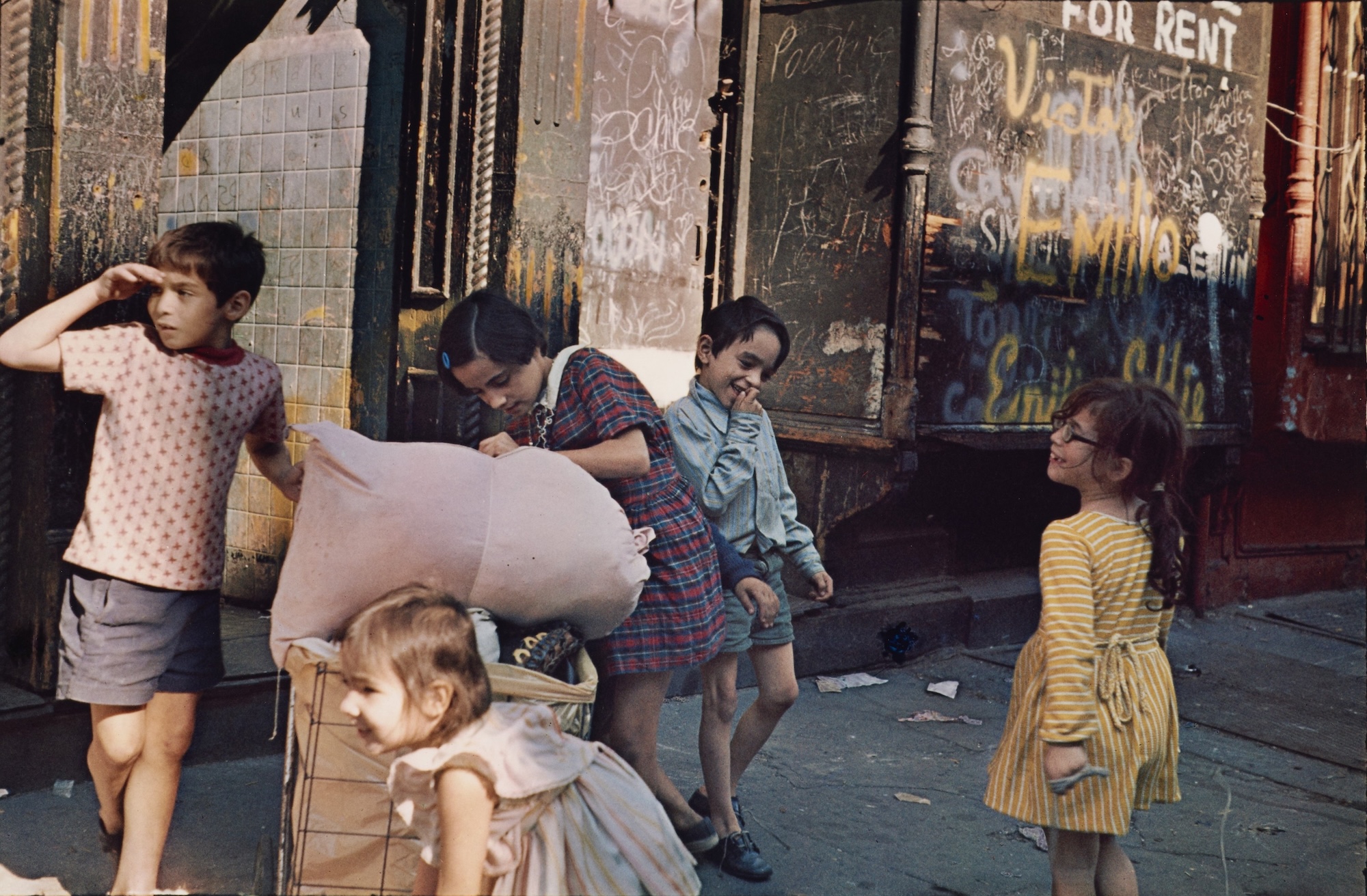
Helen Levitt, New York¸1972 © Film Document LLC, courtesy Zander Galerie, Cologne, Paris
A new show at Dulwich Picture Gallery shows a constellation of visions of the US, drawn from the photographic greats
“We’ve sub-titled this A Century of American Photography, but many of the photographers in the exhibition were not American in that sense,” says Alexander Moore, curator at the Dulwich Picture Gallery. “They had arrived in the US and started making pictures; these were people analysing the US as outsiders. An important part of the exhibition narrative is to say that this is a great melting pot of influences and ideas.”
We’re talking about Portrait of a City: A Century of American Photography, on show at the Dulwich Picture Gallery until 04 October. Featuring image-makers such as Alfred Steiglitz, Lewis Hine, Walker Evans, Saul Leiter, Roy deCarava, Diane Arbus and Bruce Davidson it’s a constellation of some of the greats of American photography, drawn from the collection of The Savings Bank DNB. But, as Moore points out, they are also a surprisingly varied bunch. The first photograph in the exhibition is The Steerage, taken on a crowded boat by Steiglitz in 1907, shortly after it left New York for Europe. Born in the US to German parents, Steiglitz spent his early years between the US and Germany, in a life of privilege. The exhibition also includes work by Weegee, who was born in Ukraine before emigrating to the US when he was about 10. Weegee grew up in impoverished New York tenement blocks.
“An important part of the exhibition narrative is to say that this is a great melting pot of influences and ideas.” Alexander Moore, curator, Dulwich Picture Gallery
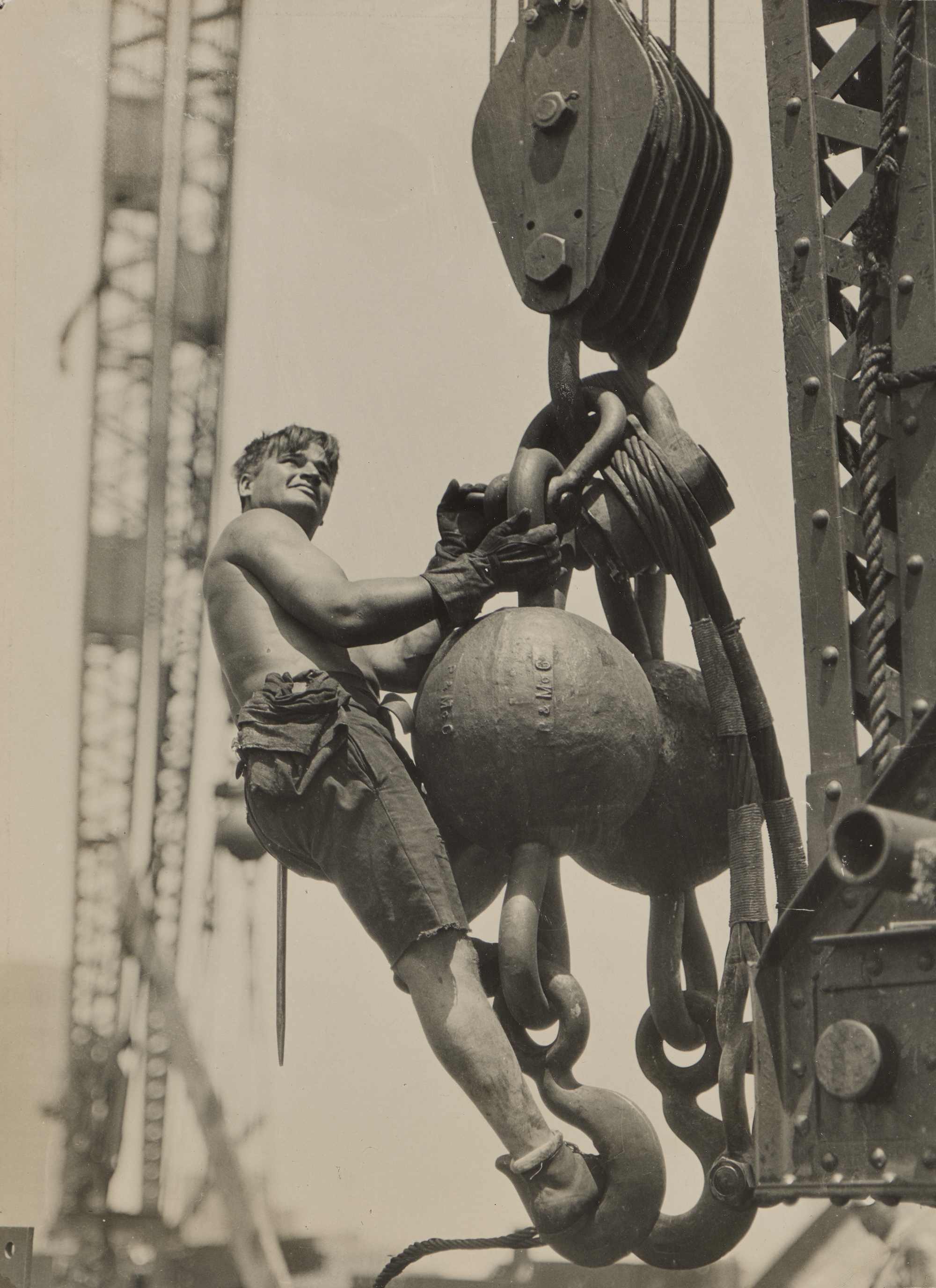
These varying approaches feed into different visions of America. The exhibition includes Edward Steichen’s double-exposure shot of the Empire State Building, for example, which helped cement New York as a city of dreams; Weegee’s later images document a much darker side. Lewis Hine’s work sits somewhere in between, documenting the sheer graft that went into constructing the glitzy cityscape; Hine’s socially-committed photography later became an important model for the Photo League, a progressive collective of photographers who shared his belief that images could help bring about change.
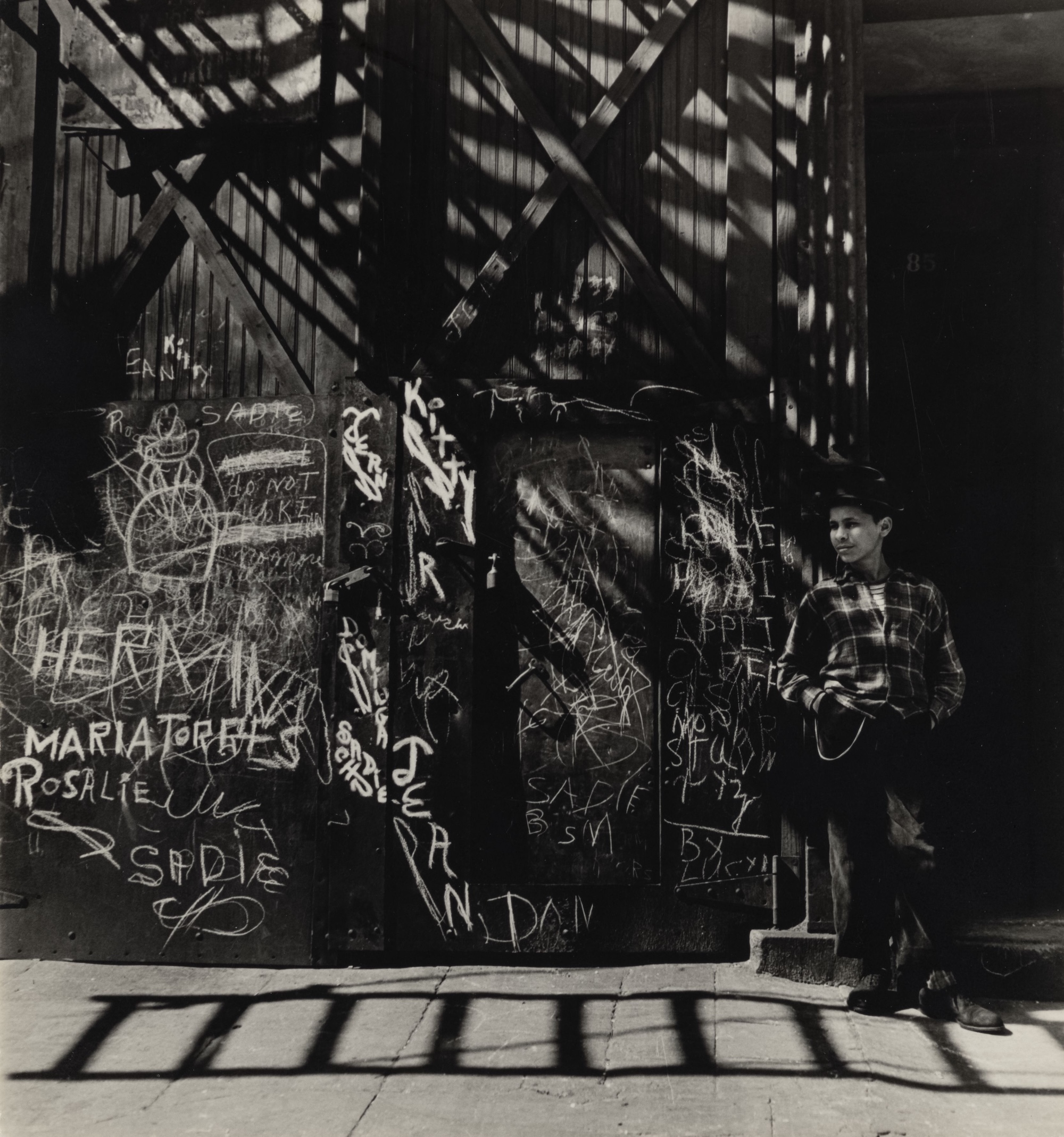
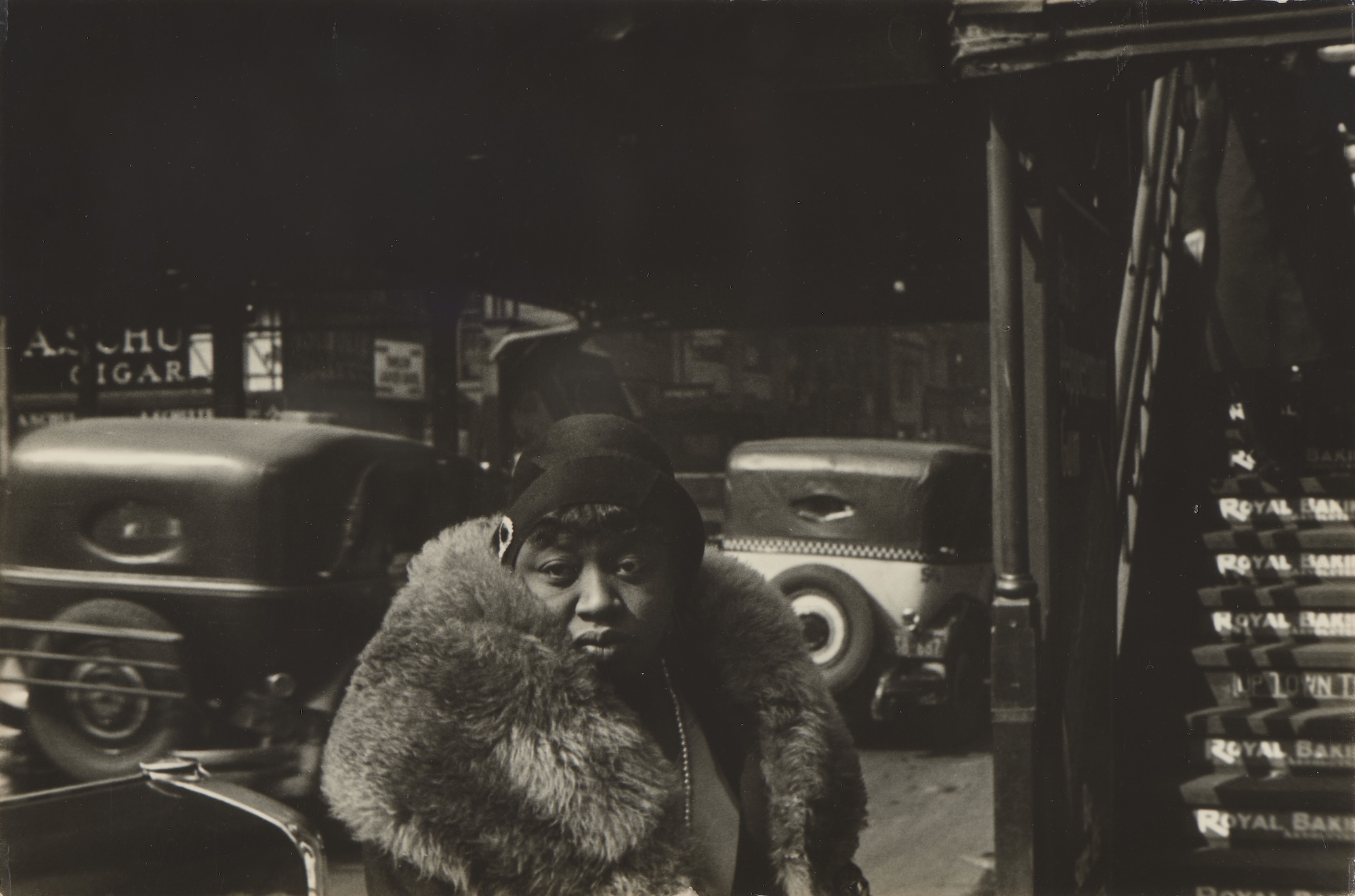
Image-makers such as Weegee, Aaron Siskind, Helen Levitt, Arthur Leipzig, Ruth Orkin, Morris Engel and Lisette Model – all of whom have work in the exhibition – were associated with the league, dreaming up a different vision again of what New York could or should be. “We ended up dedicating a room to New York, it seemed to be inevitable,” smiles Moore. “But we look at specific neighbourhoods – the Lower East Side, the Bowery and Harlem, photographers who come from within those worlds, and photographers who came from the outside.”
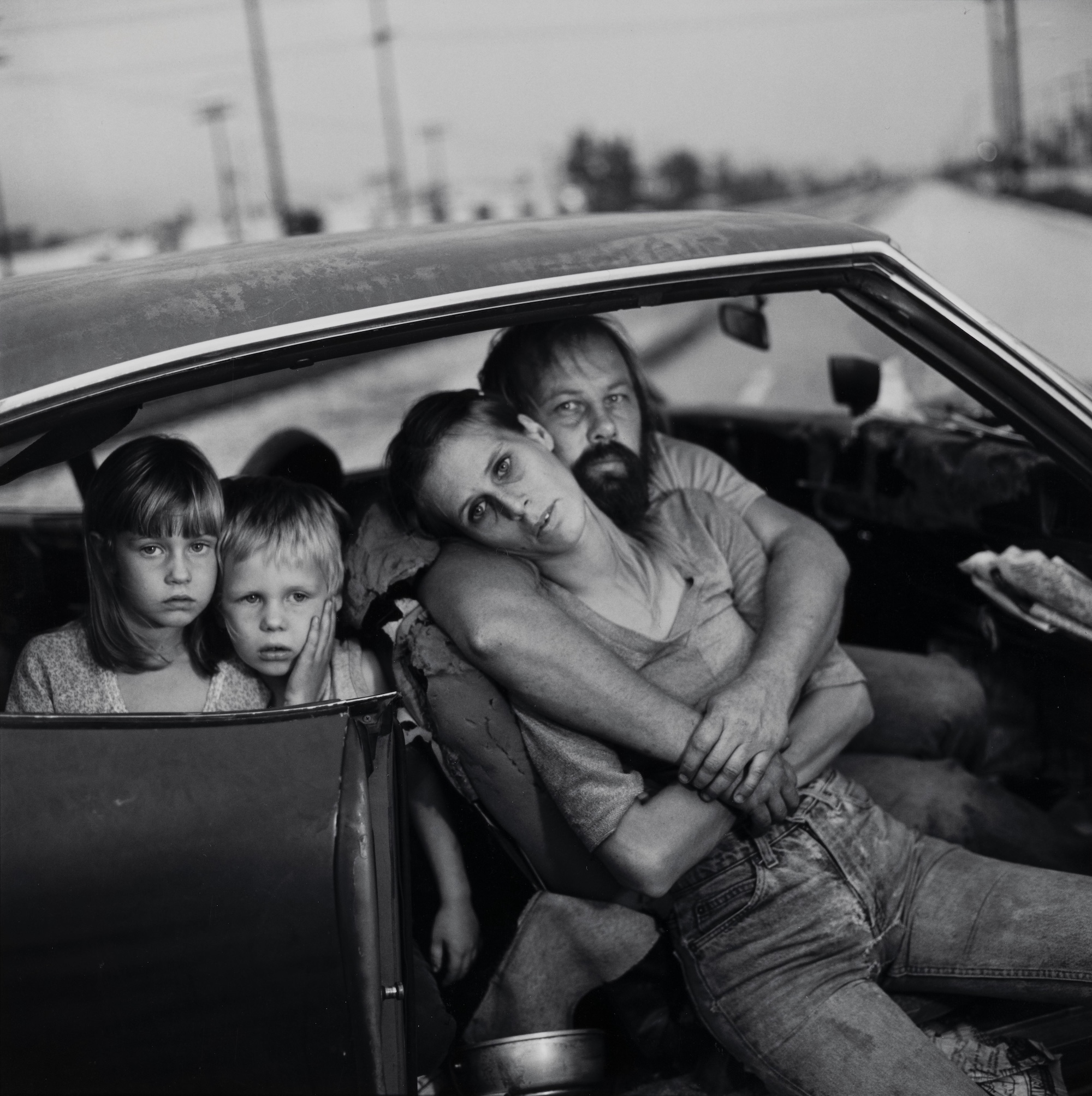
Beyond New York are images testifying to other American dreams and realities, sometimes within the same image. Mary Ellen Mark’s The Damm Family in Their Car, Los Angeles, California, 1987 documents the Damms in their automobile, another symbol of modernity. But this family is homeless, and Marks has recorded them while they are living in the car, hand-to-mouth. Elaine Mayes’ photograph of a group from a commune in Haight-Ashbury in 1968 testifies to hippy idealism and alternative living in San Francisco, but two of the women look shockingly young [the three women pictured are 18, 19 and 21, the men are 22 and 25].
“They’re teenagers who saw the opportunity to experiment with newfound freedom, and it was a media sensation,” says Moore of the image, which comes from Mayes’ wider series The Haight-Ashbury Portraits, 1967-1968. “The idea of the Summer of Love attracted people from all over the US because it was broadcast. Mayes developed quite a personal connection, not just to individuals but to the whole moment; she was very concerned, particularly about the number of young mothers she came across while making her series. In that moment, and in her work, there is a lot of vulnerability in the face of what was meant to be a great celebration of freedom.”
Other images testify to other kinds of freedom. Helen Levitt’s shot of kids playing in the street in New York in 1972 is irresistible and, whether there were fewer screens back then – or cars, parks, or air-conditioned apartments – seems to attest to an altogether different time. It also says something about attitudes towards photography, Moore points out, a willingness or indifference about being photographed. And while not all of the individuals in the exhibition look thrilled to be photographed, many clearly participate. “It’s a noble thing, to give your likeness to a photographer, so that they can record life in a city,” says Moore. “But it’s quite different now. Now one of the assumptions is that you’re not just being photographed, your image is being contributed to a digital sphere.”
These questions recur in the show-stopping final room, devoted to Bruce Davidson’s Subway series; shot in a mean-streets New York of the 1980s, it documents a city seemingly slipping out of control. The heavily tagged insides of the train carriages suggest anarchy in a not-so-fun way, the commuters peer warily at Davidson, though – well aware that he is there – they don’t ask him to stop. Guardian Angels step in, aiming to provide commuters with a sense of safety but adding a slightly menacing air, all-seeing eye emblems on their t-shirts. There’s also camaraderie though, one of the final shots showing people helping an unlucky traveller who’s got their arm stuck in the door.
The hanging of this room is interesting, prints packed tight on the walls; it creates a sense of being in the rush hour, with its sensory overload and frenetic yet hushed energy. Moore points out you can look from this image right back to the start of the show, and the equally busy boat in The Steerage. “You get this very distilled idea of the American city having changed a great deal, but in some ways not at all.”
Portrait of a City: A Century of American Photography is on show at Dulwich Picture Gallery until 04 October. Curator Alexander Moore is giving a talk about the exhibition at the gallery on 10 September. www.dulwichpicturegallery.org.uk