
All images © Alice Zoo
On residency in London, the Thai photographer is making work that connects, using the camera to reframe the world and personal experience
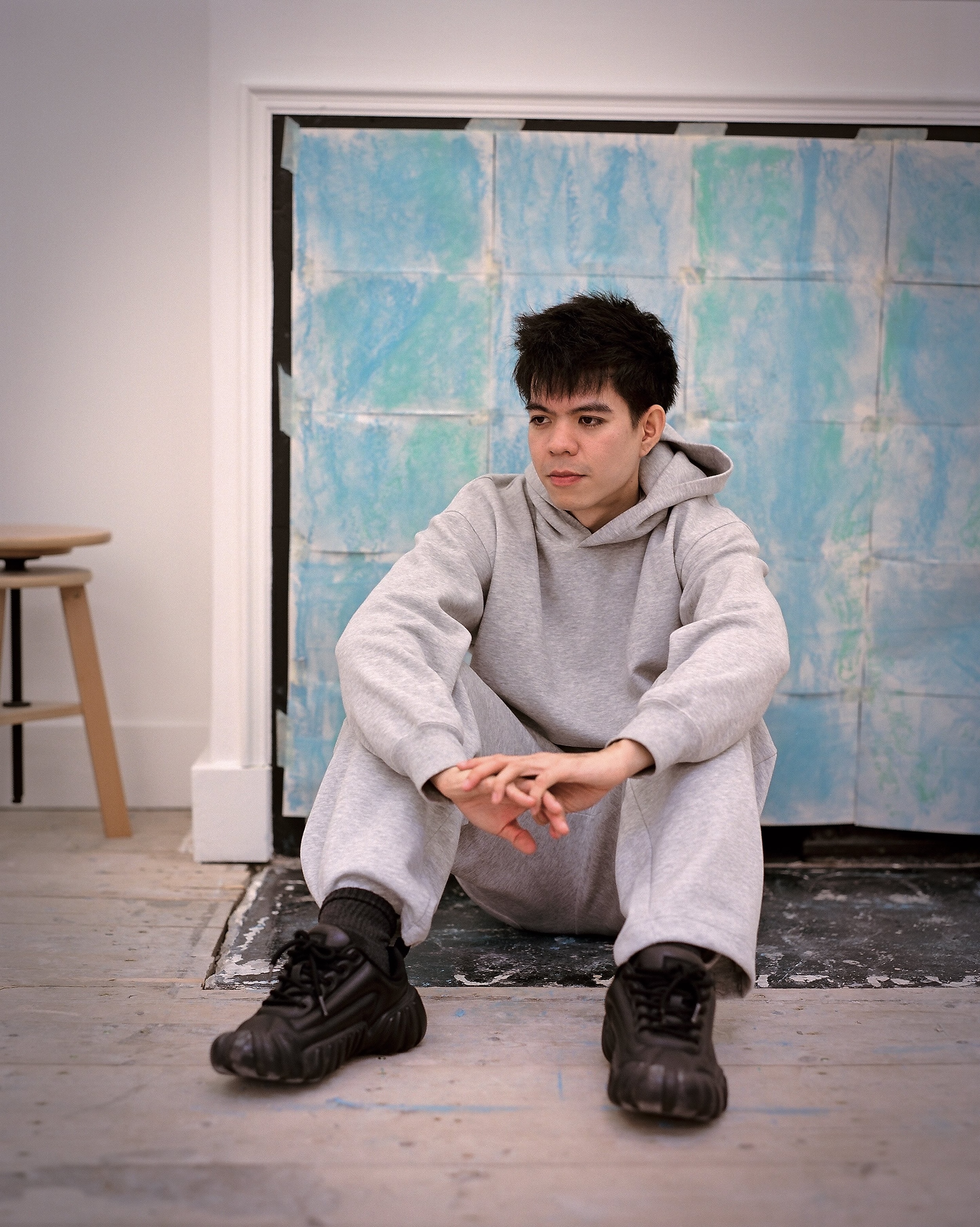
Harit Srikhao has lived in Europe before. “I found it hard to tell a good story,” he recalls. “Every artist has very few stories that they want to tell in their life. I think I have just two or three.” Born in Bangkok, the photographer and artist is on residency in London as we speak, living and working in an 18th-century townhouse in Bloomsbury. Above us, skylights open onto vast plane trees, still holding onto the last of their summer green. “My stories are linked with my hometown,” he says. “Thailand, where I grew up; my childhood and my family; my desire and my trauma. I’ve found that it’s very hard for me to create new content in a new country.”
Srikhao is the inaugural artist to be hosted by YDP, a project space in Bedford Square for Asian and Asian-diasporic contemporary art and artists. When I visit, the building has the echoing feeling of a place still coming together; some rooms lie open and empty, awaiting their use; it smells of new wood, and I can hear hammers and drills. But then, as I am led through to the back, artwork suddenly emerges, and the bright, open studio space Srikhao is temporarily calling home.
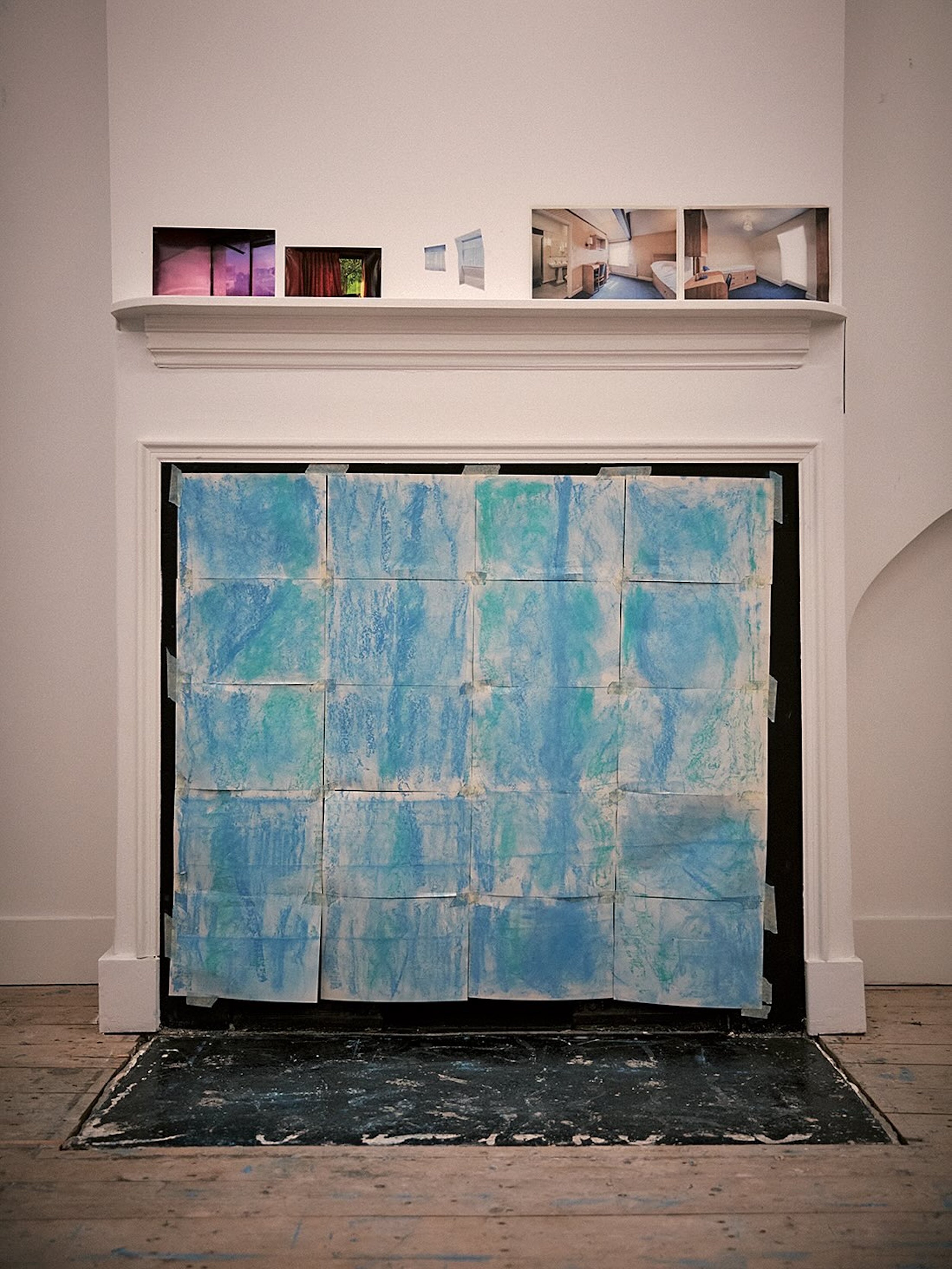
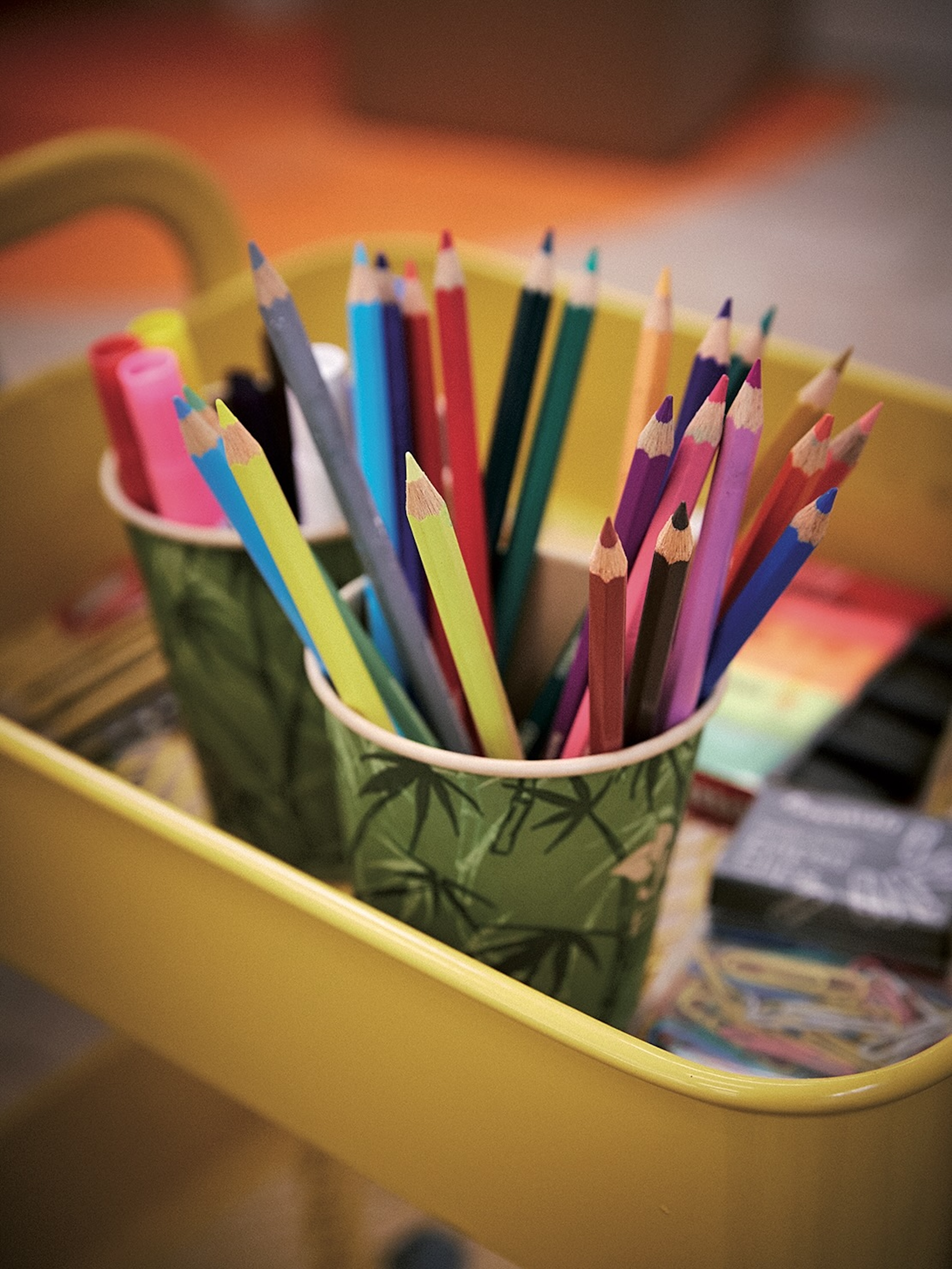
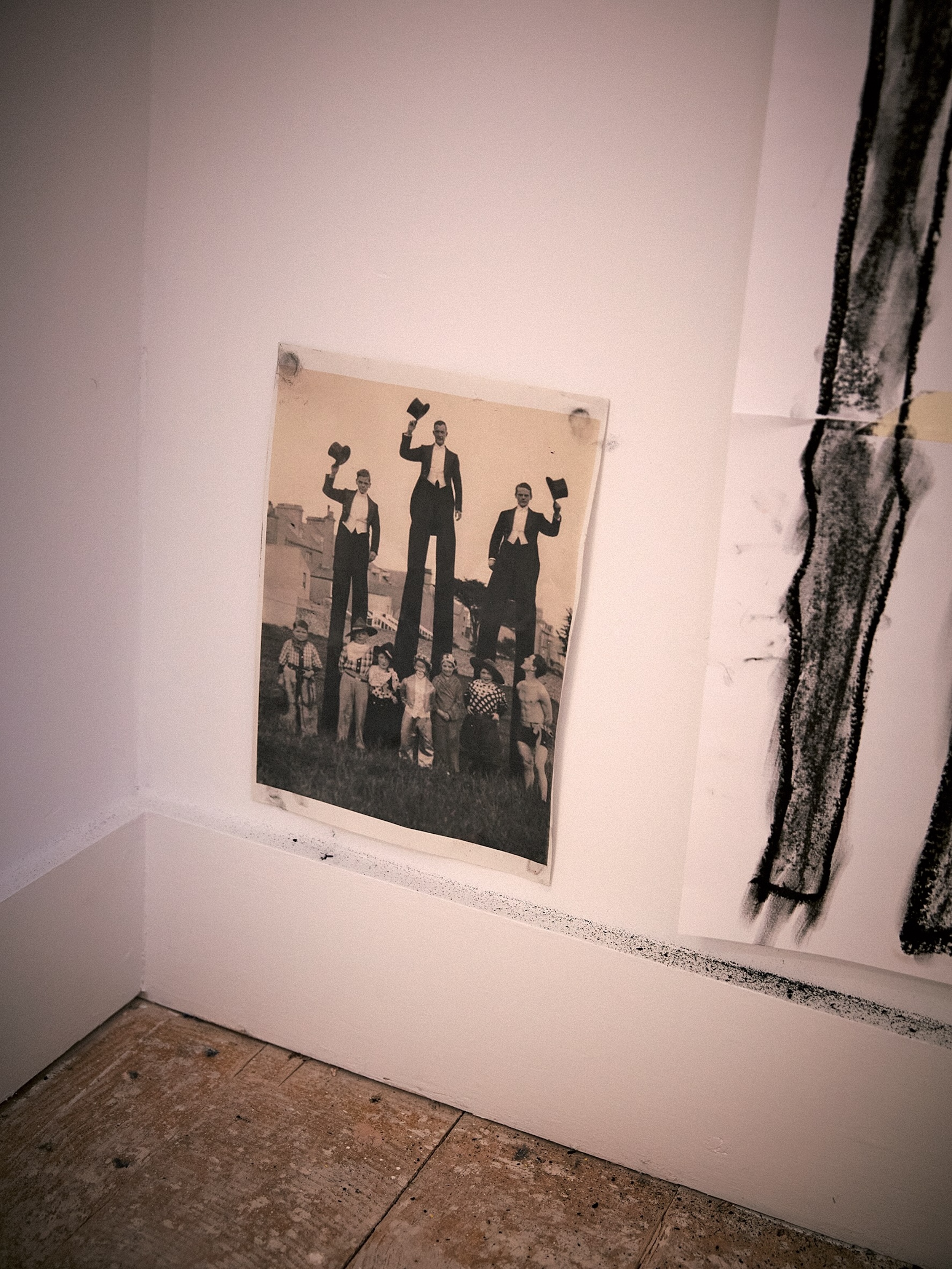
Residencies present a challenge as much as an opportunity, requiring artists to quickly adapt to new environments, climates and time zones, at the same time as thinking about the work. The timeframes are also a test – particularly for Srikhao, who usually works on projects for a year or two. Here there is an expectation of progress in 12 weeks. But one month in and he is finding his way, the walls pasted with drawings and sketches, glossy prints pinned to the shelving unit. “Everyone has to find a way to claim the space,” he reflects.
It is a brisk autumn day, and I am conscious that London must be cold and grey compared to the brightness and humidity of Bangkok. Srikhao agrees. “Good sweets though,” he smiles, offering me a square from a bar of chocolate. “Of course, the good part of being abroad is that you talk with different people, from different cultures,” he adds. “You can look at the work from another perspective. And then you can see that these new people are connected by the same strings that connect every human.”
“I’m very interested in the idea of disconnection, because I think it’s key to a lot of trouble in the world”
Srikhao brought the beginnings of an ongoing project with him to London, work that takes as its starting point the true story of Thailand’s Tham Luang cave rescue. In June 2018, a teenage football team and its coach were trapped in a cave system after intense monsoon rains; the story fast became international news, and as many as 10,000 people were involved in planning and executing their rescue. Almost three weeks after being trapped, the boys were safely evacuated, miraculously living to tell the tale.
Media interest only intensified after their escape and documentaries followed, produced by Netflix, Amazon Prime and National Geographic, amongst many others. Srikhao followed the story with interest and a deepening ambivalence. He noticed the way that the team were only ever shown in uniform – their football kit, or school uniform – and always, always smiling. He could see that the youngsters, aged just 11 to 16, were being transformed from schoolboys into national symbols, and felt the pressure that this must have exerted on them – especially in the context of an ordeal that had been fraught with darkness and real danger.
And, as real life tends not to, the story did not end after the media attention faded. One of the young team, Duangphet Phromthep, eventually travelled to the UK to continue his football training and, in 2023, took his own life. This event received comparatively scant press coverage. Srikhao believes the media outlets were unwilling to rescind their vision of the boys as stars, as miraculous, and their story as one of hope, of overcoming. “When I was a teenager, I encountered similar feelings of trauma and abuse of power,” he says. “This story, in some way, reflected my own experience.”
He began to make work responding to the narrative, travelling to the cave to make photographs. The experience of doing so, situating himself in the same scenario as the young boys – some of them close to his own age – was intense. “It was a very, very bodily experience,” he says. “You go in complete darkness, it’s very scary.”
Each trip took between six and seven hours, walking into the cave, photographing and walking out. “It feels like you’re inside a creature,” Srikhao recalls. “Psychologically, it’s like a mother’s womb – very dark, but warm at the same time; very frightening, and yet you feel safe.” He wants his exhibition at YDP, in spring 2026, to communicate some of this intensity, the bodily experience of the trip. “I’m interested in this duality of feeling that the cave collapsed. At a certain point you realise you’re in something that’s way bigger than you, and you just surrender. You think, ‘OK, if I die today, nobody’s going to find me’. It requires a very strong, spiritual sense – you’re not thinking, you’re just there.”
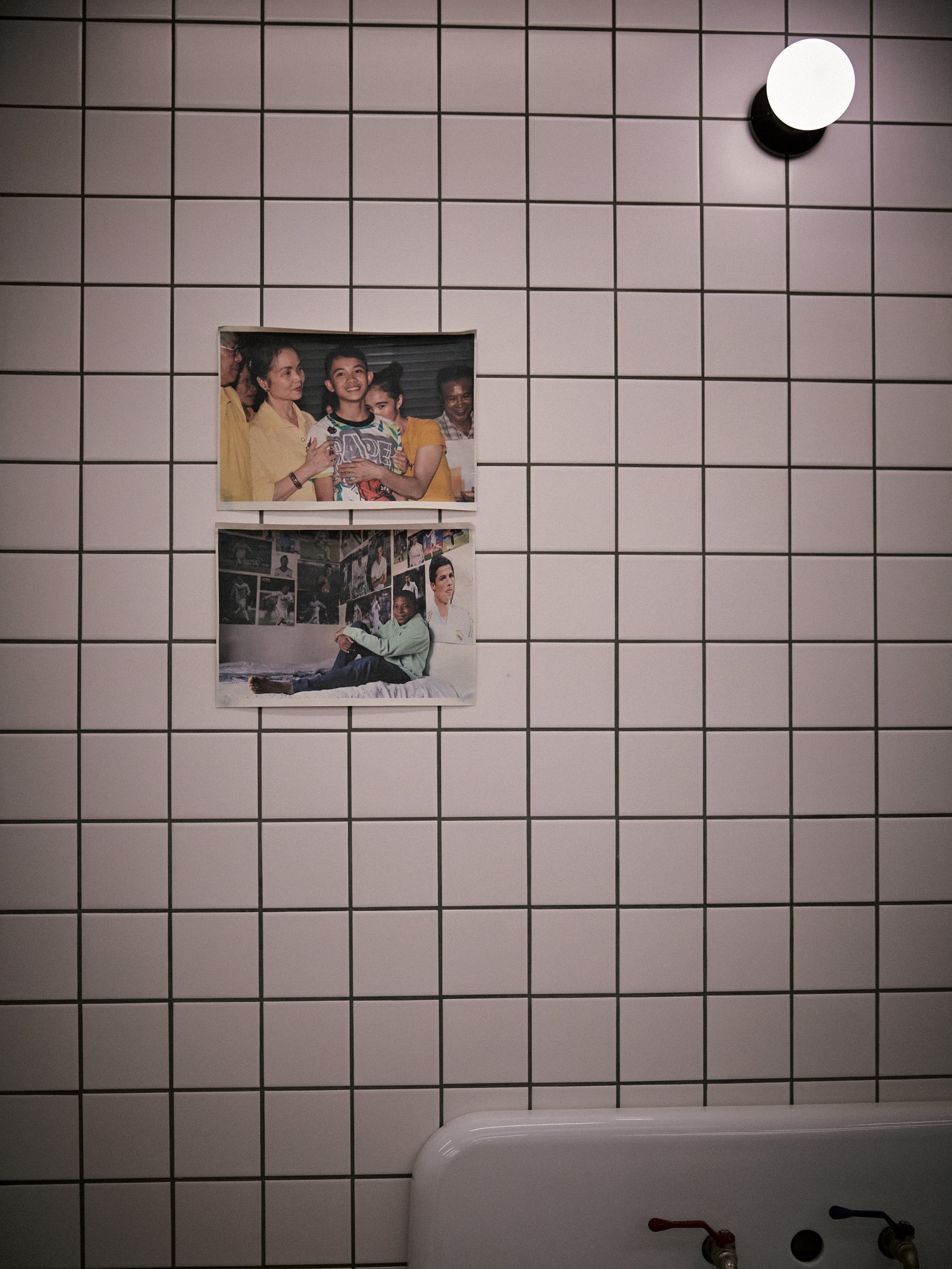
Significant, too, is the gesture of bringing the cave from Thailand to the UK, akin to the trip taken by Phromthep. Srikhao is coming to recognise a connection between his journey into the cave and the journey going abroad. “I think I understand him,” he says, gesturing to a picture of Phromthep pinned to the wall. “He didn’t speak English, he was at a boarding school in the UK. I don’t think it was easy for him. He was a stranger here. The cave was probably warmer than the weather in the UK. A sense of strangeness, the unfamiliar, the loneliness, I want to bring all of that into the exhibition.”
While researching the project, Srikhao learned about a trick, or magical knot, which dissolves when put under pressure. “I think this is the concept of the exhibition, that somehow photography and artwork and storytelling can reverse things, or can create a new reality,” he says. “A new, happier ending to a story. Photographs have a power to create hope, and to create new realities for people.”
Srikhao himself has experienced this kind of artistic alchemy. In his late twenties, while facing a pattern of self-destructive behaviour he was struggling to understand, he sought out support from an art therapist. During their work together, he realised that his struggles were a reaction to the abuse he had experienced a decade before. As a teenager he had modelled for photographs for his partner, who was older than him, and more senior in the art and film industry. The images walked a fine line between art and pornography, and soon after, the partner used them to blackmail Srikhao.
“I was quite young, I’m still figuring out what happened,” he says. The events disoriented him, rending a fissure between himself and his felt experience. “I guess it’s a very protective mechanism inside all of us. When everything is very overwhelming, very hurtful, we just leave the body. Permission to let someone capture your vulnerability has to begin with trust, or with human connection.”
A violation of that trust can make someone go to pieces, and the effects can be felt for years. Hence Srikhao’s work with the therapist, who slowly helped him bring the fragments of his narrative back together. “I think that was the first time that I knew – this is all connected, and it’s very deep.”
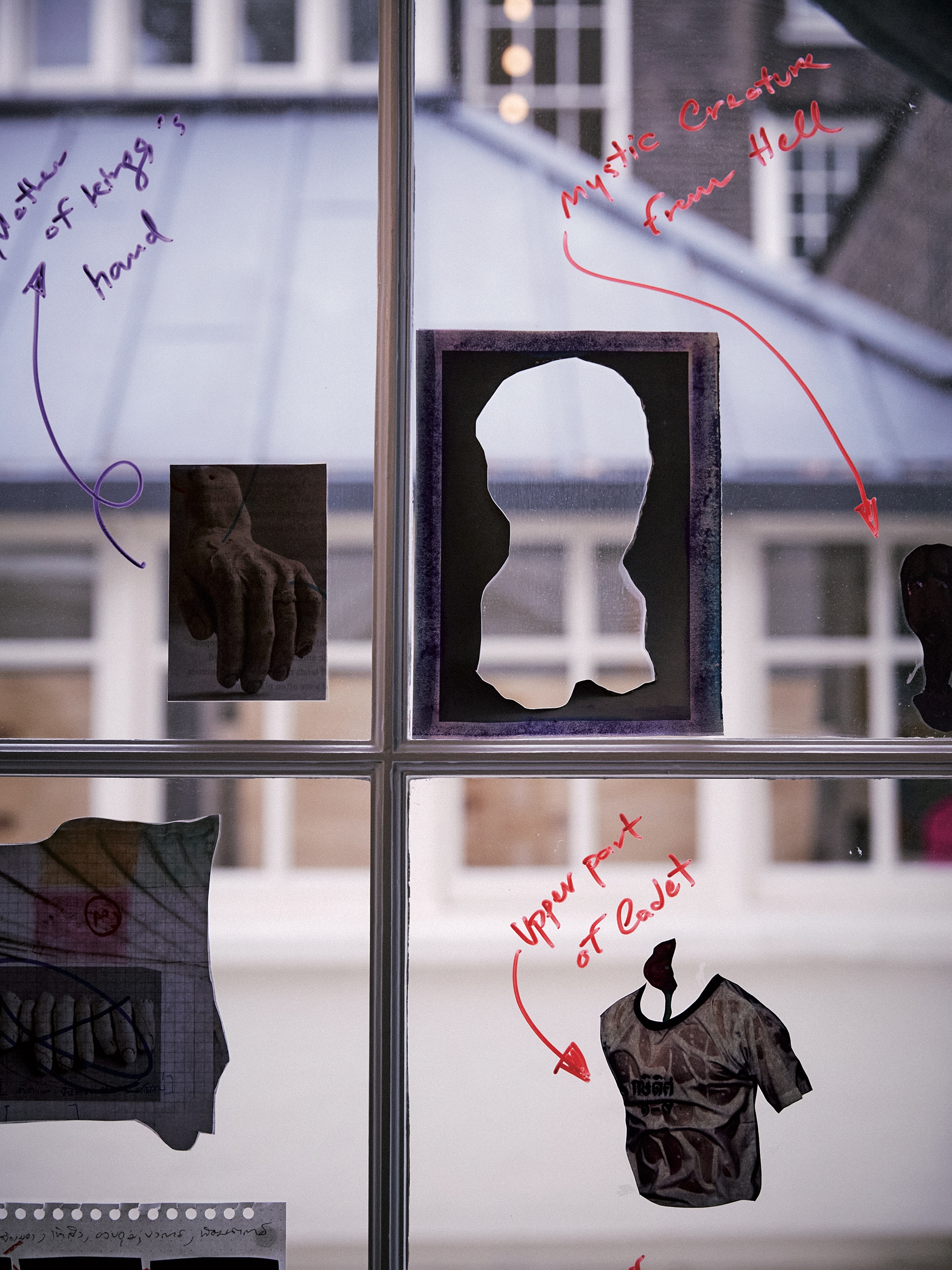
The therapist encouraged Srikhao to work with scissors to make collages, and to add his own marks with chalk. “It’s a kind of framing,” Srikhao explains of the process. “The incident may be very big, but you have the power to collage it – you can cut it down, make it smaller. You can place it on a page. It’s like you’re rearranging your narrative at the same time. It’s very simple, but very effective.”
Chalks are a traditional tool of art therapy, he adds, because of the directness of their contact with the body, the immediacy of the experience of using them. “You have to use your fingers, it’s a direct point between the subject and the object that you’re working on. There’s no barrier. And you let yourself feel something.”
Srikhao’s work in therapy profoundly transformed his memories of the abuse he had experienced. “I spent a lot of time dealing with it, through therapy and also in making artworks,” he says. “After that, I began thinking a lot about the agency of the subject, and how artwork, or how creating art, can reverse that role, can take back agency and power.”
These early therapeutic explorations became Cumulus (2023), a photobook that revisited and reconfigured his teenage photographic archive as a way of re-encountering this period on his own terms. Imago (2024), a project in film and mixed media, reclaimed the photographs that had been used to blackmail him. “The function of blackmail is to make you disconnect from others, and to make you disconnect from yourself,” Srikhao observes. “But the same photograph, in the first place, was intended for you to connect with yourself and others.”
In Imago Srikhao boldly revisits the works and, by transforming them, restores them to their original purpose. “We sliced, crumpled, burned and painted over photographs taken during that time, transforming the deep wounds of our past into ephemeral light and shadow,” states a narrator in the work’s accompanying text.
“I’m very interested in the idea of disconnection, because I think it’s key to a lot of trouble in the world,” Srikhao tells me. “When you disconnect from yourself, it’s not good. It disconnects you from other people. But in contrast, when you connect with yourself, it makes you connect with the world, and with others. I think about this a lot, and how photography can be a way of making people – or making the photographer – reconcile with the world again.”
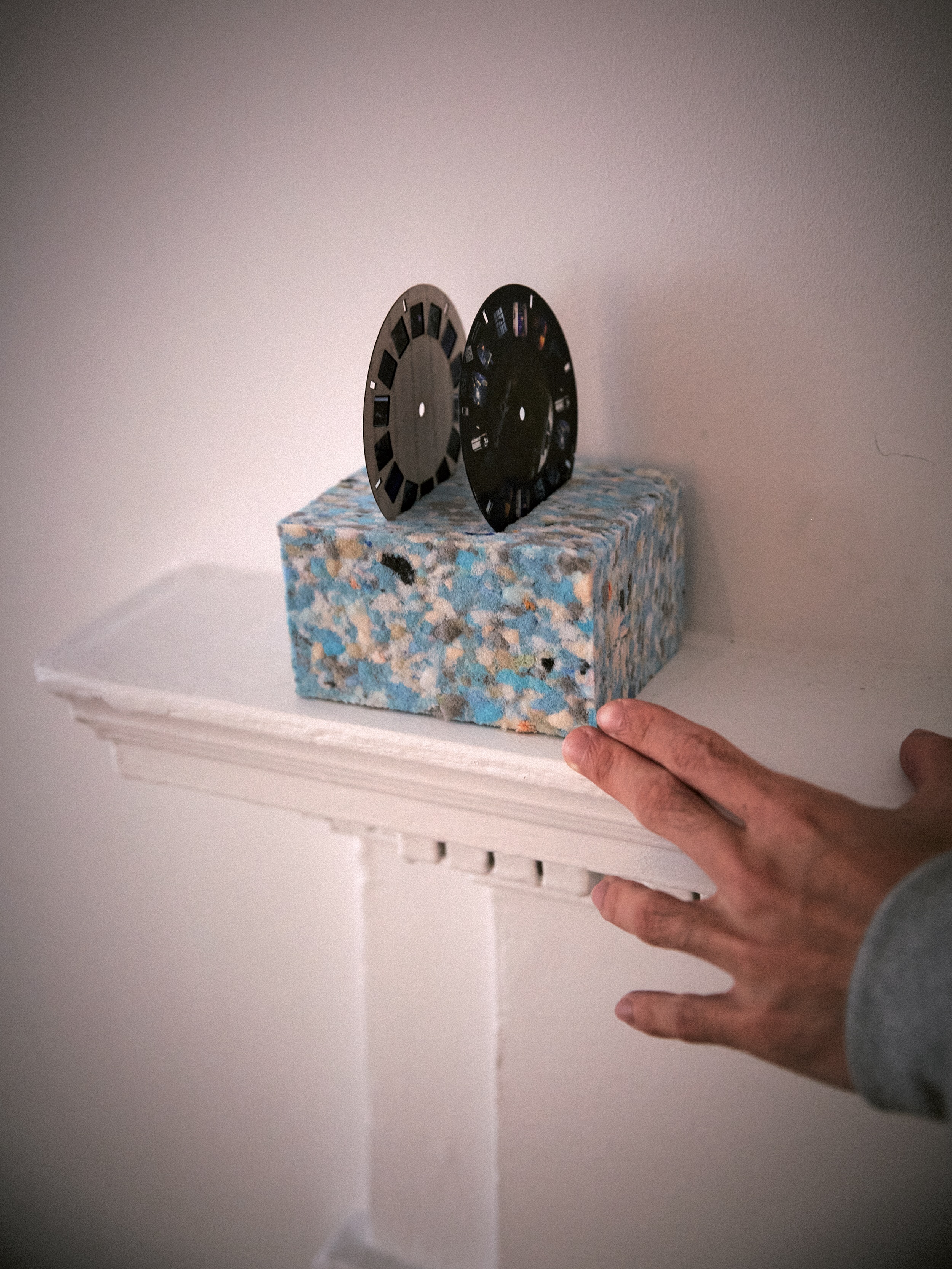
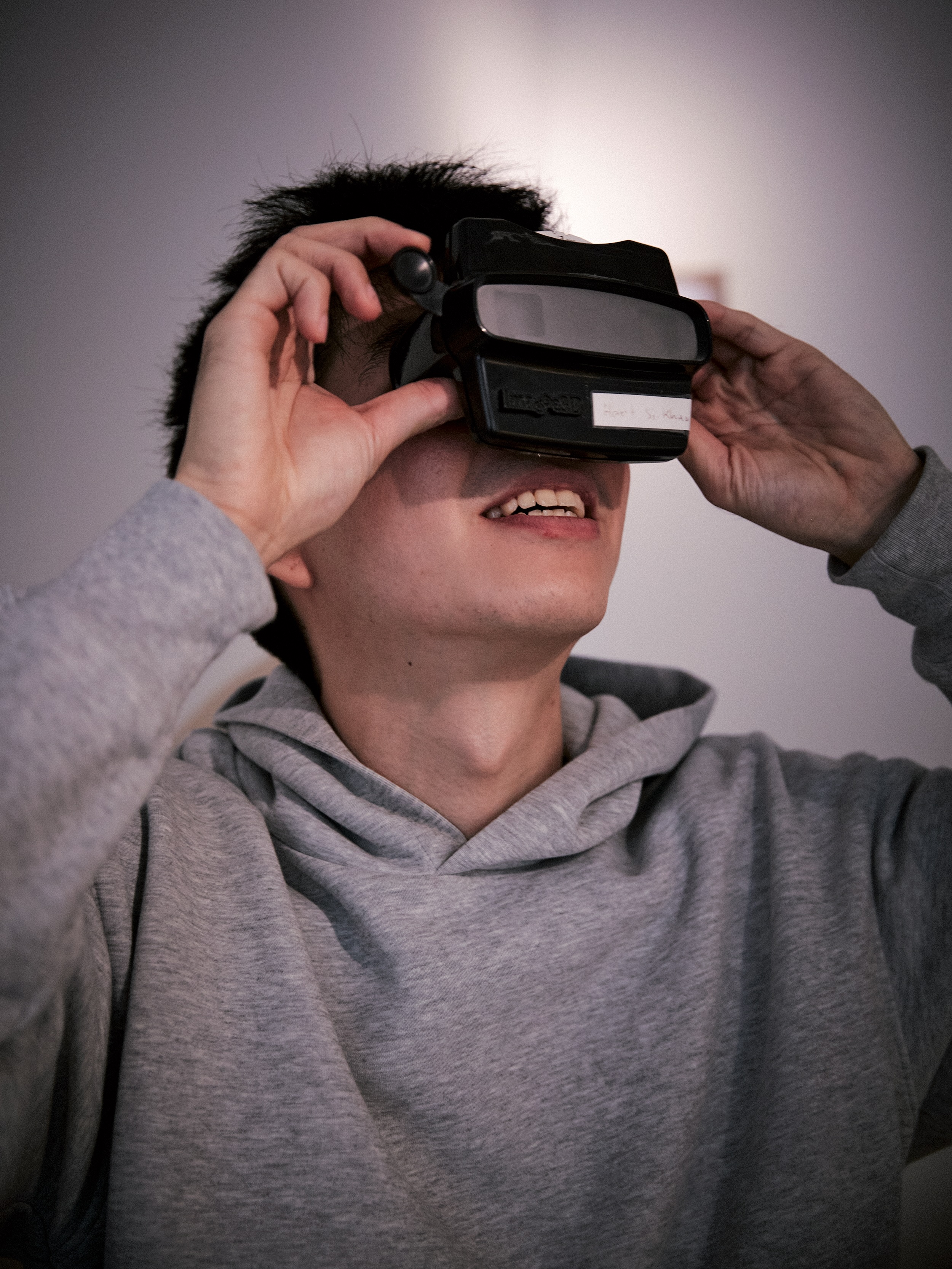
Downstairs from his studio at YDP, in the Artist’s Lab space, Srikhao has already installed a display drawing on almost a decade of his scrapbooks, titled Monument and Cloud. His work in collage, drawing and writing speak to one another from the walls, from text written on the windows, and from the centre of the room, where they hang from a string. Tiny kings and godheads decorate the window frames and low down at the edges of the room. A slide viewer on the mantelpiece is full of pictures of the sky, cloud after cloud.
For all its weight, Srikhao’s work manages to maintain a gentleness and sense of humour. “Kinship, trauma, healing, spirituality, they’re big words,” Srikhao says, when I comment on this warmth. “I used to use the camera to analyse, or to deconstruct, or to criticise. Now I want to use the camera to try to create, to connect. It’s a good apparatus. Photography, for me, asks, ‘How can I reframe the world?’
“Everyone has a certain level of disconnection or dissociation in this world,” he continues. “It’s a very anxious place. But looking at the world through the viewfinder is a direct connection between yourself and the world. Photography is a tool to stop yourself from dissociating too much.” So, I ask, is making art something that brings us back into connection? “Yes,” he replies. “I think it still does, no matter what. And it always will.”