
Interviews

Setting the Stage in Pyongyang, North Korea

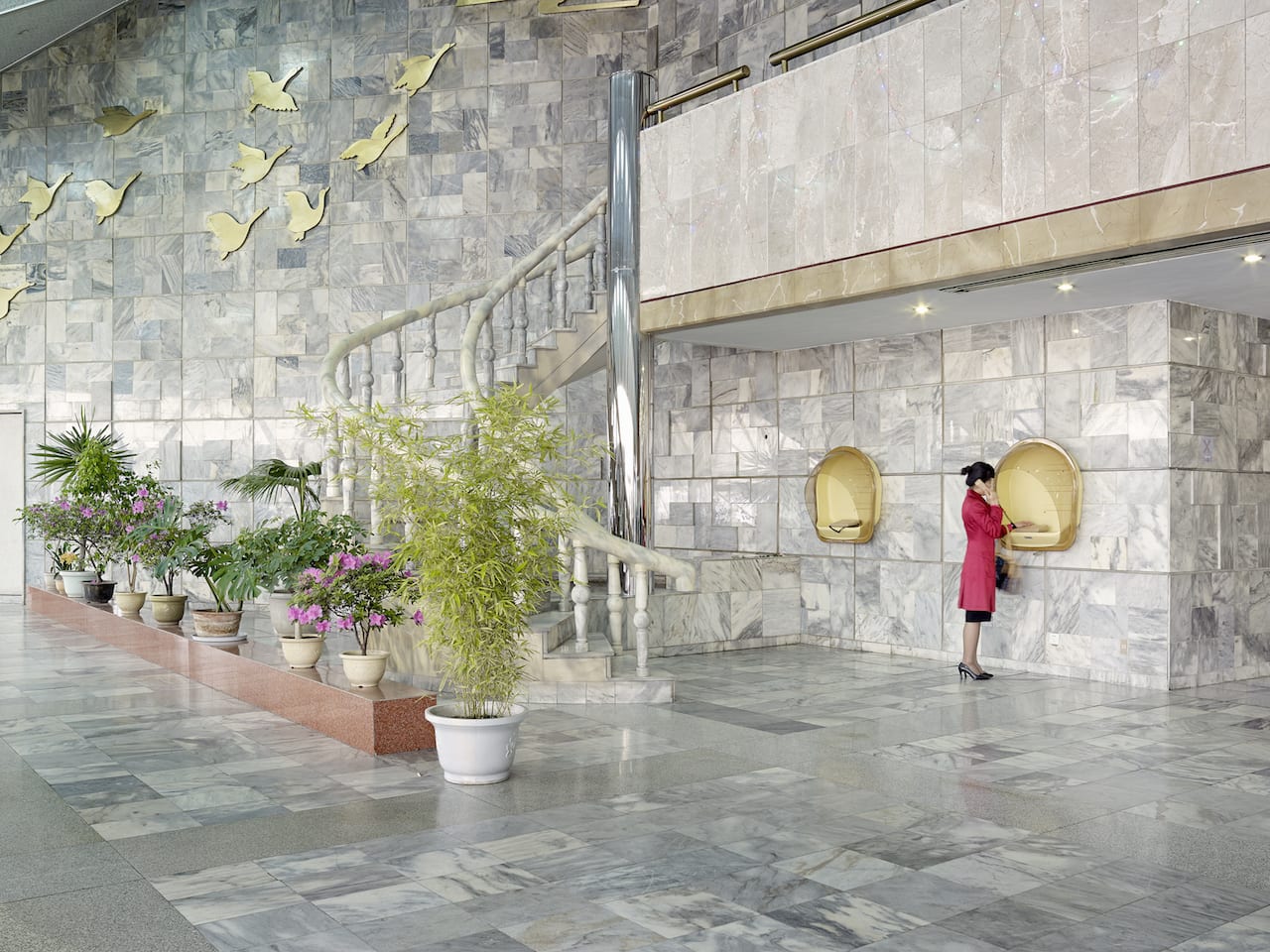
Documentary images of North Korea have trickled steadily into the media landscape since the late 1990s. Since those granted access to the region are afforded little freedom to be creative, their main depictions are usually of totalitarian dictatorship, state-sanctioned ideologies, normalised militarism, and colossal architecture, all of which have become over-familiar in images of the country. This documentary déjà vu is what prompted Eddo Hartmann to pursue a multimedia project about North Korea, to act as a record for what many of us cannot see. The photographer visited Pyongyang, the country’s capital, four times between 2014 and 2017, creating thousands of large and medium format digital images of the city’s architecture and citizens. “I kept seeing images in this World Press Photo kind of style,” he explains. “I knew that if I were to go there, it would not be the way that I would take pictures, because it wouldn’t be interesting.”
30 November 2017

A different take on the city in Susannah Ray's New York Waterways

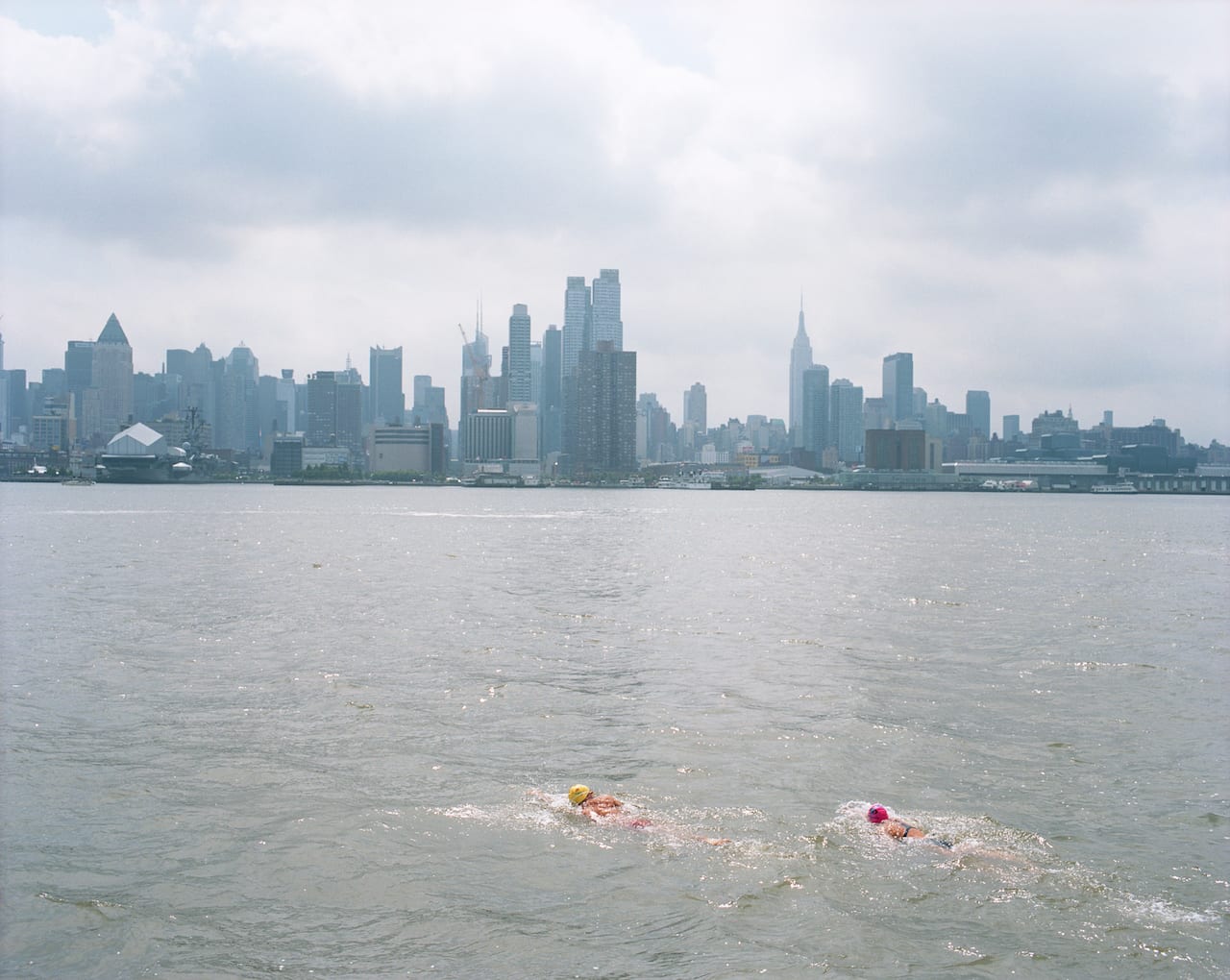
For Susannah Ray to get into the centre of New York city, she must first travel over a series of bridges and waterways. Whether driving across Jamaica Bay or taking the subway from her home in Rockaway Beach, Queens to Brooklyn or Manhattan, she repeatedly finds herself captivated by the sights she encounters – the sky changing colour above the water; the birdwatchers on the shores; men fishing near a scrap metal yard, up to their waists in waders. She sees groups of people performing religious rituals, gatherings and prayers on the banks of the river. She sees more simply being. Ray’s image of New York is utterly coloured by its relationship with the water. So when she decided to create a portrait on the city, she decided to use those urban waterways to weave it all together. “The water serves so many different purposes for so many different people,” she says. “It acted as a focal point. The communal draw symbolises that idea of coexistence.”

28 November 2017

"Culturally rich, economically poor" inner-city life shapes Omar Khaleel's work

For Omar Khaleel, fashion is personal. Using his native Birmingham as a backdrop for his editorial commissions and portraits, he shapes his work according to the details and textures of British urban life. From the streetwear his models are styled in, to the musicians he photographs and the local streets he uses as locations, Khaleel’s photographs pay tribute to the many facets of inner-city identity and are steeped in the environment that shapes it. As a British-Yemeni, representing cultural diversity plays an important role in Khaleel’s approach to photography. “I am bicultural and live in a culturally rich but economically poor inner-city environment,” he says. “I have been blessed enough to have grown up with and be around people from all walks of life.”

24 November 2017

Drip, a new platform from Kickstarter, offers access to ongoing funding

Kickstarter has arguably revolutionised photography, allowing image-makers to source crowdfunding for big projects, and therefore help bring trends such as self-publishing to life. It’s now commonplace for photographers to announce they’re making a book and start a Kickstarter campaign to fund printing it, for example – but the platform only launched in 2009, and Arnold van Bruggen and Rob Hornstra were very early adopters when they used it to fund the first book in The Sochi Project (which was published in early 2010). Now Kickstarter has announced a new initiative allowing artists, collectives, and communities to seek funding on a more ongoing, subscription-like basis, rather than for one-off projects. Called Drip, it was soft-launched on 15 November and, so far, is only open to creatives invited by the platform – though of course anyone who wants to fund a project is now welcome. Drip is scheduled to open up to more creatives at the start of 2018.

24 November 2017

Woman Paper Visa journal celebrates female photojournalists

Anna Alix Koffi realised that the issue of women in photojournalism was so big that it warranted a publication of its own, and started thinking out a framework for a second edition of Visa Paper focusing on work by women. “I realised I could do this because there are women artists everywhere I go,” she says. “Most of the time publications don’t focus on women, but I knew that Woman Paper Visa would be special because women in photojournalism is a strong thing. It’s much more difficult than any other form of photography.”

23 November 2017

World-class collector David King talks work, life, and left-wing history

It’s a spectacularly beautiful early morning in December and the traffic is rolling past indifferently on one of North London’s less than silent streets. I’m standing in front of a large red door, having come to visit David King and his world-famous collection documenting the extraordinary visual history of the Soviet Union. King has been assembling the collection for almost five decades and now it is in the process of being transferred to the archives of Tate Modern. The collection has always run in parallel to his work as a graphic designer, photographer and author – work, it is fair to say, that shows influence from the Bolshevik-era material he has discovered on his many visits to the former USSR, and which he has often drawn from in his books, posters, photographs and graphic work.

23 November 2017

Into the woods at the V&A’s exhibition of trees in photography

Marking the 800th anniversary of the Charter of the Forest signed by King Henry III, and corresponding with the launch of the 2017 Charter for Trees, Woods and People, the V&A’s new display Into The Woods: Trees in Photography, celebrates the significance of trees in the work of photographers across the world and throughout history.
The exhibition is comprised of works from the V&A’s permanent collection as well as photographs recently transferred from the Royal Photographic Society ahead of their rehousing in the museum’s new Photography Centre in 2018. Curated by Martin Barnes, senior curator of photographs at the V&A, Into The Woods began as an impulse – “I just like trees!” – but gradually revealed itself to be the germ of a great idea.

22 November 2017

Q&A: Luce Lebart from the AMC-backed Canadian Photography Institute

Luce Lebart has hopped across the Atlantic Ocean to take the helm of the newly-minted Canadian Photography Institute (CPI), which fills the large gap left by the abrupt and permanent closure of the Canadian Museum of Contemporary Photography in 2009, thanks to the support of Scotiabank, the Archive of Modern Conflict and the National Gallery of Canada Foundation

21 November 2017