One of the dominant influences in contemporary European photography is wheeled into the restaurant at…
We are in Arles, where in July 2016 he showed Mortuary, one of his signature sculptural installations, made up of heavily manipulated, elongated photographic forms. He had been selected for the Rencontres photofestival’s Discovery Award, though in truth this cat had been long out of the bag – Yokota exhibited in Arles in 2015, showing his almost imperceptible inky-black prints from his Inversion series as part of Another Language: 8 Japanese Photographers, curated by Simon Baker of Tate Modern. And in the preceding half decade, his intriguing, visually arresting performances, experiments, installations, books, soundscapes and collaborations have blazed a trail from Tokyo to wider international acclaim, taking photography on a journey to the extreme. In this he is a revolutionary, with neither pretension nor timid creativity. The sheer energy with which he produces work is extraordinary, verging on obsessional and driven by a desire to constantly record, destroy and then recreate. Anxiety is the fuel. “In my mind, I have an image of burning energy in continual production,” he says.

Illuminating India: Photography 1857-2017, is the first exhibition to document the history of photography in India, and includes both archive and contemporary work. It includes images by India’s first known photographer Ahmad Ali Khan, pioneering art photographer Marahaja Ram Singh II, the country’s first female photojournalist, Homai Vyarawalla; and award-winning contemporary photographers such Magnum’s Sohrab Hura. It also includes images of India taken by non-Indians, including Henri Cartier-Bresson, Werner Bischof, Margaret Bourke White, Lucien Hervé, Mitch Epstein, Vasantha Yogananthan, and Olivia Arthur.
This October photographers have taken over the popular Art on a Postcard fundraiser run by The Hepatistis C Trust. Over 1000 unique works will be available for £50, with big names such as Jim Goldberg, Martin Parr and Wolfgang Tillmans joining in alongside less-familiar talents. In total 1200 lottery tickets will be available, with the postcards assigned at random to ticket-holders on 30 October. The images will go on show at theprintspace, Shoreditch from 12-24 October, with a private view on 12 October; in addition all the images, and a full list of the participating image-makers can also be seen at www.artonapostcard.com/photo-postcard/ Tickets are bought online at www.artonapostcard.com/shop/ and all money raised will go to The Hepatitis C Trust’s campaign to eliminate hepatitis C from the UK by 2030.
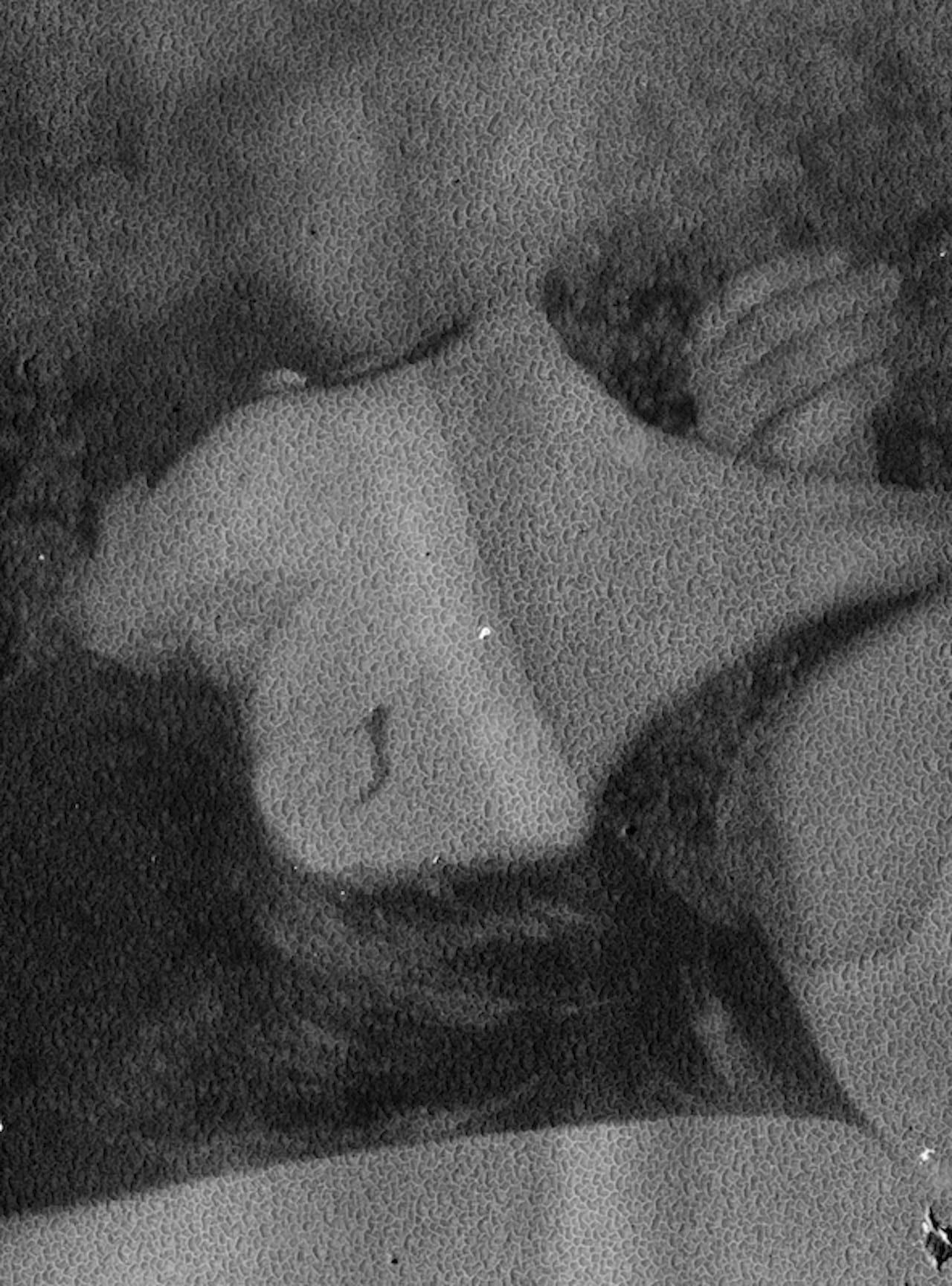
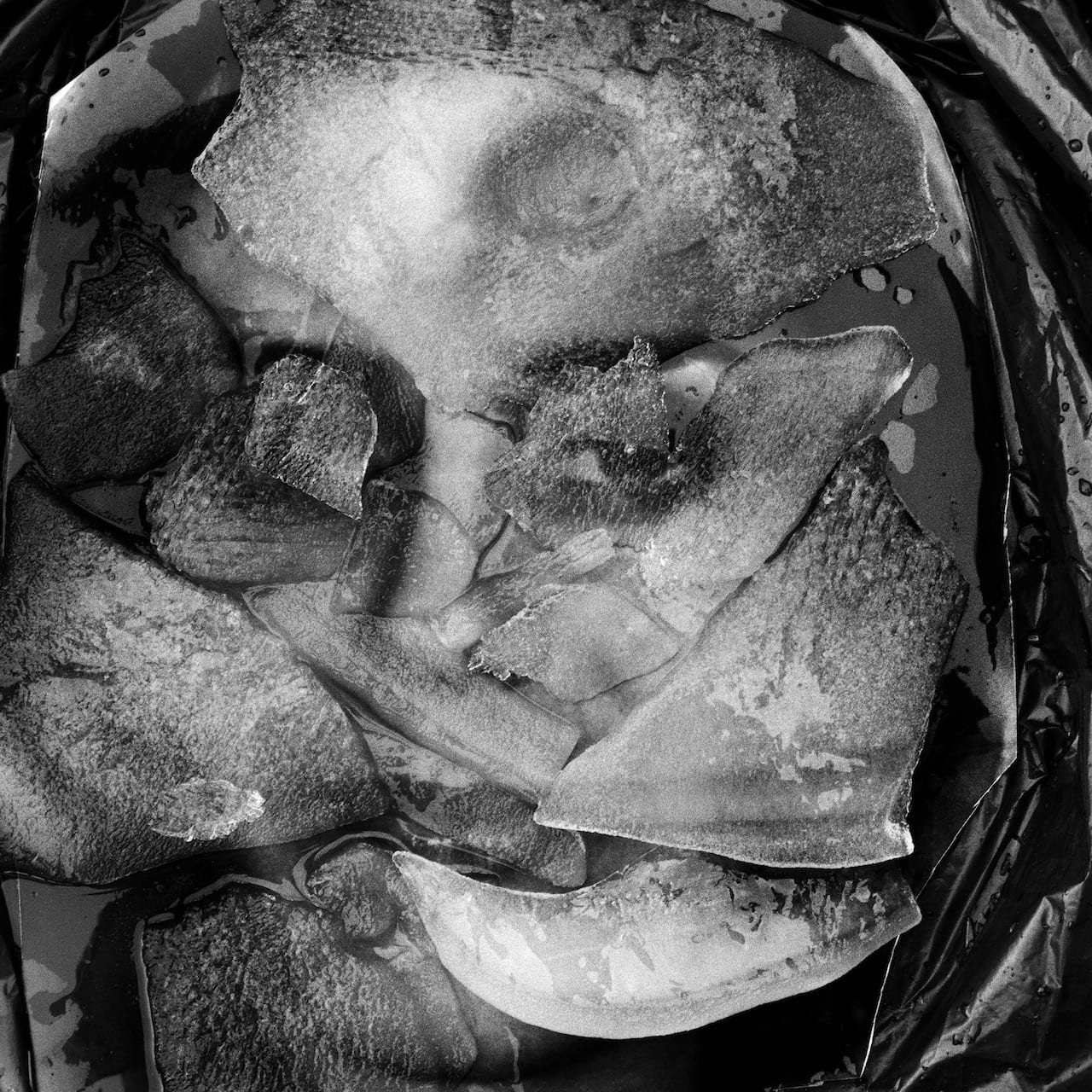
“In this series, I dissolve images and fragments of time,” says French photographer David Infante. The monochrome ‘portraits’ that make up Mirror without a memory certainly feel as if they are unfixed, spanning time as they shift and melt under a fragmented surface. Triggered by a period of solitude in London, he resurrected images from his archive, reprocessing his memories by selecting photographs, cutting them up and combining snippets to give them new forms. For Infante, slowing down time or wrestling many layers of it into one frame takes us into what he calls “parallel worlds”: a space to reflect and search for new meanings beyond the surface of the everyday. The photographer, who has just completed an MA at the Royal College of Art in London and is based in southern Portugal, ascribes his meditative approach to his early experience with analogue photography. “It brought me concentration and contemplation,” he explains.
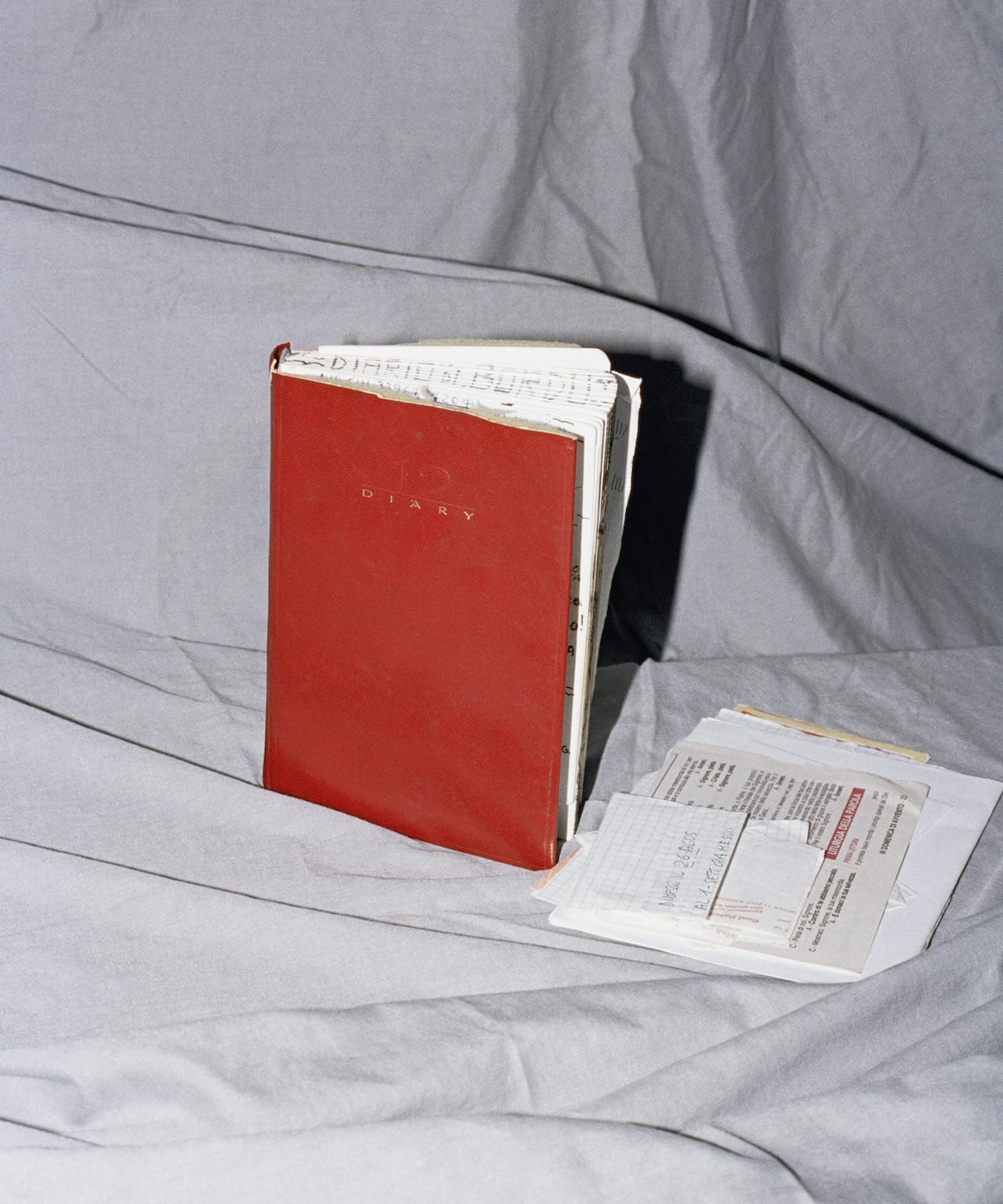
When Veronica Viacava moved to London, straight out of high school in Milan, she had never studied photography. But she had developed an interest in the concept of the photographic image, beyond the physicality of manually taking pictures, and seeking independence from her family, who didn’t approve of her desire to study the arts, enrolled at the University of Middlesex. Viacava has just graduated, and her work has been deeply personal throughout. When she was 17, her mother passed away, which led to intense musings on old family photo albums. By the end of her second year at Middlesex, she had begun to think about the materialisation of memory and “the idea of photography turning the past into an object”, she says. “So that you can look through it.”
On the face of it, Thomas Ruff has radically altered course since his first major…
“MY FRIENDS!” writes Çağdaş Erdoğan from the Silivri Prison, Istanbul on 21 September, in a handwritten letter translated by a curator contact and circulated by his publisher Akina Books. “I salute all of you with my heart. Regardless of the illogical times we have been having, I hope you are well. Don’t worry about me. I’m doing well despite the physical and psychological negativities I experienced since the last two weeks.” Erdoğan was taken into custody at the start of September and officially arrested on 13 September, when he was put into pretrial arrest on accusations of membership to a terrorist organisation. In his letter, Erdoğan discusses the reason he was initially apprehended, and discusses some of the reasons he has been given for the terrorism charges.
German photographer Andrea Grützner, who was born in 1984, has won the ING Unseen Talent Award with her series Hive. She now wins €10,000 to develop a new project and, along with the other shortlisted photographers, the opportunity to develop her work under the guidance of Nadav Kander, the UK-based photographer best-known for his huge commission for The New York Times Magazine, Obama’s People.
Randal Levenson stumbled upon fairgrounds almost by accident in 1971 – travelling from Ottawa to Maine to visit a friend, he found he was there at the same time as the Fryeberg fair. He spent eight days photographing its agricultural and carnival exhibits and, intrigued, went on to the next fair, the last of the season, in Topsham, living in a tent in the woods opposite to be as near to the site as possible. From there Levenson decided to shoot a book-long project on the so-called carnies, and worked on the project for the next ten years. He spent nearly all of 1974-78 on the road with various sideshows and carnivals, shooting from under a dark cloth on a large-format camera on a tripod. “I photographed freaks as normal people,” he told Vice back in 2014. “I found most to be fairly noble individuals.”