
Festivals

Sim Chi Yin investigates the Fallout

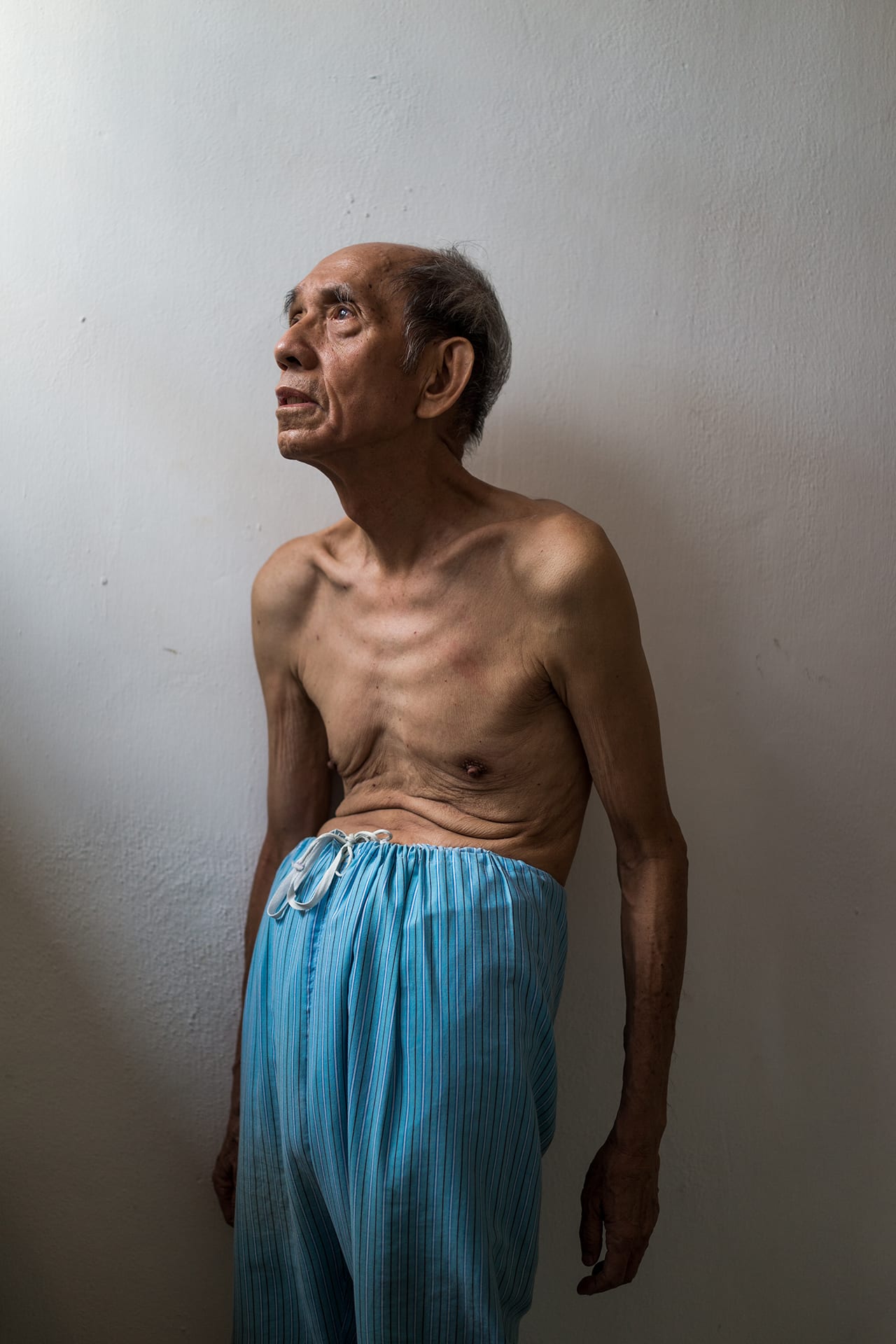
It’s disconcerting to think how years of work and effort, of countless hours spent practising and honing a skill, can be wrenched away from any of us in just a few minutes of misfortune. It’s also, for any of us used to good health, troubling to consider how reliant we are on the basic functionality of our bodies. A photographer, for example, needs to be able to hold a camera, to have the strength to frame a shot and time the click of the shutter in the heat of the moment. Shorn of that basic ability, what are we left with? Early one morning in May 2015, Sim had to face that exact question.

She was on assignment for a French newspaper, travelling to the Tumen Economic Development Zone, a government-owned complex of Chinese factories on the edge of the border with North Korea. Tumen employed North Korean labourers who, with state sanctioning, would be sent to live and work in the economic zone. The brief was to capture how North Korea and China trade. This place seemed like the perfect microcosm for that complex relationship – the makings of great pictures.

Entering Tumen with her driver and colleagues from Le Monde, she failed to spot a sign that read: “No smoking, photography, or practising driving”. As they approached the factories, the car passed a small group of women in black jumpsuits, knelt by the roadside picking weeds from the ground. Sitting in the driver’s seat with the window wound down, Sim instinctively raised her camera and fired off a couple of shots. “Almost immediately, the women turned around, ran towards the cab, and reached into the car,” she wrote in an article for ChinaFile, recounting events.
27 June 2018

Portrait(s) festival on show in Vichy

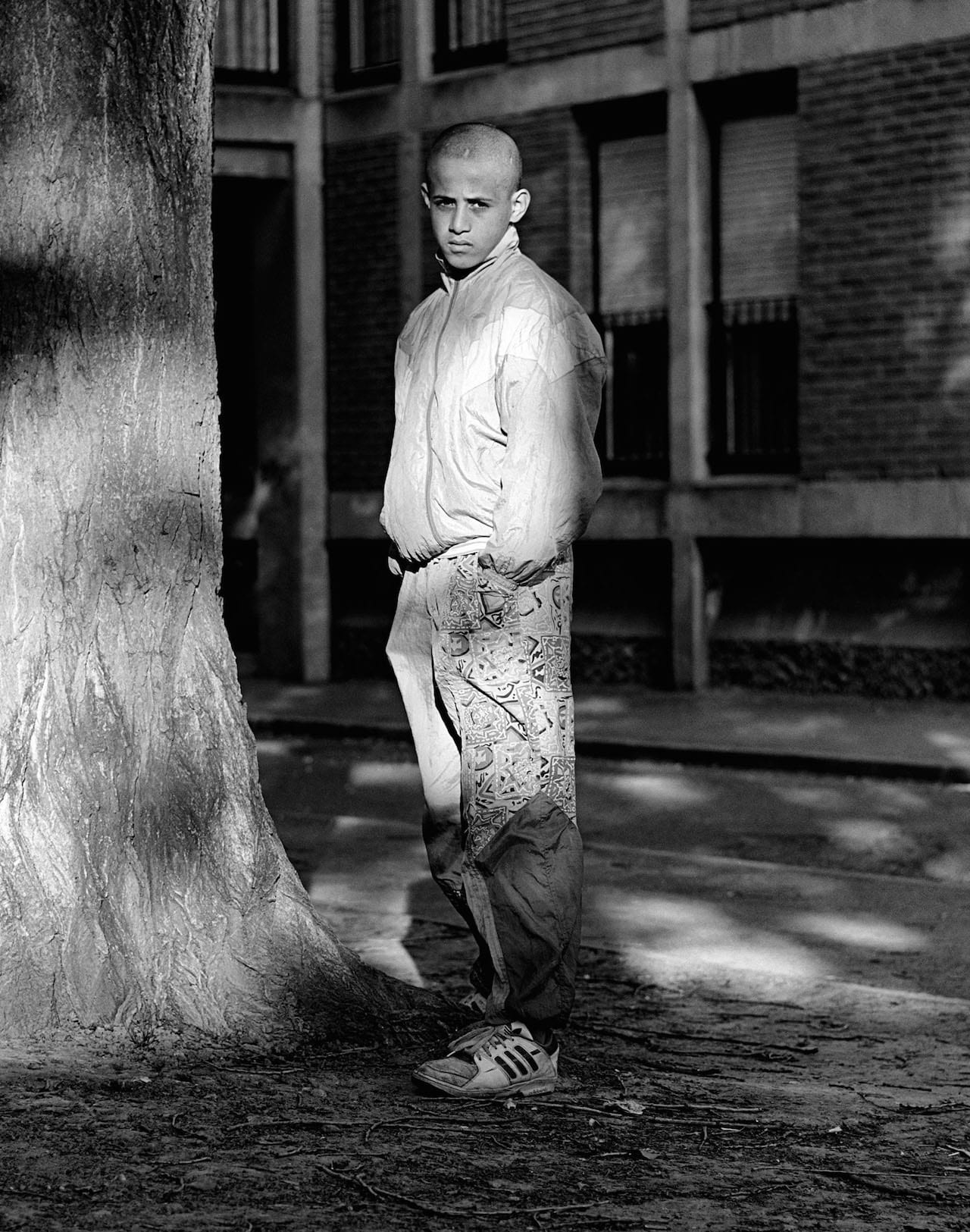
Nelli Palomäki, Justine Tjallinks, Denis Dailleux, Mark Seliger, Thomas Sauvin, Gilles Coulon, Mattia Zoppellaro and The Karma Milopp are all showing work in the Portrait(s) Photography Encounter – a festival devoted to pictures of people. Based in Vichy, France, the festival is now in its sixth year, and has been overseen this time by artistic director Fany Dupêchez.

Dailleux’s images were shot from 1987-1992, and show children based in the working class suburbs of Persan-Beaumont, Northern France; the images Sauvin is showing are also from the archives, but were taken by amateurs in China, and rescued by the French artist after the negatives were sent to the Beijing Silvermine to be melted down.

20 June 2018

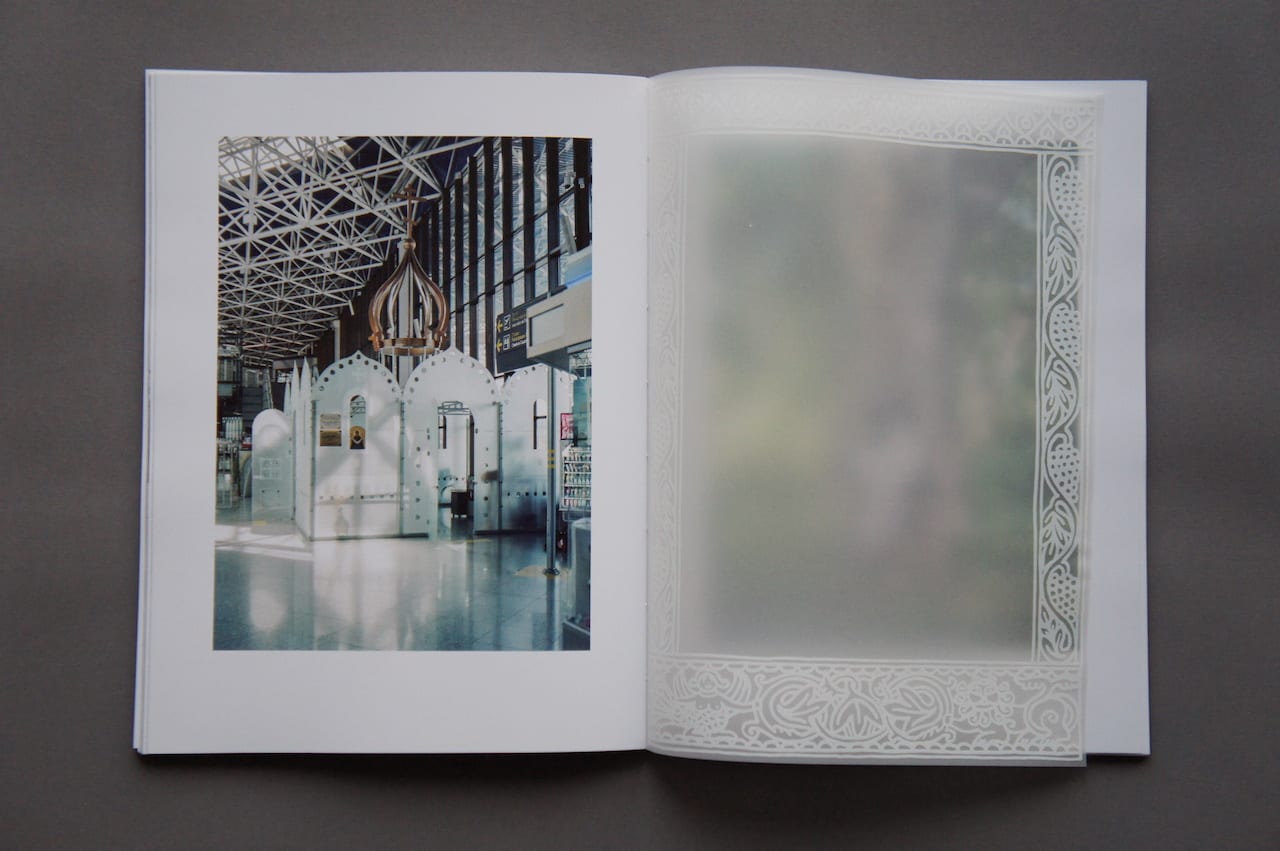
Andrey Ivanov wins the Photobookfest Dummy Contest in Moscow

“When I became a parent, I had the idea to make a photographic book for children,” says Russian photographer Andrey Ivanov, who has won the Photobookfest Dummy prize. “I started to photograph subjects and images of Russian fairy tales. At first it was a series of purely staged photos, but then I began to notice that some of the documentary photos I found fitted perfectly into this fabulous series.

“The fairy tale is the most authentic source of Russian archetypes. As the saying goes: ‘A fairy tale is a lie – yet there is a hint in it, a good lesson to good fellows’. The viewer follows the photographic tracks of the main hero of the fairy tale, referring to the cultural codes of the collective unconscious, and guesses or recognises the fairy-tale images, or hints of them.”

19 June 2018

Michael Danner wins the Fotobookfestival Kassel Dummy Award

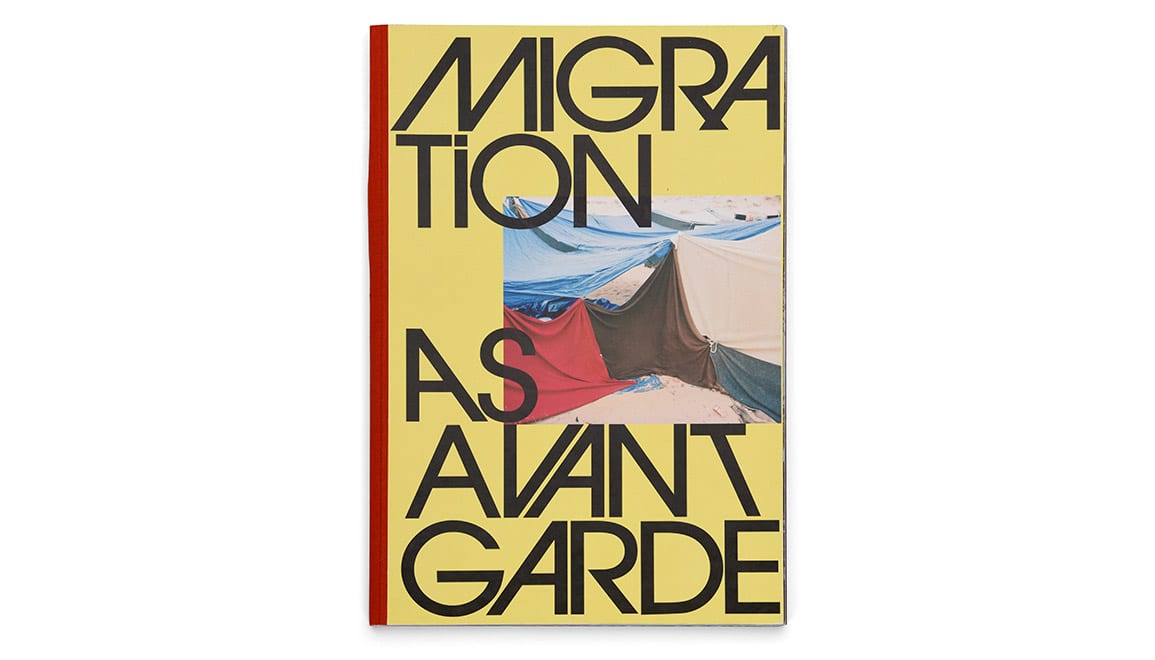
Michael Danner’s book project Migration as Avant-Garde has won the prestigious Dummy Award at the Fotobookfestival Kassel. His mock-up will now be produced and published by Kettler, Germany, the company behind Mathieu Asselin’s hit book Monsanto: A Photographic Investigation. 

Born in Reutlingen, Germany in 1967, Danner studied photography at Fachhochschule Bielefeld in Germany and the University of Brighton in the UK, and lived in London from 1997 to 2000. He’s now based in Berlin, where he lectures in photography at the Berliner Technische Kunsthochschule. He has previously published three monographs and seven artist’s books. 

His project “examines the new ways in which migrants are pursuing their hope for a better life”, he states, adding: “The term ‘avant-garde’ stands for progress and the way of a pioneer. Driven by the desire to give their lives meaning, and guided by their own integrity, migrants bring new perspectives and points of view to our society. The origin of his work was the reading of a 1943 text by the philosopher Hannah Arendt.”

5 June 2018

Ones to Watch: Ulla Deventer

For the past five years, Ulla Deventer has been working on a project about women and prostitution in Europe – specifically in Brussels, Athens and Paris – but also, more recently, in Ghana. Several of the women she met in the project’s early days were from West Africa, and Deventer developed close friendships with some of her subjects, who inspired her to travel to their home countries to experience first-hand what life is like for women living there.

In May 2017, Deventer, who was born in Henstedt-Ulzburg in north Germany and is now based in Hamburg, spent six weeks in Accra, the capital of Ghana, where she focused her attention on the living conditions of the city’s youth, particularly its female sex workers. She recently returned to the country to continue to work on Butterflies Are a Sign of a Good Thing – an extension of her original project.

4 June 2018

Viva Photo España!

Europe boasts more than a hundred photography festivals, but few match the scale and ambition of Photo España in Madrid. This year, the organisation behind it, La Fábrica, celebrates the festival’s 20th edition with a typically eclectic summer season of activities throughout the Spanish capital, encompassing the work of more than 500 artists across dozens of venues that range from the small to the iconic. “The festival is a collective project with a wide variety of institutions, both public and private, supporting it,” says director Claude Bussac, who is hoping that the 2018 edition will “push forward both the formal and geographical boundaries of photography… We aim to celebrate our 20th anniversary questioning photographic meaning and inviting photographers from every continent.”

23 May 2018

Breaking Point at the Hamburg Triennial

The 18-year-old Hamburg Triennial will be directed for the second time by Polish curator Krzysztof Candrowicz, who moved to Hamburg four years ago and set about transforming the it, bringing people and institutions together, and determined to make it more relevant to the viewing public. The 2015 edition was, he says, “The first holistic attempt to create the collaborative framework of the festival. Before, the museums were basically highlighting their own exhibitions, but there was no actual curatorial collective structure.” The determinedly political and environmentally-conscious theme this year was inspired by an amalgamation of many factors, he says, including spending a year “away from structured, mechanised and commercial reality”, travelling around Latin America, Nepal and India. “Breaking Point became, for me, a metaphor for rapid and sometimes unexpected transformation on a personal and global level.”

23 May 2018

Photo London: Another Kind of Life explained by Barbican curator Alona Pardo

“They’re all driven by motivations that are both personal and political to a degree, and they are all self-initiated projects,” says curator Alona Pardo of the photographers in the show Another Kind of Life: Photography on the Margins. “Some may have started as commissions, but very early on took on a life of their own. It was interesting to think about the role of the photographer, because often the photographer hides behind the camera as a facade. There is also an interesting subtext of the photographer occupying the position of an outsider within mainstream society. They are there, assertively documenting the world.”

16 May 2018