
Exhibition

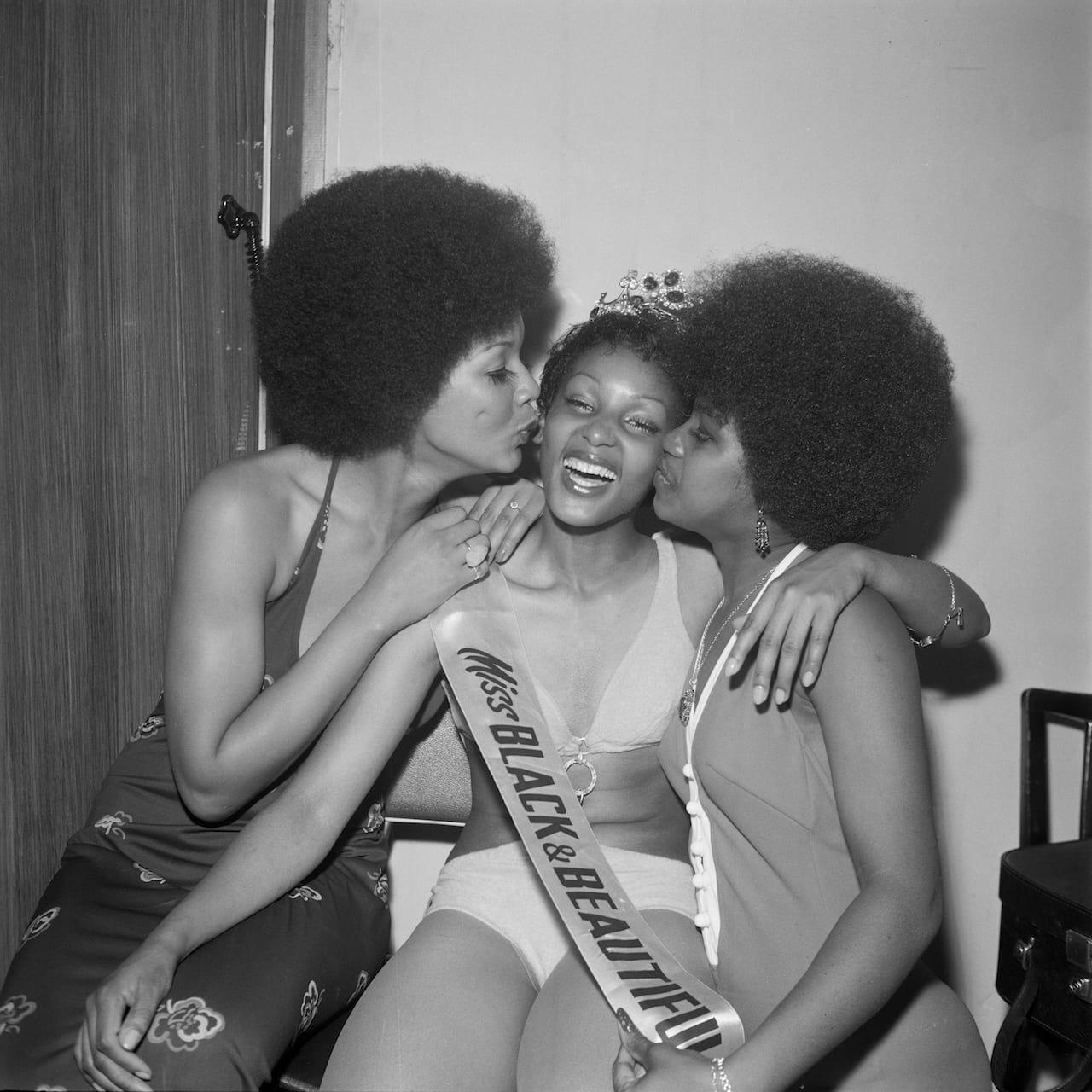
Black and Beautiful in Raphael Albert’s vintage photographs of beauty contests

Born on the Caribbean island of Grenada in 1935, Raphael Albert moved to London in 1953. Studying photography at Ealing Technical College while working part-time at a cake factory, he soon picked up freelance jobs for black British papers such as West Indian World, The Gleaner, Caribbean Times, and New World, and also started to document the West Indian communities in Hammersmith and Fulham, photographing weddings, Christenings and other social events, and taking studio portraits of local families in his home.

In 1970 he established the Miss Black and Beautiful contest, followed by Miss West Indies in Great Britain, Miss Teenager of the West Indies in Great Britain, and Miss Grenada, running them via his company, Albert Promotions, and going on to set up a magazine called Charisma in 1984. The pageants ran for 30 years and he documented them all photographically, as well as commissioning other photographers to shoot them, and in 2007 he organised a display of their work during Black History Month titled Great Britain: Celebrating 30 Years of Beauty Pageants (1963-1993). Albert died in 2009.
13 June 2018

Crunch time for students at Free Range and more…

It’s show time for a new batch of graduates, with photographers and artists around the UK showing off the last work they’ve completed as students. The BA Photography and BA Photojournalism & Documentary Photography shows have already taken place at the London College of Communication, for example with strong portfolios by Herman Rahman and Freya Clayton-Payne, among others; the University of Westminster’s MA Documentary Photography and Photojournalism and MA Photography Arts students are showing their work at Ambika P3, London from 23-28 June, meanwhile, with new graduates including Cheryl Newman, former photography director of the Telegraph Magazine.

Free Range at London’s Old Truman Brewery, meanwhile, offers institutions based outside the UK’s capital the chance to show work in it, taking over the East London warehouses for two photography weeks – 22-25 June, and 29 June-2 July. Exhibitions are free and open from Friday-Monday both weeks, and institutions taking part include Falmouth University, Arts University of Bournemouth, and University of East London. Here BJP picks out our selection of the works that will go on show.

12 June 2018

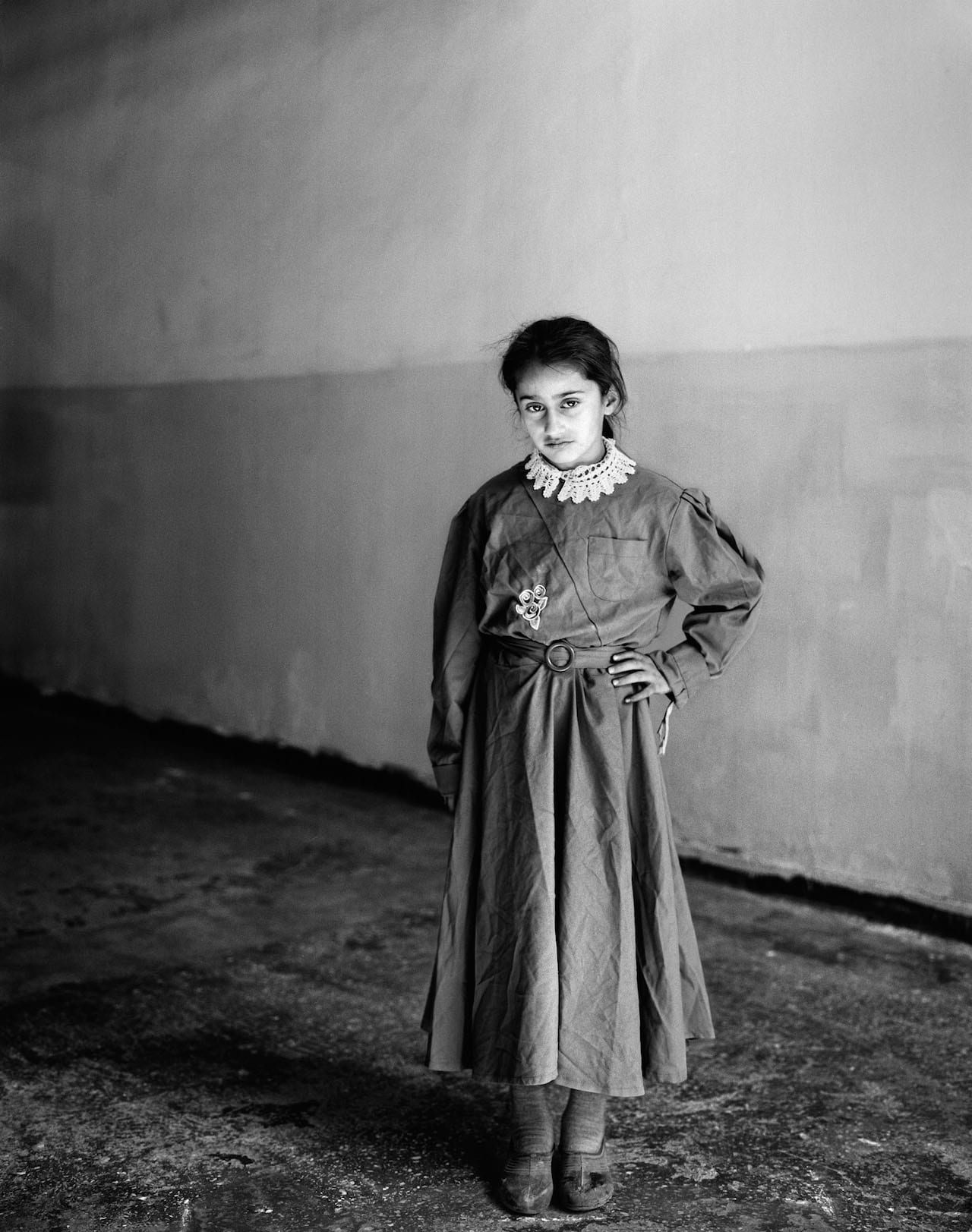
Time Folds for Vanessa Winship at Barbican Art Gallery

“It asks, inevitably, questions about who we are. Who we are in Britain, or who we are in the world. It asks questions about legacy, my own life, and cycles; the very folding of time,” says Vanessa Winship of her latest project, the ongoing series And Time Folds. “It’s difficult to say exactly what it is about because I don’t really know what it will end up being,” she adds.

Winship was the first woman to win the prestigious Henri Cartier-Bresson Award back in 2011, and she now has a major solo show opening at London’s Barbican Art Gallery on 22 June, also titled And Time Folds. It features over 150 photographs including previously unseen projects and archival material; it also includes her newest series, a mixture of “completely different, random formats” and found objects, inspired by her granddaughter and “how she frames herself in the world in relation to seeing, hearing and touching”.

12 June 2018

Tom Hunter’s personal odyssey

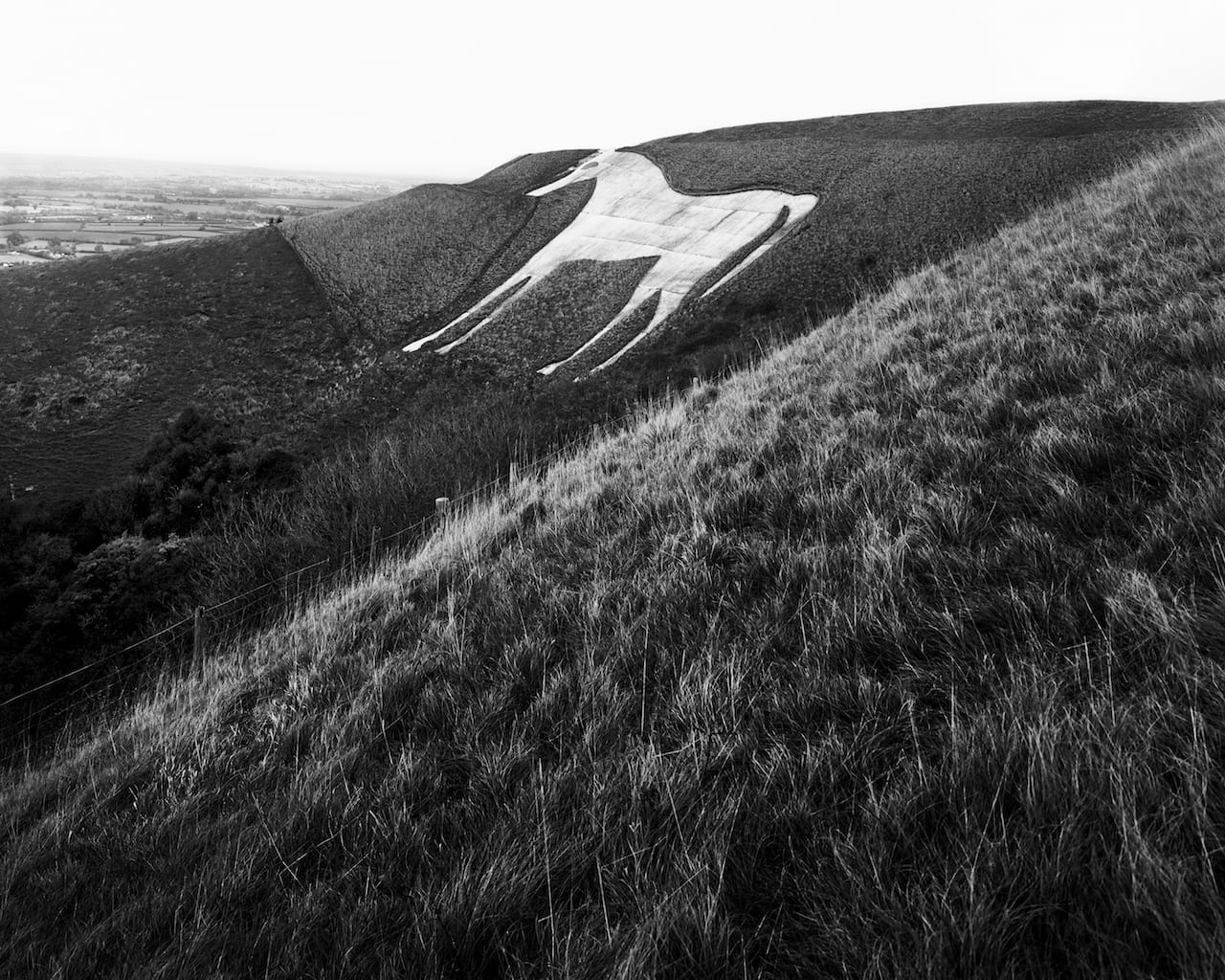
Tom Hunter’s best-known shot shows a young woman in a squat reading a possession order; taken in Hunter’s home in the 1990s, the portrait’s colour and composition evoke Vermeer’s A Girl Reading At An Open Window. His new series, Figures in a Landscape, is a similar combination of personal and the cultural, which takes the viewer “through a world imbued with myths and legends”.

Starting in Dorset, in the village where Hunter grew up, the series tracks past standing stones and megalithic chalk figures in the countryside and the dinosaurs in London’s Crystal Palace park, and ends up in Hackney, Hunter’s base for the last 20 years, and once home to Lugus, the Celtic god of the River Lea. The last shot was taken at Winterville where, says Hunter “the mid-winter solstice pagan festival becomes distorted in an Olympian mountain top landscape. Here ancient and contemporary narratives clash and shatter into a dystopian consumerist nightmare”.

12 June 2018

What To Do With A Million Years by Juno Calypso

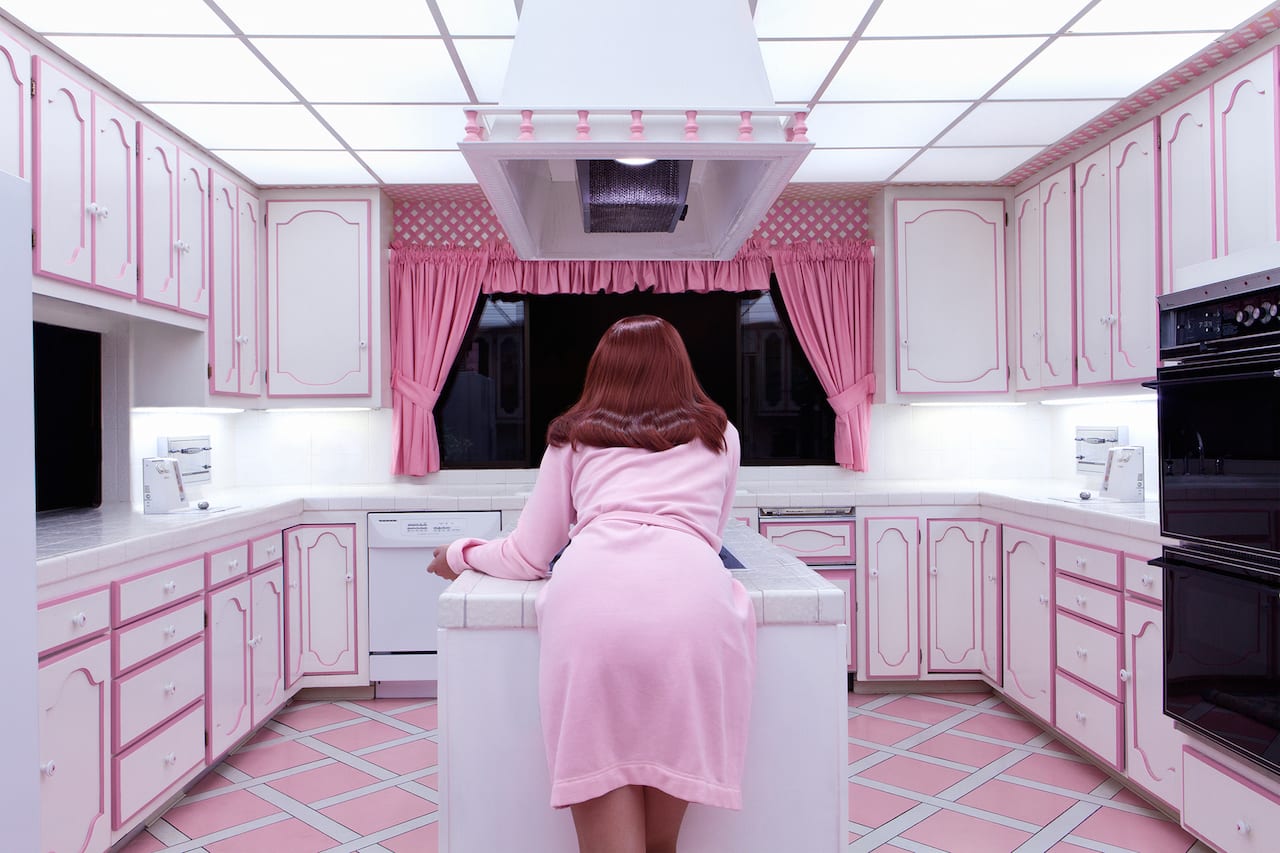
Under the back garden of an unremarkable family home in Las Vegas is an extraordinary 16,000sq ft, all-pink, bomb-proof bunker. Inside are decadent bedrooms decorated with crystal chandeliers and baby pink wallpaper, and a bathrooms with a hot-pink toilet, white marble hot tub, and opulent golden fittings. Surrounding the house is a hand-painted mural of the countryside, and an underground garden with a swimming pool and fake trees growing out of a carpet that stands in for grass.

“It’s basically a house within a house,” explains Juno Calypso, who spent three days of solitude in the bunker, for her project What To Do With A Million Years. Designed to be safe from any disaster or intruder, the bunker was built in 1964 by Avon cosmetics founder Gerry Henderson and his wife, who were terrified of a potential nuclear breakout in the advent of the cold war.

Calypso is currently showing the series at London’s TJ Boulting gallery, and has transformed the basement space into a version of the garden, complete with fake plants, eerie mood lighting, and a soundtrack of soft romantic rock that plays against the continuous sound of running water from a stone fountain in the corner.

11 June 2018

Michael Danner wins the Fotobookfestival Kassel Dummy Award

Michael Danner’s book project Migration as Avant-Garde has won the prestigious Dummy Award at the Fotobookfestival Kassel. His mock-up will now be produced and published by Kettler, Germany, the company behind Mathieu Asselin’s hit book Monsanto: A Photographic Investigation. 

Born in Reutlingen, Germany in 1967, Danner studied photography at Fachhochschule Bielefeld in Germany and the University of Brighton in the UK, and lived in London from 1997 to 2000. He’s now based in Berlin, where he lectures in photography at the Berliner Technische Kunsthochschule. He has previously published three monographs and seven artist’s books. 

His project “examines the new ways in which migrants are pursuing their hope for a better life”, he states, adding: “The term ‘avant-garde’ stands for progress and the way of a pioneer. Driven by the desire to give their lives meaning, and guided by their own integrity, migrants bring new perspectives and points of view to our society. The origin of his work was the reading of a 1943 text by the philosopher Hannah Arendt.”

5 June 2018

Into the Forest with Yan Wang Preston

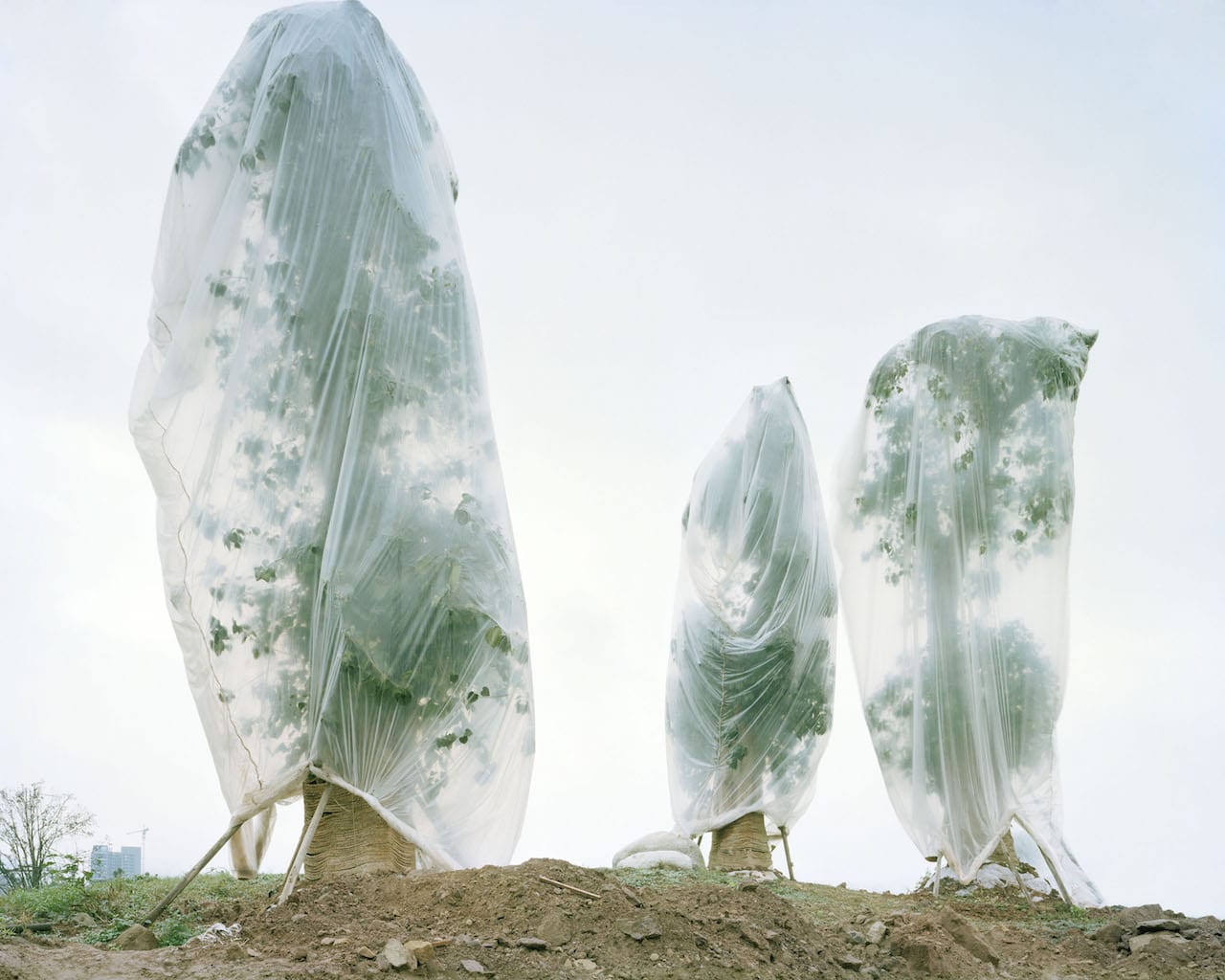
In Chongqing, the largest city in southwest China, city officials have been planting trees for over a decade, aiming to create a “forest city”. But after investigating the origins of these trees, photographer Yan Wang Preston uncovered a troubling process. “The whole concept of trying to be green is being abused,” she says.

By way of example, she tells the story of Frank – a 300 year-old tree that’s a central character in her new book, Forest. When Preston first encountered Frank in 2013, he was being forcefully removed from a small village that was soon to be flooded by one of the Yangtze River dams. Frank was sold to the owners of a five-star hotel in a nearby county for 250,000 RMB, approximately £30,000. When asked whether the tree would survive, one of the guards replied with pride, reassuring Preston that they were all experts at transplanting trees.

But when she returned in 2017, Frank had been dead for over two years – and so had the tree that had followed it. “The older the trees are, they more likely they will die, because it’s hard for them to adapt to a new environment,” says Preston. “I’m interested in the complicity of this whole thing. For the tree, it’s very sad to be relocated. But then, the ultimate motivation is to be closer to nature”.

4 June 2018

Losing ground in Matthew Benjamin Coleman’s Heygate: A Natural History

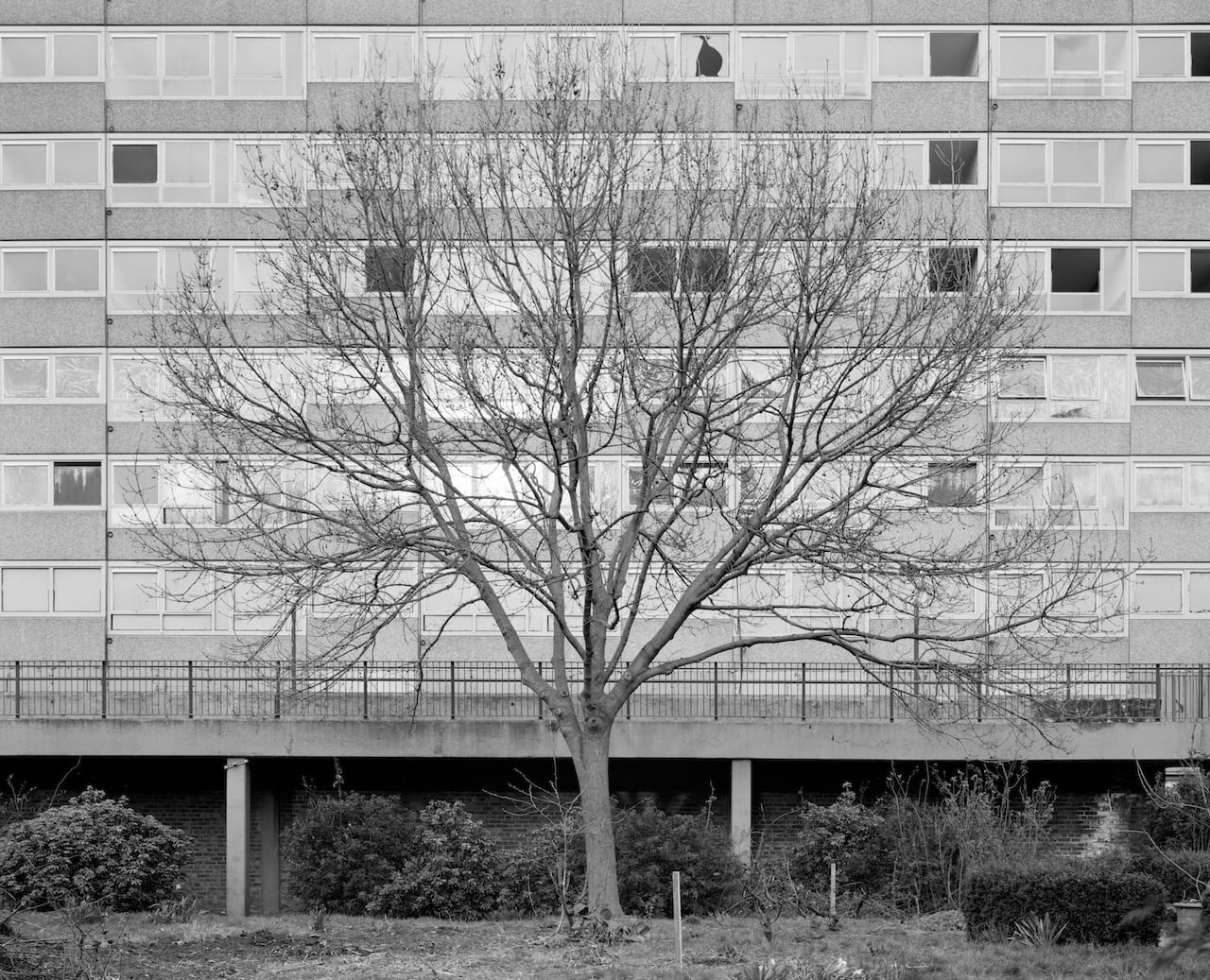
Completed in 1974, London’s Heygate Estate was once a symbol of triumph over destruction, housing some 3000 people on the site of Victorian tenements destroyed by World World Two bombing. The estate was also home to an ‘urban forest’ planted in the 1970s, which included the best part of 500 mature trees by 2011, when Matthew Benjamin Coleman started to photograph the site.

But by 2011 Southwark Council, which owned the estate, had also already moved out many of its tenants and leaseholders, starting a process which culminated in it selling the land in 2013 to the Lendlease property developer. As the estate depopulated, “guerrilla gardeners, graffiti artists, skateboarders and parkour enthusiasts, as well as photographers, film-makers, and other assorted ruin-tourists” moved in, says Coleman; he adds that, of the 406 trees on the estate in 2013, 286 were felled to make way for building work. 

1 June 2018

Sam Ivin’s Lingering Ghosts on show in London

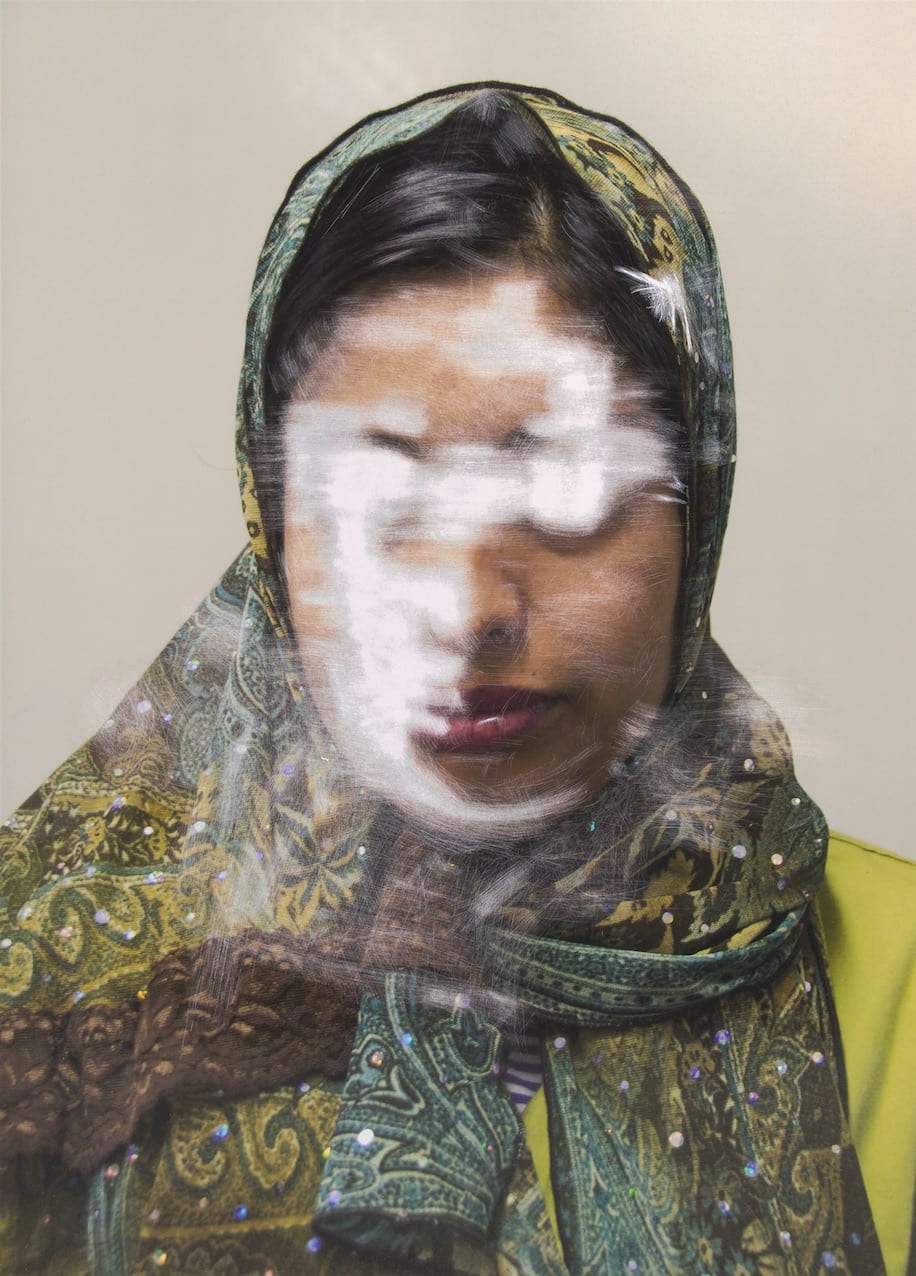
Article 14 of the Universal Declaration of Human Rights states: “Everyone has the right to seek, and to enjoy in other countries, asylum from persecution.” The UK was one of 48 nations to vote in favour of this document at the United Nations General Assembly in 1948 and now, 68 years later, British photographer Sam Ivin prints the full statement at the start of his first photobook, Lingering Ghosts. Made up entirely of portraits of people who have applied for asylum here, the book is a reminder – and an interrogation – of the codified notions of morality and fairness that Britain voted for but is not living up to.

Published by Fabrica, Lingering Ghosts asks a simple but thorny question – what does it mean to be an asylum seeker in the UK? Ivin scratched out the eyes of his subjects to induce a sense of foreboding, discomfort and alienation. As Gemma Padley notes in the foreword, “Once we remove our ability to connect with a subject through a person’s eyes, what remains?”

1 June 2018