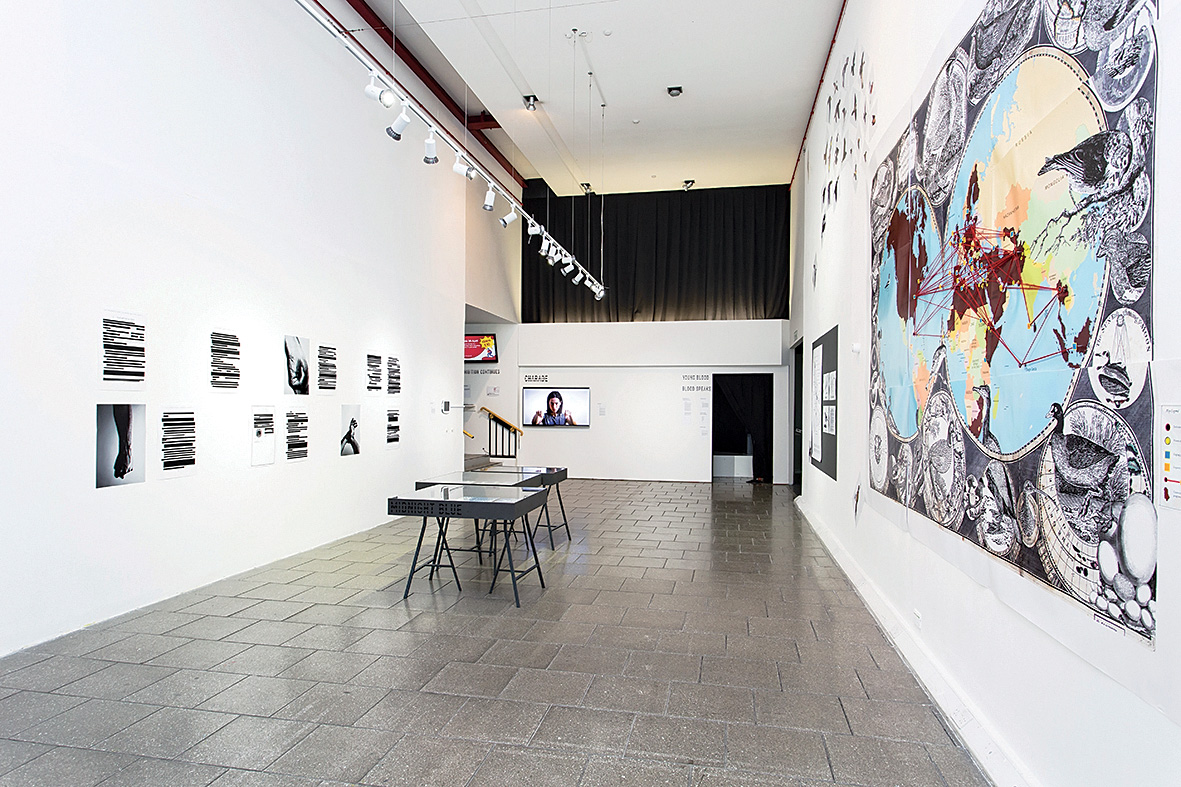

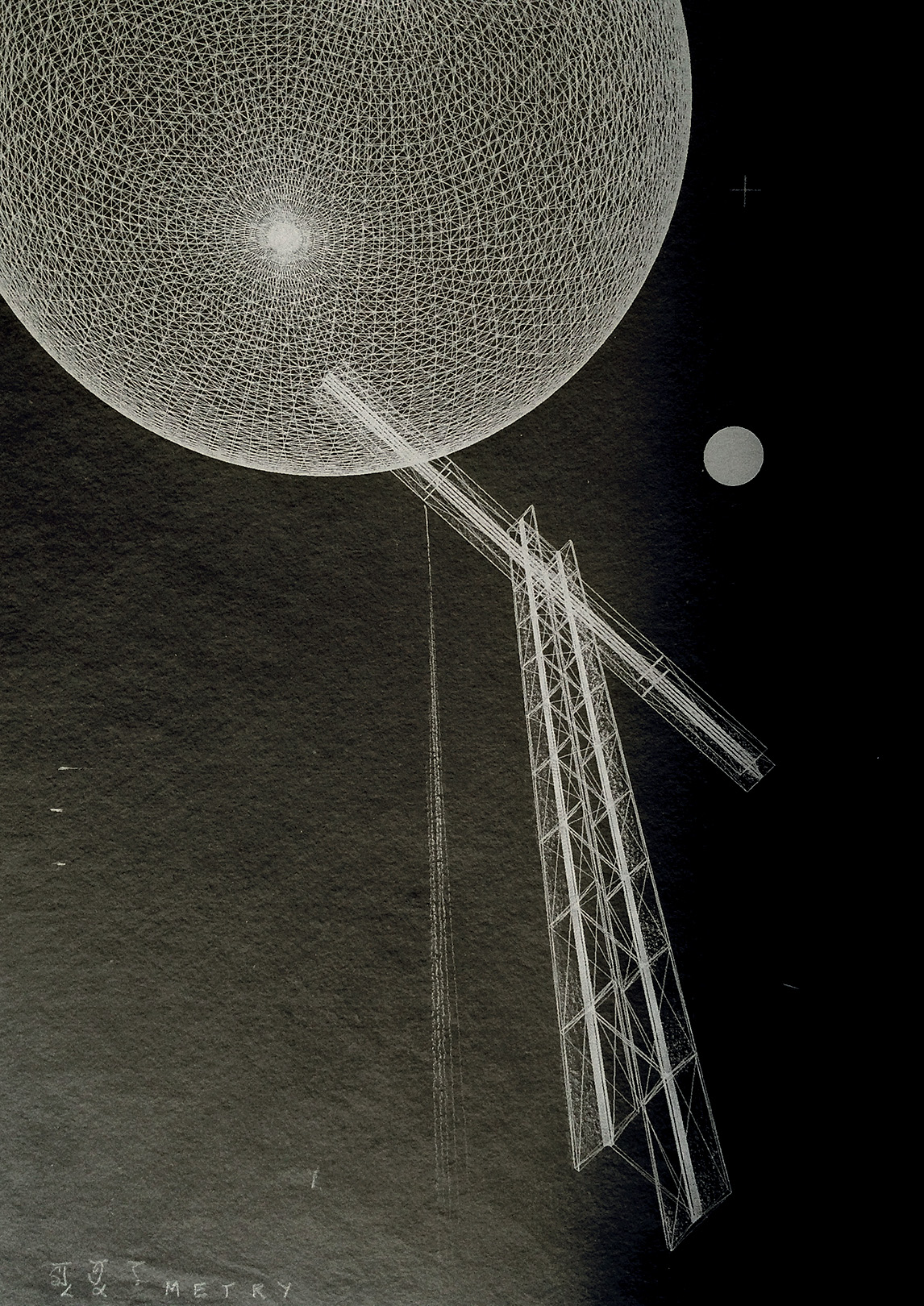
Lita’s House – Gallows IV © Sofia Karim.
Questioning the power of the image in legal and political frameworks, Visible Justice hosts events in public forums such as its year-long residency at London’s Institute of Contemporary Arts, explain its founders, Max Houghton and David Birkin
On 20 May 2026, Visible Justice opened its year-long residency at London’s Institute of Contemporary Arts. Gathering photographic artist Amak Mahmoodian, legal scholar Patricia J Williams, poets Sunnah Khan and Haia Mohammed, and including a screening of Walid Raad’s 1998 short film The Dead Weight of a Quarrel Hangs, the evening explored questions of visibility and resistance, focusing on Palestine, Lebanon and Iran. It also included both words and images, Mahmoodian presenting her photographic series One Hundred and Twenty Minutes, and Mohammed – who was evacuated from Gaza in 2025 – reading from her debut poetry pamphlet, The Age of Olive Trees.
On 09 July, Visible Justice returned to the ICA with writers, artists and filmmakers Lola Olufemi, Saeed Taji Farouky and Sofia Karim (whose uncle, photographer, educator and curator Shahidul Alam was detained by the Bangladeshi government in 2018); together they discussed policing, prisons and punishment – including current changes to UK law around protest and direct action.
The following evening, Visible Justice screened Steve McQueen’s 2008 film Hunger, which depicts Irish Republican prisoner Bobby Sands and his 66-day hunger strike in the Maze Prison in 1981; the screening was introduced by Heba Muraisi, who undertook a 73-day hunger strike from the end of 2025, after being jailed for pro-Palestine protest action, plus Francesca Nadin, who founded Prisoners for Palestine to support the hunger strikers.
Visible Justice’s events will continue at the ICA throughout 2026 and early 2027, culminating in a weekend takeover next spring, marking the end of its residency. The collective, an academic research hub at University of the Arts London, explores how justice is experienced by individuals and communities who are excluded from orthodox legal systems, and considering where sites of resistance reside – in political and legislative frameworks, in everyday acts of refusal, in art and poetry. Throughout, the role of the body is key, as a site of both injury and resistance; the residency is underpinned by the legal concept of habeas corpus (the demand to ‘produce the body’), a fundamental right and requirement that detained individuals be brought before a judge or into court, which dates back to medieval times.
Visible Justice is also physically bringing people together with these events, the artists, academics, lawyers and activists they invite to take part, and the public who attend and contribute. That gathering is key, says co-founder Max Houghton. “There’s so much heavy grief in the world, and has been for a while now,” she says. “We wanted a space to be able to hold that and think with it, and – speaking with students and friends – I know that they do too. People are reaching for connection and community.”
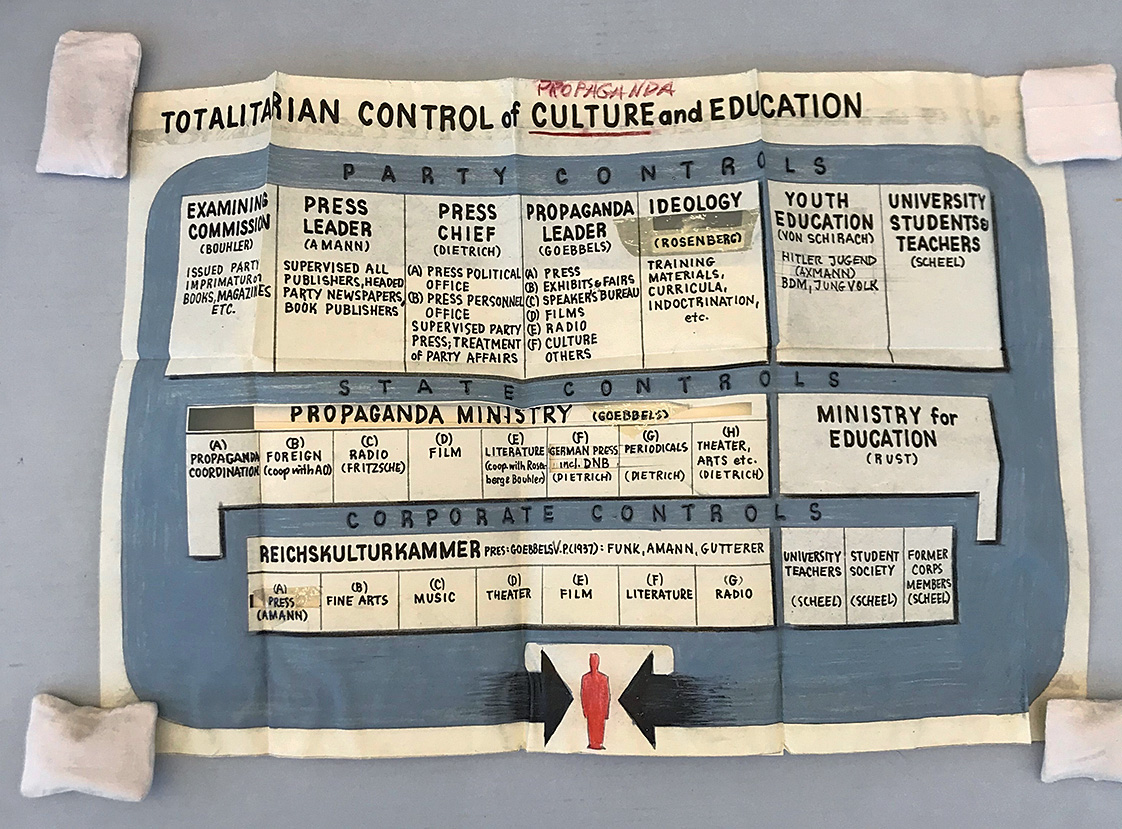
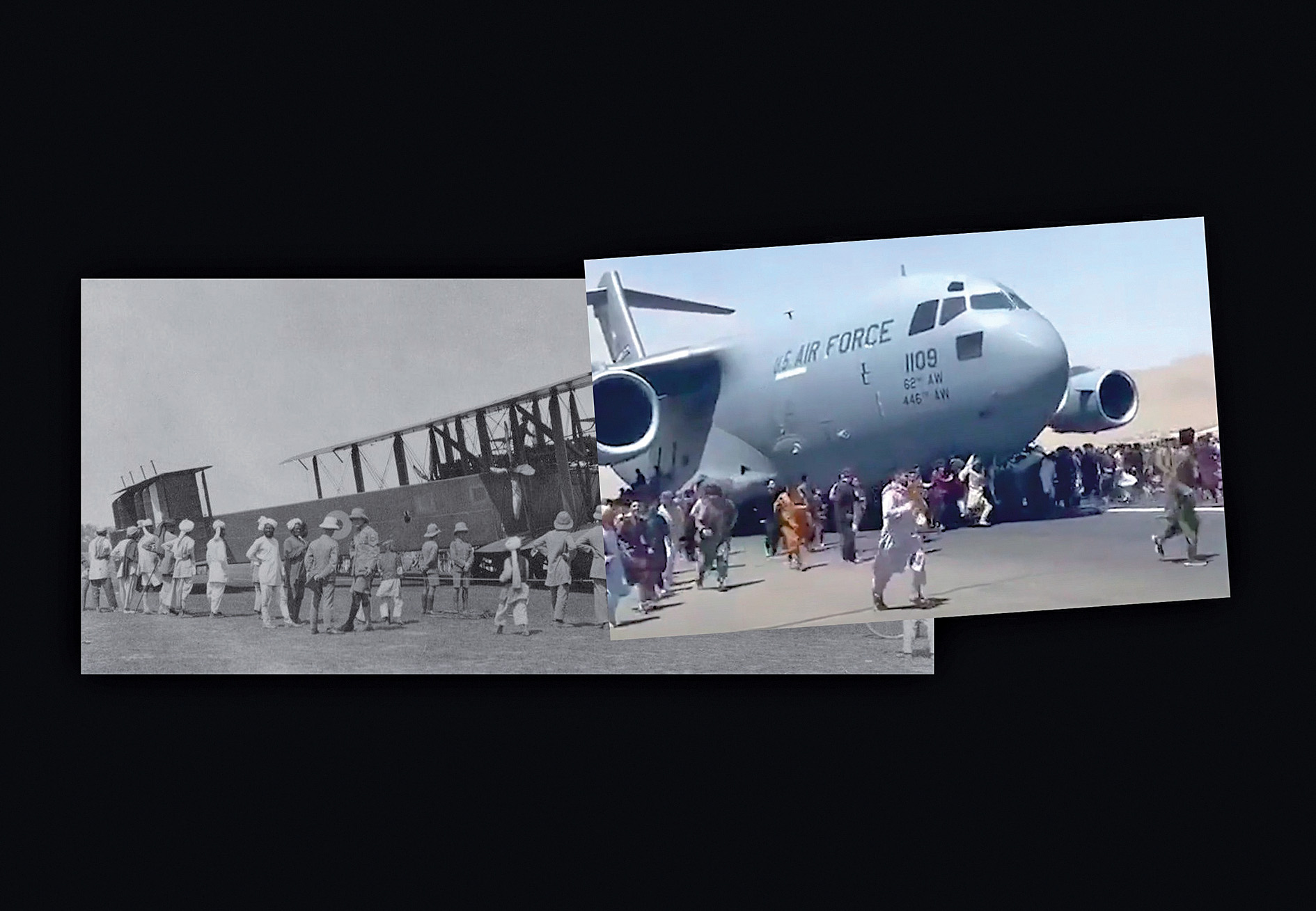
“There’s so much heavy grief in the world, and has been for a while now. We wanted a space to be able to hold that and think with it” – Max Houghton
Houghton is course leader for the MA photojournalism and documentary photography at London College of Communication and she set up Visible Justice in 2018 with David Birkin, an artist who also teaches at LCC. The pair converged over their shared interest in the intersection of images and legal systems. Houghton’s PhD, supervised by lawyer Philippe Sands KC at University College London, explored the use of visual materials at the Nuremberg Trial, for example, and how those uses set precedents and visual regimes still informing the present day; Birkin is currently undertaking a PhD at the Centre for Research Architecture, Goldsmiths, under the supervision of Kodwo Eshun of The Otolith Group and Susan Schuppli from Forensic Architecture, tracing histories of aerial violence, lawfare, disarmament and resistance through the lens of aerial photography.
“When I was living and teaching in the US I was looking to human rights law and international law as a solution to injustices like forced disappearances or drone strikes,” explains Birkin. “But I’ve come to realise that the law is not the site of justice for so many people, and increasingly so, as we move towards more draconian and repressive measures. So it’s no coincidence that our ICA collaboration is focusing on sites of justice that lie outside or beyond legal frameworks, or that my own PhD connects to that.”
The immediate spark for Visible Justice came from Birkin and Houghton’s work at LCC; during a course on collaboration the MA students were partnered with human rights organisation Reprieve, “and produced such amazing responses,” says Birkin. After exhibiting the work at LCC, Birkin and Houghton felt it would be a shame to let these lines of thought drop and, setting up Visible Justice, they organised a symposium and exhibition at LCC in October 2018, both titled Collective Imaging and Imagining. The exhibition included work by Birkin and Shahidul Alam, as well as Larry Achiampong and David Blandy, Edmund Clark and Helene Kazan; the symposium, like Visible Justice’s ongoing ICA residency, was interdisciplinary, exploring “how cultural practices and the visual arts can create meaningful interventions into existing legal and political frameworks”.
In May 2019, Visible Justice followed with another symposium at LCC, Embodied Activism; addressing race and representation, it featured contributions from image-makers such as Poulomi Basu, Sim Chi Yin and Abd Doumany, as well as lawyers and academics. In November a further symposium took place, this time at The Photographers’ Gallery in London; Decoding the Gaze: Iconography and the Algorithm considered the role iconic and viral images play in shaping how social justice movements are now represented, with photojournalists, artists, activists and academics.
In 2021 Visible Justice collaborated with legal scholar Patricia J Williams, firstly with photography students in London and her philosophy students in Boston, which grew into a co-curation of an exhibition, Infinitude, at Northeastern University’s Center for the Arts, alongside a symposium; the show’s title comes from 19th-century New England author Ralph Waldo Emerson, whose notion of the ‘infinitude of private man’ “championed the limitless potential of the self-reliant individual, freed from societal constraints,” wrote Houghton and Birkin in the exhibition text. “For us, Infinitude also conjures the vast scale of the galaxy and the seemingly boundless reaches of technology and personal ambition driving the contemporary space race.”
Houghton emphasises that working in publicly accessible institutions has become an important strand in Visible Justice’s work, despite the fact it is based at a university. “It’s about expanding modes of address and widening the discussion,” she says. “Talking to other academics really matters, and David and I do just that. But for the conversation to take place in a truly generative way, it needs to be as public as possible. We want to take it out of the university and be public-facing.”
In February 2025, Visible Justice curated an evening of performance, poetry and discussion at Tate Modern, titled Hostile Environments: What Happens to the Land, Happens to Us. Considering issues of systemic racism and environmental justice, it brought people together alongside Tate’s exhibition Gathering Ground, which explores similar topics around extractivism in relation to displacement and the destruction of indigenous land. “It’s about who we are when we gather,” Houghton reflects. “We were lucky to have [actor and activist] Khalid Abdalla join us on stage; he then took the whole audience up to the gallery, where he created a sonic intervention.
“The sound of a drone permeated the space of Abbas Zahedi’s viscerally affecting artwork Begin Again; Abdalla then held a silence of 76 seconds – one second for each year since the Nakba [the mass displacement and dispossession of the Palestinian people during the 1948 Arab-Israeli war]. Sharing that space, in silence, was a deeply felt and communal experience.”
Visible Justice wants to create opportunities to collectively grieve “this incredibly violent political moment”, say Houghton and Birkin; they also want to “hold space for joy”. Either way they are making room for emotion, for the messy and the human (as opposed to what Birkin describes as the “slick, glossy, consumerist content in most museums”). Visible Justice aims to think through images to explore the intersections of visual culture, ethics, aesthetics and political voice; they also want to open up deeper questions around dehumanisation and distanciation, envisaging other ways of being in the world.
Houghton references the concept of “the underside of the image”, for example, the idea that images can connect with the emotions, the unconscious and the imagination, and therefore help us construct new ‘imaginaries’. And, as Visible Justice is interdisciplinary, such ideas can manifest in other, unexpected ways. Birkin points to Nadine El-Enany by way of example, a professor of law at the University of Kent and a poet, who also contributed to the Hostile Environments project. El-Enany is well-versed in the language of law and academia, he says, but she has chosen to move beyond that mode of address with poetry in order to speak in other registers.
“Legal language follows a certain logic, a certain rationalism,” he says. “We want to engage with that, but we also want to engage with people on a deeper level that is felt, haptic and embodied, whether through the visual or through the poetic. We want to speak to Dr Cornel West’s assertion that ‘Justice is what love looks like in public’.”