


All images from the series Defensive Readiness: Revised Edition © Amin Yousefi.
Amin Yousefi, winner of the C/O Berlin Talent Award 2026, discusses his latest work
Born in 1996 in Abadan, Iran, Amin Yousefi holds an MA in photography from the University of Westminster and lives in London. His work has been exhibited in galleries such as Fotografisk Center, Copenhagen, and Ag Galerie, Tehran, and in 2026 he published the photobook Eyes Dazzle as They Search for the Truth with Luhz Press. Yousefi’s new project, Defensive Readiness: Revised Edition, which rethinks a textbook once distributed to Iranian high-school students, will be exhibited at C/O Berlin in 2027.
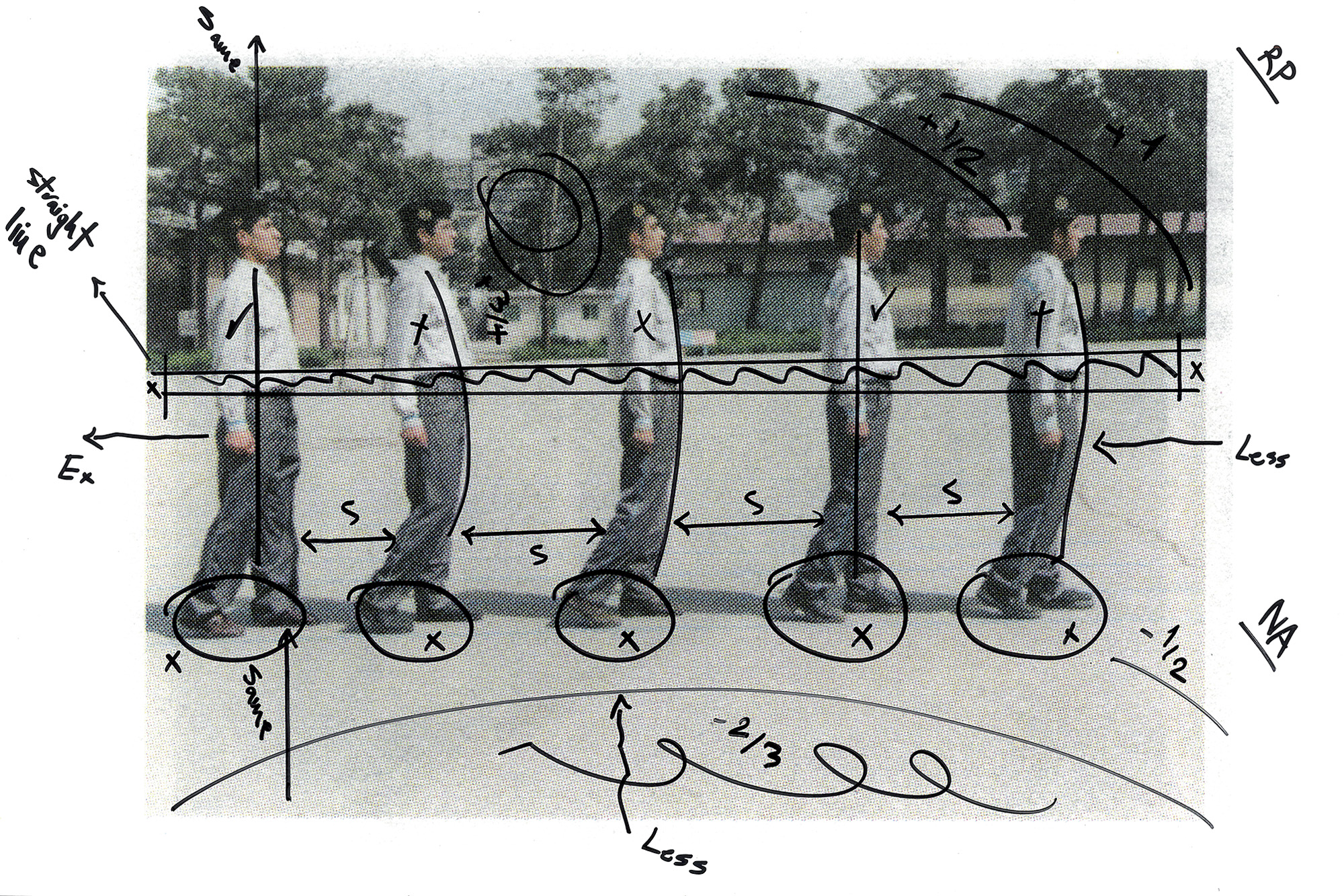
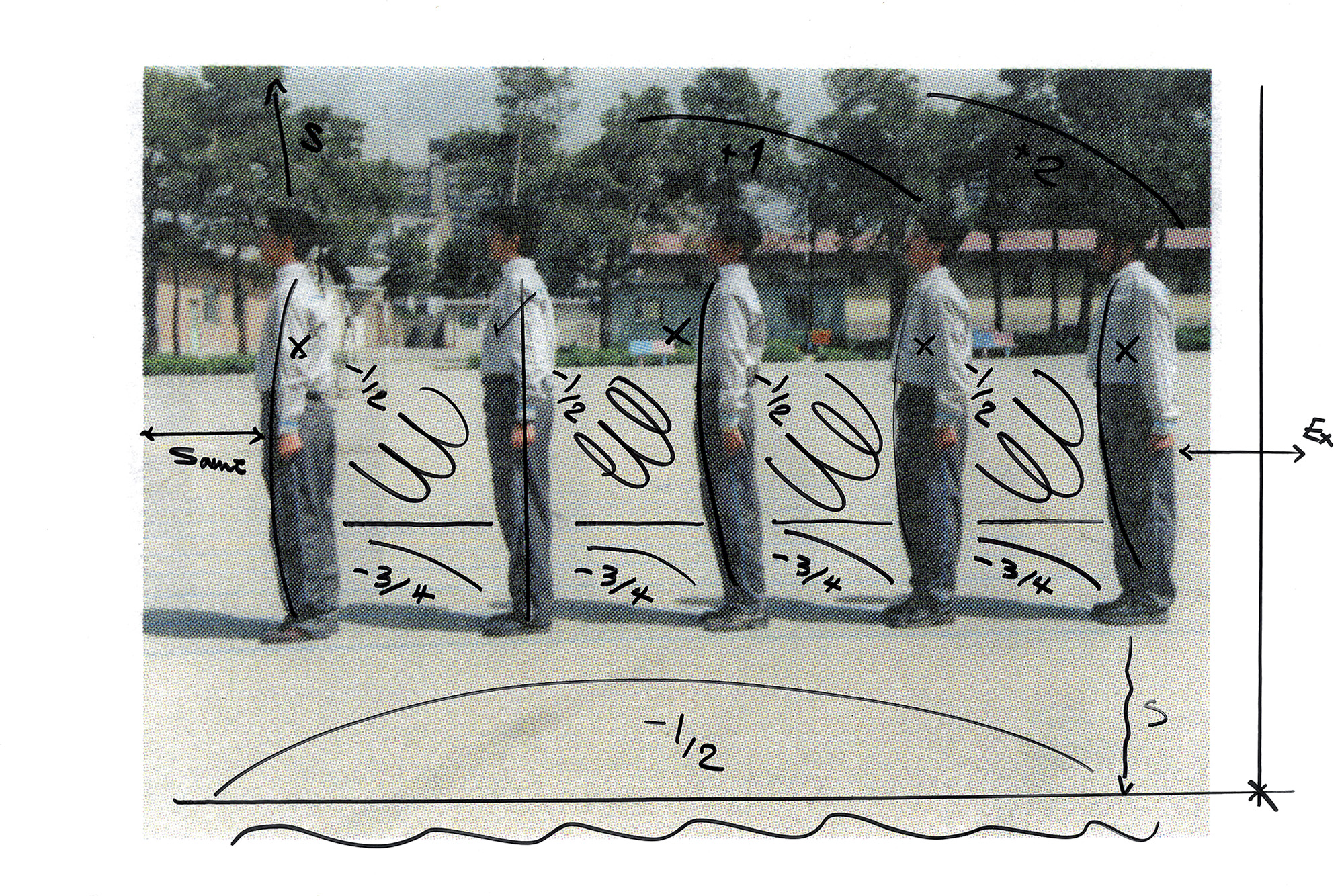
“By annotating the textbook and then restaging its images with my own body, I moved from reader to participant. That shift changed how I understood institutional images. It changed it from evidence into an apparatus” – Amin Yousefi
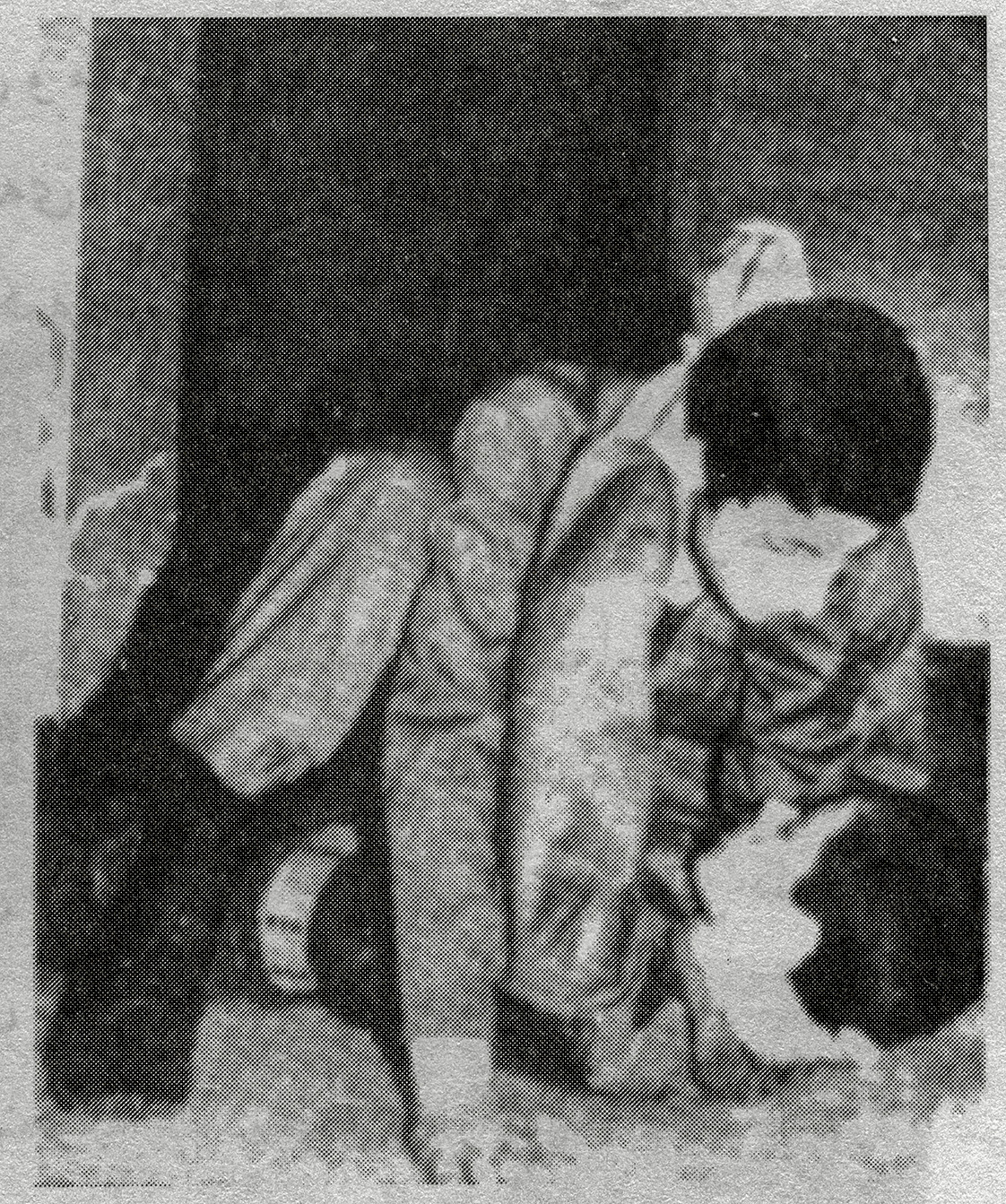
“When I began working with the Defensive Readiness textbook, I wasn’t approaching it as a historical document. It functions more as a manual that trains bodies into legibility. Introduced to students at around 15, it teaches how to stand, aim, rescue and respond to threat. Looking back, the project became less about the textbook as an object and more about how it produces a disciplined subject, where readiness itself becomes a form of citizenship and physical comportment becomes a form of ideology.
By annotating the textbook and then restaging its images with my own body, I moved from reader to participant. That shift changed how I understood institutional images. It changed it from evidence into an apparatus. As a reader, I could analyse its rhetoric from a distance. But as a participant, I felt how authority enters through posture, rhythm and anticipation. The image doesn’t simply describe a form; it demands cooperation in order to complete its instruction through the body. This made me understand institutional photographs less as documents than as rehearsals. They rehearse obedience, producing subject formation through repeated gestures until compliance becomes something that feels natural, almost internal, like bodily knowledge. The project also led me to ask what kind of citizen is being produced in this system. The photographs imagine a subject who becomes available to the state before he is fully formed as an individual. He must remain alert, technically functional, emotionally restrained and physically aligned with others. The body is trained to convert fear into procedure and vulnerability into readiness. What interested me most was the ordinariness of this figure; a high-school student learning these postures as part of a civic curriculum. The ideal citizen is not defined by heroism. He is repeatable, measurable and ready for activation.
The work intervenes in the textbook on two levels. The first is through reproduction and annotation. I reworked selected pages with corrections, darkroom-style markings and handwritten notes, as if imagining the material before it reached the classroom. These interventions shift the language of instruction into something more clinical, even procedural, revealing how institutional power often operates through forms that resemble care. The body is not only commanded, but measured, corrected, stabilised, made compliant. In this sense, the textbook becomes an archive of body politics, showing how governance operates through visibility, repetition and normalisation rather than force alone.
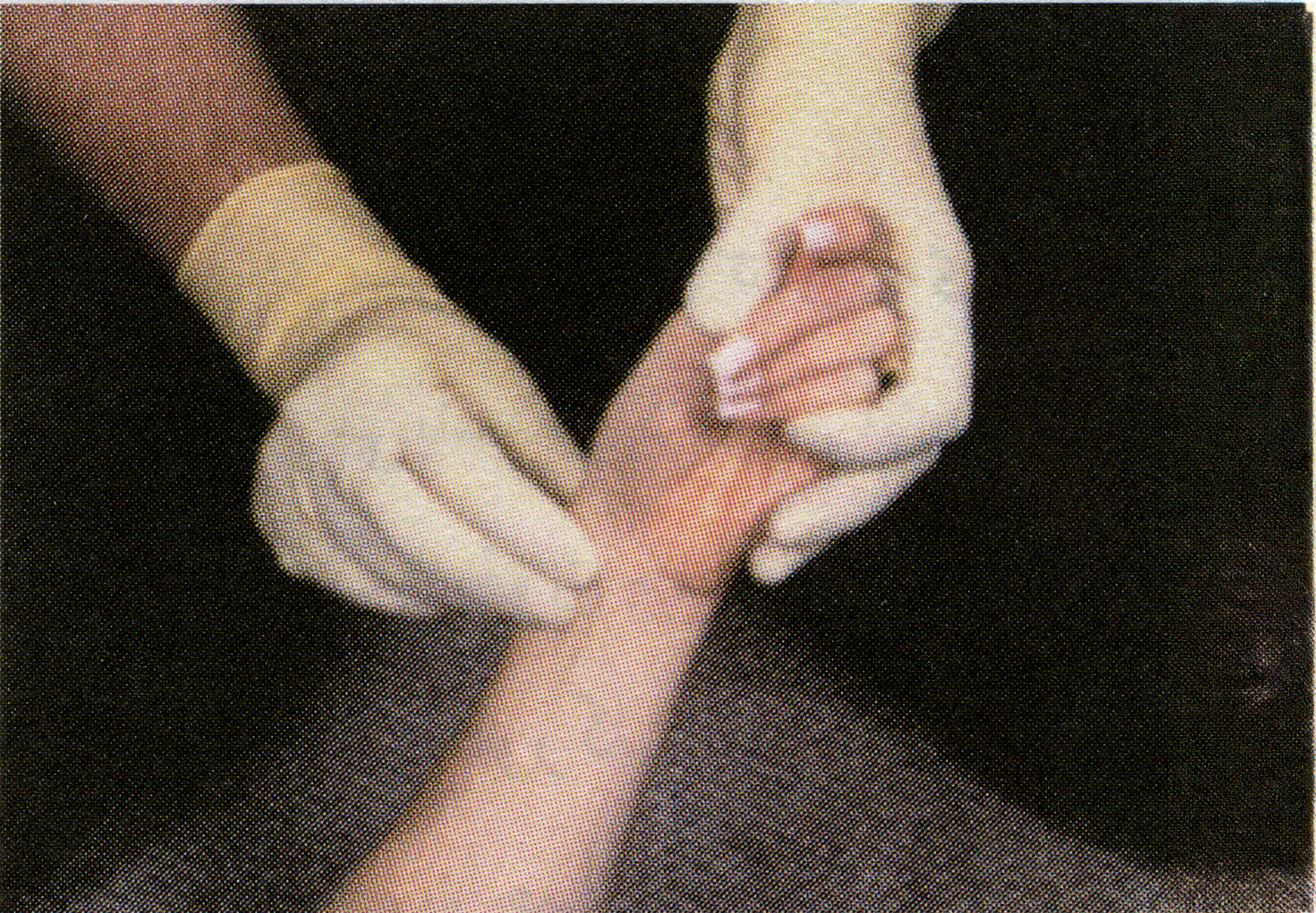
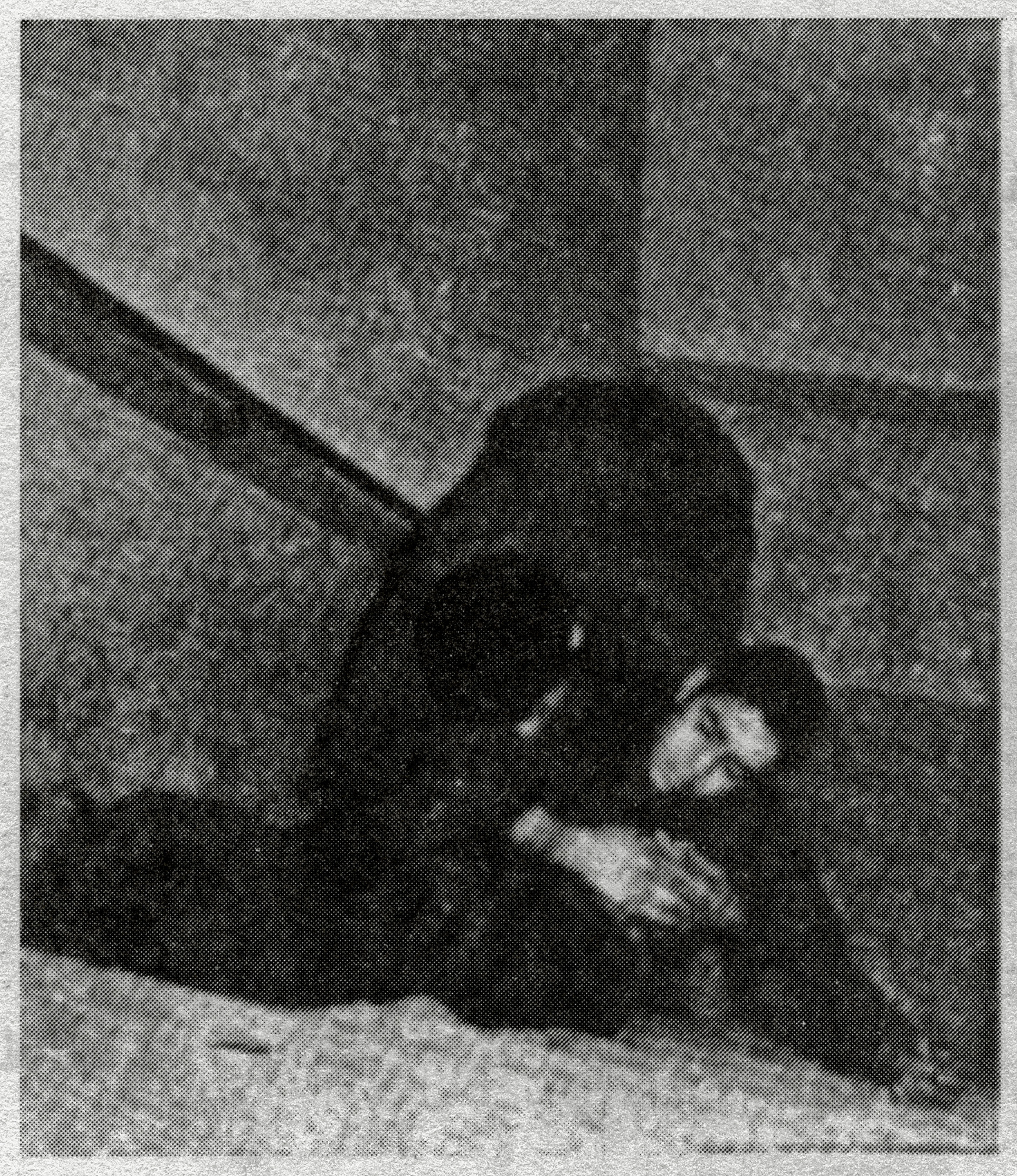
The second intervention is performative and spatial. I re-enacted poses from the manual using my own body and translated them into three-dimensional scans. By restaging two-dimensional diagrams as volumetric records, I was able to see what the original images suppress; weight, strain, micro-adjustments and the constant instability of balance. Re-enactment exposes the gap between institutional representation and lived embodiment. Even in the original photographs, the students do not perform the drills with perfect precision – they are ordinary bodies, not trained soldiers, and their movements reveal small inconsistencies in posture and coordination. When I reconstructed these instructions as precisely as possible, that gap became even more visible. The figures that appear stable in print become fragile when enacted, revealing how much effort is required to sustain positions that are presented as effortless.
The three-dimensional scans make this visible in a different way. They turn the manual’s figures into volumetric bodies that resist idealisation. Instead of clean diagrams, what emerges are imperfect, unstable forms that carry tension and imbalance. The scans expose the labour hidden beneath the appearance of discipline, showing how much physical negotiation is required to approximate an image that always assumes a body more stable than the one performing it.
Working with these materials also raises questions of authorship, responsibility and intervention. I approach the textbook as a charged historical object. It contains anonymous bodies, institutional intent and a system of instruction embedded within its imagery. My intervention begins from that recognition. Annotation, sequencing and re-enactment are not neutral acts; they alter the conditions under which these images are read. They slow down the authority of the manual and shift attention toward its underlying logic. Responsibility, for me, also means resisting the idea that reinterpretation can replace or overwrite what is already there. In a previous project, Eyes Dazzle as They Search for the Truth, I worked with photographs by Michel Setboun, who described this process as treating images as ‘the raw material… the fertile ground for a new story’. I hold on to that tension carefully; acknowledging the origins of an image while still asking what else it can reveal.
Spending time with these images has changed how I understand the political reality they come from. The textbook was produced after a period of war, yet it continues to carry its logic through education, posture and the anticipation of future threat. What becomes visible is not a single event, but a continuity of instruction that moves through the body. Political reality appears here not only in moments of crisis, but in small rehearsals of behaviour that persist long after the original conditions have shifted.”
Amin Yousefi discusses his work Eyes Dazzle as They Search for the Truth with the photographer and long-time collaborator David Campany at Ibraaz in London on Thursday 05 November 2026.
His project Defensive Readiness: Revised Edition will be exhibited at C/O Berlin in Amerika Haus from 13 February to 02 June 2027.