
All images © Sanlé Sory, 2026. Courtesy of Tezeta. Sanlé Sory photographed at Volta Photo Studio in Bobo-Dioulasso, Burkina Faso.
The Burkina Faso artist’s later work reveals the changing ethos and sociopolitical shifts in West African photography
When asked why The Photographers’ Gallery is displaying later colour works by the Burkinabe studio photographer Sanlé Sory – and why now – TPG curator Taous Dahmani’s answer is clear and direct: “Because I’m here now.”
“I had always wanted to think about the long tradition of West African studio photography as a global surface,” she adds. Fed up with dominant readings, Dahmani argues that these photographs require a relocation of function if they are to be understood in more generative, restorative ways. The job of photographer is political, artistic, often polemic and gestural; it is also, fundamentally, a job. It is labour. It is a means to get paid and a way to live one’s life, void of a punch card and with freedom to roam. Photography is a history of grafting, of making ends meet, of waking up and going to work. Dahmani looks away from the recent landscape of “revived” West African photographic exhibitions, literally blown up for the Western art powers that be, and instead sees them as they are: small and intimate. And that is enough.
Perhaps ‘fine art’ – whatever that means – is a poisoned chalice, a trapdoored pedestal, a gilded cage. Instead, Sory is here a master craftsman, but one looking to get paid rather than necessarily disrupt the canon. This curse of fine art, which fixes Sory’s oeuvre and character into something discovered, demanding recontextualisation, and subsequent elevation, in turn shuts a door into the modern world.
“[Sory’s later colour work] holds quite a significant shift in what we know about the history of West African practice” – Taous Dahmani, curator
Reductive readings often position this sort of photographer, and by extent photography, as a historical event over a living being. Dahmani says this limited reading “refuses entry into contemporality”, and perpetuates Western art narratives as “acceptable forms of nostalgia about this past of liberation, a call to the time ‘when we liberated poor Africans’”. On the two far sides of the Atlantic, and deep in the white cube, when we see West African studio portraits, it is always revolutionary times. Nothing ever changes, Africa is Africa, and the West is the West.
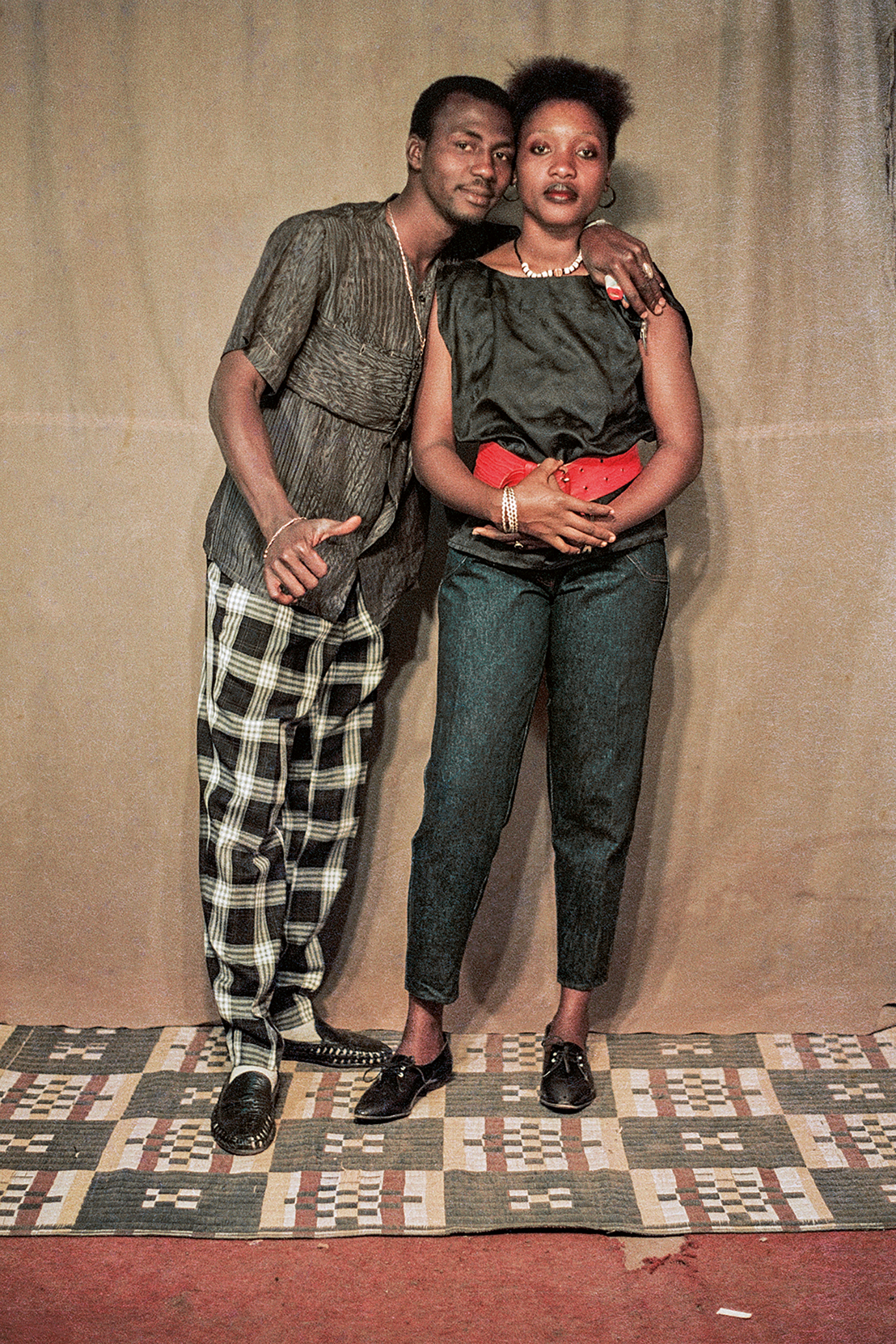
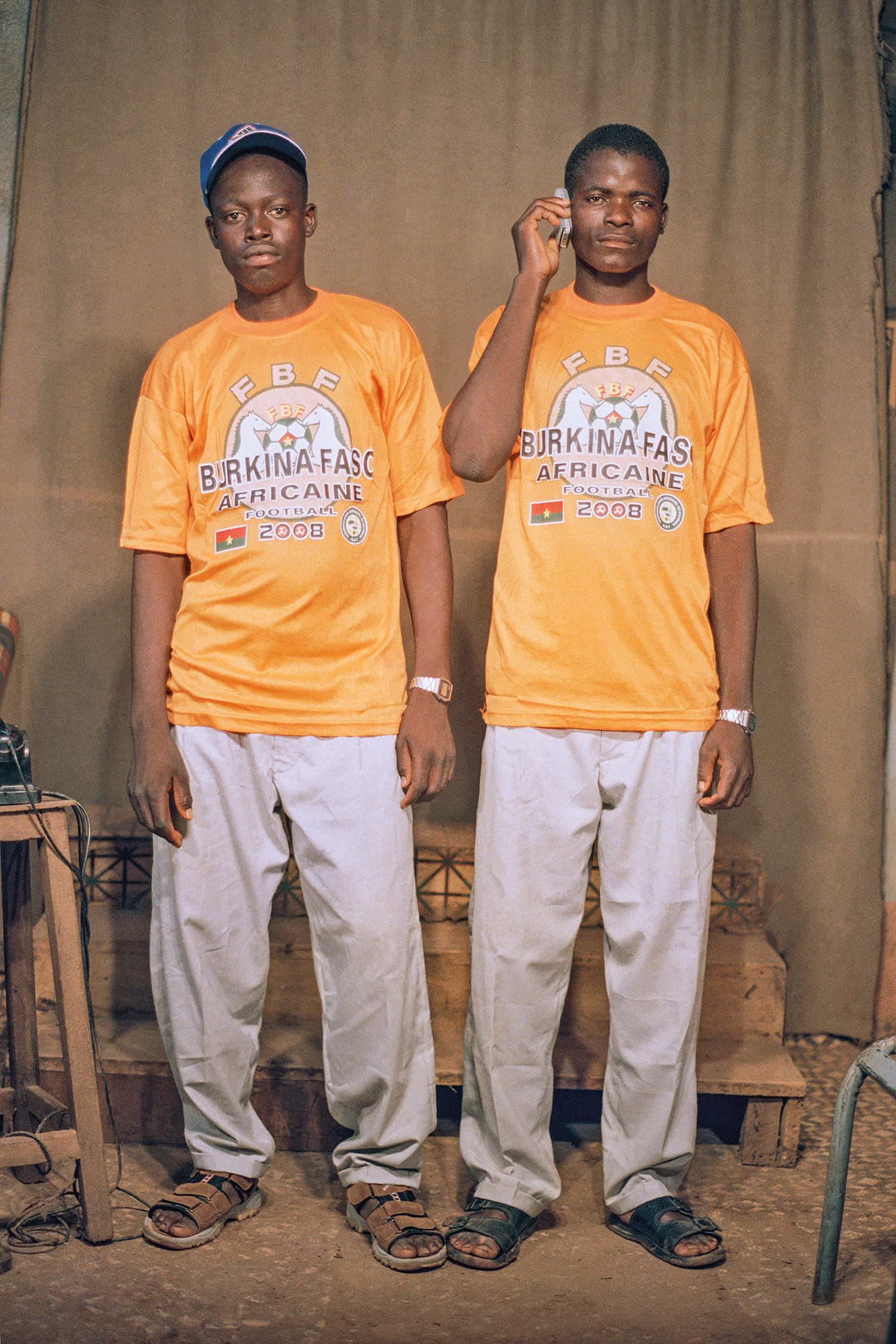
But Sory’s archive holds “thousands and thousands” of later colour negatives, many of which have never been printed beyond their original commission. Dahmani asks why and steers towards a relocation, a “re-anchoring” in her terms. Perhaps these colour works, a move on from the earlier black-and-white work of the 1960s and 70s, were deemed harder to digest for Western audiences, something less fixed than the story we know (or have been told). To Dahmani, Burkina Faso, and the wider African stage, is not a fixed event but a site to examine universal photographic systems, alongside the specificities of 20th-century African histories. “[Sory’s later colour work] holds quite a significant shift in what we know about the history of West African practice,” she says.
She reads the practice as both ubiquitous and unique; closer to the functional, political and social histories caught within the portraits, and understood as wholly commissioned artefacts. Yet by curating the show in London there is an awareness that home is not always a place one can return to, that there is perhaps no true contextual providence left. Instead there is a possibility to seek out new lands, ways of being and seeing, ones which bring the photographs to audiences new and old, but allow all those looking to see for themselves.
The Western art reading has a tendency to turn African nations into islands, dislocating them from neighbouring, concurrent histories. Dahmani refers to this as a “dictated, fetishised history”, one the market embraces with ease but which brings us no closer to understanding these images or people. “For me, colour became the starting point,” she says. “Can we think critically about this history through the lens of colour? Can we think of it as a form of politics? Most of the pictures we know are from the 1960s and 70s. Postcolonial moments of aspiration, of joy… at least that’s how it’s sold. Moments of ‘Finally, the freedom of the African people!’ But it stops there. No one wonders what happens after.”
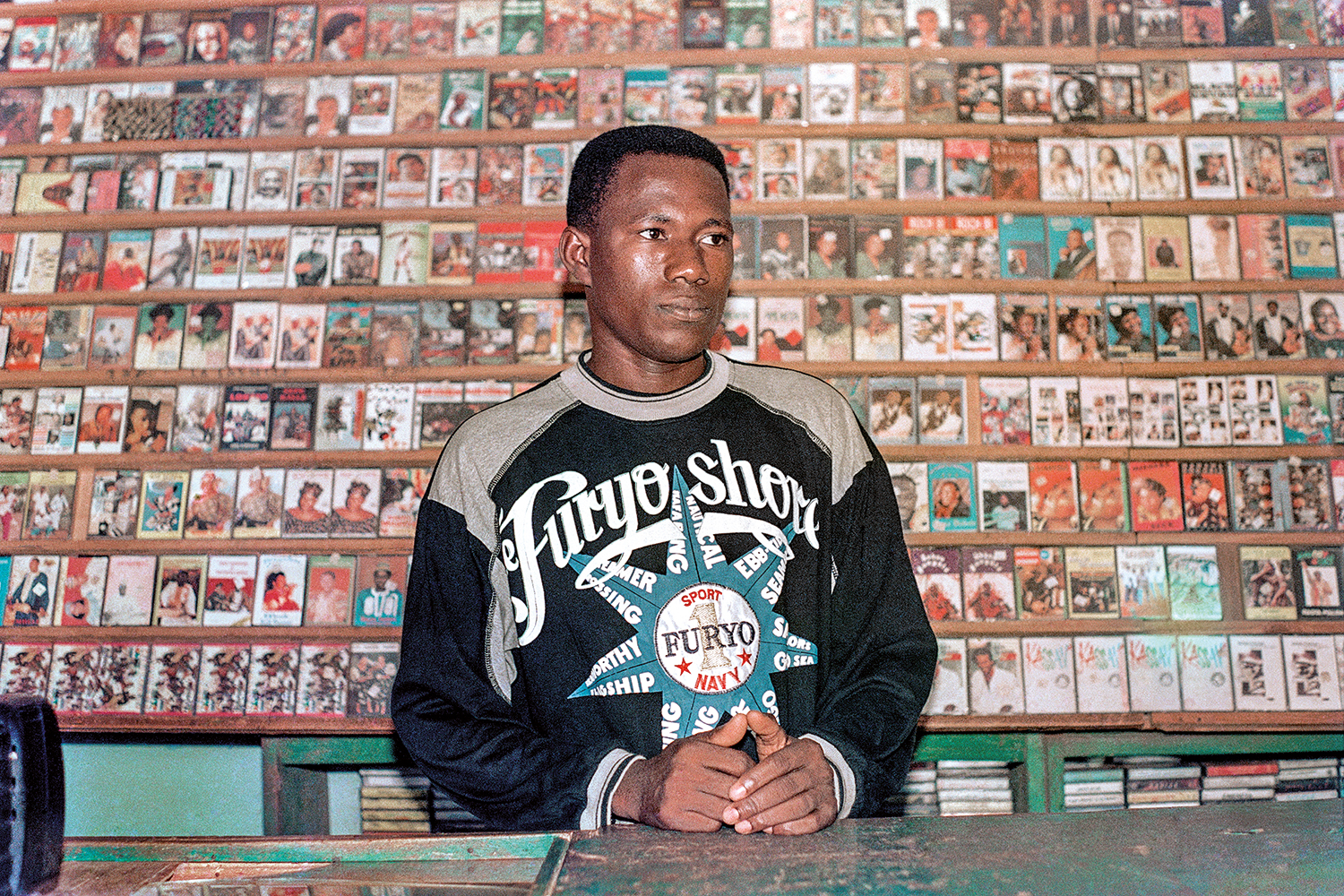
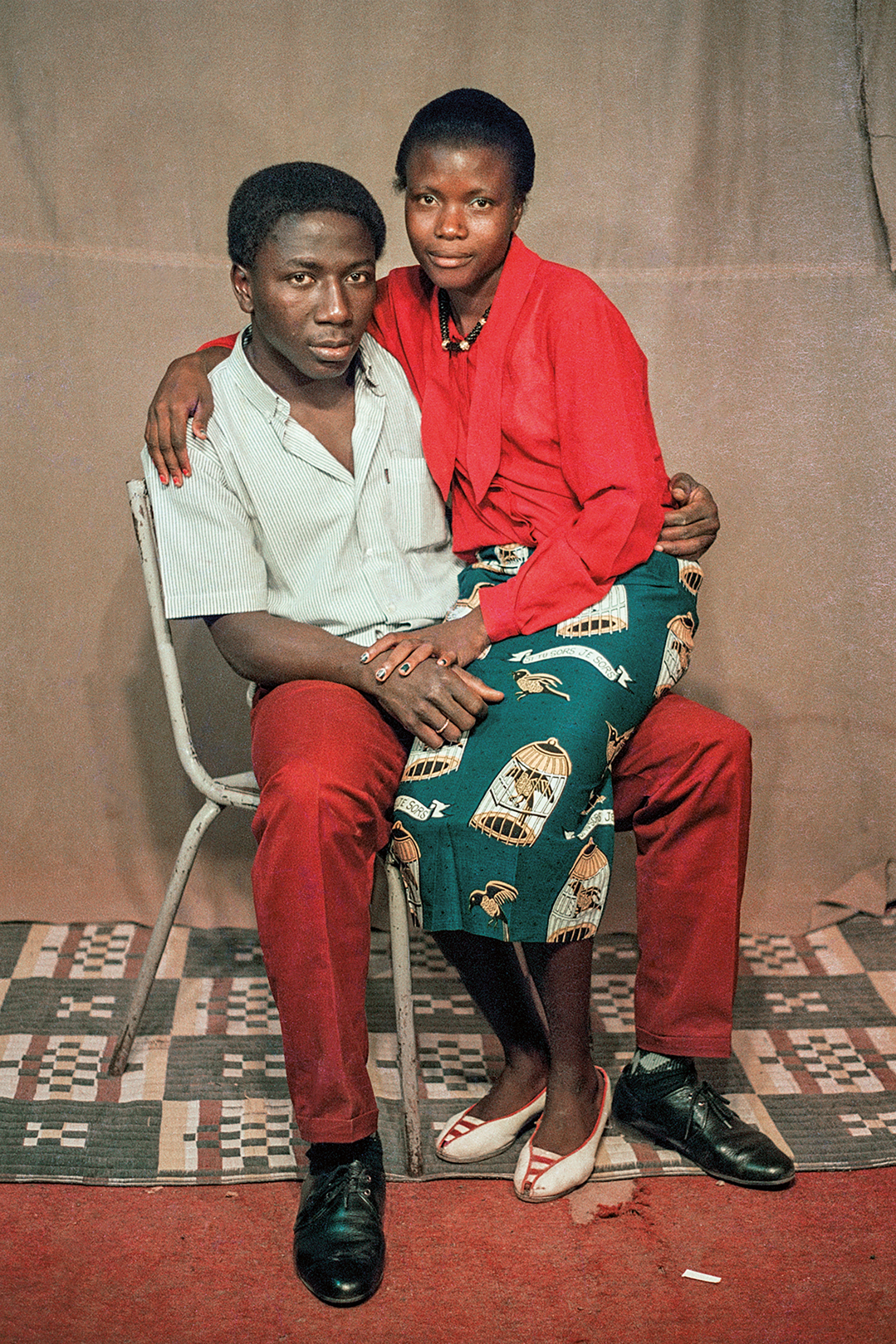
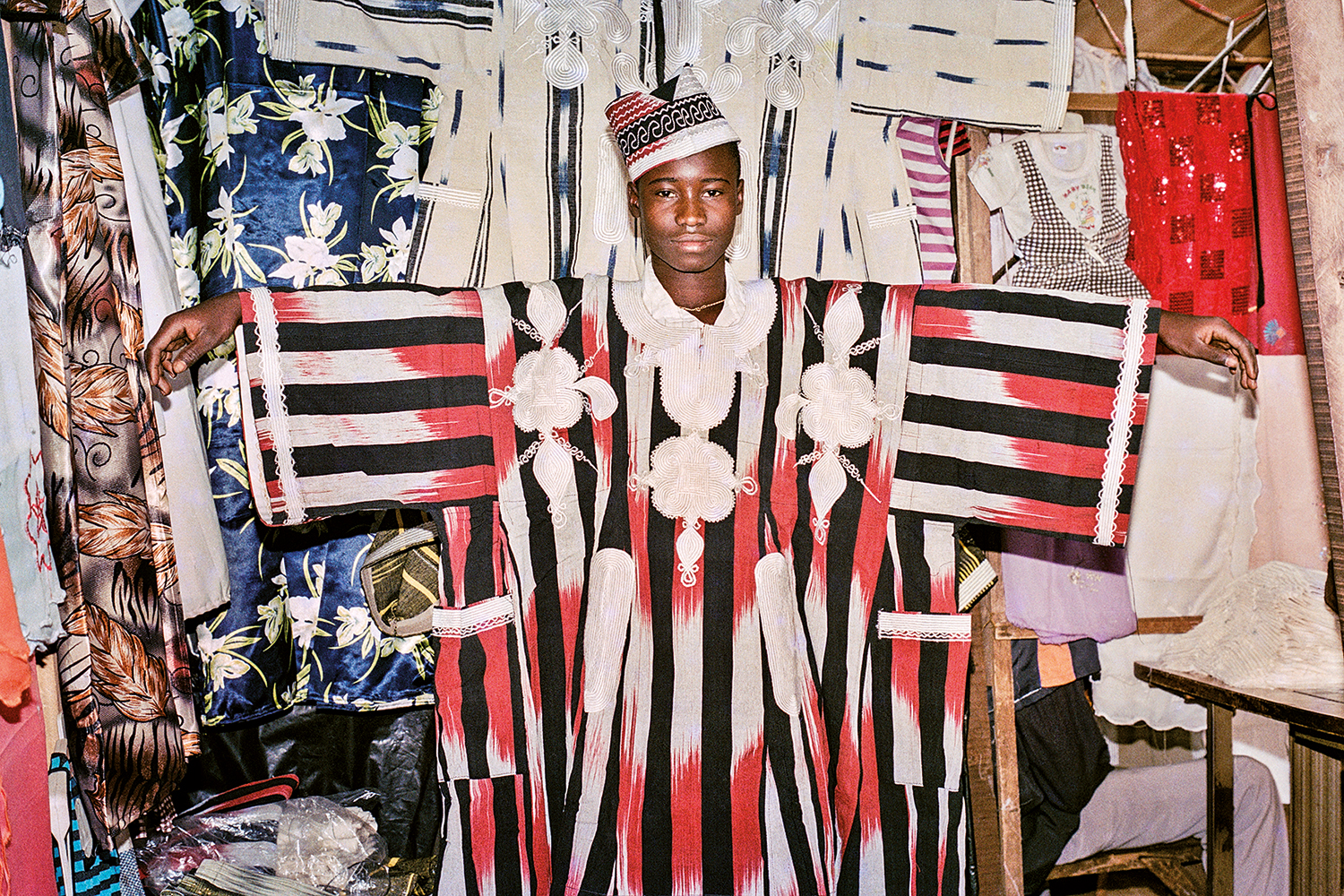
Sory’s later portraits of street vendors, personable and direct, grew out of a slowing appetite for commissioned portraits. Cameraphones had arrived and times were changing. Dahmani also stresses the desires of the later sitters he was commissioned to record, commenting on their input into the images. “Sory printed in black-and-white, but when colour became more accessible, clients asked for it. It was more expensive, and he suddenly couldn’t work alone.” For Dahmani, both sitter and printer become producer and collaborator.
Dahmani traces stories of the sitters through historical relocations; every now and then you notice someone dressed fancifully for the camera, who is “wearing a suit slightly too small, their shoes maybe unvarnished”. Through these images Dahmani moves away from a fashion-first reading towards something more akin to socially informed style studies, an analysis of hand-me-downs and counterfeit designerwear. This becomes part of the re-anchoring, and perhaps a new type of non-hierarchical photographic kinship. It aids an understanding of universality, not exotic idiosyncrasy, though a story that is also deeply African.
Sory had to negotiate and barter with his subjects, as ultimately the images existed off their payments. He had to follow trends, keep up with the changing times. Suddenly people did not want his famed illustrated backdrops any longer. “They wanted to be part of a new technology, and a new capacity of being seen,” Dahmani explains. Sory, as with many West African portraitists, is rarely discussed within the contexts of an emerging contemporary. Entry into the modern world, with colour, Nike, Obama T-shirts, and iPhones, has not been curatorially permitted.
“I now don’t have to prove that photography is an art form,” Dahmani states. “But I do want to get back to the fact that actually, historically, there were things that we were too quick to put into one category, instead of allowing them to be a multiplicity of things. And I don’t think we often allow African artists to be a multiplicity of things.”
Sanlé Sory: Colour Years is at The Photographers’ Gallery, London, from 14 October 2026 to 21 February 2027. The accompanying book is published by GOST, priced £45 https://gostbooks.com/products/volta-colour