
Documentary

Women by Women at Newcastle’s BALTIC Centre for Contemporary Art

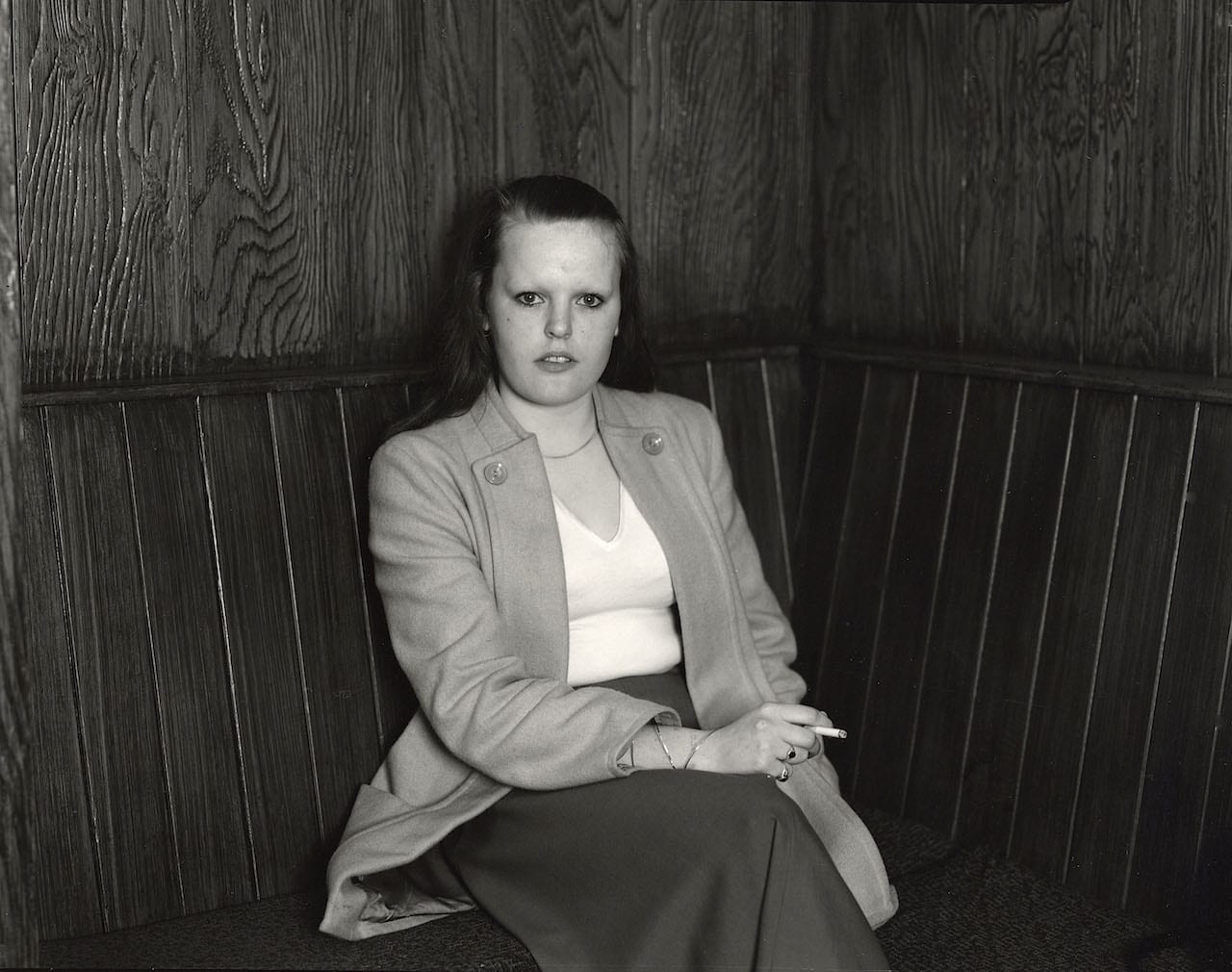
“I think women photographers are very good at building relationships with their subjects” says Sirkka-Liisa Konttinen, co-founder of Amber, a film and photography collective based in Newcastle that aims to capture working-class life in North East England. “They are more interested in the personal stories, and through these they get a much more intimate look into their subject’s lives.”

Women by Women is a major presentation of the work of five female photographers working in the North East from the 1970s – 2000s. Curated by Konttinen, the photographs are drawn from projects originally commissioned by Amber, and the exhibition forms part of Idea of North season at the BALTIC Centre for Contemporary Art in Newcastle.

“The North is often associated with the male more than the female, in terms of what has been documented,” says Konttinen. “I thought it [the show] would make a strong statement about our collection being more balanced than is perceived by the outside world. It’s the idea of bringing women into the picture of the whole concept of the North.”

15 June 2018

Contemporary African Photography Prize winners announced

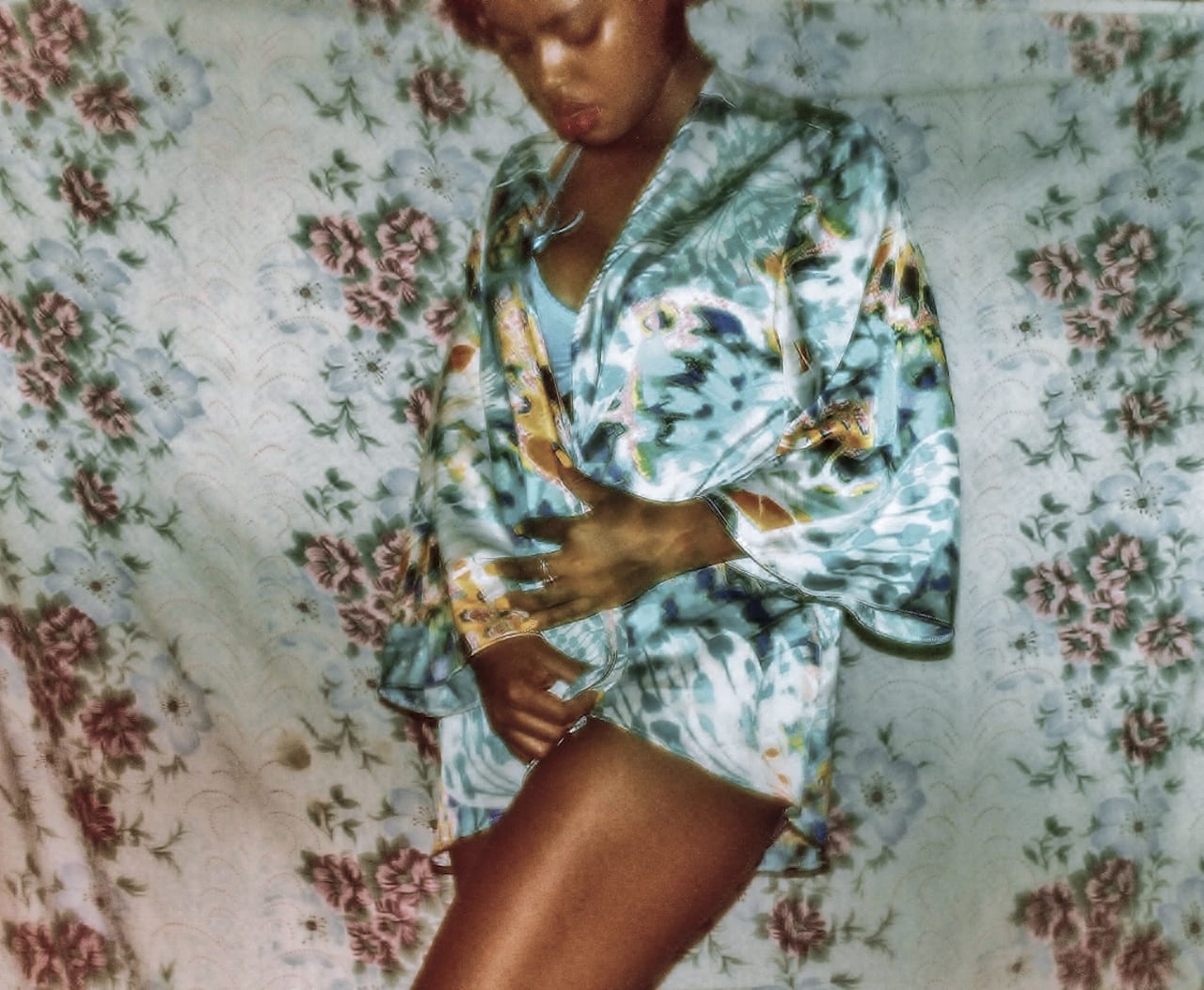
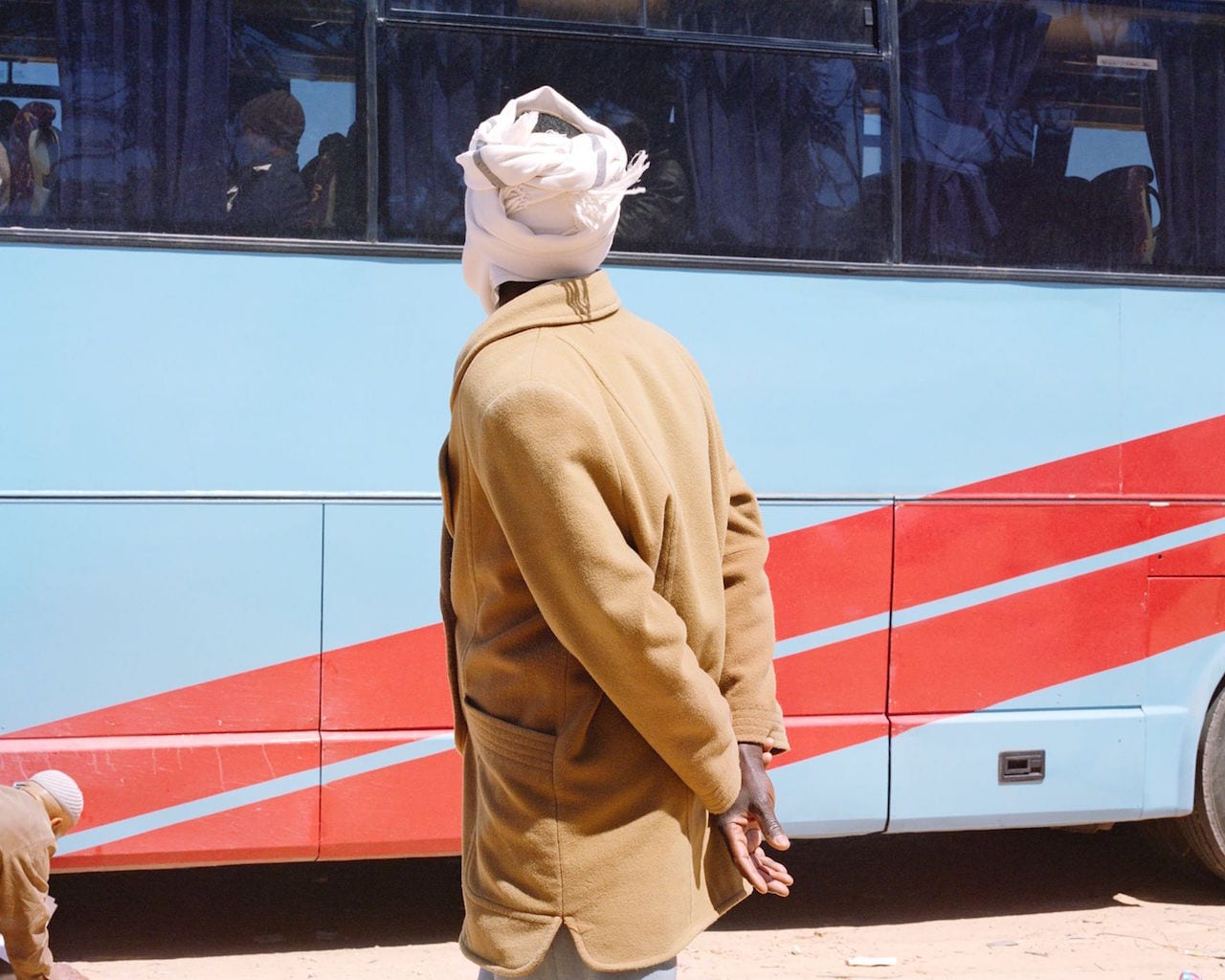
Yassine Alaoui Ismaili (Morocco), Paul Botes (South Africa), Anna Boyiazis (USA), Tommaso Fiscaletti & Nic Grobler (South Africa), and Phumzile Khanyile (South Africa) are the five winners of the seventh CAP Prize. Open to photographers of any age or background, the CAP Prize is awarded to work that engages with the African continent or its diaspora.

Born in 1984 in Khouribga, Morocco, Yassine Alaoui Ismaili – aka Yoriyas – lives in Casablanca and has been awarded his prize for the series Casablanca Not the Movie (2014–2018). “It is both a love letter to the city I call home and an effort to nuance the visual record for those whose exposure to Morocco’s famous city is limited to guide book snapshots, film depictions or Orientalist fantasies,” he says.

14 June 2018

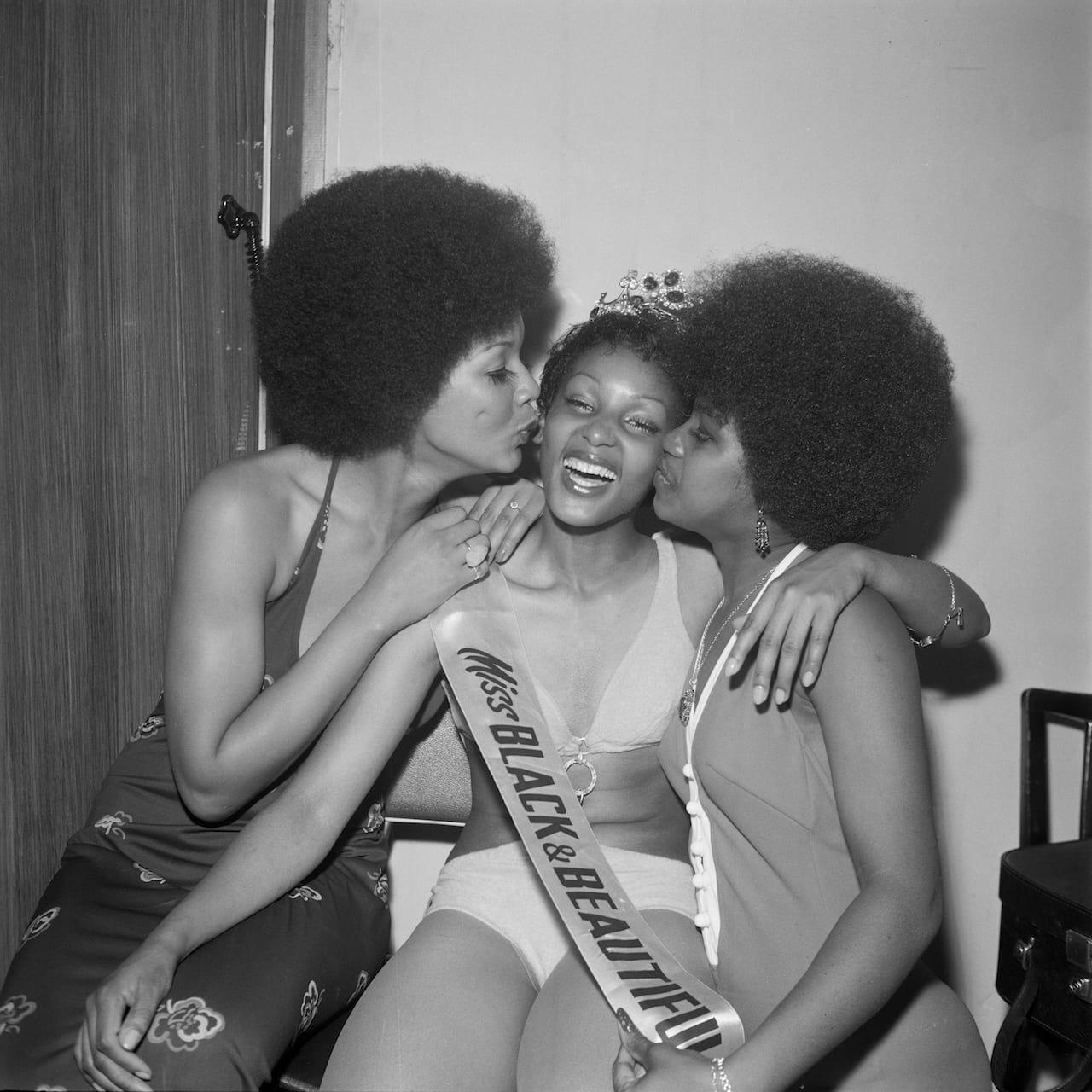
Black and Beautiful in Raphael Albert’s vintage photographs of beauty contests

Born on the Caribbean island of Grenada in 1935, Raphael Albert moved to London in 1953. Studying photography at Ealing Technical College while working part-time at a cake factory, he soon picked up freelance jobs for black British papers such as West Indian World, The Gleaner, Caribbean Times, and New World, and also started to document the West Indian communities in Hammersmith and Fulham, photographing weddings, Christenings and other social events, and taking studio portraits of local families in his home.

In 1970 he established the Miss Black and Beautiful contest, followed by Miss West Indies in Great Britain, Miss Teenager of the West Indies in Great Britain, and Miss Grenada, running them via his company, Albert Promotions, and going on to set up a magazine called Charisma in 1984. The pageants ran for 30 years and he documented them all photographically, as well as commissioning other photographers to shoot them, and in 2007 he organised a display of their work during Black History Month titled Great Britain: Celebrating 30 Years of Beauty Pageants (1963-1993). Albert died in 2009.

13 June 2018

Crunch time for students at Free Range and more…

It’s show time for a new batch of graduates, with photographers and artists around the UK showing off the last work they’ve completed as students. The BA Photography and BA Photojournalism & Documentary Photography shows have already taken place at the London College of Communication, for example with strong portfolios by Herman Rahman and Freya Clayton-Payne, among others; the University of Westminster’s MA Documentary Photography and Photojournalism and MA Photography Arts students are showing their work at Ambika P3, London from 23-28 June, meanwhile, with new graduates including Cheryl Newman, former photography director of the Telegraph Magazine.

Free Range at London’s Old Truman Brewery, meanwhile, offers institutions based outside the UK’s capital the chance to show work in it, taking over the East London warehouses for two photography weeks – 22-25 June, and 29 June-2 July. Exhibitions are free and open from Friday-Monday both weeks, and institutions taking part include Falmouth University, Arts University of Bournemouth, and University of East London. Here BJP picks out our selection of the works that will go on show.

12 June 2018

Time Folds for Vanessa Winship at Barbican Art Gallery

“It asks, inevitably, questions about who we are. Who we are in Britain, or who we are in the world. It asks questions about legacy, my own life, and cycles; the very folding of time,” says Vanessa Winship of her latest project, the ongoing series And Time Folds. “It’s difficult to say exactly what it is about because I don’t really know what it will end up being,” she adds.

Winship was the first woman to win the prestigious Henri Cartier-Bresson Award back in 2011, and she now has a major solo show opening at London’s Barbican Art Gallery on 22 June, also titled And Time Folds. It features over 150 photographs including previously unseen projects and archival material; it also includes her newest series, a mixture of “completely different, random formats” and found objects, inspired by her granddaughter and “how she frames herself in the world in relation to seeing, hearing and touching”.

12 June 2018

Spain under the microscope in Ricardo Cases’ solo show

It’s little more than a decade since Ricardo Cases took his first tentative steps into the world with his personal work, exhibiting as part of New Spanish Photography at Lodz Fotofestiwal in 2007, a group show that travelled on to China and Slovakia. More than a dozen solo shows followed across Spain over the next three years before his international breakthrough with the book Paloma al aire [Pigeons in flight], published by Dewi Lewis in 2011. Ostensibly, the book follows pigeon-fanciers in Valencia and Murcia going about a local racing ritual, painting male birds for a competition in which the winner is the cock that attracts the hen. But with its distinctive spiral-bound, notebook appearance, and Cases’ tight framing, emphasising the surreality of the chase, it acquired a cult following, marking the arrival of a singular talent. The unconventional traits to this and his subsequent works are clearly evident in his first major survey exhibition, on show in Madrid from 13 June to 22 July at the spectacular Sala Canal Isabel II, as part of this year’s Photo España.

12 June 2018

Tom Hunter’s personal odyssey

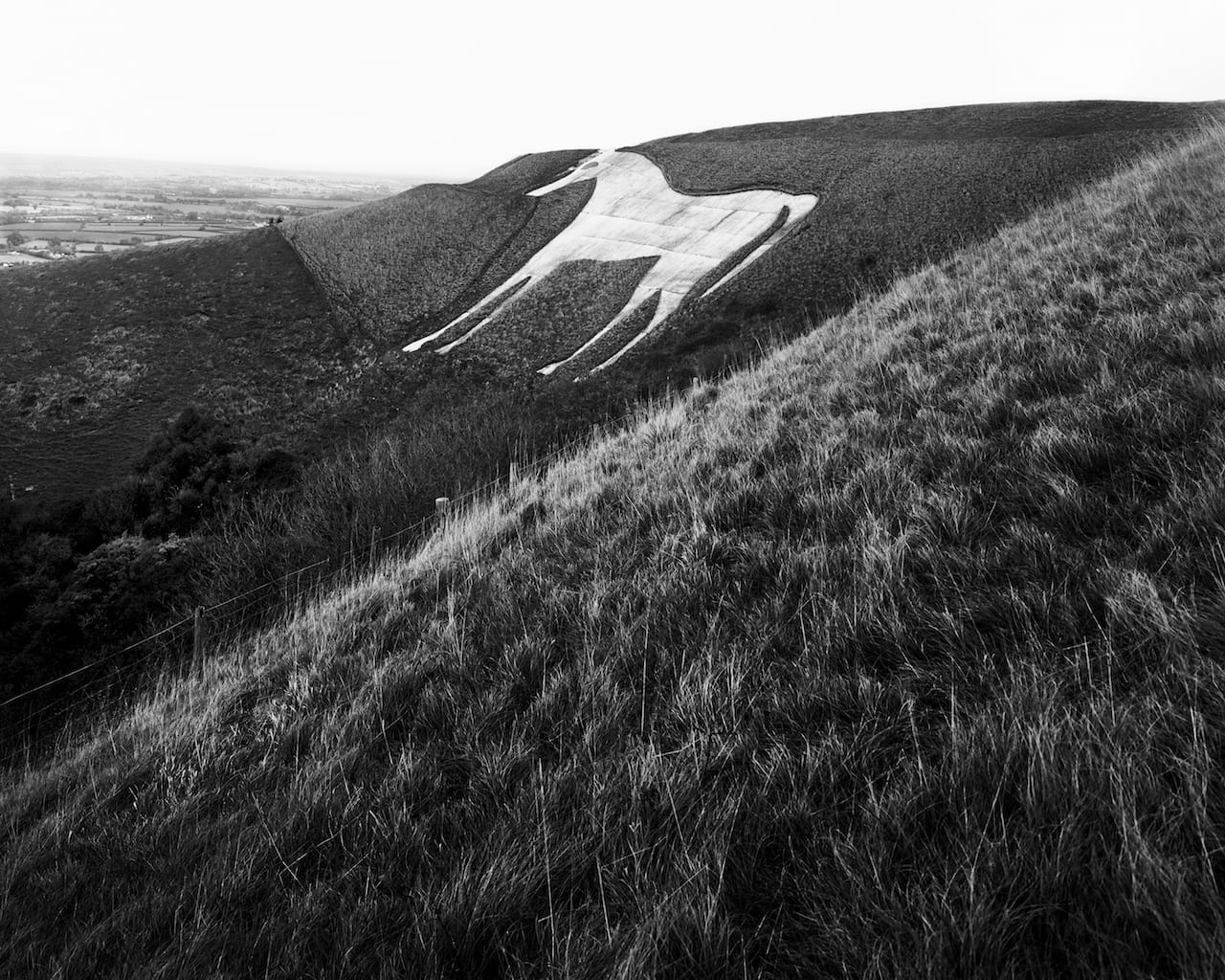
Tom Hunter’s best-known shot shows a young woman in a squat reading a possession order; taken in Hunter’s home in the 1990s, the portrait’s colour and composition evoke Vermeer’s A Girl Reading At An Open Window. His new series, Figures in a Landscape, is a similar combination of personal and the cultural, which takes the viewer “through a world imbued with myths and legends”.

Starting in Dorset, in the village where Hunter grew up, the series tracks past standing stones and megalithic chalk figures in the countryside and the dinosaurs in London’s Crystal Palace park, and ends up in Hackney, Hunter’s base for the last 20 years, and once home to Lugus, the Celtic god of the River Lea. The last shot was taken at Winterville where, says Hunter “the mid-winter solstice pagan festival becomes distorted in an Olympian mountain top landscape. Here ancient and contemporary narratives clash and shatter into a dystopian consumerist nightmare”.

12 June 2018

Karim El Maktafi on life with dual heritage

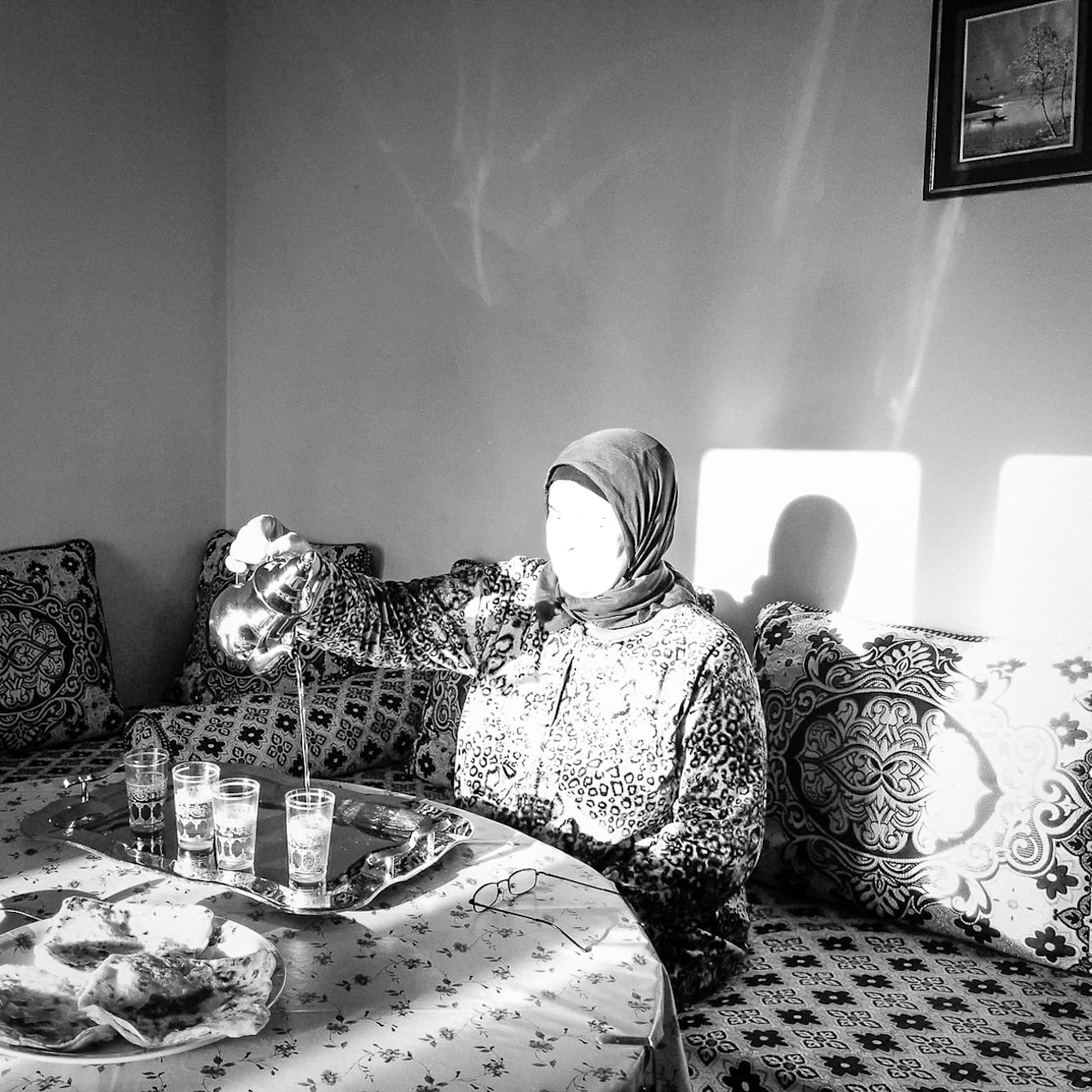
Hayati, meaning “my life” in Arabic, reflects on photographer Karim El Maktafi’s dual identity as a second-generation Italian born to Moroccan parents. The images were taken in both Italy and Morocco, and are all shot on an iPhone SE [Special Edition] – for a couple of reasons.

El Maktafi got into image-making via smartphones as a teen, after using them to take photographs of his friends. After graduating from the Italian Institute of Photography in 2013, he decided to return to the device with a more trained eye, when he decided to shoot Hayati.

He also uses a smartphone camera is because it’s less intrusive. El Maktafi’s family were against him photographing them, and in general don’t approve of photography as a career, which is why their faces are either cropped out or disguised by rays of light in the project. Using a smaller camera proved gentler way to record them, and the many other people involved.

6 June 2018

Out of time with Géraldine Lay

In classical music, ‘impromptu’ refers to a short improvised piece, performed spontaneously with little or no preparation. Géraldine Lay’s new book, Impromptus, is a visual take on the term, aiming “not to tell a story about the place or the country, but to be out of time”.

Lay first encountered photography during her course in History of Art at the University of Lyon; studying the history of the medium, she was bitten by the photography bug, and went on to study at the National Photography School. She graduated in 1997, and is now based in Arles.

“Initially, my practice was part of my daily life, I had no preconceived ideas or strict subject,” says Lay. “I got into the habit of always having a camera with me, to take advantage of all the little moments of life.”

6 June 2018