


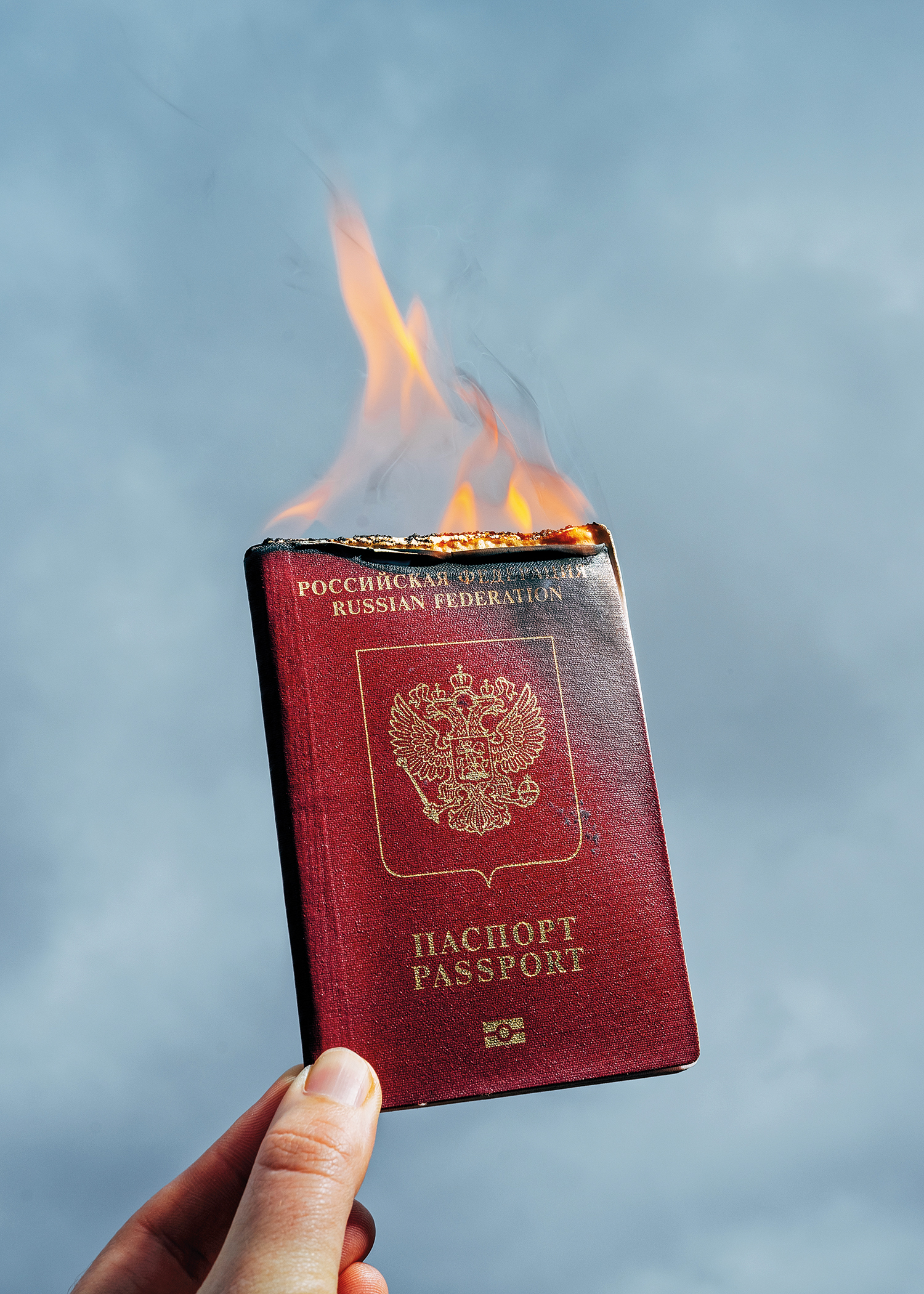
Not in My Name © Nikita Teryoshin.
Invited to document feminist performance art collective Pussy Riot protesting the Russian Pavilion at the Venice Biennale, Nikita Teryoshin became part of the action in the wider world
In early 2022, after Russia’s full-scale invasion of Ukraine, Russian-born photographer Nikita Teryoshin was commissioned by a German news magazine to document the influx of Ukrainian refugees across the Polish border. Due to a hand injury, he was forced to pull out of the job, and was left feeling listless. Long estranged from his country of birth, and horrified by the events that were unfolding on Europe’s eastern border, he felt the urge to use his camera to make a statement. So taking his Russian passport, he held it against a grey Berlin sky, set it on fire, and photographed it.
Born in Leningrad, Teryoshin moved to Dortmund, Germany, as a teenager. His father worked as a set designer and painter for theatre and television, and the young Nikita found these studios and workshops fascinating. It was perhaps there he developed a certain sensitivity to the construction of images, the way that arrangements of objects, bodies and lighting create meaning, and the technical tricks and special effects that can confuse an audience’s sense of the real. From there he realised that, across culture, media and politics, there is almost always a ‘backstage’, a hidden space in which spectacle is carefully engineered, labour is invisibilised, and wealth and reputation are laundered.
Teryoshin’s personal projects have since explored the global arms trade and the marketing of war, political conventions and the apparatus of governance, and the strategies of artwashing and sportswashing employed by repressive kleptocracies. Around the time he burned his Russian passport, he was part of a burgeoning online NFT community, through which he engaged with many Ukrainian and Russian artists. “It was super supportive,” he says. “Photographers from all over the world, helping each other out. I thought, maybe I can mint this photo of my passport, and raise some money for Ukraine.”
He minted and sold the NFT, and printed posters and limited editions of the image, raising thousands of euros which he donated to causes in Ukraine. The photograph was published in German broadsheet Die Zeit, and circulated widely online. Some Russians mocked the burning as cowardly and superficial, enacted from the relative safety of a third nation. An old classmate of Teryoshin’s posted on social media that she had reported the image to security services and that, if he attempted to return to Russia, he would be escorted directly from the plane to a prison cell.
Teryoshin is sanguine. “From the beginning, it was pretty clear that I can’t go back [to Russia],” he says. “Before the full-scale invasion, burning a passport would have landed you with a fine. But they’ve changed the law, and applied it retrospectively, so it’s now 16 years in prison.”
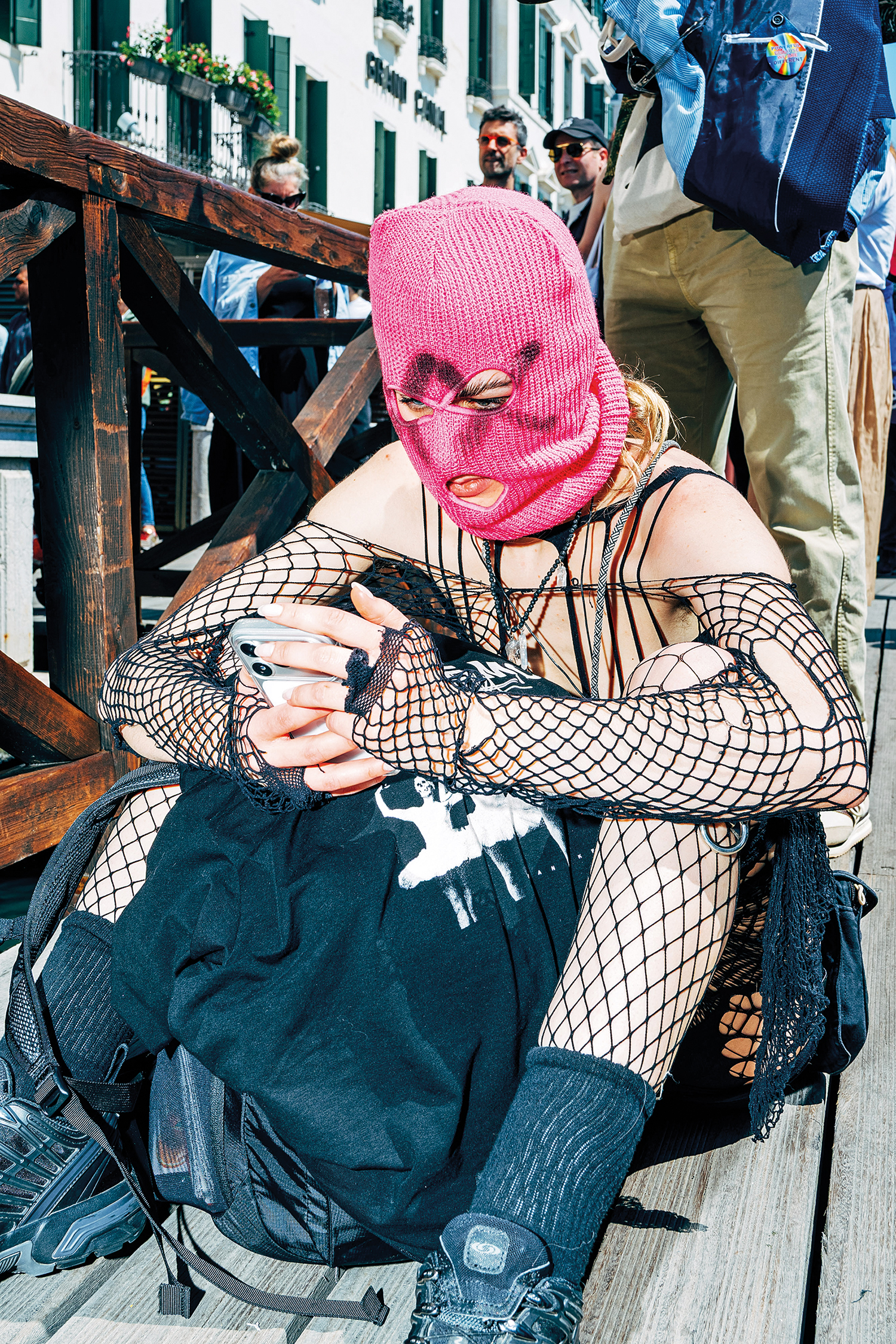
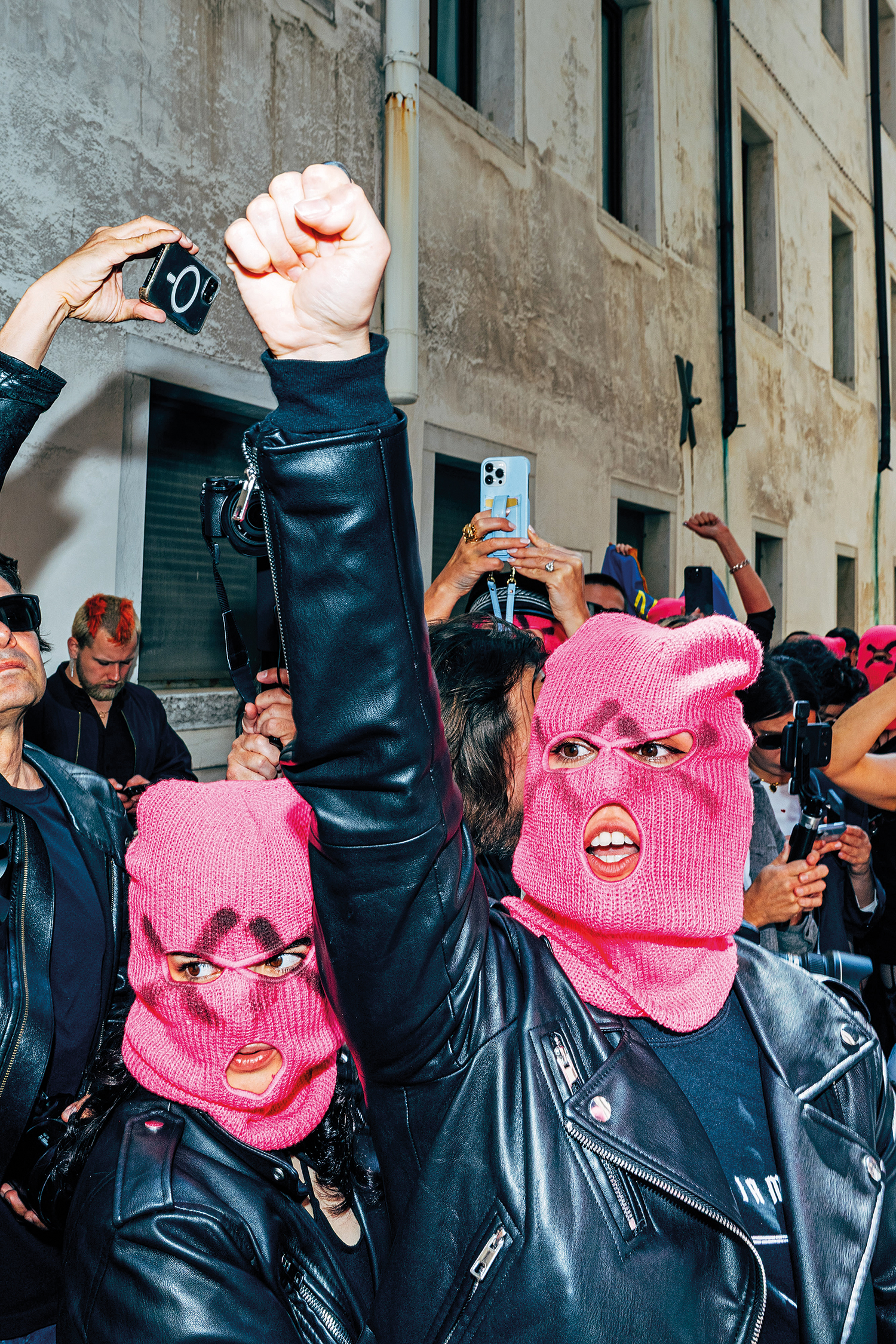
“It’s absurd to say that you’re not into politics and you’re against the war, but then be comfortable going out onto a global stage and representing [the aggressor]” – Nikita Teryoshin
The photographic medium is deeply implicated in the ecologies of contemporary protest. Setting fire to passports, flags and sacred texts as an act of resistance relies on the presence of a camera for political potency and endurance. Photographs of flames seem to arrest the physics of combustion, and suggest that a fire might, in fact, burn ceaselessly. The image of Teryoshin’s flaming passport is a performance of ritualised agency that lingers conceptually, with the potential to act as a universal igniting force. And the idea that a political fire could burn forever in the hearts and minds of a population is the kind of notion that tends to trouble insecure autocrats.
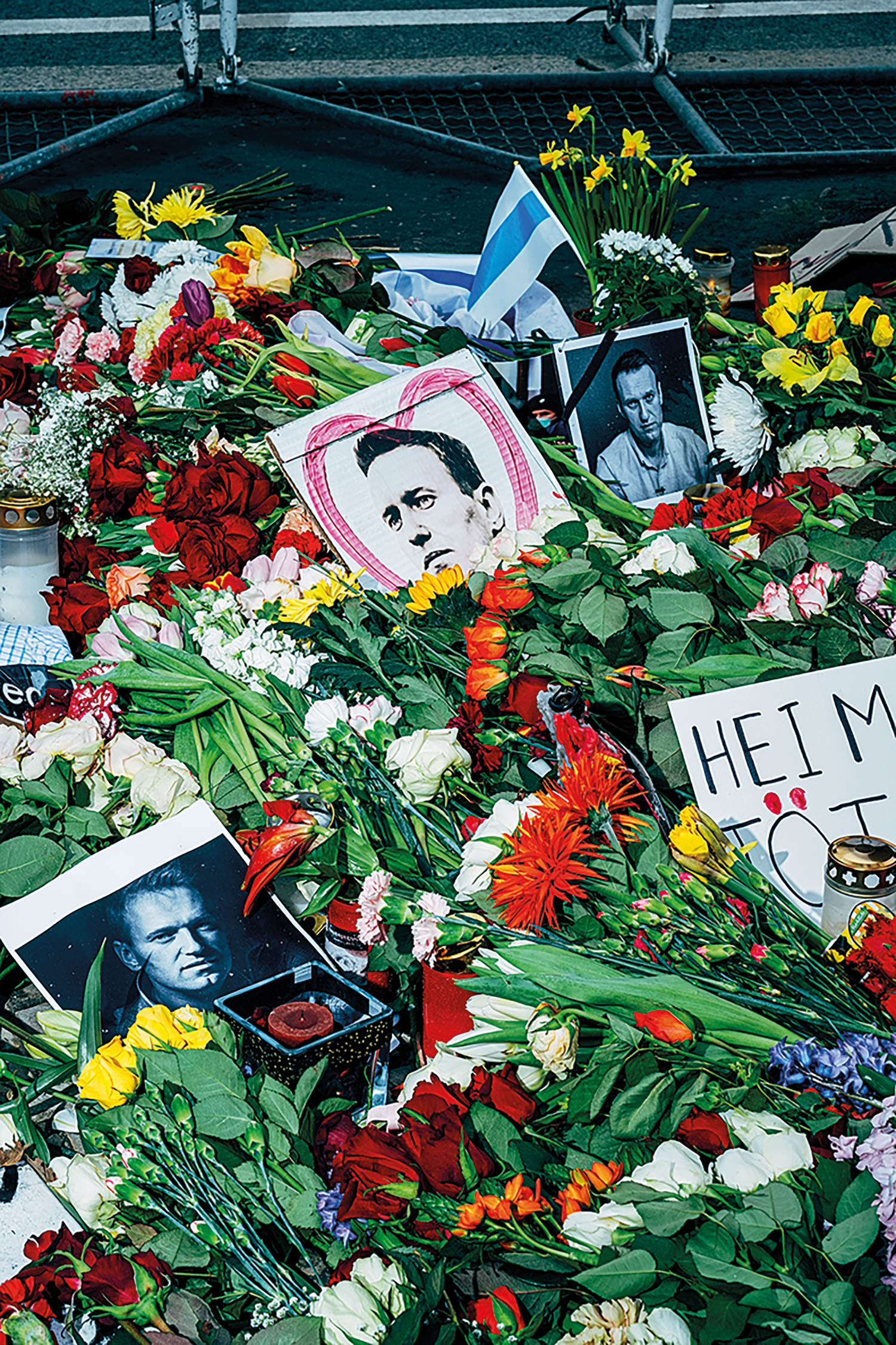
After the death of Russian opposition leader Alexei Navalny in a Siberian penal colony in February 2024, Teryoshin joined a protest at Berlin’s Russian embassy, organised by the dissident feminist performance art collective Pussy Riot. Taking some photographs, he sent them to the group afterwards. Two years later – after a disorienting visit to Qatar to shoot the petrostate’s inaugural edition of the prestigious commercial art fair Art Basel – Teryoshin was reflecting on how the art world functions as a geopolitical instrument for intersecting spheres of power and conflict. Then he received a message from Pussy Riot’s founding member, Nadya Tolokonnikova; the group would be staging a protest outside the Russian Pavilion during the preview week of the Venice Biennale, and they wanted him to document it. It seemed to Teryoshin like “a greeting from the universe”.
Since their formation in 2011, Pussy Riot have adopted strategies of punk spectacle and aesthetic actionism, producing pictorially intense and vivid image-acts that seem to prioritise the visual afterlife of protest over the act itself. The group emerged at around the same time as Instagram, a time when everyone from the Pope to the Israel Defense Forces was joining Twitter, and when social networks were having far-reaching off-screen sociopolitical impact (including during the Arab Spring). Highly digitally literate, and well aware of the political power of their (youthful, female) bodies as a form of media, Pussy Riot typically brief photographers and bloggers in advance of their upcoming actions.
Image production is a key component of their strategy, the group adopting hybridised radical feminist approaches to protest to explore the argumentative potential of visibility. Their brightly coloured balaclavas are an important visual motif within this strategy, and they anonymise and de-individualise group members. Pussy Riot have claimed to have dozens of members, and say that their participants can totally differ in each guerilla performance. Their headwear also creates visual parallels with other direct action, liberation and feminist movements, which have embraced the balaclava as a performative object.
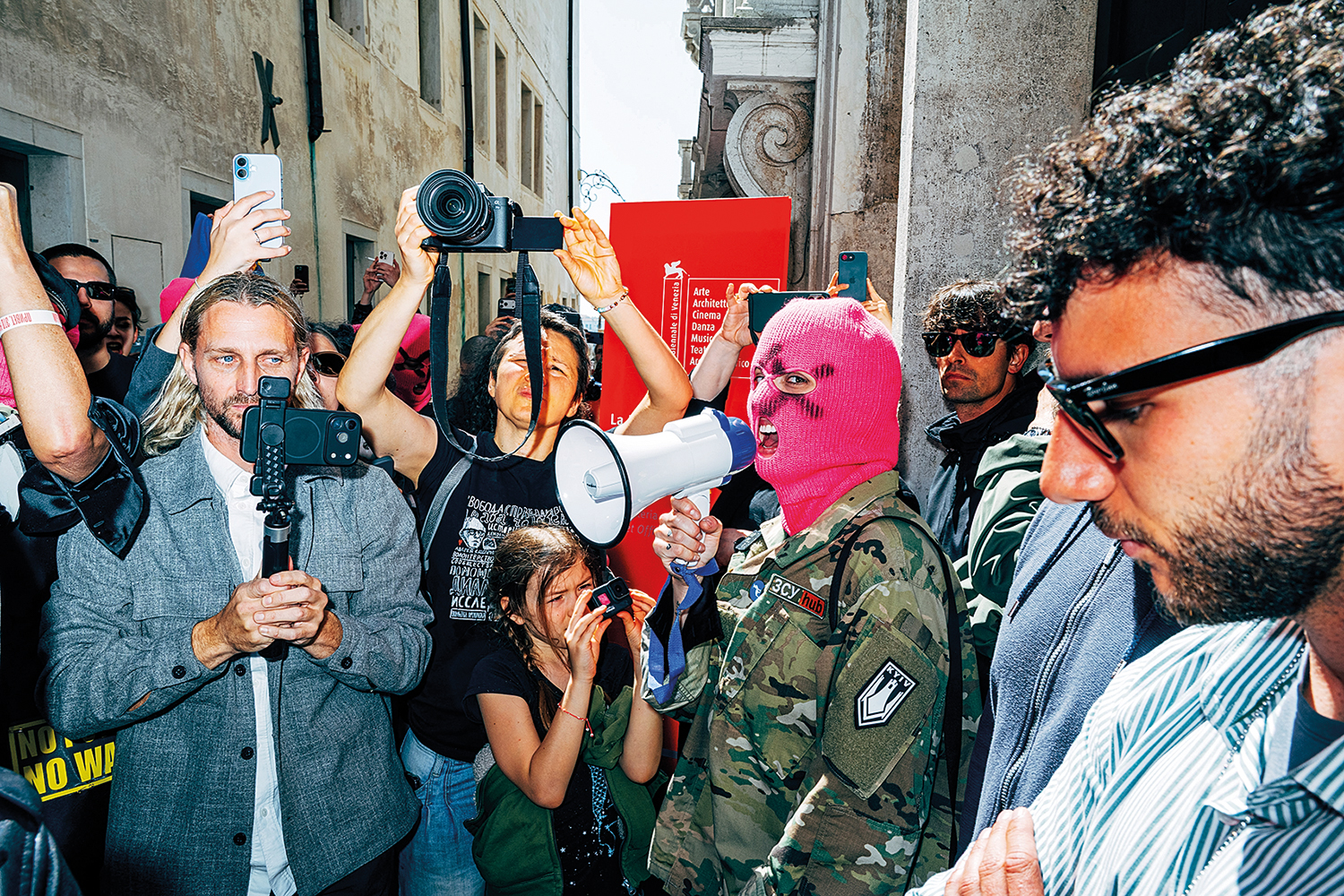
The presence of Femen, which was founded in Ukraine but now operates internationally, adds a further dimension. Femen employ their own naked bodies as a form of media, forcing a confrontation with the precarity and vulnerability of the nude female form – and crucially, generating further visibility. With slogans painted across their bare breasts, Femen attempt to invert the hypersexualised connotations of female anatomy, and suggest that the body can assert its own meanings and values.
It is a strategy that has been critiqued. What Femen present as a liberated female image has been criticised as a hegemonically white, thin and able-bodied representation; the group has also been accused of prioritising a deeply Western view of female emancipation, specifically targeting Islam and rejecting women who have an alternative relationship with their bodies. Femen activists’ confrontations with law enforcement and security services make for compelling imagery, but the political meanings they produce are not always shared.
Nevertheless, as Judith Butler writes in Notes Toward a Performative Theory of Assembly, “though the body in its struggle with precarity and persistence is at the heart of so many demonstrations, it is also the body that is on the line, exhibiting its value and its freedom in the demonstration itself, enacting, by the embodied form of the gathering, a claim to the political”. Pussy Riot and Femen’s emphasis on corporeality risks reinforcing the patriarchal notion that the attention paid to women should be arbitrated by their physical appearance. However, it is worth remembering that in the Russian and post-Soviet cultural context, in which the Orthodox Church wields significant influence, the presence of non-conforming female bodies in public space can still be considered societally menacing.
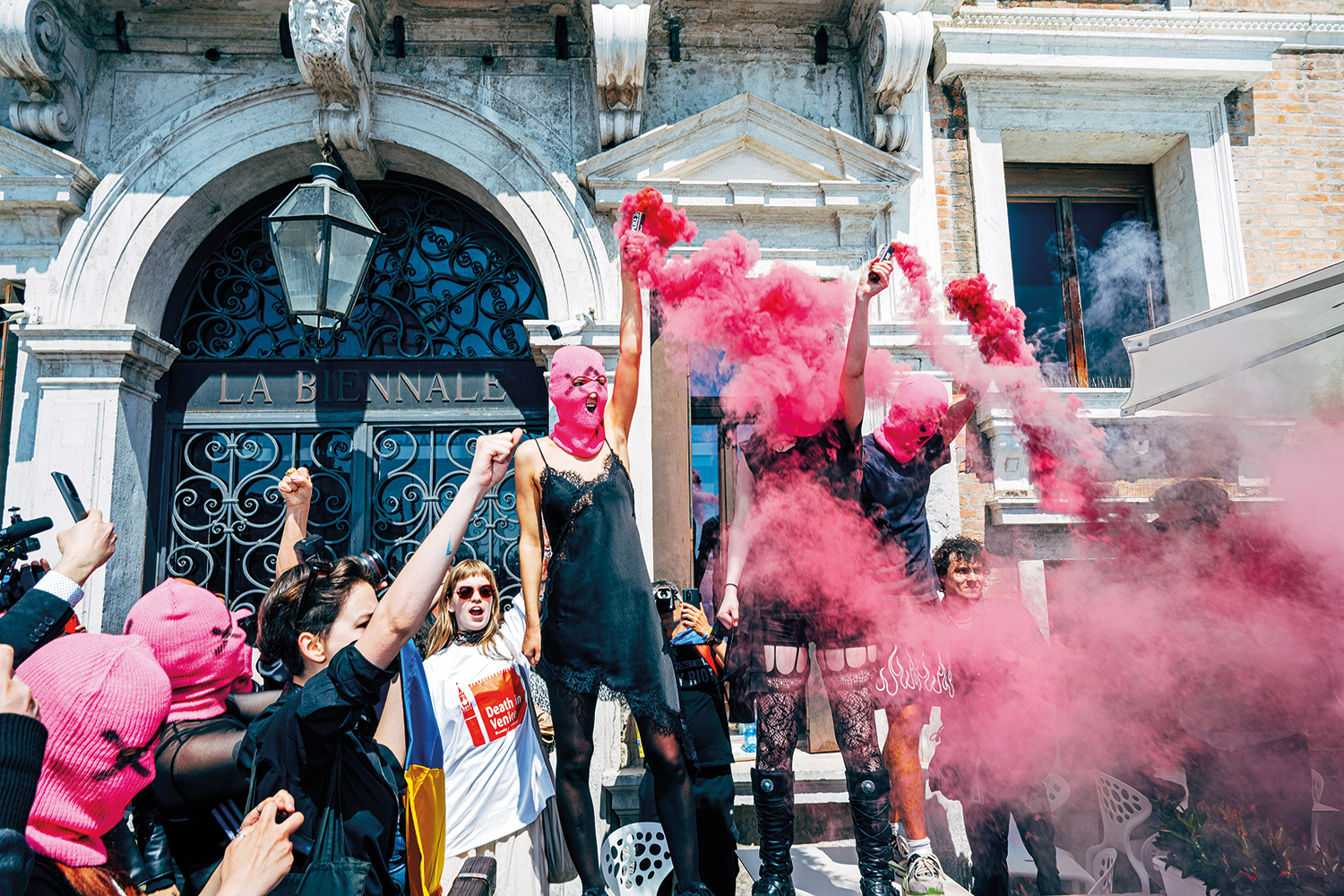
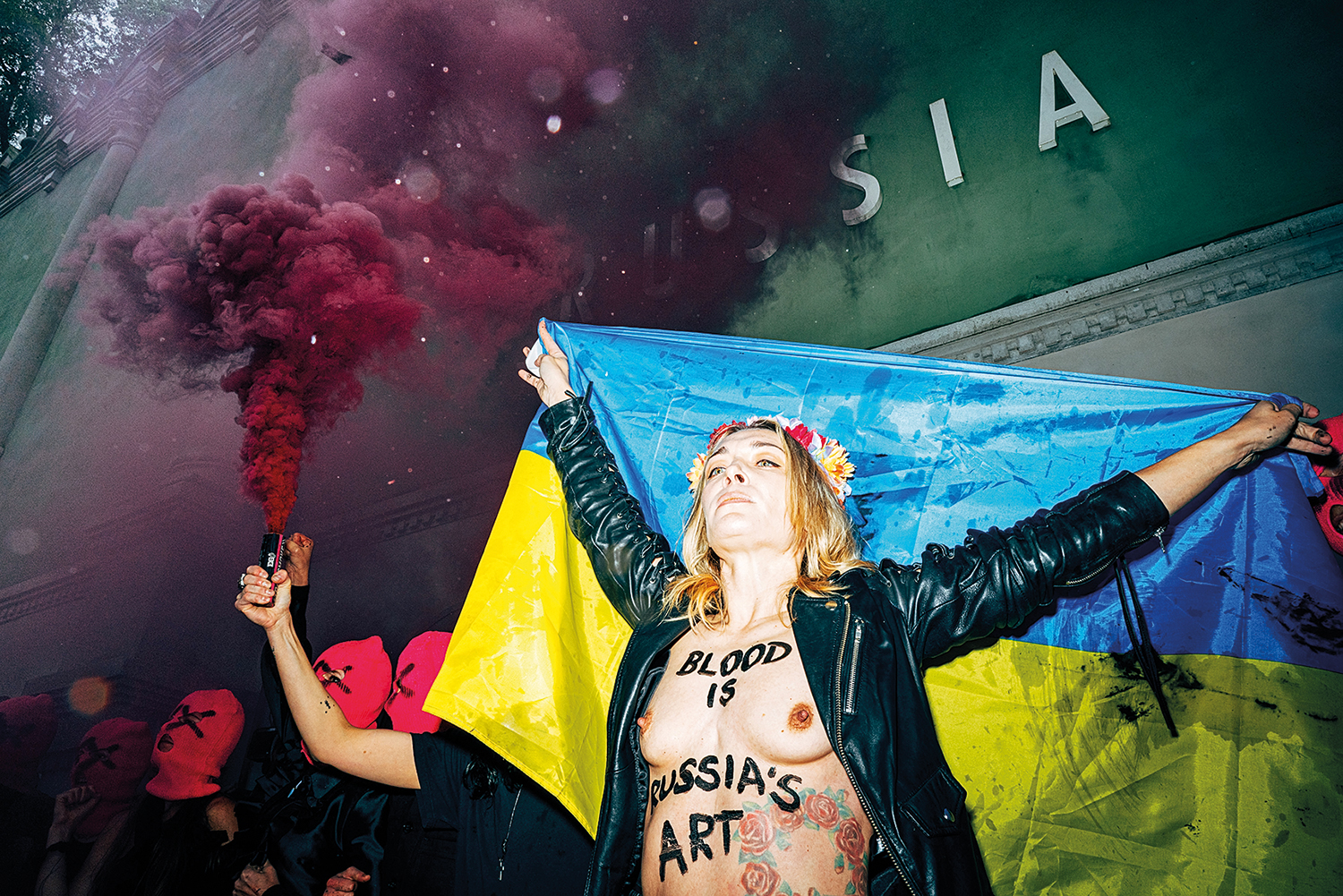
“Russia wages hybrid war,” explained Tolokonnikova to the assembled press on the steps of the Russian Pavilion, as the protest was dissipating. “It’s not just tanks and drones, murders and rapes in Ukraine, but it’s also culture, art, language, so called ‘soft power’. It’s clear that it’s part of their military strategy and that’s the way they try and conquer the West. And you guys just open the doors to them,” she continued, before concluding with a weary sarcasm: “That’s funny.”
When challenged on the presence of states accused of crimes against humanity, Biennale president Pietrangelo Buttafuoco appealed to liberal false balance; “If the Biennale started selecting works [on the basis of] passports, it would cease to be what it has always been: the place where the world comes together.” It seems a platitudinal take from the conservative intellectual – and former leader of the youth wing of the neo-fascist Italian Social Movement party – confusing rogue state propaganda with artistic freedom.
Teryoshin is alive to the paradox that emerges when “the world comes together” in Venice. “I think the normalisation of Russia’s presence in Europe, in this cultural environment, is totally wrong,” he states. “People say to me, ‘Yeah, but the artists who are part of it are not into politics’. Or, ‘There is no one from Russia who is really into this war’. But it’s absurd to say that you’re not into politics and you’re against the war, but then be comfortable going out onto a global stage and representing [the aggressor]. One of the best examples of artwashing is this pavilion.”
He accepts his position as an active agent in the protest’s efficacy – especially as the Russian Pavilion was only open during preview week, when few members of the public would have been present for the demonstration. “You could say the photographs become more important than the action itself,” Teryoshin reflects. “There were maybe 200 people there at that moment. But the only thing the world will see are the pictures.”
Nikita Teryoshin’s new book Game of Chairs is published by pupupublishing, priced €55.
pupupublishing.bigcartel.com