
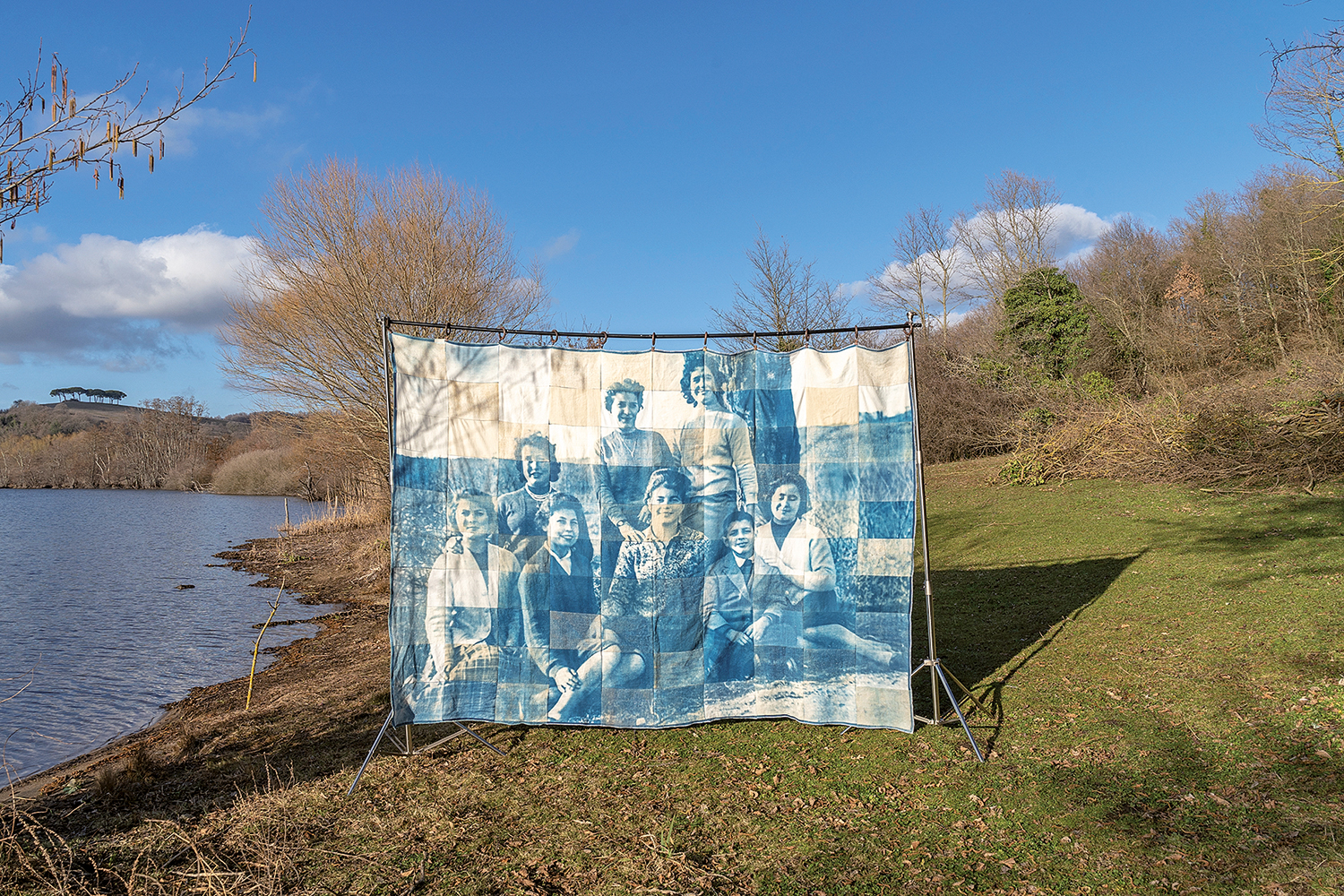
From the series La Dote di Latera © Daniele Cimaglia and Giuseppe Odore.
The first in-person Photoworks Festival since 2018, Un/Stable: Lands, Anxieties, Dreams aims to create space for new potential
“In the spaciousness of uncertainty is room to act,” wrote Rebecca Solnit in Hope in the Dark; when life is at its most fractious and precarious, perhaps there is the greatest opportunity for radical change. The UK – and the world – finds itself at such a moment, and in Brighton & Hove this October, Photoworks Festival is embracing the unpredictability.
Un/Stable: Lands, Anxieties, Dreams is the first full Photoworks Festival to happen since 2018; during the pandemic the event (previously Brighton Photo Biennial) was reconstituted as a ‘festival in a box’, sent out to individuals and organisations, and it took the same form in 2022. In 2024 Photoworks staged performance-based and participatory activities at the Photoworks Summit and Photoworks Weekender, then in 2025 the Photobook 101 with the University of Brighton. This October sees the return of a full festival in venues across Brighton & Hove.
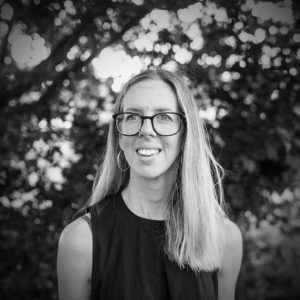
“There are so many festivals in the world, we don’t want to just repeat the same formula” –
Louise Fedotov-Clements, director
It will be the first Photoworks Festival for current director Louise Fedotov-Clements, who spearheaded the Summit, Weekender and Photobook 101, and who previously founded Derby’s FORMAT Festival. She is keen to continue to innovate, reflecting; “There are so many festivals in the world, we don’t want to just repeat the same formula.” The opening weekend on 02-04 October will kick off with an international conference, exhibitions and events; the shows and events will continue for the month, and the theme extends through the 2026 Photoworks Annual, Cosmophotographies, which will launch at the festival.
As the title Un/Stable: Lands, Anxieties, Dreams suggests, this festival takes an interest in the environment. At Brighton Museum and Art Gallery, And So I Watch You From Afar and The Most Beautiful Anthropocene by Aindreas Scholz confront the climate crisis with works documenting how humans are reshaping the coastal environment, for example, using cameraless photography printed in a sustainable darkroom. The project intimates both diagnosis and cure, proposing production methods that are collaborative and exploratory, rather than extractive.
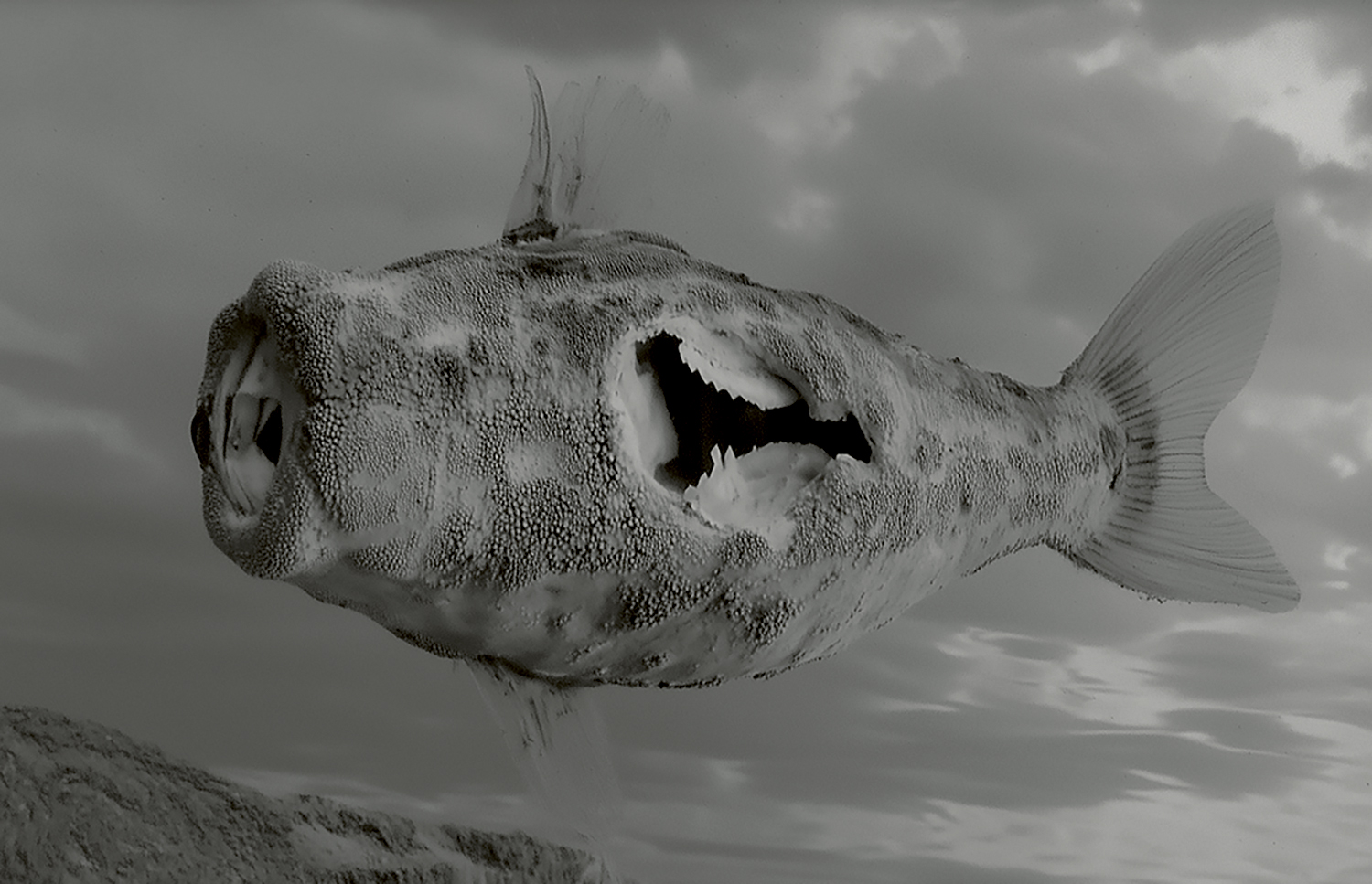
The same ethos runs through other work. At Regency Town House, Sam Kaufman’s film Pseudomorphs explores how threatened cuttlefish camouflage and adapt their bodies, shifting the boundaries between discrete organisms and the broader marine ecosystem. In the same venue is Holly Birtles’ Fighting Fish, made with AI and analogue techniques, and inspired by research into river pollution in the UK and India. Daniele Cimaglia and Giuseppe Odore’s La Dote di Latera (‘The Latera Dowry’) was created with a group of women in the small, Medieval town of Latera, central Italy, meanwhile; drawing on traditional cultivation and weaving techniques, it features work cyanotyped onto the community’s inherited linen.
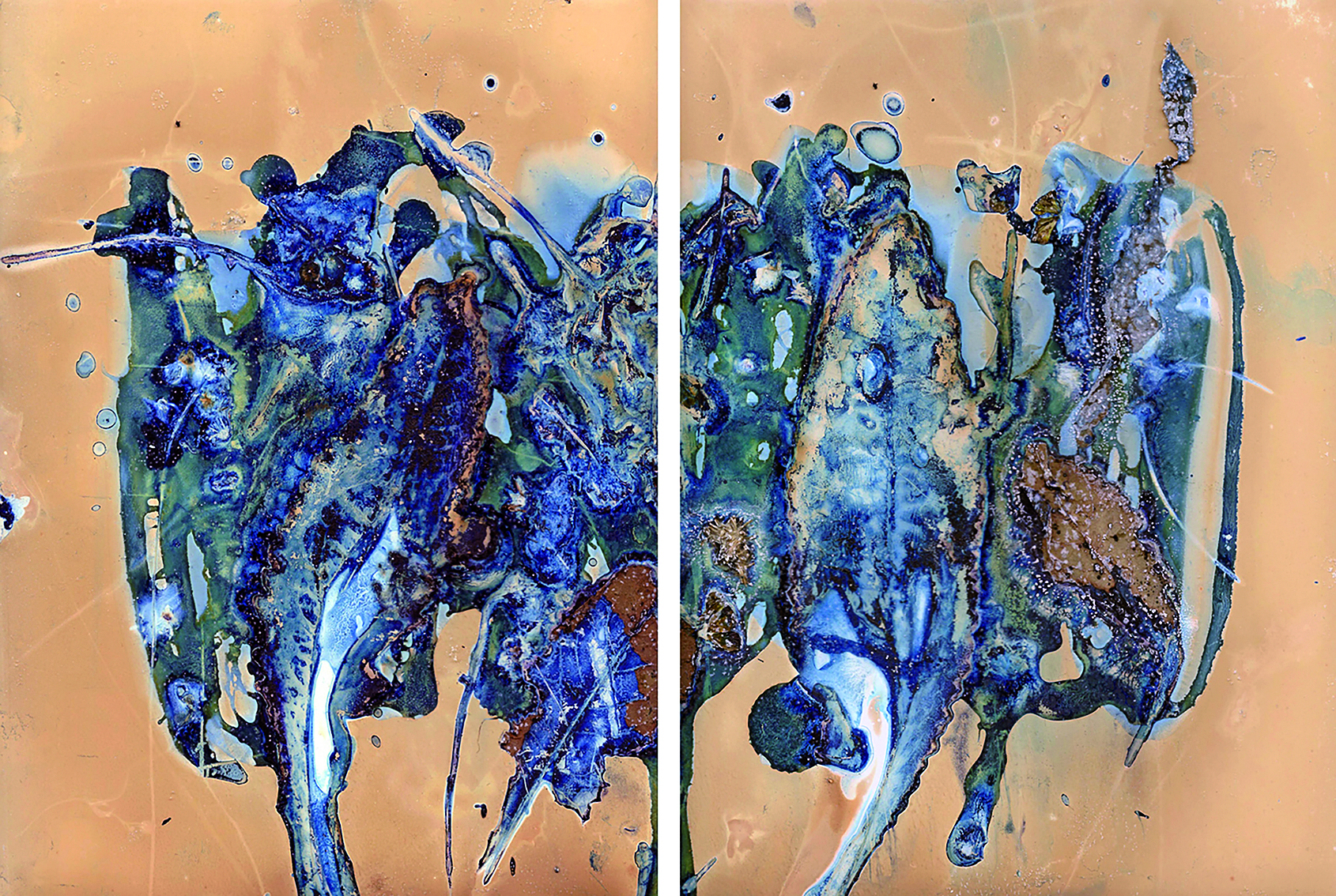
Uncertainty is fertile terrain for both artists and scientists, and Fedotov-Clements sees parallels between the disciplines “in terms of world-building and creating realities that others might enter”. Bones of Our Land is a collaboration between the two fields, made by artist Tsz Wai Pun and ecologist Coşkun Güçlü. Presented at Gallery Lock, it is a multimedia installation in which sound, soil analysis, photography, archival materials and scientific fieldwork converge to chart the restoration of an environmentally degraded Hong Kong hillside. Visitors are invited to ‘read’ the history of the ever-changing landscapes.
Throughout there is an emphasis on process, both on the way in which works have been made, and the sociopolitical contexts which helped form them and our responses. “We’re not interested in just presenting the images that have been produced, but in the artists’ experiences as well as the narratives within the works,” explains Fedotov-Clements. “What we’re trying to do is to unravel and share information about the creative process.”
Putting ourselves in the picture 1&2 by Fast Forward: Women in Photography is a case in point, based on two publications featuring work by 52 women who challenge gender discrimination and female representation; Two photographs, a forgotten history at Dorset Place Gallery presents research by artist Jermaine Francis with Deborah Ireland at the Royal Geographical Society Archive, investigating images made in the 1860s. The two images offer divergent accounts, prompting us to consider the role interpretation plays in our consumption of photographs.
Alma Haser: Playing with Your Eyes at Hove Museum of Creativity liberates photography from beyond the frame, via playful, crafted works that resculpt our experience of 3D reality. Haser’s show expands on her chapter in Thames & Hudson’s forthcoming Mini Photographers book, on which Photoworks was a consultant. Meanwhile Where We Meet at Jubilee Library draws on the artists Eva Louisa Jonas, Kairo Urovi and Queer Grounds participants’ engagement with a queer DIY building community in West Sussex.
At Phoenix Art Space, Brighton Photo Fringe also leans into collaboration, demonstrating less individualistic, more mutually supportive ways of working via projects by eight collectives. Brighton Photo Fringe is now led by recently appointed curator Ricardo Reverón Blanco, who was previously part of the Photoworks team. Brighton & Hove also recently saw the opening of POST, a new lens-based art space founded by Nina Emett and Simon Roberts. “It was long overdue for Brighton, but also the country because hopefully it inspires others that it is possible to get on and do things, though funding is tight and times are challenging,” says Fedotov-Clements.
She hopes that the festival will encourage people to collaborate and exchange, supporting those facing challenging territories politically, and enabling intercultural dialogue. “I want this to be a safe space to have challenging conversations, encountering a variety of ideas and ways of being in a positive light,” she says.
Photoworks Festival runs from 02 October–01 November 2026 at venues across Brighton & Hove.
photoworks.org.uk